Tag: Indian Newspaper Society

  • ASCI clarifies on recent news report about Self Declaration Certificate

    ASCI clarifies on recent news report about Self Declaration Certificate

    Mumbai: The Advertising Standards Council of India (ASCI) has emphasized that broadcasters and advertisers must obtain a self-declaration certificate (SDC) before releasing any new advertisements. Starting from 18 June, all new ads can only be aired if they have the SDC, as required by the Supreme Court and notified by the Ministry of Information and Broadcasting (MIB).

    The Indian Society of Advertisers (ISA), the Indian Broadcasting and Digital Foundation (IBDF), and the Indian Newspaper Society (INS) have collectively requested that the Ministry of Information and Broadcasting (MIB) delay the implementation of the SDC mandate to allow the industry sufficient time to comply with the new regulatory requirements.

    In a letter to the MIB, the INS suggested that the SDC mechanism should be restricted to medical advertisements since the SC case specifically addresses misleading medical ads. Advertisers will be required to generate SDCs via the Broadcast Seva portal for TV and radio ads and through the Press Council of India (PCI) portal for print and digital ads.

    The ISA has also called for a postponement of the SDC mechanism, citing concerns over asset confidentiality as ad materials uploaded on the Broadcast Seva and PCI websites will be publicly accessible. Additionally, both websites frequently experience technical issues, potentially causing delays in generating the SDCs.

    Despite these concerns, the MIB reiterated during a stakeholder meeting on 11 June that the SDC mandate for all new advertisements across TV, digital, print, and radio will come into effect on 18 June, in accordance with the Supreme Court directive.

    ASCI has requested its members to report any difficulties they encounter in implementing the SDC mandate, so it can compile these issues and present them to the MIB for further consideration.

  • MRUC finds IRS 2013 data valid, lifts abeyance

    MRUC finds IRS 2013 data valid, lifts abeyance

    MUMBAI: Finally, taking the decision on the latest Indian Readership Survey (IRS) data, the Media Research Users Council (MRUC) said the voluntary abeyance placed on the IRS 2013 has been lifted with effect from 20 August 2014.


    The IRS 2013 data published on 28 January 2014, evoked several questions from the about the validity of the results. Therefore the Readership Studies Council of India (RSCI) requested subscribers to hold the study in abeyance while it took a revalidation exercise.


    A committee was then formed with two co-chairmen, one from the publishing industry and one from the advertising agency industry. They decided that the methodology was in order and a process audit needs to be done which was awarded to Praveen Tripathi (Magic 9 Media).


    The findings of this report were discussed by heads of four industry bodies- MRUC chairman, RSCI chairman, Indian Newspaper Society president and ABC chairman and a decision was to be taken. The heads also discussed it with the RSCI technical committee chairman and the two co-chairmen of the revalidating committee.


    The audit took place in two stages. The first stage involved direct back checking of respondent homes post which a broad and deep forensic statistical analysis exercise was carried out to identify and isolate both fieldwork compliance deficiencies and incidences of the occurrence of unusual publication incidence in respondent interview records. By sieving the aggregate data set for these issues, the audit was able able to judge unequivocally whether the statistical deviations systematically changed any of the crucial readership outputs. The outcome was conclusive and unequivocal that the study results had not been impacted.

  • There is a need for self-correcting mechanisms in media: Pranab Mukherjee

    There is a need for self-correcting mechanisms in media: Pranab Mukherjee

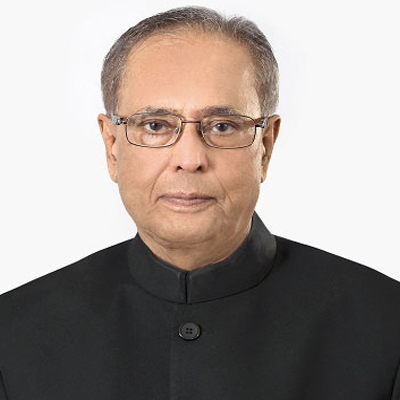
    NEW DELHI: President Pranab Mukherjee today said there was need for self-correcting mechanisms to check ‘aberrations’ like the malaise of paid news in the media.


    Inaugurating the Platinum Jubilee celebrations of the Indian Newspaper Society (INS), the President said, “It is distressing to note that some publications have resorted to “Paid News” and other such marketing strategies to drive their revenues.”


    The temptation to “dumb down” news should also be resisted, he said, stressing that the nation faces critical challenges that go well beyond the pressure of ‘Breaking News’ and immediate headlines. While newspapers must continue to be effective raconteurs, they must also be visionary nation builders.


    But he said India’s ‘vast, varied and vibrant media is a national asset and the media as a whole not only keeps people informed but also performs a very crucial function of presenting ideas and alternatives in the domain of policy formulation and implementation.’


    The President said these are changing times and it is not possible for newspapers to be spared from the consequences of the evolution of ideas and the embrace of technology. It is essential for newspapers to be alive to the challenges of technology and to harness responsibly the opportunities that present themselves.


    He said the influence, credibility and quality of the Indian media is well recognised. Newspapers must be keepers of the conscience of the country. They have to be active participants in the continuing endeavour to nurture a democratic republic committed to achieving justice and fundamental freedoms for all citizens. Journalists must bring to public notice the array of ills and deprivations that continue to beset large numbers of our people – be it malnourishment, continuance of discriminatory practices against sections of society, particularly dalits, or the burdens and tragic consequences of indebtedness. They must shape and influence public opinion even as they provide objective and balanced coverage of news.


    He said the Indian Newspaper Society has over the years met the challenges of time even as it has represented the most influential of India’s newspapers and periodicals. “75 years ago, the world was a very different place. Newspapers of the time not only survived the shortages that war brought in its wake, but also engaged themselves in the difficult task of informing people of the momentous events of a contentious period in our history. It took resolve, vision and a sense of destiny on the part of the founding fathers to have formed a society that could take up issues of common interest for its members. INS members have played a vital role in nurturing a free Press which is a critical component of our democracy,” he added.


    The President stressed that over the years, INS members have informed society and promoted debate on the important questions that confront the nation. “Be it the ravages wrought by war or those inflicted by the man-made Bengal famine, the trials and tribulations of a nation torn by partition or the building of modern day India, newspapers have played a crucial role in educating Indians and giving expression to the diversity of views in our society, upholding thereby the fundamental right to freedom of speech and expression,” he concluded.