
Tag: Indian media

  • India’s OTT paid video subscribers pegged at 1.3 million: Frost and Sullivan

    India’s OTT paid video subscribers pegged at 1.3 million: Frost and Sullivan

    MUMBAI: OTT (over-the-top) was the buzzword in the Indian media and entertainment sector in 2015 with multiple players firming up their game plan to tap into the lucrative and booming digital space. With the emergence of numerous OTT service providers in the past two years coupled with the entry of Netflix in India, the space is poised to grow at a fast pace in the years ahead.

    According to Frost and Sullivan’s market insight on the OTT video market in India, there are about 66 million unique connected video viewers in India every month, and about 1.3 million OTT paid video subscribers. Growth in the space can be attributed to increase in smart-phones penetration as well as the improvement in Internet speed in India.

    Despite facing several challenges today, the OTT market growth will be fuelled by various disruptive innovations in technology and business models over the next five years, as per Frost and Sullivan. 

    “With an increase in the use of smart devices in India, content owners and aggregators are using non-TV platforms to improve reach and generate revenues through subscription and advertisement. However, it’s hard to woo the Indian consumer. Success in OTT video distribution will depend on the ability to offer variety of content, new content, at a reasonable price and impeccable user experience,” said Frost and Sullivan research director Vidya Subramanian Nath. 

    While today a few broadcasters such as the Star TV Network and Zee Entertainment are driving services as well as viewership for OTT video with Hotstar and DittoTV respectively, over the next five years, there will be more broadcasters as well as cable and DTH operators expanding their OTT services. However, inadequate bandwidth speeds and the incumbency of YouTube in the market have challenged market participants.

    “India may have over 225 million Internet users, but for consuming video, one needs high-speed broadband access and only about 35 per cent of these users have access to it, informed Nath. “OTT video subscription numbers fluctuate dramatically every month. We find that advertising video on demand (AVOD) is the most preferred mode of OTT video delivery in India currently,” she said.

    Among content types, there is an increasing demand for short duration video content. This is primarily attributable to the average low Internet speeds and changing preferences of many Indian viewers. It is common to find online viewership peak during major sports events like the IPL, elections, or breaking news.

    Platforms such as YouTube offer opportunities for independent content creators who can publish their videos online without the hassles of negotiation with large networks. Now, with the entry of Netflix in India, independent professional content production will continue to grow. Broadcasters who have their own content or video platforms with a variety of publishers are driving the market. While Viacom18 is all set to launch its service called VOOT next month, Ekta Kapoor’s Balaji Telefilms is also burning the midnight oil to launch its OTT platform – ALT Digital by June this year. Balaji Telefilms CEO Sameer Nair has huge expectations from the platform and expects ALT Digital to have a whopping four million paid subscribers globally by 2020. 

    With substantial investment being pumped in by companies like by Star India (Hotstar), Sony Pictures Networks India (Sony Liv), Zee Enterprises (dittoTV), Eros International (ErosNow) and Singtel, Sony & Warner (HOOQ) amongst others, the competition in the OTT space is set to intensify with the key differentiators being user experience and variety of content offering.
  • India’s OTT paid video subscribers pegged at 1.3 million: Frost and Sullivan

    India’s OTT paid video subscribers pegged at 1.3 million: Frost and Sullivan

    MUMBAI: OTT (over-the-top) was the buzzword in the Indian media and entertainment sector in 2015 with multiple players firming up their game plan to tap into the lucrative and booming digital space. With the emergence of numerous OTT service providers in the past two years coupled with the entry of Netflix in India, the space is poised to grow at a fast pace in the years ahead.

    According to Frost and Sullivan’s market insight on the OTT video market in India, there are about 66 million unique connected video viewers in India every month, and about 1.3 million OTT paid video subscribers. Growth in the space can be attributed to increase in smart-phones penetration as well as the improvement in Internet speed in India.

    Despite facing several challenges today, the OTT market growth will be fuelled by various disruptive innovations in technology and business models over the next five years, as per Frost and Sullivan. 

    “With an increase in the use of smart devices in India, content owners and aggregators are using non-TV platforms to improve reach and generate revenues through subscription and advertisement. However, it’s hard to woo the Indian consumer. Success in OTT video distribution will depend on the ability to offer variety of content, new content, at a reasonable price and impeccable user experience,” said Frost and Sullivan research director Vidya Subramanian Nath. 

    While today a few broadcasters such as the Star TV Network and Zee Entertainment are driving services as well as viewership for OTT video with Hotstar and DittoTV respectively, over the next five years, there will be more broadcasters as well as cable and DTH operators expanding their OTT services. However, inadequate bandwidth speeds and the incumbency of YouTube in the market have challenged market participants.

    “India may have over 225 million Internet users, but for consuming video, one needs high-speed broadband access and only about 35 per cent of these users have access to it, informed Nath. “OTT video subscription numbers fluctuate dramatically every month. We find that advertising video on demand (AVOD) is the most preferred mode of OTT video delivery in India currently,” she said.

    Among content types, there is an increasing demand for short duration video content. This is primarily attributable to the average low Internet speeds and changing preferences of many Indian viewers. It is common to find online viewership peak during major sports events like the IPL, elections, or breaking news.

    Platforms such as YouTube offer opportunities for independent content creators who can publish their videos online without the hassles of negotiation with large networks. Now, with the entry of Netflix in India, independent professional content production will continue to grow. Broadcasters who have their own content or video platforms with a variety of publishers are driving the market. While Viacom18 is all set to launch its service called VOOT next month, Ekta Kapoor’s Balaji Telefilms is also burning the midnight oil to launch its OTT platform – ALT Digital by June this year. Balaji Telefilms CEO Sameer Nair has huge expectations from the platform and expects ALT Digital to have a whopping four million paid subscribers globally by 2020. 

    With substantial investment being pumped in by companies like by Star India (Hotstar), Sony Pictures Networks India (Sony Liv), Zee Enterprises (dittoTV), Eros International (ErosNow) and Singtel, Sony & Warner (HOOQ) amongst others, the competition in the OTT space is set to intensify with the key differentiators being user experience and variety of content offering.

  • Media During Deluge in Chennai

    Media During Deluge in Chennai

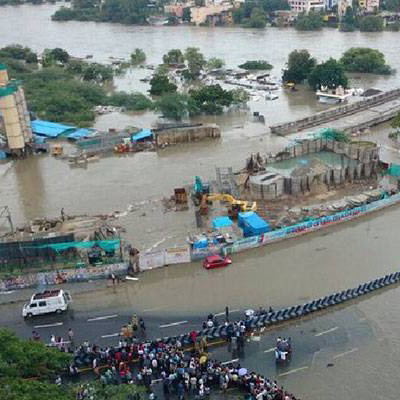
    MUMBAI: The historic floods of the Century that ravaged Chennai in December 2015 has a few lessons for the media. It was the absence of national media in the initial stages of the deluge and the criticism thereof that brought to fore the relevance of local FM radio to the rescue of the battered people of the flooded plains. The first casualty in the flooded areas was electricity and the hype TV channels wanted to create reached none of the victims who were in dire straits to contact the volunteers for help. It was Chennai Live FM 104.1 that managed an Operational Command post of sorts, connecting the victims and a number of cell phone armed individual volunteers and NGOs. Other FM channels followed suit. All India Radio’s RJs came handy with total service agenda on all days, that followed heaviest dumping of 1605.2 mm by the rain clouds, which accounted for 130 per cent above the average rainfall of the North East monsoons this season in Chennai alone. The rainfall on 2 December in Chennai alone is more than the annual rainfall of some of the wettest European nations.


    The realty greed that respected no water places and flood plains converted most of the storm water courses and marsh lands into posh colonies in the last two decades that turned into watery graves in Chennai this monsoon. People unwittingly removed bamboo bushes and trees along the bunds of ponds and reservoirs that added to the misery of Chennai. The Chemberambakkam lake, the life line of Chennai swelled so perilously forcing release of 34500 cusecs of water or 10 lac litres of water per second through the sluice gates on 2 December, inundating fields, homes, the airport and heavily inhabited areas of Chennai mercilessly that never experienced the fury of floods in the past. The only communication possible was through radio waves when the mobile towers, telephone exchanges and sub stations of electricity got flooded and most of the facilities came under water and crashed. Most of the flooded areas had water reaching the first floor forcing power shut down in the whole city. 


    The mapping of flood plains and the storm water course in all the inundated areas of Chennai would have taken a few years of survey but the Mother Nature has delineated the same in a matter of few days along with pain and misery to the people of Chennai. Such details documented by radio stations and TV channels would be of great use to the policy makers in the near future. 


    But resilience of Chennai was on its best when most of the FM stations started receiving calls from the affected people raising SOS messages. The Radio Jockeys continued without respite to broadcast the distress calls reaching the NGOs and individuals ready to help. Some anchors were checking and telling Chennaiites the rainfall details, road conditions, water level, actual need of the victims from torch light, charge packs, food, milk, blankets medical assistance and so on. An IAF helicopter could evacuate a pregnant woman to labour room with active and accurate information from the spot through cell phone to the studio. The contact details from where the help could reach the affected areas was best done by the FM stations of Chennai when hundreds of land phones with government control rooms could not aid rescue when they went dumb due to gushing waters. One thing was very clear, Muslims, Hindus, Christians, Jains… every one joined hands breaking the divisive barriers of religion, language or the region. Foremost in the minds of the rescuers was safety of human beings and rescue operations by teams and individuals with the tinge of heroism. Humanity was reigning supreme. 


    It was the innovative skills of Radio Jockeys that kept repeating dos and don’ts for the people in the hours of emergency. While the TV channels contributed immensely to show the external world, the gravity of the devastation with a bird’s eye view of affected areas, the Army, Navy and NDRF could do the rescue operations efficiently. The credit for huge resource mobilisation of relief materials and efficient dissemination of information and resultant coordination goes to the electronic media of Chennai especially, the FM Radio. 


    Chennaiites are proud of their media at its best in the cause of relief and rebuilding. 


    (The views expressed here are those of the author and Indiantelevision.com need not necessarily subscribe to the same.)

  • Pranab lauds Indian press for upholding high standards and free speech

    Pranab lauds Indian press for upholding high standards and free speech

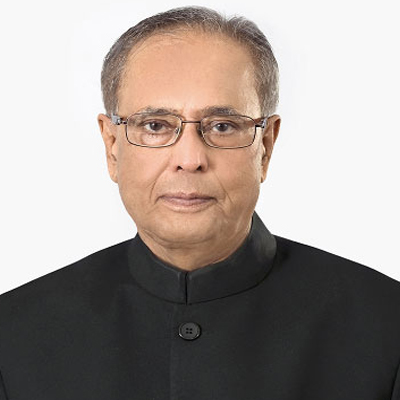
    New Delhi: President Pranab Mukherjee said today that the media in India has always supported the freedom of individuals to speak out as per his or her conviction and saluted the media for not compromising on freedom of speech and expression.


    He was speaking after receiving the first copy of the English version of the book The Eighth Ring, the autobiography of late K M Mathew, former editor and publisher of Malayala Manorama. The book was released by Mammen Mathew, Chief Editor, Malayala Manorama. Eminent Jurist & former member of Parliament  Fali S Nariman and Dr. Prannoy Roy, Chairman NDTV spoke on the occasion. 

    The President said the history of Indian journalism is intertwined with that of the freedom movement. From the time of Hickey’s Gazette which came out during the days of the East India Company, the media has highlighted problems faced by the common people. Many national leaders founded newspapers or were closely associated with it during the freedom struggle.


    Relatng an interesting story from history, he said Jawaharlal Nehru wrote in October 1937 in The Modern Review of Calcutta under a pseudonym and criticised himself for having dictatorial tendencies. People wondered who had dared criticize Nehru but it was only much later that people realised Nehru himself had written the article in order to encourage criticism. 

    The President expressed confidence that the media in India has always fought authoritarian tendencies. He was confident they would be able to succeed in meeting all modern day challenges, including those posed by techonolgy. He complimented the Manorama Group for treating journalism as a mission and commitment to society.

    The President said he knew Mathew personally from the early days of his public life. He has been familiar with the Malayala Manorama Group for long and attended the 125th year celebrations in Kottayam in 2013. The Malayala Manorama group has established a significant presence in the media world with numerous publications, TV and Radio channels. He was particularly fond of the Manorama Year Book and used to eagerly await the arrival of the Bengali edition every year. 

  • Balaji quintuples y-o-y PAT for Q2-2014; EBIDTA more than doubles

    Balaji quintuples y-o-y PAT for Q2-2014; EBIDTA more than doubles

    BENGALURU: Balaji Telefilms Limited (BTL), the blue-eyed entity of the Indian media and entertainment industry, reported consolidated PAT of Rs 12.33 crore for Q2-2014, more than quintuple (506 per cent) the Rs 2.43 crore reported for Q2-2013 and  more than triple (342 per cent) of the Rs 3.61 crore for Q1-2014.


    The improved performance was driven essentially by its motion picture operations. BTL reported EBIDTA for Q2-2014 at Rs 10.95 crore, more than double the Rs 4.63 crore for Q2-2013. BTL’s EBIDTA for Q1-2014 was negative at Rs (-5.02) crore


    The company’s consolidated revenue from operations for Q2-2014 at Rs 194.16 crore was more than triple (329 per cent) of the Rs 58.96 crore for Q2-2013 and more than double the Rs 84.04 crore for Q1-2014.


    Let us look at the other figures reported by BTL for Q2-2014


    BTL has reported revenue from three streams: Balaji Telefilms (Television content production-Balaji); Motion Pictues – Balaji Moption Pictures Limited (BMPL) and BOLT Media Limited (BOLT).


    Its television content production stream reported revenue of Rs 30.33 crore for Q2-2014, which was 33 per cent higher than the Rs 22.80 crore for Q1-2014. Rs 32.32 crore were spent in Q2-2014 towards cost of production, acquisition and cost of telecast fees, staff cost, depreciation and other expense resulting in loss from operations of Rs (-1.99) crore. Other Income brought in Rs 3.02 crore and hence a PAT of 0.804 crore.


    BMPL with revenue of Rs 164.05 crore for Q2-2014, which was more than double (2.66 times) the Rs 61.67 crore for Q1-2014. Expense totaling Rs 152.23 crore resulted in a PAT of Rs 11.81 crore.


    BOLT had revenue of 0.27 crore and total expense of 0.59 crore resulting in a net loss of Rs (-0.32) crore.

  • Q2-2014 HT Media PAT up due to subsidiary stake sale: Radio Business PBIT up 28%

    Q2-2014 HT Media PAT up due to subsidiary stake sale: Radio Business PBIT up 28%

    BENGALURU: Despite slightly lower consolidated income from operations in Q2-2014 at Rs 534.65 crore, as compared to the Rs 540.93 crore in Q1-2014, Indian media group HT Media Limited (HT Media) reported a 22.5 per cent jump in PAT for Q2-2014 at Rs 58.18 crore (after minority interest) as compared to the Rs 47.49 crore in Q1-2014 and 75 per cent higher than the Rs 33.31 crore for Q2-2013. HT Media had reported group consolidated income from operations of Rs 510.87 crore for Q2-2013.


    Excluding the Rs 38.21 crore from the proceeds of the sale of HT Media’s stake in HT Burda, PAT for Q2-2014 would be lower than the PAT for the immediate preceding quarter or the corresponding quarter of last year.


    Note: An amount of Rs 38.21 crore representing the difference between (i) the net proceeds of HT Media’s sale of equity shares held in a subsidiary company HT Burda amounting to Rs 59.91 crore and (ii) the carrying amount of assets of HT Burda less liabilities in the consolidated financial statement amounting to Rs 21.7 crore has been recognised as other income in the company’s financial statement.


    HT Media’s Fever 104 FM has four radio stations in Mumbai, Bangalore, Kolkata and Delhi. Its Radio, Broadcast and Entertainment segment’s PBIT at Rs 4.69 crore for Q2-2014 was 27.8 per cent more than the Rs 3.67crore for Q1-2014 and almost double (1.97 times) the Rs 2.38 crore PBIT for Q1-2013.


    The company claims that its advertising revenue from Printing of Newspapers and Periodicals ‘ segment increased to Rs 386.8 crore for Q2-2014 from Rs 364 crore in Q2-2013, primarily driven by increase in advertising yields and volumes. It also claims a 14 per cent increase in circulation revenue of print segment to Rs 64.2 crore in Q2-2014 from Rs 56.3 crore during the corresponding period last year, driven by increase in realisation per copy.


    Let us look at the other Q2-2014 figures reported by HT Media


    HT Media’s total income for Q2-2014 at Rs 591.6 crore was 11 per cent more than the Rs 535.25 crore for Q2-2013 and 4.1 per cent more than the Rs 568.49 crore for Q1-2014, mainly on account of higher other income due to HT Media’s sale of its stake in a subsidiary company HT Burda in the current quarter.


    Other Income at Rs 56.95 crore for Q2-2014 was more than double (2.34 times more) the Rs 24.38 crore in Q2-2013 and also more than double (2.1 times more) the Rs 27.56 crore for Q1-2014. However, once the proceeds of HT Media’s sale of its stake in its subsidiary HT Burda of Rs 38.21 crore is excluded, Q2-2014 other income would be lower than the other income for Q1-2014 or Q2-2013.


    HT Media’s total expense for Q2-2014 at Rs 492.61 crore was about three per cent more than the Rs 478.57 crore for Q2-2013 and about 1.6 per cent more than the Rs 484.81 crore for Q1-2014.


    A major chunk of the expense is the cost of raw materials consumed in the case of HT Media. It spent Rs 189.4 crore for Q2-2014 which was three per cent lower than the Rs 195.25 crore in Q2-2013, but 10.3 per cent more than the Rs 171.57 crore in the immediate preceding quarter (Q1-2014).


    Another major chunk of expense is Other Expense in the case of HT Media. Other Expense at Rs 180.28 crore for Q2-2014 was 15.5 per cent more than the Rs 156.04 crore for Q2-2013, but about 0.8 per cent lower than the Rs 181.75 crore for Q1-2014.


    HT Media’s Employee Benefit expense for Q2-2014 at Rs 106.47 crore was three per cent more than the Rs 103.41 crore for Q2-2013 and 0.8 per cent more than the Rs 105.52 crore for Q1-2014.


     Segment Results:


    HT Media reports revenue from four streams – Printing of Newspapers and Periodicals segment; Broadcast and Entertainment segment; Digital segment and from Unallocated segment.  


    Revenue from HT Media’s Printing of Newspapers and Periodicals segment at Rs 495.85 crore for Q2-2014 was 3.4 per cent higher than the Rs 479.18 crore for Q2-2013, but 1.1 per cent lower than the Rs 504.68 crore in Q1-2014.


    PBIT for Printing of Newspapers and Periodicals segment for Q2-2014 at Rs 59.48 crore was 23.3 per cent higher than the Rs 48.24 crore for Q2-2013, but 27 per cent lower than the Rs 82.46 crore for the immediate preceding quarter (Q1-2104).


    Revenue from Radio, Broadcast and Entertainment segment for Q2-2014 at Rs 22.16 crore was 11.2 per cent more than the Rs 19.92 crore for Q2-2013, and marginally higher (3.5 per cent) than the Rs 21.41 crore for Q1-2014.


    As mentioned above, Its Radio, Broadcast and Entertainment segment PBIT at Rs 4.69 crore  for Q2-2014 was 27.8 per cent more than the Rs 3.67 crore for Q1-2014 and almost double (1.97 times more) than the Rs 2.38 crore for Q1-2013.


    Results from the Digital Segment and the Unallocated segment are negative. Please see the attached financial statements.


    HT Media chairperson and editorial director Shobhana Bhartia said, “We are glad to report a stable growth in revenue and profit this quarter, despite continued uncertainty in the macroeconomic environment, both in India, and elsewhere. Our growth initiatives in Mumbai and UP continue to deliver results, and all our digital businesses have shown robust growth. We are confident that our diversified business model, established brands and sustained focus on cost reduction will continue to create value for all stakeholders and also show better results as the macroeconomic environment improves.”

  • American Tourister launches its brand campaign with an Indian twist

    American Tourister launches its brand campaign with an Indian twist

    MUMBAI: American Tourister has introduced its brand new campaign ‘Take On The World’. The campaign highlights the brand’s fresh, energetic youthful appeal, and showcases the technology behind its new Vivolite range.


    Created by JWT Hong Kong, the Indian edition of this global TVC has been specifically enhanced with Indian background music with an aim to connect with a wider audience.  


    “‘Take On the World’ is meant to evoke that rush of excitement we feel when we’re about to go on a great trip, especially from the perspective of today’s young and optimistic travelers who are eager to see the world,” says JWT chairman Asia Pacific creative council Lo Sheung Yan.


    The high-paced TV commercial brings to life the brand’s fun, lighted-hearted and colourful attitude, while highlighting the durability of the stylish, lightweight Vivolite. The campaign, which was launched in Korea in July and will roll out across Asia Pacific through the rest of the year, also features a series of print ads that show a mix of global landmarks and young travellers from different parts of the world.  


    “Take on the World” concept captures the fun, young and international spirit of American Tourister. With this campaign we have attempted to break the Indian media clutter with some unconventional music. It’s a catchy, fun music score that resonates the brand personality also. We believe it will help us reach out to a larger audience in India and help with better brand recall,” says, Samsonite South Asia director marketing Anushree Tainwala.


    The 2013 “Take on the World” campaign is a sequel to the 2012 campaign, and marks a landmark for American Tourister, which celebrates its 80th anniversary this year.

  • Lex Witness Presents The 2nd Annual Edition of Media, Advertising & Entertainment Legal Summit

    Lex Witness Presents The 2nd Annual Edition of Media, Advertising & Entertainment Legal Summit

    Lex Witness- India’s 1st Magazine on Legal and Corporate Affairs today hosted a well-conceptualized The 2nd Annual Edition of Media, Advertising & Entertainment Legal Summit (MAELS) 2013 at Hotel Le Mridien in New Delhi. The daylong summit saw over a 100 proficient industry veterans including media professionals, Law Firm partners and teams, In House Counsels and stakeholders engaging in an interactive discussion on increasing business complexities being faced by the Media, Advertising and Entertainment sectors rising due to changes in and regulations.


    In an official message sent for the initiative;


    Kapil Sibal, Honble Minister of Law and Justice, shared that the Indian Media, Advertising and Entertainment industry plays a pivotal role in India’s economic growth through its magnificent channel of reach. However, the industry has been subject to various strides of regulations which affect the businesses and require discussions and debates to understand their impact. Further Mr. Kapil Sibal conveyed his greetings and best wishes for the success of the Summit.


    With all the media and legal professionals under one roof, Mr. Amarjit Singh Chandhiok, Additional Solicitor General of India felicitated Dr. Lalit Bhasin, President, SILF; for his outstanding contributions to the legal industry of India. Mr. Bhasin is one of the most respected authorities on legal matters in India and has recently completed 50 years as a successful personality in the fraternity.


    Over the past few years, the alignment of entertainment, information and telecommunication have increasingly affected India’s Media, Advertising and Entertainment business. According to the latest CII-PwC Industry report, release on 13th Sept 2013, India’s Entertainment & Media sector is expected to exceed INR 224,500 Cr growing at a CAGR of 18% from 2012 to 2017. However, despite of the growth patterns the M&E fraternity is witnessing various regulations and grey areas in the law revealing a different set of challenges to its members.


    Lack of clarity on the practical and commercial implications of the amended Copyright Act 2012, absence of direction on the issue related to royalty, its payment and distribution has left all the industry in a state of perplexity. Also, the regulatory changes have made it difficult for the existing business ecosystems to sustain with Telecom Regulatory Authority of India’s (TRAI) ad cap mandate, high carriage fees and below par subscription revenues. Furthermore, the process of regulation regarding content and over objectionable advertisement for TV, Radio and Internet too falls under grey area and has no apex body to monitor or dictate guidelines.


    Speaking on the occasion, PBA Srinivasan, Editor-in-Chief, Lex Witness said, Though the Indian media and entertainment industry is eyeing robust growth, yet there are legal challenges affecting the big business. Areas like contract management and arbitration in media fraternity, Technological and IPR issues associated with entertainment and advertising sectors require special attention.


    The summit gave a stage to all the panelists to share their expert viewpoints on implications of The Copyright Amendment Act 2012, its impact on business due to Royalty Payments, Change in Tax Laws, Business and Legal solutions for Performers, Authors, Producers, Broadcasters and Content Aggregators, Regulation of content and Advertisement Perspective and views from Regulators, Current challenges and issues, Proposed amendments to Cinematograph Act and impact, Carriage and Distribution Regulation Revenue squeeze with ad caps, Resolution on current differences between LCO, MSO & Broadcasters, Competition Act Implication for Media and Entertainment Industry, Contracts and Dispute Resolution, Arbitration Clauses and Industry Practices and other regulations passed.


    The expert speaker’s panel at MAELS 2013 included, Vir Sanghvi, Member, BCCC Shailesh Shah, Secretary General, IBF Nishith Desai, Founder & Managing Partner, Nishith Desai Associates Amarjit Singh Chandhiok, Additional Solicitor General of India, Supreme Court of India Vineet Magan, Regional Tax Manager, BBC Gowree Gokhale, Partner, Nishith Desai Associates Abhishek Malhotra, Partner, TMT Law Practice Avnindra Mohan, President (Legal & Regulatory), Zee Network Ajay Thomas, Registrar, LCIA India Amit Arora, Executive Vice President, IndiaCast Media Distribution Private Limited Narayan Ranjan, Chief Financial Officer, Viacom 18 Anil Lale, Associate Vice President Legal, Viacom 18 Lalit Bhasin, President, SILF Preet Dhupar, CEO, BBC Zameer Nathani, Head Legal, Balaji Telefilms Limited and Balaji Motion Pictures Limited Ayan Roy Chowdhury, Senior Manager Legal, Sony Entertainment Television Rajesh Simhan, Head International Tax Practice, Nishith Desai Associates Ashish Chandra, Head Media & Technology, Reliance Industries Rajiv Khattar, President Projects, Dish TV M.M. Sharma, Head-Competition Law and Policy, Vaish Associates Advocates Kunal Rajpal, AVP Legal & Secretarial, Viacom 18 Kaushik Moitra, Partner, TMT Law Practice


    Commenting on the significance of the Summit, Shyam Grover, Group Editor & CEO, Lex Witness said, The Indian Media & Entertainment industry is essentially being driven by augmented digitization, growth of regional media and emergence of new media for content virality. But at each stage, the industry is facing challenges affecting their future growth. MAELS 2013 is our attempt to bring the thought leaders together to interact and confer on these issues and develop their legal and business response strategies.


    The 2nd Annual MAELS 2013 initiative was supported by IBF as Principal Partner, SEPC as Official Summit Council, TMT Law Practice as Gold Partner, Nishith Desai Associates as Legal Partner, Vaish Associates Advocates as Associate Partner, Deepak Sabharwal & Associates as Kit Sponsor, Blackpen LCC as Litcom Partner DMAI, SILF, LCIA India, ICCA as Fraternity Partners, Ad Gully as digital Partner, Lawyers Club India as Online Media Partner and Indian Law Journal, Indian National Bar Association, NAI Press, IOD as Supporting Partners.

  • Balaji Telefilms Q1-2014 revenue more than doubles Q1-2013, Q4-2013

    Balaji Telefilms Q1-2014 revenue more than doubles Q1-2013, Q4-2013

    BENGALURU: The blue-eyed entity of the Indian media and entertainment industry, Balaji Telefilms Limited (BTL) reported consolidated revenue of Rs 84.03 crore for Q1-2014, more than double (up by 131 per cent) the revenue of Rs 36.37 crore in Q1-2013. BTL’s Q1-2014 consolidated revenue was also more than double (up by 117 per cent) the revenue of Rs 38.71 crore for Q4-2013.


    Let us take a look at BTL’s other figures for Q1-2014


    Despite a negative EBIDTA of Rs 5.02 crore, BTL’s other income of Rs 12.86 crore resulted in a PAT of Rs 3.62 crore for Q1-2014, almost triple (up by 179 per cent) the PAT of Rs 1.39 crore for Q1-2013, and more than sixfold the Rs 0.5143 crore PAT in Q4-2013. BTL’s EBIDTA for Q1-2013 was Rs 0.1861 crore for Q1-2013 and a negative EBIDTA of Rs (-4.5) crore for Q4-2013.


    The company attributes the EBDITA loss in Q1-2014 of Rs 5.02 crore to discontinuance of television serials and deferment of non-theatrical revenues.


    BTL’s expenditure towards marketing and distribution of television serials and movies for Q1-2014 of Rs 80.22 crore was up by 163 per cent (more than double) the Rs 38.56 crore during Q1-2013 and was 134.4 per cent (again more than double) more than the Rs 34.22 crore in Q4-2013.


    BTL’s overhead expenditure for Q1-2014 at Rs 9.25 crore was 17 per cent more than the Rs 7.91 crore for Q1-2013, but 18.22 per cent lower than the Rs 11.31 crore in Q4-2014.


    Breakup of figures from Television, Balaji Motion Pictures Limited (BMPL) and Bolt Media Limited (Bolt) for Q1-2014


    Including other operating income, Television reported Rs 22.40 as total operating income for Q-2014, Rs 18.34 crore was spent towards production, acquisition marketing and distribution, staff cost, depreciation, and other expenses were Rs 7.12 crore, resulting in a loss from operations of Rs (-3.06) crore. Other Income of Rs 12.86 crore in Q1-2014 resulted in a PAT of Rs 7.43 crore.


    The company says that it had lower revenues from Television on account of discontinuance of two shows and it expects commissioned revenues to drive both volume and realisation.


    BMPL reported total operating income of Rs 61.67 crore for Q1-2014. Expenditure towards production, acquisition marketing and distribution was Rs 61.58 crore, staff cost, depreciation and other expenses were Rs 3.65 crore, resulting in a loss of Rs 3.57 crore for BMPL.


    The company says that actual BMPL EBDITA would be Rs 3.52 crore if marketing and distribution expense of Rs 7.02 crore for two upcoming movies Lootera and Once Upon Ay Time In Mumbai Dobaara is excluded.


    Bolt reported revenue of Rs 0.8289 crore for Q1-2014. Expenditure towards production, acquisition marketing and distribution was Rs 0.6691 crore and staff cost, depreciation and other expenses were Rs 0.3787 crore, resulting in a loss of Rs 0.219 crore from Bolt.


    Click here for Balaji Telefilms Limited – Financial Report Q1 FY-2014


    Click here for Balaji Telefilms Limited – Investor Presentation Q1
    FY-2014

  • TV18 results show upturn for Q1-2014

    TV18 results show upturn for Q1-2014

    BENGALURU: Indian media and entertainment company TV18 Broadcast Limited (TV18) turned in a profit of Rs 5.9 crore after tax for the quarter on the back of a significantly deleveraged balance sheet as compared to a loss of Rs 23.5 crore in the previous year.


    Income from operations for Q1-2014 stood at Rs107.37 crore, with other income contributing another Rs 2.25 crore to arrive at a net operating income of Rs109.62 crore, lower than the net operating income of Rs136.91 crore reported for Q1-2012 and significantly lower than the net operating income of Rs147.06 crore reported for Q4-2014. TV18’s net profit was Rs 8.91crore for Q1-2014 as against a net loss of Rs 7.79 crore for Q1-2013, but much lower than the net profit of Rs 20.95 crore for Q4-2013.


    Let us take a look at the unaudited Q1-2014 figures


    Q1-2014 revenues from its media operations stood at Rs 383.4 crore, while those from its motion picture business were Rs 18.8 crore. Reduction of inter-segmental revenues of Rs 6 crore resulted in reported revenues for the television and motion pictures business, including IndiaCast revenues of Rs 147.9 crore (75 per cent for the current year) at Rs 396.2 crore for the quarter.


    Reported operating profit for Q1-2014 stood at Rs 23.8 crore, up 57 per cent over the Rs 15.5 crore during the corresponding quarter of the previous year.


    Overall, the company’s motion picture business dragged operating profits down. The company says that the losses from the Motion Pictures business were primarily on account of the tepid audience response received by its movie Bombay Talkies.


    In the current quarter, its release Bhaag Milkha Bhaag has been a critically acclaimed, runaway hit.


    For Q1-2014, motion picture business with revenues of Rs 18.8 crore reported an operating loss of Rs 8.4 crore, bringing down the operating profit of Rs 14.7 crore from the News and Entertainment segment and the Rs 15.2 crore operating profit from the Entertainment – Television business and the Rs 2.3 crore (75 per cent current year) from Indiacast.


    Comparatively, losses from the Motion Picture business were much lower at Rs 2.4 crores during Q1-2013, while during Q4-2013, the Motion Picture business had actually returned a profit of Rs 3 crore during the previous quarter (Q4-2013).


    Advertising Revenues grew 5.5 per cent year for Q1-2015 at Rs 227.5 crore as compared to Rs 215.6 crore the company reported in Q1-2013, but were significantly lower by Rs 50 crore (18 per cent) than the Rs 277.5 crore the company reported for the pervious quarter (Q4-2013).


    Net Distribution Income grew 32 percent sequentially to Rs 34.9 crore for Q1-2014, swinging from a loss of Rs 16 crore during Q1-2013 and higher than the Rs 26.4 crore reported during the previous quarter Q4-2013.


    IndiaCast is a 50-50 joint venture between TV18 and Viacom18 and has been consolidated as such. IndiaCast came into operation on 1 July 2012 and as such, is consolidated only from Q2 FY13. Also for the previous year it was consolidated as a 100 per cent subsidiary. TV18 moved to the Net Distribution Income methodology of accounting for carriage and subscription from Q2FY13. Q1FY13 results have been regrouped to ensure comparability. For Q1FY13, gross subscription and carriage numbers are included in the audited results of FY13. From the current year; we have stopped reporting new operations separately given their vintage. Segmental numbers are based on management accounts and are not audited.


    Effective 1 July 2012, IndiaCast has been managing TV18’s and Viacom18’s distribution operations. operating profits Net Distribution Income may be understood as subscription revenues earned by the company minus carriage/placement fees or any promotions/commission paid.


    News and Infotainment Operations

    The summary for this segment shows three streams – General News, Business News and Infotainment (AETN18). For Q1-2014, operating profits from Business News of Rs 17.5 crore were eroded by the Rs 1.4 crore loss reported by General News and another Rs 1.4 crore loss by Infotainment to arrive at a net operating profit of Rs 14.7 crore.


    Overall revenues for this segment were lower at Rs 119 crore for Q1-2014 as compared to the Rs 127 crore for Q1-2013 and significantly lower (by 25 per cent) than the Rs158.3 crore during the last quarter (Q4-2013). Even the revenues from the Business News stream were significantly lower (by 38.6 per cent) at Rs 57.3 crore for Q1-2014 as compared to the Rs 93.3 crore for Q4-2013, but were about six per cent higher than the Rs 54.2 crore reported for the corresponding quarter of the previous years (Q1-2013).


    General News and Infotainment streams revenues were lower for Q1-2014 at Rs 55.2 crore (General News) and Rs 6.5 crore (Infotainment) as compared to the Rs 62.1 crore (General News) and Rs 10.7 crore (Infotainment) for Q1-2013. During Q4-2013, General News reported revenues of Rs 56.1 crore and Infotainment Rs 8.9 crore.


    Entertainment Business


    Q1-2014 revenues for Viacom 18 stood at Rs 408.3 crore as compared to the Rs 340.8 crore for Q1-2013 and Rs 404.8 crore for Q4-2013. Operating profits stood at Rs 15.2 crore as against Rs 2.4 crore in Q1-2013.


    Broadcasting revenues for Q1-2014 were Rs 303.6 crore. The company says that


    operating profits from its broadcasting business grew by 35 per cent over the previous year.


    ETV News and Entertainment (Non-Telugu)


    Figures reported on a 100 per cent basis for this stream are as follows:


    ETV News revenues for Q1-2014 were Rs 27.8 crore with EBITDA of Rs 8.9 crore while revenues from ETV Entertainment stood at Rs 57.5 crore and a negative EBITDA of Rs 42.5 crore.


    Said Network 18 managing director Raghav Bahl, “The macroeconomic environment continues to be challenging and growth prospects remain uncertain. Given this backdrop, our broadcasting operations turned in a steady performance aided by the roll out of digitisation in 42 cities. However, there were pockets of weakness and we are committed to improving segments that are not meeting expectations. We have a strong portfolio of channels and remain confident of unlocking their value for our stakeholders.”


    Added Group CEO B Saikumar, “We continue to turn in steady operating profits from our television businesses. Motion pictures have seen losses this quarter and the management is confident of stemming them in the immediate term. While our news and infotainment businesses have seen distinct softness in advertising, our entertainment businesses led by Colors have performed well on this front. Net Distribution Revenues from IndiaCast are on a strong growth trajectory and we continue to be enthused by its growth potential. The industry is going through several important changes on both the advertising and distribution fronts. We believe that these changes are positive and will lead to a stronger industry structure. We remain confident of delivering a strong year ahead.”