Tag: Indian media industry

  • Jaideep Gandhi: “The return on experience is going to be really high” at Goafest 2025

    Jaideep Gandhi: “The return on experience is going to be really high” at Goafest 2025

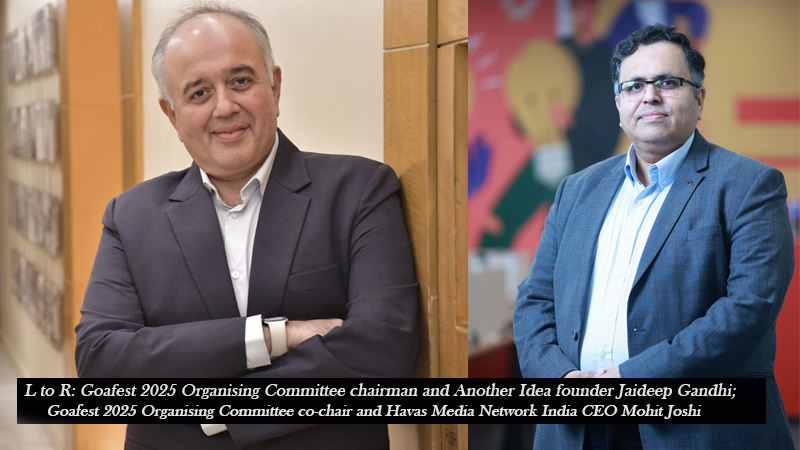
    MUMBAI: The sunny sands of Goa are abuzz again, and this time the buzzword is “experience”. South Asia’s iconic advertising and media festival, Goafest 2025 kicks off from 21-23 May at the luxurious Taj Cidade de Goa – Heritage and Horizon. Steering clear of clichés, the festival theme boldly invites participants to “Ignite Creativity”. As Goafest 2025 Organising Committee chairman and Another Idea founder Jaideep Gandhi enthusiastically put it, “the return on experience is going to be really high”.

    What sets Goafest 2025 apart is its immersive ‘Goafest Village’ concept. Inspired by global festivals like Cannes Lions, the village sprawls across the heritage venue, packed with parallel-running sessions, interactive zones and entertainment spots. Gandhi explains, “The objective was to make it inclusive, hosting parallel sessions, entertainment, engagement, and sports”.

    Adding spark to the sandy shores, the festival introduces two fresh initiatives—Ad Plays and Goa Fresh. Goafest 2025 Organising Committee co-chair and Havas Media Network India CEO Mohit Joshi highlights, “Ad Plays integrates wellness activities like pickleball, yoga and a walkathon. Goa Fresh brings in students from top institutes, offering them mentorship and industry insights”.

    Goafest 2025 promises a dynamic blend of content with over 60 illustrious speakers delivering more than 35 sessions and 20 masterclasses. Among the notable figures are Rishad Tobaccowala from Publicis, Youri Guerassimov of Marcel Worldwide, Hindi cinema’s Kareena Kapoor, cricketer Gautam Gambhir, and pioneering AI film director Vivek Anchalia. “Almost 25-30 speakers are clients this year, representing top brands like Spotify, Tata Motors and HUL”, Gandhi notes proudly.

    Reflecting on this mammoth event, Joshi stresses that the real charm lies in its community-driven spirit, “We have one vision—to grow Goafest together. It’s not ‘you’ or ‘me,’ it’s ‘us’”.

    Another record-breaking highlight is the ABBY Awards 2025, powered by The One Show, boasting an unprecedented 4,076 entries from 233 organisations. As Gandhi succinctly puts it, “Every year the challenge becomes more interesting. It’s all about continuously improving”.

    Compared to the previous edition in Mumbai, which revolved around adaptability, this year’s festival pushes proactive transformation through meaningful experiences. The integration of sports, wellness, student mentorship, and the vibrant Goafest Village ensures a unique, memorable celebration.

    “We spend six months organising Goafest, and each year we aim to outdo ourselves”, shares Gandhi. Joshi adds, “We take lessons from every global event and bring those insights home, aiming for improvement every year”.

    Indeed, with creativity at its core and collaboration in its spirit, Goafest 2025 is ready to ignite fresh perspectives, cement new connections, and redefine industry standards on the idyllic Goan coast.

  • Sun TV Q3 profits plunge to Rs. 347 crore-Has the network lost Its signal?

    Sun TV Q3 profits plunge to Rs. 347 crore-Has the network lost Its signal?

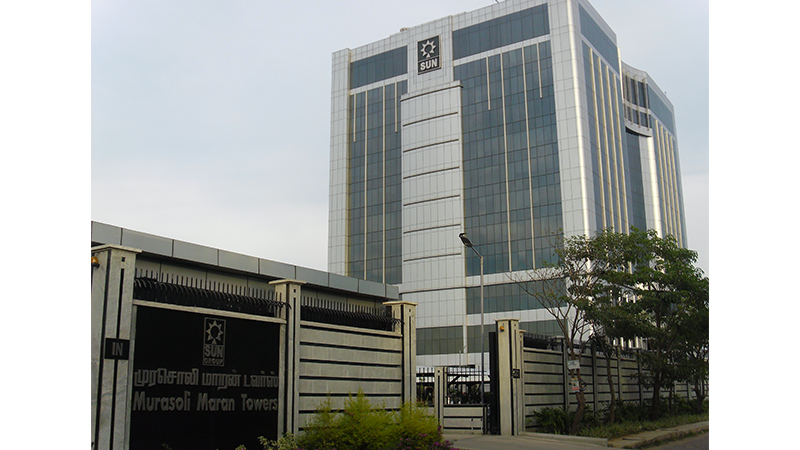
    MUMBAI: Sun TV Network, once the prime-time champion of regional television, is now facing more reruns than fresh hits. The third quarter of FY25 has been less ‘superhit serial’ and more ‘filler episode’—with revenue, EBITDA, and profits all taking dramatic dives. While audiences may still be watching, advertisers have clearly flipped the channel, leaving Sun TV’s earnings on mute.

    Is this a brief ad break before the comeback, or is Sun TV headed for a season finale?

    Standalone Results

    Sun TV’s Q3 FY25 numbers resemble an ageing sitcom—still on air, but struggling for ratings. The company reported total income of Rs 927.66 crore, a decline from Rs 1,014.81 crore in Q3 FY24. The advertisement revenue stood at Rs 332.17 crore, sliding from Rs 355.43 crore last year. Clearly, advertisers are swiping right on digital and left on traditional TV.

    Subscription revenue, however, managed a 2.03 per cent growth, reaching Rs 434.51 crore—a small consolation prize in a sea of red ink. Meanwhile, EBITDA took a nosedive to Rs 432.13 crore, down from Rs 573.76 crore in Q3 FY24, reflecting higher operational costs and the ever-shrinking TV margins.

    Profit before tax (PBT) slipped to Rs 454.61 crore, down from Rs 591.31 crore last year. The real kicker? Profit after tax (PAT) dropped to Rs 347.17 crore, a steep decline from Rs 437.34 crore in Q3 FY24. A 20.6 per cent drop in net profits is enough to make any investor reach for the remote control.

    Consolidated Results

    On a consolidated level, total income stood at Rs 967.56 crore, marking a drop from Rs 1,058.66 crore in Q3 FY24. Revenues from operations were Rs 827.56 crore, a slump compared to Rs 923.15 crore in the corresponding quarter last year.

    The profit before tax on a consolidated basis stood at Rs 473.87 crore, down from Rs 611.85 crore in Q3 FY24. The after-tax profits also followed the downward trend, clocking in at Rs 363.26 crore, compared to Rs 453.09 crore in the previous year’s Q3.

    While cricket franchise revenues from Sunrisers Hyderabad and Sunrisers Eastern Cape offered some cushion, their combined contribution stood at a modest Rs 0.11 crore this quarter, a stark contrast to Rs 8.98 crore in Q3 FY24. The cost of maintaining these franchises remains high at Rs 1.09 crore this quarter, squeezing margins further.

    Sun TV Network’s board has approved an interim dividend of Rs 2.50 per share, a 50 per cent payout on a face value of Rs 5.00 per share—a small consolation prize for investors watching their returns shrink faster than a bad soap opera plot twist. While this cash giveaway might sweeten the deal, will it be enough to distract from the sinking profits?

    Meanwhile, ad revenue has taken a nosedive, as brands shift their budgets towards digital darlings like YouTube and OTT platforms. Is Sun TV stuck in an old-school rerun while the world streams ahead? Or does it have one last prime-time comeback left in its script?

    With advertising dollars migrating to digital, subscription revenues becoming the lifeline, and cricket franchise earnings proving inconsistent, Sun TV has its work cut out. Will it manage to reinvent itself, or are we witnessing the beginning of a long-term fade-out? 

  • India Today Group sees revenue fall amid challenging market conditions

    India Today Group sees revenue fall amid challenging market conditions

    Mumbai: When a titan stumbles, the tremors are felt far beyond its own walls. Investor confidence wavers, markets shift uneasily, and a once-unshakeable reputation finds itself on thin ice. Such is the case for the India Today Group, which, in a jarring Q2 FY25 performance, posted steep declines in both revenue and profits. This downturn isn’t just a dip in the numbers; it’s a stark reminder that even the most formidable institutions can struggle against economic forces and the relentless pressure of an ever-changing media landscape. Despite efforts to trim costs and adapt, India Today’s latest results signal not progress, but troubling stagnation.

    For the quarter ending September 2024, the Group’s revenue plummeted to Rs 206.77 crores from Rs 311.79 crores in the preceding quarter, marking a sharp 33.7 per cent drop. This contraction becomes more severe when juxtaposed with the Rs 213.86 crores reported in the same quarter last year. Despite moderate operational adjustments, production costs grew by over 3 per cent, reaching Rs 24.35 crores compared to Rs 23.62 crores a year ago. Employee expenses also remained stubbornly high at Rs 81.41 crores, reflecting a challenging balance between workforce retention and profitability.

    Net profit for the quarter dwindled to Rs 8.35 crores, representing a staggering decline from Rs 51.43 crores reported in Q1 FY25. This downward spiral in profitability is exacerbated by a combination of rising costs and a limited revenue base, suggesting that the current strategic approach may lack the flexibility needed to weather industry-wide upheaval. Even more concerning is the dwindling cash flow, with net cash inflows from operations at a mere Rs 88.78 crores, down significantly from previous levels, limiting future investments and expansion.

    Television and media operations, traditionally a strong revenue stream, reported Rs 202.85 crores, down from Rs 309.22 crores in the previous quarter, reinforcing an overall industry-wide struggle to maintain viewership and advertiser interest. Radio broadcasting, a secondary but growing segment, failed to offset this decline, posting a minor increase to Rs 3.92 crores in Q2 FY25, underscoring limited diversification.

    While India Today Group continues to hold a respected position within the media industry, these financial indicators highlight urgent structural and strategic reevaluation. Moving forward, the Group must navigate the intricate dance of cost control and technological investments, all while addressing audience shifts in an age of digital-first content.

  • Dish TV records 11.2% revenue growth for Q1-2014; higher Arpu’s, lower losses

    Dish TV records 11.2% revenue growth for Q1-2014; higher Arpu’s, lower losses

    BENGALURU: India’s largest DTH services provider Dish TV India Limited (Dish TV) reported first quarter fiscal 2014 standalone operating revenues of Rs 578.4 crore, recording 11.2 per cent growth over the Rs 519.95 crore operating revenues it clocked during Q1-2013. Also, its Q1-2014 standalone revenues were higher by 4.1 per cent than the Rs 555.4 crore the company reported for Q4-2013.


    Let’s take a look at the other figures for Q1-2014


    EBITDA of Rs 121.7 crore was lower by around 22 per cent for Q1-2014 as against EBITDA of Rs 156.6 crore the DTH provider reported for Q1-2013. EBITDA margin for Q1-2014 stood at 21 per cent. It had reported a 29.9 per cent margin for Q1-2013. However, Dish TV’s net loss was down to Rs 30.4 crore as compared to Rs 32.3 crore in the corresponding quarter last fiscal (Q1-2013) and Rs 43.6 crore in the previous quarter (Q4-2013).


    Dish TV’s primary expenses include cost of goods and services, personnel cost, administrative cost, advertisement expenses and selling expenses. Expenditure at Rs 456.7 crore was significantly higher by around 25 per cent than the Rs 364.4 crore the company reported for Q1-2013 and 4.9 per cent more than the Rs 435.4 crore it had reported for the previous quarter (Q4-2013).


    Dish TV’s advertising expenses for Q1-2014 at Rs 30.7 crore (which were 5.7 per cent of revenues of Q1-2104) were more than double (127.4 per cent higher) the Rs 13.5 crore during Q1-2013, and 84.9 per cent higher than Rs 16.6 crore during Q4-2013. It’s selling and distribution expenses during Q1-2014 at Rs 59.3 crore were also higher by 14.9 per cent than the Rs 51.6 crore during Q1-2013 and 2.9 per cent more than the Rs 57.6 crore in Q4-2103.


    Dish TV saw a gain of around two lakh in net number of subscriptions during Q1-2014. It had added 5.04 lakh subscriptions during Q1-2013. Subscription revenues for Q1-2014 were up 15.9 per cent at Rs 528 crore as compared to Rs 455.6 crore during Q1-2013 and higher by 5.6 per cent than the subscription revenues in Q4-2013.


    ARPU for the quarter increased 5.1 per cent to Rs 165 resulting in a 15.9 per cent y-o-y increase in subscription revenues. Dish TV reported a free cash flow of Rs 48.4 crore for Q1-2014 as compared with Rs 22 crore in Q4-2014 and Rs 65 crore for FY-2013.


    Dish TV chairman Subhash Chandra said, “In an ever changing world, the Indian media industry is keeping pace. Digitisation, which happens to be the most talked about, has still a lot to achieve even in the digitized towns and cities. Though it is comforting to see the evolution towards a transparent distribution environment, the distribution industry needs to act fast to leverage the opportunity to weed out the long standing inefficiencies in the system.”


    “Too much focus on box seeding has diluted the addressability part of the digitisation mandate. In such a scenario, Dish TV’s focus on quality additions is a counter-intuitive move which has started delivering encouraging results. The first quarter saw the company deliver strong free cash flows while maintaining healthy customer retention and investing in brand equity,” added Chandra.


    Dish TV managing director Jawahar Goel said, “In line with our expectations, pack price hikes and improved subscriber quality in the recent months resulted in a strengthened ARPU. On the expenses front, higher investment in marketing, brand building and seasonal sports driven content along with the impact of a weak rupee on dollar denominated costs, resulted in a sequentially flat EBITDA margin.”


    “We remain committed to add quality subscribers who would be value accretive to the business. Our successful initiation of a series of entry level price hikes, even in a not so perfect macro environment, demonstrate our pricing power and resolve to eliminate subsidies in the medium term. At the same time, we continue to expand our distribution network and consider ourselves amongst the best placed to reach out to customers who fit the bill. We are also making strong progress towards lining up additional transponder capacity to beef up our existing, industry leading bandwidth. We intend to leverage the additional capacity for distributing localised content as well as strengthen carriage revenues,” said Goel.


    Commenting on the persistent weakness in the rupee and its impact on the financials, Goel said, “A flagging rupee has been an industry wide concern since some time now. To contain further widening of gap between the cost of the consumer premises equipment (CPE) and amount realized from the customer due to rupee depreciation, Dish TV initiated an acquisition price hike of Rs 250 on 4th July. Sensing the need, other players in the DTH industry followed suit within the next few days.”


    “We are evaluating possibilities for improvement in hardware economics of CPE sourced from India, given a depreciating rupee. We have also been considering options with our overseas suppliers to commence production at a base in India,” he added.


    Talking about Dish TV’s overseas ventures, Goel confirmed, “Work on Dish TV Lanka (Pvt.) Limited, the company’s subsidiary, is progressing as per plan. Since it is going to be a zero subsidy model, it makes us all the more excited about the expansion.”


    With a sustained focus on strengthening the balance sheet, Dish TV says that it looks forward to retiring a significant portion of its outstanding debt. The company claims that it is well positioned, through its internal accruals, to repay approximately Rs 750 crore outstanding debt through the current fiscal.