Tag: Indian media

  • I&B ministry proposes guidelines for encryption of channels

    I&B ministry proposes guidelines for encryption of channels

    Mumbai: In an organised press briefing on Wednesday, the ministry of information & broadcasting introduced revised uplinking and downlinking guidelines for TV channels in India, as I&B secretary Apurva Chandra informed. The earlier guidelines were issued in 2011.

    As per the new guidelines, the encryption of channels is now mandatory for all bands other than C band.

    The following objectives are set to be achieved by the proposed guidelines:

    1. Ease of compliance for the permission holder:

    The proposed guidelines give importance to ease of compliance for the permission holder.

    a) There is no requirement to obtain prior permission for live event telecasts; only the pre-registration of events would be necessary.

    b) The requirement of prior permission for a change of language or conversion from Standard Definition (SD) to High Definition (HD), or vice versa is also not required.

    2. Ease of doing business

    a. The guidelines proposed a specific timeline for the grant of permission.

    b. Limited liability partnership (LLP) entities can also seek permission.

    c. A news agency can get permission for a period of five years instead of one year.

    d. A channel can be uplinked by using the facilities of more than one teleport/satellite, as opposed to only one teleport/satellite.

    e. The new guidelines have removed certain restrictions on the transfer of a channel from one entity to another.

    f. A teleport operator can uplink a foreign channel for being downlinked outside India, enabling earning of foreign exchange for the operator.

    3. Simplification and Rationalisation

    a. One composite set of guidelines instead of two separate guidelines;

    b. The structure of the guidelines has been systematised to avoid duplication, and common parameters, including financial requirements, etc., have been placed in appendices;

    c. The penalty clauses have been rationalised to separate the nature of penalties that have been proposed for different types of contraventions as opposed to the uniform penalty as at present.

  • Sony Pictures Networks India rebrands channel portfolio

    Sony Pictures Networks India rebrands channel portfolio

    Mumbai : Sony Pictures Networks India (SPNI) has rebranded all its network channels to be more aligned with Sony’s global ethos.

    Sony’s networks exist at the crossroads of technology and entertainment, and the logos reflect that the new branding colors are vibrant, inspiring, and reminiscent of a brilliant light spectrum.

    The logo’s curve is inspired by the swing of the Sony-S, and the dominant background is synonymous with the Sony brand.

    Sony has created a visual thread that connects the diverse family of Sony’s networks and reflects the 360-degree entertainment experience with this uniform shape and associative color play.

    SPNI managing director & CEO N.P Singh said, “The power of the Sony brand and its values have driven our work ethics so far, and today, it reflects in our channel-brand architecture as well.”

    “The work that we started three years ago has now reached fruition. We are creating a powerful unified entertainment conglomerate with a broader appeal by refocusing our existing channel portfolio in its latest look and feel,” he adds.

  • National Media Award 2022: ECI invites entries for best campaign on voter’s education & awareness

    National Media Award 2022: ECI invites entries for best campaign on voter’s education & awareness

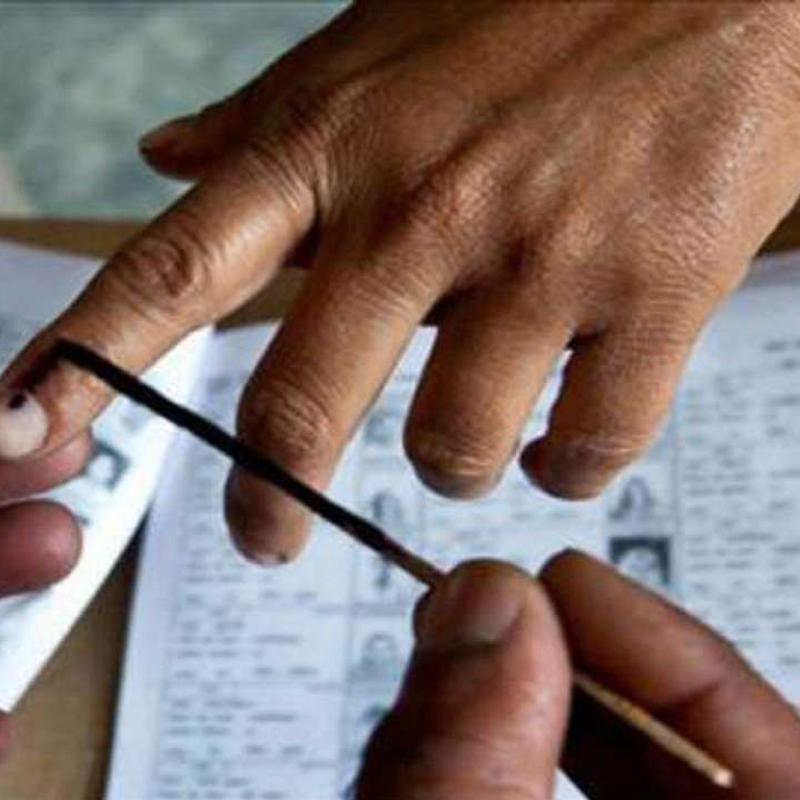
    Mumbai: The Election Commission of India has invited entries from media houses for the National Media Award for the best campaign on voter’s education and awareness during the year 2022. The last date to submit the entries is 30 November 2022.

    The awards are given to recognise the great work done by media organisations to encourage voter turnout by raising knowledge of accessible elections, educating the public on the electoral process, and encouraging people to vote and register to vote.

    There will be four awards given out, one for each of the following: print media, television (electronic), radio (electronic), and online (internet)/social media. The honours will be given on National Voters Day and will consist of a citation, a plaque, and cash prize (25 January 2023).

    The jury’s decision will be based on the following criteria: the quality of the voter awareness campaign; the extent of coverage/quantity; evidence of impact on the public; and coverage of accessibility issues.

  • Barc week 40’22: 1st India News consolidates leadership in Rajasthan

    Barc week 40’22: 1st India News consolidates leadership in Rajasthan

    Mumbai: 1st India News has claimed that, according to Barc data for Week 40, the channel is ahead of News18 Rajasthan with a 44 per cent share in the 15+ ALL TG.(SOURCE: Barc TG: 15+ ALL; MKT: Rajsthan (urban); Wk 40, 2022; 24 Hrs ; share of top  three channels basis impressions 000’s )

    On a weekly basis, 1st India News has consistently outperformed the competition in the Rajasthan urban market among the key TG of 15-50 year old males and female ABC TG.

    In the same TG, 1st India Rajasthan has prevailed over the competition on a week-on-week basis, with a 46 per cent share in week 39 and a 45 per cent share in week 40, respectively. (Source : Barc  TG: 15-50 years MF ABC; MKT: Rajasthan (urban ) ; Wk 39 & 40, 2022; 24 hrs ; share of top  three channels basis impressions 000’s)

    1st India News chief business officer Manoj Jagyasi said, “For regular updates and high-impact news days, viewers tune into 1st India News for its credible and diverse news content. Key national advertisers and top clients in Rajasthan trust 1st India News to effectively deliver on their brand campaigns. We offer a wide range of customised media solutions, which has increasingly attracted the interest of advertisers and media agencies alike”

    1st India News, which was founded in 2013, has a strong reporter network of over 2,000 reporters and has placed a reporter in each Rajasthan constituency. The channel is usually the first to report on breaking news. According to the most recent Barc data, 1st India News is the preferred news channel among discerning Hindi news viewers in Rajasthan.

  • Barc Wk 37-40’22: News18 India outperforms GECs in terms of reach

    Barc Wk 37-40’22: News18 India outperforms GECs in terms of reach

    Mumbai: News18 India has outperformed popular GECs in terms of reach. News18 India claimed that they have outperformed top general entertainment channels such as Star Plus, Sony and Zee TV with a cumulative reach of 8.7 crore.

    According to Barc data (HSM; All 15+; Avg. Wk 37-40’22), the cumulative reach of Star Plus stood at 7.6 crore, whereas the cumulative reach of Sony and Zee TV stood at 6.56 crore and 6.52 crore, respectively.

    Commenting on the viewership data, Network18 Hindi News CEO Karan Abhishek Singh said, “News18 India has a reach significantly better than all the major GECs. Our reach and viewership numbers show the kind of audience trust we enjoy. For advertisers, it’s a great opportunity to use the news genre as their preferred vehicle and to take their brand to audiences in a much more efficient and impactful way.”

    For over three months now, News18 India has been number one in terms of both viewership and reach in the Hindi news genre.

    This week, News18 India maintained its lead in the national Hindi news channel segment with 15.9 percent (Wk. 40’22, TG: 15+, HSM), compared to TV9 Bharatvarsh’s 13.0 per cent, India TV’s 12.6 per cent, and AajTak’s 12.5 per cent market share.

    The channel has performed exceptionally well in the highly sought-after 9 – 10 p.m. prime time slot.

    Kishore Ajwani of News18 India has a market share of 18.4 per cent, while Sudhir Chaudhary of AajTak is ranked fourth with a market share of 14.1 per cent.

    Furthermore, News18 India has nearly three times the viewership of ABP News during the prime time period of 9 to 10 p.m.

  • Media Mantra wins PR mandate for Archies

    Media Mantra wins PR mandate for Archies

    Mumbai: Media Mantra on Monday bagged the PR mandate for Archies to drive its corporate communications strategy in the country.

    Media Mantra, as a PR partner, will take the responsibility of aligning regional communications and reinforcing Archies’ market leadership in India. They will work on Archies’ corporate reputation and awareness, amplifying its visibility, strategic communication counsel, and overall public relations and media relations.

    Media Mantra will also be instrumental in developing effective stakeholder engagement strategies, brand positioning, and external communication management. Archies’ latest appointment is in line with its vision to inject new inspiration and creativity into the renowned brand, foraying into emerging markets and extending its long history of success in the country.

    Media Mantra founder and director Udit Pathak said, “It’s a matter of great pride for Media Mantra to partner with a legacy brand like Archies. Acting on our role as strategic advisers, we intend to apply our vast knowledge and expertise to execute innovative, disruptive, and high-impact PR campaigns that will create a positive impact on Archies’ business in India.”

    “With our 10th anniversary around the corner, Media Mantra has carved its own niche as a leading multi-practice and full-service PR and digital media agency across sectors. D2C is one of our strong practice areas, and the current mandate will help consolidate this practice even further. We are excited to support Archies in its bid to enhance their visibility, credibility, and prominence in the media ecosystem at large, and amongst their target audience in particular,” he added.

    Archies’ executive director Varun Moolchandani said, “From a firm that just sold cards, Archies has come a long way to establish itself as a full-fledged social expression enterprise. We’ve been the trailblazers of India’s gifting ecosystem for 44 years on the back of our ability to keep innovating and improving our offerings.”

    He further added, ” Building on the same vision, we’ve roped in the services of Media Mantra to help us reposition our brand and amplify our presence in the country. We look forward to a long-term and mutually beneficial relationship with them.”

    Founded in 1979, Delhi-based Archies has been in a league of its own, with its chain of offline and online stores being synonymous with greeting cards and popular for special occasion gifting. Having begun by selling greeting cards and gifts, the well-established company has only grown with the modern culture, increasing urbanisation and improving standards of living. It currently operates with over 250 franchises and 230+ exclusive outlets, named Archies Gallery, which are spread across 120 cities and six countries.

    With sentimental value driving its brand appeal to all age groups and demographics, Archies has now reduced its dependence on greeting cards, diversifying into new categories. The firm, currently, boasts a diverse portfolio comprising different and unique products like artificial jewellery, crystalware, chocolates, soft toys, perfumes, grooming products, and their recent foray into the skincare and beauty segment.

  • Indian media not muzzled: BJP spokesperson Nalin Kohli

    Indian media not muzzled: BJP spokesperson Nalin Kohli

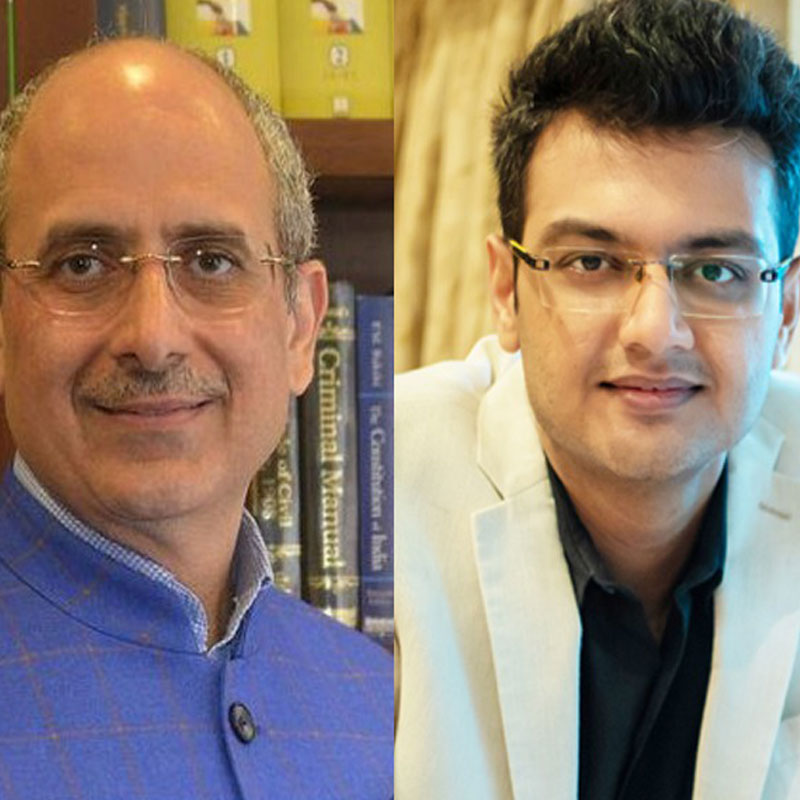
    NEW DELHI: Amidst the huge chatter of Indian media being biased and muzzled, BJP national spokesperson and Supreme Court advocate Nalin Kohli has claimed that the country has a robust media otherwise no channel or outlet would be running anti-BJP and anti-Modi stories. He was in a live webcast with Governance Now MD Kailashnath Adhikari during the Visionary Talk series held by the public policy and governance analysis platform. 

    Calling media as an important and fourth pillar of democracy the BJP senior leader said that media is free and vibrant in India what you see on social media is demonstrative of the right to freedom of speech. He refuted the charges that the media is muzzled and said that that media has been muzzled only once during emergencies. “Everybody remembers those days.”

    “If media was really muzzled then how are people using media to abuse prime minister, Narendra Modi and BJP government so openly and freely. I believe and am convinced that media is independent” said Kohli.  

    Kohli blaming the opposition for manufacturing issues and blaming the BJP government for stifling freedom of speech and said that it is a charge leveled against the BJP government without any foundation. “As the opposition, they have a right to manufacture issues. Unfortunately, issues are manufactured without foundation” he said.

    While responding to a question on how the government will regularize social media content, Kohli, who has also been convener of BJP’s national media cell said there is the issue of territorial jurisdiction when it comes to social media. He reiterated that that freedom of speech is an extremely valuable fundamental right under Article 19 of the Constitution but also puts reasonable restrictions on that freedom. He said that nothing can be beyond the constitutional framework and the best way is to self-regulate.

     “There is always a way to express yourself with civility and you cannot threaten anyone. To threaten a lady or her daughters with rape, obscenity, and abusive language is a reflection of an individual’s own self. If we forget to be civil, how can we have civilization” he asked.    

    “Freedom of speech does not mean curtailing other persons freedom by fear…because after Article 21 provides for life and liberty. If a person feels intimidated or stalked or threatened because of the exercise of freedom of speech of someone else that too needs to be reviewed.  We are reaching a point where these issues are being discussed. Perhaps they will be debated and over a period of time…some kind of framework may come, maybe self-regulation by the platform whether it would require a court to intervene, laws to come in…that’s a much larger debate’’ said Kohli.

  • The sad demise of ethics & sensitivity in Indian media’s reporting

    The sad demise of ethics & sensitivity in Indian media’s reporting

    NEW DELHI: It was the afternoon of Sunday, 14 June 2020 when the news of the untimely demise of 34-year-old film actor Sushant Singh Rajput hit the headlines of all mainstream news channels in India with sensational headlines and a disturbing reportage such included revealing sensitive details of his death. The whole circus that ensued during the day brought widespread criticism to the state of media in the country. 

    IIMC  professor and course director department of English journalism Surbhi Dahiya shares with Indiantelevision.com that some news channels not only sensationalised the matter but also flouted  guidelines on reporting a suicide. The Press Council of India had advised media to not publish such stories prominently, not describe the methods of suicide and be sensitive in their reportage. 

    She continues, “Not just pictures of him lying dead on his bead circulated on social media were picked up by one of the news channels, most of the headlines were sensational and passed sarcastic comments on this death.” 

    IIMC Dhenkanal professor Mrinal Chatterjee adds that such insensitive reporting not only hurts the sentiments of the family of the deceased but also leaves a bad taste for the viewers.

    DCAC department of journalism assistant professor Tarjeet Sabharwal notes, “The whole reportage around Sushant Singh Rajput’s death was not only insensitive but unethical too. I strongly feel that the media of today has lost its basic ethical, moral and human sense. The anchors and reporters who are covering these stories are working hard to get into news the accurate facts but don’t bring out any emotions in reporting. Media today is nothing but mockery.” 

    But what has brought the fate of Indian media to such low standards? 

    According to Dahiya, it can be attributed to the mad race to gain TRPs, while Sabharwal feels that the cut-throat competition within the media ecosphere, especially the rising popularity of digital media is forcing the mainstream channels to present a different narrative, which is not always ethical. 

    However, assistant professor Ankhi Mukherjee believes that the TRPs come because Indian audience likes to follow such news. “Indian media has completely forgotten ethics and I am not talking about the periphery media when I say it. I had rejected TV a long time back and I think that all viewers must be doing that. They get advertisers because there are people watching their channels. Indian culture is based on discrimination and we like to follow such (sensational) news. We thrive into this news and there has been no attempt made to change this mindset (by the media).” 

    University of Mumbai department of journalism and communication assistant professor Sanjay Ranade further highlights that the workforce in most of the mainstream news organisations today are not trained well enough to understand the nuances of journalism. “The media of today is totally corrupt – morally, ethically, and financially and that has started reflecting in the type of reporting they are doing," he says.  

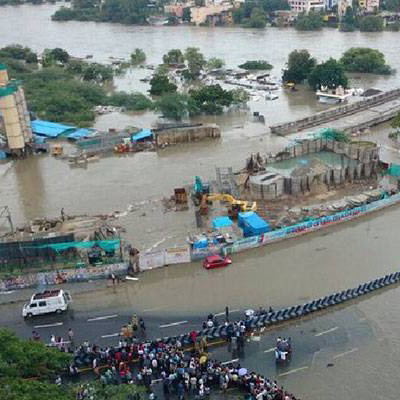
    “When 26/11 happened, we treated it as a crime story but later we realised it was not another crime story but terrorism. Similarly, when floods happened in Mumbai, we saw it as a civic story and not as the humanitarian crisis it was.  And when we talk about Sushant Singh Rajput’s case, it was not another crime or entertainment story, but it was death by suicide and mental health problems. But not a single journalist today is trained to cover sensitive issues like that. Journalists of today are lacking intellectual, emotional, and social training,” he adds.

    He elaborates that media houses today need a complete shake-up and owners of media companies need training in journalism. Most importantly, other departments like marketing and especially HR need training in what journalism actually means. 

    He insists, “All journalists are trained well, I believe, but the organisations don’t let them work the way they want to. A journalist is trained to stand against the system, but all the MBA graduates who work as leaders and HR are trained to work under a system, then how do you think they can do justice to the professional role!”

    It seems that media houses need to relook at the way they approach their reporting, especially when it comes to sensitive issues.

  • DD reaches 92 per cent of India; FreeDish 30 million homes

    DD reaches 92 per cent of India; FreeDish 30 million homes

    NEW DELHI: Doordarshan in terrestrial mode is estimated to be available to about 92 per cent population spread over 81 per cent area of the country, the Parliament has been told.

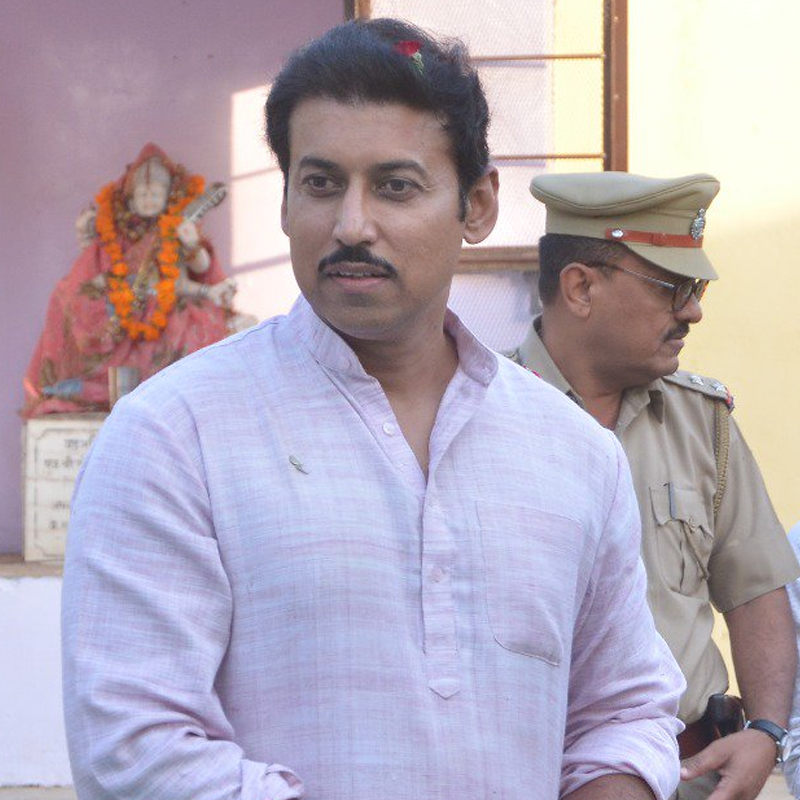
    However, in satellite mode, multichannel TV coverage of Doordarshan reaches all the areas of the country through Doordarshan’s free-to-air DTH service FreeDish. It is possible to receive DTH signals anywhere in the country with the help of a small-sized dish receive unit, the minister of state for information and broadcasting Rajyavardhan Rathore said.

    Modernisation of Doordarshan network by utilising modern techniques and equipment is a continuous process. Schemes in this regard have been formulated and implemented from time to time. The modernisation plan covers a broad spectrum, which includes digitalisation, adoption of new technologies, upgradation and replacement of old ageing equipment, etc.

    According to industry estimates, DD FreeDish has reached about 20 to 30 million homes with 80 TV channels and 32 radio channels. This information is based on the KPMG- FICCI (Klynveld Peat Marwick Goerdeler – Federation of Indian Chambers of Commerce and Industry) Indian Media and Entertainment Industry Report 2016.

    The minister said there was no restriction on any channel for obtaining a slot on DD FreeDish through e-auction as DD Free Dish Platform was Free-to-Air and no subscription was charged by Doordarshan from viewers.

    The minister said, in the e-auction held so far by Doordarshan, no pay channel had participated. (However, it is learnt that Zee News and Big TV which are pay channels successfully bid for beaming free to air on FreeDish).

  • DD reaches 92 per cent of India; FreeDish 30 million homes

    DD reaches 92 per cent of India; FreeDish 30 million homes

    NEW DELHI: Doordarshan in terrestrial mode is estimated to be available to about 92 per cent population spread over 81 per cent area of the country, the Parliament has been told.

    However, in satellite mode, multichannel TV coverage of Doordarshan reaches all the areas of the country through Doordarshan’s free-to-air DTH service FreeDish. It is possible to receive DTH signals anywhere in the country with the help of a small-sized dish receive unit, the minister of state for information and broadcasting Rajyavardhan Rathore said.

    Modernisation of Doordarshan network by utilising modern techniques and equipment is a continuous process. Schemes in this regard have been formulated and implemented from time to time. The modernisation plan covers a broad spectrum, which includes digitalisation, adoption of new technologies, upgradation and replacement of old ageing equipment, etc.

    According to industry estimates, DD FreeDish has reached about 20 to 30 million homes with 80 TV channels and 32 radio channels. This information is based on the KPMG- FICCI (Klynveld Peat Marwick Goerdeler – Federation of Indian Chambers of Commerce and Industry) Indian Media and Entertainment Industry Report 2016.

    The minister said there was no restriction on any channel for obtaining a slot on DD FreeDish through e-auction as DD Free Dish Platform was Free-to-Air and no subscription was charged by Doordarshan from viewers.

    The minister said, in the e-auction held so far by Doordarshan, no pay channel had participated. (However, it is learnt that Zee News and Big TV which are pay channels successfully bid for beaming free to air on FreeDish).