Tag: Indian market

  • Five key learnings from OTT platforms for the media and entertainment industry

    Five key learnings from OTT platforms for the media and entertainment industry

    OTT platforms and players are dominating the entertainment space by providing unrivalled flexibility and easy access to view a multitude of shows of various genres as well as original content without censorship. Over the past half a decade, these platforms are emerging as the go-to content consumption destination for users who look for variety and quality content to pass their free time. According to Deloitte, OTT platforms could easily cater to an audience of 355 million by 2020.Its impact on traditional media networks and video distributors has been immense. A lot of conventional entertainment platforms, in fact, can take a leaf out of the books of successful OTT platforms and revamp their offerings to boost growth and enhance viewership. Given below are a few learnings from the OTT platforms that can be beneficial for the media and entertainment industry.

    1) While OTT players started off by providing Hindi and English content, they realized that there is an immense potential in India for regional content, with75% of new internet users expected to consume data in local languages by 2020. OTT players realized that regional content could further drive demand and attract more users across the country . There are several studies that prove that regional content consumption drives thrice the amount of engagement and accessibility, which means the media and entertainment industries, should be able to connect with diverse target groups across India with relevant content to enhance their growth opportunities. As per a report by IAMAI and Kantar IMRB, presently, there are 160 million potential new users for online viewing in urban India and 732 million potential new users in rural India. They can be easily tapped by addressing the issue of the language of access on various platforms.

    2) Discovery of content is of more importance than ever before, as it helps consumers to easily access the content that will appeal to them the most. OTT players  have enabled easy discovery of content for users with AI-based recommendation engines, automatic content display basis, etc. The ability to quickly search all the available content and pair it with any device can be overwhelming for viewers. While quality and entertaining content are prerequisites to augment subscription and grow consumer affinity, the media and entertainment industry should also ensure that their offerings are easily discoverable and the delivery uncomplicated in order to retain or enhance user base. Recommendation engines are considered to be highly powerful personalization tools, as they help improve a visitor’s experience by offering relevant items at the right time and on the right page.

    3) While the real differentiator is content when it comes to OTT platforms, a lot of players are now investing in improving their tech and platform capabilities to ensure that viewers have the best possible experience while consuming their content of choice. OTT platforms have pulled out all the stops to ensure that even during high concurrency periods, such as Cricket or Football season, the viewing experience of users is uninhibited and they are able to enjoy the games without a glitch. All of this requires tremendous innovation and investment in terms of technology, which OTT platforms haven’t shied away from and other players in the domain would do well to emulate.

    4) In times to come, aggregation models will gain prominence and enable consumers to navigate through the vast amount of content available online. Currently, nexGTV is one of the most advanced OTT content aggregation platforms, providing content to multi-screen equipment. Users are easily able tostream media channels ona variety of terminals, like mobile phone, smart TV, high-definition player, etc., anywhere at any time. Apart from offering original shows and series, OTT players are now charging a minimal fee for each piece of content basis the demand witnessed from the users.

    5) Gone are the days when only short-format content such as short films, caught the attention of viewers on OTT platforms. These days, people are equally interested in viewing long-format content on their mobile phones and are eager to finish watching a movie or a web series during their commute time. So it is no more just content snacking, it is serious viewing in India post low cost and steady internet availability that is attracting today’s new-age consumers. The media and entertainment industry should be able to up their ante and release content that is relevant to consumers’ specific interests and viewing preferences, regardless of the length and format of the content.

    The article has been authored by NexGTv head, growth Dushyant Kohli

    The opinions expressed within this article are the personal opinions of the author. The facts and opinions appearing in the article do not reflect the views of Indiantelevision.com and we do not assume any responsibility or liability for the same.


  • OTT players aim to carve a niche with originals

    OTT players aim to carve a niche with originals

    MUMBAI: Catch-up content, popular TV shows and a library full of good movies can make an over-the-top (OTT) platform an attractive proposition to viewers but it is a good original show that can turn the viewer into a subscriber. With more than 30 frontline OTT players, platforms are frantically working to create originals to boost subscription or advertising revenue.

    Good content will ensure you stand out anywhere with a seasoning of marketing and advertising. Hence, platforms, such as Sony Liv, Eros Now, Hooq and Hotstar, which started out with syndicated content, are looking to invest increasingly in original content. Zee5 and AltBalaji, however, launched with original offerings right from the start.

    Initially, they acquired rights for movies and TV shows and knew it was time to come up their own stuff when audiences stuck to TV. A recent Hotstar report claimed that there was a five-fold growth in online video consumption with 96 per cent of it coming from content longer than 20 minutes. According to market research firm Counterpoint, the OTT market is expected to grow 35 per cent year-on-year, currently holding 100 million subscribers.

    Even international players in the Indian market are planning specific originals for audiences of the country. Netflix India recently premiered Love Per Square Foot, a full-length Hindi romance. The OTT giant will premier Sacred Games on 6 July, an episodic show starring Saif Ali Khan and Nawazuddin Siddiqui, which will be available for the global audience too. To make the local connection strong, Netflix has chosen Anurag Kashyap and Vikramaditya Motwane as directors and their production house Phantom Films.

    Netflix is aware that India is a big market and second only to Mexico when it comes to binge watching in public. For 2018 itself, it has kept aside a chest of $8 billion for original content. For India, it is looking at increasing partnerships with local content creators. It has just announced another original Indian film. Titled Lust Stories, it will be directed by four prominent names – Zoya Akhtar, Karan Johar, Anurag Kashyap and Dibakar Banerjee.

    In an earlier interview with Indiantelevision.com, Netflix VP communications-Asia Jessica Lee said, “We are committed to working with producers, creators, talent and crew in India to create more great content. We are constantly innovating to enhance our member experience to be able to better serve members and provide more control over their watching experience.”

    Amazon Prime Video, the big competitor of Netflix has also started huge investment in original Indian shows going beyond its rich collection of Bollywood movies. After the success of Inside Edge and Breathe, the platform will gift viewers many originals including Made in Heaven and Mirzapur. Not surprisingly, each episode costs Rs 1-2 crore to create and it is hoping the return will happen soon.

    According to FICCI’s latest media report, 70 per cent of content consumed was less than a year old while those beyond this range made up just 15 per cent. It is no wonder that creators must always be giving people something new to snack on.

    Eros Digital CEO Rishika Lulla Singh mentioned earlier that the platform will come up with six to eight originals in FY 2018-19. Show launches will happen in the second half of the year. While renowned directorial talents will extend their creative support for Eros Now Originals, the shows will be across diverse genres.

    Zee5 has also announced the launch of 20 new originals across different languages and diverse genres. Zee5 digital head Archana Anand believes original content is a powerful tool to draw viewers. The OTT space even allows for more experimentation than TV broadcast. The main aim is to ensure the viewers can’t get enough of your content and will not hesitate to spend some bucks.

    Among other platforms, Hooq, which is famous for its Hollywood movie collection, will launch its first ever original series soon, selecting the best from five original selected screenplays premiered as pilot episodes. Among the five competing pilots is also an Indian series: Bhak (India), Haunt Me (Singapore), How To Be A Good Girl (Singapore), Aliansi (Indonesia) and Heaven and Hell (Indonesia). The new trend is also expanding scope for production houses, aspiring actors and new directors in the industry.

    OTT is also waking up to the giant within the country – regional content. They’ve realised that English and Hindi won’t cut out for people. With the existent content online, the FICCI report states that just 7 per cent viewership comes from English content, 63 per cent from Hindi and 30 per cent from other languages. It is the last set that players are keen to tap and grow.

    Instead of mass marketing, OTT platforms are targeting individuals by providing them with options of their taste and preference.

    With eyes shifting from TVs to your palm-held devices, even broadcasters (such as Zee) aren’t far behind in wooing audiences. The best is yet to come.

    Also Read :

    Zee5 launches 20 originals to drive up subscription

    OTT experts discuss future of India’s hybrid market

  • Q3 ’16: 70pc smartphones shipped, 90pc sold by e-tailers 4G-enabled; Indian market crosses 30 million

    Q3 ’16: 70pc smartphones shipped, 90pc sold by e-tailers 4G-enabled; Indian market crosses 30 million

    MUMBAI: Smartphone market in India crossed the 30 million unit shipments milestone for the first time ever in a quarter in CY Q3 2016 maintaining its healthy traction with 11 per cent year-on-year growth.

    According to the International Data Corporation’s (IDC) Quarterly Mobile Phone Tracker, smartphone shipments clocked 32.3 million units in CY Q3 2016 with 17.5 per centage growth over the previous quarter. “This seasonal spike in third quarter of the year can be attributed to the channel preparation for the festive season, mega online sales and early import of smartphones owing to Chinese holidays in October” says IDC India’s senior market analyst – client devices Karthik J.

    Online share of smartphone increased to 31.6 per cent with impressive 35 per cent Quarter-on-Quarter (QoQ) growth due to strong performance by key online players primarily from China-based vendors. Also, closing weeks of the quarter witnessed incremental supplies as many vendors were preparing their inventories for the online festival sales in October. Lenovo Group continues to lead online channel followed by Xiaomi. “Lenovo Group accounts for almost one-fourth of total online smartphone shipments driven primarily by Lenovo’s K5 series and Motorola’s G4 series models. Also, Xiaomi’s Redmi Note 3 and newly launched Redmi 3S fuelled the online shipments to a large extent,” adds Karthik. 

    4G smartphone shipments grew 24.8 per cent over previous quarter in CY Q3 2016. Rollout of Reliance Jio network has further increased the share of 4G enabled smartphones in India. Seven out of 10 smartphone shipped in Q3 2016 were 4G enabled and 9 out of 10 smartphone sold by eTailers were 4G.

    http://www.indiantelevision.com/sites/drupal7.indiantelevision.co.in/files/styles/large/public/image005.png?itok=g7Hwl27b

    Samsung leads the Indian smartphone market with 23 per centage share with 8 per cent sequential growth and 9.7 per cent growth from the same period last year. Despite the recall of Samsung’s flagship Note 7, multiple new launches across both offline and online channels added onto the its strong portfolio helped vendor to grow at a healthy rate in CY Q3 2016. J2 continues to be a key contributor for Samsung.

    Lenovo Group (including Motorola) climbed to second place with 9.6 per cent share of smartphones. Similar to the CY Q3 2015 trend, Lenovo Group’s shipment spiked in CY Q3 2016 with growth of 46.1 per cent over previous quarter. Motorola’s volume almost doubled Quarter-on-Quarter driven by newly launched E3 Power and G4 models. K5 series continues to be lead runner for Lenovo accounting for over 40 per cent of its total volume.

    Micromax slips to third position with a 32 per cent decline in smartphone shipments over previous quarter. Vendor is facing tremendous pressure from other local vendors in sub US$ 100 segment and with Chinese players in US$100-150.

    Xiaomi makes its debut in top five as its shipments doubled over previous quarter. With primary focus on online and minimalistic product portfolio, vendor has grown more than 2.5 times over the same period last year. As the vendor plans to expand its footprint in the offline channel, competition is likely to get intense in Indian smartphone market.

    Reliance Jio sustains its fifth position in CY Q3 2016 despite a healthy 20.9 per cent growth over previous quarter. With the commercial launch of Reliance Jio Service with attractive introductory offer, the LYF branded smartphones saw a sharp demand with reports of stock outs at some locations. Apart from its entry level Flame series, Water series also contributed to the growth in Q3 2016.

    http://www.indiantelevision.com/sites/drupal7.indiantelevision.co.in/files/styles/large/public/image006.png?itok=6w5UhTsk

    Overall mobile phone market shipments closed at 72.3 Million units in CY Q3 2016 with an 18.1 per cent sequential growth. Feature phones registered 39.9 Million units in CY Q3 2016 with a healthy 18.6 per cent quarter-over-quarter growth. However, feature phones market declined at 12.4 per cent over the same period last year, pulling down the overall mobile phone shipments marginally by 3.3 per cent.

     “Mobile vendor ecosystem is going through a multi-dimensional transition. Continuous investment from China based vendors on retail expansion and high decibel marketing has led to disruption in the plans of home-grown vendors to some extent. To remain relevant, home-grown vendors are counting on the feature phone market even though they are facing certain supply issues for a few components” says IDC India market analyst client devices Jaipal Singh. “Also, vendors are relooking at the channel strategy by getting lower tier distributors on-board, positioning more staff at storefronts and adopting the right mix of products in both online and offline channels” adds Singh.

    Migration from feature phone to smartphone has slowed down, helping India based vendors to maintain their dominance in overall mobile market. Though feature phone market is consolidated with few key vendors, it is also witnessing the emergence of new brands. Itel in its second quarter in Indian market has quadrupled its shipments while Zen mobile shipments have more than doubled over the previous quarter.

    IDC India expects 2016 to end with a higher single digit annual growth, considering the smartphone performance till CY Q3 2016. 

  • Q3 ’16: 70pc smartphones shipped, 90pc sold by e-tailers 4G-enabled; Indian market crosses 30 million

    Q3 ’16: 70pc smartphones shipped, 90pc sold by e-tailers 4G-enabled; Indian market crosses 30 million

    MUMBAI: Smartphone market in India crossed the 30 million unit shipments milestone for the first time ever in a quarter in CY Q3 2016 maintaining its healthy traction with 11 per cent year-on-year growth.

    According to the International Data Corporation’s (IDC) Quarterly Mobile Phone Tracker, smartphone shipments clocked 32.3 million units in CY Q3 2016 with 17.5 per centage growth over the previous quarter. “This seasonal spike in third quarter of the year can be attributed to the channel preparation for the festive season, mega online sales and early import of smartphones owing to Chinese holidays in October” says IDC India’s senior market analyst – client devices Karthik J.

    Online share of smartphone increased to 31.6 per cent with impressive 35 per cent Quarter-on-Quarter (QoQ) growth due to strong performance by key online players primarily from China-based vendors. Also, closing weeks of the quarter witnessed incremental supplies as many vendors were preparing their inventories for the online festival sales in October. Lenovo Group continues to lead online channel followed by Xiaomi. “Lenovo Group accounts for almost one-fourth of total online smartphone shipments driven primarily by Lenovo’s K5 series and Motorola’s G4 series models. Also, Xiaomi’s Redmi Note 3 and newly launched Redmi 3S fuelled the online shipments to a large extent,” adds Karthik. 

    4G smartphone shipments grew 24.8 per cent over previous quarter in CY Q3 2016. Rollout of Reliance Jio network has further increased the share of 4G enabled smartphones in India. Seven out of 10 smartphone shipped in Q3 2016 were 4G enabled and 9 out of 10 smartphone sold by eTailers were 4G.

    http://www.indiantelevision.com/sites/drupal7.indiantelevision.co.in/files/styles/large/public/image005.png?itok=g7Hwl27b

    Samsung leads the Indian smartphone market with 23 per centage share with 8 per cent sequential growth and 9.7 per cent growth from the same period last year. Despite the recall of Samsung’s flagship Note 7, multiple new launches across both offline and online channels added onto the its strong portfolio helped vendor to grow at a healthy rate in CY Q3 2016. J2 continues to be a key contributor for Samsung.

    Lenovo Group (including Motorola) climbed to second place with 9.6 per cent share of smartphones. Similar to the CY Q3 2015 trend, Lenovo Group’s shipment spiked in CY Q3 2016 with growth of 46.1 per cent over previous quarter. Motorola’s volume almost doubled Quarter-on-Quarter driven by newly launched E3 Power and G4 models. K5 series continues to be lead runner for Lenovo accounting for over 40 per cent of its total volume.

    Micromax slips to third position with a 32 per cent decline in smartphone shipments over previous quarter. Vendor is facing tremendous pressure from other local vendors in sub US$ 100 segment and with Chinese players in US$100-150.

    Xiaomi makes its debut in top five as its shipments doubled over previous quarter. With primary focus on online and minimalistic product portfolio, vendor has grown more than 2.5 times over the same period last year. As the vendor plans to expand its footprint in the offline channel, competition is likely to get intense in Indian smartphone market.

    Reliance Jio sustains its fifth position in CY Q3 2016 despite a healthy 20.9 per cent growth over previous quarter. With the commercial launch of Reliance Jio Service with attractive introductory offer, the LYF branded smartphones saw a sharp demand with reports of stock outs at some locations. Apart from its entry level Flame series, Water series also contributed to the growth in Q3 2016.

    http://www.indiantelevision.com/sites/drupal7.indiantelevision.co.in/files/styles/large/public/image006.png?itok=6w5UhTsk

    Overall mobile phone market shipments closed at 72.3 Million units in CY Q3 2016 with an 18.1 per cent sequential growth. Feature phones registered 39.9 Million units in CY Q3 2016 with a healthy 18.6 per cent quarter-over-quarter growth. However, feature phones market declined at 12.4 per cent over the same period last year, pulling down the overall mobile phone shipments marginally by 3.3 per cent.

     “Mobile vendor ecosystem is going through a multi-dimensional transition. Continuous investment from China based vendors on retail expansion and high decibel marketing has led to disruption in the plans of home-grown vendors to some extent. To remain relevant, home-grown vendors are counting on the feature phone market even though they are facing certain supply issues for a few components” says IDC India market analyst client devices Jaipal Singh. “Also, vendors are relooking at the channel strategy by getting lower tier distributors on-board, positioning more staff at storefronts and adopting the right mix of products in both online and offline channels” adds Singh.

    Migration from feature phone to smartphone has slowed down, helping India based vendors to maintain their dominance in overall mobile market. Though feature phone market is consolidated with few key vendors, it is also witnessing the emergence of new brands. Itel in its second quarter in Indian market has quadrupled its shipments while Zen mobile shipments have more than doubled over the previous quarter.

    IDC India expects 2016 to end with a higher single digit annual growth, considering the smartphone performance till CY Q3 2016. 

  • NXT Digital ‘hits’ Indian market with total outlay of Rs 5000 crore

    NXT Digital ‘hits’ Indian market with total outlay of Rs 5000 crore

    NEW DELHI : After three and half years of struggle, Hinduja’s Headend In The Sky (HITS) platform NXT Digital finally got rolling with a total project outlay of approximately Rs 5000 crore. The mammoth investment will be utilised as the business continues to design and develop new products and services for a growing customer base as well as strive to enhance its own standards.


    Information and Broadcasting Minister Arun Jaitley officially launched the venture in the presence of Hinduja Group chairmanAshok Hinduja and Grant Investrade MD Tony D’Silva.


    Launching the platform, Jaitley said, “Multiple carriage technologies will provide customers more choice as to which technology platform to choose.”


    While Hinduja Ventures has set an initial budget of Rs 5000 crore for the project, the chairman is open to investing more if necessary. “We are here to aggressively back this initiative and if necessary we will invest double or triple the allocated budget. Last mile operators (LMOs) are the one who started the business by laying the first cable and this venture is for them,” Hinduja said.


    The HITS project will not only facilitate over 100 million homes go digital in Phase III & IV digitisation markets but will also raise the standards of quality of service. 


    To acquire the base model of a Cable Operators Premises Equipment (COPE), one has to pay Rs 10.60 lakh while the premium one can be acquired after a payment of Rs 14 lakh. The amount appears high for the LMOs but Hinduja said that the Group also has a finance group, which would help the LMOs. “The project has a lot of securities and the investment is certain to provide returns so it is a safe investment. We have insurance schemes for the operators so their investment is safe,” he added.


    According to D’Silva, the consumer will have to pay a maximum of Rs 50 per month. NXT Digital is presently equipped to beam up to 500 channels and this capacity can be raised to 1000. The earth station is in Sector 62 in Noida in the National Capital Region (NCR) of Delhi. NXT Digital has six transponders at present.


    D’Silva also noted that it was interesting that the last two phases of Digital Addressable Cable TV System (DAS) provided for only 32 per cent of the revenue though they would cover a much larger area.


    The DAS Phase III and IV areas, which are estimated to have more than 120 million home, are the prime focus of NXT Digital. To succeed in occupying 15 per cent of the market, the company will have to provide set top boxes (STBs) to 20 million home, which is a huge demand to supply. However, Hinduja is bullish about meeting the demand on time and optimistic that the platform will not face a situation where there will be shortage of boxes.


    NXT Digital is also positioning itself as a adopter of the government’s Make in India, Digital India and Skill India initiatives, which according to Hinduja was the byword for the Group. The LMOs in the DAS III and IV areas have to be skilfully equipped with modern technologies that NXT Digital will be bringing in.


    Asked about how his system was different from the already existing – NSTPL’s JainHits – Hinduja said that the aim of the Hinduja Group was to protect the LCOs because it was they who had built this industry in the late eighties. “Therefore, the LMO will not lose out in any way, will be fully in charge of his own company, and will have full freedom to operate in his own way,” he said.


    When queried as to why it had taken the Group three years to get a licence when there was no cap on HITS, Hinduja said, “Formalities take time.”


    He also said that wherever someone tries to bring in transparency in any system, there are objections. He was also conscious that there was competition in the field and this may even lead to some legal hassles, but his Group was prepared for everything.


    Hinduja said that he was conscious of the matter relating to NSTPL pending in TDSAT, which sought that broadcasters treat HITS players at par with multi system operators (MSOs). He said the NXT Digital viewpoint had been presented at the hearings.


    Senior Hinduja executive Aubin Das said that the NXT Digital platform also took efforts to curb the issue of piracy and if LMOs attempt to put on the channel of a broadcaster in the slots meant for local channels, it could be immediately traced and stopped.


    Commenting on the training and development initiatives Castlemedia director Vynsley Fernandes said, “We are travelling to every nook and corner of the country to skilfully equip and train people about our technological upliftment and it is a chain system. Around 200 people have been trained under a ‘Train the Trainer’ programme and they will train others. And we are not equipping them only about NXT Digital we are introducing them to the next generation.”


    D’Silva said that under NXT Digital, the LMO gets to continue their ownership, enter into broadcasting deals, do packaging and pricing according to market demands, acquire STBs at cheaper rates, run up to 16 local channels, and compete with direct-to-home (DTH) operators.


    He added that DTH was on Ku-Band, which got disturbed in rainy or inclement weather, but HITS being on C-Band will not be disturbed. Furthermore, the HITS headend was on ground while DTH had to depend on satellites. Furthermore, NXT Digital will be able to service both DAS and non-DAS areas.


    NXT Digital focused marketing and subscription drive in the Phase III & IV markets. The company has so far travelled across 400 districts in 20 states to contact and inform the cable fraternity there about its offerings. As of now it has 14 vans touring various parts of the country to give live demonstrations to LMOs and LCOs. 


    Welcoming the move, Maharashtra Cable Operators Federation president and task force member Arvind Prabhu said, “I would like to congratulate AP Hinduja, with this initiative he actually kickstarts the process of digitisation. Mr Hinduja thought about the last mile operators and came up with NXT Digital, which will help LCOs getting their due. The other HITS platform is providing the COPE at a cheaper price and that will be a challenge. The pricing that we got from them are really good but considering the fact that DAS III and DAS IV areas do not come under ratings I believe there can be further negotiation with the broadcaster. Overall I believe it’s a move for the LCOs.”


    LCO from Assam and Task Force member Md Iquebal Ahmed also welcomed the HITS venture. “Operators cannot afford headends and MSOs take total advantage of it and in that context, it’s a great initiative. But the content pricing needs to come out transparently. Affordable pricing is what we are looking forward to.”


  • 3Pillar Global expands leadership team in India

    3Pillar Global expands leadership team in India

    MUMBAI: 3Pillar Global, a leading developer of innovative software products for clients, has announced the appointment of Suresh Kabra as its VP and GM of India to lead the continued growth of the company’s delivery center.


    “We are thrilled to welcome Suresh to our growing team. He has an outstanding track record of entrepreneurship and product development and will serve as an extremely valuable asset to our operations in India,” said 3Pillar CEO David DeWolf. “His proven ability to lead high performance teams, along with driving new initiatives and building long-lasting customer relationships, compliments 3Pillar’s global growth strategy.”


    Kabra will be responsible for leading, guiding and mentoring the delivery teams while overseeing the day-to-day operations. Suresh will also be responsible for developing and increasing brand awareness and reputation in the Indian market, leading to increased traction in the market for 3Pillar and influencing the ability to recruit top talent.


    “I am excited to join the 3Pillar Global executive team at such an exciting time of growth for both the company and the software product development industry. I am looking forward to leveraging my experience to lead and grow the team in India,” said Kabra.


    Prior to joining 3Pillar, Kabra was the founder and CEO of clk2c.com, a start-up in the mobile video delivery space, which was acquired in early 2013. Prior to becoming an entrepreneur, he served as assistant VP of Software Products Group at Aricent, Inc., where he directly managed several product line managers and product engineering teams in Delhi, Bengaluru and Chennai.


    Kabra also served as VP, business development (APAC) for Conexant, Inc., where he helped the company to grow business manifolds in the Greater China region. He holds a BE from BITS, Pilani and MS from Concordia University, Montreal, and has done a certificate program in International Management from NUS-Stanford. Kabra is also a MIT Sloan Executive Program in General Management scholar. He also holds a Design Patent for Flexible Display Units, issued by The Patent Office, Govt. of India.

  • Heli-cam shoots Zee Rishtey Awards

    Heli-cam shoots Zee Rishtey Awards

    MUMBAI: Those looking forward to watching the Zee Rishtey Awards coming Sunday are in for a visual extravaganza.


    For the first time in the history of Indian television, a Heli-cam has been deployed to shoot all the acts live at the venuem that is, at the Andheri Sports Complex.


    For the uninitiated, Heli-cams are known for their flexibility and small size, and are used globally to capture aerial photographs and moving images. The technology has been of great use to professionals including astronauts and scientists for procuring panoramic views of the Earth but it is yet to make its debut in the Indian television industry.


    Exults director Zee Rishtey Awards Arun Sesh Kumar: “The camera is being used in films too these days, but nobody has used it for TV shows in India till now.” Kumar, who is fascinated by the technology, wanted to bring it in to shoot the Awards that have been planned on a gigantic scale.


    Just the platform set up by Umang Kumar for the performances is 1060/80 feet; he informs, pointing out that the Heli-cam has entered the Indian market just a month and a half ago.


    “We have spent a bomb to rent the camera that is usually imported from the US. The good part is that it came with an operator who was a pro at handling it and we got enough time to rehearse and get a hang of using it with ease,” says Kumar, adding that the Heli-cam has helped them capture every nook and cranny that was hitherto unreachable. It took almost 48-hours for the team to shoot the entire show.


    Kumar says that the camera has been used to capture some of the interesting moments that goes on among the audience. Besides, it has even helped in getting a better view of some of the exciting acts in the show.


    And, the camera isn’t the only first at the upcoming awards. The Zee programming team has come up with a few innovations, with Sharmistha Roy Banerjee, creative director of Essel Vision that has produced the show, working for over a month to get everything in place for the big night.


    According to Kumar, “This year’s show is much better and bigger than any of the past years,” with artistes from Zee’s many serials roped in for the event.


    Another first is that in keeping with Zee’s theme, Vasudhaiva Kutumbakam (the world is my family), the channel is extending a gesture of friendship to other channels. Kumar reveals that Zee Entertainment Enterprises Limited MD Puneet Goenka has come up with the idea of felicitating top shows from other channels; marking the opening of a new chapter in Indian television history. “I agree that channels are always at war. But rivalry doesn’t need to be taken to the level of enmity,” says Kumar, who thinks the initiative will work well for the industry.


    With so many new beginnings, the awards, to be aired on Zee TV on Sunday, 1 December, have got good sponsors too, reveals a source from the marketing team. Vaseline is the title sponsor and the show is powered by Vatika Enriched Coconut Oil. Lacto Calamine Reneu is the Co Presenting Sponsor and Colgate Active Salt Healthy White, Dabur Chyawanprash, JOY Skin Fruit Face Wash, LIC, Johnson Baby Cream are the associate sponsors.

  • Brand Dialogue bags creative mandate for Flipkart

    Brand Dialogue bags creative mandate for Flipkart

    MUMBAI: Just within a month of its entry into the Indian Market, Brand Dialogue, a European brand communications company headquartered in Amsterdam and Mumbai, has bagged the mandate for providing branded packaging for Flipkart India.


    Brand Dialogue’s partner agency Yellow Dress Retail (YDR) will be providing the services to Flipkart India.


    Speaking about the association, Brand Dialogue CEO Willem Woudenberg said, “Flipkart India is a pioneer in its field and we are extremely delighted to get them on board with us. It’s just been a month and this win makes us feel more welcome in the Indian market. We are here to make a difference and this comes as the beginning of our creative journey. Yellow Dress Retail (YDR) team headed by Marcel Gort is a strong mix of experienced professionals and creative talents and they will definitely add value to Flipkart India’s brand position.”


    YDR will provide branded packaging for all private labels under Flipkart India and will support the brand in conceptualising and creating private labels in various key categories.


    Flipkart privaye labels director Roy Thomas said, “We have expanded our product range by launching our own label DigiFlip – offering camera bags, pen-drives, headphones, computer accessories and a lot more. Now we have got YDR on board to assist us in the brand packaging of our private label products. YDR may be new in India but their commitment and creativity goes a long way and we are confident that they will match the quality and standards that we are synonymous with.”

  • Micromax ropes in Hugh Jackman as its brand ambassador

    Micromax ropes in Hugh Jackman as its brand ambassador

    Mumbai: Building on the promise of ‘nothing like anything’ experience, Micromax has signed Hollywood actor Hugh Jackman as its brand ambassador.


    In a first of its kind association for the brand, the actor will be seen endorsing the Canvas series of the brand. The association would start with its new smartphone  – Canvas Turbo that will be soon launched in the Indian market.


    Speaking on the association, Micromax chief marketing officer Shubhodip Pal said: “We are very excited to welcome Hugh Jackman in the Micromax family as he truly embodies the aspirational, reinventing and fearless persona of the brand. As we look to expand our footprint across the globe in various international markets, the association with Jackman is an ideal partnership for us to connect with audiences as he is the leading name in the entertainment industry in the world.”


    He further added: “At Micromax, we have always believed in offering products and services that empower our consumers with the latest technologies and innovations. This is a strategic partnership and we look forward to creating a strong 360 degrees campaign for our audiences across print, TV and online platforms.”


    Reinventing the story of empowerment, Micromax has always urged consumers to explore new boundaries in the Indian market.


    out the association with Micromax, Jackman said, “I am extremely thrilled and honored to be a part of the Micromax family. I am a huge lover of India as it is one of the most exciting countries in the world and we also share our love for cricket. Phones are genuinely time saving devices that can help you live a better life while juggling around with different situations. The new Canvas phone is a leap in innovation with great sense of fun and amazing features that helps me balance my work with all the different roles that I play in my everyday life.”

  • King Koil Unveils Posture Sense Mattress

    King Koil Unveils Posture Sense Mattress

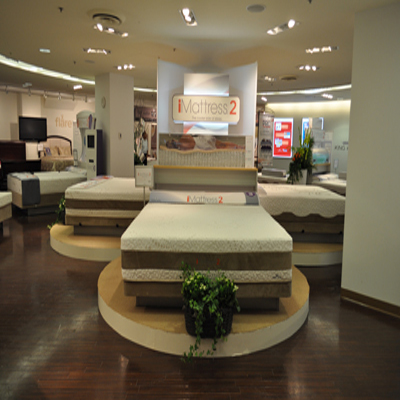
    King Koil, an internationally acclaimed and magnificent mattress brand has ushered in its latest range of premium mattress ‘Posture Sense’. Posture Sense by King Koil is the most widely available balanced coiled support system mattress, with a unique dual comfort feature. To ensure, an ultimate sleeping comfort, this uniquely designed & patented technology mattress, has been launched, for the first time in the Indian mattress market.


    The Posture Sense Mattresses are made from the finest materials in the most appropriate mix and provides an unrivalled comfort and support to the human body. With the unique high coil count of pocketed spring core, Posture Sense comes with one side as a softer support layer to the body for luxurious and plush feel and on the other side off the mattress an option of comparatively firmer feel to the body.


    The firm side is created by using heavy density REBOND foam; where as the soft side comes with two luxury layer options i.e Ultra PLUSH Foam and CELLULAR MEMORY Foam. All the mattresses meet our high- quality standards of proper support, comfort and long-lasting durability.


    Excited about the unique addition to the portfolio of King Koil, Mr. Archit Gupta, Managing Director said, “Our Company is well-known for providing Innovative Designs & Patented technology mattresses. As a sole licensee of King Koil for the Indian Market, I am sure it will help us to redefine the sleeping solutions.”


    We aim to continuously present a large range of offerings to Indian customers and Posture Sense mattress is the new addition in this endeavor”, added Mr. Gupta.


    Posture Sense mattresses are available across all leading stores of India, the price ranges from15000 INR to 46000 INR.