Tag: Indian government

  • Cracking down on Indian TV & streaming piracy, Italian style

    Cracking down on Indian TV & streaming piracy, Italian style

    MUMAI: Piracy has been the bane of both broadcasters and streamers for some time now. Yes, both have anti-piracy crews who spend crores of rupees behind sophisticated tools which crawl the world wide web round the clock to track illegal streams and bring down the rogue sites with the help of ISPs. 

    Even the Indian government has stepped in at times with the department of telecommunications (DoT)  directing  ISPs to take down the crooks, but more often than not the takedowns relate to what the mandarins fear could be a threat to national security,  religious sentiment, is defamatory or points fingers at the powers-that-be wrongly. 

    Could it learn from what the Italian government is doing to protect broadcasters and streamers and bring down piracy? The authorities there are not using Mafia-like tactics; they are simply putting in place stricter regulation, policing and implementation. 

    Italy has more than five million or more citizens accessing scoundrel sites costing the pay TV ecosystem (more specifically sports) – Dazn, Sky Italia, Prime Video and Mediaset Infinity –  more than €400 million  annually.

    To get an insight into what’s happening in Italy a little bit of background in sequential order would help. In August 2023, the Italian government passed a strict anti-piracy law which brought in lay viewers  into the fold of those who would be penalised with fines going up  as high as  €5,000.  ISPs would be slapped with administrative fines of 20 million lira to 500 million lira, or in today’s currency – €10,00  to €265,000.  Those involved in the supply/distribution of infringing IPTV streams would  face up to three years in prison and a fine of up to €15,000.

    Then on 31 January 2024, Lega Serie A (the governing body of football  in Italy)  launched an anti-piracy platform Piracy Shield which is operated by the nation’s Communications Regulatory Authority, AgCom. Its purpose was to identify and penalise those who are watching –  mind you, those who are WATCHING –  pirated content, and even those who are streaming it. Piracy Shield was designed to block illegal streaming within 30 minutes of detection by targeting both IP addresses and domain names.

    In March 2024, Italians  received reminders that fines were on the way, even for those who download illegal sports streaming apps from legal marketplaces operated by Google, Apple, and Amazon.

    Reports are that the measures seem to be working so far. The multi-pronged exercise has succeeded in blocking over 1,000 online domains and more than 500 IP addresses associated with illegal streaming activities since the start of the new football season in Italy. However, no information was available about individuals being penalised for viewing pirated content at the time of writing.

    Recently, AgCom announced the extension of  Piracy Shield to cover cultural events, music and TV series. Additionally, it signed a memorandum of understanding between the prosecutor’s office and Guardia di Finanza (financial police) under which automatic information exchange between the parties will enable subscribers of pirate IPTV services to be automatically fined. Yes – AUTOMATICALLY fined.  

    Secondly, an amendment to the online copyright enforcement regulation approved by the Italian senate proposes prison sentences of up to a year for individuals who do not report – yes, those who DO NOT REPORT – piracy or related offences. The amendments also target service providers such as VPN and DNS companies. This includes VPN and DNS service providers such as Google and Cloudflare. These providers will face stricter obligations to cooperate with authorities in stopping the distribution of pirated material.

    The amendments and changes have  been welcomed by the Italian pay TV industry and streamers. The reason: under the new dispensation, authorities will soon have access to names, surnames, IP addresses, and other identifying details of those accessing criminal websites and hence penalties will be automatically imposed.

    We will have to wait and see how effective these measures will prove to be and how much they will deter the pirates in Italy.

    In the meantime, can the Indian pay TV ecosystem, DoT, and the government take a closer look at the Italian model of curbing piracy?  Can the cash-rich Board of Control for Cricket in India (BCCI) and industry come together to create an industry wide platform to curb sports broadcast leakages? Especially, since it is the main sports body that has been raking in billions of dollars by licensing the TV rights. Can the penalties for resorting to piracy be made tougher?

    A study in 2023 pointed out that Indian broadcasters and streamers are losing close to $3 billion (Rs 25,000 crore) annually on signal leakages related to sports and TV series telecasts through illegal cable TV and internet distribution. Indian anti-piracy laws also only finger and penalise the pirates – and that too infrequently as policing, and implementation is weak. Hence, piracy continues to be to be widespread and almost everyone in the ecosystem takes it lightly.  

    Harsher measures like making viewers and the likes of Google and Apple culpable through automatic  penalties could help alleviate the problem. The authorities will not have to penalise too many violators; just making a loud noise about a few could prove a deterrent to most.

    The times, they are a-changing. Can the anti-piracy efforts in India gain in strength and momentum through collaboration between the stakeholders? 
     

  • I&B ministry proposes guidelines for encryption of channels

    I&B ministry proposes guidelines for encryption of channels

    Mumbai: In an organised press briefing on Wednesday, the ministry of information & broadcasting introduced revised uplinking and downlinking guidelines for TV channels in India, as I&B secretary Apurva Chandra informed. The earlier guidelines were issued in 2011.

    As per the new guidelines, the encryption of channels is now mandatory for all bands other than C band.

    The following objectives are set to be achieved by the proposed guidelines:

    1. Ease of compliance for the permission holder:

    The proposed guidelines give importance to ease of compliance for the permission holder.

    a) There is no requirement to obtain prior permission for live event telecasts; only the pre-registration of events would be necessary.

    b) The requirement of prior permission for a change of language or conversion from Standard Definition (SD) to High Definition (HD), or vice versa is also not required.

    2. Ease of doing business

    a. The guidelines proposed a specific timeline for the grant of permission.

    b. Limited liability partnership (LLP) entities can also seek permission.

    c. A news agency can get permission for a period of five years instead of one year.

    d. A channel can be uplinked by using the facilities of more than one teleport/satellite, as opposed to only one teleport/satellite.

    e. The new guidelines have removed certain restrictions on the transfer of a channel from one entity to another.

    f. A teleport operator can uplink a foreign channel for being downlinked outside India, enabling earning of foreign exchange for the operator.

    3. Simplification and Rationalisation

    a. One composite set of guidelines instead of two separate guidelines;

    b. The structure of the guidelines has been systematised to avoid duplication, and common parameters, including financial requirements, etc., have been placed in appendices;

    c. The penalty clauses have been rationalised to separate the nature of penalties that have been proposed for different types of contraventions as opposed to the uniform penalty as at present.

  • Budget2022: Govt to set up task force to promote animation, video gaming industry

    Budget2022: Govt to set up task force to promote animation, video gaming industry

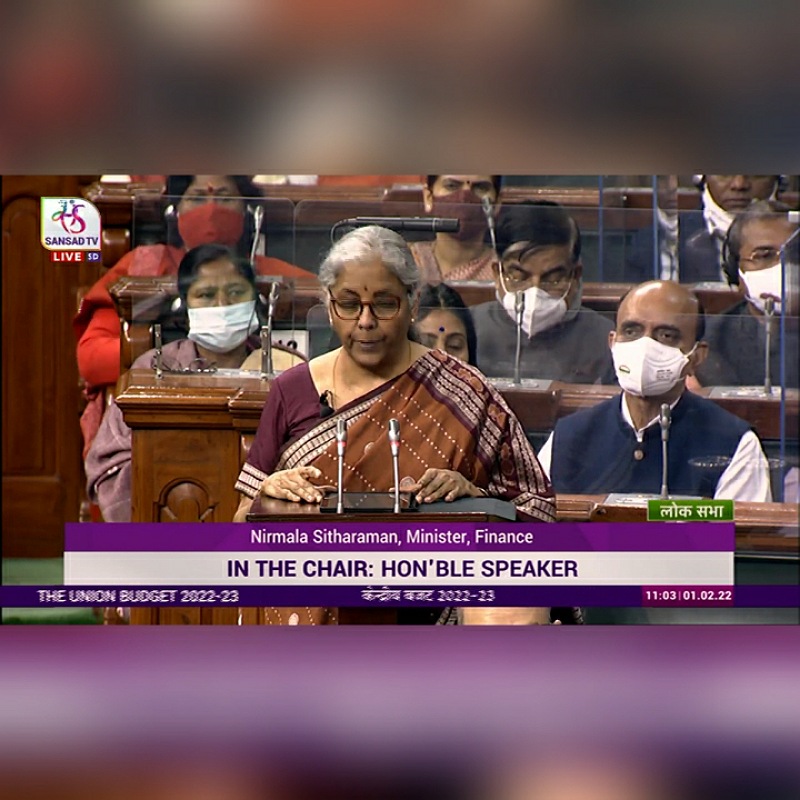
    Mumbai: The government has proposed to set up a specialised task force for the promotion of the animation, visual effects, gaming and comics (AVGC) industry. The announcement was made by finance minister Nirmala Sitharaman while presenting the annual budget 2022 on Tuesday.

    “Animation, Visual Effects, Gaming and Comics (AVGC) sector offers immense potential to employ youth. An AVGC promotion task force with all stakeholders will be set up to recommend ways to realise this and build domestic capacity for serving our markets and the global demand,” said Sitharaman.

    The announcement was welcomed by the industry, with Federation of Indian Chambers of Commerce and Industry (FICCI) hailing it as a big win for the sector.

    FICCI chairman – AVGC XR Forum and Punnaryug Artvision founder Ashish SK said that the budget announcement of the formation of task force for AVGC Promotion has come at the most appropriate time. “After setting a strong foundation in the last two decades the Indian AVGC – XR is poised to grow phenomenally in coming decade. The creative skills from India needs nurturing to a great extend to enable the growth of the sector. Setting up of a task force will definitely bring in a great focus on positioning Indian AVGC sector for services exports, co-productions, growth of Indigenous intellectual property and its consumption patterns within India and overseas,” he said.

    According to industry representatives, the Indian AVGC – XR sector is expected to have a major share of the media and entertainment industry. The horizon and use cases of AVGC – XR verticals have expanded beyond its day-to-day defined utility in architecture, life science, legal, education, industrial, urban planning, sports, digital universe, metaverse etc apart from media & entertainment.

    “The AVGC task force is a huge step by the government to promote the sector. We wholeheartedly welcome it and FICCI AVGC-XR Forum will continue to work closely with the government on various policy initiatives to realise the growth potential of the Industry. This industry vertical has tremendous scope for employment generation and exports,” said FICCI co-chairman – AVGC- XR Forum, and Graphiti Studio founder Munjal Shroff.

    In its latest report released last month, the Confederation of Indian Industry (CII) and Boston Consulting Group (BCG) had also projected that India’s media and entertainment industry which is currently valued at around $27 billion is all set to grow at 10-12 per cent CAGR to become a $55-70 billion industry by 2030. The report had also highlighted that the industry’s next phase of growth will be led by OTT, gaming, VFX and animation.

    The finance minister said the union budget seeks to lay a foundation and give blueprint of the economy over the next 25 years – from India at 75 to India at 100.

  • ‘Inappropriate content’ on TV & radio to be regulated

    MUMBAI: The Indian Government plans to establish a body to regulate the content broadcast on television and radio channels.

    In the backdrop of escalating concern of over-regulating and gagging of free speech by the Central Government, the government is now considering regulation of television and radio channels against what is being termed as ‘inappropriate content’.

    The Central Government has decided to establish a grievance redressal mechanism against objectionable content that is broadcast on TV news and entertainment channels, and FM and community radio, the Asian Age reported.

    This would mean that radio stations and television channel which were following a self-regulatory mechanism could now be held liable for complaints against their content filed by the public.

    If a member of the public has a complaint regarding certain content broadcast over radio or television, s/he can lodge a complaint with the district magistrate (DM) or the police commissioner (chairmen of the district-level monitoring committee), according to a government directive accessed by the paper.

    People are free to register their complaints online at pgportal.gov.in, or directly send their grievances to the union information and broadcasting ministry.

    In January 2017, the Supreme Court had directed the government to establish a mechanism for redressal of complaints against “contents of private TV channels and radio stations and accord due publicity to the measures to enable citizens approach it with their grievances.”

    The Programme and Advertising Code of the government prohibits the broadcasting of certain type of content, including anything that “offends and is against ‘decency’, contains criticism of friendly countries, contains attacks on religion or communities, is obscene or defamatory, encourages or incites violence, encourages superstition, denigrates women or affects the integrity of the nation.”

    It was reported in February 2017 that action was taken in 52 cases of television and two of radio in the past three years for violation of the Code. The minister of state for information and broadcasting Rajyavardhan Rathore had said the action in most cases was limited to apology scrolls, or switching off channels for a brief period.

    Rathore had said the Supreme Court had, on 12 January 2017, advised the Government to formalise the complaint redressal mechanism including the period of limitation within which a complaint can be filed. The court also said the concerned statutory authority which shall adjudicate upon the same including the appellate and other redressal mechanisms, leading to a final conclusive determination.

    As and when there is a prima facie case of violation by private satellite TV channels and private FM channels regarding content aired by them, the matter is placed before the IMC for its consideration/recommendations. Thus, IMC functions in a recommendatory capacity.

    Apart from this, the Ministry had earlier issued directions to States to set up District level and State level Monitoring Committees to regulate content telecast of local TV channels carried on Cable TV Networks.

    AlsO Read :

    Press regulation not called for, says Modi

    SC to MIB: Get mechanism to deal with complaints on TV, radio shows

    Govt warning to TV channels on b’cast norms breach

    Govt admits centralised content monitoring of TV and Radio ‘non-workable’

  • MAM 2016: When marketing, advertising hopped on to Digital India

    MAM 2016: When marketing, advertising hopped on to Digital India

    ‘Live streaming’, ‘Video on demand’, ‘data crunching’, ‘branded content’, ‘geo-targeting’, ‘digital measurement’, ‘native advertising’, ‘programmatic’, ‘digitisation’, ‘demonetisation’….2016 has generated enough buzzwords for the Indian marketer. So much so that it is hard to place one’s finger on that one thing that defined 2016’s marketing trends. Whatever be that theme, 2016 was definitely a year of disruption.

    Certainly it was disruptions galore. Disruption in how the audience consumes content (Hotstar, Netflix anyone?); disruption in how TV is viewed with major push towards digitisation; disruption in what content advertisers pay for (HUL’s Brooke Bond Red Label and the Six Pack Band, Tata Tiago driving TVF’s Tripling); disruption in media planning and buying (Amagi’s Mix); disruption in how we use money (payment banks and e-wallets) and finally disruption in pricing.

    One prime differentiator for brands this year was pricing or even no- pricing! The year started with the popular debate on Net Neutrality sparked by Airtel Zero and Facebook’s internet.org. Both had ambitious plans to provide internet across India at zero cost to preferential consumers. These projects couldn’t take off without blessings from TRAI, but differential pricing was also a major weapon used by OTT players in their race to be India’s primary SVOD service.

    Not to mention Baba Ramdev-pioneered Patanjali Ayurveda that gave global and incumbent Indian FMCG giants sleepless nights with its highly competitive pricing, even taking over other major advertiser by setting aside Rs 300 crore or Rs. 3 billion in ad spends. The nationalistic flavour that dominated the year further added to the brand’s marketing success.

    Patanjali wasn’t the only brand that cashed in on India’s new found nationalism in 2016. Another good example is Bajaj V, Bajaj Automobile’s latest launch in the 150 cc category, a part of steel used in which came from the now-decommissioned Indian navy’s warship INS Vikrant. The long-running and innovative marketing campaign, conceptualised and experimented with long-form content by Leo Burnett, picked up several medals in this year’s awards season.

    Nationalism aside, one of the major disruptors that the Indian marketers had to keep up with in 2016 was the Indian government itself. With some 60-odd policy changes throughout the year across various sectors, with remarkable execution time, the government kept the nation — and the markers — on their toes. Demonetisation of high value currency notes being the latest. While one would expect government and its departments to take several months to act on a single policy change, the PM Modi-led government remained exceptionally pro- active throughout 2016 — some critics dubbed it extremely destructive, but that’s another story — including the Star-Up India initiative that would further pump out a new breed of digital brands by 2017.

    ‘Marketing isn’t magic. There is science to it.’ This famous quote by Hubspot’s social media scientist and award winning marketer Dan Zarrella was felt strongly in 2016. Marketing in India saw a major facelift with increasing stress on technology. Whether it was the rise of messenger apps over social media, FB opening its door to easy and convenient live streaming, chat bots fronting the direct marketing initiatives by new age services, drones becoming the messengers of communication, media agencies putting more emphasis on data procurement and trend mapping through new tools, or AR/VR changing the ball game altogether…. ‘martech’ has taken a leap of faith worth a few decades in just a year. And for once, India wasn’t lagging at the tail end of this disruption. In some cases it was actually in the eye of the storm.

    Social media and technology giant Facebook recently announced India as its second most important market after the US and has in fact invested heavily in several India- only initiatives for both its users and brands. The result is that several brands, which were solely dependent on YouTube for the ‘digital video’ aspect of their marketing mix are now taking Facebook seriously. Although YouTube remains the market leader in digital video ad spends, 2016 Facebook has drawn significant attention from brands thanks to the advanced targeting options and different format options it offers with its video service (360 degree, live video, etc). Given the major setbacks that Facebook faced in this market, first with internet.org and then its mistake with measurement figures, this positive acceptance by brands was a major plus.

    2016 also saw several major Indian brands dabbling in Virtual Reality. Tata Motor’s virtual desk drive through mass distributed Google cardboards is a classic example. While innovations brought freshness in the sector, it has only set the stage for a more substantial use of VR/AR for marketing in 2017.

    When it comes to the start-ups and e-commerce world, the general trend was that of austerity. With cash crunch in the investment world and investors asking to recheck acquisition costs and several start-ups nearing their re-evaluation period, many companies saw themselves moving from GMVs to NPS to measure their value. With their burn rates going down, ecommerce giants couldn’t continue their marketing blitzkrieg as they did in 2015.

    While 2016 remained loyal to the ad spend estimates, third quarter saw a major fall in advertising spends across mediums following marketing budget cuts in major FMCG brands in the aftermath of demonetisation. Advertising was the first sector to be impacted due to this government move. Though the effect was felt across the whole medium, cut in television advertising spends accounted to almost Rs 600 crore (Rs. 6 billion) — some estimates put it as high as 2500 crore or Rs 250 billion. Print and out of home were the second most impacted segments. At the cost of over-generalising, the industry has seen a drop of almost 25 per cent in advertising spends in the current quarter. Advertising is also likely to be the last sector to return to normalcy as long as brands continue to treat it as expenditure and not an investment.

    Though comparatively digital advertising suffered less due to demonetisation, the digital video saw a major setback, while SEO and other forms of digital advertising managed to stay afloat. Nonetheless, it is imperative that most major agencies would revise their advertising forecast for 2016- 2017 estimates factoring in demonetisation.

    It goes without saying that digital became one of the primary mediums of advertising for brands in 2016 with traditional agencies planning major account with the ‘digital first’ as a concept. The rapidly growing digital advertising spends got a major boost as social media planning became a buzzword. Industry experts and senior planners are hopeful that this trend will continue through 2017 with the availability of cheaper and faster data across India. The ongoing dialogue of a cashless economy saw digital brands such as payment banks and e-wallets emerge as a major spender. The government’s push towards cashless transaction of money is most likely to give rise to a new breed of digital brands, which is good news for the digital advertising world.

    However, television continued to be the most preferred medium; especially with brands going after maximum reach and engagement. Television in India proved its efficiency as an advertising medium, thus ruling ad spends. But, major media management agencies such as GroupM and Dentsu Aegis Network are moving towards ‘video planning and buying’. Being platform-agnostic is the way forward.

    Overall, 2016 started with a good pace but slowed down for the advertising world towards the second quarter. The industry took a major hit in the third quarter and is yet to recover from the demon(etisation) bit. While media gurus are bullish on long-term effects of demonetisation, they don’t have high hopes of the industry returning to normalcy anytime before the end of the financial year.

    While the advertising world awaits ‘achhe din’ (a period of prosperity) in 2017, it bid adieu to 2016, the year when marketing and advertising leap-frogged into ‘Digital India’.

  • MAM 2016: When marketing, advertising hopped on to Digital India

    MAM 2016: When marketing, advertising hopped on to Digital India

    ‘Live streaming’, ‘Video on demand’, ‘data crunching’, ‘branded content’, ‘geo-targeting’, ‘digital measurement’, ‘native advertising’, ‘programmatic’, ‘digitisation’, ‘demonetisation’….2016 has generated enough buzzwords for the Indian marketer. So much so that it is hard to place one’s finger on that one thing that defined 2016’s marketing trends. Whatever be that theme, 2016 was definitely a year of disruption.

    Certainly it was disruptions galore. Disruption in how the audience consumes content (Hotstar, Netflix anyone?); disruption in how TV is viewed with major push towards digitisation; disruption in what content advertisers pay for (HUL’s Brooke Bond Red Label and the Six Pack Band, Tata Tiago driving TVF’s Tripling); disruption in media planning and buying (Amagi’s Mix); disruption in how we use money (payment banks and e-wallets) and finally disruption in pricing.

    One prime differentiator for brands this year was pricing or even no- pricing! The year started with the popular debate on Net Neutrality sparked by Airtel Zero and Facebook’s internet.org. Both had ambitious plans to provide internet across India at zero cost to preferential consumers. These projects couldn’t take off without blessings from TRAI, but differential pricing was also a major weapon used by OTT players in their race to be India’s primary SVOD service.

    Not to mention Baba Ramdev-pioneered Patanjali Ayurveda that gave global and incumbent Indian FMCG giants sleepless nights with its highly competitive pricing, even taking over other major advertiser by setting aside Rs 300 crore or Rs. 3 billion in ad spends. The nationalistic flavour that dominated the year further added to the brand’s marketing success.

    Patanjali wasn’t the only brand that cashed in on India’s new found nationalism in 2016. Another good example is Bajaj V, Bajaj Automobile’s latest launch in the 150 cc category, a part of steel used in which came from the now-decommissioned Indian navy’s warship INS Vikrant. The long-running and innovative marketing campaign, conceptualised and experimented with long-form content by Leo Burnett, picked up several medals in this year’s awards season.

    Nationalism aside, one of the major disruptors that the Indian marketers had to keep up with in 2016 was the Indian government itself. With some 60-odd policy changes throughout the year across various sectors, with remarkable execution time, the government kept the nation — and the markers — on their toes. Demonetisation of high value currency notes being the latest. While one would expect government and its departments to take several months to act on a single policy change, the PM Modi-led government remained exceptionally pro- active throughout 2016 — some critics dubbed it extremely destructive, but that’s another story — including the Star-Up India initiative that would further pump out a new breed of digital brands by 2017.

    ‘Marketing isn’t magic. There is science to it.’ This famous quote by Hubspot’s social media scientist and award winning marketer Dan Zarrella was felt strongly in 2016. Marketing in India saw a major facelift with increasing stress on technology. Whether it was the rise of messenger apps over social media, FB opening its door to easy and convenient live streaming, chat bots fronting the direct marketing initiatives by new age services, drones becoming the messengers of communication, media agencies putting more emphasis on data procurement and trend mapping through new tools, or AR/VR changing the ball game altogether…. ‘martech’ has taken a leap of faith worth a few decades in just a year. And for once, India wasn’t lagging at the tail end of this disruption. In some cases it was actually in the eye of the storm.

    Social media and technology giant Facebook recently announced India as its second most important market after the US and has in fact invested heavily in several India- only initiatives for both its users and brands. The result is that several brands, which were solely dependent on YouTube for the ‘digital video’ aspect of their marketing mix are now taking Facebook seriously. Although YouTube remains the market leader in digital video ad spends, 2016 Facebook has drawn significant attention from brands thanks to the advanced targeting options and different format options it offers with its video service (360 degree, live video, etc). Given the major setbacks that Facebook faced in this market, first with internet.org and then its mistake with measurement figures, this positive acceptance by brands was a major plus.

    2016 also saw several major Indian brands dabbling in Virtual Reality. Tata Motor’s virtual desk drive through mass distributed Google cardboards is a classic example. While innovations brought freshness in the sector, it has only set the stage for a more substantial use of VR/AR for marketing in 2017.

    When it comes to the start-ups and e-commerce world, the general trend was that of austerity. With cash crunch in the investment world and investors asking to recheck acquisition costs and several start-ups nearing their re-evaluation period, many companies saw themselves moving from GMVs to NPS to measure their value. With their burn rates going down, ecommerce giants couldn’t continue their marketing blitzkrieg as they did in 2015.

    While 2016 remained loyal to the ad spend estimates, third quarter saw a major fall in advertising spends across mediums following marketing budget cuts in major FMCG brands in the aftermath of demonetisation. Advertising was the first sector to be impacted due to this government move. Though the effect was felt across the whole medium, cut in television advertising spends accounted to almost Rs 600 crore (Rs. 6 billion) — some estimates put it as high as 2500 crore or Rs 250 billion. Print and out of home were the second most impacted segments. At the cost of over-generalising, the industry has seen a drop of almost 25 per cent in advertising spends in the current quarter. Advertising is also likely to be the last sector to return to normalcy as long as brands continue to treat it as expenditure and not an investment.

    Though comparatively digital advertising suffered less due to demonetisation, the digital video saw a major setback, while SEO and other forms of digital advertising managed to stay afloat. Nonetheless, it is imperative that most major agencies would revise their advertising forecast for 2016- 2017 estimates factoring in demonetisation.

    It goes without saying that digital became one of the primary mediums of advertising for brands in 2016 with traditional agencies planning major account with the ‘digital first’ as a concept. The rapidly growing digital advertising spends got a major boost as social media planning became a buzzword. Industry experts and senior planners are hopeful that this trend will continue through 2017 with the availability of cheaper and faster data across India. The ongoing dialogue of a cashless economy saw digital brands such as payment banks and e-wallets emerge as a major spender. The government’s push towards cashless transaction of money is most likely to give rise to a new breed of digital brands, which is good news for the digital advertising world.

    However, television continued to be the most preferred medium; especially with brands going after maximum reach and engagement. Television in India proved its efficiency as an advertising medium, thus ruling ad spends. But, major media management agencies such as GroupM and Dentsu Aegis Network are moving towards ‘video planning and buying’. Being platform-agnostic is the way forward.

    Overall, 2016 started with a good pace but slowed down for the advertising world towards the second quarter. The industry took a major hit in the third quarter and is yet to recover from the demon(etisation) bit. While media gurus are bullish on long-term effects of demonetisation, they don’t have high hopes of the industry returning to normalcy anytime before the end of the financial year.

    While the advertising world awaits ‘achhe din’ (a period of prosperity) in 2017, it bid adieu to 2016, the year when marketing and advertising leap-frogged into ‘Digital India’.

  • ‘Make in India’ initiative ups FDI equity inflows to 48% in a year

    ‘Make in India’ initiative ups FDI equity inflows to 48% in a year

    MUMBAI: The growth in Foreign Direct Investment (FDI) has been significant after the launch of ‘Make in India’ initiative in September 2014. The country has seen 48 per cent increase in FDI equity inflows during October 2014 to April 2015 over the corresponding period last year.


    In 2014-15, the country witnessed unprecedented growth of 717 per cent to $40.92 billion of investment by Foreign Institutional Investors (FIIs). The FDI inflow under the approval route saw a growth of 87 per cent during 2014-15 with inflow of $2.22 billion despite more sectors having been liberalized during this period and with more than 90 per cent of FDI being on automatic route. These indicators showcase remarkable pace of approval being accorded by the government and confidence of investors in the resurgent India. 

    The increased inflow of FDI in India, especially in a climate of contracting worldwide investments, indicates the faith that overseas investors have imposed in the country’s economy and the reforms initiated by the Government towards ease of doing business. The Make in India initiatives of the Government and its outreach to all investors have made a positive investment climate for India which is evidenced in the results for the last financial year especially the second half. 

    The FDI inflow during the financial year 2014-15 was spread across the sectors evidencing the fact of positive eco-system of investment opportunities, which India is now providing- Services Sector, Telecommunication, Trading, Automobile Industry, Computer Software & Hardware, Drugs & Pharmaceuticals  and Construction activities. 

    The FDI policy was amended to further enable a positive investment climate and sync it with the vision and focus areas of the present Government such as affordable housing, smart cities, financial inclusion and reforms in railway infrastructure. The Construction Development sector was allowed easy exit norms with rationalized area restrictions and due emphasis on affordable housing. The FDI cap in insurance and pension sector has been raised to 49 per cent. 


    100 per cent FDI has been allowed in railway infrastructure, excluding operations and also in the medical devices sector. 


    Further the definition of NRI was expanded to include Overseas Citizen of India (OCI) cardholders as well as Persons of Indian Origin (PIO) cardholders. NRIs investment under Schedule 4 of Foreign Exchange Management Act, 1999 (FEMA), Regulations will be deemed to be domestic investment made by residents, thereby giving flexibility to NRIs to invest in India.

  • Govt. may soon ban Google, Yahoo to protect official data

    Govt. may soon ban Google, Yahoo to protect official data

    NEW DELHI: The government is set to ban e-mail services such as Gmail, Yahoo, Hotmail, etc for official communications by December this year to safeguard its critical and sensitive data.


    The Department of Electronics and Information Technology (DEITY) is drafting a policy on e-mail usage for government offices and departments and the policy is almost ready. The department is now taking views from other ministries on it, according to Secretary J Satyanarayana.


    The government is expected to route all its official communication through the official website NIC’s email service, according to a report.


    Google and Yahoo are the prominent email tools used by government officials.


    “The e-mail policy of the government of India, as this policy will be called, is almost ready and we are taking views from other ministries on this. Our effort will be to bring it in to effect by mid or end-December,” said Satyanarayana.


    The proposed policy aims to make it mandatory for government offices to communicate only on the nic.in platform rather than commercial email services.


    The policy is expected to cover about five to six lakh Central and State government employees for using the email service provided by National Informatics Centre (NIC).


    The Indian government needs about Rs four to five crore to ramp up the NIC infrastructure. But, the total investment needed for the full operation of the e-mail policy could be around Rs 50 to Rs 100 crore.


    This will also include integrating the e-mails with cloud so that official data can be saved on a cloud platform, which can then be easily shared with the concerned government ministries and departments.


    The development is learnt to be related to concerns being raised by a section in the government, especially intelligence agencies, over use of email services, provided by foreign firms (mostly US-based), which have their servers located in overseas locations, making it difficult to track if sensitive government data is being snooped upon. In addition, the Snowden saga contended that US intelligence agencies used a secret data-mining programme to monitor worldwide internet data to spy on various countries, including India.