Tag: Indian football

  • FairPlay Sports announces collaboration with Indian footballers Gurpreet Singh Sandhu & Sandesh Jhingan

    FairPlay Sports announces collaboration with Indian footballers Gurpreet Singh Sandhu & Sandesh Jhingan

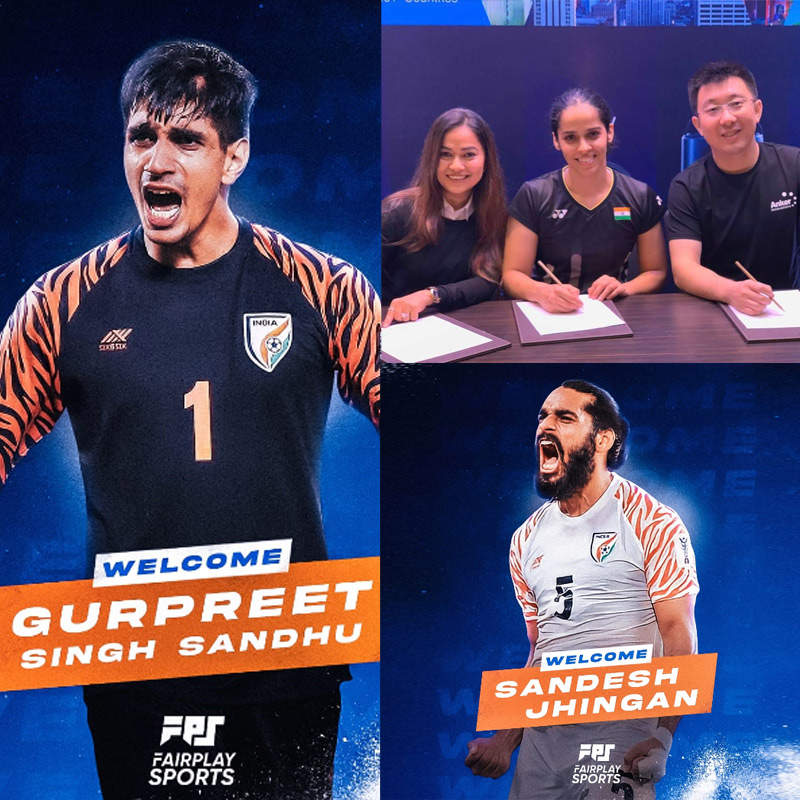
    Mumbai: Gurpreet Singh Sandhu and Sandesh Jhingan, both Indian footballers, have signed with the Delhi-based sports marketing agency FairPlay Sports.

    The new signings will further boost FairPlay Sports’ roster, which already includes Indian football captain Sunil Chhetri, Chennaiyin FC captain Anirudh Thapa, ATKMB winger Ashique Kuruniyan and ATKMB forward Manvir Singh, among others.

    FairPlay Sports co-founder Bandana Chhetri said, “Both Gurpreet and Sandesh are key figures in Indian football. Additionally, both are massive fan favourites because of their style of play and intensity on the field. As an agency, we have always had a focus on football and footballers because it has a lot of potential for growth. We want to provide footballers with the opportunity and support they need off the field so they can maximise their potential on it.”

    Talking about the same, the national team goalkeeper Gurpreet Singh Sandhu said, “I am thrilled to get on board with FairPlay Sports. I’ve known the people behind it for some time now and am excited at all the possibilities being part of the FairPlay team will bring.”

    Indian defender Sandesh Jhingan added, “I am happy to have signed with FairPlay Sports, who I feel do a fantastic job with all athlete-related aspects beyond the pitch. I’m looking forward to all the exciting opportunities that come out of this association.”

  • ISL 2016 shows growth; final gets 41 million TV views

    ISL 2016 shows growth; final gets 41 million TV views

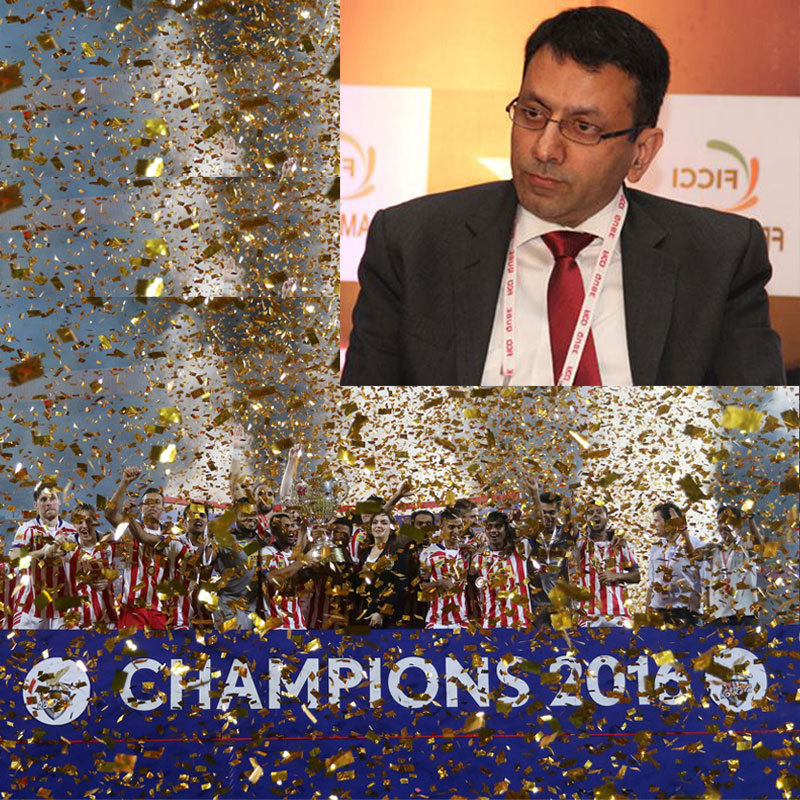
    MUMBAI: The third season of the Hero Indian Super League was one of the most watched and followed footballing properties in India in 2016. With eight teams vying hard and looking equal on the paper, it was set to be a thrilling contest on cards. Atletico de Kolkata won the equally fought final in a penalty shootout, defeating fellow finalists of 2014, Kerala Blasters at a packed Kochi Stadium.

    The final was seen by 54,000 fans in the stadium, while 41 million fans tuned in on television to follow the nail biting drama (BARC, CS4+, U+R, all Channels). The total viewership was a rise of 41 per cent as compared to the final of 2015, shattering all records on the TV viewership of the league in history.

    Numbers suggest that finalists’ were being ably supported by their respective states. In Kerala, the ISL final became the most viewed sporting event in 2016, eclipsing the 2016 T20 World Cup semi-final (India vs West Indies) and the Euro 2016 final. In West Bengal, the ISL final had a higher viewership that that of IPL 9 finals (BARC, CS 4+, U+R Average Impressions).

    With a total viewership of 216 million as compared to 207 million last year, it is easy to understand that the football league is growing steadily (BARC, CS4+, U+R). One of the One of the highlights of the season was the sharp increase in rural India viewership registering a cumulative figure of 101 million, indicating the widespread appeal of the sport. Furthermore, key metro markets like Mumbai and Chennai emerged as one of the top performers this season recording a surge of more than 50% over last year along with a cumulative 20 per cent spike in viewership in Tamil Nadu.

    Football Sports Development Ltd founder & chairperson Nita Ambani, optimistic about the rising popularity of the game in India, said, “The overwhelming response from fans is testament to the vision we have for the league, and it reaffirms our faith that the ‘Indian football is moving in right direction. The response from newer markets like Tamil Nadu and Mumbai, and further growth in established markets like West Bengal, Kerala etc shows the appetite for the sport. Stadium attendance, viewership numbers and growth on digital platform this season further encourages us to reset our benchmark for the season ahead.”

    The third season of ISL has recorded a surge of over 25 per cent in overall viewer engagement vis-à-vis ISL 2015. This showcases the enhanced quality of play complemented by new look graphics and the best of experts on the commentary panel, cutting across demographic boundaries and capturing the imagination of a diverse fan base.

    2016 edition also took the digital medium by storm, registering double view-time, which was 2.3 times over last year on both Hotstar and Jio platform combined. The phenomenon of the Hero ISLwas also visible at the stadiums throughout the season in all ISL club cities, with fan armies and football enthusiasts filling up an average of over 84 per cent seating capacity, the highest across all three seasons.

    Star India managing director Sanjay Gupta said, “The kick-off to the Hero ISL in 2014 signified the birth of a footballing nation. This is a long term journey however we are very encouraged by the incredible fan affinity and increase in following of the league and the sport in a short span of three years. We had dreamt of the day when Indian footballers would emerge as sporting heroes and this season of the Hero ISL has seen many new stars emerge. Further the quality of play and multi-lingual, high quality broadcast content has delivered record engagement levels amongst fans. The deeper penetration of the league into Urban and Rural India and the explosive growth of digital consumption augurs well for the future of football in India.”

  • ISL 2016 shows growth; final gets 41 million TV views

    ISL 2016 shows growth; final gets 41 million TV views

    MUMBAI: The third season of the Hero Indian Super League was one of the most watched and followed footballing properties in India in 2016. With eight teams vying hard and looking equal on the paper, it was set to be a thrilling contest on cards. Atletico de Kolkata won the equally fought final in a penalty shootout, defeating fellow finalists of 2014, Kerala Blasters at a packed Kochi Stadium.

    The final was seen by 54,000 fans in the stadium, while 41 million fans tuned in on television to follow the nail biting drama (BARC, CS4+, U+R, all Channels). The total viewership was a rise of 41 per cent as compared to the final of 2015, shattering all records on the TV viewership of the league in history.

    Numbers suggest that finalists’ were being ably supported by their respective states. In Kerala, the ISL final became the most viewed sporting event in 2016, eclipsing the 2016 T20 World Cup semi-final (India vs West Indies) and the Euro 2016 final. In West Bengal, the ISL final had a higher viewership that that of IPL 9 finals (BARC, CS 4+, U+R Average Impressions).

    With a total viewership of 216 million as compared to 207 million last year, it is easy to understand that the football league is growing steadily (BARC, CS4+, U+R). One of the One of the highlights of the season was the sharp increase in rural India viewership registering a cumulative figure of 101 million, indicating the widespread appeal of the sport. Furthermore, key metro markets like Mumbai and Chennai emerged as one of the top performers this season recording a surge of more than 50% over last year along with a cumulative 20 per cent spike in viewership in Tamil Nadu.

    Football Sports Development Ltd founder & chairperson Nita Ambani, optimistic about the rising popularity of the game in India, said, “The overwhelming response from fans is testament to the vision we have for the league, and it reaffirms our faith that the ‘Indian football is moving in right direction. The response from newer markets like Tamil Nadu and Mumbai, and further growth in established markets like West Bengal, Kerala etc shows the appetite for the sport. Stadium attendance, viewership numbers and growth on digital platform this season further encourages us to reset our benchmark for the season ahead.”

    The third season of ISL has recorded a surge of over 25 per cent in overall viewer engagement vis-à-vis ISL 2015. This showcases the enhanced quality of play complemented by new look graphics and the best of experts on the commentary panel, cutting across demographic boundaries and capturing the imagination of a diverse fan base.

    2016 edition also took the digital medium by storm, registering double view-time, which was 2.3 times over last year on both Hotstar and Jio platform combined. The phenomenon of the Hero ISLwas also visible at the stadiums throughout the season in all ISL club cities, with fan armies and football enthusiasts filling up an average of over 84 per cent seating capacity, the highest across all three seasons.

    Star India managing director Sanjay Gupta said, “The kick-off to the Hero ISL in 2014 signified the birth of a footballing nation. This is a long term journey however we are very encouraged by the incredible fan affinity and increase in following of the league and the sport in a short span of three years. We had dreamt of the day when Indian footballers would emerge as sporting heroes and this season of the Hero ISL has seen many new stars emerge. Further the quality of play and multi-lingual, high quality broadcast content has delivered record engagement levels amongst fans. The deeper penetration of the league into Urban and Rural India and the explosive growth of digital consumption augurs well for the future of football in India.”

  • Rs 20 crore salary cap set for Indian Super League season 2

    Rs 20 crore salary cap set for Indian Super League season 2

    MUMBAI: The first season of the Hero Indian Super League (ISL) was indeed a success for the sport in India as it achieved a rare status of being the fourth-most watched football leagues in the world. 


    Now in its second edition, the controlling body of the ISL, the Football Sports Development Ltd (FSDL), formed through a joint venture between IMG-Reliance and Star India, has decided that the ISL clubs will have player’s salary cap of Rs 20 crore for the second season to be held this year. 


    The board has also decided that the ISL will have an auction for Indian players who have played in the senior national teams but missed out on the inaugural ISL season.


    Each club will be eligible to add only one such player from the auction list consisting of maximum 12 to 15 players. Those not picked through auction will form part of the Domestic Players Draft. 


    Commenting on the development, an Indian Super League spokesperson said that the new set of rules are defined to encourage clubs in player retention, assist them in managing player costs and provide a level playing field for each club to prepare for the second season with a reasonable and broadly equitable chance of winning the league in 2015. 


    “The inaugural year of the ISL brought to fore many new faces of Indian football other than the known international names. The league encourages the Clubs to retain such players to help them build an identity and fan base,” added the spokesperson.


    In terms of player retention, a number of decisions have been taken at the first Governing Council to review the inaugural season. The Governing Council committee consists of all eight ISL participatory club representatives and officials from FSDL. 


    For marquee players it has been decided that each club must have a minimum of one marquee player. Clubs can retain their marquee player from the inaugural season but are free to sign one from the open market, with prior approval from the League. For international players, clubs can retain a minimum of one and maximum of five international players. Additionally, clubs are allowed to contract international players by themselves through the market directly. 


    It has also been decided that a minimum of one and maximum of six domestic players can be retained by a club. Players, who are not part of the retention list of clubs, can be signed by any ISL club in the open market until April 2015. In case they are still without contract, such players will be listed in the Domestic Draft. 


    Each club is to have a minimum of 22 players, with a mandatory two developmental players in the squad. Each team would consist of one marquee, eight international and 13 domestic players including the compulsory two under-23 developmental players. A club can have a maximum squad size of 25. Additional quota of three players can have maximum two international players it has been decided.

  • Zee Sports to telecast 15 matches of Santosh Trophy

    Zee Sports to telecast 15 matches of Santosh Trophy

    MUMBAI: Zee Sports will telecast the finals rounds of 61st Santosh Trophy comprising of quarterfinals, semi finals and finals from 14 October to 25 October. 

    In total 32 states and government institutions have taken part in this year’s tournament. The cluster leg of the 61st Santosh Trophy was held over the last month in Gurgaon and Faridabad.

    Zee Sports business head Himanshu Mody says, “We are proud to be associated with the telecast of 61st edition of Santosh Trophy. Zee Sports has put in lot of hard work to present the Santosh Trophy in a viewer friendly format at viewer friendly times with in depth analysis. We are also, undertaking a holistic program to develop football from ground level to see India playing in major football tournaments around the world. We are sure that all this along with Zee Sports distribution strength will see football reach a new level.”

    Zee Sports will telecast the fifteen matches from the quarterfinals onwards of the 61st Santosh Trophy, live and exclusive from, Gurgaon starting 15 ctober. Zee Sports would be using a 10 camera set up to produce the telecast. The telecast package will include preview and review shows, half time match analysis and various studio programming. The coverage will involve more cameras, more replays, new commentators and a new graphic look. Zee Sports ace anchor Mayanti Langer will present the pre-match and a post match analysis along with football expert Novy Kapadia, informs an official release.

    In line with Zee Sports promise to deliver international quality coverage of Indian football, legendary John Helm will be commentator along with Zee Sports anchor Debayan Sen for the Santosh Trophy.

    To promote the tournaments a special section on Indian football will be created on Zee Sports website www.zeesports.co.in. This will provide soccer fans with the latest team news, match scores, statistics and player profiles, as well as exclusive player interviews and photo galleries. There will be interactive sections, which will include chat rooms, video clips of matches, online games, wallpapers and ring tones, the release adds.

    The Schedule:

    Haryana vs West Bengal – 14 October – 4:45 pm
    Goa vs Punjab – 14 October – 7:00 pm
    Kerala vs Tamil Nadu – 15 October – 4:45 pm
    Maharashtra vs Karnataka – 15 October – 7 pm
    Haryana vs Punjab – 16 October – 4:45 pm
    West Bengal vs Goa – 16 October – 7 pm
    Tamil Nadu vs Karnataka – 17 October – 4:45 pm
    Maharashtra vs Kerala – 17 October – 7 pm
    Haryana vs Goa 18 October – 4:45 pm
    West Bengal vs Punjab – 18 October – 7 pm
    Kerala vs Karnataka 19 October – 4:45 pm
    Maharashtra vs Tamil Nadu 19 October – 7 pm
    First Semi Finals – 21 October – 6:30 pm
    Second Semi Finals – 22 October – 6:30 pm
    Finals – 25 October – 7 pm