Tag: Indian Film & TV Producers Council

  • Sajid Nadiadwala passes the baton after 13 years at Indian film producers’ association’s helm

    Sajid Nadiadwala passes the baton after 13 years at Indian film producers’ association’s helm

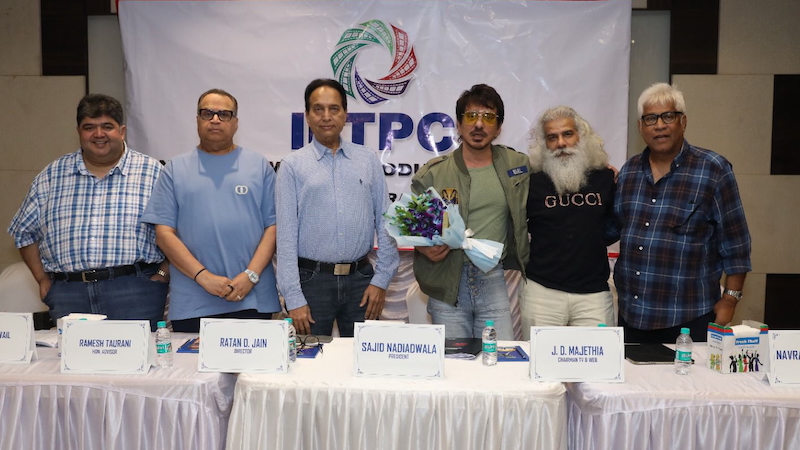
    MUMBAI: After 13 years steering India’s film and television producers’ council, Sajid Nadiadwala has stepped aside. His successor? Ratan Jain, a three-decade veteran of Bollywood who previously ran the organisation from 2010 to 2012.

    The handover came at the Indian Film & TV Producers Council’s 34th annual general meeting yesterday. Nadiadwala, in his farewell address, spoke of the need for fresh leadership and proposed Jain as his replacement—a nomination the members backed unanimously.

    The outgoing president received the usual tributes: a bouquet from NR Pachisia and a memento from Jamnadas Majethia. Members applauded his tenure, though the council offered few specifics about his achievements.

    Jain brings serious credentials. As head of Venus Group, he has produced box-office successes including Khiladi, Baazigar, Dhadkan, Humraaz and Garam Masala. His return marks a homecoming of sorts after his earlier stint at the top.

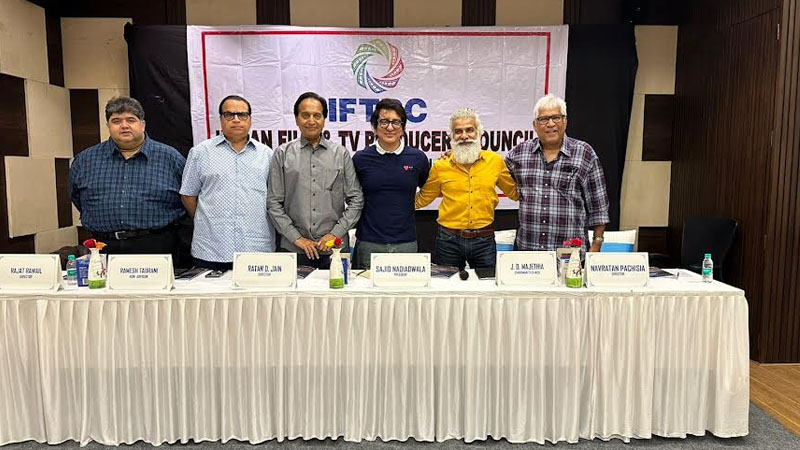
    The newly elected board for 2025-26 includes Majethia as chairman (TV & web), alongside directors NR Pachisia, Madhu Mantenna, Kumar Mangat Pathak, Rajat Rawail, Shyamashis Bhattacharya, Nitin Vaidya and Abhimanyu Singh. Ramesh Taurani will serve as honorary adviser.

    The council now awaits Jain’s vision for an industry navigating streaming disruption and changing audience habits.

  • Sajid Nadiadwala re-elected as IFTPC president

    Sajid Nadiadwala re-elected as IFTPC president

    Mumbai: The Indian Film & TV Producers Council (IFTPC), the leading organisation representing producers in the Indian film, television, and digital media sectors, held its 33rd Annual General Meeting (AGM) on 10 September 2024 at the IFTPC Studio under the leadership of Sajid Nadiadwala, who was re-elected as president. In his address, Nadiadwala detailed the Council’s achievements and progress over the past year. He observed that “the central government as well as the State CM are receptive to the Film Industry,” and expressed hope that the recent box-office successes of certain films will help reinvigorate the industry, highlighting his satisfaction with the success of content-driven films that do not rely on star power.

    JD Majethia, re-elected as TV and Web Wing chairman, recalled the recent farewell event for Sony Network CEO and MD N.P. Singh noted that Singh was “surprised at the pleasant and warm farewell given to him.” Majethia assured that the IFTPC will continue to honour many more distinguished figures from the industry in the future and expressed his optimism that “within 2-3 years, the Indian TV and Web will definitely reach the pinnacle of glory.”

    The reconstituted board of directors for 2023-24 includes Sajid Nadiadwala as president, JD Majethia as chairman of the TV/Web Wing, along with Ratan Jain, NR Pachisia, Madhu Mantena, Shyamashish Bhattacharya, Kumar Mangat, Rajat Rawail, Nitin Vaidya, and Abhimanyu Singh. Ramesh Taurani has once again been requested to continue serving as an honorary advisor.

  • Indian Film & TV Producers Council re-elects Sajid Nadiadwala as its president

    Indian Film & TV Producers Council re-elects Sajid Nadiadwala as its president

    Mumbai: Indian Film & TV Producers Council (IFTPC) has once again re-elected Sajid Nadiadwala as president at the 31st annual general meeting (AGM). This is the 11th year in a row that Nadiadwala has been president. Jamnadas Majethia was also elected again as chairman of the TV and web wing of the IFTPC.

    The AGM saw the induction of two new directors and the new board composition as follows: Ratan Jain, NR Pachisia, Madhu Matena, Shyam Bajaj, Kumar Mangat Pathak, Rajat Rawail, Shyamashis Bhattacharya, Dinesh Vijan, Nitin Vaidya, Abhimanyu Singh, and Ramesh Taurani.

    Nadiadwala expressed satisfaction that the pandemic has ebbed and that box office business is once again flourishing. He added that he would soon lead a delegation to the Maharashtra chief minister Eknath Shinde to discuss concerns pertaining to the sector.

    Jamnadas agreed with Nadiadwala and stated that while the TV business is developing well, there are some difficulties related to the film city that need to be addressed. He expressed hope that the meeting with the CM will help to address these concerns.

    He lamented the need to lower the extremely high electricity prices. He added that the contractual agreement with art directors is cause for serious concern because some art directors fail to pay their employees’ salaries on time, which causes unease and tension among the employees.

    The meeting paid tribute to all the departed souls during the year including Lata Mangeshkar and IFTPC former director Vijay Galani.

  • Sony Pictures Networks India ups safety bar on TV sets

    Sony Pictures Networks India ups safety bar on TV sets

    MUMBAI: TV production in India has been a bit of a bummer over the past few years: hazardous material constructed sets, loosely put together electrical connections, below par sanitation, and shoddy facilities have been the hallmarks of shooting floors. Safety measures for TV actors and crews have been sub-par. Accidents have sometimes got out of hand, and there have been several incidents over the years where crew have been injured or lost their lives. Sony Pictures Networks India (SPN) is changing that at least on one front: having ambulances and clinics on all sets where TV shows or films are being shot.

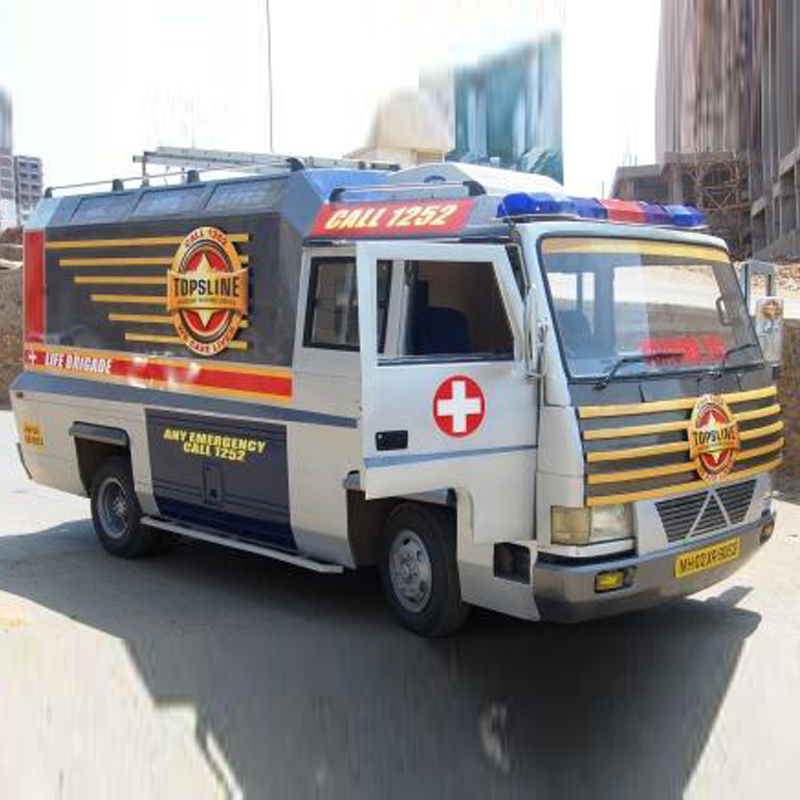
    Apparently, the company has hired one of India’s top emergency response services TopsLine to deploy 11 mobile clinics and ambulances at the sites of 16 shows where shooting is under way in Mumbai and its periphery. Why is SPN India suddenly getting a shot of corporate social responsibility?

    Well, it’s part of its efforts to raise the bar and provide protection to those who work on the front lines to churn out the content that brings it ratings and revenues. A while ago SPN India officials had conversations with these folks on how they felt on the sets, and the reaction was pretty eye-opening. Most respondents said that, apart from wages, what they wanted was better hygiene and ablution facilities, apart from safety. That prompted the network to spring into action, taking the first of many more steps it intends to take in this direction.

    The mobile medical vans are likely to cover around 1600 people at a stretch if one were to assume 90-100 people working on an average at each of its different sets at a time.

    While TV industry professionals have lauded SPN India’s initiative, a lot more needs to be done says Hats Off Productions co-founder and the Indian Film & TV Producers Council TV division head JD Majethia. However, there are challenges, he admits.

    “The nature of business is so different — the shooting sites are temporary structures; it’s difficult to make arrangements. Sites keep shifting, and sometimes the sets are on wheels,” says Majethia.

    There is the lack of basic hygiene amongst the crew at times who chew tobacco, spit betel nut juice (pan) on the sets, which tends to dirty the area. Of course actors have their vanity vans, which keeps them ring fenced from the mess. But the crew has to bear with it all the same.

    A problem that is faced by many a producer and production supervisors is providing proper lunch tables on locations. “On large shooting floors, if there are 100 people at work and everybody needs to be accommodated during lunch, it becomes difficult to manage, say 10 tables, in an hour’s time,” explains Majethia. Then, potable water, for example, is one of the issues that needs careful planning.

    At times there is the mosquito menace at the shooting locations. And when the Dengue fever scare has been running rampant, this is indeed concerning. “In such situations, we often take the help of pest control services and also provide safety creams such as Odomos to all the actors and workers,” Majethia said.

    Majethia once again lauded SPN India’s ambulance drive and added that the industry is constantly working with the various trade craft bodies to improve the lot of those on the sets. “And things can only get better from here,” he said.
  • Sony Pictures Networks India ups safety bar on TV sets

    Sony Pictures Networks India ups safety bar on TV sets

    MUMBAI: TV production in India has been a bit of a bummer over the past few years: hazardous material constructed sets, loosely put together electrical connections, below par sanitation, and shoddy facilities have been the hallmarks of shooting floors. Safety measures for TV actors and crews have been sub-par. Accidents have sometimes got out of hand, and there have been several incidents over the years where crew have been injured or lost their lives. Sony Pictures Networks India (SPN) is changing that at least on one front: having ambulances and clinics on all sets where TV shows or films are being shot.

    Apparently, the company has hired one of India’s top emergency response services TopsLine to deploy 11 mobile clinics and ambulances at the sites of 16 shows where shooting is under way in Mumbai and its periphery. Why is SPN India suddenly getting a shot of corporate social responsibility?

    Well, it’s part of its efforts to raise the bar and provide protection to those who work on the front lines to churn out the content that brings it ratings and revenues. A while ago SPN India officials had conversations with these folks on how they felt on the sets, and the reaction was pretty eye-opening. Most respondents said that, apart from wages, what they wanted was better hygiene and ablution facilities, apart from safety. That prompted the network to spring into action, taking the first of many more steps it intends to take in this direction.

    The mobile medical vans are likely to cover around 1600 people at a stretch if one were to assume 90-100 people working on an average at each of its different sets at a time.

    While TV industry professionals have lauded SPN India’s initiative, a lot more needs to be done says Hats Off Productions co-founder and the Indian Film & TV Producers Council TV division head JD Majethia. However, there are challenges, he admits.

    “The nature of business is so different — the shooting sites are temporary structures; it’s difficult to make arrangements. Sites keep shifting, and sometimes the sets are on wheels,” says Majethia.

    There is the lack of basic hygiene amongst the crew at times who chew tobacco, spit betel nut juice (pan) on the sets, which tends to dirty the area. Of course actors have their vanity vans, which keeps them ring fenced from the mess. But the crew has to bear with it all the same.

    A problem that is faced by many a producer and production supervisors is providing proper lunch tables on locations. “On large shooting floors, if there are 100 people at work and everybody needs to be accommodated during lunch, it becomes difficult to manage, say 10 tables, in an hour’s time,” explains Majethia. Then, potable water, for example, is one of the issues that needs careful planning.

    At times there is the mosquito menace at the shooting locations. And when the Dengue fever scare has been running rampant, this is indeed concerning. “In such situations, we often take the help of pest control services and also provide safety creams such as Odomos to all the actors and workers,” Majethia said.

    Majethia once again lauded SPN India’s ambulance drive and added that the industry is constantly working with the various trade craft bodies to improve the lot of those on the sets. “And things can only get better from here,” he said.