Tag: Indian film industry

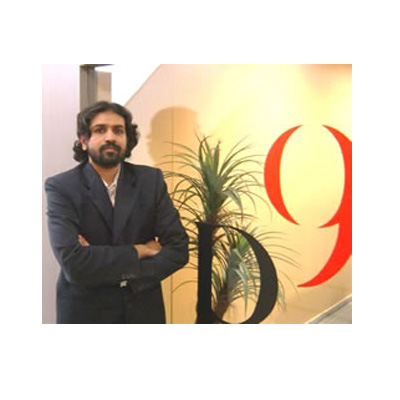
  • ‘80% of activity where brands are engaging themselves with films is in associative marketing’ : CEO Navin Shah

    ‘80% of activity where brands are engaging themselves with films is in associative marketing’ : CEO Navin Shah

    This year the Indian film industry has entered the spotlight with release after release that has caused a stir in the media. Amidst all this, there have also been several others contributing to the noise and much like ‘parasites’ seem to be clinging on to the fame! In short, brands are increasingly riding the tide of Bollywood, transforming this activity into a more organised format by investing ‘big monies’ towards it. This trend seems to be gaining ground in the Indian sub-continent with a whole host of advertisers jumping in the ‘brand-wagon’ of blockbusters including Krrish, Lage Raho Munnabhai, Don and the latest addition Dhoom 2.

    Highlighting the potential of this relatively new yet burgeoning industry, P9 Integrated CEO Navin Shah took some time out to speak with Indiantelevision.com’s Renelle Snelleksz.

    Excerpts:

    What are the various options available to advertisers when associating with a film?
    A product placement is only one aspect of what a brand can do with a film. In fact, product placement only forms 10 per cent of all the activity. Actually a lot happens outside the film, in what is popularly called associative marketing or co-promotion, where the film rides on the brand to get promoted and in turn the brand rides on the euphoria of the film.

    Firstly, there is no lag in the time period, like for Salaam-e-Ishq, which is releasing on 24 January, the planning can be done now. Secondly, even if there is a high integration of the creative of the brand footage and the film, it is only outside and is short lived. It is irrespective of the fate of the film, because you are doing an outside association you are assured of your ROI as it is media linked. The association can be amplified via other mediums like television, print, cinema hoardings.

    Therefore, 80 to 90 per cent of activity in which brands are engaging themselves with films is in associative marketing.

    Is it not a big risk that brands are taking with in film associations, especially if the movie doesn’t do well?
    If you look at it from purely a visibility perspective, while it is a risk, when you have product placement x amount of viewership is guaranteed. However, today there are a couple of more avenues where the brand is going to be seen, most importantly is satellite television because sooner or later the movie will be released on TV, not just once but at multiple times so in that case visibility is assured. In addition, in the Indian context, the home video segment is really growing so even the shelf life of the film is largely increased with the sale of DVDs. To that extent, the risk gets slightly amortized but in-film per se is a ‘high risk high return model’ because if it works then the returns can go as high as Rs 20 to 30 crores. Therefore, the marketer is always aware of the fact that he is pumping in on something that can give him a disproportionate return.

    Brand associations are then a viable option and filmmakers stand to gain as it not only provides additional revenue but also helps to market his film?
    In fact this is what most of the advertisers think. But if you look at it from a filmmaker’s perspective he makes a mutli-million rupee film, the brand monies are inconsequential in terms of its overall PNI. In this scheme of things. the brand actually rides on a Rs 15-40 crore project. It’s not only the producer that benefits from this activity. If done right it’s a win-win situation. In fact, for a client it’s a huge opportunity because in India films are such a big passion that if something works, the magic can help reap benefits for years to come.

    A classic example is ICICI and Baghban, that’s a four year old story while the shelf life of that can grow to be about 20 years as satellite TV keeps replaying it over and over again. Thus, it is a disproportionately skewed equation for the brand and if brands realise this they can use it to their advantage.

    How much are brands willing to spend on the medium?
    Worldwide there are brands, including automobile companies, glass manufactures, mobile phone companies that spend almost 20-30 per cent of their marketing budget on product placement, like for instance new versions of the Audi have been launched via films. In India, there are at least 40 brands that spend more than Rs 100 crores in a year.

    This year’s blockbuster Krrish is often sighted as a popular case study, but what happens when there are more than 10 brands incorporated in a film, in that case how does it prove to be a ‘clutter breaking’ approach?
    It’s not about whether there are four brands or 500 brands in a film. If the brand is shown in the right context, then I think there is place for even 100 brands where every brand will stand out in three hours. If you take the example of a Bond film, there are about 20 brands placements and each one gets its own glory so there is no question of ‘clutter’, it’s the context and the way you portray the brand.

    Among several brands in film, will a particular brand have to pay a greater premium for more visibility?
    It’s more about the idea and not about the show time measured in seconds that a brand came in. An example is a product placement I had done for Kodak in Hum Tum where it was as small as 10 seconds in which Saif remembers Rani getting married to Abhishek and the thought freezes as a photograph on which he scribbles “Maybe a perfect Kodak moment?” That in my mind is more than a brand trying to tout his product for 10 minutes in a film. So it’s not about one trying to outdo the other, everybody can be equally good as long as the idea behind the placement is imaginative.

    The biggest role to my mind is that of expectation management

    Who implements the placement in this set up? How does it work?
    It is the director’s prerogative, he is the final decision maker. One can however give inputs and suggestions.

    For an organization like P9 Integrated, what is their hand in the whole process?
    Firstly, we are match makers and secondly the biggest role to my mind is that of ‘expectation management’. The client may often think that by putting a certain amount of money he owns the film, while the filmmaker is any which way making a film on his terms, so P9 would ideally bring the two parties to a common platform and manage their expectations to start with, help the brand in ideating and help the producer in execution as expectation managers.

    Do several media agencies come to the table with different brands to be integrated in a film, or does one agency handle all the placements for a film?
    There have been instances where we have taken up the exclusive rights for the film and so we become a ‘toll gate’ so anybody in the market ranging from a media agency to a client will have to come to us. A case in point is the recently acquired exclusive rights for Salaam-e-Ishq for any co-promotional activity.

    Internationally, what is the scope of the market? What is being done in that space?
    Globally the industry is a three decade old business making it a mature market, today it is growing at a pace of 6-8 per cent, which would be almost 5 per cent of the overall advertising pie used on this medium. Growth will continue until it reaches a critical mass which it has not yet achieved.

    We have done several co-promotional marketing tie-ups in India for Hollywood movies including the work on Superman and Mother Dairy cheese, we had also done MI3 and Gabanna and likewise we are in talks with many films, one of the big films which is slated for December is Happy Feet on which we will be doing something interesting.

    What can we expect in the coming months?
    We have just finished working on an association for Kinetic for Apna Sapna Money Money. We also did Mentos and Jaaneman.

    There are three key films in the pipeline with a huge amount of stuff being done – for Guru, some mind blowing activity on our home production Traffic Signal which Madhur Bhandarkar is directing and of course Salaam-e-Ishq. In addition, we are also working in the regional market with Telegu films.

    What do you identify as being the way head for the industry in India?
    The future for this industry is that brands for a particular target audience and particular style and stature will require experts like us to be their entertainment AOR experts, not only for implementation but to play a complete advisory and consultancy role and give them a blue print of the strategy for the whole year of how entertainment will play a role in their brand.

    Secondly, there is some amount of measurement emerging in terms of effectiveness and impact. Companies like Media e2e are attempting to put in those measures into place.

    Measurement should become an integral part of the any project exercise so we should actually have a directional tool of getting a report card at the end of every activity to determine what worked and what didn’t work.

    Thirdly, we need to bring a lot more discipline into the whole business of branded entertainment. The biggest drawback is the lack of trained talent in this business. Additionally, there is a need to train even the professionals and the practitioners of marketing to talk of a common currency in terms of best practices, category knowledge, trends, ROI, economics and legal aspects of branded entertainment as it is an option that probably allows one to marry their passion with their career.

  • Former Disney boss Eisner enunciates ‘box’ theory at HT summit

    Former Disney boss Eisner enunciates ‘box’ theory at HT summit

    MUMBAI: The success is all in a box. The financial box coupled with micro-management is the key to the success of any enterprise, says Michael Eisner, who used to head US media conglomerate Walt Disney.
    Speaking at the ongoing Hindustan Times Leadership Summit, Eisner complimented India on its success and traced its cultural heritage as a reflection of its potential.

    Speaking about the glorious story of Walt Disney drawn from the concept of ‘Inside Box’, he pointed to the success that creativity could bring to any business. He also highlighted the need to learn lessons fast and to evolve to succeed rather than being bogged down by them.

    “We faced resistance when we entered France and were pelted with eggs. In India we did not get that reception. The Indian film industry is a success story, so I do not wish to suggest how it has to develop. But then we have developed the model that has had tremendous success” said Eisner.

    Stressing on the importance of weaving creativity around the financial box, he said, “Creativity is essential to any industry, not just animation. Creativity has to have a symbiotic relationship with financial aspects.”

    Eisner also pointed out that using the benefits of micro management, Disney achieved success. “We never lost a dime on a single movie, thanks to the financial box. Creativity can flourish within financial limits. It really works,” said Eisner.

    He explained that Disney, which was also involved in other activities, the financial box system had been deployed to achieve maximum benefits.

    Quality, creative products and the ability to bond with the customers was the mantra that Disney adopted in every toy, movie, hotel room, ashtray, Broadway, credit card etc. “Each of it is a dot that symbolises the Disney brand. The brand friendly initiative is also reflected in our hotel initiative (32 hotels) and each hotel is a financial box. We used whimsical icons to bring in creativity. In Star Cruise — it was a floating box –creativity was witnessed in gambling that was introduced,” said Eisner.

    Highlighting the importance of internet, Eisner said, “The world has become a single dot. Time, money or language, internet has impacted every part of the entertainment industry. With a video and internet one can be creative. Internet is the next platform for the entertainment industry. Fantastic things with tremendous potential are possible with internet.”

    “Think inside the box, micro-manage it and have a good time. That is what it takes to become a financial success,” was the mantra of Eisner.

  • CII to organise a Big Picture conference at intl film festival in Goa

    CII to organise a Big Picture conference at intl film festival in Goa

    MUMBAI: On the occasion of the International Film Festival of India (IFFI) in Goa which kicks off later this month the Confederation of Indian Industries (CII) will organise a conference Big Picture from 22-23 November 2006.

    The conference is dedicated to the changing face of Indian cinema and envisions to provide direction for catalysing growth of the Indian film entertainment space. Focussed on the content and financing aspects of the film business with individual sessions on film marketing, communication, co-production and new technologies, the CII endeavours to open new vistas through a series of keynotes, panel discussions and case studies, presenting growth opportunities and strategies to overcome challenges facing the Indian film industry. The conference provides an opportunity to network with the key executives from different organisations.

    The speakers include Silicon Image, USA president and CEO Steve Tirado, E&Y global media and entertainment head John Nendick,
    Kuwait National Cinema Co head Hisham Alghanim, Motion Pictures Association senior VP and regional director – Asia Pacific region Mike Ellis.

    There will be knowledge sessions on home entertainment, financing, mobile entertainment revenues, digital technology and co productions. There is so much talk about the emerging mobile entertainment in the small screen. Where are we headed and what’s the opportunity in this space? That is one of the questions this seminar will tackle.

    Around 180 movies will be screened over 11 days of the festival. The films that will be shown include the critically acclaimed Babel with Brad Pitt and Cate Blanchett that could get a Best Picture Oscar nomination next year. It closes the festival. Volver from Spanish maestro Pedro Almodovar is the opening film of IFFI 2006. The country focus
    this year at IFFI will be Argentina. A retrospective of Spanish film actor Javier Bardem will also be part of the action.

    The majority of the Indian Panorama movies are available for overseas distribution and theatrical rights. Visitors can can meet the right holders at the Film Bazaar, The Indian Panorama section would feature 20 films, including Madhur Bhandarkar’s Corporate, Girish Kasaravalli’s Kannada film Nayi Neralu, K. Satyanarayan’s Telugu film Hope, Madhu Kaithapuram’s Malayalam film Ekantham and Cheran’s Dhavmai Dhavamirrunthu.

    In the cinema of the world section films that will be screened will include the American comedy Borat
    Cultural learnings of America for make benefit glorious nation of Kazakhs. Then there is the Italian film Le Caimanby from Nanni Moretti. The film tackles Italian politics and love as seen through the eyes of a failing film producer. From France there is Little Jerusalem by Kairn Albou The story focuses on sisters Laura (a philosophy student falling in love with an exiled Algerian Muslim) and Matilde (a devout mother of four torn by her husband’s infidelities).

    Following her characters from ancient religious rituals to contemporary situations, Albou vividly brings to life the challenges made to religious faith by secular society.

    This year the festival will feature a special retrospective of Prithviraj Kapoor’s films, and a special screening of Richard Attenborough’s oscar winner Gandhi will also be held to mark the centenary of Satyagraha movement launched by Mahatma Gandhi.

    Goa Chief Minister Shri Pratapsing Rane said, ‘Goa is slated to be India’s next entertainment super-hub and IFFI 2006 is spearheading its growing recognition as an International cinema destination. This year IFFI 2006 synergises global participation, high profile glamour, world-class entertainment and internationally applauded films. Add to that a beautiful locale and the frills and fancies that come with a red carpet event and you have the perfect concoction of fun, glitz and quality entertainment’.

    Entertainment Society of Goa (ESG) CEO Nandini Paliwal says, ‘IFFI 2006 will offer the best of world cinema. With acclaimed films from across the globe, the festival represents a kaleidoscope of cultures and creates a medium to appreciate and share cinematic excellence. In fact, ESG is in the process of making a yearly event calendar encouraging associated ventures with international brands in the field of cinema and will work towards making Goa the entertainment heart of the country”.