Tag: Indian film industry

  • Sankranthi boosts box office to Rs 1,013 crore as Telugu films dominate the month

    Sankranthi boosts box office to Rs 1,013 crore as Telugu films dominate the month

    MUMBAI: January 2025 kicked off with a bang for the Indian box office, fuelled by blockbuster Telugu festival releases. According to Ormax Media’s latest report – The India Box Office Report: January 2025, films released this month grossed a staggering Rs 1,013 crore domestically, proving that Sankranthi remains one of the most lucrative periods for cinema. With three major Telugu releases driving the momentum, the industry witnessed a stellar start to the year.

    Telugu cinema stole the show, contributing Rs 480 crore to the month’s total. Sankranthiki Vasthunam emerged as the undisputed box office king, grossing over Rs 200 crore, cementing its place as January’s highest-grossing film. The festive fever didn’t stop there—Game Changer and Daaku Maharaaj also capitalised on the Sankranthi rush, ensuring Telugu cinema’s 44 per cent language share.

    Top performers of January 2025

    Despite its dominance, Telugu cinema wasn’t alone in the limelight. The Hindi film Sky Force, the only significant Hindi cinema release of the month, crossed the Rs 100 crore mark, though it wasn’t enough to push Hindi’s overall share past 30 per cent. Tamil cinema also made its presence felt with Madha Gaja Raja, which managed to cross Rs 50 crore, securing its spot among the top earners.

    Here’s how the top five films fared:

    1.   Sankranthiki Vasthunam – Rs 200 crore+

    2.   Sky Force – Rs 100 crore+

    3.  Game Changer – Rs 100 crore+

    4.   Daaku Maharaaj – Rs 100 crore+

    5.   Madha Gaja Raja – Rs 50 crore+

     Box Office Report

    While Hindi cinema had a relatively muted start to 2025, the industry is expected to rebound with upcoming big-ticket releases. With only Sky Force in contention, Hindi films struggled to maintain their traditional dominance. However, with several high-profile movies slated for February and beyond, the playing field may soon level out.

    Ormax tracks gross box office (GBO) for consistency across industries. Films releasing in multiple languages have their collections assigned accordingly. Figures are credited to the month of release, even if business spills into subsequent months. For instance, Kalki 2898 AD (released 27 June 2024) saw significant earnings in July but was reported under June’s total.

    Some films remain in theatres at the time of reporting. Their projected collections are included, with final numbers updated in subsequent editions.

    As February approaches, industry watchers are keenly observing how upcoming films will shape the box office landscape. With Sankranthi delivering fireworks, all eyes are now on Hindi cinema’s next move. Will Hindi cinema reclaim its dominance, or will Telugu films continue their reign?


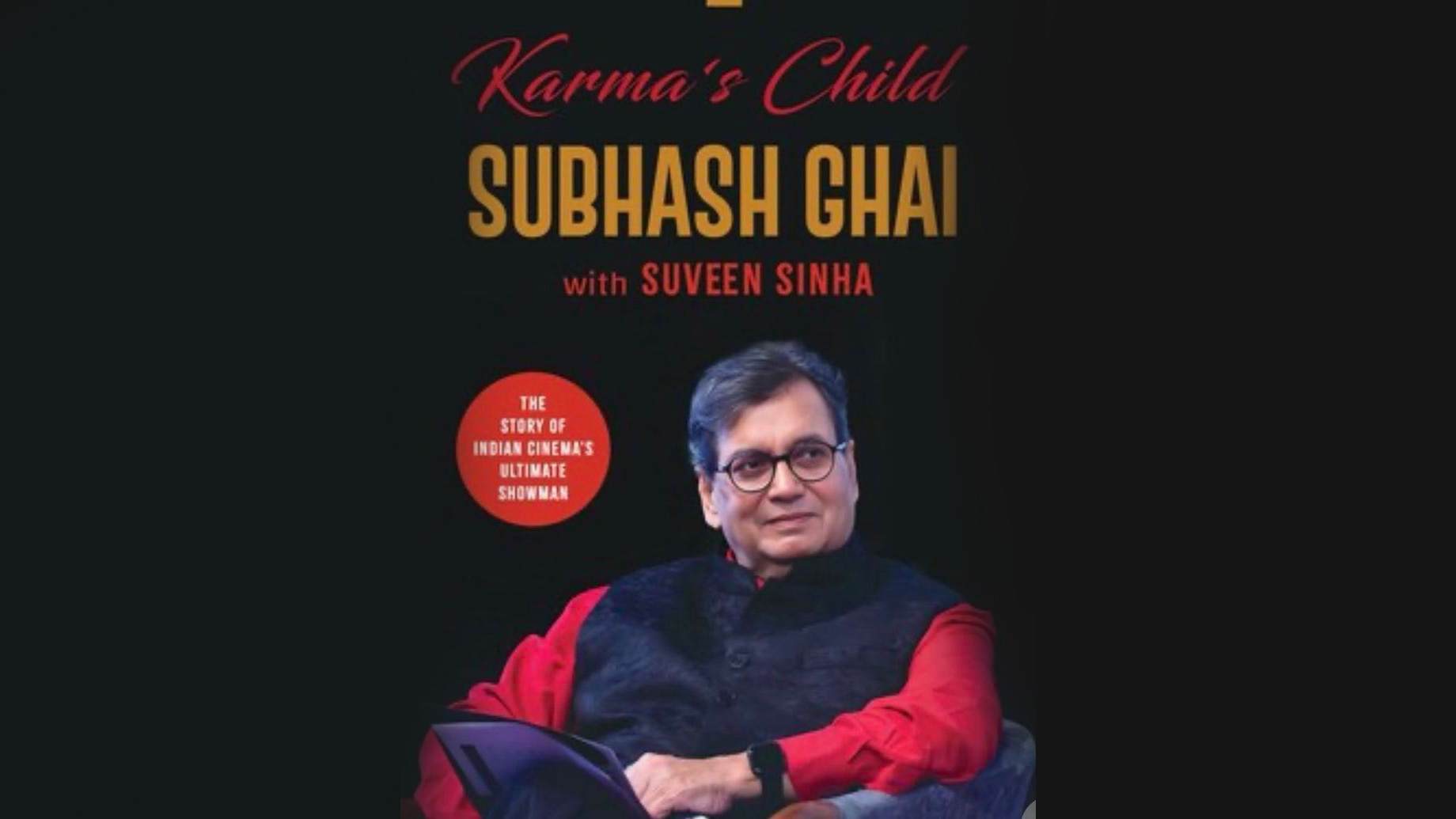
  • Subhash Ghai chronicles his legacy in “Karma’s Child”

    Subhash Ghai chronicles his legacy in “Karma’s Child”

    Mumbai: Subhash Ghai, renowned as Indian cinema’s ultimate showman, invites readers to experience his cinematic brilliance with the release of “Karma’s Child: The Story of Indian Cinema’s Ultimate Showman,” co-authored with Suveen Sinha and published by HarperCollins. The memoir captures the iconic director’s remarkable journey, from shaping Bollywood’s landscape with his blockbuster films to nurturing the next generation of filmmakers through his institute, Whistling Woods International.  

    Ghai’s career is marked by his mastery in crafting films that blend grandeur, compelling storytelling, and unforgettable music, transforming Bollywood from the late 1970s to the 1990s. Out of the fifteen films he directed during this era, eleven—including iconic hits like Kalicharan, Vidhaata, Hero, Karma, Ram Lakhan, Saudagar, Khal Nayak, and Taal—became massive blockbusters, solidifying his legacy in Hindi cinema.  

    The memoir also chronicles Ghai’s pioneering spirit, from revitalising theatres during the peak of video piracy to launching film music on audio CDs, and expanding the reach of Hindi films to global markets. His ability to direct multi-starrer films and introduce new talent who rose to stardom reflects his visionary eye for innovation in cinema.  

    Now, as the founder of Whistling Woods International, Ghai’s influence extends beyond filmmaking. His institute stands as a beacon of film and creative arts education, shaping storytellers and visionaries for the future.  

    Reflecting on his memoir, Ghai shares, “Countless stars are born in our film industry and just as many fade away. What you hold in your hands is the story of how a young man came from nowhere, faced the challenges before him, and carved his own path. This book is the story of the Hindi film industry as it unfolded before my eyes from the 1960s till today.”  


  • FCAT abolished, filmmakers criticise government’s decision

    FCAT abolished, filmmakers criticise government’s decision

    NEW DELHI: It was on April 7 that the government decided to abolish the Film Certification Appellate Tribunal (FCAT) with immediate effect. The statutory body was formed in 1983 to hear appeals from filmmakers against the rulings by the Central Board of Film Certification (CBFC). FCAT has played a crucial role in releasing several films which were initially banned from screening by the CBFC. 

    The Centre’s decision to do away with the FCAT has been met with widespread condemnation from filmmakers in the country, with industry stakeholders opining that such a move from the government could lead to creative restrictions, and may even delay film releases. 

    With the FCAT now dismantled, producers and directors unhappy with the censor board's verdict will have to approach the high court for remedy. 

    Soon after the abolition of FCAT, several prominent personalities including National Award-winning filmmakers Hansal Mehta and Vishal Bharadwaj, and actor Richa Chadha took to social media to pan the move. 

    "Do the high courts have a lot of time to address film certification grievances? How many film producers will have the means to approach the courts? The FCAT discontinuation feels arbitrary and is definitely restrictive. Why this unfortunate timing? Why take this decision at all?" tweeted Hansal Mehta. 

    Omkara director Vishal Bhardwaj censured the government's move to shut down the FCAT, calling it a “sad day for cinema.” 


    CBFC former chairperson and actor Sharmila Tagore also came out in support of filmmakers and made it clear that the decision to abolish FCAT could not only consume the time of the judiciary but also delay the release of films. 

    "I don’t know what the rationale is, what was the reason for doing this. I don’t want to comment on it at all. But FCAT was a body that was presided over by a judge and they had very eminent members. I felt since there was a legal body already present, why can’t that body look into these PILs and then later, the courts are always there. The problem with the court is everything takes a little longer. Producers can’t risk it. For them, even a week’s loss is huge," Tagore told Indian Express. 

    Several filmmakers had previously made use of FCAT to release their films on time. In 2017, Alankrita Shrivastava had approached FCAT after CBFC refused to certify Lipstick Under My Burkha. After watching the movie, FCAT asked to give an 'A' certificate to the movie with a few edits. In 2016, it was the intervention of FCAT that helped Anurag Kashyap to release his film Udta Punjab. 

  • Cannes delegates apprised of opportunities in Indian film industry

    NEW DELHI: India has invited some masters of world cinema to conduct master classes and workshops in Film Bazaar at the International Film Festival of India in Goa in November and visit different locations in India.

    Addressing foreign and Indian delegates to the India Pavilion at Cannes, Information and Broadcasting Ministry Joint Secretary (Films) Ashok Parmar said this was “in sync with our Film in India initiative under the aegis of the Film Facilitation Office. We also had the opportunity to speak about international collaboration between talent and co-creation of content since we have signed co-production treaties with several countries.”

    He said the meeting with the various delegates enabled the Ministry to introduce internationally celebrated filmmakers to IFFI, which is in its 48th year and thus showcases the latest critically acclaimed films. “We would be delighted to have these eminent personalities”, he added

    He went on to inform the filmmakers that setting up of the National Centre of Excellence in Animation, Gaming and Visual Effects in Mumbai and a new Film and Television Institute in the North Eastern State of Arunachal Pradesh will enhance the skill of the film sector.

    The delegates were informed of the Ministry’s ambitious National Film Heritage Mission through the National Film Archives based in Pune and the National Museum of Indian Cinema in Mumbai under the aegis of Film Division, as an endeavour on the part of the Government’s effort to preserve the century old cinematic heritage of the country.

    The meeting also discussed how the Directorate of Film Festival could promote Indian cinema across various cities in the UK and Poland and at the same time give their films a footprint in India.

    The National Film Development Corporation which conducts the Film Bazaar tied up with Marco Muller – Artistic Director, Pingyao International Film Festival, to introduce various initiatives to acclaimed international filmmakers and representatives of various National Bodies from Countries that have an international co-production with India.

    Indian Ambassador to France Mohan Kumar said, “We had very useful discussions centered around two fundamental objectives: how to achieve greater visibility for Indian Cinema worldwide and how to promote India as a destination for foreign movies. Discussions with Directors, Producers and Policy-makers from UK, Italy, Poland Germany and China proved fruitful and a possible road map to increase the global footprint did emerge”.

    The delegates in attendance included Fatih Akin (Director/Producer – Germany);
    Nurhan Sekerci (Producer – Germany); Bady Minck (Director/Producer – Austria/Luxembourg); Simone Gattoni (Director/Producer – Italy); Heather Stewart (Creative Director – British Film Institute; Izabela Kiszka-Hoflik (Head of Film production and Project Development – Polish Film Institute; and Michel Pradier and Marielle Poupelin – Telefilm Canada

    The India Pavilion is organized by the NFDC on behalf of the Ministry and is a fully equipped and functional business centre during this period and provides Indian delegates with an opportunity to meet and conduct business with leading members of the international film fraternity.

    The Pavilion will host knowledge sessions with various filmmakers and also facilitates the publicity of films produced by Indian filmmakers. The Corporation has published an India Guide with details of Indian professionals registered with the Cannes Film Festival & Market.

  • Indian film industry bats for simplified tax structure

    Indian film industry bats for simplified tax structure

    NEW DELHI: The Indian film industry is up in arms against the Goods and Services Tax Bill proposed by the government, as far as entertainment levies go.


    It has been voicing its concerns on the forthcoming GST bill as the proposed bill does not subsume all the taxes levied on the film sector.


    The film industry strongly feels that entertainment taxes levied by local bodies must be subsumed in the proposed GST regime. To this effect, the Film and Television Producers Guild urged the Government that all entertainment taxes, whether levied by the States or local bodies, be subsumed in the GST.


    The Government can implement this proposal by making amendment to the Constitution (122nd Amendment) Bill 2014 by deleting entry 62 to the List II (State List) to the Seventh Schedule to the Constitution of India.


    In a statement, the Guild said that the Constitution (100th Amendment) Bill 2014 passed earlier this month by the Lok Sabha gives effect to change in taxing powers of the State and Central Governments and making suitable changes to introduce Goods and Services Tax in India. The Bill has now gone to the RajyaSabha.


    The Bill seeks to subsume almost all indirect taxes charged by Central and State Governments.


    However, the Guild noted that most of the taxes would be subsumed in GST with one notable exception of the entertainment tax levied and collected by local bodies. The Bill allows the entertainment tax to be levied and collected by local bodies (that is, panchayats and municipalities). The tax would be over and above the State and Centre GST on entertainment.


    The local body entry tax (such as Octroi) estimated at Rs 14,000 crore per annum for Maharashtra alone, has been fully subsumed in GST. However, local body entertainment tax estimated at Rs 25 -Rs 30 crore across India is kept out of GST allowing such local bodies to charge an incremental entertainment tax over and above GST.


    The Bill has deleted exclusive power of the Central government to tax all services and manufacture of goods (except for excise duty on tobacco products, petroleum and alcohol for human consumption). Similarly, exclusive power to tax on sale and purchase of goods, all types of entry of goods, luxury, betting and gambling and entertainment tax (unless levied and collected by local bodies) except for tax on purchase and sale of alcohol for human consumption has been taken away.


    Film and Television Producers Guildpresident Mukesh Bhatt said, “Internationally, films are considered as arts and cultural ambassadors and offered many incentives and financial support governments around the world. Indian films have contributed significantly in uniting the nation and taken Indian culture to international audience. Films should be treated at par with other services and not be singled out for the additional entertainment tax. In fact, the Government implies to treat entertainment at par with sin goods such as alcohol and tobacco, which are also kept out of GST.”


    An Ernst and Young report titled “Subsume entertainment tax in GST” states that supplementary levies in addition to GST are warranted only for products that are harmful to health such as tobacco and alcohol or those that are detrimental for the environment (petroleum). There are no negative externalities associated with entertainment. It must be considered at par with other goods and services and should be given a fair tax treatment.


    Producer and Excel Entertainment co-founder Ritesh Sidhwani added, “Besides, levy of this tax at the local body level will neither be simple nor yield much revenue. India has a total of 640 districts, even if a small percentage of the local bodies seek to impose the tax, compliance and enforcement will be a nightmare.”


    The EY report states that for local governments, the most suitable tax base is considered to be real property, which is immobile and can readily be identified within the boundaries of a given jurisdiction. Entertainment, being mobile and available in diverse forms, is not a suitable base for municipal/local taxation. The situs of entertainment is important for municipal/local bodies that collect tax if the source of entertainment is within the boundaries of their jurisdiction. With the advent of modern technology, movies and films can be watched not just in cinema halls or through cable or DTH connections, but also on computers, laptops and media players.


    Entertainment signals could be beamed from a satellite and receivedanywhere within the footprint of the signals, which could be the whole of the country or the continent.


    At any given time, it would be difficult to determine whether the film is being watched within the limits of the municipal or local body.


    Dharma Productions’ Karan Johar said, “It will be almost impossible for the film producers to estimate the tax revenues with any precision. This appears to be against the government policy of facilitating ‘ease of doing business and ‘tax certainty’ in India.”


    It is believed that even though the tax would be charged and collected from the theaters, film producers are impacted by it since the producers generally enter into revenue sharing arrangements with the theaters, which are based on revenues net of any taxes applied on the admissions. They would need to know the taxes applied by each of the local bodies to determine their share in the revenue pool.


    Film and Television Producers Guild CEO Kulmeet Makkar added, “The Film Guild has on numerous occasions reached out to the Central Government, Empowered committee of State Finance Minister, Parliamentary Standing Committee. However, this has not been addressed in the bill.”
  • Priyanka Chopra gets applauded for her performance in ‘Mary Kom’

    Priyanka Chopra gets applauded for her performance in ‘Mary Kom’

    MUMBAI: Mary Kom, which features Priyanka Chopra in the lead, is on its way to become the highest grosser women oriented film in Indian Film Industry. On its opening day the film has made 8 Cr, 9.25 Cr on Saturday and will cross 10 Cr on Sunday as per the ongoing trade buzz. Mary Kom, a biopic on the five-time boxing champion M C MaryKom’s life, is directed by first time director Omung Kumar and co-produced by Sanjay Leela Bhansali. 


    The film has been shot for the better part in Imphal, Manipur, where the sportswoman was bred. Born in a humble home in Kangathei, Mary was only a teenager when she decided to pursue boxing, despite inviting her father’s ire.


    A story of a strong willed Manipur-based girl, who faced all odds to pursue her passion and who continued to follow her love for boxing even after becoming a wife and a mother of two, Mary Kom released in 1,800 plus screens in the country.  


    The movie is perched comfortable on its way to profitability. The movie has earned the distinction of breaking even in record time. Trade analysts and distributors reveal the movie is set to maintain collections over the weekend and should hit the Rs 30 Cr mark by Monday quoted a leading business daily. 


    “Priyanka Chopra has outdone herself. She has played Mary Kom to the hilt. She definitely deserves a National Award for this performance. Also with this Mary Kom is on its way to become the highest grosser of the year in the league of out and out woman oriented cinema. Just like Mary Kom, this film is a sure-shot winner”, says Vajir Singh, Trade Analyst and Editor of Box Office India. 


    Another Trade analyst and Editor of Film Information Komal Nahta says, “First day collections were 8 Cr, second day 9.25 Cr and I am sure that it will pick-up on Sunday also.Priyanka lives the character of Mary Kom and proves that she was born to play the role. She has put in tremendous effort to essay the role and all the hard work seems to be worthwhile because she shines with a mind-blowing performance which is absolutely award-worthy. It’s her most memorable performances. Mary Kom is a box office champion.”


    A leading distributor of Delhi, Sanjay Ghai of Mukta Arts says, “First weekend collection will be 32-33 Cr and it will made 55 Cr in its first week of release. I think that it will become tax free all over India in coming few days. Priyanka does a good job of getting into the part. She has brought the boxer to life convincingly enough. Priyanka will win most of the awards this year for her outstanding performance in Mary Kom. It leaves you rooting for our sportsmen who have put India on the world map. We should make such kind of commercially viable real life stories more often.”


    Rajesh Thadani of Multimedia Combines, a leading distributor from Mumbai says, “Mary Kom didn’t disappoint as it opened decently and minted about Rs. 8.5 crore net at India box office, as per early trade estimates. Its PriyankaChopra’s best act to date. Mary Kom has shown fantastic growth of 20% on Saturday from Friday. Mary Kom is doing very well in multiplexes. This is however much bigger opening than what Mardaani and Queen got so that in itself is commendable. Mary Kom also had a benefit of no tax inMaharshtra and other states which helped boost its collection. MaryKom will also likely to have good Sunday and will have one of the top 10 opening weekends of 2014.”


    Mary Kom is on its way to being a part of the slew of medium budget movies which have reaped rich dividends for its makers after box office collections, satellite rights and music rights. 

  • Sala Budha spreads message of love and generosity

    Sala Budha spreads message of love and generosity

    MUMBAI: The Indian film industry really seems to be exploring more ideas than ever before. This time, an Oriya film, Sala Budha (The Stupid Old Man) explores how the elders in our society are really not a liability but resources for the younger generation.


    The film was promoted at the festival amid much fanfare with folk performances to grab more eyeballs. The director of the film, Sabyasachi Mohapatra said that instead of looking at elderly people as liability we should consider them a great resource for leading the society.


    While interacting with the media at the sidelines of the 44th International Film Festival of India (IFFI), Mohapatra said that one in every five persons will be over 65 by 2035 and this film is a tale of human values and generosity.The story is based on a 100 year old story penned by his father, Sahitya Akademy award winner Shri Kapileswar Prasad Mohapatra. It is a black and white film with an 83-year-old protagonist.


    Made in Sambalpuri dialect spoken in the western part of Odisha, Sala Budha is one of the 26 feature films selected for the Indian Panorama category in this year’s edition. It commemorates the silver jubilee of Mohapatra’s last film in the Sambalpuri dialect, Bhukha, a widely acclaimed film.
    Set in a rural backdrop, Sala Budha is a film that ventures into the folklore lives of these simple God believing people. A journey through their faiths, culture, tradition and musical lives where man has only learnt to give and share.

  • Indian cinema has always showered me with immense love; sometimes even beyond my expectations: Amitabh Bachchan at IBC2013

    Indian cinema has always showered me with immense love; sometimes even beyond my expectations: Amitabh Bachchan at IBC2013

    In a candid conversation with Mohinder Walia, MD, Mumbai Media City at the Convention Keynote of IBC2013 (International Broadcasting Convention) in Amsterdam, Amitabh Bachchan’s opening line on his relationship with Indian Cinema created tremendous buzz, reaffirming what can only be described as “the power of his super stardom” and the humility that he accepts it with.


    Amitabh Bachchan, the greatest legend of Indian Cinema, was felicitated with the Judges’ Prize in addition to speaking on 100 Years of Indian Cinema: Creative Evolution and Global Markets. Mohinder Walia hosted the conversation and shared insights on the Indian Film Industry along with Amitabh Bachchan.


    Mohinder Walia said, “The Indian Film Industry today sees over 1,000 films released each year. According to a just released industry report, showbiz is set to grow at 18% in five years. Globally, there is a lot more interest in Indian Films. Having the iconic Amitabh Bachchan at IBC2013 adds perspective on what the Industry can offer the world”.


    About Mumbai Media City:

    MUMBAI MEDIA CITY is India’s largest Studio, Broadcast, Media Asset Management (MAM), and Media School Facility. Benchmarked to Hollywood standards, this facility will be a world class “One-stop shop” for all requirements connected to Film and TV Production, Post-production, VFX, Animation, Preview and Rehearsal Theatres, Auditorium, Make-up Rooms and Allied Services, Hotel, Digital Media Asset Management (MAM), Broadcast Play-out and Up-linking/Down-linking, Equipment, Training, and Hosting of Industry events. Mumbai Media City will commence operations in 2014 to be the first-of-its-kind-in-India facility conveniently located in the heart of Mumbai, while bring competitively priced.
    To know more, visit www.goldenbirdentertainment.com

  • Copyright challenges with globalisation of the Indian film industry

    Copyright challenges with globalisation of the Indian film industry

    NEW DELHI: Media lawyers Jamshed Mistry and Suneera Madhok have said categorically that copyright belongs to the filmmaker by right, simply because he or she has created a piece of art – film – and the right was inviolate.

    It is when these rights are transferred that copyright issues come to the fore. Unless sold outright (not advisable under any circumstances) all transfer of rights are temporary and applicable to the media/format, the geographical territory and for a given period.

    If these issues are taken care of through a contract, then issues of insurance come up to cover not-budgeted for legal expenses on cases thrust on the production/producer by some mischievous litigants, asserted insurance expert Maneck Dastur.

    These experts were taking part in a panel discussion on challenges following globalisation of the film industry in India. The discussion was moderated by writer and filmmaker Ramesh Tekwani. Filmmaker Brahmanand Singh also spoke at the discussion jointly organised by Entertainment Society of Goa and the Film Federation of India.

    Filmmaker and distributor Vincent Corda confirmed that no international co-production or distribution deal could be finalised unless the project is adequately insured. He went on to explain that besides the various development funds that existed to initiate and sustain project development, there was also a risk fund to cover such exigencies.

    Straying from films yet staying with entertainment, Entertainment Society of Goa CEO Manoj Srivastava wanted to know just how IPR applied to events; the system of collection of fees seemed to be in place but he was not quite sure how the IPR owners got their dues from the collections. As this flummoxed all, the Film Federation of India had been asked to tackle it at the industry level with a condition that it must take up the copyright issue as a full-fledged, daylong seminar and thrash out the issue in detail.

  • What ails the Indian film industry?

    What ails the Indian film industry?

    BANGALORE: A panel discussion on ‘What ails the film industry – A reality checkup of the filmed entertainment sector‘ at the third edition of the Ficci‘s two-day Media and Entertainment Business Conclave highlighted a number of issues that plagued the film industry in India.

    The session, moderated by actor, director and screenwriter Kamal Hassan had film producer, director and scriptwriter S Priyadarsan, South India Film Chamber of Commerce Secretary L Suresh, Cinemax CEO Suresh Shenoy and Real Images co-founder Senthil Kumar as panellists.

    Piracy, multiple sales of the same ticket and the state governments‘ role in fixing movie ticket prices were highlighted as the main banes of the Indian film industry.

    In the case of producers, besides piracy, the other major ailments were high cost of talent and high cost of production; cost inflation; lack of understanding of Intellectual Property (IP) and Copyright (CR) rules; lack of access to institutional funding; lack of good scriptwriters and original content.

    From the exhibitors point of view, archaic rules and regulations, some as old as 1947, such as getting licenses and renewals, needed a relook since most of the theaters had gone digital. The laws based on the Electricity and the Projection Acts were not really relevant today.

    From the distributors point of view some of the problems faced included exorbitant acquisition costs; because of non-availability of institutional funds, regional distributors were finding it difficult to grow beyond their limits, hence making it difficult to release films during peak season time because of high prices by the exhibitors and also multiple releases during a week makes it difficult for the distributor to get good show timings from the exhibitors who control the last mile.

    The industry needed to embrace technology at all places down the value chain. Priyadarsan shared the approach of the Kerala Film Industry to curb piracy and revenue leakages through wide releases of films and computerised ticketing. Instead of the 30 or 40 screens that a film was released earlier, it is now being released across 100 screens. In the case of computerised tickets, Priyadarsan said that sitting in his house, he could know how many tickets of his film were sold in real time.

    Shenoy cautioned that the viability of a wide release varied from movie to movie. It should be based on the merit of the film. He pointed out the wide release had brought down the shelf life of a movie from 4 weeks to 1 week, hence there could be problem with maintaining a flow of content for the exhibitor. The number of movies being produced had to be at least doubled to maintain a steady flow of content and to advocate wide releases for big ticket films.

    Shenoy also suggested that the government should take up piracy issue on a pan India basis and bring in a suitable law and impose it on the states, rather than the current situation where piracy which came mainly under the ambit of state governments‘, many of whom did not take the matter seriously.

    Suresh said that Tamil Nadu had one of the best laws to combat piracy that was being emulated by a number of states, but bemoaned the fact that implementation of the law was very poor. Piracy could be eradicated only if the administrators in a town were adamant and ruthless in implementing the law.

    Suresh also questioned a state government‘s (like Tamil Nadu) curbs in the pricing of film tickets. The ticket price of a small budget film could be low, while in the case of the big budget film, the producer, with the knowledge-not permission from the state government, could fix whatever price he chose. Computerized ticketing would ensure that a government would get its taxes.

    Hassan agreed with Suresh saying that the state government should treat films as any other business, more so in the case of the southern states, where the governments saw films more as a political platform.

    Suresh also suggested dynamic pricing of film tickets, maybe, the price could be higher for the first few weeks and then lowered later. He further said that the in the case of other major cities and towns, the benefits of dynamic rates that were being arbitrarily fixed by theater owners depending upon show timings did not filter down to the producers who owned the copyrights of the content.

    Shenoy informed, “In some cases, the cost of talent is almost 60 per cent of the film‘s budget”. He suggested that rather than paying per film, the actors should be paid a fixed sum and part of the profits which depended upon the box-office performance of a film, a model similar to the one followed in Hollywood.

    Senthil agreed that most of the problems faced by the industry could be alleviated with the right application of technology. Piracy, which caused leakage of 30 to 50 per cent revenue leakage, could be prevented to a great extent. Technology made it possible for piracy to be curbed in all means except through a cam-coder brought into the movie hall. Technology will make the necessity of a film print redundant.

    Shenoy said that there was a need for open dialogue between all the stakeholders and the government as well as a constructive dialogue amongst various stakeholders in the film world is critical. For example the multiplex impasse a couple of years ago impacted not only the warring parties, but everyone in the value chain. “The industry must keep channels of communication open and look for alternative means for dispute resolution,” he suggested.

    Shenoy further suggested that producers should garner together an initiative to train scriptwriters and paid great importance to research and development to enable only quality scripts being made into films.