Tag: Indian Express

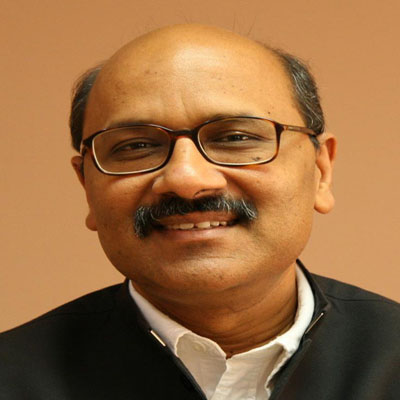
  • Shekhar Gupta steps down from managerial position of Indian Express

    Shekhar Gupta steps down from managerial position of Indian Express

    MUMBAI: Though, he did not officially hold the title of CEO, he will be giving up his position as managerial chief of the group while still staying as editorial chief. In a letter to his employees, he stated that the company was no longer in ‘crisis’ and it was time for him to step down.


    Indian Express chairman and MD Viveck Goenka will be assisted by a newly appointed CEO George Verghese to undertake operations. Gupta will be devoting more time to EXIMs, their media institute. He also mentioned in the letter that there is a need for a more structured and formally organised corporate leadership for the group.


    In 2009 he was awarded the Padma Bhushan for his contribution in the field of Journalism. He has a weekly column in the newspaper and hosts the interview based show ‘Walk the Talk’.

  • Govt case for administered content code gains ground

    Govt case for administered content code gains ground

    Big Brother will soon not just be watching but acting, and news broadcasters will have nowhere to hide because they will not have much of a case to defend. That is a hard truth that otherwise responsible heads of news networks accede to in private but refuse to acknowledge in public.

    The first practical signs of that came on 4 February. The spark: coverage of the political skirmishes over ‘outsiders crowding out locals’ in Mumbai city.

    Invoking for the first time the provisions of the Cable Television Networks (Regulation) Act, 1995, the Mumbai Police reportedly ordered transmission of two news channels – Sahara Mumbai and India TV – be stopped “for repeatedly telecasting clippings of tension between workers of the Maharashtra Navnirman Sena (MNS) and Samajwadi Party (SP)”. Cable operators were directed to stop transmission of the two channels for 24 hours from the time they received a copy of the order.

    Joint commissioner of police (law and order) KL Prasad was quoted in an Indian Express report as saying, “We have issued an order under Section 19 of the Act, which specifically states that ‘half truths’ cannot be spread.”

    The ‘half truth’, Prasad said, was in the manner in which the channels tried to depict through pictures, videos and words that ‘Mumbai is tense’. “A situation controlled in 20 minutes was made to look as if it was still happening,” Prasad pointed out.

    Sahara Mumbai head Rajeev Bajaj’s reaction was on expected lines: “If an order has been passed, we will fight it out in court.”

    The 4th February action by the authorities becomes even more relevant if we keep in mind the fact that the I&B ministry is already majorly upset with the News Broadcasters Association (NBA) for having failed to meet their own stated deadline of 31 January for submitting a Content Code.

    “They have sent us nothing, despite the fact that they themselves had set the deadline and we think they are not interested,” senior I&B officials complained.

    The government is worried about the excessive repetitions of shots of violence – whether against women, or communal in nature and says, “This is really dangerous and the editors must now take a call on this.”

    Incidentally, the ministry is also gearing up to meet a Delhi High Court deadline on sitting down with the Indian Newspaper Society, the Indian Media Group and the Indian Broadcasting Foundation to thrash out depiction of violence and obscenity in the media.

    Hearing a writ petition requesting the court to pass an order to tell the ministry to take action on such depictions, the court had given an interim order on 14 December, for the organisations and the ministry to thrash out issues and report to the court within 10 weeks.

    The government feels that the NBA is wasting time and that the ministry would have to soon come out with its Code.

    So just what is it that forces otherwise responsible news channel heads to do what is so patently against all norms of even the most basic of journalistic practices?

    A one line answer could of course be, ‘The low road is the easy road to ratings riches’. An already cluttered market getting ever more crowded by the day and with no regulation to govern conduct, it’s easy to see why most channels are taking this route.

    There is another factor at work here that is worth a mention. Which is that the tabloid news channel proposition is a viable entry strategy for those without the deep pockets that are required for launching an entertainment channel. So in essence these channels are not too far removed from entertainment channels, with a whole load of extremely low cost fictional content to offer as well in addition to the regular fare that is principally infotainment rather than news.

    There is an added intrinsic logic that we believe is driving this obsession with the bizarre and the salacious as far as the ‘tabloidised’ Hindi news channels are concerned. It might well be that these channels are filling a real and existing need gap for the Hindi male viewer looking for entertainment.

    After all, where does the Hindi heartland male viewer get his daily dose of TV entertainment if we accept that Hindi GECs are targeted mainly at women? Where else but Hindi news channels – which might explain why the preponderance of sex, crime, and the plain bizarre is working for Hindi news channels.

    Coming back to where all this started, the present situation is clearly becoming more and more untenable. Something has to give. The sad part of this is that it will likely be the government giving a bull in a China shop solution that will be to the detriment of all news broadcasters; and more importantly, the public at large.

  • CNN-IBN & Indian Express team up for UP election coverage

    MUMBAI: CNN-IBN and The Indian Express and the Centre for the Study of Developing Societies (CSDS) have joined hands to cover state elections in Uttar Pradesh. Special month-long programming titled ‘Battle for U.P’ on CNN-IBN will include live debates amongst various party leaders and prominent authorities; exit poll projections after each phase of polling and post-poll surveys – providing a holistic account of the electoral activities taking place in various parts of the state.

    An editorial and marketing collaboration between the two news houses The Indian Express and CNN-IBN promises to provide the readers and viewers with the most up-to-date, comprehensive and precise news on all aspects of the election – from pre-polling, the actual ballot casting to post-poll results and developments, informs an official release.

    The scope of the partnership entails The Indian Express featuring tune-in advertisements on the ‘Battle for U.P.’ programming along with regular extensive poll coverage on the days after it is aired on CNN-IBN.

    In addition to daily news wheel stories the channel will also air a series of programmes dedicated solely to the elections. Some of them will include –

    *A half hour special debate show from Lucknow on – whether the state’s capital is being left out from the rest of the country when it comes to economic and social growth – featuring some of the city’s most recognisable faces. The show will air on CNN-IBN on 27 April at 8:30 pm

    *’Battle for U.P. exit poll special’ on CNN-IBN- will present the exit poll projections of that phase on 1 May.

    *Similarly, on 8 May – the day of the last phase of polling – a one-hour special at 9:30 pm on CNN-IBN will be aired analysing and predicting the exit poll results.
    *11 May will see live, day long special coverage of the UP ballot counting on CNN-IBN beginning from 7 am until at least 2 pm. Two more shows will follow in the evening.

    Introducing the campaign, CNN-IBN and IBN 7 editor in chief Rajdeep Sardesai said, “The UP elections are without a doubt one of the most important state assembly elections taking place in the country this year and CNN-IBN will be present on location to bring their viewers the most up-to-date news and comprehensive analyses as and when they happen.”

    Speaking on this significant alliance, CNN-IBN and IBN 7 director marketing and online projects Dilip Venkatraman said, “This coming together of the two biggest news brands to report on the U.P. elections is an all-encompassing approach that includes the best of both print and broadcast news. We are delighted to work together with The Indian Express on a property as important as this and hope for similar collaborations with them in the future.”

    “It is a great pleasure to collaborate with CNN-IBN in bringing our readers the latest on the U.P. state elections. I am confident that our partnership will provide the most current and inclusive coverage on the event(s) along with reliable analyses of the post-poll results,” said The Indian Express head corporate business development Gautam Mukherjea.

  • Narayan Rao elevated to NDTV Group CEO

    Narayan Rao elevated to NDTV Group CEO

    MUMBAI: NDTV Limited has elevated its executive director KVL Narayan Rao to group CEO. In his new role, which is effective immediately, Rao will oversee the businesses of the NDTV Group in India and abroad.

    Rao will be responsible for ensuring that the business aspirations of the group are met and that NDTV becomes a global Indian media brand, recognised all over the world for its ethics, high standards and achievements, a company release says.

    Rao has been with NDTV since 1995 and has played a key role in the transition and growth of NDTV from a production house to a broadcaster. In his earlier role as director, he was responsible for human resources, administration and operations of the company.

    The NDTV Group is expanding both its news and non-news business, which will be overseen now by Rao. He will oversee the implementation of a common code of conduct across the group companies and ensure that the group adheres to the highest standards of corporate governance.

    Said NDTV Ltd chairman Prannoy Roy, “With Narayan’s rich experience in media broadcast and his leadership experience, he is the best person to steer NDTV in its rapid growth phase. His strong execution skills, his understanding of the organisation’s culture and his personal integrity make him an obvious choice.”

    “It’s a huge privilege and a great honour and I am delighted to get this opportunity to play a role in NDTV’s future,” Rao said.

    Rao started his career as a journalist with the Indian Express. Thereafter, he joined the Indian Revenue Service and served in different roles, including deputy commissioner of income tax and deputy secretary in the ministry of defence. Rao has a Masters degree in English Literature. He has also graduated from the National Academy of Direct Taxes and has a management diploma in public finance from IIAP/ENA, Paris. He represents NDTV on several international bodies.

  • Indian Express, CNN-IBN journalists win MS Oberoi media awards

    Indian Express, CNN-IBN journalists win MS Oberoi media awards

    MUMBAI: Transparency International India, an international NGO with support from the Oberoi Group has instituted the first MS Oberoi Awards aimed at recognising and rewarding journalists for outstanding stories exposing corruption in India.

    Varghese K George from Indian Express and Rohit Khanna from CNN-IBN won The Gold Award. The Silver Awards were shared by ML Narsimha Reddy of the Telugu Daily Eenadu, and Samudra Gupta Kashyap of the Indian Express in the Print category and by Saurabh Shukla of Aaj Tak and Siddhartha Gautam of CNN-IBN in the Electronic category.
    The jury comprised o B G Verghese, Harsh Mander, Justice Leila Seth, Vinod K Bakshi and Arun Duggal.

    Verghese said, “While shortlisting the entries and selecting the winners, the jury has given weightage to stories that have direct and significant effect on development, progress, human rights violation or public interest. Also the impact and significance of such disclosures and the risks and challenges countered by the journalist in breaking the story were among the factors taken into consideration in making the final decision.”

    Announcing the awards Transparency International India chairman Tahiliani said, “Transparency International aims to increase the level of accountability and transparency of government institutions, elected representatives and the government. In a democratic society all citizens need to take a stand against corruption and must therefore be well informed. The electronic and print media have played a vital role in generating awareness through their reach.”

    The Oberoi Group chairmans P R S Obero added, “Journalists, who often at substantial personal risk, investigate and expose corrupt practices deserve applause, recognition and encouragement. The Rai Bahadur M.S. Oberoi Media Awards are an effort to demonstrate our admiration for these compelling tales of courage, character and integrity. I would like to congratulate the winners for their exemplary zeal, which if relentlessly pursued by all of us, has the potential of making India a better place to live in and do business with.”

    The presentations will be made on 11 January in New Delhi.

  • Norwest Venture partners invests $10 million in Web 2.0 Sulekha.com

    Norwest Venture partners invests $10 million in Web 2.0 Sulekha.com

    MUMBAI: Sulekha.com, the online social media and local commerce destination for Indians,has announced Promod Haque’s global technology venture capital firm, Norwest Venture Partners (NVP)’s series A, investment of $10 million in the company.

    Sulekha.com plans to use the new capital to extend business development and marketing, primarily through alliances, and expand its service offerings into new vertical markets. NVP managing partner Promod Haque, has joined the Sulekha board of directors. Sulekha, founded and run by Satya Prabhakar, received prior funding from the Indigo Monsoon Group (IMG), led by Param Parameswaran and Harish Raghavan. IMG invests in early stage companies in the Indian Internet and Mobile domains.

    “Sulekha has been a Web 2.0 company even during the Web 1.0 days. It has positioned itself at the vortex of three of the largest Internet mega-trends: India, Social Media and Local Commerce through industry-leading services including Blogs, Social Networks, Classifieds and Yellow Pages. While the management of Sulekha has done a great job of developing reach and revenue, the real explosive potential, both in online and mobile platforms, is still in front of us,” said Haque.

    “NVP is one of the most reputed venture capital firms in the world with more than 45 years of experience in building successful companies. This, coupled with NVP’s strong interest, many investments and relationships across various industries in India, made NVP a great choice for Sulekha as we pursue aggressive growth plans in the coming year,” said, Sulekha.com founder and CEO Satya Prabhakar. “In particular, we look forward to working with Promod Haque who, with his valuable experience and vast global network, has helped numerous companies, both in U.S. and India, soar and succeed,” he added.

    “The marriage of trusted member to member interactions and its application to classifieds and business search/ratings holds incredible promise in spurring local commerce in India. Sulekha’s successful track record of aggregating member content and interactions by city and by vertical areas of interest will allow us to deploy the new capital to dominate this market niche,” said IMG and Sulekha.com Chairman Param Parameswaran.

    Sulekha’s Portfolio of Services – Interact and Transact
    By offering a user-generated platform and a trusted community network, Sulekha enables Indians to interact and transact with their peers and businesses through three popular services:

    Blogs and Social Networking – Sulekha provides the largest and most popular platform for Indians to voice their ideas, opinions and reviews in blogs. Users can also connect with other Indians creating online social networks. Just as social networking driven by expression has become a destination for US consumers, Sulekha brings the same experience to India and beyond.

    Sulekha has crafted successful offline partnerships with such companies as Penguin, DNA and Indian Express to create important additional distribution avenues for its tens of thousands of bloggers.

    Classifieds – Sulekha has the largest and most popular Indian classifieds marketplace for goods and services that fosters transactive relationships among its members in over 25 cities worldwide daily. With more than 250,000 ads and addressing 80% of online Indians worldwide, Sulekha provides unparalleled opportunities to connect members when they need to interact and transact.

    Yellow Pages – Sulekha.com is the provider of online yellow pages in India supporting millions of business searches every month. Sulekha leverages its vast audience to help local businesses reach customers on a daily basis, and includes user-contributed reviews, ratings and recommendations to enable consumers to make the most informed purchasing decisions. Sulekha’s yellow pages currently offer business listings in eight cities throughout India and US. Sulekha Yellow Pages is also integrated with WAP-enabled mobile phones for mobile downloads of listings.

    “While we are only recently witnessing tremendous interest in Web 2.0 startups worldwide, Sulekha has been a thought leader in this space for some time, and continues to make rapid strides. Sulekha’s strong and experienced management team is well-positioned to capitalize on the unprecedented Internet growth in India over the last year, and we believe the company has a first mover advantage in pursuing significant revenue-generating opportunities in the coming years,” added Haque.

  • Essel to pump in Rs 1 billion into UNI over next 2 years

    Essel to pump in Rs 1 billion into UNI over next 2 years

    NEW DELHI: Essel Group chairman and media baron Subhash Chandra today challenged those criticising his buying of a 51 per cent equity in news agency United News of India (UNI) to put their money where their mouth is.

    “If anybody else, including the government, feels that he can work towards revival and expansion of UNI, then I’ll be happy. I will gladly give up majority shareholding too in that person’s favour,” Chandra told journalists here.
    As an indication of his genuine interest in reviving the financially beleaguered news agency, Chandra gave an assurance that the Essel group would pump in Rs 1 billion over the next two years into UNI to upgrade infrastructure and acquire cutting edge technology.

    “We have identified gaps (read shortcomings) in UNI and are trying to address them along with the other shareholders of the organisation,” Chandra said.

    Essel’s picking up of 51 per cent shareholding in UNI by Mediavest India Pvt Ltd, an investment vehicle floated by Chandra, last month has been greeted by howls of protest from political parties, journalists and the UNI employees’ union.
    Chandra paid approximately Rs 320 million for a majority stake in the news agency. Other shareholders of the agency include media companies like The Times of India Group, Ananda Bazar Patrika, Hindustan Times, The Statesman, Dainik Bhaskar and Indian Express.

    Chandra also assured some journalists from UNI present at the press conference and others in general that there would be “no forced retrenchment.”

    However, a proper human resources development department will be put in place to work out voluntary retirement schemes and other initiatives related to employee redeployment and employment.

    “We have hired a techno commercial person today only to upgrade and strengthen the technology available to UNI employees,” Chandra said, adding that the hunt was on for professionals in other departments of the news agency too.

    According to him, “My interest in UNI is not to make money (the structure of UNI is such that all the revenue earned is to be ploughed back into the organisation itself), but to uphold the objectives of the founding fathers of UNI, which includes having plurality of information in the country from credible platforms.”

    Pointing out that his vision is to turn UNI into a global and competitive news agency providing a spectrum of services, Chandra said Essel Group (owners of Zee Telefilms amongst a host of other media and entertainment related companies) will “leverage” its global media contacts to work for the betterment of UNI.

    Scotching rumours that Zee Telefilms and his other media companies would end up having a direct synergy with UNI, Chandra said, “In life there comes a time when a person looks beyond earning money and doing things for personal satisfaction. I’m doing that. If somebody feels he or she can do better than me, then such people are most welcome to take charge of UNI’s revival.”

    Mediavest was amongst the three bidders for unsubscribed shares of UNI whose other shareholders agreed to bring on board the Essel Group in early September.

    To a specific question whether Mediavest would mop up some remaining preferential shares in case other shareholders shy away, Chandra replied in the affirmative.

    “If nobody else subscribes to those shares, then we’ll pick them up,” he said, adding that such a move would take Mediavest’s holding in UNI up to approximately 58 per cent.

    Chandra also made it clear that “mis-informed people” with vested interests are undertaking a “disinformation campaign” dubbing his company’s arrival on the scene as a total sale of the news agency to one single entity.

    “We have just joined the board of directors and are ready to discuss across the table any issue with anybody from UNI. But I cannot help it if some people continue to hallucinate,” he said.

    UNI was launched in March 1961. Today, it claims to be serving more than 1,000 subscribers in more than 100 locations in India and abroad. They include newspapers, radio and television networks, web sites, government offices and private and public sector corporations.

    UNI has collaboration agreements with several foreign news agencies, including Reuters and DPA whose stories are distributed to media organisations in India through the Indian agency.

    UNI’s wire service is available in three languages, English, Hindi and Urdu. While the Hindi service Univarta was started in 1982, the Urdu service debuted in 1992.