Tag: Indian entertainment sector

  • Chetan Chauhan takes charge as CEO of Thinkinkpicturez to script regional content revolution

    Chetan Chauhan takes charge as CEO of Thinkinkpicturez to script regional content revolution

    MUMBAI: In a bold move fitting the silver screen, Thinkinkpicturez Ltd has cast veteran media executive Chetan Chauhan as its new chief executive officer. With nearly three decades of industry experience, Chauhan takes the helm as the Mumbai-based entertainment company lines up a Rs 500 crore expansion into regional cinema and children’s content.

    The announcement signals a clear pivot. Thinkinkpicturez is betting on the rising tide of regional storytelling, developing content in Gujarati, Marathi, and other Indian languages. The company has also set its sights on an often-overlooked segment: children’s cinema.

    Chauhan, an influential figure in the Gujarati film ecosystem and a former publicist for over 70 regional films, is known for his association with Pan Nalin’s Last Film Show, India’s Oscar entry. His résumé includes top roles at The Times of India Group (BCCL), Mid-Day, Reliance, and Pantaloons, along with academic tenures in Gujarat’s media institutions.

    “The entertainment industry in India is growing at an unprecedented pace… We are committed to nurturing fresh talent and promoting regional narratives, with a special emphasis on children’s cinema”, said Chauhan.

    Thinkinkpicturez is also exploring collaborations with the Gujarat Government to drive employment through media investments in the state. The company continues to assess the feasibility of six pending Hindi feature films previously announced.

    According to company sources, the goal is not just expansion, but representation. By spotlighting regional stories and backing grassroots talent, Thinkinkpicturez aims to redefine India’s entertainment map.

    With Chauhan at the wheel, the company plans to align with broader trends such as the rise of AI in storytelling and the push for inclusivity in content. His appointment marks a new chapter—less about red carpets, more about redrawing the boundaries of Indian cinema.

  • 7Seas sails steady as boss duo steer ship for five more blockbuster years

    7Seas sails steady as boss duo steer ship for five more blockbuster years

    MUMBAI: It’s a full steam ahead at 7Seas Entertainment Ltd., and at the wheel? The company’s power duo: L. Maruti Sanker and L. Hemalatha. The board of directors, clearly not one for surprises, handed both of them extended contracts this week — and let’s just say, the couple who leads together, stays together.

    In a move smoother than a rom-com plot twist, the board on April 5 reappointed Sanker as MD and Hemalatha as executive director for another five-year term each.

    Effective dates? 1 April 2025 for him and 28 March 2025 for her.

    Tenure? Till March 2030.

    Shareholder approval? Pending, but likely a formality — after all, it’s not every day you get a managing couple with a combined stake of 64,90,821 equity shares to run the show.

    Both appointments came on the strong shoulders of the nomination and remuneration committee, which seems to believe, “If it ain’t broke, don’t reboot it.”

    “The board of directors of the company, based on the recommendation of the Nomination and Remuneration Committee, has reappointed L. Hemalatha… and L. Maruti Sanker… for a period of five (5) years,” read the formal filings to BSE.

    Corporate love story or just good business?

    For the uninitiated, Hemalatha, a B.Sc graduate with 13 years of experience in game testing and admin, has served the company in various avatars. She also holds 4,00,000 equity shares, proving she’s got skin in the game — quite literally.

    Sanker, on the other hand, is already something of a legend at 7Seas. The man juggles IT, games, marketing, operations, and HR like a tech-powered octopus on a Red Bull bender. And with 60,90,821 equity shares, he’s practically part of the furniture — the very expensive kind.

    Oh, and did we mention? They’re married. Yes, it’s an actual boardroom romance, not just a metaphorical one. They’re officially listed as spouses — a line that SEBI filings, in all their thrilling glory, made sure to include. Love, leadership, and legalities, all tied up in a bow.

    No red flags, no raised eyebrows.

    Both directors have passed the regulatory sniff test. According to the filings, neither is “debarred from holding the office of director by virtue of any SEBI order or any other authority.” The Nomination Committee double-checked, just to be sure. The coast is clear. No skeletons in the closet, no regulatory cobwebs.

    What does all this mean for investors and fans of 7Seas’ gaming and entertainment playbook?

    Stability.

    Vision.

    And probably a lot more titles rolling out under the careful watch of two people who’ve built the house — and now continue to live in it.

    So, while Hindi cinema plots twist every Friday, 7Seas has gone for a straight sequel: same cast, same crew, and five more years of what seems to be a winning formula.

    Here’s to steady hands on deck. Or as they say in the business world: “strong governance with marital synergy.”

  • Shemaroo’s Q3 revenue: Adapting to digital and facing legacy trials

    Shemaroo’s Q3 revenue: Adapting to digital and facing legacy trials

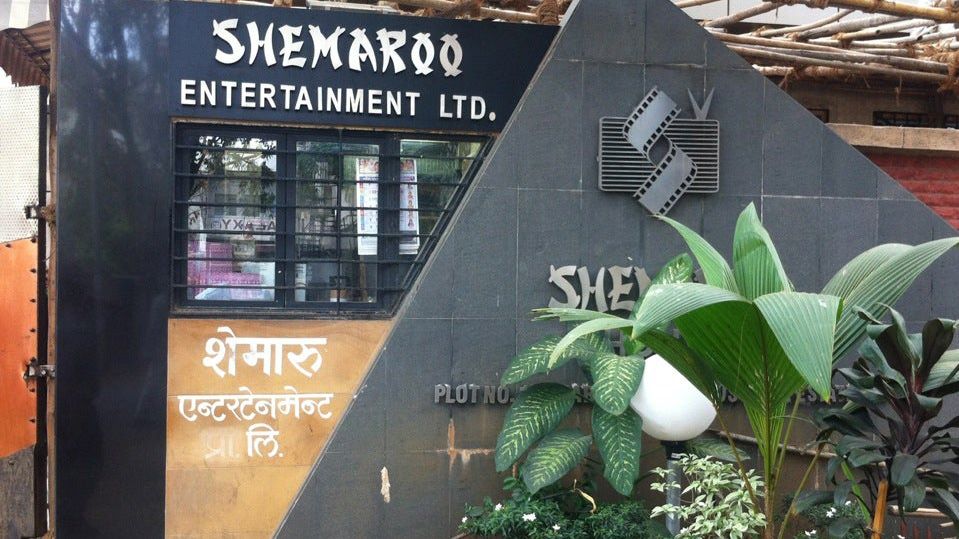
    MUMBAI: Shemaroo Entertainment Limited has rolled out its financial results for Q3 FY25 and the nine-month period ending 31 December 2024. Founded by the ever-visionary Raman Maroo in 1962 as a humble book library, Shemaroo has since performed an Indian cinema-style transformation into one of India’s foremost entertainment companies. With a current market valuation of approximately Rs 10,000 crore and a legacy spanning six decades, the company is proof that a great plot (and some brilliant foresight) can weather any twist. Maroo’s genius for spotting trends early—like assembling one of India’s largest content libraries—has cemented Shemaroo’s reputation as a box-office favourite in both traditional and digital media.

    Now, who says legacy brands can’t dance to a new tune?

    In today’s fiercely competitive market, where giants like Netflix, Amazon Prime Video, Sony and Zee vie for consumer attention, Shemaroo’s strategy is anything but passive. The company’s ability to repurpose its extensive Indian cinema and regional film library for streaming platforms, coupled with its focus on regional and niche content, is its secret sauce for staying relevant. Can a legacy brand like Shemaroo thrive in a world dominated by binge-worthy web series and blockbuster originals?

    Let’s dive deeper into the numbers and uncover the plot twists behind the balance sheet.

    Consolidated Performance

    For Q3 FY25, Shemaroo Entertainment reported consolidated revenue from operations at Rs 16,437.42 lakhs. Think of it as a steady performance—better than Rs 15,592.64 lakhs in the previous quarter but just a tad shy of Rs 16,206.08 lakhs in Q3 FY24. Adding Rs 296.45 lakhs in other income, the total income reached Rs 16,733.87 lakhs for the quarter. It’s not quite a standing ovation, but at least the audience has not walked out.

    Now, let’s talk about EBITDA (Earnings Before Interest, Taxes, Depreciation, and Amortisation)—the backstage crew of financial performance. For Q3 FY25, EBITDA stood at Rs 1,539.47 lakhs. Rising operational costs and tight advertising budgets played the villain here, but the show must go on! Meanwhile, Profit After Tax (PAT) took a dramatic dive, with a loss of Rs 3,652.75 lakhs, compared to a profit of Rs 1,228.94 lakhs in Q3 FY24. If this were a movie, we would call it a tragic second act.

    For the nine months ended 31 December 2024, consolidated revenue totalled Rs 48,082.93 lakhs. That’s down from Rs 50,834.08 lakhs in the previous year—not the kind of sequel numbers anyone hopes for. EBITDA came in at Rs 4,210.69 lakhs, while PAT posted a net loss of Rs 10,937.90 lakhs, compared to a loss of Rs 2,041.57 lakhs in FY24. It’s safe to say, the financial script could use a few rewrites.

    Despite these challenges, Shemaroo’s numbers reveal a company determined to stay in the game. With rising operational costs and shifting consumer preferences, the Q3 results underline the importance of resilience and adaptability in today’s cutthroat entertainment landscape. After all, every blockbuster needs a bit of suspense, doesn’t it?

    Standalone Results

    On a standalone basis, Shemaroo’s revenue from operations for Q3 FY25 was Rs 15,542.52 lakhs, edging up from Rs 15,226.01 lakhs in the previous quarter and Rs 14,773.76 lakhs in Q3 FY24. Total income, including Rs 253.41 lakhs from other sources, hit Rs 15,795.93 lakhs for the quarter. While it’s not quite a red-carpet moment, it’s certainly not a straight-to-DVD release either.

    EBITDA for Q3 FY25 clocked in at Rs 1,419.05 lakhs. Operational costs, which soared to Rs 14,792.44 lakhs, weren’t shy about stealing the spotlight. Meanwhile, PAT took a dramatic dive, delivering a loss of Rs 3,739.99 lakhs compared to Rs 2,732.39 lakhs in Q3 FY24. Let’s call this twist in the tale Shemaroo’s “Bollywood tragedy” phase.

    For the nine months ended 31 December 2024, standalone revenue reached Rs 45,506.20 lakhs, falling short of Rs 48,541.42 lakhs reported in the same period last year. Total income tallied up to Rs 46,058.52 lakhs, while EBITDA for the period stood at Rs 4,153.34 lakhs. PAT for the nine months delivered a loss of Rs 8,176.58 lakhs, more than doubling last year’s Rs 4,035.48 lakhs. These numbers suggest Shemaroo’s script might need some serious rewrites to avoid becoming a “box-office bomb.”

    Still, Shemaroo’s knack for juggling its legacy operations with a burgeoning digital portfolio shows promise. After all, every epic needs its moment of redemption—here’s hoping Shemaroo’s next act delivers the blockbuster twist we’ve all been waiting for!

    Shemaroo’s dual focus on traditional media and digital growth has been a defining aspect of its strategy. While revenue from legacy operations faces mounting challenges, the company’s investments in digital platforms are yielding promising results. Shemaroo’s partnerships with OTT players and its direct-to-consumer initiatives are driving audience engagement and revenue growth. The question remains: can Shemaroo go viral in the digital world while keeping its classic charm?

    The digital segment has shown significant traction, with increasing subscriber counts and higher engagement metrics. However, the competition in the OTT space is fierce, with new entrants vying for market share. Will Shemaroo’s robust content library and its reputation for delivering quality entertainment be enough to sustain long-term growth? Or will the digital world prove to be a tougher audience than expected?

    Shemaroo has long been a pioneer in India’s entertainment sector, leveraging its extensive content library to cater to diverse audience preferences. The company’s innovative marketing initiatives, such as regional-language content expansions and festival-centric campaigns, have strengthened its brand equity. However, the slight decline in revenue indicates that the path forward will require even greater innovation to compete in a market increasingly dominated by digital platforms.

    Can Shemaroo continue to build on its legacy while charting a new course in the digital age? The coming quarters will reveal whether this stalwart of Indian entertainment can transform challenges into opportunities and emerge stronger in a competitive landscape. For now, Shemaroo is writing its next chapter—and it promises to be an interesting read.

    After all, even legends need to adapt—no one wants to be a rerun.

  • CII workshop seeks to address copyright issues in the Indian entertainment sector

    CII workshop seeks to address copyright issues in the Indian entertainment sector

    MUMBAI: The Confederation of Indian Industries (CII) will orgabnise the second edition of its legal workshop series Technology, Value Adds & The Law on 13 September 2006.

    The aim is to address copyright issues in the Indian entertainment sector. The workshop will focus on copyright issues with respect to new technologies and value add services (Vas).

    At the workshop the CII-Lawquest legal paper Copyrights & Emerging Technologies will be released.

    There will also be a panel discussion. Today technology is evolving at great speed with it increasing the importance of electronic and digital media. At the same time, the innovators cannot foresee all its future uses, which calls for urgent attention of copyright owners towards electronic and digital rights issues.

    The session will be moderated by Tata Teleservices VP Vas Pankaj Sethi. The speakers are Star senior VP – interactive services Viren Popli, Hutchison Essar VP vas SP Narayanan, ,
    UTV VP international Ashoka Holla and Raj Tilak who is a consultant