Tag: Indian economy

  • India Today Conclave 2025 brings powerhouses together for thought-provoking dialogues

    India Today Conclave 2025 brings powerhouses together for thought-provoking dialogues

    MUMBAI: Brace yourselves, thought leaders and policy buffs! The India Today Conclave 2025 is all set to electrify the stage at the Taj Palace, Delhi, on 7-8 March. With an enviable lineup of political titans, business magnates, cultural icons, and global experts, this year’s theme—’Age of Acceleration’—promises to decode the rapid transformations shaping our world.

    Leading the charge is Delhi CM Rekha Gupta who will make her first significant public appearance since assuming office. She will unveil her vision for Delhi under the ‘Lotus Capital’ framework, touching upon governance, infrastructure, and policy shifts set to redefine the capital’s future.

    Adding firepower to the political discourse, Uttar Pradesh CM Yogi Adityanath will reflect on the grandeur of the Maha Kumbh, revealing how it transcends tradition to become a showcase of logistical and infrastructural prowess. Meanwhile, former U.S. State secretary and CIA director Mike Pompeo will provide an insider’s perspective on global security, shifting alliances, and the evolving India-U.S. relationship.

    The geopolitical conversations will extend further with Palestine Land Studies Centre director Zeina Jallad offering insights on Gaza’s legal and political landscape, while author and former Israeli parliamentarian Einat Wilf will present her perspective on the region’s future.

    The conclave isn’t all politics and diplomacy. Indian cinema’s perfectionist Aamir Khan will take a deep dive into storytelling, cinema, and the evolution of entertainment, while Shabana Azmi and Jyothika will share behind-the-scenes insights into their upcoming film, alongside producer Shibani Akhtar. In a rare public conversation, Sonakshi Sinha and Zaheer Iqbal will explore the ever-evolving nature of love and companionship.

    Women in business will take centre stage as Namita Thapar (Emcure Pharmaceuticals), Avarna Jain (Saregama), and Anu Ranjan (Indian Television Academy) discuss leadership, entrepreneurship, and breaking barriers in male-dominated industries.

    The conclave will also shine a spotlight on sports, music, and intellectual excellence. Indian cricketer Suryakumar Yadav will discuss how he’s redefining modern batting, chess prodigy D. Gukesh will recount his meteoric rise to becoming the world’s youngest champion, and musician Rishab Rikhiram Sharma will share his journey of taking Indian classical music to the world stage.

    With conversations spanning governance, business, technology, culture, and sports, India Today Conclave 2025 is poised to be a melting pot of ideas that shape India’s trajectory. As the world speeds up in the ‘Age of Acceleration’, this conclave promises to be the pulse of change, where the future is not just discussed—it’s defined.

    http://indiatodayconclave.com/

  • SIDBI releases inaugural MSME Outlook Survey

    SIDBI releases inaugural MSME Outlook Survey

    MUMBAI: If you want to know what’s really happening in India’s bustling micro, small, and medium enterprise (MSME) sector, SIDBI has just made life easier. The Small Industries Development Bank of India (SIDBI) has released the inaugural edition of its MSME Outlook Survey, a quarterly report that takes the pulse of India’s MSMEs, delivering valuable insights into their performance, expectations, and market sentiment.

    The survey, covering manufacturing, services, and trading sectors, introduces two new indices—the MSME-Business Conditions Index (M-BCI) and the MSME-Business Expectations Index (M-BEI). These indices, ranging from 0 to 100, gauge market sentiment, with readings above 50 signalling optimism and those below 50 indicating caution.

    The MSME sector seems to be on an upward trajectory, with the latest survey painting a positive picture:

    . Business conditions are improving, with manufacturing leading at 60.33 M-BCI, followed closely by services at 59.67.

    . Optimism is high for the future, with M-BEI projections exceeding 60, while manufacturing alone soars past 70.

    . Sales growth, profitability, and production outlooks remain bullish, with order books filling up fast.

    . Manufacturers expect rising input costs but anticipate higher profitability due to increased production and selling prices.

    .15 per cent of MSMEs foresee improvements in skilled labour availability and infrastructure, including electricity supply and permit processing.

    . Employment levels remain stable, but 30-40 per cent of respondents plan to expand their workforce soon.

    .  Digital marketing, environmental protection, and technology adoption are gaining traction, as MSMEs embrace modern business strategies.

    Commenting on the survey launch, SIDBI chairman & managing director Manoj Mittal emphasised the importance of MSMEs in shaping the economy, “MSMEs are the backbone of the Indian economy and a vital driver of socio-economic change. This survey will provide stakeholders with valuable insights, enabling them to evaluate the current business climate and fine-tune their strategies.”

    The full report is available at www.sidbi.in.

  • Indian advertising economy touches Rs1Tn

    Indian advertising economy touches Rs1Tn

    Mumbai :  The winter update of MAGNA’s “Global Ad Forecast” predicts that global media owners net advertising revenues (NAR) will reach $853bn this year, more than 5.5 per cent above the 2022 level and will grow by more than 7.2 per cent in 2024.

    •  The Asia Pacific advertising economy grew more than 8.2 per cent to $286bn this year powered by India, Pakistan and China. In 2024, APAC advertising revenues will increase more than 6 per cent.

    •  India is now consistently the fastest growing market and leads the ad spend growth globally. India moves into top ten markets and forecast to climb to 8 position by 2028. Indian advertising sales grew over 11.8 per cent in 2023 to Rs 1099bn ($14bn) and is the 11 largest market.

    •  In India, Digital formats contribution to growth is slowing down (more than 14.2 per cent in 2023 Vs more than 25.7 per cent in 2022), however digital remains the largest at Rs 500bn ($6.4bn) with a share of 46 per cent. Linear formats will grow by more than 9.9 per cent with both television and print growing equally at more than 8 per cent. Radio (more than 12.1 per cent) and OOH (more than 29.8 per cent) are seeing a robust recovery though still short of pre- covid revenue.

    •  In 2024, the India advertising market will grow by more than 11.4 per cent. Digital formats will rise more than 13.9 per cent to reach Rs 569bn ($7.2bn), while linear ad sales will increase by more than 9.3 per cent to reach Rs 655bn ($8.3bn).

    MAGNA India SVP, director – intelligence practice Venkatesh S, said: “In 2023H1 advertising spend grew more than 9.6 per cent, accelerated in the second half of 2023 to more than 13.8 per cent. The recovery is driven by festive spending and marquee events like ICC WC and elections. Globally, Traditional media owners’ (TMO) ad revenue growth is slowing down, while in India both Linear (more than 9.9 per cent) and Digital formats ( more than 14.5 per cent) are growing. Traditional formats will still be the largest, at least till 2027, though pure play digital is driving the adex. Non-linear formats (AVOD, Digital Newspaper, Podcasting & DOOH) of TMOs are growing steadily in double digits and contribute 5 per cent to the total revenue of TMOs.”

    India along with China is projected to contribute about half of global GDP growth in 2023 & 2024. After a more than 7.3 per cent expansion in 2022, the IMF in their latest October 2023 update predicts a slight deceleration in economic activity with real GDP growth of more than 6.3 per cent in 2023. The GDP has been revised up by 0.4 per cent from the April 2023 update as economic growth remains robust. India is reliant on its own domestic demand, private consumption, and investment spending for its growth. The overall sentiment is positive and upbeat though the market remains complex with local and global pressures. Large consumer base and aspirations of the young Indians works in its favour.

    Inflation remains vulnerable to rising food and fuel prices. The task of bringing inflation back to target is a priority for the government through macro prudential measures and monetary policy tightening. After more than 6.7 per cent in 2022, inflation though expected to ease down to more than 5.5 per cent in 2023 is still in the upper bracket of the central bank’s desired range.

    The Union Budget’s focus on boosting manufacturing, higher disposable income with lowering of taxes and increased spending on infrastructure augurs well for the adex growth. Advertising spending is growing at a healthy rate of over 11.8 per cent in 2023. Total ad sales are rising from Rs 982bn ($12.5bn) in 2022 to Rs 1099bn ($14bn) in 2023.

    Consumers are increasing their spending, primarily driven by the young working adults who are investing in experiential led categories like travel, auto, and entertainment. Impassable categories like CPG, continue to see higher spending. 2023H2 which includes festive spending, ICC World Cup and government spending before the upcoming national elections early next year is expected to contribute 10-12 per cent incremental growth to adex.

    CPG, auto and fintech are the most dominant sectors contributing to India’s adex growth followed by government, communication, travel, and real estate. Retail including e-commerce, financial services, Media & Entertainment and Apparel will see average growth, Startups who have been the mainstay for all tent poles properties have either cut budgets or moved to performance marketing than brand marketing. With the new retrospective taxation policy on gaming, brands have exercised caution in spending.

    According to TRAI In the last few years, the Government has fostered the digital ecosystem with inimitable assets like Aadhar, UPI & DigiLocker taking the digital public goods to a higher level. Also, driven by rising internet user base and affordable devices, currently 881mn have access to internet as of march 2023. Government has also initiated labs to develop applications using 5G service to ramp up digital business services and this will have a rub off on the digital advertising economy. In 2023, overall digital ad spends will grow over 14.2 per cent to top Rs 500bn ($6.4bn). India takes the lead in mobile growth followed by the US and Brazil according to a report by Adjust and it is a mobile first market. The share of mobile within digital will touch 59 per cent this year. There are 467mn social users in the country and it has been the bellwether for digital growth with more than 19 per cent growth. Total video registers more than 16 per cent growth. It is noteworthy that OTT players display robust growth trends driven by increased CTV subscribers, content choices and local language play. The OTT subscription is estimated to be at 50mn this year. In 2024 total digital growth estimated at more than 13.9 per cent to touch Rs 569bn ($7.2bn).

    Overall Television is growing but Pay TV is facing challenges from Free Dish, FTA channels and OTT in terms of subscriber base. Following the implementation of the amended New Tariff Order (NTO) 3.0 which allowed broadcasters to hike channel access price, subscribers have moved out of Pay TV being a price sensitive market. Despite this, Television is still the largest video medium with over 900 million viewers and daily viewing at 222 mins. In the light of rising consumption of short form content along with web series and availability of TV shows on OTT platforms, the time spent indicates TV is holding onto its audiences. The proposed broadcast bill extending its purview to include OTT, will help eliminate disparities to the advantage of linear television. Also, there remains considerable growth opportunity for TV and advertisers are keen to cover the vast population of live audiences. Television ad revenues in 2023 will grow more than 8.9 per cent to reach an estimated Rs 365bn ($4.6bn). In 2024 TV advertising was estimated to grow more than 9.9 per cent to reach Rs 401bn ($5.1bn).

    Newspaper has risen to be the most credible source of information. With 391mn copies (2021-22) circulated every day and language print taking the lead, the geographical spread and the audience size presents a massive marketing opportunity. The advertising growth is on the back of recovery in volumes; however, yield remains a challenge. In 2023, ad sales revenue will grow over 8.1 per cent to Rs 175bn ($2.2bn). Growth expected to continue in 2024 to drive an increase of over 9 per cent, Rs 187bn ($2.4bn).

    Radio’s road to recovery has been a gradual one. Despite the volumes crossing pre-covid levels, yield has been a struggle though ad rates have flared up slightly. The industry is battling challenges of measurement limitations and audio streaming apps gaining user base. Radio players are offering airtime bundled with off air solutions to make up for the revenue. Government led allowance of news broadcast and increase in Government advertising rates will accelerate ad spends. Overall, advertising revenues are growing by 12.1 per cent to reach Rs 18bn ($229mn), which is 80 per cent of the pre-COVID market size. In 2024, radio estimated to grow over 11 per cent, Rs 20bn ($254mn)

    OOH advertising has consistently grown post the pandemic as audience movement continues to ascend. Rising roadside DOOH screens in metros and state capitals, substantial presence in ambient spaces have added to demand, leading to growth in DOOH spends which contributes 5% to total. In 2023 OOH revenue increased by 26.7 per cent valued at Rs 30bn ($382mn) reaching 90 per cent of the pre-COVID market size. This pace will be sustained for a few more years and in 2024, OOH will exceed 2019 revenues adding over 16% to the size. In-cinema advertising is up sharply as audiences are flocking to cinemas. State-of-the-art technologies like IMAX and Dolby Atmos, has transformed movie-watching into a truly awe-inspiring experience and this has been another reason for audience draw. It will cover 74 per cent of 2019 market size by the end of 2023 with an impressive over 43% growth to reach Rs 8bn ($102mn). In 2024, the growth is estimated to be more than 19%.

    IPG Mediabrands India Chief Investment Officer Hema Malik, commented: “India continues to script its unique narrative in the advertising landscape, boasting robust growth across diverse mediums despite evolving consumer preferences and market dynamics. The promising trajectory across television, digital, radio, and out-of-home channels signifies the dynamic nature of our advertising landscape. I am optimistic about the future as India’s advertising story unfolds, driven by innovation, adaptability, and a burgeoning consumer base.”

  • HUL is working towards building brands with a purpose: Nitin Paranjpe

    HUL is working towards building brands with a purpose: Nitin Paranjpe

    Mumbai: Hindustan Unilever Limited (HUL) brands are transforming to serve the India of tomorrow. Speaking at the 89th annual general meeting recently, the company’s chairman Nitin Paranjpe said that the India growth journey, which began prior to the pandemic, continues to be strong. He mentioned that India needs growth that is not just transformative, but also inclusive – growth that is both productivity and employment led. Drawing attention to the paradoxical and fast changing world we live in, he highlighted the urgency for businesses to take the lead in addressing the environmental and societal challenges that the world faces.

    In his speech titled ‘Serving India, Today and Tomorrow’, Paranjpe said “HUL has been an integral part of India’s growth story over the years and has always believed that what is good for India is good for the company.” 

    He shared a glimpse of the company’s future-fit strategy. “Our belief that purpose-driven brands and business can indeed deliver sustainable growth and it has been further strengthened over the years.”

    He also mentioned that the company crossed the Rs 50,000 crore turnover mark and over the last decade, HUL has more than doubled its turnover, tripled the Ebitda and quadrupled the market cap.

    Paranjpe said, “At HUL, we are embedding sustainability across the value chain and beyond through what we call the ‘Compass’; our strategy to make sustainable living commonplace. We believe that ‘Compass’ will help us deliver superior performance and drive sustainable and responsible growth. We are building technology muscle to serve our customers and consumers even better. We are determined to showcase that there can never be a trade-off between purpose and performance.”

    HUL has the power to impact the lives of consumers

    Paranjpe highlighted that HUL is working towards building brands with a purpose. With more than 9 out of 10 Indian households using one or more of HUL brands. He said “HUL has the power to impact the lives of consumers. The company’s brands strive to bring about positive social change and break barriers to help build a more inclusive society through thoughtful marketing campaigns. Through several initiatives, the company has been addressing challenges like water scarcity, livelihood opportunities, employability, health and sanitation among others.”

    Moving towards a phygital journey

    As the world changes and moves towards digitalization, brands need to be present everywhere and communicate consistently to stay top of mind. On this, he said, “with an increased adoption of digital, the shopper journey has now become phygital.”

    He added that in a nation of paradoxes, critical to unlocking value is deaveraging – we need to win in rural and in urban, in mass as well as in premium, in traditional and on digital.

    HUL’s growth drivers

    He feels that the road ahead holds both challenges and opportunities. “In order to overcome the challenges and realise the enormous opportunities that exist, it is imperative to ensure that the next phase of growth for the nation is both sustainable and equitable. Businesses can play a key role in this transformative journey,” he concluded.

  • Rural, tier 2 & 3 cities to drive the next leg of growth: Ashish Bhasin, DAN

    Rural, tier 2 & 3 cities to drive the next leg of growth: Ashish Bhasin, DAN

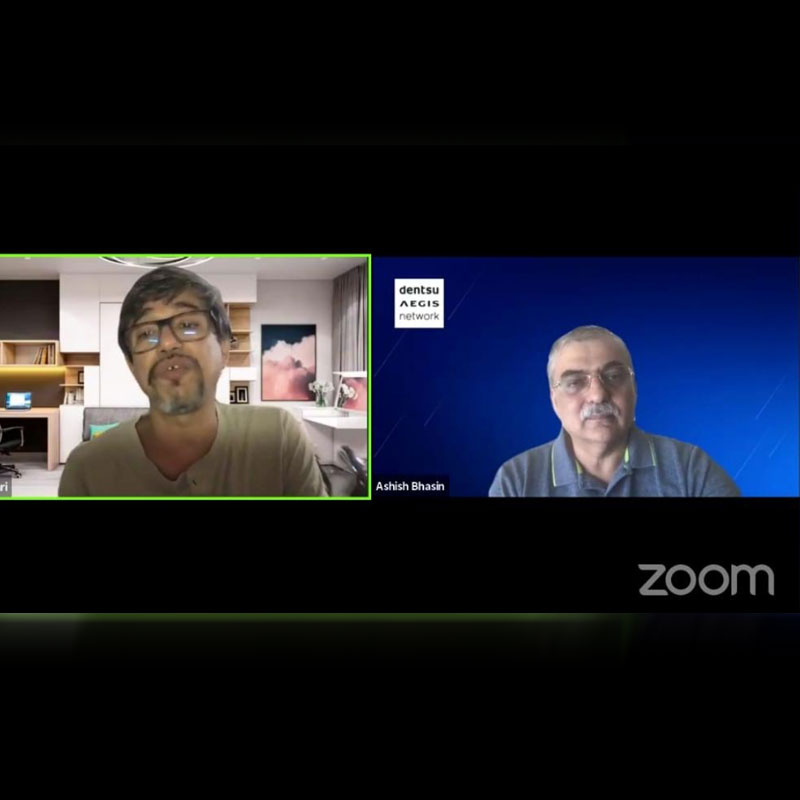
    NEW DELHI: After the sluggish growth in the previous few quarters, which is now further worsened by the Covid2019 pandemic, DAN CEO APAC and chairman India Ashish Bhasin is now bullish about the economic possibilities of the country. He feels that the worst has already happened and from here on it is going to be a month-on-month recovery path for the industry, he shared with Indiantelevision.com during a virtual fireside chat with founder CEO and editor-in-chief Anil Wanvari. 

    Bhasin noted that he doesn’t see a V-shape recovery happening but there are certain markets, which have already started signs of growth and will continue to do so, including automobile and FMCG.

    “FMCG was doing well during the lockdown too as it came under the essential services category and then also a function of sales-and-demand, managed pretty well. Another sector that has started showing signs of recovery is the automobile industry. I feel that post-pandemic more people will be preferring own transport and I see a rise in sales of motorbikes happening. Tractor sales did pretty well too, over the past few months and that will continue to do so,” he insisted. 

    He is also pinning his hopes for growth in rural and tier 2, tier 3 areas. “The harvest has been good this time and also the sowing season was pretty positive. Though the agriculture sector just contributes to the 15-16 per cent of the GDP, it will play a significant role in pulling the numbers up in the coming quarters. Also, more dispensible income in the hands of people will create a good supply-demand cycle. I see rural areas and tier 2, tier 3 cities driving the next leg of our growth.”

    Bhasin pointed out that in the rest of the industries, demand might not be a big problem but the struggles will be on the part of restoring the supply side logistics that have been badly hurt because of the pandemic. He sees sectors like cinema, real estate, and non-digital education entities taking quite some time to revive from here. 

    “It’s not like a switch that goes off during the lockdown and is suddenly up as the restrictions are lifted. One, it will take its own time for the labourers to come back, the production to start, and then supplies picking up. Even then, it is not going to be a straight way, there will be hiccups with cases spiking up or maybe demand going down,” he elaborated. 

    He stated that the pandemic has pushed the country behind by 2-2.5 years and it will take time till 2022 for the economy, as a function of various markets cumulatively, to reach 2019 level. 

  • Industry hails eased lockdown restrictions, wants more from economic stimulus

    Industry hails eased lockdown restrictions, wants more from economic stimulus

    NEW DELHI: We are close to completing two months of the ongoing nationwide lockdown, instigated by the fatal global pandemic COVID2019, living through extraordinary times, adjusting to newer ways of working, and dealing with newer ways of living. Many businesses have faced unimaginable loss, with giants like Ola, Uber, Swiggy, amongst others, laying off employees in mass numbers, and brands like Cream Bell shutting down. Small-scale businesses, be it brands running the shop on Instagram, or independent agencies, everyone has faced dire consequences.

    Amidst all this, the Indian government announced the fourth phase of the lockdown a few days back, with a lot of relaxations (depending on a state-to-state basis), and also introduced an economic stimulus package to help the businesses, especially the MSMEs, getting back on their feet, laying a foundation for ‘Aatmnirbhar Bharat’ (self-reliant India).

    The advertising industry’s reaction to these announcements has been lukewarm. While most of them seem to be content with the new lockdown guidelines, they had higher expectations with the economic stimulus than served.

    Reacting to the new lockdown guidelines, Havas Group CEO Rana Barua noted that it is very early to comment “as there are way too many mixed reactions from the industry. So, we will have to wait for a few more weeks to understand the implications.”

    FCB India group chairman and CEO Rohit Ohri said, “India is a densely populated country and it is wiser to remove the lockdown in a phased manner. The government, I feel, is doing a great job at it.”

    Madison Media chief analytics officer Nagaraj Krishnamurthy also lauded the government intervention in the matter. “The new lockdown guidelines try to balance life and livelihood. State governments have been given more power to decide on implementation.  This is a welcome step as local government will be a lot more informed on the ground reality. Ideally, we may have wanted all restrictions removed so that crowd immunity gets developed. However, such a broad stroke easing of restrictions may not be practically possible.”

    Dentsu One president Harjot Singh Narang feels that the current situation is much like watching a cricket match as things are happening in real-time and everyone is reacting according to the evolving situations in ways they think is the best.

    He said, “(The steps) are being subjected to a billion viewers with multibillion views on what is being done and what more could be done differently. I strongly feel that at times of crisis like this, we need to let the frontline response team do its work and do our best to help them in any way possible. There will always be views (personal and public) on what more could be done for the economy, the migrant, the underprivileged, etc…. but for now I feel we are clearly looking to open up slowly and cautiously. Is it “too cautious” or “too early”, that only time will tell.”

    The new economic stimulus, while great for the businesses, doesn’t hold much ground when it comes to helping to deal with the demand-side problems that India has been facing.

    While Barua preferred to reserve his comments on the economic package for the time being, Krishnamurthy noted, “There have been very good announcements with regard to reforms. The government has used a crisis to unleash difficult reforms in holy cow sectors like agriculture and defence. Rural demand which was subdued will now improve. This will lead to lagged uplift in demand. However, in the strict meaning of stimulus which is a capital infusion, it is a tad disappointing. There is no sector-specific monetary stimulus for very badly hit sectors like retail, media, hospitality etc.”

    He added that it is very much possible that the government will come up with one more round of monetary stimulus once the lockdown ends and people get back to work. “A true picture of demand will then emerge and the government can intervene to ease the pain faced by badly impacted sectors.”

    Narang agreed to Krishnamurthy that the stimulus will help the business but there is a 50:50 chance of demands improving early. “If I try to put myself in the decision maker’s shoes – as of now the thinking behind the stimulus package seems to be – over-index and create more liquidity for businesses so they can pass it on to people as wages, profits etc, and that should increase demand overall. Additionally, push in big-ticket reforms to oil the business machinery and enable it to run faster and better thereby attracting large foreign businesses to set up production facilities in our country and keep the wheels of growth turning.”

    “Sounds good in theory but the problem is that any thinking on supply-led growth is bound to take a long time as the economic multiplier kicks in and gets demand grows. Given the suffering around us and the sentiment that has fallen sharply ever since 2019 and now the complete nosedive of 2020, this time span could be even longer. This situation could jeopardise the whole theoretical possibility of it working. However, if the reforms kick in quickly and we do get to become a producer-led economy for large business investments, then even though we will go through a painful period for some time the recovery could be more robust and sustainable than a simple consumption-led growth model that we seem to have until 2018.” he added.

    Both Narang and Ohri said that it would have been better if the government had put money directly in consumer’s hands.

    Ohri suggested relief in taxes to support the dwindling spending power. Narang said, “I would look to put money in people’s hands directly as much as possible through tax reductions and direct transfers to the underprivileged but am not sure on how much the current coffers of the government could support this and how much of it could become just a short-term measure to alleviate pain without a mid- to long-term strategy to kick in long-term restructuring and growth that truly reduces inequality all around.”

  • Are we ready for vocal for local?

    Are we ready for vocal for local?

    NEW DELHI: As the country transitioned into the fourth phase of Covid2019 lockdown, prime minister Narendra Modi in his effervescently charming manner stood on the national podium asking citizens to go “Vocal for Local” for building an “Aatmnirbhar Bharat” (self-reliant India), on 12 May. He also announced a stimulus package of Rs 20 lakh crores for the economy to realise this aspiration.

    Following his address, union minister of finance Nirmala Sitharaman spelt out a list of reforms and reliefs, utilising the huge stimulus package, including a change in the definition of MSMEs, the introduction of collateral-free loans for the sector, injection of liquidity in DISCOMs, and liquidity support for farmers.

    As expected, social media was abuzz with posts supporting the call for using local products, some also sharing a detailed list of global vs ‘swadeshi’ FMCG products.

    Praising this move of the government, chartered accountant and AnBac Advisors founder Anuj Bali told Indiantelevision.com, “This is a great initiative taken by the Indian government as it is going to help us in building a stronger economy and also positively balance our imports with exports.”

    He added that the way the prime minister has approached the public with the idea is also a great stimulator. “He has presented it like he had come up with the Swacch Bharat Abhiyan, motivating people to start living the movement.”

    However, while the idea of going local and creating a self-reliant India has appealed greatly to the masses and industrialists, there are some structural issues, which the governments will have to address.

    DigitalKites SVP Amil Lall says, “Going local helps any economy to grow but first we need to check if we are ready for it. For example, if we talk of mobile manufacturers or automobile manufacturers in India, we will still have to import the spare parts, as such facilities are far from realisation here. Brands like Lava, while being Indian, have their research and development departments based in China.”

    Bali shared similar views as he said, “Yes, the government needs to intervene at core levels, apart from introducing financial stimulus. There are a lot of bureaucratic issues as well when it comes to acquiring land for businesses and setting up factories, which needs to be addressed.

    He added, “We also need some intervention in the education sector to develop research appetite in our students.”

    Economic experts noted that it is not very feasible to achieve this target of going completely local, given the current status of India.

    Retired professor Satish K Jain, who has served institutions like JNU, shared, “It is a good idea but I think we are not really prepared it (using only local brands). You need to have proper infrastructure, rules and regulations should be easy, bureaucracy should be efficient, and there should be enough local expertise in place, all of which is lacking right now. Our infrastructure also is not developed to achieve this.”

    TERI School of Advanced Studies vice-chancellor (Actg) Manipadma Datta said, “India is facing a demand-side crisis right now, but with this, we are making it look like a supply-side challenge. Even before the lockdown, we saw how automobile manufacturers were struggling as there was no demand. In addition to this, our manufacturing index and agricultural index has been falling rapidly.”

    He added that another problem facing the Indian business sector right now is the unorganised labour class, which comprises 24 per cent of the workforce. “They have had a very traumatic experience because of Covid2019 and it will take time for them to get over it.”

    Both Datta and Bali noted that the economy will grow only when all people have money in their hands and the government needs to address the liquidity issues for the consumers as well.

    All of them agreed that a rework on labour laws, already in process, simplification of bureaucratic processes, and investment in research & development facilities are needed to achieve this goal, and that seems like an extension of ‘Make In India’ mission.

    However, Datta left us with a question around how feasible and sensible is it to make a local economy in a highly globalised world. “Look at Singapore. That is a very small nation, doesn’t have enough land to put factories and relies on international facilities. Yet, it is one of the most advanced regions, not just in Asia, but globally. So, why do we really need a local approach to be self-reliant?”

  • Vitamin Stree latest campaign breaks down the opportunity gap to educate the Indian economy

    Vitamin Stree latest campaign breaks down the opportunity gap to educate the Indian economy

    MUMBAI: Women have long been unable to progress economically, in the way and scale that their male counterparts have. India’s female workforce participation has sharply declined (19.6 million left the workforce) in the time (between 2006-2012) that the economy itself has grown substantially. This has allowed for at least 70% of overall household income in India to go to men. And it makes no fiscal sense either, to leave women out. Women can add up to 700 billion USDs if opportunities for both genders are made equal.  So Vitamin Stree, decided to look into it and explore why this economic gender gap exists – and credit went to an ‘opportunities gap’ that has existed for decades, if not centuries now.

    The opportunity gap has five key components; birth rate, education, workforce participation, safety and financial security. Vitamin Stree’s latest scratching the Surface video breaks down the opportunities gap with the aim to educate and inform viewers of what constitutes the gap, why it exists, and how eradicating the gap would affect the Indian economy. That gender disparity is deep-rooted in our society is nothing new, what is alarming is the rate at which we are trying to bridge this gap. The World Economic Forum recently said that it would take us 202 years to bridge the gap at the rate we are going. That’s a long time. And if we need to hasten the process, which we do, a good place to start is at the beginning.

    Padmini Vaidyanathan, Head, Vitamin Stree: " Women need a new working reality, and for the workplace to be equal for everyone, the ground work needs to start at the time a girl is born. There is no magical, overnight solution to this, and with this video, we want to show gender gap, currently, only widens at every step of a girl’s life. We believe this can and will change, as long as we keep reminding ourselves, where all women are discriminated against, and actively work to resolve that.

  • BTVi unveils programming series — ‘1100 Days of Modi’

    MUMBAI: The NDA government led by the prime minister Narendra Modi has been in power since May 2016, and nearly 1100 days since then have seen the government take a several significant steps including on the economic front to enhance growth in one of the fastest growing countries in the world.

    In order to take stock of the economic performance of the Modi government, the hits and the misses, Business Television India (BTVi) has begun (at 12 noon-1pm and 9pm-10pm every day) a new series “1100 Days Of Modi” – that includes several shows that highlight multiple aspects of the Indian economy, business and the stock markets. The programming began with a hard-hitting show on why global ratings agencies are not re-rating India despite multiple improvements in the macro-economic framework of the country and put the agencies on the mat for this inexplicable stance.

    Commenting on the special series, BTVi executive editor Siddharth Zarabi said, “The period since May 2014 has been one of significant all round change, with the central government taking numerous steps to fix many vital parts of the economy. The reforms scorecard is pretty impressive and has the potential to propel India to a path of high and sustainable GDP growth.”

    “At BTVI, we are taking stock of the performance so far and are presenting an economic reforms scorecard for our viewers to grasp not just the most recent, but the overall trajectory of economic changes since Modi assumed power. Our coverage is based on the recognition that business TV viewers in India are extremely sophisticated and need more insightful information and intelligent analysis,” Zarabi added.

    Viewers will have the chance to watch engaging discussions between eminent experts around the real and key metrics of India’s economic performance and be able to ascertain the possibilities of new investment opportunities that the recent policy changes offer for both Indian as well as overseas investors. The series remains on air during the coming fortnight.

  • Majority of Indian business houses dependent on IT

    Majority of Indian business houses dependent on IT

    NEW DELHI: The VMware Cloud Index 2013 reveals that Information Technology is seen as a change enabler and source of business value for organisations by 85 percent of the respondents.


    Indian organisations are turning to IT to help them grow their business in the current economic environment, VMware said.


    Fast provisioning and zero downtime from networks (80 percent) and storage (81 percent) have been identified as key areas for IT to address over the next 12 months in the study. A total of 65 per cent claim will have a formal strategy in place for supporting end user computing, clearly showing that Indian businesses are acting to cater to the needs of the new age worker.


    The study reveals that nearly nine of every 10 per cent respondents in India believe that Cloud Computing or ‘as-a-service’ approach is relevant to their organisation.


    Nearly eight of every 10 respondents in India say they currently have a cloud-related initiative in place within the organisation or are planning to implement cloud, or ‘as-a-service’ approach, in the next 12 months.


    In terms of the top business priorities in India over the next 12 months, 87 per cent of IT decision makers said improving the quality and capabilities of their products and 85 per cent said addressing the rising expectations of customers and improving customer satisfaction.


    The current perception of IT remains positive in India with 63 per cent of respondents noting that the perceived credibility, influence and power of the CIO in their organisation is increasing.


    Business priorities are clearly shifting at a time when optimism is slowly returning to the Indian economy.


    In terms of priorities for IT over the next 12 months, improving IT agility and responsiveness to business demands was high at 82 per cent and operational efficiency was noted by 80 percent of respondents.


    Additionally, server consolidation via virtualisation continues to be a strong priority at 77 per cent.


    Respondents in India are also aware of and are planning new and evolutionary priorities.

    A software-defined approach to implementing and managing data center resources (servers, storage, networks) was stated by 71 percent of respondents. Furthermore, mobility and consumerisation of IT was also noted by 71 per cent as expected to create a lasting impact for organisations over the next two to three years.


    While 71 per cent of IT decision makers are concerned about end users accessing corporate systems and applications from mobile devices, 73 per cent believe that their IT organisation are able to keep up with the end user computing needs of their employees.