
Tag: Indian Cricket League (ICL)

  • The Indian ‘Paisa’ League

    The Indian ‘Paisa’ League

    What began as a fledgling franchise in 2008 is today a world-renowned property with brand value pegged at $3.03 billion in 2013 and the highest at $4.13 billion in 2010.


    The Indian Premier League (IPL) – the fallout of an altercation between the board of control for cricket in India (BCCI) and the now-defunct Indian Cricket League (ICL) – has transformed cricket into an enterprise.


    An American Appraisal India report – based on a survey of 300 key participants of the IPL ecosystem including team managements, sponsors, advertisers, advertising agencies and broadcasters – found 57 per cent of the respondents saying that their advertising budgets towards IPL had either risen or remained constant over the last five years. Whereas only 14 per cent of the respondents said they had actually cut their ad spends on IPL over the past five years. Over 52 per cent of the respondents also said that franchise-led sponsorships could be between Rs 15 crore to Rs 75 crore per season.


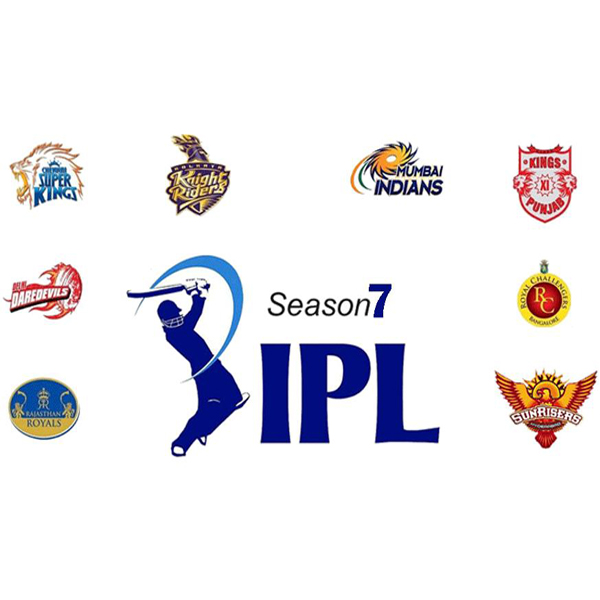
    According to the report, Chennai Super Kings and Mumbai Indians have emerged as the most powerful brands valued at $72 million each, followed by Kolkata Knight Riders ($69 million), and Royal Challengers Bangalore ($51 million). Rajasthan Royals ($45 million) and Delhi Daredevils ($40 million) are somewhere in the middle, with Kings XI Punjab ($32 million) and Sunrisers Hyderabad ($25 million) at the bottom of the pile.


    While each team is trying to claw its way back with operational improvements, trust flows with stakeholders will eventually determine the health of IPL’s long-term liquidity and profitability. For the current eight teams to sustain, their short-term operational movements need to be aligned with their strategic plans for the tourney.


    Further, the report estimates the merchandising valuation of IPL at $40 million, as compared to $2 billion for Spain’s La Liga. Despite having a population which is 25 times larger and an economy which is at least 25 per cent larger than that of Spain, India’s IPL is only two per cent of Spain’s La Liga in terms of merchandising. The reason is piracy and the availability of counterfeit products apart from the fact that the prices of original IPL merchandise are quite high from an Indian point of view.


    While there is a huge potential for the merchandising market to grow, the report also predicts it will grow ten-fold by 2020 – from $40 million to $400 million.


    Coming to broadcasters in the IPL universe, the tourney is currently in its seventh edition and will continue its long-standing association with Multi Screen Media (MSM), the official broadcaster of IPL, after Sony coughed up nearly $1 billion for a period of 10 years in 2008. Between 2008 and 2012, DLF was the sponsoring partner ($50 million) while from 2013 to 2017; Pepsi won the title sponsorship for a bid of nearly $66.5 million, beating its closest rival in Airtel.


    For the seventh edition, MSM’s two channels – Sony Max and Sony Six – have already started their Pepsi IPL campaign. The network is reportedly hiking its ad rates by 15-20 per cent and expects the revenue generated to be anywhere between Rs 900 – Rs 950 crore, despite the reduction in the number of matches played from 76 to 60. The broadcaster is learnt to have floated rates in the range of Rs 4.75- Rs 5 lakh per 10-second spots, and expects to increase them as the tourney gathers momentum.


    As far as viewers go, IPL’s reach was pegged at over 200 million viewers in 2013, as against about 163 million viewers in 2012. The total viewership in 2013 has been 2.6 per cent, up from the 2.2 per cent in 2012. Correspondingly, MSM earned Rs 750 crore in ad revenues in 2012 and upped it to Rs 950 crore in 2013, according to FICCI KPMG 2014.

  • ‘Twenty20 injects new life into sports broadcast’

    The sports genre will be known for four key things in 2007. Firstly, the upheaval that happened regarding cricket. Second, a breakaway initiative by the Essel Group forced the BCCI to wake up from its deep slumber. Third, a new format emerged that rejuvenated the bat and ball game. Fourth, even if cricket goes down there is no other sport to replace it.

    As regards the first point, there was a huge build up for the World Cup in March. Everyone from broadcaster Sony to marketers, advertisers had a calypso tune on their lips. Pepsi, one of the ICC’s partners, even went Gold for the event. Two matches into the World Cup and things went into free fall. India was eliminated. Information available with Indiantelevision.com indicates that Sony lost at least Rs 800 million as a result of unsold inventory. The overall loss to the economy from the World Cup debacle is believed to have been in the region of Rs. 2.5 billion.

    However, a few months later things had come full circle. This was due to two things. India won the T20 World Cup. Additionally, Twenty20, which was initially looked upon with some scepticism, proved to be a perfect fit for today’s attention-challenged youth. As a format it has proved to be a win-win situation for all parties involved – TV channels, advertisers and viewers.

    In the ultimate analysis, India’s unexpected showing in the T20 World Cup in South Africa looks like having the kind of long term impact that India’s even more unexpected victory in the 1983 ODI World Cup did.

    The biggest reaper of the T20 windfall was of course ESPN Star Sports (ESS). The T-20 success also means that ESS will get more bang for its buck that had been anticipated when it won the ICC rights late last year with a $ 1.1 billion punt.

    That apart, there is the BCCI’s ‘officially sanctioned’ Indian Premiere League, which if it takes off in the manner that IPL chairman Lalit Modi is envisaging, could well be to cricket what the Uefa Champions League currently is to soccer.

    It is worth recalling here though that it was Subhash Chandra’s Essel Group that first bet on the Twenty20 format when in April it announced the launch of its breakaway Indian Cricket League (ICL). The stated aim of the ICL, behind which Essel put in an initial investment of $ 1 billion, was to unearth talent from India and also to raise the standards of domestic cricket.

    And despite the Indian cricket board’s best efforts to ensure that the ICL remained stillborn, the fact that the inaugural tournament was staged with moderate success highlights one point. Carping apart, ICL has clearly validated itself. Suffice to say that the ICL’s calendar of five events for 2008 speaks for itself as regards Chandra’s intent to stay the course.

    What the IPL and ICL will likely do is that just as Europe is where the world’s best soccer talent congregates, the same will happen in India vis-?-vis cricket.

    The BCCI’s response to Chandra may have in initially been borne out of its outrage at the ‘temerity’ of a private body’s to take it on, but the positive fallout was that it increased the pay packet of domestic cricketers to prevent further exodus. Additionally, when it does launch its IPL, it will go that extra mile to ensure that it’s a success for all those involved in it.

    The upcoming IPL in April is structured as a franchisee-based Twenty20 Series with top international players. The likes of Russell Crowe, Shah Rukh Khan and Vijay Mallya have bid to own a team.

    Lodestar Media CEO Shashi Sinha feels that there is room for both. Also there are clients who will get in as the risk factor is less. Numbers may not be too high but they will not shoot down as was the case with the World Cup. A loyal audience is what clients will pay for as long as the price is right. Even a sixes event will work as long as it is pushed at a national level.

    As far as the rest of the sports broadcasters are concerned, 2008 will be key for Ten Sports as a host of cricket rights it has including Pakistan and Sri Lanka come up for grabs. Whether its association with Zee affects its position with cricket boards remains to be seen. Still, WWE has ensured that the channel remains steady in terms of weekly reach.
