Tag: Indian Cinema

  • Genre-bending tales are the reel deal for India’s content creators

    Genre-bending tales are the reel deal for India’s content creators

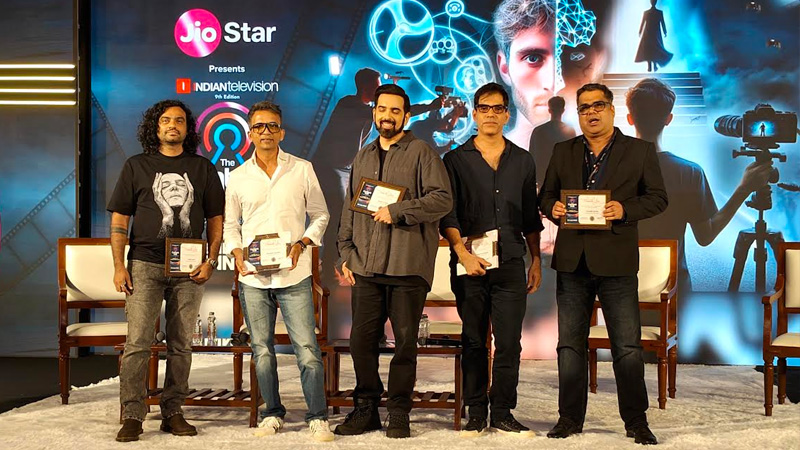
     MUMBAI: Jump scares, script flips and streaming hits, if there’s one thing Indian content creators agree on, it’s that the lines between genres are getting as blurred as a high-stakes thriller. At the 9th edition of The Content Hub Summit 2025, an insightful session titled “Genre Dynamics: Pushing Creative Boundaries in Indian Cinema, OTT and Television” brought together leading storytellers who are breaking the mould and mixing genres with flair. Chaired by filmmaker and trade analyst Saurabh Verma, the panel featured director Vishal Furia (Chhorii), writer-director Ravindra Gautam, Banijay Asia’s Mrinalini Jain, Applause Entertainment’s Rahul Ved Prakash, and filmmaker Kussh S Sinha (Nikita Roy).

    Horror director Vishal Furia kicked off the conversation by pointing out how genre films have matured. “We’re finally moving past jump scares. Indian horror is now about deeper themes like motherhood and social realities. Chhorii was scary, yes, but it also tackled female agency.” With Chhorii 2 on the way, he promised more genre-defying elements.

    Mrinalini Jain noted the surge in creators experimenting with “genre cocktails.” Think courtroom dramas that are also comedies, or thrillers laced with social commentary. “We’re seeing a healthy overlap between what entertains and what provokes thought. Audiences want content that works on multiple levels.”

    Ravindra Gautam emphasised that Indian television is slowly catching up with OTT and films in storytelling ambition. “We are moving away from just ‘kitchen politics’. There’s a demand now for fantasy, mystery, even dystopia, if told well and rooted in Indian ethos.”

    For Rahul Ved Prakash, whose work at Applause spans crime thrillers, political dramas and quirky comedies, the shift is evident in how stories are greenlit. “There’s a rise in shows that can’t be boxed into one genre and that’s a good thing. Viewers now want layered narratives.”

    Kussh Sinha, who’s working on genre-blending projects himself, argued that Indian creators shouldn’t just chase global formats. “We must create our own grammar rooted in Indian emotions, tropes and chaos. The global audience is already watching. Let’s show them our unique flavour.”

    The panellists highlighted a set of unmistakable shifts shaping India’s evolving content landscape. Genre fusion has firmly taken root, with historical thrillers, horror-romance hybrids, and docu-dramas gaining popularity across platforms. Writers now have more creative control, with writers’ rooms involved earlier in the process to help define genre direction and narrative tone. Regional content is leading much of this innovation, with Tamil, Telugu, and Marathi creators delivering some of the boldest and most genre-defying storytelling. And above all, audiences are choosing character over category they are drawn to emotionally resonant, layered protagonists, regardless of the genre label.  

    As the session wrapped, one thing was clear: the days of sticking to safe genre formulas are over. Whether it’s a horror film that makes you cry, a mythological show with sci-fi twists, or a soap opera with supernatural undertones, Indian creators are pushing past traditional formats and building new blueprints for storytelling.

    If 2024 was the year of experimentation, 2025 might just be the year of reinvention, one genre-bending frame at a time.

  • India’s music royalties hit the high notes with Rs 700 crore windfall

    India’s music royalties hit the high notes with Rs 700 crore windfall

    MUMBAI: India’s  music scene is singing a very different tune these days—one that sounds suspiciously like cash registers ringing. Music royalty collections in India have struck a crescendo at Rs 700 crore in 2024, surging 42 per cent year-on-year and quadrupling over five years in a performance that would make even Indian cinema proud.

    The star of this financial symphony? Streaming platforms, which have transformed from industry pariahs into the golden goose laying digital eggs. India’s global ranking for creators’ collections has leapt from a modest thirty seventh position in 2019 to twenty third in 2023, according to the International Confederation of Societies of Authors and Composers (CISAC) in its latest annual report.
    Royalty collectionsBut before the champagne corks start popping in recording studios across the subcontinent, there’s a sobering reality check. Despite the impressive crescendo, India’s royalty collections remain woefully below potential for a market of this magnitude—a case of having the orchestra but missing half the instruments.

    The culprit? Indians’ stubborn reluctance to pay for premium music streaming services. While platforms like Spotify, JioSaavn and Gaana are desperately trying to wean users off their freebie addiction with subscription models—backed by music labels like Saregama—the conversion rate remains sluggish.

    Adding to creators’ woes is the dismal performance of non-digital revenue streams, which continue to hit bum notes. CISAC has been working overtime with the Indian Performing Rights Society (IPRS) to bring global standards to governance, licensing and royalty distribution—essentially teaching old dogs new digital tricks.

    The organisations have crafted a fresh action plan for FY25, designed to explore untapped market potential and identify business opportunities. The blueprint targets improved collections from local digital services whilst diversifying revenue streams beyond the usual suspects.

    With India’s creative economy finally finding its rhythm, the question isn’t whether the music will stop—it’s how loud the next movement will be.

  • Jio Studios dominates 2025 with Sky Force success and OTT power moves

    Jio Studios dominates 2025 with Sky Force success and OTT power moves

    MUMBAI:  If 2024 was a cinematic knockout, then 2025 is already shaping up to be a content juggernaut for Jio Studios. After delivering a string of smash hits last year-including Article 370, Laapataa Ladies, and Shaitaan, plus record-breaking blockbusters like Stree 2 and Singham Again-Jio Studios has wasted no time in kicking off 2025 with a bang. The momentum continued with the Sky Force release, which soared at the box office and received glowing reviews.

    Jio Studios isn’t just ruling the big screen—it’s also dominating the OTT space. The studio has already dropped eight major releases across digital platforms, ensuring there’s something for everyone.

    Among the early 2025 highlights:

    . Mrs. – A bold and conversation-sparking film on Zee5

     .  Dhoom Dhaam – The ultimate binge-watch on Netflix

    .   The Storyteller – A masterful nod to Satyajit Ray’s cinematic legacy

     .  Kaushaljis vs Kaushal – A heartfelt exploration of second chances in love on JioHotstar

    These titles aren’t just topping streaming charts—they’re also leading Ormax reports, proving that Jio Studios isn’t just creating content; it’s setting the benchmark.

    As Jio Studios continues to push creative boundaries, audiences can expect a packed year of high-quality, genre-defying content. With eight plus titles already launched and more in the pipeline, the studio is doubling down on its commitment to delivering fresh, diverse, and engaging stories to audiences everywhere.
     

  • Eros Media World clears $56 million debt, strengthens financial position

    Eros Media World clears $56 million debt, strengthens financial position

    MUMBAI: Eros Media World PLC (EMWP) just hit a blockbuster financial milestone—becoming debt-free in India. Over the past three years, the global Indian film entertainment powerhouse has successfully repaid its outstanding bank debt, including principal and interest, totalling approximately $56 million at current exchange rates.

    At its annual general meeting on 28 February 2025, the company’s Indian subsidiary, Eros International Media Ltd (EIML), confirmed to shareholders that the full repayment had been completed during Q3 of the 2024-25 fiscal year. This financial feat follows EIML’s successful implementation of its debt resolution plan under the Reserve Bank of India’s “Resolution Framework for COVID-19 Related Stress” circular, introduced on 6 August 2020. Notably, EIML had first announced the implementation of this plan on 22 June 2021, covering an aggregate debt of Rs 468.07 crore at the time.

    This achievement isn’t just about numbers—it’s a game-changer for Eros Media World’s financial stability. With a clean slate, the company now has greater flexibility to invest in its strategic priorities, expand its global footprint, and double down on high-quality content production.

    “With the successful repayment of our bank debt in India, we have significantly strengthened our financial health, reinforcing our long-term commitment to financial discipline. This achievement allows us to focus on growing our entertainment business and unlocking new opportunities for value creation,” said Eros Media World PLC director Kishore Lulla.

    With India’s debt burden off its books, Eros Media World can now channel resources into growth, innovation, and content development. The company remains committed to producing premium entertainment and pushing boundaries in the global entertainment industry.

    As streaming wars heat up and the demand for high-quality content skyrockets, Eros Media World stands well-positioned to leverage its strengthened financial footing for bold new ventures.

  • Shruti Haasan’s ‘The Eye’ set to mesmerise India at Wench Film Festival

    Shruti Haasan’s ‘The Eye’ set to mesmerise India at Wench Film Festival

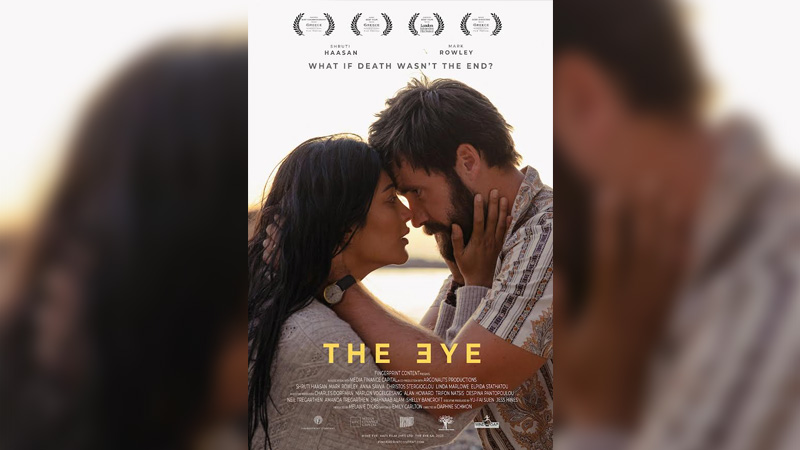
    MUMBAI: Indian audiences, prepare to be enthralled! Shruti Haasan is bringing her international lead debut to home turf. The Eye, a gripping British psychological thriller directed by Daphne Schmon, will premiere in India as the opening film at the fifth Wench Film Festival. The festival, founded by Sapna Bhavnani, is India’s only dedicated platform for horror, sci-fi, and fantasy films and will run from 27 February to 2 March 2025.

    The Eye follows Diana (Haasan), who embarks on a journey to a remote island where her husband, Felix (Mark Rowley), drowned. Seeking closure, she plans to scatter his ashes, but instead, she stumbles upon the eerie ‘Evil Eye’ ritual. This ancient practice offers a tantalising promise—to bring Felix back—but at a chilling cost.

    Shot on location in Athens and Corfu, the film immerses viewers in Greece’s breathtaking yet ominous landscapes. Following screenings at the London Independent Film Festival and the Greek International Film Festival, The Eye has generated significant global buzz, and its India premiere is set to amplify the excitement.

    Speaking ahead of the Indian premiere, Haasan expressed her enthusiasm for the project. “Psychological thrillers have always been a genre that fascinates me. To be part of a story that dives deep into human emotions, grief, and the supernatural is incredibly exciting. Besides the fact that the film has a riveting storyline and top-notch production quality, what makes this project even more special is that it was created under an all-women-led production house, which aligns with my passion for supporting women in the film industry. Furthermore, this film champions a sustainable way of filmmaking, something that the world desperately needs. If we want to continue telling our stories, we must be able to tell them in a manner that is conscious of our impact”, she said.

    Schmon, the creative force behind The Eye, shared her thoughts on the film’s depth and Haasan’s performance, “The Eye is both a love letter to Corfu, the island where my family is from, and an exploration of the dark psychological impulses surrounding grief. The story demanded an actor who could embody its emotional depth and complexity, and Shruti Haasan was the perfect fit. Her ability to navigate Diana’s grief, paranoia, and resilience with such authenticity is truly remarkable. It was only an artist of Shruti’s calibre who could do justice to this role, and she has delivered a stellar performance that will leave a lasting impact.”

    Beyond its haunting narrative, The Eye represents a shift towards sustainable filmmaking. Produced by Fingerprint Content, the film’s team made conscious efforts to reduce its environmental impact during production, setting a new standard for responsible filmmaking.

    With its powerful performances, an intriguing storyline, and an eerie yet visually stunning setting, The Eye is poised to leave audiences spellbound. As the festival opener, it will set the tone for a celebration of boundary-pushing genre cinema at the Wench Film Festival.

  • Aanand L Rai’s Colour Yellow names Harini Lakshminarayan as COO

    Aanand L Rai’s Colour Yellow names Harini Lakshminarayan as COO

    MUMBAI: Colour Yellow Productions, helmed by filmmaker Aanand L Rai, has appointed Harini Lakshminarayan as chief operating officer. She brings over two decades of experience in IP development, production and strategy to the Mumbai-based production house.

    In her new role, Lakshminarayan will oversee strategic operations and business development while maintaining the studio’s focus on storytelling and IP creation. She joins the company as it plans to expand its content slate across markets.

    “Harini brings a unique combination of creative foresight and strategic expertise that aligns perfectly with our mission,” said Colour Yellow Productions founder Aanand L Rai. “Together, we will continue to raise the bar for what Indian cinema can achieve in both domestic and global markets.”

    Lakshminarayan said she was excited to join the studio known for films like Raanjhanaa, Tanu Weds Manu, and Tumbbad. “Aanand L Rai’s incredible vision for storytelling that consistently pushes boundaries is truly inspiring,” she noted.

    The appointment comes as Colour Yellow, established over a decade ago, looks to build on its legacy of creating culturally rooted content that appeals to wider audiences. The studio has previously produced critically acclaimed films like Newton, Mukkabaaz and Shubh Mangal Saavdhan.

  • Adar Poonawalla acquires 50 per cent stake in Dharma Productions for Rs 1000 Cr

    Adar Poonawalla acquires 50 per cent stake in Dharma Productions for Rs 1000 Cr

    Mumbai: In a blockbuster deal that blends Bollywood glamour with business acumen, Serum Institute of India, CEO, Adar Poonawalla has acquired a 50 per cent stake in Karan Johar’s Dharma Productions for Rs 1000 crore. This partnership not only infuses the storied film production house with fresh capital but also marks Poonawalla’s strategic entry into the entertainment sector, broadening his portfolio beyond healthcare.

    Dharma Productions, known for producing some of Bollywood’s biggest hits, will now benefit from Poonawalla’s business expertise and resources. The deal is set to drive the company’s expansion into new content forms and strengthen its position in the evolving Indian film industry. The acquisition also brings an added layer of financial strength and strategic backing that is expected to propel Dharma into new ventures.

    Johar, expressing his optimism about the partnership, stated, “I am thrilled to welcome Adar Poonawalla to the Dharma family. His vision aligns with ours, and this investment will open up new avenues for us to create engaging and meaningful content.”

    This agreement symbolises a fresh chapter for Dharma Productions, which has been a cornerstone of Bollywood for decades. With Poonawalla on board, the company aims to accelerate its growth plans, expand its reach across platforms, and capitalise on emerging digital opportunities. The funds are likely to be used for producing high-budget films, expanding the company’s digital content division, and exploring international collaborations.

    Poonawalla commented on his latest investment, saying, “Bollywood has always fascinated me, and this partnership is a step towards not only investing in a successful business but also in the future of Indian cinema. I look forward to working closely with Karan Johar and the team at Dharma to achieve great things.”

    The deal puts Dharma Productions in a stronger position to compete with other major players in India’s entertainment industry. Prior to Poonawalla’s entry, the stake was hotly contested, with Reliance and Saregama among the potential buyers. However, Poonawalla’s winning bid underscored his serious intent to diversify his investments beyond the pharmaceutical industry.

    Industry insiders believe this move will encourage more industrialists to look at the entertainment sector as a viable investment avenue. With content consumption surging across digital platforms, Poonawalla’s financial backing could help Dharma Productions expand its footprint in streaming and international markets.

  • PVR Inox Q2 FY25 results show mixed performance amid strategic changes

    PVR Inox Q2 FY25 results show mixed performance amid strategic changes

    Mumbai: PVR Inox has reported its Q2 FY25 financial results, indicating a quarter of mixed performance as the company navigates post-pandemic recovery and strategic adjustments. Revenue reached Rs 16.2 billion, marking a 36.2 per cent increase quarter-over-quarter (QoQ), though it declined 18.9 per cent year-over-year (YoY). This growth was driven by a resurgence in Hindi films and improved footfall, which rose 27.6 per cent QoQ, although occupancy rates remained below pre-covid levels.  

    The company’s EBITDA stood at Rs 4.7 billion, down 32.2 per cent YoY but up significantly by 90.6 per cent QoQ, with a post-IndAS EBITDA margin of 29.5 per cent. However, net losses persisted at Rs 0.1 billion for Q2 FY25, compared to a Rs 1.7 billion loss in Q1 FY25. Average ticket prices (ATP) and spend per head (SPH) showed growth, increasing 9.4 per cent and 2 per cent QoQ, respectively, signalling steady progress despite challenges.  

    The balance sheet reflects a cautious but optimistic outlook. Total borrowings declined from Rs 17.9 billion in FY23 to Rs 17.2 billion in FY24, indicating the company’s efforts to reduce debt. Free cash flow turned positive, helping to stabilise liquidity, and cash reserves grew from Rs 3.3 billion to Rs 3.9 billion over the same period. However, with profit margins still tight and interest expenses continuing to rise, sustained improvement in box office performance and cost management will be essential to achieve profitability.  

    Looking ahead, PVRInox anticipates strong performance during the festive season, driven by major releases such as “Singham Again”, “Pushpa 2,” and “Bhool Bhulaiyaa 3”. The company remains optimistic about reaching a 32 per cent occupancy rate in Q3, supported by a robust content lineup.  

  • The Hema Committee Report: Is Indian cinema facing a new dark chapter?

    The Hema Committee Report: Is Indian cinema facing a new dark chapter?

    Mumbai: “Do not trust what you see; even salt looks like sugar!” A provocative line from the controversial Hema Committee Report, made public by the Kerala government last month, has ignited widespread controversy and debate. The report has prompted numerous actors to share their experiences, leading to an outcry in Kerala and raising crucial questions about the state of the Malayalam film industry.

    Malayalam cinema has long been celebrated for its progressive portrayal of women. Yet, recent revelations suggest a disturbing hypocrisy within the industry—a stark contrast to its outwardly feminist stance. The report has triggered a significant uproar, shedding light on issues of abuse, misogyny and inequality.

    How it all began?

    The crisis in the Malayalam film industry began with a shocking incident involving South Indian actress Bhavana Menon, who was kidnapped and sexually assaulted in broad daylight by a group of men back in 2017. The attack sent shockwaves through the industry, leading to the arrest of actor Dileep on charges of criminal conspiracy. Although Dileep, a major figure in Malayalam cinema, has denied the allegations, as the case remains unresolved in court.

    The horrific details of the crime initially spurred public outrage and a police investigation. As the public attention waned, women in the industry rallied together in solidarity, culminating in the formation of the Women in Cinema Collective (WCC) on 1 November, 2017.

    Formation of the report

    In its early years, the WCC focused on combating sexual harassment and addressing gender disparity and poor employment conditions in Malayalam cinema. In response, Kerala chief minister Pinarayi Vijayan established a three-member expert committee led by former Kerala high court judge K. Hema, alongside veteran actor Sarada and ex-IAS officer K.B. Valsala Kumari. The Hema Committee conducted a thorough investigation from November 2017 and submitted its final report on 31 December, 2019.

    The 235-page report, compiled by the panel, exposed the tight grip held by a small group of male producers, directors, and actors over the industry. This control has perpetuated a culture of abuse and inequality.

    Disturbing details in the report

    Though the report refrained from naming specific individuals, its revelations have reverberated throughout the industry. According to sources, some sections of the report were redacted, leading to speculation that influential figures are being shielded. The report detailed numerous instances of harassment, including allegations of male actors, producers, and directors demanding sexual favors and subjecting those who refused to mental torment, such as repeatedly forcing intimate scenes.

    The report also highlighted the struggles faced by male actors, including unauthorised bans from working in the industry. Many men, including prominent artists, have been reluctant to speak out for fear of jeopardising their careers. The report described the Malayalam film industry as being under the control of a “mafia” of powerful male figures who wield the authority to ruin careers and enforce their will.

    Reactions

    Following the report’s release, several women have come forward with their stories. One actress accused veteran actor Siddique of rape and harassment when she was 19. Although she initially faced skepticism, the release of the Hema Committee report has given her claims renewed attention. In response to these allegations, Siddique resigned from his position as General Secretary of the Association of Malayalam Movie Artists (AMMA).

    Actor Mohanlal had resigned from his post as president of the AMMA amid sexual assault cases against top office bearers Siddique, Baburaj and other actors such as Mukesh, Maniyanpilla Raju and Jayasurya.

    Actor Mammootty wrote in a Facebook post that the industry wholeheartedly welcomes and supports the recommendations and solutions outlined in that report. He also stated it is high time that all associations in the film industry join hands to implement them.

    In a similar fashion, both the actors have been facing criticism in the public sphere for being silent on the Hema committee report, which was made public on 19 August. According to media reports, Mohanlal, while welcoming the report, had also said that issues that are happening in the other sectors are part of cinema too.

    Legal actions

    At the time of writing, the special bench of Kerala high court that was tasked with hearing the cases related to the Hema Committee report came down heavily upon the Pinarayi Vijayan government for its inaction over the disclosures made in the report, which looked into the challenges faced by women in the Kerala film industry. The special bench comprising Justices AK Jayasankaran Nambiar and CS Sudha was constituted by the HC on 5 September and directed that the full report be handed over to the Special Investigation Team (SIT) to take requisite action.

    “We are surprised by this inaction. When it received the report or when DGP was given a copy in Feb 2021, some action must have been taken. Assuring confidentiality of women, we understand that. But the state govt is confronted with practices derogatory to women, what has it done? What is it that you are doing to address problems facing women, not just in cinema?” the court asked. Further, stating that this was a problem affecting the majority in the state, the court observed that it cannot be silent.

    Key lessons for the Indian film industry to be taken in consideration

    The Hema Committee Report has empowered many women in the industry to share their harrowing experiences, triggering a new wave of #MeToo activism in Kerala. While this was just a tip of the iceberg, many disturbing stories remain untold. The report exposes the urgent need to address women’s safety and challenging the wretched patriarchal values within the industry.

    While such instances are not surprisingly uncommon in Indian cinema, the recent surge in crimes against women and the silence of many male industry figures reveal a troubling disconnect between public statements and private attitudes, showcasing the industry has indeed entered a new dark chapter. It is crucial for Indian cinema to confront these issues openly, tackle its internal problems and create safer environments for all its members.

    Readers can access the full report given below:  https://event.indiantelevision.com/banner/hcr.pdf

  • “I think the international Indian-South Asian diaspora is very fond of Bollywood and starve for it”: Zee Studios’ Shariq Patel

    “I think the international Indian-South Asian diaspora is very fond of Bollywood and starve for it”: Zee Studios’ Shariq Patel

    Mumbai: Zee Entertainment Enterprises Ltd, a powerhouse in India’s media and entertainment, is set to host the ‘Maruti Suzuki Arena Presents 22nd Zee Cine Awards 2024.’ Set against the backdrop of a triumphant 2023 for Indian cinema, the event promises to honor outstanding contributions to the industry.

    Recently, stars like Alia Bhatt, along with Maruti Suzuki and ZEEL representatives, unveiled the chic trophy. The kickoff event featured actors sharing memories from past editions, with an exciting performance lineup announced for the much-anticipated on-ground event on 10 March.

    Delving deeper, Indiantelevision.com caught up with Zee Studios chief business officer Shariq Patel to gain insights on Zee Cine Awards 2024 being special; impact that Zee Cine Awards aims to create in the world of Bollywood celebrations and more…

    Edited Excerpts:

    On Zee Cine Awards’ evolution over the years, and the 2024 edition particularly being special

    What will make the 2024 edition special, is Shah Rukh Khan, as he is coming back to the Zee Cine Awards after nine years, he is the showstopper for us. This year, there is a certain amount of enthusiasm as cinema has bounced back, especially after how well the films like ‘Pathaan’, ‘Gadar 2’, ‘Jawan’, ‘Rocky Aur Raani Kii Prem Kahaani’ did last year. An entire boom happened at the box office; that’s why we are following the mantra of ‘Cinema Zindabaad’ this year for the award show. We took the line from the movie ‘Gadar’ and made it into ‘Cinema Zindabaad Tha, Hai Aur Rahega’. With two key people in the industry associated with the award show- Shah Rukh Khan coming on board and Bobby Deol, along with the Deol family, the main agenda is to put the spotlight on the fine talents of the industry. The excitement is a lot more, with movies like ‘12th Fail’, ‘Sam Bahadur’ and some great performances that were delivered. It’s a natural progression, and I think it’s interesting because the films were so loved in 2023, it has been a landmark year in terms of Box-Office collection. post covid, everyone thought that Box-Office was going to die, but the audience has come back saying ‘We Want Cinema’, especially with OTT emerging and everyone thinking that overall habits have changed, and people just prefer sitting at home. All these theories got de-bunked in 2023 much to the elation to all of us, who actually are involved in this field.

    Are there any new or innovative award categories introduced for Zee Cine Awards 2024 to reflect the changing dynamics of Bollywood

    No, the categories pretty much remain the same because we are not looking at adding anything which isn’t there, it is basically honouring excellence in all departments of Cinema. Everyone knows what those departments are, so we are not creating any new departments or awards. The idea is to honour thousands of people who give their blood, sweat and tears to come up with movies on a week-on-week basis, it’s like holding in high esteem for the best of the lot.

    On some exciting details about the star-studded lineup and collaborations for Zee Cine Awards 2024, and in what ways do brands, sponsors, and celebrities benefit from their involvement in the event

    I guess the brands look at sponsoring any event which gives a positive rub-off, the bigger the event, the greater the recall and obviously if the event is in line with what the brand stands for, there is a positive rub-off that association brings in, which has happened with Zee Cine Awards and other film awards. I believe even in other big events like IPL, or other sports properties, there is always an association benefit that brands get. I think if you talk to the Maruti Suzuki team or any other sponsors, it’s easy for them to hire the same artist and do TVC or get their brand ambassadors to be a part of the event of the same scale. But shooting over one to two days and being posted or premiered later on might not have the same impact as much as an event of this kind and as it offers positive brand allure that rubs off so on the brand. Hence, they might choose this.  However, the on-ground event is on the 10 March, so the excitement will be there from today till its actual on-air date, which will probably be a week or so later. So, that 20-day effect of conversations around it, especially the trade media and consumers as such, will always be a positive benefit.

    On the enduring impact that Zee Cine Awards aims to create in the world of Bollywood celebrations

    I think it’s honouring the talent; we have been putting out a lot of our old winners and if you see some of those clips on our Instagram page, everyone from Hrithik’s debut till this year, it’s a platform which gives opportunities, and make known of the brand Zee actually is. There is an ingrained association that every big actor or artist has with Zee, and this award kind of solidifies it in a slightly different manner. All the big actors, directors, and technicians have at some point or the other won a Zee Cine Award over the last 22 years, which kind of deepens the association. You have heard how everyone talks about it and how there is a specific emotional connection with it, whether they have performed, won, or have been nominated. There is a bit of that family feeling that Zee brings, being the true homegrown brand.

    On Zee Cine Awards catering to an international audience, and the efforts that are being made to showcase Indian cinema on a global platform

    I believe that if you speak to Ashish Sehgal (chief growth officer- ad sales) or Ruchir Tiwari (chief cluster officer- Hindi movies), they will be able to provide you with a better understanding of that. I think the international Indian-South Asian diaspora is very fond of Bollywood and starve for it. Like how Ashish mentioned that we cater to 17 channels that are distributed all over the world, which automatically includes cinema. This creates a complete circle where you can watch a large number of movies on the Zee platform, and then see many artists performing and getting appreciated.

    On Zee Cinema/Zee TV planning to elevate the viewer experience in 2024, navigating creative challenges to make award shows entertaining and engaging, and adapting to the digital transformation and industry trends for Zee Cine Awards

    I believe that in order to keep the audience engaged for the expected three hours, they should get entertained; it is the same thing as watching a series, a film or a TV show. We are asking for the time of the audience, and the moment you are asking for their time, you need to make sure that it is engaging, there is entertainment happening, so either there is a big performance, a gag, some fun moment or felicitation of the award, it’s a mix and match of all. So, creatively delivering that is a challenge for us, for which we have teams. And the rest of it will be giving three to four thousand people who are on-ground, a grand experience to enjoy those particular four or five hours a day in the arena watching these actors perform and being present under the same roof as them.