Tag: Indian Broadcasting Foundation

  • Govt. reconstitutes task force for DAS phases III and IV

    Govt. reconstitutes task force for DAS phases III and IV

    MUMBAI: Days after Information and Broadcasting (I&B) Minister Prakash Javadekar announced that digitisation in the country will progress as per the new deadlines; the government has come up with a reconstituted task force for implementation of digital addressable system (DAS) in phases III and IV.


    The new task force will constitute I&B additional secretary chairperson, Telecom Regulatory Authority of India (TRAI) principal advisor for broadcast and cable satellite, I&B Ministry joint secretary broadcasting, representative from the MSO Alliance, five independent MSOs one each from north, south, east, west and north east regions, five registered LCO associations one each from north, south, east, west and north east regions, representatives from the Indian Broadcasting Foundation, News Broadcasters Association, Association of Regional Television Broadcasters of India, DTH Association, FICCI, CII, ASSOCHAM, CEAMA, Department of Telecommunications, Department of Electronics and Information Technology, DG: Doordarshan, DG: All India Radio, BECIL, BIS, five prominent consumer organisations one each from north, south, east, west and north east regions and 33 state level nodal officers one each from the states/union territories governments.


    The task force would act as an interface between the government and the industry in matters related to implementation of DAS in the cable TV sector and monitor the implementation of DAS. It also will have to analyse the roadblocks that may come in the way of digitisation and suggest measures.

  • Delhi HC extends stay on Kantar, case pushed to Feb 2015

    Delhi HC extends stay on Kantar, case pushed to Feb 2015

    MUMBAI: The hearing on the case between Kantar Market Research and the government of India has been put off to 12 February 2015.


    The case that was last heard on 8 September saw a notice of the application by the Indian Broadcasting Foundation (IBF) being accepted by the Kantar counsel that has been asked to file a response within two weeks. After this, an advance copy of the same will be given to the IBF who may then file a response in two or three weeks’ time.


    The case has been put off to 12 February 2015, on account of the personal reasons of the Kantar counsel, who had prayed for a date in January 2015.


    Meanwhile, the interim order on the case will continue that will allow Kantar’s subsidiary TAM Media Research to publish ratings till the verdict on the case is out.


    Kantar had challenged the cross-holding norm in the policy guidelines for TV rating agencies for which it had got the HC’s stay order. However, the research agency still hasn’t received any response from the Ministry of Information and Broadcasting on its application to be registered as a TV ratings service.


    Apart from the IBF, the News Broadcasters Association (NBA) has also joined the respondents in favour of the guidelines.

  • TDSAT to hear IBF case on tariff in November

    TDSAT to hear IBF case on tariff in November

    MUMBAI: It has been a busy week for the courts. While on one hand, the Telecom Disputes Settlement Appellate Tribunal (TDSAT) on 21 August heard a case from the Indian Broadcasting Foundation (IBF), Viacom 18 and MSM India challenging the tariff order amendment of 16 July that was passed by the Telecom Regulatory Authority of India (TRAI). On the other, Star India’s case challenging the TRAI order dated 18 July was heard in the Delhi High Court.


    Taking into account the Delhi HC order for the Star India case which came out on 19 August, the TDSAT today postponed the next hearing date for 18 November.


    The Federation of Hotel and Restaurants Association of India (FHRAI) had asked for refund from broadcasters for deals signed before the order came into existence that will be applicable for the current duration. However the IBF counsel stated that the order only talks of deals taking place in the new regime and the deals for which the FHRAI is asking for refunds have been done in advance.


    Considering the Delhi HC order and also IBF’s proposition that in a 2012 judgment, the TDSAT had itself said that when an arrangement is ongoing between parties and a tariff order is issued, it is not applicable with retrospective effect unless mentioned in the order.


    Therefore, the current deals signed will be dormant but not terminated till the end of the case. It has asked both parties to ensure all their pleadings are in place by 28 October so that a final verdict can be given on 18 November.


    Star India’s case is set for its next hearing on 26 September where it has challenged the regulation itself to which Zee is also a party.


    Click here to read order

  • Commercial TV subscriber tariffs: Broadcasters, Star take battle to courts

    Commercial TV subscriber tariffs: Broadcasters, Star take battle to courts

    MUMBAI: It’s the battle of the bill – the commercial cable TV bill, that is. The Telecom Regulatory Authority of India (TRAI) on 16 July 2014 issued an amendment to its earlier 2004 broadcasting and cable TV tariff order. The amendment brought in new customer categories such as commercial establishments and commercial subscribers. And it also stated that as far as cable TV rates are concerned, there shouldn’t be any differentiation on an ordinary and commercial subscriber and charges for both should be on a per TV set basis.


    That amendment has not gone down well with the Indian broadcast community as they have been lobbying for differential rates for commercial subscribers for a long time and the global practice is that commercial establishment and subscribers pay more than common subscribers.


    Its representative body, the Indian Broadcasting Federation (IBF) decided to challenge the tariff order for non-digital addressable areas (DAS) in the Telecom Disputes Settlement Appellate Tribunal (TDSAT). And industry leader Star India decided to file a writ petition against the TRAI challenging the order for both non DAS and DAS and other addressable systems in the Delhi High Court.


    Coincidentally both the cases came up for hearing on the same day. While the HC declined to give a stay order on the 16 July 2014 tariff order amendment, it has served notices to both the TRAI and the Federation of Hotels and Restaurants Association of India (FHRAI).


    The matter has been posted for a full-fledged hearing on 26 September. Till then, the order is maintainable. Meanwhile, the TDSAT has said that it will wait till the HC decides on the case to take any further action.


    What Star India has challenged in the HC is that the 16 July 2014 amendment order denies broadcasters the right to directly deal with the hotels. Star India has also appealed that it will have to unnecessarily depend on distribution platform operators DPOs to strike content deals as for commercial establishments, which might be treated as ordinary subscribers unless they specifically charge customers for cable TV subscribers. The broadcaster can only give a differentiated rate to those hotels that categorically mention TV as one of the services, thereby being deeming it fit to be called a commercial subscriber.


    The TRAI and FHRAI have been asked to respond to notices by the next hearing.


    Click here for the High Court order

  • Difference of opinion within BARC on rollout date?

    Difference of opinion within BARC on rollout date?

    MUMBAI: The silver lining in the TV rating system in India might see dark clouds if Broadcast Audience Research Council’s (BARC) chairman Punit Goenka is to be believed.


    Goenka showed concerns on the time the new rating system will start operating. Earlier talking to indiantelevision.com, BARC tech committee chairman Shashi Sinha had stated that the new ratings system should be up and running by 1 October, 2014.


    “Everyone is aware of the issue with Indian Readership Survey (IRS) and unless that gets sorted how can we roll out our process,” said Goenka, when quizzed if the launch time for BARC was on schedule. “There would be a delay,” he added.


    A committee member, without commenting on Goenka’s concerns, said that the IRS issue is sub judice and hence cannot share data with BARC. “If data isn’t shared with us, how are we going to design the panel?” he questioned. However, he soon highlighted on the fact that the current issue is with the survey done for national publishers and it shouldn’t impact any survey/data needed for television.


    Whereas another source refuted any such delay and believes that though IRS has its own sets of problems, there shouldn’t be any issue with BARC. “BARC needs IRS for establishment data, but with minor internal adjustments, everything will fall in place and IRS issue shouldn’t create any material difference to the time-table,” he pin-pointed.


    Similarly, another source believes that there shouldn’t be any delay in the rating system to come in place. “Work is in process and in line with the date we had said earlier. And we are hopeful of reaching the due date without any hassle.”


    “Why think of a delay? Everything is on schedule,” said a highly placed industry source. “An eight to 10 days delay shouldn’t be called as a delay. A minor variation in the date shouldn’t be an issue,” he concluded.


    Early this year, in January, BARC had signed a contract with Médiamétrie for a 1+5 year term. The French audience measurement system will be providing the audio watermarking technology to BARC to monitor TV consumption through its 20,000 strong panel.


    The funding to put up the new system in place has been divided as follows: 60 per cent Indian Broadcasting Foundation (IBF), 20 per cent ISA and 20 per cent Indian Advertisers Agencies Association of India (AAAI).

  • Man Jit Singh likely to continue as IBF president

    Man Jit Singh likely to continue as IBF president

    MUMBAI: It was in early January of this year, that a major announcement emerged from MultiScreen Media (MSM – Sony Entertainment) wherein NP Singh was announced as CEO of the network, replacing Man Jit Singh. 


    The industry hadn’t digested the news when another one broke which stated that  Man Jit Singh was being moved into a global position as president of  Sony Pictures Home Entertainment, replacing David Bishop who will depart in March when his contract expires.


    What this elevation means is that Man Jit Singh will now be located in Los Angeles (LA). 


    So what does it mean for Indian Broadcasting Foundation (IBF) of which he is the president?


    Last year in September, the IBF re-elected Singh as its president at its 14th annual general meeting. But with him spending more time in LA, will IBF look for someone else to take his place? 


    No, comes the unanimous response from highly placed industry sources. An IBF representative states that:  “Man Jit Singh will continue to preside over the body as the president. For us, things are working smoothly and we don’t expect to see any changes.”


    Another source from the industry who is in agreement adds, “There is a board meeting to discuss the issue on 16 of this month but we see status quo being maintained.”


    When we called up Man Jit Singh to get his view on the same, he was unreachable. However, sources reveal he will be jetting to and fro between India and the US even now like he used to earlier. “He is used to the travel and has been doing it for ages now, so we don’t think distance is going to change anything.”

  • TV’s leading ladies get into the CAF act

    TV’s leading ladies get into the CAF act

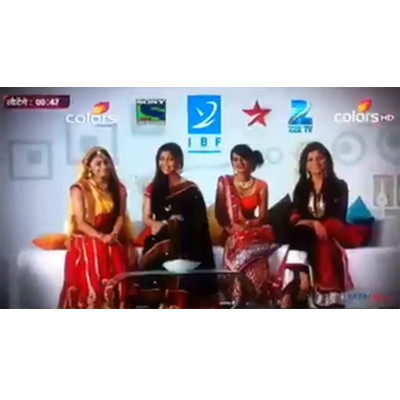
    MUMBAI: In an attempt to speed up the filling of consumer application forms (CAFs), the Indian Broadcasting Foundation (IBF), along with major broadcasters, has relaunched its on-air promo campaign urging cable TV subscribers to fill them at the earliest as mandated by Telecom Regulatory Authority of India (TRAI).


    The campaign features television’s leading ladies like Sakshi Tanwar, Toral Rasputra, Rubina Dilaik and Nia Sharma. It urges consumers to fill their details and hand over the CAFs to their cable TV operators, failing which they will have their cable TV connection snipped off.  The deadline for the submission for the forms was 15 December which again wasn’t met and extended to 31 December.


    Says an IBF official, “From the time the campaign was launched first, we have been playing it across channels. And for a few weeks that it was taken off the screens, a scroll/ticker ran, reminding subscribers about the imperative to fill up CAFs.  We have started airing it again so that concerned parties take a note of it and help us achieve the goal.”


    However, he isn’t optimistic about the procedure winding up by the end of the year as well. “And if MSOc and LCOs don’t do it, they will get in trouble, this time,” he says firmly.


    The channels have been told to show the campaign as many times as possible throughout the day.


    In the earlier phase of the campaign in 2012, actresses (Shweta Tiwari, Pooja Gaur, Ragini Khanna) educated and sensitised DAS subscribers about the issue. As per the Digital Addressable Cable TV Systems Regulations, 2012, the MSOs can transmit digital signals and activate the set top boxes only after receiving the CAF from the consumer with his/her preference. If there is no form, the MSOs were obliged under law not to transmit the signals and deactivate the cable connection. However, no such switch off took place in the first phase of digitisation. On the contrary, the deadlines of various phases have been extended time and again.


    So what is the reason for this delay? The official feels that the delay in the process is either from the consumers’ side or the local cable operators who have not taken the form collection seriously.  “We still can’t figure out what is the reason for this blockage?,” he says.


    The agenda is that by end-2014, India’s 100 million-odd cable TV homes will phase out the analog version, and switch on digital TV.


  • Ad Cap: The Story continues.

    Ad Cap: The Story continues.

    MUMBAI: That both music channels and news channels had approached the Telecom Disputes Settlement and Appellate Tribunal (TDSAT) against the 12 minute ad cap ruling by the Telecom Regulatory Authority of India (TRAI) is known.

    We had also reported that while the TDSAT hearing for music channels was scheduled for 21 October, that for news channels had been brought ahead to 31 October from 11 November.

    ut there’s one more twist in this tale for music channels too will now have to wait, much like their news counterparts, till 31 October to hear the TDSAT ruling on the matter.

    And it doesn’t end there. Industry sources reveal there is still confusion regarding the ad cap with nearly 50 per cent of television channels not implementing it, a few of which are following the earlier mandate of 16 and 20 minutes advertising, and still others ‘flouting the rule completely.’

    In fact, a source states the number of antacid pills being consumed by planners and buyers in agencies and by ad sales executives in TV channels has gone up thanks to the constant bickering between the two of them.

    Indeed, Sony Entertainment Television took everyone by surprise when the network unanimously decided not to follow the 10+2 mandate. Network CEO and Indian Broadcasting Foundation president Man Jit Singh had then said: “There should be status quo and there should be one law for all channels from all genres.”

    Till date, Sony stands by its CEO’s statement. “We will wait for the verdict from TDSAT, which comes out at the end of this month. We want status quo, no matter which way the verdict goes,” says MSM president network sales, licensing and telephony Rohit Gupta.

    We will continue with the 10+2 ad cap no matter what the TDSAT decides, says Ashish Sehgal

    On the other hand, representatives of Star Network and Viacom 18, which have been happily following the ad cap, maintain that their respective managements will take a call after the TDSAT ruling. “We will follow the law,” they say.

    Meanwhile, Zee has an entirely different take on the issue. “We will continue with the 10+2 ad cap no matter what the TDSAT decides,” says Zeel chief sales officer Ashish Sehgal.

    He justifies this stance saying: “Not that we are too happy with the scenario, but we need to bring in discipline. We are now going to the international norm of 12 minutes of advertising per hour. The network has already created its business plan around the new rule. A lot of planning has gone into this. We have increased our content and decreased the inventory and revising this again is not on our agenda.”

    On their part, advertisers are unhappy with the few networks that are implementing the mandate voluntarily and charging high rates. The big question facing them is what if TDSAT overrules TRAI’s diktat. “Will the channels revert to their earlier air time allocation as everyone else is doing or will they further hike the rates?” one of the advertisers questioned voicing his apprehensions on condition of anonymity.

    As far as the industry is concerned, an IBF member says: “Let’s say the TDSAT quashes the TRAI order. The ruling will be valid for everyone and every broadcaster (even those who are complying with the 12 minute ad cap) can go back to the old system. Or news and music channels lose the case in TDSAT. They can approach the Supreme Court for succour. Then let’s say the Supreme Court puts a stay on the ad cap, it will then be back to the way the world was operating before this ad cap announcement by TRAI.”

    News broadcasters say that if the verdict is in support of the ad cap, it will be implemented by end-November, if not earlier. “With Diwali round the corner, we are unsure how many days the court will take to come up with the verdict. Though if it is implemented, it is bad news for news channels,” says a member of NBA (News Broadcasters’ Association). Asked if the NBA will then appeal to the Supreme Court, the member dismisses it as a hypothetical question.

    Some advertisers believe that the new ad cap regime could take longer to roll out completely. Some expect it to spill over to mid-2014. Or it could be even later, if things go back and forth in court as they are wont to do.

    For the industry, however, what could be the best outcome is that Union I&B Minister Manish Tewari’s suggestion (that ad cap be implemented post completion of digitization in December 2014) is taken seriously and becomes a reality.

    But then there are the cynical observers. Says one of them: “Don’t get into the politics. Ministers say something and do something else. After all, where did the request for the ad cap come from…”

  • The TAM story continued…

    The TAM story continued…

    It has clearly broadcast its intent: the Rs 37,000 crore Indian TV broadcasting industry wants change in the way TV viewership is monitored in India. Though a lot of noise has been made about the quality of and what was wrong with the ratings, followed by broadcasters‘ cancellation notices to TAM Media Research‘s service, nothing specific was forthcoming from them on what those changes should be. This was followed by a period when speculation was that TAM‘s ratings would be blacked out for a while until it corrected itself and satisfied broadcasters.


    But despite denials from the Indian Broadcasting Foundation (IBF) very senior management sources in television channels have toldindiantelevision.com that the cancellation notices by the broadcasters stand cancelled. I guess one shouldn‘t be surprised. Long after some broadcasters unsubscribed, they continued to claim their No 1 position. How? As per ratings, of course.


    Confirming this is the CEO of a TV channel: “Most of the broadcasters who sent in their subscription cancellation letters to TAM have withdrawn them. Nobody will come on record; the IBF will say no it has not happened, but the cancellations stand cancelled. All the channels who say they have unsubscribed have been circulating ratings internally and to their producers. So who says that they have cancelled their subscriptions to TAM?”

    _________________________________________________________

    Most of the broadcasters who sent in their subscription cancellation letters to TAM have withdrawn them. Nobody will come on record; the IBF will say no it has not happened, but the cancellations stand cancelled. 
    _____****________________________________________________


    But to be fair, the broadcasters did write to TAM withdrawing their subscriptions, but they did not ‘enforce‘ those letters. TAM continued to give out ratings and the industry continued to download them. Besides, one-third of the broadcasting industry unsubscribing was not a shut-down, but a warning. A warning which was very much required. 


    While Broadcast Audience Research Council (BARC) is underway and will possibly take over the industry as the sole ‘currency‘ for television ratings by mid-next year, a black-out in the interim period is not a desirable situation for any of the stakeholders, is what we understand.


    So the fact is TAM never went away really. What happened was that there were threats to make it go away, but behind closed doors the broadcasters worked on elucidating what they would like TAM to do to win their favour and their custom. Their list of demands, part of which was reported by Mint, includes:


    Monthly data v/s Weekly data


    Broadcasters prefer their ratings on a monthly basis as opposed to every week. This means data will be week specific, yet it will be available for consumption only at the end of the month.


    No ratings for smaller niche


    Any cell or segmentation which has less than 30 peoplemeters employed in it, should not be reported. This translates to no ratings for smaller niche channels in that particular month. The idea behind this restriction is self-explanatory. ‘No data is better than insufficient data.‘


    CPT v/s CPRP


    A lot of the chaos surrounding TAM ratings arises out of tall claims made by channels based on ‘share‘. The broadcasters wish to do away with the share syndrome and want the data strictly in numbers. This implies that the market standard will now have to change from Cost Per Rating Point (CPRP) to Cost Per Thousand (CPT). Broadcasters want to be told the exact number of viewers they are reaching in thousands, irrespective of the share aspect, which as I understand, is prone to loopholes.


    BARC supervision


    The broadcasters‘ have demanded that the implementation of all their demands and the overall technical procedure is subject to BARC‘s tech committee‘s supervision.

    _________________________________________

    Broadcasters have complained for long, that in a country where millions of viewers are getting added annually and there is a robust digitization exercise in place, how can they believe TAM’s claim of the TV universe shrinking? In this context, the demand for increasing the viewers, only seems justified.
    _____****__________________________________

    From 145 million to 260 million


    The total television viewing universe in India is approximately 500 million. Out of this, around 240 million comprises rural viewers which are not covered by TAM. This leaves 260 million urban, semi-urban and semi-rural viewers. Currently, TAM covers a universe of 140 million viewers only. The broadcasters rightly demand that the sample base should be boosted to 260 million viewers to cover the entire non-rural universe.


    Broadcasters have complained for long, that in a country where more viewers are getting and there is a robust digitization exercise in place, how can they believe TAM‘s claim of the TV universe shrinking? In this context, the demand for increasing the viewers only seems justified.


    The fallout happened due to a number of causative factors. Inaccuracy, lack of transparency and illogical explanation were some of the complaints made by the broadcasting industry for a considerably long period of time.


    Besides, it was important to send out a clear message to TAM and the rest of the world, that the Indian broadcasting industry is capable of dismantling an existing system by their united strength. Also, the time was right to set the stage for the upcoming BARC. The sudden outburst against TAM was not so sudden after all.


    The concerns of all involved have to be addressed sooner than later. And it is definitely a positive development to know that broadcasters finally chose to break their golden silence and initiate corrective measures.


    The consensus between TAM and broadcasters is believed to have been reached for the above-mentioned demands. So far everyone stands divided on the way forward based on broadcasters five or six point plan. It is now up to TAM to convince agencies and advertisers, both of which are very crucial stakeholders in the entire set up.
  • TRAI seeks to define TV ratings guidelines

    TRAI seeks to define TV ratings guidelines

     NEW DELHI: Even as the government-mandated Broadcast Audience Research Council (BARC) has been working on getting its act together, the Telecom Regulatory Authority of India (TRAI) today expressed the need for urgency in finalising its regulations for TV ratings agency accreditation. In an Open House today on its consultation paper on “Guidelines/Accreditation Mechanism for Television Rating Agencies in India,” TRAI officials indicated that the system of rating agencies could be streamlined only through proper guidelines mandated by it.


    TRAI chairman Rahul Khullar, Principal Advisor (Broadcasting and Media), and other officials were present at the open house attended by about 30 stakeholders, including News Broadcasters’ Association head K.V.L, Narayan Rao, BARC CEO Partho Dasgupta, Paritosh Joshi, Indian Broadcasting Foundation (IBF) secretary general Shailesh Shah, among others.


    The stakeholders were generally in favour of a self-regulated mechanism through BARC which has committed to roll out TV ratings by Q2 2014.


    Most of the attendees agreed that TAM had failed in its task and any agency that takes over this work should be able to give a more rational coverage of viewership.


    Khullar at the meeting candidly said that even if BARC is progressing, he had been mandated by the ministry of information & broadcasting to start the consultative process on TV ratings which he was doing. He also said it was not clear who would be the regulating agency for the TV rating process in India: TRAI, I&B minsitry, or industry itself.


    Some participants of the Open House however expressed their fears that it is quite likely that TRAI will end up being the regulatory agency for the same.


    In an effort to put an end to controversies generated by TRPs, TRAI had on 17 April issued a paper to deal with issues such as establishing an accreditation mechanism for TV rating agencies and methodology of audience measurement to ensure transparency and accountability in the rating system.


    The consultation paper on “Guidelines/Accreditation Mechanism for Television Rating Agencies in India” also seeks to get the views of stakeholders on sample size; secrecy of sample homes; cross holding between rating agencies and their users; complaint redressal; sale and use of ratings; disclosure and reporting requirement; competition in rating services; and audit.


    The consultation paper has been issued at the behest of the I&B ministry, which had earlier received a report from the Amit Mitra Committee on the subject. IBF has since been working to set up BARC as an alternative to TAM.


    TRAI officials said incorrect ratings will lead to production of content which may not be really popular while good content and programmes may be left out. Therefore, there is a need to have an accurate measurement and representative television ratings for programmes.