Tag: Indian Broadcasting Foundation

  • Rathikant Basu: A bureaucrat who pushed boundaries

    Rathikant Basu: A bureaucrat who pushed boundaries

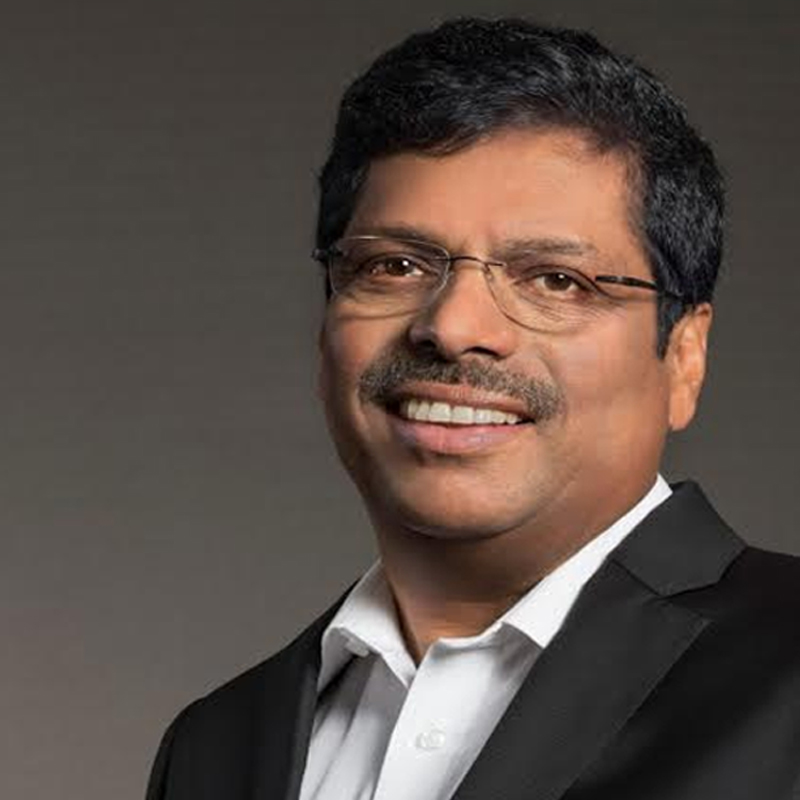
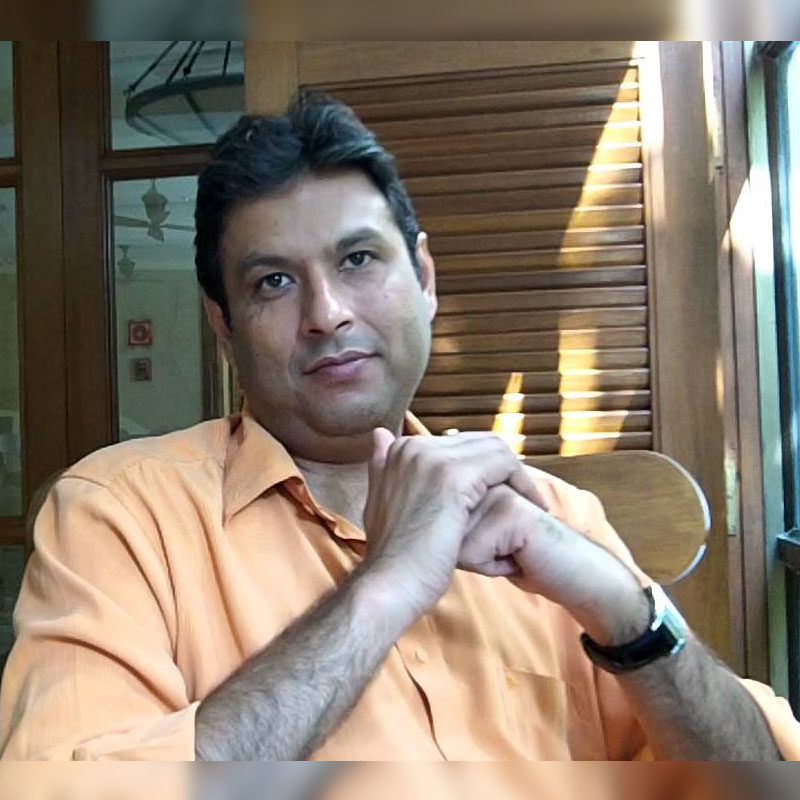
    Mumbai: He loved the high life. A career bureaucrat from the Indian Administrative Services, Rathikant Basu, shifted from the civil services to a private sector corporate job as head of Star TV India (yes, the same Disney Star TV India which has today been subsumed in the Big A’s Reliance Industries) in the late nineties.

    He had impressed Rupert Murdoch (who was then the owner of Star TV India) with the work he had done for Doordarshan when he, along with information and broadcasting secretary Bhaskar Ghose, privatised the news bulletins on the state-owned channel by handing production to the Prannoy Roy-owned NDTV.

    Additionally, he had also faced the influx of private general entertainment channels, Zee TV, Sony Entertainment, ATN, Star Plus (a hotch-potch of Chinese language and international programmes) -head on in the early and mid-nineties.

    He injected freshness into DD programming by inviting private producers to churn out popular shows on its buzzing with entertainment spinoff called DD Metro. This was at a time when Zee TV had revolutionized TV consumption with its dose of Anchor Ek Minute, Saregama, Antakshari, shows which struck a chord with starved-for-entertainment Indian viewers.

    Suddenly, DD which seemed to be losing its hold on the media planner and buyer trade, got it back, thanks to the spurt in ratings.

    And that is what had enamored Murdoch about Mr Basu – as he addressed him – and he hired him as the CEO. Former Star TV India CEO Peter Mukerjea had a moniker for him – he simply called him Rodney. Says he in his book Star Struck – Confessions of a TV executive: “..it was a friendlier and more informal way of referring to him than Mr Basu, which sounded very much more like a school headmaster. .He himself was an excellent thinker, super bright and also exceptionally amiable – clearly a highly talented individual.”

    Peter then talks about Mr Basu’s sojourn at Star India when the latter thankfully failed in his bid to transform its biz model to a slot-fee-air time model just like DD used to operate. He then talks about other failed forays of Star India into the DTH business with the government getting wind of it and disallowing it without it jumping through regulatory hoops. Basu’s attempt at localizing the foreign and English language shows like Baywatch, The Bold and the Beautiful into Hindi led to Star Plus becoming a laughing stock. His efforts at playing out reruns of shows such as Chandrakanta and Saans also flopped miserably. And led to confusion amongst advertisers who deserted it.

    What he was certainly successful at, was in the setting up of the lobbying group the Indian Broadcasting Foundation (IBF), which he did as a knee jerk reaction to the government raising the red flag on the Star India DTH service ISkyB. He also did a great job in launching the first private satellite news channel in India under the brand Star News in partnership with Prannoy Roy’s NDTV, with whom he had a prior and also good working relationship since his days at DD

    The confusion about Star Plus’ identity and Basu’s hiring of former government personnel led to a period of some chaos in amongst content producers and advertisers which then forced Murdoch’s hand and led to his being elevated as non-executive chairman with Peter becoming CEO.

    What also worked against Mr Basu as CEO of Star TV India was some envy from his peers in government service who saw him as a turncoat, thus retarding the network’s progress in India. 

    Not one to be put down, Basu,  after the completion of his contract at Star India launched channels under the brand Tara (a takeoff on Star India), which he continued to run for more than a decade and a half. Not very profitably. But ran them he did. Until he discovered he was suffering from Alzheimer’s Disease.

    Basu, on his part, also knew how to give back. He had kindly consented to be on indiantelevision.com’s The Indian Telly Awards jury for at least a couple of years. Far from being just a serious former bureaucrat, he cracked a few jokes and he chortled. Yes, he did – an antithesis to the strict and sombre exterior he normally presented to the media. 

    The industry veteran passed away on 17 March 2024, following a harrowing descent while grappling with the mind-robbing ailment. He was just nine days short of completing his eighty-second birthday.

    Says Peter in his book: “Rodney was never a bad chap, on the contrary he was rather fun to be with. Alongside his intelligence, I admired so many aspects of his admittedly quirky personality. As a boss, he had always been very civil with me and I, in turn, gave him due regard and respect. There was no doubt in my mind he was a gentleman.” 

    May the gentleman RIP.

  • NTO 2.0: Discovery Communications India publishes new RIO

    NTO 2.0: Discovery Communications India publishes new RIO

    Mumbai: Discovery Communications India has published its reference interconnection offer (RIO) issued under telecommunications (broadcasting and cable) services interconnection (addressable systems) regulations, 2017 for all distribution platforms. The new RIO will be effective from 1 December onwards. 

    The tariffs for TV channels mentioned in the RIO adhere to the Telecom Regulatory Authority of India (Trai) new tariff order (NTO) 2.0.

    The channel operates nine standard definition pay-TV channels and five high definition pay-TV channels. It is also offering eight bouquets to TV subscribers.

    The implementation of the new tariff order 2.0 is on hold as broadcasters under the aegis of the Indian Broadcasting Foundation (IBF) have challenged the Trai order in the Supreme Court. The final hearing on the matter is scheduled for 30 November

  • Twin conditions ensure broadcasters do not engage in ‘perverse’ pricing: TRAI

    Twin conditions ensure broadcasters do not engage in ‘perverse’ pricing: TRAI

    Mumbai: The twin conditions introduced in the New Tariff Order (NTO) 2.0 seek to ensure that broadcasters do not engage in “perverse pricing”; that consumers do not get a raw deal; and that choices offered by and to all market participants remain real. Both conditions are important in their own ways, observed Telecom Regulatory Authority of India (TRAI).

    The regulator made these statements in its counter-affidavit submitted to the Supreme Court quashing the writ petitions by the Indian Broadcasting Foundation (IBF) and other broadcasters to halt the implementation of NTO 2.0.

    The twin conditions introduced in the NTO 2.0 seek to discourage unfair bundling, stated TRAI. The first condition prescribes that the aggregate a-la-carte (MRP) prices of channels in a bouquet must not be more than 1.5 times the bouquet price, hereafter referred to as the “Aggregate Test”. So, if a bouquet has five channels A, B, C, D, and E (with their individual a-la-carte) and a bouquet price of X, the total/aggregate of A+B+C+D+E should not be more than 1.5 times X.

    The second condition, which alone has been struck down by the Bombay high court judgement, states that the MRP of any individual channel in a bouquet, i.e., its a-la-carte price, should not exceed three times the average MRP of a pay channel in that bouquet, hereafter referred to as the “Average Test”.

    TRAI alleges that broadcasters want to maximize their advertising revenue and hence are bundling their popular channels along with less popular channels to claim higher subscription and advertising revenues. The high-demand channels that do not need to be pushed, henceforth called driver channels, are bundled with those channels in which consumers otherwise have no interest.

    “In a large number of cases bouquet prices are the same as the a-la-carte price of the driver/popular channel. In many cases, the bouquet price artificially has reached such perversity that the bouquet price is cheaper than the driver channel in it,” observed TRAI.

    This perverse pricing compels the consumer to pick a bouquet over a-la-carte channel not by choice but out of compulsion, it alleged. 

    In a prior hearing, SC expressed three concerns with NTO 2.0 order: a) Whether the “Average Test” in the twin conditions formed a part of the pre-consultation process b) Are broadcasters and DPOs being treated equally c) Is “Average Test” severable from “Aggregate Test”.

    Referring to a) TRAI responded, “Both twin conditions were fully deliberated on prior to making of the 2020 framework. There is ample correspondence between TRAI and the broadcasters concerning the implementation of the twin conditions. Even the Telecom Disputes Settlement and Appellate Tribunal (TDSAT) has found broadcasters to be in violation of such twin conditions prescribed by TRAI in the past, and held that all reference interconnect offers had to be in consonance with those conditions.”

    TRAI denied discriminating between broadcasters and DPOs stating that there are exhaustive notes on the subject matter that point to the contrary.

    Referring to c) TRAI responded, “The 2020 framework seeks to address two major issues arising out of the formation of the bouquet by broadcasters. The first concerned heavy discounting of bouquet prices, and the second related to ‘pushing’ of unwanted channels to consumers.”

    “TRAI is duty-bound to resolve both issues, in order to safeguard the interest of all service providers and consumers,” it said. 

    The next hearing will be held on Tuesday 7 September.

  • K Madhavan tapped as Walt Disney India & Star India president

    K Madhavan tapped as Walt Disney India & Star India president

    New Delhi: K Madhavan has been named president, the Walt Disney Company India and Star India, effective immediately. He takes on the mantle from Uday Shankar, who stepped down in October and exited the mouse house at the end of 2020.

    The announcement was made by The Walt Disney Company chairman international operations and direct-to-consumer Rebecca Campbell early on Wednesday.

    In this role, Madhavan will drive the strategy and growth of the company in India, with responsibility for the vast Disney, Star and Hotstar businesses and operations spanning across entertainment, sports and regional channels, and direct-to-consumer. This includes oversight of channel distribution and advertising sales, as well as a thriving local content production business which currently is responsible for the creation of 18,000 hours of original content across fiction, non-fiction, sports, and movies in eight languages.

    “For the past several months, I have had the pleasure of working directly with KM and have seen first-hand how he has adeptly managed our India business, which has been and will continue to be critical to our global and regional strategy,” said Campbell. “A skilled leader with an extensive background in media, KM has taken our vast Star networks and local content production businesses to new heights despite continued industry evolution and significant challenges due to the pandemic.”   

    “I am very proud to have the opportunity to lead the incredibly talented and passionate team we have in India, and to further build upon our strong portfolio of channels and high-quality programming that is a favourite with viewers across the region,” said Madhavan. “We have an exciting journey ahead of us. I am committed to continuing to move our business forward, working more closely together with colleagues across Disney to enhance our global and regional offerings.”

    Since 2019, Madhavan served as country manager of Star & Disney India, overseeing the media conglomerate’s television and studios business in India. He has been responsible for driving the growth of the business, focusing on innovation, and creating compelling content for consumers. 

    Madhavan joined Star India in 2009 as its south head. Under his leadership, the company built a thriving regional entertainment portfolio. Previously, he was the driving force behind Asianet’s growth as the undisputed leader in Malayalam with more than 50 per cent of market share, serving as MD and CEO in 2000-2008. Madhavan’s vision for the regional language network led the company to set benchmarks in quality programming in south India. Prior to his media career, he was in the banking and corporate finance sector. 

    Madhavan currently serves as president of the Indian Broadcasting Foundation (IBF) and as chairman of the National Committee of Media & Entertainment CII (Confederation of Indian Industry).  

  • MIB reminds TV channels, teleport ops about timely online payments

    MIB reminds TV channels, teleport ops about timely online payments

    NEW DELHI: In an apparent bid to make broadcasters/TV channels and teleport operators to follow its diktat on online payments for renewals and renewal fees, the Ministry of Information and Broadcasting (MIB) issued two notices recently cautioning stakeholders that any breach could result in adverse consequences.

    “Non-payment or delayed payments of prescribed annual permission fee tantamount to violation of uplinking/downlinking guidelines and attract action regarding continuation/revocation of permission under the relevant clauses of uplinking and downlinking guidelines 2011,” one of the MIB notices stated, adding it has been observed that a number of broadcasters and teleport operators had not been paying the requisite permission fee.

    Directing broadcasters and teleport operators to deposit outstanding dues within 15 days from the issue of the notice, MIB said, cracking the whip, that any failure to do so will attract action under the existing policy guidelines.

    “It must also be ensured that the time schedule for payment of required fee, as prescribed in the uplinking and downlinking guidelines 2011, is strictly adhered to. It may also be ensured before making any request to MIB that there are no outstanding against the channel/teleport operators on the date of application,” the notice said.

    In another notice, MIB reminded stakeholders about the submission of online applications for change of name or logo or any other issue, apart from foreign remittance proposals.

    “It is reiterated that the instructions given in the notice regarding online submission of applications may be strictly adhered to,” the second notice from the government said.

    These notices come close on the heels of the Indian Broadcasting Foundation, the apex industry body for TV channels in India, petitioning the Prime Minister’s Office on the steep hike by MIB in processing fees and other administrative costs.

    MIB, in the past, has maintained that the facility of online payments to the government by stakeholders was introduced to reduce paperwork and make life easy for all.

    Also Read:

    MIB mandates broadcasters to make applications via Broadcast Seva

    MIB seeks all new MSO applications online 

    New portal to help ease of broadcast business

  • TV channels cite logistical challenges in broadcast for the disabled

    TV channels cite logistical challenges in broadcast for the disabled

    NEW DELHI: A debate on broadcasting for persons with disabilities (PWDs) has thrown up more questions than solutions. TV channels have stated that though desirable, the process is expensive and challenging, for instance, in case of live events and that before setting guidelines for private broadcasters, pubcaster Doordarshan should lead by setting an example.

    Pointing out that content to be made accessible to PWDs is viewed by the masses as well, which itself increases backend work, the Indian Broadcasting Foundation (IBF) has said in a country such as India, where varied languages, dialects and language-scripts prevail, broadcasting for specially abled people is challenging.

    “There should be synergies between capacity building for equipment manufacturers, distributors/re-distributors (DPOs) as well as broadcasters who are working with the Ministry [of Information and Broadcasting] for framing the Accessibility Standards for TV channels and the entire end-to-end chain of broadcasting should be coordinated, including amongst distributors and consumer premise equipment providers,” it added.

    IBF, an industry organisation comprising TV channels, was articulating its views on a consultation paper floated by the TRAI on making broadcast and ICT services accessible to persons with disabilities.

    If the IBF stated more co-ordination was needed amongst various stakeholders in the broadcasting value chain, another industry body representing news TV channels, the News Broadcasters Association (NBA), highlighted: “Though desirable, the effort required to make broadcasting and ICT accessible to PWDs is a major and expensive exercise.”

    What are the challenges in making broadcasts suitable for PWDs? There are several financial, technical and logistical challenges, including closed captioning, which is critical for people who are deaf or hard-of-hearing, or those who may have a disability that requires audio description. Wikipedia clarifies the term `closed’ indicates that the captions are not visible until activated by the viewer, usually via the remote control or menu option. Many Hollywood and European films providing subtitles sometimes have closed captioning, too.

    “News content presents special challenges to provide subtitling, especially in multiple languages. Most news items are cut live or within minutes of an event and there is no time to redo the content in multiple languages or provide subtitles,” the IBF has pointed out adding that TV screens in most news channels are “clogged with scrolls and headlines” leaving little space for additional closed captions to be run.

    However, it was conceded by the IBF that an effort to provide closed captioning can be made in repeat news bulletins, which, again, will carry a heavy financial burden as old clips also need to be captioned apart from news.

    According to the NBA, a universal categorisation is an impediment to finding a solution to the problem of accessibility for PWDs as broadcasting and ICT services include inadequate “distribution equipment and consumer premise equipment,” including remote-control systems that have voice recognition and a touch­-screen.

    The two industry organsiations, representing a wide spectrum of TV channels in India, have not only exhorted the regulator to advise the government to provide financial incentives before launching such guidelines, but have also suggested identifying certain percentage limits (50 per cent in one case) in the category or genre of TV channels that could possibly make broadcasts more accessible to PWDs.

    “We request that the consultation on issues relating to distribution/re-distribution of broadcast signals and related equipment and technical aspects be suspended till the time Accessibility Standards for Television Channels are issued by the Ministry,” the IBF has submitted, adding DD must “take the lead” in providing access solutions such as visual captioning to PWDs and demonstrate their applicability for private broadcasters to develop appropriate programming and technology to meet threshold requirements.

    Also Read :

    TRAI seeks better accessibility for persons with disabilities

    Broadcasters, DPOs oppose TV channel auction proposal

     TRAI bats for converged regulator & renaming of NTP’18

  • Smriti Irani tweets industry body advisory urging restraint by TV news channels

    Smriti Irani tweets industry body advisory urging restraint by TV news channels

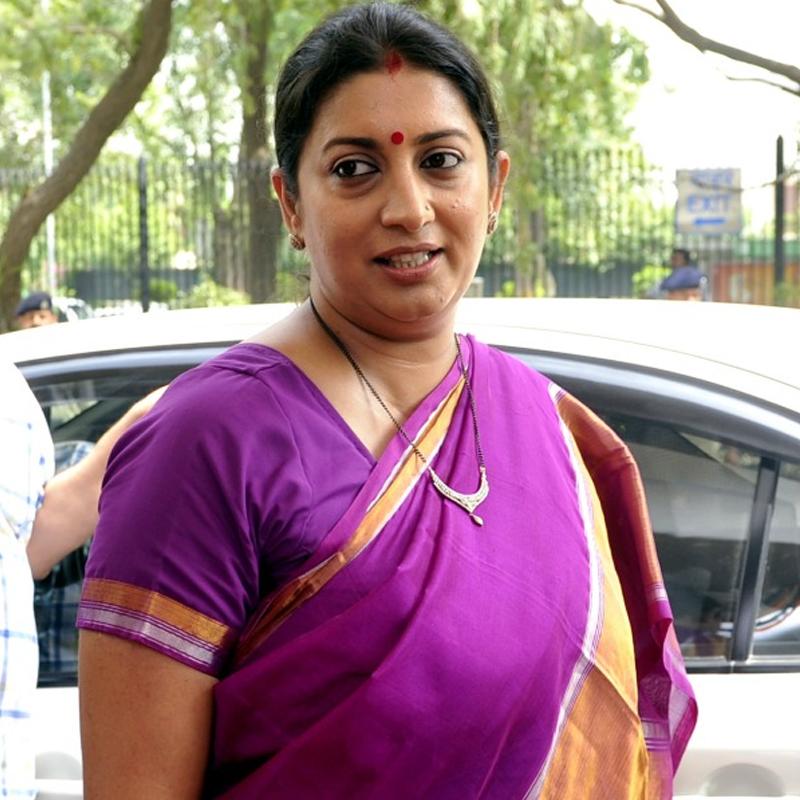
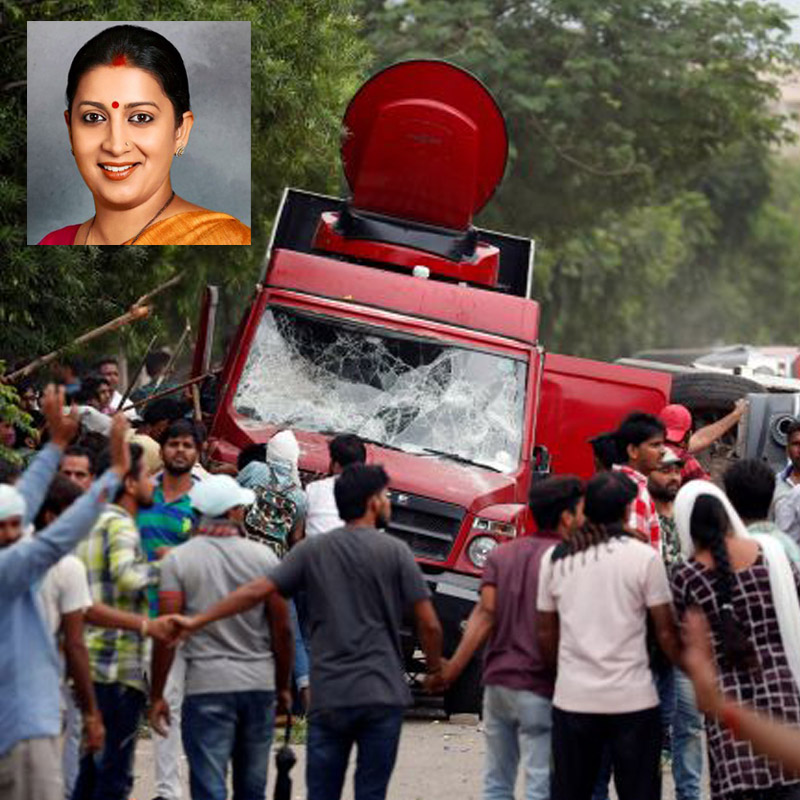
    NEW DELHI: Minister for Information and Broadcasting Smriti Irani yesterday in tweets amplified advisories issued by news industry associations, which had cautioned TV news channels to exercise restraint while reporting on the violence unleashed in the states of Haryana, Punjab, parts of Uttar Pradesh and Delhi in the aftermath of self-styled godman Ram Rahim being convicted of rape charges by a local court on Friday.

    At around 20.59 Irani tweeted: “Drawing attention of news channels to Clause B of Fundamental Std. of NBSA refraining channels from causing panic, distress &undue fear.”

    As social media exploded questioning the minister’s tweet and intentions — some even supported her assertions, though, saying the media was reporting falsely on incidents of mob violence — she followed up her first tweet with another one stating: “Kindly note this advisory has been given by the offices of the National Broadcasters Association.” In another message she also condemned the attack on media and damage to property.

    News Broadcasters Association (NBA)’s self-regulatory body News Broadcasting Standards Authority or NBSA had actually re-circulated among member-news channels the organisation’s ethics and codes that overall harp about restraint.

    On reporting news involving armed conflicts, communal violence, public disorder and internal disturbances, the NBSA guidelines urge TV news channels that telecast of such incidents should be tested on the “touchstone of public interest”.

    Broadcast Editors Association (BEA), an apex body of editors of national and regional television news channels in India, too issued an advisory on Friday cautioning TV news channels to “keep a careful eye on the content and views that can inflame people.”

    “All editors should take utmost care while playing violence visuals of the coverage of Baba Ram Rahim case. Please verify the facts before putting them on air because lots of rumours are floating around,” the BEA statement said.

    While NBA did issue a statement condemning the violence and attacks on the media (OB vans were damaged and some media people were assaulted), it urged “the chief ministers of Haryana and Punjab to take action urgently to bring the situation under control in order that the media/press are able to perform their duties without fear.”

    For the records, NBSA does have extensive code of ethics and broadcasting standards. In the section Principles of Self-regulation, the code states: “Television news has greater reach, and more immediate impact than other forms of media, and this makes it all the more necessary that channels exercise restraint to ensure that any report or visuals broadcast do not induce, glorify, incite, or positively depict violence and its perpetrators, regardless of ideology or context. Specific care must be taken not to broadcast visuals that can be prejudicial or inflammatory…”.

    Meanwhile, a Punjabi language news channel reporter received injuries in attacks allegedly by followers of the Dera Sacha Sauda chief Ram Rahim in Haryana while the video journalist accompanying him has gone missing after the assault. 

    Rakesh Kumar, a reporter with PTC News, said he and his video journalist Shipendar Happy were attacked near the Dera headquarters when they went there to report after Dera head Gurmeet Ram Rahim’s conviction in a rape case. “They thrashed us brutally leaving me with a fracture in my right hand. My cameraman Happy is still missing. They also torched our vehicle and equipment,” Rakesh told news agency PTI.

    ALSO READ:

    NBSA hauls up news channels; fines them, demands apology

    BCCC gets more complaints on harm than sex, obscenity & nudity on TV

  • Dish TV shoots off letter to IBF; alleges discrimination by b’casters, OTT platforms

    Dish TV shoots off letter to IBF; alleges discrimination by b’casters, OTT platforms

    NEW DELHI: In a move that’s certain to set the cat amongst the pigeons, Dish TV, one of India’s biggest satellite platform in terms of subscribers, has not only accused broadcasters of  “discrimination” relating to making available content to various pay distribution platforms vis-à-vis likes of OTT, but also “creating huge disparity” in the market.

    “Broadcasters, on one hand, keep on charging huge subscription fee from us and, on the other hand, provide the same content/channel to the OTT platforms at highly subsidized rates, thereby not only creating a non-level field, but also causing huge detriment to the subscribers of Dish TV. Availability of same content/channel on alternate distribution platform on much cheaper rate vis-a-vis DTH has started resulting into migration to the alternate distribution platforms,” Dish TV has said in a letter to the Indian Broadcasting Foundation, an apex body of TV channels or broadcasting companies operating in India.

    The Dish TV letter dated 11 August 2017, reviewed by Indiantelevision.com, goes on to highlight why the move of TV channels to turn FTA, join Doordarshan’s free-to-air DTH platform DD FreeDish after paying a carriage fee, and making available content at highly subsided rates to OTT platforms like YouTube and that being proposed by Reliance Jio slides the Indian television market’s business model to be largely advertising driven.

    “It is a common industry knowledge that the broadcasters have provided their channels to the OTT platforms at a highly discounted rates, which is totally prejudicial and discriminatory to the DTH platforms,” the Dish TV letter stated, which has also been sent to the DTH Association of India and the All India Digital Cable Federation, a body of digitally-able MSOs.

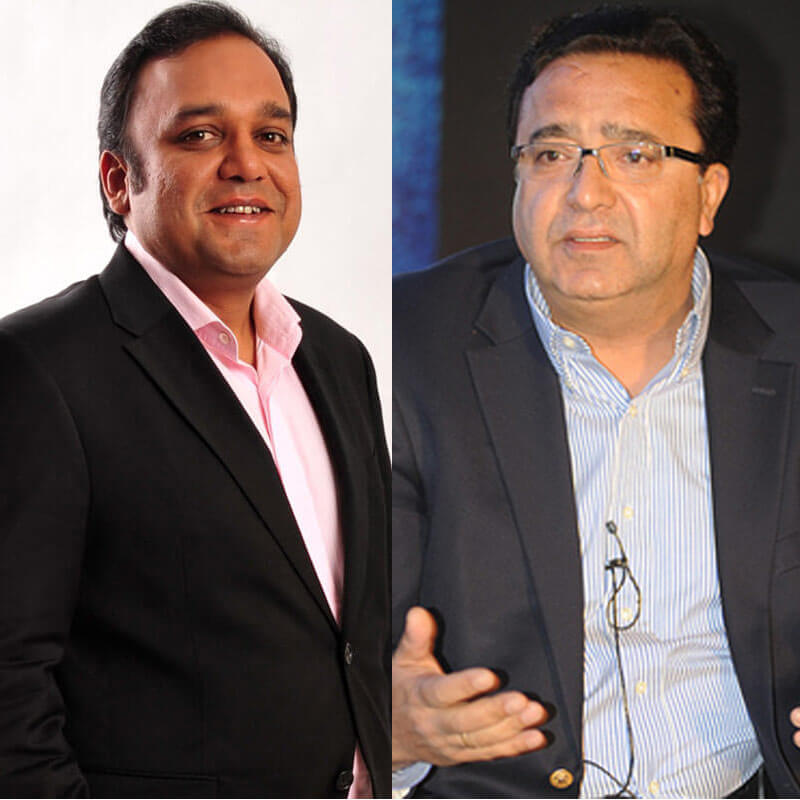
    The letter from Dish TV, written by the satellite platform’s managing director Jawahar Goel, is addressed to IBF president Punit Goenka, who also is Zee Entertainment Enterprises Limited MD and CEO, and a nephew of Goel. Goenka’s father and media baron Subhash Chandra is a member of India’s Upper House or Rajya Sabha.

     According to people familiar with the development, IBF’s member-companies have been asked to give their feedback on the content of the letter, which could be put to vote some time mid-September.

    “The IBF constitutes of seven major members, viz. Star, Zee, Sony, IndiaCast, Sun (TV group), Discovery and Times, which not only control the IBF but also are the major players collecting the subscription and advertisement revenue— collecting more than 99 per cent of the subscription and advertisement revenue of the Indian broadcasting industry,” the letter stated, adding that actions of the broadcasters “clearly indicate” the focus was shifting towards increasing the advertising revenue against subscription revenue.

    Raising the issue of sector regulator TRAI and disputes tribunal TDSAT’s emphasis on “fairness, reasonability and non-discrimination” as far as making available content to distribution platforms,  Dish TV pointed out that strategies employed by broadcasters were “deterrent to the pay TV market.”

    Pointing out that certain actions of the broadcasters could amount to breach of cross-media restrictions too, the letter exhorted the IBF members to discuss “whether the emphasis has to be on pay model (where the broadcasters can collect subscription) or an FTA model (where the broadcasters can get the advertisement revenue)”.

    Till the time of writing this report, Indiantelevision.com could not get across to IBF for a reaction.

    “Availability of same content/channel on alternate distribution platform on much cheaper rate vis-a-vis DTH rate has started resulting in(to) migration to the alternate distribution platforms,” the letter highlighted, adding that big broadcasters’ own OTT platforms (like Star’s Hotstar, Viacom18’s Voot, Sony Pictures Entertainment’s SonyLIV and Zee’s dittoTV, for example) also contributed to compounding the problem.

    The letter added: “It will be critical for your (IBF) members to spell out the strategy to hold/grow the pay TV market, which has been contributing to around 35-40 per cent of the total revenue of the pay broadcasters.”

    However, it seems that the present slew of letters from Dish TV and accusations will again rock the approximately Rs 558  billion Indian media and entertainment industry, which had thought corporate skirmishes of mid 1990s to mid 2000s had been buried in favour of overall growth of the broadcast and cable sectors and the media and entertainment industry, in general.

    ALSO READ:

    Jawahar Goel raises alarm of emerging Star cricket monopoly


  • BCCC directs ‘Pehredaar Piya Ki’ to late night slot with disclaimers

    NEW DELHI: The Broadcasting Content Complaints Council (BCCC), a self-regulatory body under the Indian Broadcasting Foundation umbrella, has asked Sony Pictures Network India to move its fictional serial Pehredaar Piya Ki, aired on one of its channels, to the 10 pm slot and simultaneously run a scroll that it doesn’t promote child marriage.

    The soap opera, with a story-line where a minor boy is shown married to a young-adult woman, who also doubles up as his security guard, had come under criticism for allegedly promoting regressive ideas like child marriage, which is an offence under Indian laws.

    The BCCC directive to Sony Pictures Networks India, which came on Wednesday, was the first one chaired by its new chief Justice (retd) Vikramajit Sen, according to news agency IANS.

    “We had a monthly meeting and the channel officials were called for a discussion, which went on for quite long. After everything, they were directed that the timing of the show should be shifted to a late night slot of 10 pm  and that they must run a disclaimer. They (Sony Pictures Networks India) will have to comply,” a BCCC executive was quoted by IANS as saying.

    Indiantelevision.com could not independently reach out to SPNI for its comments on the BCCC directive till the time of writing this report, which is based on what news agency IANS has filed.

    Since the last BCCC meeting, the body received around 138 fresh complaints against `Pehredaar Piya Ki’, which is produced by Shashi Sumeet  Productions and went on air last month. The makers had been defending it, saying viewers must understand the circumstances in which the girl has to marry the boy child, the news agency report stated.

    Earlier, some media reports quoted the minister of information & broadcasting (MIB) Smriti Irani, when asked about the controversy surrounding the Sony Pictures Networks India serial, saying that her ministry has asked the BCCC to look into the issue.

    The serial stars Tejaswi Prakash Wayangankar as Diya Ratan Singh and Afaan Khan as her husband Prince Ratan Singh.

    Set up in June 2011, BCCC is an independent self-regulatory body for non-news general entertainment channels under the Indian Broadcasting Foundation, an apex body of a large number of general and factual entertainment TV channels operating in India. IBF website states its members manage 350+ channels and about 90 per cent of television viewership across country.

    ALSO READ:

    BCCC gets more complaints on harm than sex, obscenity & nudity on TV

    Modify or shift ‘double entendre’ progs, cautions broadcasting council

    TV content: Madras HC seeks Centre’s clarification on regulatory mechanism

    State-level television committees to monitor FM & Community Radio

  • Comment: BARC India’s move to plug loopholes sign of robustness & credibility

    That the Broadcast Audience Research Council of India (BARC), the incumbent dominant audience measurement organisation in the country, has decided to reformat and revamp its existing Ethics Committee into a proposed disciplinary panel not only speaks volumes of the leadership within BARC India, but also sends a strong message to the media industry. The message is clear: we take acts of transgressions, alleged or proven, seriously and will not shy away from tweaking our regulations to uphold transparency and credibility of the data.

    In an industry that has a history of shying away from taking hard and difficult decisions, by and large, preferring to sacrifice transparency at the altar of status quo, the Sudhanshu Vats-led BARC’s board decision — as and when it’s formalised — to crank up its internal monitoring systems along with additional checks and balances is a welcome decision. Actually some observers have gone to the extent of saying that such a disciplinary committee, with powers to crack the whip, was necessary if vested interests within the Indian media industry were to be neutralised.

    What is BARC India proposing? Have a semi-judicial panel, headed by a retired judge and comprising BARC stakeholders’ representatives and outside experts, to take up complaints of malpractices and after hearing all sides, hand out a verdict — and punishments too, if necessary. Basically, take actions to discourage future transgressions.

    That such a move could have been gently nudged by the courts is a side story. It is a known fact that BARC India’s executive office, helmed by a seasoned media pro like Partho Dasgupta, has been sniffing out alleged attempts at malpractices to influence audience data for quite some time, but had taken visible action only in few cases. Most notable amongst such actions included suspension for four weeks the audience measurement data of three news channels last year.

    The very fact that the three suspended TV channels, two of them being news channels, moved court to get temporary reprieve and then two of them going ahead to slap BARC India with compensation demands for defamation just goes to show that in this game where everything’s fair in love and war, it’s always better to have robust checks and balances; even if at times people and companies are taken at face value.

    BARC India must have imagined that having an ethics committee with fairly broad guidelines will suffice. The main objective of this panel was to highlight it was there to “ensure fair and transparent ratings system, free of any influences and malpractices” with stakeholders (Indian Broadcasting Foundation, Indian Society of Advertisers, and Advertising Agencies Association of India), having a “zero tolerance policy towards any attempts to influence the ratings integrity.” The Ethics Committee, actually did have the power to “address concerns and investigate malpractices that may be adopted by any entity” regarding the ratings, but probably it lacked legal teeth, which got amplified when BARC India was hauled into court with its decisions to penalise errant subscribers challenged in Bombay High Court. 

    Framers of BARC India’s articles of association — unintentionally or intentionally — also put in an enabling clause that apart from the listed acts of transgressions and subsequent actions that the organisation could take, “there might be new ways identified from time to time, which would constitute as an attempt to infiltrate and manipulate the data.” An enabling clause to further make data measurement credible, in case under onslaught. 

    BARC India’s proposal to have a semi-judicial body headed by a retired High Court of Supreme Court judge to look into complaints of malpractices, adjudicate on such matters after listening to all the players involved and then hand out punishments, including financial, to the errant ones, once guilt is proven, will certainly go a long way in raising standards of transparency of data and credibility of BARC India, but it would not be a fool-proof mechanism. Especially when BARC is obliged, under government mandate, to annually raise by 10,000 its data measuring boxes or Bar-o-Meters. This year it’s slated to go up to 30k and ultimately to 50k.

    Industry organisations such as News Broadcasters Association and Indian Broadcasting Foundation do have such semi-judicial committees that look into the plaints relating to content and then hand out verdict — and punishments. The Advertising Standards Council of India also hauls up companies and ad agencies creating misleading ads. But there would always be the likes of Patanjali (in ASCI’s case) and the three TV channels suspended by BARC (whose data were subsequently resumed in deferment to court reprieves) who would try to circumvent existing norms. 

    However, that BARC India is evolving with the times and being pro-active instead of being reactive is a welcome sign. That most sections of the industry — handful of opponents, notwithstanding — are backing such BARC moves is also encouraging. Because at the end of the day, a robust audience data will only add to the good health of the industry that bets billions of dollars on such data in a market that’s by default is the biggest in APAC in terms of size (China is bigger, but non-Chinese media companies’ forays are restricted). Not to mention BARC’s attempts to cut down on litigation and subsequent outflow of money on legal cases.

    ALSO READ:

    BARC India suspends errant channels’ review

    In deference to court, BARC to release suspended channels’ data

    ‘Name and shame delinquent channels’