Tag: Indian Advertising

  • Shah Rukh rules screens, but celeb ads lose steam in IPL 18

    Shah Rukh rules screens, but celeb ads lose steam in IPL 18

    MUMBAI: Hindi cinema’s beloved Badshah may have remained the king of cricket screens, but the age of celebrity ads during the IPL has started to cool. According to a TAM Sports report analysing all live matches of IPL 18, the share of celebrity-endorsed commercials dipped by 13 per cent from last season, marking a strategic shift among brands embracing broader creative bets.

    This year, celebrity-endorsed ads comprised 53 per cent of total ad volumes during live matches, down from 59 per cent in IPL 17. Non-celebrity-backed commercials, often grounded in concept-led or product-first storytelling, took the remaining 47 per cent slice — a six-point jump year-on-year.

    Film actors led the celebrity endorsement race, accounting for 50 per cent of ad volumes, while sports personalities made up 32 per cent. In contrast, film actresses featured in just 18 per cent of celebrity-led ads, and TV actors barely registered at 0.16 per cent.

    Despite the overall dip, Shah Rukh Khan continued to reign, claiming eight per cent of all celebrity ad volume share in IPL 18 — a solid, if slightly faded, follow-up to his 13 per cent haul from IPL 17. He was trailed by Ananya Panday (seven per cent), Laksh Lalwani (six per cent), and sporting stalwarts like M.S. Dhoni (five per cent) and Ajay Devgn (five per cent).

    Among sports celebrities, M.S. Dhoni once again led the charge with a 17.3 per cent share, followed by Rohit Sharma (13.6 per cent), Suryakumar Yadav (9.5 per cent), Yashasvi Jaiswal (6.4 per cent), and Mohammed Siraj (6.4 per cent). Notably, IPL 18 saw fewer overall and sports celebrities endorsing brands — dropping from 75+ and 35+ in IPL 17 to 60+ and 15+ respectively.

    The food and beverage (F&B) segment proved irresistible for celebrity endorsements. Two of the top five ad categories belonged to F&B: pan masala and biscuits. The other three categories that dominated celebrity tie-ins were e-commerce gaming, financial institutions, and paints. Collectively, these top five segments accounted for 67 per cent of all celeb-endorsed ad volumes.

    Among advertisers, Sporta Technologies, Parle Biscuits, Vishnu Packaging, Playgames24x7, and RSH Global took the lion’s share, collectively clocking 53 per cent of all celebrity-backed ad space.

    As brands rethink ROI in a cluttered media landscape, the 2025 IPL season shows a noticeable shift toward diversified and cost-conscious strategies — with star power still potent but not quite the only currency.

  • R Venkatasubramanian steps down as COO of Havas Play amid ongoing restructuring

    R Venkatasubramanian steps down as COO of Havas Play amid ongoing restructuring

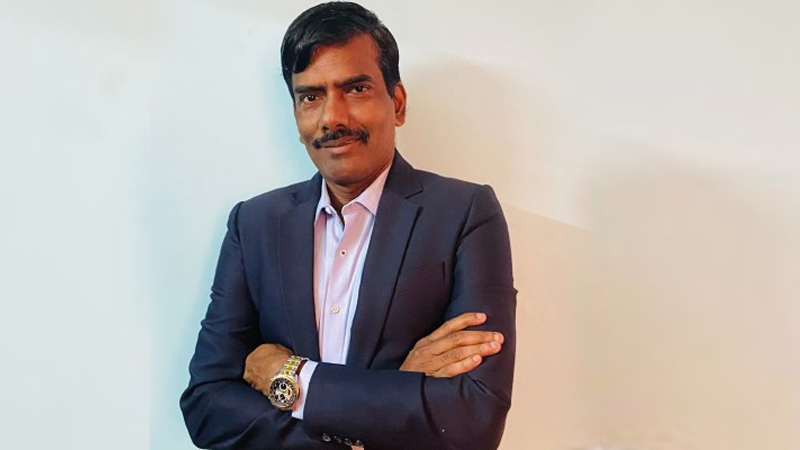
    MUMBAI: In a significant development within the Indian media and entertainment ecosystem, R Venkatasubramanian has stepped down as the chief operating officer of Havas Play. His departure comes amid an ongoing internal restructuring at the agency, as confirmed by Havas Media Network India CEO Mohit Joshi.

    “We are currently in the middle of a restructuring, but Venkat has decided to move on. I wish him all the best”, said Joshi in an official statement responding to the exit.

    Venkatasubramanian’s association with Havas Media spanned over six years, during which he held multiple leadership roles including president – investments and Havas Play MD, and later elevated to COO of Havas Play in May 2024. Prior to this, he played key roles across Initiative Media, MPG, and Lintas Media Group, with a two-decade-long track record of building media investment strategies and driving business transformation.

    His leadership tenure coincided with a period of rapid evolution at Havas Play, where the agency expanded its experiential, content, and sponsorship-led offerings. While the company has not named a successor, sources indicate that the restructuring may lead to a redefined leadership structure.

    Venkatasubramanian’s departure adds to a string of high-level exits across India’s media-buying industry, as agencies increasingly reorient operations toward tech-first and performance-driven models.

  • Indian advertising stalwart Fali Vakeel passes away

    Indian advertising stalwart Fali Vakeel passes away

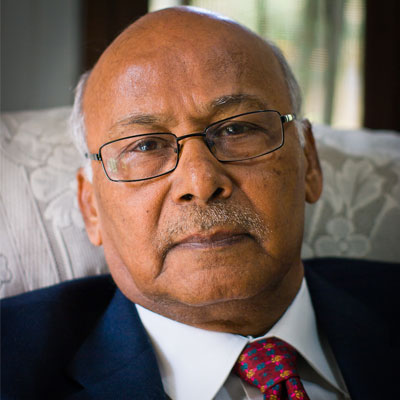
    Mumbai: Fali Vakeel, a towering figure in the world of Indian advertising, has passed away on 16 March 2024, just two months ahead of his birthday on 6 May.

    His contributions to the advertising industry have left an indelible mark that will be cherished for years to come.

    Vakeel’s career spanned over several decades, during which he played a pivotal role in shaping the landscape of Indian advertising. Even after his retirement as vice chairman of Lintas, Vakeel remained deeply intertwined with the agency, serving as the trustee of its Employee Welfare Trust.

    Throughout his illustrious career, Fali Vakeel witnessed the evolution of the advertising industry, navigating through numerous changes with resilience and grace. Fali Vakeel was not only known for his quick wit, wisdom, he was titled as the ‘Last of the Mad Men in Indian advertising,’ by his colleagues and peers in the industry.

    Expressing his profound grief, MullenLowe Global – Group CEO India and CSO (APAC) Subramanyeswar S (Subbu) said, “Once in a rare while, someone like Fali comes along to not only raise the bar in their field of operation, but they create an entirely new standards of measurement – CREATIVITY, in our case. Our deepest condolences goes to his family, personal friends, and to the entire Lintas community. He will always be an inspirer and admirer to us. May he rest in peace!”

    Under Vakeel’s leadership at Lintas experienced significant growth, securing prestigious clients and accolades. His impact extended beyond the boardroom. Fali was admired for his mentoring and nurturing of talent within the industry, shaping the careers of many aspiring advertising professionals. His dedication to fostering a culture of creativity will continue to inspire generations to come.

    In his memory, the Lintas family extends its deepest condolences to Fali Vakeel’s loved ones. A man of great warmth and humor, Fali Vakeel will be dearly missed by all who had the privilege of knowing him.

    His funeral will take place on 16 March Saturday at the Parsi Prayer Hall, Worli at 3.40 pm and Uthumna on Sunday 17 March at 3.40 pm.

  • Mathrubhumi celebrates its 100-year anniversary with anthology film

    Mathrubhumi celebrates its 100-year anniversary with anthology film

    Mumbai: Mathrubhumi, one of the oldest newspapers in the country has rolled out arguably the first-ever anthology of brand films in the history of Indian advertising, to mark the beginning of its centenary celebrations.

    Conceptualised by Kochi-based Maitri Advertising Works, these films have recreated and showcased some of the meaningful social interventions the newspaper has initiated since its inception through its editorial content and aims to highlight the brand’s social stature as a responsible media house.

    “When we decided to bring out audiovisual content in connection with our centenary celebrations, a run-of-the-mill corporate documentary talking about the commercial growth of the brand in numbers and growth charts was the last thing we wanted to do,” stated Mathrubhumi managing director MV Shreyams Kumar. “I wanted the agency to come up with something meaningful and different.”

    “In the last 100 years, Mathrubhumi had positively impacted society in the realms of environment conservation & protection, infrastructure development, education, agriculture and gender equality to name a few. My brief to the agency was to highlight these aspects in an interesting and aesthetic way without any chest-thumping or forced product placement. The audiovisual was to be screened in front of a large audience and it had to have the scale and impact. It had to be done quickly too because the prime minister of India had agreed to attend the function on a particular date,” he further said.

    “It was exciting to work on this very clear brief and thrilling too because Mathrubhumi always gave us the creative freedom to think big and think different,” remarked Maitri Advertising executive creative director Venugopal Ramachandran Nair. “Our first task was to arrive at a creative device that would make storytelling entertaining and impactful. We struck upon the idea of our protagonist, a young man, who would carry forward the entire storyline. He would never age and through different periods of time he would voice his strong and clear opinions.”

    “When we put together the basic idea in a piece of paper and presented it, the client gave us an immediate go-ahead. However, choosing the most relevant topics to portray in the film posed a big challenge, since there was a problem of plenty,” stated Maitri Advertising managing director Raju Menon. “Apart from the topics suggested by Shreyams Kumar, there were so many cover stories, features, articles and editorial content in the Mathrubhumi archives, each addressing relevant and time-sensitive social issues.’’

    In consultation with the newspaper’s editorial team, the agency finally handpicked the six most relevant topics to be portrayed in the film series.

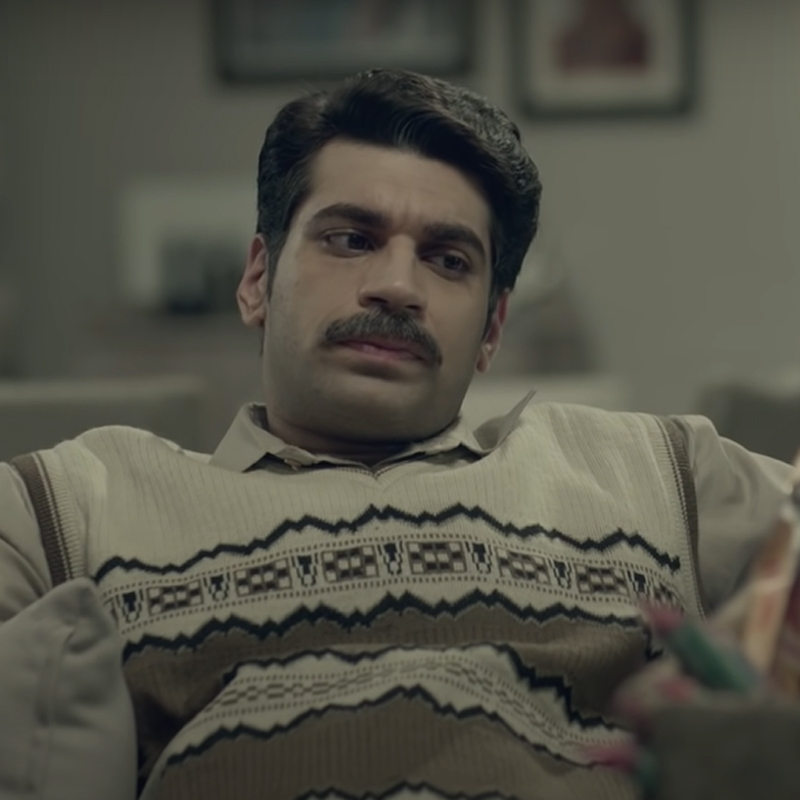
    “Execution of the project was not an easy task. There were constraints of time. The research process was enormous and a precisely set deadline was looming large behind us every day,” said Maitri Advertising branch director Jayakumar N, who is also in charge of managing the Mathrubhumi Account. “We decided to work with six versatile directors meticulously selected based on their ability to interpret the agency script and their expertise in visual storytelling. The next task was to find out the lead actor. The directors, after long hours of auditions finally settled down on Adil Ibrahim, a promising young actor in Malayalam cinema.”

    The opening film in this anthology narrates the birth story of Mathrubhumi as a catalyst to India’s freedom movement in 1923, followed by another five shorts, showing the audience how the editorial contents carried out by the newspaper has positively impacted society.

    The film has been released across various digital media platforms. Stand-alone edits of each film in this anthology would also run as television commercials later, across various channels.

    Maitri Advertising ideation executive Ajeesh Raman, who was in charge of scripting and supervision remarked, “Working with six highly talented directors on this anthology film was very exciting and indeed a great learning experience. Our brief to them was simple –  Make every film interesting and engaging yet when compiled together, the audience should see it as a seamlessly blended single film, with proper optical and acoustic connect between each of them.”

    “We are extremely happy that the anthology film, probably first of its kind, is getting tremendous response on social media. People don’t see it as branded commercial content. More than commercial property, we believe that it got the potential to become a social property sooner than later,” commented Mathrubhumi director of digital business Mayura Shreyams Kumar.

    “A project of this magnitude wouldn’t have been possible without the wholehearted support of Shreyams Kumar. He is a gem of a client every agency would love to have in their portfolio who realises the power of simple ideas the moment he hears one,” said Maitri Advertising executive director C Muthu. “For over two decades, we were able to churn out memorable and award-winning creative works for Mathrubhumi because of this.”

  • Not Just for Laughs: Tracing Humour In Indian Advertising

    Not Just for Laughs: Tracing Humour In Indian Advertising

    NEW DELHI: One of the Navarasa, hasya (humour) has been an integral part of Indian performance and creative arts since 500 CE. From its presence in the scriptures to medieval performing arts of the nakkal, bhands, bahurupi, bhagatiya, etc in the form of small skits heavy on slapstick comedy, humour has always been a source of entertainment for Indians. At one point in time, Indian movies, be they melodramas or potboilers, were incomplete without the comic relief – an actor whose role was to break the tension with his jokes and shenanigans, without disrupting the narrative.Even the classic action blockbuster Sholay had the characters of Jailer and Soorma Bhopali. Admittedly, it took some time for us to adapt to more subtle and satirical forms of comedy. Take Bollywood for instance – from Mehmood, Asrani and Keshto Mukherjee in the 70s and 80s, to Johnny Lever, Shakti Kapoor and Govinda who ruled the roost in the 90s – there isn’t much difference in their brand of zany, in-your-face humour.

    There were filmmakers like Hrishikesh Mukherjee, Basu Chatterjee and writers like Premchand who were experimenting with more subtle forms of comedy, but the attachment of humour with a performance created a blanket view for most of the audience. Certain programmes in the earliest days of television in India were also humorous in nature; ZabaanSambhalKe, Tu Tu Main Main, Ye Jo Hai Zindagi, and Office Office being some examples. Almost all of them relied on a slice-of-life but very heavy-handed humour that aimed to elicit loudguffaws ratherthan leave a pleasant smile on viewers’ faces. A similar flow could very well be traced in the Indian advertising too, of which humour has been a great part. 

    How Humour Found Its Way In Indian Advertising

    "Indian ads have been using humour in various forms for more than five decades. The early ads used to be in cartoon form in newspapers. Then it went to TV and now in digital formats,” Brand Building founder and brand strategist Ambi Parameswaran shares. According to him, humour is just another emotional appeal that connects well with the consumers and has done a good job in increasing the brand propensity among the masses.

    Here’s a look at how the element of humour has evolved in Indian advertisements. 

    The Early Pun-tastic Days 

    If we look at the early print ads of the 1940s and 1950s, humour was largely missing from all brand communications. Those were the days of long-form, simple, informative copies aimed at hard-selling the products; be it for Rexona, Lux, or Tata Benz. 

    It was in the mid-1960s that brands like Amul and Parle started experimenting with quirkier messaging, thereby introducing humour to Indian advertising. With the use of puns, these brands sought to catch the reader's eye in an instant and also tickle their funny bone.However, the underlying messaging remained the same, indicating the what and why of the product.

    Brands like Binaca Talc and political parties like Shiv Sena also made some bold moves with their tongue-in-cheek way of stating things. Both the ads came out in 1967.

    The 70s were much braver and incisive with their comedy; Amul took jibes at major social and political matters, while Surf’s Lata Ji tried to claim her territory back from the new entrant Nirma, which offered a similar product experience at a cheaper price. 

    This was probably the turning point in Indian advertising as brands started getting in more deeply into the humour space. Vicks (Vicks Ki Goli Lo, KhichKhich Door Karo), Luna (Chal Meri Luna La),  and LijjatPapad (KurramKurram) were some of the other iconic ads of those days.

    The Jibes of the ‘90s & ‘00s

    The following two decades saw a great influx of creativity in Indian ad-making. As the economy liberalised, creating greater competition in the market, brands were forced to fight for attention and loyalty. As a result, a great number of print and video ads were churned out during this period. 

    This era also witnessed a finer form of humour, with personification and exaggeration, taking centre stage. However, most ads still focussed on getting a loud laugh from the viewers. The impact of sitcoms and serials with family values also reflected in the new slice-of-life form of advertising, which had already begun in the 80s but only got refined. 

    Pepsi (Oye Bubbly), Cadbury (Duniya Dairy Milk Ki Bann Jaye Re), Mentos (Daddu) ads were some of the top commercials to experiment with personification in that era.

    As the larger-than-life personalities of the film world made their way to television sets, hyperbole became a key element in many ads, primary examples being the Fevikwik (Chutki Mein Chipkaye), Happydent White (Smile Please), and Center Fresh Fruit (KaisiJeebhLaplapayee) commercials.

    Enter The Internet

    MICA co-chairperson fellow program in management Prof Varsha Jain states that from 2007 onward, with the advent of the internet and its penetration, humour in advertising took on a new form and direction. As the consumer became smarter, more alert, and better connected with the global world, the ads started becoming more creative, the slapstick humour turned into subtle satire, and more brands started taking into cognizance social and political matters. 

    Fevikwik (TodoNahi Jodo) is one of the finest examples. Released in 2015, the ad took a beautiful take on the Indo-Pakistan relationship. The Mauka Mauka ads for the World Cup were also very tasteful in their humour.

    More recently, there are a number of brands which have had a stunning journey on the funny and quirky side of the scripts. Be it food-delivery platform Swiggy or fantasy sportsapp Dream 11, their ads are always a big hit with netizens.

    Brands like Zomato and Durex are making the best use of social media, their moment marketing initiatives always relying on great puns and anecdotes. In the age of internet virality, humour helps businesses make a positive impression on audiences, which can boost revenue and brand awareness.


    congrats everyone who voted for team Rajasthan

    A post shared by zomato (@zomatoin) on


    The only condition: Be reeaaaaly good at it! #FathersDay

    A post shared by Durex India (@durex.india) on


    Why Humour

    As per Varsha Jain, humour serves great cognitive benefit for a brand as the ads are more viewable and memorable. That’s why most ads in the early days of advertising were created in a way to start word-of-mouth discussions around the products. This has only transferred to online modes with social media now, but the objective still remains to get people talking. 

    However, this might not be the only reason making brands stick to funny campaigns with catchy slogans. Another prime reason to play with humour is that the genre allows space for better storytelling in little time, says The Script Room co-founder Ayyappan Raj. 

    Humour as a genre doesn’t demand much of a scale, therefore offering logistical benefits too. “You can crack a joke in a conversation between two people in a lift, you don’t need to go to Ladakh and do drone shots,” quips Raj.

    The Recipe to Strike The Right Chords with Humour

    Speaking to Indiantelevision.com on Ad Break, iconic adman Bharat Dabholkar had pointed out that to make humour work, one has to ensure that they stay away from religion, communalism, and sexism; otherwise, pretty much everything can be made to look funny. 

    Hyper collective founder and global CCO KV Sridhar (Pops) points out that ads with high cultural relevance, quirky, un-dramatised humour and relatable anecdotes for the viewers will always strike the right chords. One perfect example is the ongoing Dream 11’s #ApnaGame campaign. 

    He adds, “You cannot be offensive or crude in your humour. There is no need to dramatise a joke. If you see today, the donkey campaign (for UpGrad) and the CRED campaigns, they do not work for me at all.”

  • Indian advertising stalwart AG Krishnamurthy passes away

    Indian advertising stalwart AG Krishnamurthy passes away

    MUMBAI: An entrepreneur to the core… a creative disrupter who did not care about the establishment and the way it functioned in the late seventies and eighties. This perhaps best describes Atchyutani Gopala Krishnamurthy, fondly known as AGK, who passed away at the age of 73 in Hyderabad following a brief hospitalisation on 5 February.

    The founder, chairman and managing director of Mudra Communications, AGK was regarded by many in the industry as a legend — an adman, a creative genius, a pioneer in business and marketing, and an author — all rolled into one. His sudden demise after a brief illness came as a shock to many. Incidentally, 5 February, 2016 also marked the silver jubilee of MICA – the advertising institute, which Krishnamurthy established.

    Krishnamurthy had been an inspiration for many generations of advertising enthusiasts and veteran creatives in the country, and his ‘rags to riches’ story of setting up Mudra Communications from a Rs 35,000 and one client company to an empire worth millions, is one of the biggest success stories of our times.

    Born on 28 April, 1942 in Vinukonda, in the southern state of Andhra Pradesh, Krishnamurthy didn’t start off his career in advertising but chance and impromptu necessity led him in. In 1968 he joined the Calico Mills, a big textile name in the 60s and 70s, to assist Giraben Sarabhai. Later, he was commissioned by Reliance Dhirubhai Ambani to come up with “the best possible advertising in textiles” for Reliance’s in-house fabric brand, Vimal. And from him came the brand’s tagline – ‘Only Vimal.’ He was also the man behind the simple yet evergreen tagline – ‘I love you Rasna.’

    By 1980, AGK had christened ‘Mudra’ as an independent advertising agency while scouting for like minded business partners. With his insights and leadership, it didn’t take long for Mudra to become a full-service national-level advertising house.

    He later penned a biographical book titled Dhirubhaism on Dhirubhai Ambani’s business philosophy and the anecdotes that he shared with Krishnamurthy when they worked together, which is still referred to by many management and business students.

    Although his creative works are revered and celebrated even today, his biggest contribution to the advertising fraternity is no doubt, setting up of MICA or Mudra Institute of Communications, Ahmedabad as it was earlier called. It was the first of its kinds in all of Asia when it was established in 1991.

    AGK’s talent for starting new businesses and establishing its success in the market didn’t end there. After retiring from Mudra in 2003, he founded AGK Brand Consulting as ran it as chairman.

    A few ad men took to social media to express their grief.

    Cartwheel Creative founder Ramakrishna Desiraju, popularly known as Ramki tweeted, “Flooded by memories of AGK. What a remarkably atypical adman he was. MICA, perhaps more than Mudra, will be his lasting legacy. RIP. Much too late, I regret not staying in touch with AGK. His strange accent, his warm smile, and his earthy wisdom will always stay with me.”

    R K Swamy Hansa Group chairman SK Swamy tweeted, “Hardly 74 years Founder of Mudra Communications AG Krishnamurthy is no more. He changed the rules when he ruled….”

    Krishnamurthy is survived by his wife, three daughters and son. We at Indiantelevision.com express our heartfelt condolences to the family. May his soul rest in peace.  

  • Indian advertising stalwart AG Krishnamurthy passes away

    Indian advertising stalwart AG Krishnamurthy passes away

    MUMBAI: An entrepreneur to the core… a creative disrupter who did not care about the establishment and the way it functioned in the late seventies and eighties. This perhaps best describes Atchyutani Gopala Krishnamurthy, fondly known as AGK, who passed away at the age of 73 in Hyderabad following a brief hospitalisation on 5 February.

    The founder, chairman and managing director of Mudra Communications, AGK was regarded by many in the industry as a legend — an adman, a creative genius, a pioneer in business and marketing, and an author — all rolled into one. His sudden demise after a brief illness came as a shock to many. Incidentally, 5 February, 2016 also marked the silver jubilee of MICA – the advertising institute, which Krishnamurthy established.

    Krishnamurthy had been an inspiration for many generations of advertising enthusiasts and veteran creatives in the country, and his ‘rags to riches’ story of setting up Mudra Communications from a Rs 35,000 and one client company to an empire worth millions, is one of the biggest success stories of our times.

    Born on 28 April, 1942 in Vinukonda, in the southern state of Andhra Pradesh, Krishnamurthy didn’t start off his career in advertising but chance and impromptu necessity led him in. In 1968 he joined the Calico Mills, a big textile name in the 60s and 70s, to assist Giraben Sarabhai. Later, he was commissioned by Reliance Dhirubhai Ambani to come up with “the best possible advertising in textiles” for Reliance’s in-house fabric brand, Vimal. And from him came the brand’s tagline – ‘Only Vimal.’ He was also the man behind the simple yet evergreen tagline – ‘I love you Rasna.’

    By 1980, AGK had christened ‘Mudra’ as an independent advertising agency while scouting for like minded business partners. With his insights and leadership, it didn’t take long for Mudra to become a full-service national-level advertising house.

    He later penned a biographical book titled Dhirubhaism on Dhirubhai Ambani’s business philosophy and the anecdotes that he shared with Krishnamurthy when they worked together, which is still referred to by many management and business students.

    Although his creative works are revered and celebrated even today, his biggest contribution to the advertising fraternity is no doubt, setting up of MICA or Mudra Institute of Communications, Ahmedabad as it was earlier called. It was the first of its kinds in all of Asia when it was established in 1991.

    AGK’s talent for starting new businesses and establishing its success in the market didn’t end there. After retiring from Mudra in 2003, he founded AGK Brand Consulting as ran it as chairman.

    A few ad men took to social media to express their grief.

    Cartwheel Creative founder Ramakrishna Desiraju, popularly known as Ramki tweeted, “Flooded by memories of AGK. What a remarkably atypical adman he was. MICA, perhaps more than Mudra, will be his lasting legacy. RIP. Much too late, I regret not staying in touch with AGK. His strange accent, his warm smile, and his earthy wisdom will always stay with me.”

    R K Swamy Hansa Group chairman SK Swamy tweeted, “Hardly 74 years Founder of Mudra Communications AG Krishnamurthy is no more. He changed the rules when he ruled….”

    Krishnamurthy is survived by his wife, three daughters and son. We at Indiantelevision.com express our heartfelt condolences to the family. May his soul rest in peace.  

  • Women portrayal: Better days are emerging

    Women portrayal: Better days are emerging

    MUMBAI: The debate over portrayal of women in our advertisements and soaps is ever going. Remember the recent Airtel advertisement which created a furor as people debated if a working woman should cook or not? Or even the last year’s Ford Figo advertisement, which saw people from creative agency JWT being asked to leave and not to forget the deodorant ads.
    Many blame that the sexist or regressive portrayal of women in advertisements, soaps and movies is the reason behind the way they are treated in real life. While others say it just reflects the changing morals and values of the generation that consumes it. The advertising industry has been faced with a piquant situation, for many years now.
    However, over time, steps have been taken to apply a healthy amalgam of scientific temper and good intentions to pursue the goal of gender equality.
    Advertising is known to reflect societal norms and should be a torch bearer of change. Does advertising showcase the changes in women’s roles? The question is answered in a survey, of key personnel in advertising and marketing in the report titled, Changing Gender Frames.
    In today’s connected and networked times, the role of media in shaping and forming public opinion and perceptions has been well documented. One such area is that of gender stereotyping.  So, one of the ways to change the attitude towards women could be through the change in portrayal of women in media and advertising.
    The research, included marketing and advertising professionals spread across Delhi, Mumbai and Chennai, to assess and understand the status of gender stereotypes, the perceptions of the portrayal of women in advertising and an understanding of the effect of communication that challenges gender stereotypes.
    In the research, professionals resoundingly endorsed that it is education and financial independence that is empowering women, giving them more decision making power and helping them enter public spaces and conversations.

    There was almost unanimous agreement that gender roles are less clearly defined these days, and stereotyping and accompanying social pressures are on the wane, especially for aspects like women working out of the house and men doing housework, both of which have become acceptable.  But women still feel that children are more their responsibility than that of the father.
    However, there is some ambiguity on the whole sexuality or body image aspect. Women still report that men normally judge them on the basis of beauty and sex appeal.
    Professionals are of the opinion that in advertising today women are being portrayed more as energetic, confident and modern multi-taskers than as ‘homely’. This then leads to the question of whether a new stereotype of supermom has arrived.
    While most professionals feel that the changing trend is sustainable, it rests on the fact that marketers now look at women as a potential segment which will facilitate growth; thereby making it important to tap the potential of this segment which is now experiencing independence on the financial as well as decision making front.
    Using women ‘provocatively’, in advertising is seen as a sure shot way to grab attention even today by both men and women.
    The research also flagged advertising that has been noticed for its challenging of gender stereotypes.   Airtel with the wife as boss, the remarriage story of Tanishq and the mother who trains her child in the Bournvita commercial, have emerged as examples of moving to the new gender conversation with style.
    However, there is still a majority feeling that advertising has not been able to portray the actual status of women in society.   While there seems to be a change in the portrayal of women in advertising due to her newer roles, there still seems to be a lot of opportunity to explore various facets of women and showcase them in advertising.

    Click here to read the full report


  • All India Bakchod re-lives 90’s era of Indian advertising

    All India Bakchod re-lives 90’s era of Indian advertising

    MUMBAI: Don’t judge them by their name. All India Bakchod (AIB) is what they call themselves. They are probably India’s most vocal bunch of youngsters on YouTube. They definitely make you LOL (laugh out loud) with every take of theirs be it on films, politics to even advertising.

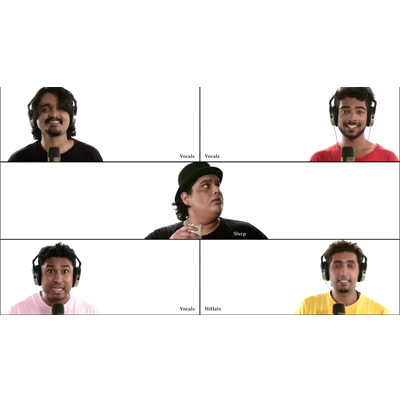
    Team AIB which includes names like Tanmay Bhat, Rohan Joshi, Gursimran Khamba and Ashish Sakya who are popular on the digital world. The podcasters today have over 38.5 K Twitter followers, 504,286 likes on Facebook and over 505,473 YouTube subscribers.

    AIB for their latest video has collaborated with Voctronica to a pay tribute to the evergreen era of Indian advertising. It can be noted that AIB has partnered with Snapdeal and has subtle mentions of the brand for this video. Snapdeal also is selling AIB merchandise. The video has been watched over 136,260 times on the video-sharing site at the time of filling this story.

    AIB with this video takes you back to the time when advertising was all about catchy jingles.

    Click here to watch the video


  • ‘The Hindi GEC market can only grow between 10-15 per cent’ : Anita Nayyar- Havas Media CEO

    ‘The Hindi GEC market can only grow between 10-15 per cent’ : Anita Nayyar- Havas Media CEO

    The Indian advertising and television industry has started to feel the heat of the global economic slowdown. With advertisers trimming their ad budgets and postponing launches of products and services, the entire sector is beginning to feel the pinch.


    In an interview with Indiantelevision.com’s Anushree Bhattacharyya, Havas Media CEO Anita Nayyar speaks about how the Indian television and advertising industry is trying to cope with this financial crisis.


    Excerpts:

    How much has the global financial crisis affected the Indian advertising industry?
    The Indian advertising industry, pegged at Rs 160 billion, has been clearly affected by the global economic meltdown. The television segment, which accounts for Rs 72 billion, was growing at 18-20 per cent. Given the current situation, growth will slow down.


    Lots of big launches of products or services have been postponed. Advertisers are waiting till the first quarter of next year to see how the market is going to evolve. It is too early at this stage, thus, to quantify the pace at which the ad industry will grow.

    Looking at the current economic crisis, how deeply hurt will be the TV sector? Are the Hindi general entertainment channels (GECs) headed for further trouble due to the on-going dispute between the TV producers and workers?
    Out of the Rs 72 billion television ad industry, almost 50 per cent (Rs 36 billion) comes from the Hindi GECs. Looking at the current strike and the global financial crisis, the Hindi GEC market can only grow between 10–12 per cent. The strike between producers and Federation of Western India Cine Employees (FWICE) is, however, a temporary phase and would not continue for long. So the GEC market would pick up pace once again, after the strike in Mumbai gets over.


    FMCG is the category that advertises mostly on GECs. And presently it is one of the least impacted category. Hence advertising will gain momentum once the strike gets over.

    Will the TV news channels feel the pinch?
    It is true that the five to six categories that include banking, insurance, automobile, aviation and real estate are the worst hit by the global financial crisis. And so news channels would be affected. The news television market could see a 5-7 per cent growth. Interestingly, I think now is the time for the banking sector to advertise to regain the confidence of its clients. But it seems like banks are restraining from further advertising spends in a major way.

    What about the growth of sports and movie channels?
    Sports and movie channels are based on events and film titles. Channels like these will not get affected to a large extent and will grow between 5-10 per cent, each time they show events or big titles. Thus for sports channels, the more the sports events they have, the more they will get a chance to grow. In sports, cricket will keep bringing the advertisers in. However since the TV rights acquisition cost for live cricket is very high, it will be difficult for broadcasters to break even.

    Do you feel you have been able to bring Havas out of Euro RSG’s basket?
    I don’t think that we have ever tried to project that Havas Media works under the limelight of Euro RSCG; in fact we are trying to bring Havas Media out of the shadow of Euro RSCG. Today we have Havas Media as the umbrella brand which has various other brands like Euro RSCG, Havas Sports, Havas Entertainment, MPG, Media Contacts etc. Thus wherever there is an opportunity, we try to bring the Havas brand in front.


    Havas Media has clients like Reckitt Benckiser, which is our biggest client. It also has Voltas, Bank of Baroda, Air France, ibibo.com and Hindustan Motors as its clients.

    News channels will feel the heat as banking, insurance, automobile, aviation and real estate are the worst hit by the global financial crisis

    Interestingly, when you moved out of Starcom you were blamed for taking away both people and accounts?
    I don’t know how to answer these allegations. There were people who had shifted from Starcom even before I had joined Havas Media. Nevertheless for people who joined Havas after me, all I can say is that they were all intelligent people and no one has brainwashed them. So they were aware of their decision.


    As for the businesses that I got from Starcom, those moved based on pitches. But this also proves another point – that I share a very good relationship with the clients.

    Havas Group introduced Havas Sports in India. How has sports marketing picked up in India, especially after IPL?
    Sports marketing always existed in India. However thanks to the Indian Premiere League (IPL), it gained recognition. Sports marketing companies like Total Sports Asia and Globosports have been investing in sports like Golf tournament, Tennis matches, marathon etc. After the success of IPL, companies have openly accepted sports as an event to endorse their products or services. Cricket, however, continues to hog the limelight.


    We at Havas Sports have clients like Good Earth products, A1GP, etc. Havas Sports is also involved in celebrity endorsement.

    How are your clients reacting to this financial crunch?
    Fortunately for Havas Media, clients have not yet decreased their advertising budget or postponed launch of their products. So far, we have not seen our clients reducing their budgets.

    How is Havas Media tackling the situation, because sooner or later your clients will also reduce their ad budgets?
    We are looking at various cost efficient alternatives like internet, multiplex, radio and below the line activities.