Tag: IndiaCast

  • “Subscribers stick to us because of our services and choice of packs”

    “Subscribers stick to us because of our services and choice of packs”

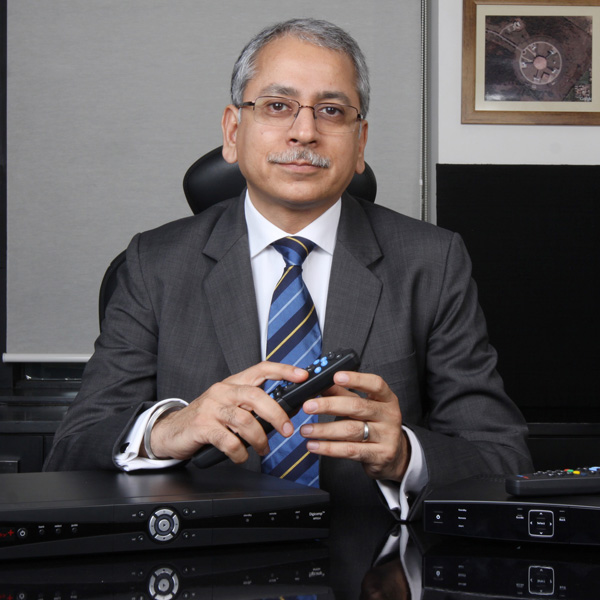
    When you first meet him, what strikes you most about him is his candour. Indeed, Tata Sky managing director & CEO Harit Nagpal has got a reputation of speaking his mind. He was not afraid to come out in the media and make an appeal to ISRO when it delayed delivering him his transponders on GSAT-10 which would have allowed him to ramp up the offerings the Tata group, News Corp and Temasek joint venture could deliver to its customers. When the appeal got no response, he did not let it dampen him. Instead he chose to upgrade Tata Sky’s set top boxes from MPEG-2 to MPEG-4 at no cost to them.


    He was also quite open at the Indian Digital Operators Summit organised by Indiantelevision.com and Media Partners Asia when he invited his rivals and other players from the cable TV ecosystem to come in and study the best practices that Tata Sky has put in place. “The time has come for all of us to collaborate and grow the digital ecosystem,” he had said. “And my doors are open to anyone who wants to see how we do what we do.”


    That offer still stands, says Nagpal, who believes that Tata Sky has some processes which compare with the finest practices globally. Especially its single-minded focus on the customer and the experiences it provides them. Nagpal strongly believes in delighting the customer and his supplier-partners as well. “In this way, we will all grow together,” he says.

    Nagpal presides over the DTH Operators Association of India and has a CV which explains his dervish like focus on the consumer. A chemical engineering graduate with an MBA from FMS, Delhi, he has nearly 28 years of work experience with stints at Shoppers Stop, Pepsi, Marico and Lakme in various leadership positions in fields like Sales, Exports, Operations and Marketing. Before joining Tata Sky in August 2010 he was the group marketing director of Vodafone plc, working out of London.


    In a conversation with indiantelevision.com’s Seema Singh and Vishaka Chakrapani, Nagpal talks about the efforts which are needed to keep Tata Sky’s 11 million subscribers happy, the company’s decade-long journey and how it’s dealing with the national digitisation rollout.


    Excerpts:


    How was the year 2013 for Tata Sky and for the DTH industry? What will year 2014 bring for Tata Sky and the industry?

    2013 was what we had been waiting for years. It was strange that in a country like India where everything is regulated, there was one full unregulated industry that required government intervention. People developed cold feet when the process of digitisation began but after the first round took place both the industry and government were confident that it has to be and can be done.


    DTH gained hugely in the process. We don’t create a new customer; instead, we convert an analogue customer to DTH. Very rarely we have fresh customers coming to DTH. On a steady basis, this industry picks approximately three million customers every year. Also, every year DTH converts around four per cent of the 100 million cable TV viewers into DTH homes. In the cities that got digitised in 2013, DTH gained nearly 30-35 per cent of cable converts.


    So while we were converting around four per cent cable TV customers into DTH subscribers per year, with digitisation, we have moved it up to 35 per cent in a month. Now did we gain or lose, it’s for you to decide. The biggest advantage of DTH is that consumers can choose their pack and pay for it.


    At Tata Sky, we’ve had a very good year, in terms of total turnover, profits, growth rate, churn, average revenue per user (ARPU) etc. In every aspect, we are leading.


    The new year will have newer services and technology being introduced.


    What differentiates Tata Sky from other DTH players?


    There’s hardly any scope for differentiation here. With content being common and everyone having access to similar technology, there is no exclusivity. The only differentiation is through the service we offer. Stakeholders are judged on: a) how they manage customers without causing much trouble for them and (b) how they help customers recover as soon as possible, in case of any issue. 

    I have always believed that there is room for innovation. We started with standard definition (SD), high definition (HD), DVR, video on demand (VOD), ‘Catch up TV’ and now have moved to ‘Everywhere TV’. We believe in introducing one service every year. The service initially starts with being accepted by leading edge customers, which then percolates to others.

    How do you decide on the new services? Also, how do you ensure that it is accepted by the consumer?

    Customers tell us what they are seeking. We just have to go back to them and seek their pain points and then find solutions for that. We don’t start with technology and find customers. We try to seek their needs and then tailor services.

    The television sets in Indian homes are getting better, and so we have to ensure that we match the screens at home. Giving digital signals to cable TV homes was the first step, the second was HD. Even for this transformation, it was the customer that gave us the cue, since they were looking for better quality. 

    The recorder was introduced when we saw that people were expected to be in front of the TV when the show was being broadcast, it was becoming impossible for them to plan their day around the show. The answer to this was the recorder.

    When we saw it was causing inconvenience for customers to physically get a DVD from market and watch it, we launched VOD and followed it up with ‘Do it yourself’ films.

    Catch up TV came in response to customers wanting to watch something that had already been aired. Our latest addition was ‘Everywhere TV’. We found out that more and more people were spending time outside and were consuming videos on mobile screens. So we thought of connecting Tata Sky to the handsets. Through this, a decent broadband or 3G connection could help people consume content through ‘Everywhere TV.’

    How much a does a consumer pay for subscribing to ‘Everywhere TV’? How do you divide the revenue share? Do you think people would want to subscribe to ‘Everywhere TV’?

    If a consumer can buy a Rs 50,000 phone, he would not mind paying Rs 60 per month for ‘Everywhere TV’. The Rs 60 is divided equally among all stakeholders. So while one-third goes as taxes, the broadcasters take one third and we keep the rest. So, we would make around Rs 20 for the infrastructure we’ve invested.

    The need on which the product is based tells me it will do well. The first launch is restricted to iOS, but we will be launching soon on Android as well. We are happy with the numbers we got in the first three weeks of the launch of the service.

    Everyone is consuming videos today. And with the video consumption going up, prices are coming down. Even mobile phone operators want people to consume videos on phone. Everywhere TV is one way of increasing consumption and as networks start getting filled it is possible for mobile operators to drop prices. Our job is to create the product and make it affordable.

    How are the multiple services helping the company?

    The services are helping us increase the ARPUs without any price rise. When you are penetrating deeper into a market, your next customer is bound to give you less. The only way you can increase it is by making him consume more of what he wants to and make him pay for it.

    By offering more services and choice of packs, we have been able to ensure that our subscribers stick to us. The fact that we have growing ARPUs, we must be doing something right, by launching multiple services. 

    Have you been able to fulfill the need for more capacity with MPEG4 boxes? By when will the seeding of the MPEG4 boxes be complete?

    MPEG4 boxes have ensured that there is no real content shortage now. We started seeding MPEG 4 boxes this year and with that we have been able to fill the gaps. We had to leave Kerala and Tamil Nadu, because of capacity constraint. With the MPEG4 boxes, we have been able to go back to Kerala with 19 channels.

    It will take close to two years for us to complete the whole replacement process. We have 12 transponders and with these MPEG4 boxes, we are fine in the short to medium term.

    Recently the aggregator IndiaCast had a face-off with Dish TV over ‘on-request channels’. How does Tata Sky manage the relationships with the stakeholders involved?

    We have great relations with our content providers. We have long and protracted negotiations with them. However, that rarely leads to a breakdown of relations and we reach a reasonable and reasoned out number to renew our contracts. If we make more money we would like to share it with the partners.

    2014 may see disappearance of aggregators? Do you think it will affect the DTH players?

    No, it will not. I have been hearing news on these lines, but it doesn’t affect us much. If it comes into force, instead of negotiating with one player, we will have to negotiate with several players. But that is easy. These negotiations do not happen every day, these are contracts signed for three to four years.


    Apprehension is that if all this will result in cost hike. But I don’t see any cost issue. In fact, with aggregation we are forced to buy certain channels, which our customers don’t want. If TRAI decides to remove the role of aggregators then I may not take all the channels. I can save that bandwidth for products that my customer wants. Currently, what is happening is more and more bandwidth is getting clogged because of the channels that broadcasters wants to push and not what customers want to watch.

    In the long run, it is all about what the customer wants.


    Are the DTH players pinching customers from each other?

    At this stage there are no such plans. With 70 per cent still being analogue cable TV homes, we have enough scope from the analogue cable TV homes. We can tap that.

    Do you think India is still far away from US standards? Can we think of a time when DTH will totally replace cable TV? 

    I think we are already there. Any technology launched in the US is also available here. There are some services that are slightly better there but that’s dependent on quality of broadband. The day that gets better, the service experience will get better. There are infrastructural constraints that keep us from providing certain services that are present in the US. But, one has to start somewhere.

    Cable is getting digitised and so it’ll be there in the industry. I don’t think India will be an only DTH country. The industry improves only when more operators try to do new things. Life starts with fragmentation and moves to consolidation. I don’t think there’ll be consolidation in this business. Yes, the number of subscribers moving from cable to DTH is larger than reverse. But that doesn’t mean the cable will disappear.

    How has the response of interior towns been to DTH penetration?

    More than 60 per cent of our new customers are not from the top 20 cities. Once a service reaches them, they respond more positively than a person in the city. Most places we are going today are places with the presence of cable. There is certainly a kind of saturation we are reaching in top cities. Not like we are not getting numbers but there are certain limitations.


    More customers are available in the interiors. A good amount of growth is coming from basic services in interiors and high end in top cities. A customer, who came to us seven years ago, picked up our innovations each year. We are hopeful that someone in the interiors will also get onto our recording facility in a few years.

    To what extent has packaging been explored in India? How do you package channels for your consumers? Is it easy for consumers to add or remove channels from their pack?

    There was a time we were creating packs that customer didn’t even understand. In India, people don’t watch metals (bronze, silver, gold packs), they watch genres. Hindi news and Hindi soaps is something that everyone watches. What we do is that we put these in the base pack and then top it with a bit of music and other genres. We, then give two language channels because in most homes two languages are spoken apart from Hindi and English. Customers have a choice of adding other genres like English movies, kids, music, knowledge, etc on top of the base pack.

    We have services by which if a person who is not getting a channel he needs, can just SMS it to us and instantly the channel will be switched on. It’s instantaneous. Customers take a pack and then add on a la carte. So they take a base pack and then add channels to it. That’s where our revenues are growing. Our ARPUs are growing because we are making it easy for our consumers to buy more content.
  • IndiaCast withdraws contempt application against Dish TV in TDSAT

    IndiaCast withdraws contempt application against Dish TV in TDSAT

    NEW DELHI: The deal between IndiaCast and Dish TV over the DTH operator’s ‘on request channels’ scheme has come into effect with the latter providing IndiaCast channels on an a la carte basis from 1 January 2014.

    However, even before the previous agreement could end, the aggregator once again had approached the Telecom Disputes Settement Appellate Tribunal (TDSAT), last year, claiming that Dish TV was in violation of the 19 December TDSAT order that had brought about a ceasefire between the two.

    The petitioner (IndiaCast) had filed an application about its apprehension regarding compliance of the TDSAT order by Dish TV and that its channels will be visible in its packs even after the deal terminates. However, during the hearing that came up on New Year’s eve, the aggregator’s counsel withdew the application after the TDSAT observed that there was no non-compliance on the part of Dish TV in following its previous order.

    The bench also stated that the application was premature as the agreement will only come into effect from 1 January when the deal ends for 22 IndiaCast channels which will now only be provided on an a la carte basis above the packages. It also mentioned that Dish TV had modified its scroll to say the same. The application was dismissed as withdrawn by the petitioner.

    The order passed on 19 December noted that no legal objection can be taken to the arrangement proposed to be made by Dish TV to take out IndiaCast channels out of its packs and provide them only on a la carte basis to subscribers who want to view the channels. One deal comes into effect from 1 January for 22 channels and the second comes into effect from 1 April 2014 for 16 channels after the fixed deal agreement expires. IndiaCast counsel Ramji Srinivasan had given an undertaking that the ads published by its client against the respondent shall stop forthwith.

  • IndiaCast vs DishTV: The final TDSAT order says it all

    IndiaCast vs DishTV: The final TDSAT order says it all

    MUMBAI: Last week, there was a lot of brouhaha about the IndiaCast vs DishTV round of fisticuffs on the DTH operator’s “on request channel service” and the former’s flurry of ads in newspapers and on TV. Both sides claimed victory, saying the Telecom Disputes Settlement Appellate Tribunal (TDSAT) had ruled in their favour. But there was no order in sight.


    Today the TDSAT posted it on its web site, with he verdict pronounced by its chairman Aftab Alam. And here are the highlights: 


    * The tribunal says that a legal objection cannot be taken to Dish TV’s arrangement of ‘on request channels’ which its counsel said would imply that from1 January 2014, 22 IndiaCast channels will be available only as a-la-carte out of its package. The deal with the other 16 channels shall come to an end on 31 March and from 1 April, they would also be treated similarly.


    * The Dish TV counsel also clarified that the scroll running on IndiaCast channels shall from now on only say that those channels will be available on a-la-carte basis and people shall be asked to communicate through the SMS number mentioned on it in case they want to subscribe to any of them.


    * IndiaCast counsel was requested to give an undertaking to the court that the ads published by its client against Dish TV shall stop. 


    And with these statements, the TDSAT disposed off both the petitions. 


    Who really won? It looks like each got its way, in some way, and the tribunal told them to cease firing.  But is it the last that we have seen of them bashing each other? Will they come together on the table and negotiate a deal? 


    After all, the seven million subs of Dish TV are not to be sniffed away. And the absence of channels such as Colors on Dish TV pack can lead to customer attrition. History has shown that very few Indian customers go for a-la-carte channels. This will continue to be the case unless customers miraculously have a change in their consumption habits. Both IndiaCast and Dish TV might hold out for a while but we at indiantelevision.com  are betting on the duo reaching a settlement – sooner, than later. 


    Click here for the full order

  • Spuul joins hands with IndiaCast

    Spuul joins hands with IndiaCast

    MUMBAI: Spuul, an online streaming service for Indian cinema and television shows has joined hands with IndiaCast, a Viacom18 and TV18 venture, to offer shows from Colors, MTV India and the ETV bouquet of channels to its subscribers.

    The deal allows Spuul to showcase hits like Comedy Nights with Kapil, Balika Vadhu, Uttaran, Sanskaar, Bani, Madhubala and Sasural Simar Ka from Colors and Timeout with Imam and Webbed from MTV India.

    Reaffirming Spuul’s brand promise of providing premium entertainment anytime, anywhere, Spuul CEO India Prakash Ramchandani said, “Colors and MTV are leading channels across the general entertainment and youth space in the Indian television market. By bringing shows of Colors, MTV India and ETV channels to our platform, we plan to give our users an instant and continued access to their favourite shows at their convenience. This association with IndiaCast only highlights our proposition of providing entertainment on the go.”

    Spuul users can now have unrestricted access to shows of Colors, MTV India and ETV channel on their PCs, iOS and Android smart phones and tablets.

    IndiaCast Media Distribution group CEO Anuj Gandhi said, “Spuul makes popular Indian entertainment content available on internet-connected devices through its platform. We are pleased to partner with Spuul to offer consumers our premium TV content and movies at their convenience, anytime, anywhere.”

  • Cable TV DAS and the head end factor

    Cable TV DAS and the head end factor

    MUMBAI: Digitisation is meant to bring about transparency and order to what has for long been talked about as an unorganized business. The pressure of scaling up in order to deliver digital cable TV has also had an expected fallout: consolidation. Smaller cable ops, independent operators have been forced to join hands with existing national MSOs like Hathway or DEN or amongst themselves. And this fusing has resulted in the reduction of the number of headends in the major metros – especially in Delhi and Mumbai where there has been a shrinkage from 110 to 15 and from 50 to seven respectively.

    “Consolidation of headends is taking place in the transition from analogue to digital phase. Also the trend now is that the MSOs set up headends only in areas where they cannot get access to a fiber line or a digital line. Also they are looking for solutions like getting a line from say Delhi or Mumbai to the nearby areas,” informs an industry expert.

    Industry experts attribute this change to factors such as rising costs of digital headends, billing procedure and administrative control.

    Explains Hathway Cable & Datacom MD & CEO Jagdish Kumar: “With digitisation has come the convergence of technologies and features like high definition content, VAS and broadband accessibility. All this in turn requires large amount of investment to manage economies of scale, thus ushering consolidation.”

    While Hathway currently has 23 headends and seven backup headends, including GTPL, several independent operators, informs Kumar, have evinced a keen interest in aligning with its ongoing digital plans, largely due to its success in Phase I and II.

    “We’ve drawn up ambitious expansion plans for Phase III and IV. We will soon make announcements on a few strategic acquisitions,” he exults.

    IndiaCast Media Distribution executive vice president Amit Arora agrees that a number of Delhi and Mumbai-based independent operators have started taking their digital feeds from bigger MSOs.

    “This arrangement is gaining popularity since it isn’t easy for every independent operator to make the huge capital investment needed for digital headends. And consolidation of headends has led to central warehousing of data and SMS,” he says.
    According to Ortel Communications CEO BP Rath, with a 200 channel headend costing nearly Rs one crore, it is not worth investing that kind of money for an independent operator who caters to say 10,000 customers in a small town.

    “So, they are joining bigger players in order to take feeds from them. While smaller operators merged with bigger players even during the analogue phase, it is now happening on a larger scale. And one will see further consolidation during phase III of digitisation,” he says.

    Apart from independent operators joining forces with bigger MSOs, the other reason for consolidation is the advent of the conditional access system (CAS) and the subscriber management system (SMS), as well as the prerequisite for getting these systems audited and approved by broadcasters.

    “When the bigger MSOs are taking so long to adjust to the new system and maintain quality as per the regulation, how will the small players be able to do it?” questions InCable managing director Ravi Mansukhani. “With consolidation, the big MSOs will take care of all the back office problems and the on-ground activity will be done by the independent operators.”

    “All this has led to a whole lot of process issues, which the smaller MSOs find difficult to manage and that is why independent operators are joining bigger players,” adds Rath.

    Ortel, which has 31 analogue headends, two digital headends and four analogue plus digital headends, is waiting for phase III. “It is only after that, we will see consolidation happening in Orissa and Chhattisgarh. Though we have our own headends, we are also talking about intercity connectivity,” informs Rath.

    Kumar too feels that “the trend will continue even in phase III and IV. The demand for digitisation will impact local independent operators, who will find it difficult to manage independently. Hence, the independent operator would continue to look to aligning with the bigger MSOs.”

    However, Arora thinks otherwise. “The consolidation process has already come to a phase where I do not see any further consolidation happening in phase III. The big wave has already happened in phase II,” he says.

    So when a smaller operator takes digital feed from a bigger MSO, how do they share revenue? “The revenue share worked out between bigger MSOs and independent MSOs is purely on mutually beneficial terms based on investments and services being provided in the market,” says Kumar.

    Arora elaborates: “Everybody has worked a different revenue model. Someone has opted for a 49:51 split, some have a 50:50, while some will have a 51:49 split. The revenue share depends on the strength and the need for funds.”

    Coming to another metro, Kolkata, unlike Delhi and Mumbai, its five big players: GTPL, Hathway, Manthan, IMCL and Digicable Network have not seen an urge to merge.

    Meanwhile, Arora sounds a cautionary note. “A takeover of one MSO by the other in Kolkata would only be possible if there is a national degree of consolidation.”

    According to Mansukhani, the biggest consolidation will take place nationally. “Right now only the small and middle level players are going to the big players and then ultimately few major players will have control.”

    Mansukhani feels that even international players will show interest in India once they see healthy cash flows of the MSOs in DAS I and II areas. “This is when the maximum consolidation will take place and this will happen once the entire phase I and II is complete.”

    Talking about the evolution of cable TV on the ground in Kolkata Manthan Broadband Services director Sudip Ghosh says, “Players with a subscriber base of more than five lakh might not consolidate headends. But Kolkata can see the consolidation of players with others having a subscriber base of around three to four lakh.”

  • MIPCOM SPECIAL IN THE YEAR OF 2013

    MIPCOM SPECIAL IN THE YEAR OF 2013

    Zees DID, Buddha get takers at Mipcom 
    ( 16 October 2013 )
    Curtains come down on Mipcom 2013 
    ( 11 October 2013 )
    Mexico is Country of Honour at Mipcom 2014 
    ( 10 October 2013 )
    Content explosion an opportunity for TV 
    ( 10 October 2013 )
    MIP Digital Fronts to debut at MIPTV 2014 
    ( 10 October 2013 )
    Content distribution revisited 
    ( 10 October 2013 )
    Digital media pips news channels at the post 
    ( 09 October 2013 )
    Zees Buddha wows buyers
    ( 09 October 2013 )
    Desperate Housewives gets an African flavour 
    ( 09 October 2013 )
    Disruptions are a necessary evil
    ( 09 October 2013 )
    Wheres the party tonight?
    ( 08 October 2013 )
    Its a full plate for IndiaCast/Viacom18
    ( 08 October 2013 )
    Facebook making people cling to TV
    ( 08 October 2013 )
    Buyers treated to Koffee with Karan
    ( 07 October 2013 )
    YouTubes just the beginning for AwesomenessTV
    ( 07 October 2013 )
    From television to web on the go
    ( 07 October 2013 )
    Mip Junior puts spotlight on VOD
    ( 07 October 2013 )
    What do buyers want?
    ( 07 October 2013 )
    Koouka wins 2013 Mip Junior International Pitch 
    ( 07 October 2013 )
    Mipcom 2013: Bigger and Better
    ( 07 October 2013 )
    Its Mipcom time again
    ( 05 October 2013 )
    Times TV: Scans Cannes for English flicks 
    ( 02 October 2013 )
    Star gears up for MIPCOM
    ( 02 October 2013 )
    Greymatter to debut at MIPCOM 2013
    ( 30 September 2013 )
    India’s first HD travel channel at MIPCOM 2013
    ( 28 September 2013 )
    Watch out for Hyderabads animation booth at Mipcom
    ( 23 September 2013 )
    IndiaCast/Viacom18 all set for MIPCOM 2013
    ( 21 September 2013 )
    Reliance Entertainment Digital has its eye on English entertainment content
    ( 18 September2013 )

  • Content distribution revisited

    Content distribution revisited

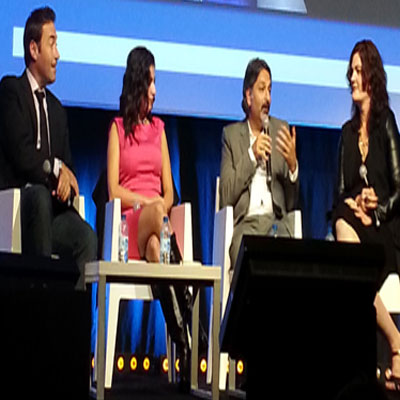
    CANNES:  “In India, we produce so much content and it is up on the web in the next three and a half minutes,” began IndiaCast Group CEO Anuj Gandhi. He was speaking at a panel on ‘Access is the new ownership: A new look at content distribution’, on day two of MIPCOM.

    Moderated by Superhuman founder Louisa Heinrich, the session focussed on changing audience expectations and how consumers ought to get what they want to watch, where they want to watch, instead of what content distributors want to show. 

    “We need to ensure that quality content is produced and is also made available cross country,” Gandhi reinforced.

    Describing India’s internet story as ‘spinning faster than the globe’ Gandhi substantiated his statement with statistics. “India has 150 million internet users and ranks number three worldwide. 75 per cent of the population using internet is below the age of 15. Almost 86 per cent of Indian web users visit a social networking site, of which 80 million are on Facebook.”

    “That apart, there are 220 million mobile devices sold every year. There are 700 million mobile phone users and 40 million are 3G subscribers. India boasts of seven million tablets and 0.5 million are sold per month. Also, there are 50 million smart phones and three million sold every month,” he said.

    India is the second most important market for internet giants, Gandhi said, adding: “Consumption of video has shot up in India, with more and more people hooking on to YouTube to watch videos.”

    Gandhi further informed the audience that the rollout of the national telecom policy would target 175 million broadband users by 2017, up from the current 15 million. “100 hours of content is being uploaded to YouTube every minute. Also, the good news is that the data access charges will come down by 70 per cent.”

    Coming to IndiaCast, he said it is looking at ways to handle traditional media. “We are getting shackled by the traditional platform. We are losing out on opportunities. The traditional platforms have ring-fenced content rights. There are longer contracts and limited flexibility.

    So while the traditional platform is growing, it is also getting expensive and has capacity constraint. Content needs to travel. We need to exploit our rights to ensure that the content is made available everywhere,” said he.

    Gandhi foresees a five-fold increase in data consumption in the switch from 2G to 3G and another five times with that to 4G. “There will be a three times growth in the YouTube revenue in the next two years and two million paying mobile TV subscribers in the next two years. The number of people watching YouTube has already crossed 50 million and the channel is now looking at ways to monetize it,” he said.

    Asked about the role of the broadcaster in social media, Gandhi said: “Well, the key issue is to have a 360 degree marketing campaign and social media is one such platform. As a content distribution company, we need to analyse what people are saying about available content. We need to be innovative, be aware of what is happening in the markets, and also keep experimenting with windowing and stop playing safe.” 

  • Its a full plate for IndiaCast/Viacom18

    Its a full plate for IndiaCast/Viacom18

    CANNES: It’s been a fruitful first day at Mipcom for IndiaCast/Viacom 18 (booth number 10.3, level 1), which met up with nearly 43 buyers from markets including France, Indonesia, Russia, Switzerland, Australia, Brazil and Jordon to name a few.

    The group expects to meet at least 120 companies from across the globe over the next three days of Mipcom.

    IndiaCast group COO Gaurav Gandhi says: “We have 15,000 hours of content in our library across the group and we add more than 2,000 hours of fresh programming each year.”

    The biggest draw according to Gandhi is: “Scripts of our famous drama series like Uttaran and Madhubala. That apart, formats like Roadies, Splitsvilla and Crunch aired on MTV are also in demand.”

    IndiaCast/Viacom18 has on offer about 40 shows including Na Ana Iss Des Lado, Ballika Vadhu and Comedy Nights with Kapil as also regional channel content and around 40 Bollywood films.

    “Mipcom is a good place for connecting with potential buyers from many smaller markets that we don’t have offices in or otherwise would never be able to reach out to. The discussions & negotiations begin here. It needs to be naturally followed up for things to materialise,” says Gandhi.

    The group is looking to monetise all its intellectual properties to the hilt. “For example Japan has a huge market for clips and looks for buying clips of many of our shows. East Europe wants drama series dubbed in their language. Africa wants script rights…” informs Gandhi.

    And yes, Colors’ recently launched series 24 is another property the group is betting on. “As regards 24, we are in the final stages of closing the deal with Pakistan,” reveals Gandhi.

    Apart from selling content, the group is also looking at acquiring content for its various channels. “We need to be sensitive towards what we choose. It should connect with our audiences. We are looking at acquiring family drama content and also non-fiction shows,” rounds off Viacom18 executive VP strategy and business development Anuj Poddar.  

  • IndiaCast/Viacom18 all set for MIPCOM 2013

    IndiaCast/Viacom18 all set for MIPCOM 2013

    IIf you thought shows such as Comedy Nights with Kapil, Uttaran or even Jhalak Dikhhla Ja have takers only in India, you couldn’t be more wrong. Indeed, there is a huge demand for these programmes even in faraway markets like Latin America, Africa and Eastern Europe to name a few.
    Which is exactly what draws aggregators and distributors such as IndiaCast to MIPCOM, the world’s biggest market for content.

    So what does IndiaCast have on offer this year at MIPCOM? “While we already have a strong syndication portfolio with our dramas. movies  and reality shows from Colors, we will also focus on content from our regional channels, news channels as well as the MTV content, “replies IndiaCast group COO Gaurav Gandhi, who will represent the company along with four others at MIPCOM.

    More specifically, IndiaCast/Viacom18’s entire catalogue will be on offer. “We have more than 25 channels in our network and so, our booth will feature content from all of these channels. This will include Ballika Vadhu, Uttaran, Madhubala, Jhalak Dikhhla Ja, Bigg Boss, MTV Roadies and also content from ETV and the news channels,” informs Gandhi.

    We will be looking at a strong syndication portfolio in our dramas and reality, we will also focus on content from regional channels, news channels as well as the MTV portfolio says Gaurav Gandhi

    And what is IndiaCast hoping to achieve at MIPCOM? Says Gandhi: “Indian dramas are finally breaking into mainstream in many markets. We hope to find more buyers who are willing to experiment and try Indian dramas for the mainstream local audiences in the respective markets and we want to target buyers who want to remake our shows  (with script and format rights) in their respective countries .  Latin America and Turkey have been the predominant forces in exporting their drama series sales worldwide. There is an opportunity for us to break into that market in a big way. Having already licensed our content to Africa and Europe (to the mainstream market), I am hoping to tap markets like Latin America this year.”

    Gandhi believes that demand for the programming that IndiaCast is hawking will also be strong in areas where Indian and south Asian diaspora are present in large numbers. This apart, there is another chunk of viewers in several countries which enjoy watching Indian programming dubbed and sub-titled in local languages. “Central Asia, Eastern Europe, Latin America and Africa are some of these nations,” he says.”We are looking at new distribution outlets and buyers from there for both our channels and programmes at MipCom this year.”

    Citing a couple of examples of how the event is a platform to help export content and reach out to a larger base, Gandhi says: “It was here that we sold the script of our show Uttaran, for a remake in Africa. While normally Indian channels buy formats/ scripts, we were the first ones to have sold the script to an international player. We recently sold the MTV Roadies format internationally. The discussions for this had started in MIPCOM only.”  

    MIPCOM makes it easier for exhibitors to meet people from different markets and sell content. “If it wasn’t for a market like these where would one find buyers from Serbia, Croatia, Bosnia, Macedonia and Tanzania?” he questions.

    And considering there is a sizeable regional population around the world, the aggregator is concentrating on regional content as well. “We have sold Gujarati content to a local channel in the US and also to west African countries this year. So for our regional content, this year, we will focus on building on that and tapping new markets” says Gandhi.

    The frenzied buying and selling of content apart, several affiliate meetings will keep IndiaCast executives busy at MIPCOM. “This is where we will talk about distribution of our channels; like Colors, MTV India, Rishtey which is our second GEC in the UK, ETV,  and News18 among a host of other channels,” informs Gandhi.   

    IndiaCast will concentrate on all platforms like Cable, DTH, IPTV, terrestrial and all forms, both linear and non-linear (VOD, SVOD, NVOD and PPV). “We are amongst the largest suppliers from India to VOD platforms. Our content is on Netflix, Itunes, YouTube etc. We have a lot of meetings lined up for such platforms as well,” he adds.

    It looks likely to be whistlestop and tiring MipCom for Gandhi and his team. And in all likelihood profitable too. 

  • IndiaCast/Viacom18 all set for MIPCOM 2013

    IndiaCast/Viacom18 all set for MIPCOM 2013

    If you thought shows such as Comedy Nights with Kapil, Uttaran or even Jhalak Dikhhla Ja have takers only in India, you couldn’t be more wrong. Indeed, there is a huge demand for these programmes even in faraway markets like Latin America, Africa and Eastern Europe to name a few.


    Which is exactly what draws aggregators and distributors such as IndiaCast to MIPCOM, the world’s biggest market for content.


    So what does IndiaCast have on offer this year at MIPCOM? “While we already have a strong syndication portfolio with our dramas. movies  and reality shows from Colors, we will also focus on content from our regional channels, news channels as well as the MTV content, “replies IndiaCast group COO Gaurav Gandhi, who will represent the company along with four others at MIPCOM.


    More specifically, IndiaCast/Viacom18’s entire catalogue will be on offer. “We have more than 25 channels in our network and so, our booth will feature content from all of these channels. This will include Ballika Vadhu, Uttaran, MadhubalaJhalak Dikhhla Ja, Bigg Boss, MTV Roadies and also content from ETV and the news channels,” informs Gandhi.


    And what is IndiaCast hoping to achieve at MIPCOM? Says Gandhi: “Indian dramas are finally breaking into mainstream in many markets. We hope to find more buyers who are willing to experiment and try Indian dramas for the mainstream local audiences in the respective markets and we want to target buyers who want to remake our shows  (with script and format rights) in their respective countries .  Latin America and Turkey have been the predominant forces in exporting their drama series sales worldwide. There is an opportunity for us to break into that market in a big way. Having already licensed our content to Africa and Europe (to the mainstream market), I am hoping to tap markets like Latin America this year.” 


    Gandhi believes that demand for the programming that IndiaCast is hawking will also be strong in areas where Indian and south Asian diaspora are present in large numbers. This apart, there is another chunk of viewers in several countries which enjoy watching Indian programming dubbed and sub-titled in local languages. “Central Asia, Eastern Europe, Latin America and Africa are some of these nations,” he says.”We are looking at new distribution outlets and buyers from there for both our channels and programmes at MipCom this year.”


    Citing a couple of examples of how the event is a platform to help export content and reach out to a larger base, Gandhi says: “It was here that we sold the script of our show Uttaran, for a remake in Africa. While normally Indian channels buy formats/ scripts, we were the first ones to have sold the script to an international player. We recently sold the MTV Roadies format internationally. The discussions for this had started in MIPCOM only.”  


    MIPCOM makes it easier for exhibitors to meet people from different markets and sell content. “If it wasn’t for a market like these where would one find buyers from Serbia, Croatia, Bosnia, Macedonia and Tanzania?” he questions.


    And considering there is a sizeable regional population around the world, the aggregator is concentrating on regional content as well. “We have sold Gujarati content to a local channel in the US and also to west African countries this year. So for our regional content, this year, we will focus on building on that and tapping new markets” says Gandhi.


    The frenzied buying and selling of content apart, several affiliate meetings will keep IndiaCast executives busy at MIPCOM. “This is where we will talk about distribution of our channels; like Colors, MTV India, Rishtey which is our second GEC in the UK, ETV,  and News18 among a host of other channels,” informs Gandhi.   


    IndiaCast will concentrate on all platforms like Cable, DTH, IPTV, terrestrial and all forms, both linear and non-linear (VOD, SVOD, NVOD and PPV). “We are amongst the largest suppliers from India to VOD platforms. Our content is on Netflix, Itunes, YouTube etc. We have a lot of meetings lined up for such platforms as well,” he adds.


    It looks likely to be whistlestop and tiring MipCom for Gandhi and his team. And in all likelihood profitable too.