Tag: IndiaCast

  • Viacom18 launches Colors Gujarati in UK

    Viacom18 launches Colors Gujarati in UK

    Kolkata: Viacom18 Media has launched its regional entertainment channel, Colors Gujarati, in the UK. IndiaCast Media Distribution, jointly owned by TV18 & Viacom18, partnered with Sky & Virgin Media for the channel launch.

    The channel is available to Sky subscribers from 1 June on Channel No. 794 and will be available for Virgin Media’s- Asian Mela Pack subscribers from 8 June on Channel No. 825. The network currently offers its flagship general entertainment channel Colors along with the premium entertainment channel Colors Rishtey as well as the movie channel Colors Cineplex in the UK.

    With this new addition, Colors Gujarati becomes the only Gujarati language channel available to UK viewers. The channel will bring the best of Gujarati content all through the week along with movie premieres on Sundays at 7 PM.

    BT Media and Broadcast director Faisal Mahomed said: “As a leading provider of media services in the UK, BT Media and Broadcast is at the forefront of broadcast innovation. With a successful partner track record, we’re pleased to continue to help Viacom18 capture larger UK audiences through our cutting-edge technology, and as always, we look forward to supporting Viacom18 with their growth plans – both in the UK and internationally.”

    Colors Gujarati has been launched with its ‘Dil Thi Gujarati’ motto which mirrors the essence of the fun-loving Gujaratis in the UK. Colors Gujarati creates content that cuts across age groups with genres ranging from drama, comedy, mythological shows, movies, awards, events, and lifestyle. The channel will largely showcase the same shows as India. Some of the popular shows include Bhakta Gora Kumbhar, Rashi Rikshawali, Prem Ni Bhavai, Kahu Chu Sambhlo Chu, and the soon-to-be-launched ManMilap.com.

    IndiaCast international business executive VP Govind Shahi said: “We have a large Gujarati speaking population in the UK and they have made their presence felt in the social and cultural fabric of the country. But currently, there is no single Gujarati channel in the UK even though there are various TV channels for Punjabi, Urdu, Bangla, and other regional language audiences. The launch of Colors Gujarati will fulfill this need-gap in the UK. The channel will constitute of best-in-class Gujarati content from our hugely popular India library – including fiction, non-fiction series, and movies”.

    With this launch on both Sky and Virgin, Colors Gujarati will reach out to a vast majority of subscribers who can sample and enjoy quality content in sync with their strong socio-cultural identity.”

  • APOS 2020: Why Indian pay TV still holds a lot of potential

    APOS 2020: Why Indian pay TV still holds a lot of potential

    KOLKATA: Even as the doomsayers have been predicting impending doom for India’s television business and tomtomming the growth of streaming services, Tata Sky CEO Harit Nagpal and IndiaCast Media Distribution Group CEO Anuj Gandhi believe that there’s tremendous scope to grow pay-TV in India. Taking part in a roundtable as part of Media Partners Asia’s virtual APOS 2020, both said television has barely been penetrated yet. 

    Tata Sky’s Harit Nagpal – who's running, arguably, one of India's most respected DTH platforms – highlighted that there is a distribution game which needs to be played well. Nagpal mentioned two ways that the business can get a growth impetus: one is reaching out to the un-penetrated households and secondly selling more to existing consumers.

    He backed his statement with facts. According to Nagpal, 100 million homes in India are TV-less, and would go on to buy one eventually. Moreover, 35 million TV watchers have subscribed to free to air service DD Freedish. According to him, the Indian consumers are gradually moving from no TV to FTA to pay-TV, acknowledging that those in the higher end of pay-TV spectrum in urban areas are migrating to OTT and broadband. While he acknowledged the movement to OTT, he also mentioned that it is slower compared to the growth of linear TV and it will continue for a while.

    “Households without a TV have not bought one so far, and those that bought one have moved to FTA because they could not afford the Rs 300 plan which the platforms charge,” says Nagpal.

    Hence, he added that expecting them to pay Rs 1000 for bandwidth to watch Rs 300 worth of content is a bit much. He stated that they would start with linear TV paying only for content while they may migrate to new media in the next decades. 

    “In the last two years, we have seen a huge surge in small screen viewing of content essentially because data cost was abysmally low. As the data prices find their right level, which is what it should be, I guess the projections we all are making will level up,” he stated.

    Indiacast’s Gandhi agreed with Nagpal’s view on the distribution game and the growth opportunity. He pointed out while pay TV’s potential has been spoken about a lot, the industry has barely made any change in the past six-seven years. 

    The silver-lining is that fictitious numbers of cable subscribers were floating up in the market before the NTO while after its implementation the industry now agrees on the number of 120-130 million paying subs. According to Gandhi, the growth opportunity is low-ARPU market which is partly either on DD or getting pirated content needs to be converted. This ongoing process cannot be taken away by streaming services.

    Moreover, Gandhi stated that the pandemic has made the industry realise that overly depending on advertising revenue is a troubling trend. Until now, content players have not focused on subscription revenue by not creating cohorts or not helping the platforms to plan for a better ARPU or upselling. Hence, while there are opportunities in the pay-TV business: one has to build a robust subscription model by tweaking, changing, remodelling the existing one.

    The statistic of 500 million smartphone users has been touted enough but Gandhi noted that all of them may not have four-inch plus screens or enough memory to have more than seven-eight apps on their devices. Hence, he opined that despite the fact that a part of the high-end consumers have started subscribing to streaming services – some of them live –  using connected TVs and devices, linear TV cannot be replaced for most of the consumers. 

  • Independent TV admits total liabilities of Rs 3.65 cr towards Indiacast

    Independent TV admits total liabilities of Rs 3.65 cr towards Indiacast

    MUMBAI: Troubled DTH operator Independent TV has admitted its total liabilities of Rs 3.65 crore towards Indiacast Media Distribution Pvt Ltd, as per a Telecom Disputes Settlement and Appellate Tribunal (TDSAT) order.

    “Learned counsel for the petitioner submits that notice has been validly served upon respondent and, therefore, prayer for interim relief may be considered today on the basis of contents of Annexure P-14 which, prima facie, shows that respondent has admitted the total liabilities to Rs 3.65 crore,” TDSAT said in the order.

    Prateek Gupta, the advocate on behalf of Independent TV prayed for a short adjournment to seek instructions in respect of interim prayer and to file a reply within two weeks.

    TDSAT has allowed the prayer post the matter for next hearing on 16 September. The order also added that Indiacast may file its rejoinder before the next date.

  • IndiaCast Media Distribution issues notice to Independent TV in TDSAT

    IndiaCast Media Distribution issues notice to Independent TV in TDSAT

    MUMBAI: Content distribution network IndiaCast Media Distribution has issued a notice to DTH operator Independent TV in the Telecom Disputes Settlement and Appellate Tribunal (TDSAT). The tribunal has asked for a reply within two weeks.

    The order from TDSAT said if the notices are served, interim prayer may be considered on the next date. The matter has been listed “for directions” on 23 August.

    Independent TV’s signals were disconnected in June because of financial issues with Antrix. However, it is scheduled to be re-launched as ITV 2.0 for channel partners in the first week of August and the signals will be restored for customers from 15 August.

  • Indiacast organises “News18 India Dialogue 2019” for the first time in the US

    Indiacast organises “News18 India Dialogue 2019” for the first time in the US

    MUMBAI:IndiaCast today announced the launch of its first edition of India Dialogues in the US for CNN-News18’s international beam, News18. This event was held in partnership with Dish Network LLC.

    IndiaCast distributes News18 across the US, UK, Middle East and Singapore and the Channel is a favourite destination for Indian diaspora for news from India across politics, business, entertainment, sports etc.

    IndiaCast, along with the News18 team have envisioned India Dialogues as a platform that will help NRI’s stay connected with India – actively participating in conversations on issues and developments that are shaping the country. Given that the upcoming General Elections are a focal point of interest at present, the first India Dialogues focused on the same with an emphasis on the evolving geo-political situation in the region. The audience at the event was be able to engage in a discussion with top commentators including BJP leader Shri Seshadri Chari, the highly decorated former Military Secretary of the Indian army Lt. General Syed Ata Hasnain and the highly acclaimed Political & Social thinker Shri Ajoy Bose. The event will also feature the Consul General of India, New York Honourable Shri Sandeep Chakravorty who will address the gathering.

    The event was held on Friday 5th April, 2019 at the Hyatt Regency, Exchange Place, New Jersey, USA.

  • Sudhanshu Vats on the TRAI tariff order, Viacom18’s channel pricing and strategy

    Sudhanshu Vats on the TRAI tariff order, Viacom18’s channel pricing and strategy

    MUMBAI: At 50, with sharp features, and a spring in his step, Viacom18 group CEO and managing director Sudhanshu Vats can simultaneously pass off as an enthusiastic, backslapping college professor and an intimidating corporate power player. Watch him in action, even briefly, and you can’t help but be struck by adjectives like efficient and disciplined. Despite his unassuming manner, Vats, I am reminded is always firmly in control.

    His six-year (and counting) stint as one of the most influential business executives in the country bears that impression out. A widely-respected thought leader and tactician, Vats has proved to be a highly effective occupant of the Viacom18 hot seat, corralling a cluster of brands and companies into an agile media and entertainment behemoth.

    He rarely ducks a question, often either plunging into a dissection of it or using short and succinct sentences to answer it. Unfailingly, however, he punctuates every response with a smile.

    Perhaps these qualities enable him to swing between an awkward but endearing dance at a kids' show awards and successfully present the intricacies of GST math on the entertainment media industry to the Prime Minister.

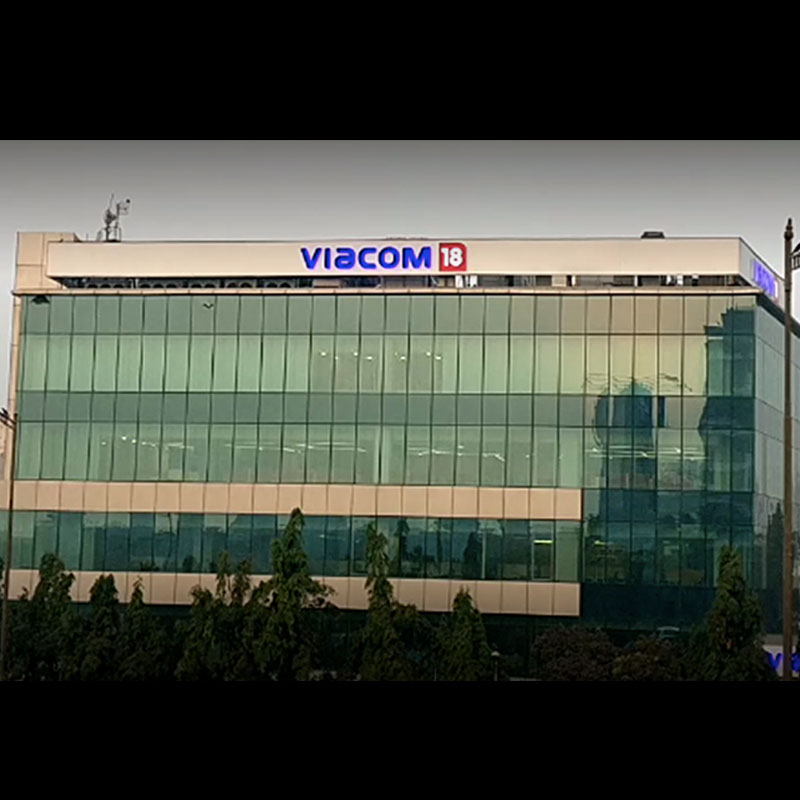
    More on that some other time. For now, however, the subject of my chat with Vats, in his office at Viacom18’s headquarters, located just off the Western Express Highway in Mumbai’s Andheri, is the much-debated tariff regime for the broadcast sector. The fundamental tenets of TRAI’s diktat is rooted in order and process, words Vats is all too familiar with.

    “The tariff order is a progressive document because it offers choice to the consumer, it attempts to bring in equity in the value chain and over a period of time brings in transparency and objectivity in the way we deal in the entire media and entertainment ecosystem,” he tells me.

    As 28 December 2018 nears, broadcasters and DPOs are working both frantically and frenetically to ensure that none of their consumers are deprived of their favourite TV channels. Friction and chaos notwithstanding, the ecosystem is making a concerted effort for a seamless transition.

    That, however, seems like a tall order for now considering the scale of the challenge. In fact, Vats puts his finger on two critical ones.

    “Education of the consumer, which is critical, is a key challenge,” he highlights.

    When talking about the second, Vats appears less a managing director of a giant corporation and more a statesman of India’s media and entertainment firmament and also its moral arbiter.

    “Second is, in these times, the ability of the industry and all the constituents of the industry to come together and to be able to support one another. Because we have to start thinking of ourselves as the industry and seek solutions rather than focusing on our individual constituency or the company. My idea is that it has to be a win-win-win formula. So everybody should win in the long-term. But in the immediate analysis we if start looking at it from our narrow boundaries then that could make the transition more difficult,” he points out.

    Viacom18 and TV18’s distribution arm IndiaCast has bundled the networks’ 57 channels (42 SD and 15 HD) in three packs – budget, value and family. The networks have also introduced 10 channel bundles, in SD and HD versions, mapped to its markets (Hindi, North East, Kerala, Karnataka, Gujarat, Bengal, Maharashtra, Orissa, Telugu and Tamil) to allow the consumer to choose from.

    “Anuj [Gandhi] and his team have done everything possible to make sure we are equipped,” the Viacom18 topper says.

    From a legal standpoint though, the matter is yet to be concluded. Earlier this month, TRAI filed a special leave petition (SLP) in the Supreme Court seeking clarifications on the 15 per cent cap on bouquet discounts. Currently, Viacom18 has not adhered to the cap. However, a favourable ruling for the regulator when the Supreme Court resumes after winter vacations next year  could lead to revision of channel pricing.

    “This is a debatable point and I will wait because the matter is sub-judice. I wouldn’t like to give a point of view at this moment and we will see how we adapt ourselves to that,” says Vats when asked whether he’s in favour of a 15 per cent cap or not.

    His network has launched a multi-media marketing campaign, titled ‘Ek Me Hai More Yahaan’, asking consumers to pick up the ‘Colors wala Pack’, designed for the Hindi speaking market (HSM) and priced at Rs 25 a month.

    Given that the top court pronounced its judgement in the matter relating to jurisdiction of TRAI on 30 October 2018, could the broadcaster have kicked-off its publicity blitzkrieg earlier?

    “As for the consumer campaign, the timing is broadly right. You can’t start telling the consumer in October and ask her to act in December. She has to act now and that’s why our campaign should be on now. That is why you’re seeing the timing the way it is,” says Vats adding that he’s committed to investing in such campaigns till it is required.

    The early success of the new tariff regime’s implementation hinges on consumer awareness and adaptability. In such a scenario, every constituent of the value chain needs to play their part. However, if industry sources are to be believed, it’s the broadcasters and MSOs doing the heavy lifting currently with the LCOs not upping their game.

    “If there is a gap in communication and things happen, there will be some loss in transition there is no doubt about it. But that has to be compensated with direct communication with the consumer. Supposing Colors wala pack or mention of some of our channels is missed out, then we keep it top of mind for consumers that there is a Colors wala pack which is very affordable. So our hypothesis is that we will have consumers being able to ask that question. And then we will be educating and training with the other part of the value chain to be able to fulfil this. So the demand should come from the consumer,” states the Indian Institute of Management – Ahmedabad alum, who has spent much of his stellar career at the mecca of marketing, Hindustan Unilever.

    The broadcast cognoscenti is fussing over the financial remodelling of the value chain. The good old consumer will now not only flip channels but also make or break businesses. She’s suddenly become more popular, more powerful and immensely more significant. How will this impact the ARPU of the broadcaster in the medium to long-term?

    Vats, as you’d expect, views this differently. He prefers restricting his focus to the systemic changes the order has induced rather than be lured by what its by-products, such as improved subscriptions numbers, have to offer.

    “With the improvement in the objectivity and transparency in the entire value chain and with the equity I think it bodes well for everybody in the value chain. It bodes well for the broadcaster also,” he says.

    Dealing with a radical change of this nature has several handicaps, the biggest being the unavailability of previous data. Therefore, predicting consumer behaviour can be a nightmare. Some believe that the tariff order will result in a shrinkage of broadcaster bouquets.

    Interestingly, Viacom18 has two fresh offerings – Colors Gujarati Cinema and Colors Bangla Cinema (yet to be launched) – as the broadcast sector readies for a regime change. The show must go on, is something Vats believes in.

    “My point view is that while the changes will happen, business has to go on. If there are people who would like to watch Gujarati films, they would like to watch Gujarati films, irrespective of what tariff order is there or what plans are there. So, I think it’s up to us to continue monitoring them as we go forward,” he argues.

    Another point Vats stresses on is the fact that people aren’t going to stop watching television. It’s a simple but significant assertion. He intends to maintain the rhythm of his business despite the uncertainties the order’s implementation is likely to throw up.

    “So some of the plans that we have are being rolled out. Whether it is channel launches or programs. The other thing you could also say as there is going to be some uncertainty, should we do programmes? But my point of view is that people are not stopping watching TV. And in the spirit of continuing the rhythm of our business we’ve go to the right level of new things whether it is new programs, new channels and new initiatives,” he adds.

    According to the 2018 FICCI report, the advent of OTT players has whetted Indian viewers’ appetite for differentiated content. While Indian broadcasters produce over 100,000 hours of content annually, newer players are investing more money per episode (though for much smaller content pieces) and are snapping up high-profile talent. Broadcast sector luminaries suggest the overall content cost is likely to rise by two to three per cent of their top line.

    Throw the tariff order into the mix, and networks could be forced to shell out a lot more than anticipated to line up engaging content on their ‘weaker’ channels. The other alternative, of course, would be yanking off the laggards.

    “The investments are business decisions and any channel which exists has to have the requisite set of viewers. If you don’t have the right set of viewership in your segment, then there will always be pressure on that channel. That we need to maintain and that will be there without doubt,” concludes Vats.

    The impending makeover of India’s broadcast sector has fuelled several questions, concerns and conspiracy theories. None of the protagonists of this play are certain of what to expect and how long it will take for dust to settle down. What’s clear, however, is the fact that this race of broadcaster reaching the consumer in her new avatar, isn’t a sprint. It’s going to be marathon, and few people know more about running long distances than Sudhanshu Vats.
     

  • IndiaCast partners JKN Media to bring Indian content to Thailand

    IndiaCast partners JKN Media to bring Indian content to Thailand

    MUMBAI: In a bid to strengthen its international foothold and provide unparalleled entertainment to the transnational viewers, IndiaCast Media Distribution – the domestic and international distribution arm of Viacom18 and TV18, has partnered JKN Media, Thailand to bring content from the network’s Indian repository through an exclusive soon-to-be-launched digital channel on JKN’s OTT Platform titled 'Bflix' for Thai viewers in 2019. The channel will showcase exclusive content from the vast Viacom18 library, dubbed in Thai, that will be available in Thailand and key South East Asia markets. The deal was signed-off at the recently held Asia Television Forum (ATF) in Singapore.

    IndiaCast and JKN Media together have successfully syndicated shows from COLORS for over five years in Thailand. This customized and exclusively packaged digital channel will bring specially curated content from the youngest and fastest growing media and entertainment company in India to the digital savvy viewers in Thailand.

    Speaking about the association, Viacom18 Group CEO and MD Sudhanshu Vats said, “With an increasing number of viewers graduating towards the digital mode of entertainment worldwide, we are continually evaluating our play in the international digital distribution space. This symbiotic partnership with JKN Media will further strengthen our equation with the country’s viewers who have enjoyed and appreciated our shows from COLORS over the years. There are many cultural similarities between India and Thailand, and hence the strong resonance with our offerings. This endeavor is another step towards providing seamless and individualized Indian-origin entertainment to Thai viewers.”

    On this strategic alliance IndiaCast Group CEO Anuj Gandhi said “We want to reach to audiences who want to experience contemporary, imaginative and high-quality relevant entertainment. It gives us immense pleasure to partner with JKN, to now take Viacom18 content to Thai viewers in their local language. We are confident that this will be a whole new exciting experience for the audiences. We would also like to thank JKN Media for their continuous partnership in scaling new heights in Thai market.”

    Adding to further, JKN CEO Anne Jakrajutatip said, “At JKN, we constantly strive to partner with brands that share our sensibilities towards great storytelling and the emotions that high-quality content can evoke. Over the past five years, we have formed a strong association with IndiaCast, which has seen us exclusively acquiring almost all the drama series from ‘COLORS’ for Thailand. Shows like Madhubala, Balika Vadhu, Chakravarti Ashoka Samrat, Chandrakanta, Udann, Naagin, Shakti, Shani, Mahakali, Ishq Mein Marjawan, Bepannah and many more have been hugely loved by all audiences in Thailand. I am glad that we have now extended our association with IndiaCast through this digital channel which will enable us to distribute all their content on our OTT platform in Thailand and across distribution platforms in Thailand, Taiwan and Hong Kong.”

  • IndiaCast rejigs revenue top brass in bid to grow across markets, platforms

    IndiaCast rejigs revenue top brass in bid to grow across markets, platforms

    MUMBAI: In a move aimed at synergizing processes and business opportunities to scale up revenues, IndiaCast, the domestic, international and digital distribution arm of Viacom18 and TV18, today, announced an organizational rejig of its revenue management structure.

    Amit Arora, who has exceptionally steered the domestic business for IndiaCast to greater heights over the years, has been elevated as president, India affiliate business.  Additionally, Arora will also drive the South Asia business along with linear distribution with telcos.

    Govind Shahi, a seasoned veteran, known for his sharp & strategic mindset, will now take over the mandate of heading the International business for IndiaCast. As the International business head, Shahi will oversee and drive business and revenues across functions and regions. All regional and vertical heads would report to him.

    Commenting on the organizational restructuring, IndiaCast group CEO, Anuj Gandhi commented, “As technology opens up newer viewing platforms and content evolves in both duration and variation, the business of distribution and syndication of content is evolving rapidly – in terms of new markets and new avenues of showcase, thereby ensuring that monetization opportunities are scaling up beyond traditional markets and platforms. This organizational rejig allows us to leverage the existing capabilities and strengths of our leaders and their teams in growing revenues and to explore new opportunities across various technologies and markets globally”.

    Sachin Gokhale, previously responsible for nurturing and successfully developing and rapidly growing the Middle East and Africa region and has managed our Asia Pacific & Business operations verticals, will now assume the new role of heading the Americas’ Business. Gokhale would be responsible for expansion and growth of business to new markets in the Americas and dialing up various digital initiatives in the region. 

    Debkumar Dasgupta, who continues to impressively grow the global syndication business, will take on the added responsibility of heading the Middle East and Africa region.

    Both Amit Arora and Govind Shahi will continue to report into Anuj Gandhi.

  • turner india reveals new channel pricing

    turner india reveals new channel pricing

    NEW DELHI: The Supreme Court today listed for 28 August the special leave petition filed by Star India and Vijay TV against a tariff and inter-connect orders of regulator TRAI that had been given a go-ahead by the Madras High Court.

    The TRAI tariff orders, first contested in Madras High Court by the petitioners, were cleared by the Chennai court with certain riders after hearings that continued almost over 16 months in front of two benches of the court.

    Though the petitioners were  unavailable for comments, a legal eagle explained that the very fact the Supreme Court has allotted a day for hearing the petition of Star India and Vijay TV, which basically revolves around copyright and why the regulator doesn’t have jurisdiction over such issues, highlights the fact that the judge doesn’t want to take a decision in a hurry.

    The next date of hearing of the case in the apex court on 28 August 2018 is few days before the deadline kicks in for filing of new inter-connect agreements by stakeholders of the Indian broadcast industry.

    After the Madras HC had given a thumb up to TRAI tariff order, and both the petitioners and the defendant (TRAI) had filed caveats in the Supreme Court, the regulator had bowled a googly saying that its tariff order would come into effect from 3 July 2018 as all judicial compliances had been completed. 

    “Having complied with the judicial mandates in the matter,  the Telecommunication (Broadcasting and Cable) Services (Eighth) (Addressable Systems) Tariff Order, 2017 and the Telecommunication (Broadcasting and Cable) Interconnection (Addressable Systems) Regulations, 2017 as upheld by the Hon'ble Madras High  Court and the Telecommunication (Broadcasting and Cable) Services Standards  of   Quality  of  Service and  Consumer  Protection (Addressable Systems) Regulations, 2017 come into effect from 3rd July 2018,” the regulator had said in a statement pointing out that all timelines mentioned in the original order should be adhered to immediately.

    According to TRAI, implementation of the new regulatory framework will “bring in transparency”, enable provisioning of affordable broadcasting and cable TV services for the consumer and, at the same time, “would lead to an orderly growth of the sector”.

    Keep tuned in for another episode of this legal saga, which started to air sometime in 2016.

  • Network18 reports improved numbers for Q1

    Network18 reports improved numbers for Q1

    BENGALURU: Network18 Media & Investments Ltd (Network18) reported year over year (y-o-y) growth in consolidated operating revenue for the quarter ended 30 June 2018 (Q1 2019, quarter or period under review) as compared to the year ago quarter (Q1 2018). The company reported consolidated operating profit (EBITDA) of Rs 18 crore in Q1 2019 as compared to a loss of Rs 2 crore during the corresponding year ago quarter. Consolidated operating revenue grew 10 percent y-o-y during the quarter under review to Rs 1,124 crore from Rs 1,025 crore in Q1 2018 on a comparable basis.

    Network18 chairman Adil Zainulbhai said: “We have begun the new fiscal with improved viewership across our portfolio, which shall be the foundation for our growth plans. We continued investments in regional news and entertainment and in digital. We continue to see opportunities in the media space.”

    TV18 Broadcast Limited

    TV18 Broadcast Ltd (TV18) is the listed Network18 broadcast subsidiary and the largest contributor to its numbers. Its consolidated revenues increased 11.1 percent y-o-y in Q1 2019 to Rs 1,088 crore from Rs 979 crore. TV18 consolidated operating profit (EBITDA) almost tripled (2.79 times) y-o-y to Rs 39 crore in Q1 2019 as compared to Rs 14 crore.

    TV18’s growth in revenue was led by Viacom18 and Indiacast revenue for which climbed by Rs 73 crore (a little less than 10 percent) y-o-y during the quarter under review to Rs 832 crore from Rs 759 crore. The company’s business and general news had revenue growth of 14 per cent (Rs 20 crore) y-o-y in Q1 2019 at Rs 173 crore as compared to Rs 153 crore. Regional news (Ex Lokmat) and infotainment had revenue growth of 24 per cent (Rs 16 crore) during the quarter under review at Rs 83 crore as compared to Rs 67 crore in Q1 2018.

    In its investor update, Network18 says that TV18’s subscription revenue increased 10 percent y-o-y during the period under review to Rs 301 crore from Rs 273 crore in Q1 2018.

    Growth in operating profit (EBITDA) was led by business and general news with 25 per cent (Rs 7 crore) y-o-y growth at Rs 35 crore in Q1 2019 as compared to Rs 28 crore in Q1 2018. Viacom18 and Indiacast had 13 per cent y-o-y growth in operating profit at Rs 26 crore from Rs 23 crore in Q1 2018. Operating loss of regional news (Ex Lokmat) and infotainment declined to Rs 22 crore in Q1 2019 from operating loss of Rs 37 crore.

    The numbers mentioned above have been obtained from TV18’s Investor update. It may be noted that Viacom18 and Indiacast became subsidiaries of TV18 from 1 March 2018. Hence, reported financials of TV18 consolidate these entities only from that date. Other y-o-y numbers are not comparable.

    “Our television channels reach out to 700 million people across the country, making every 1 in 2 Indians our consumer. We have 53 domestic channels across news and entertainment, making us a formidable player. The improving advertising environment and our rising viewership are positives, as we continue investing into growing our offerings across genres,” said Zainulbhai in a TV18 investor update.

    Network18 Digital, Print and others

    Network18 Digital, Print and others revenue declined 22 per cent y-o-y in Q 2019 to Rs 36 crore from Rs 46 crore in  the year ago quarter. Operating loss (EBITDA) increased to Rs 21 crore from Rs 16 crore.