Tag: India

  • Nokia names October 20 ‘International Mobile Photography Day’

    Nokia names October 20 ‘International Mobile Photography Day’

    Camera phones have changed photography forever and right along with it our lives. In 2014, it is estimated that smartphone photographers will take nearly one trillion photos that’s hundreds of thousands a minute (three thousand by the time you read this sentence), capturing in an instant the poignant, funny, dramatic, hilarious, strange and memorable moments that otherwise would have been lost forever.


    In recognition of the evolving digital photography revolution, Nokia calls on photographers everywhere to grab their smartphones and celebrate with us on October 20 as we mark the first International Mobile Photography Day, a day dedicated to capturing all those once-in-a-lifetime, unexpected moments. Moments immediately immortalized and shared because now, people have the convenience of having a camera on hand, always, thanks to mobile phones.


    To mark the occasion, Nokia India announced a special initiative for its Indian consumers and photography enthusiasts. Starting Oct 20, 2013, all Nokia Lumia 1020 owners can get their favorite images printed and delivered at their doorsteps, thanks to the new ZoomIn app. All one needs to do is download the new ZoomIn app from Windows Store on to the Nokia Lumia 1020, launch the app and select the image(s) to be printed. Each consumers is entitled to 6 prints (2 of 12x24inch and 4 of 10x8inch) absolutely free of cost, in addition to a super-large 16×20 inch print at a 50% discount.


    “People today are documenting life around them in an entirely new way,” said Juha Alakarhu, head of Imaging Technologies at Nokia. “They’re no longer just taking posed pictures of family and friends, but capturing memories and stories through the magic of photos or videos. Photography has become a natural part of our daily lives!


    “That wasn’t possible until camera phones essentially put a professional grade camera in everyone’s pocket.” Alakarhu believes the Nokia Lumia 1020 – with a 41 MP sensor, Carl Zeiss lenses, PureView technology, Optical Image Stabilization and super high-res zoom – makes it the perfect choice for photos that have to be right the first time.


    Nokia is producing a “mobile photo documentary,” a series of photos from people all around the world depicting the most brilliant examples of life’s unexpected moments. The best-of-the-best photos will then be turned into a compelling “Life Unexpected” video. If you would like to join in the celebration and contribute your own “Life Unexpected” photo, share a memorable photo taken with the Lumia 1020 – or any smartphone – this Sunday (October 20), and then simply tweet or post your photo using 1020MobilePhotoDay. Your tagged image will then be considered for inclusion in the “Life Unexpected” video, along with some of the most renowned photographers in the world. (The video will be released on Monday, October 21.)


    So, go ahead, snap a photo on October 20, the International Mobile Photography Day, and share your moment with the world. And while you are at it, don’t forget to order your prints through the ZoomIn app on the Nokia Lumia 1020.


  • After Europe, India where Time Warner focus is: Parsons

    After Europe, India where Time Warner focus is: Parsons

    MUMBAI: So-called restrictive legislations or not, India is a market that no mass product company can ignore. World’s biggest media company Time Warner is no exception.

    This is evident from the fact that chairman and CEO of Time Warner,Richard Parson, sees India as a priority international market after Europe for his organisation.

    At a time when Asia’s biggest market China has stringent media regulations making it difficult for non-Chinese companies to operate there, liberal India is the next haven for Western business houses.

    “Time Warner in the US is such a large player. Where are we going to get growth from?” Parson was quoted by worldscreen.com as saying at an interaction with journalists at Mipcom in France on Wednesday.

    According to Parson, “The first place we are going to look at is Europe. They are developed economies, established platforms, and there’s an orientation towards Western content. We are focused on Europe and the emerging markets of India and China, in that order.”

    Though media has speculated on investments in India by Time Warner, but the company has preferred to keep a low profile.

    At present, Time Warner’s biggest exposure to India is through a 26:74 joint venture with Zee Telefilms, called Zee Turner Ltd, for distribution of TV channels in India.

    With over 30 channels in its bouquet, in certain markets within India Zee Turner has beaten Star and Discovery-Sony TV One Alliance in terms of subscription.

    Zee Turner is targeting a turnover of Rs 4 billion by March 2007, signifying a revenue growth of 30-35 per cent compared to last financial year.

    Through some of its group companies – Turner’s three satellite TV channels CNN, Cartoon Network and Pogo, Warner Bros. Movies based in Mumbai, Zee Turner and also a small outfit of AOL in Bangalore – Time Warner has an
    adequate presence in India.

    But it would be nowhere near as lucrative or penetrative as competitor Rupert Murdoch’s Star.

    In 2004 when Parson came on a flying visit to India, he did indicate at a party thrown for India’s business elites that Time Warner would like to set up a business process outsourcing unit (reason not known) here also.

    Presently, Time Warner is slightly worried over the fate of a court mandated ban on airing ‘A’ certified movies by movie channels in the Mumbai market.

    The ban affects Indian and foreign film channels, including HBO in which Time Warner has interest.

    Meanwhile, speaking at length about his company’s plans in Europe at Mipcom, Parson did not rule out a cable acquisition in Europe.

    “We all believe cable is the winner over time,” Parsons was quoted in media reports as saying.

    “We look at everything. It’s a big issue. Cable will win in the US but maybe not outside the US since the infrastructure is not there. We look, we evaluate on price, you never know,” he added.

  • Microsoft, MTV to conduct global technology study

    Microsoft, MTV to conduct global technology study

    MUMBAI: MTV and Microsoft Digital Advertising Solutions have joined forces to conduct a global study into the impact of technology on today’s youth.

    The study, commissioned by MTV International (MTVNI) and supported by Microsoft Digital Advertising Solutions, is being conducted with teens and young adults across nine countries – India, China, Germany, Holland, Italy, Japan, Mexico, US and the UK. The study will examine the social impact of viral video, instant messaging, email, online social networks, mobile phones and on-line gaming.

    The research aims to understand:

    How today’s youth differ from their predecessors?

    What behaviour has technology altered / eclipsed?

    Do girls and boys use technology in the same way, for the same reasons?

    Is there a prime age of digital engagement?

    What factors dictate media platform and content choice?

    The new role of entertainment media and brands in 2007 and beyond.

    MTV Intl senior VP, international tesearch and planning Graham Saxton said, “The latest research into technology and teens has limited itself to understanding the habits of the early adopters or been obsessed by the technology itself. We decided to commission a study into understanding genuine social change.

    “By viewing technology within the wider context of young people’s lifestyles we aim to demystify the digital generation and provide tangible insights for ourselves and our clients to continue engaging our audience now and into the future.”

    Microsoft Digital Advertising Solutions head of International Research Caroline Vogt said, “There is a lot of received wisdom surrounding youth and their technology uptake. This research aims to uncover the real motivations driving behaviours and understand the role technology is serving in the daily lives of youth today. ”

    The research began in August and full qualitative and quantitative results are expected by December 2006.

  • Gulf Air appoints new general manager for India

    Gulf Air appoints new general manager for India

    A consistent achiever and winning performer, Nambiar has risen from the ranks of Gulf Air, having joined it in 1999 as District Sales Manager in Doha, Qatar from KLM Royal Dutch Airlines.


    After a nearly three and a half years stint in Doha, he moved to Nairobi, Kenya on promotion as Area Manager for East and West Africa. In June 2004 he was elevated to the position of General Manager at Gulf Air headquarters in Bahrain, the biggest station of Gulf Air network, before moving to Dubai in January 2005.


    A Bahrain-born Indian, Nambiar brings to the position a depth of knowledge and experience that will serve him well in this highly competitive market.


    “I am delighted to take up the new position in India, which is an important market for Gulf Air,” says Nambiar.

    “Gulf Air is, and will continue to be, a major player in this rapidly growing travel market. I hope to continue with my undeterred spirit to further develop the market. I am thankful to Gulf Air management for their confidence.

    Regional General Manager Robin Middleton says Gulf Air’s relationship with India goes back to the 60s when it started its first flight to Mumbai in 1960 – the first gulf airline to operate into India.

    “It is one of the top five revenue producing markets for Gulf Air, and it continues to be one of the largest international carriers serving this important country, which is a rapidly-growing economy,” he says.

    “We are confident that under Rajeev’s leadership and in conjunction with our GSA Jet Airways, Gulf Air will continue to go from strength to strength, not only in creating an even stronger profile with new innovative products but also by providing our Indian customers with our unique brand of Arab hospitality and culture, for which we are renowned.”


    About Gulf Air
    Founded in 1950, Gulf Air is presently owned by the Kingdom of Bahrain, the Sultanate of Oman and the Emirate of Abu Dhabi and is the only truly Pan Gulf carrier in the region.


    More than half a century later, the regional, geographic and cultural values that the airline has embraced over more than half a century are still central in defining the brand and service ethos within the contemporary and global environment.


    Today the airline’s network stretches from Europe to Asia and covers 44 cities in 30 countries. The fleet comprises 34 aircraft.


    Under President and Chief Executive James Hogan, the successful implementation of the first phase of a restructuring programme, which commenced in 2003, has resulted in the establishment of a platform for sustained commercial operation.


    It has also provided a framework for a succession of innovative products and services including the unique Sky Chefs and Sky Nannies that form part of Gulf Air’s ’boutique airline’ vision.


    The dramatic turnaround in fortunes has won international recognition. The Centre for Asia Pacific Aviation (CAPA) presented the airline with the prestigious Airline Turnaround of the Year Award for 2003. Gulf Air was also the recipient of the 2003 Platinum Award for the Best Airline in the Middle East and North Africa, which recognised the airline’s commitment to service excellence. Other awards include:

    Winner – Middle East Leading First Class Airline, World Travel Awards 2005
    Winner – World’s Leading Airport Lounge, World Travel Awards 2005
    Winner – Middle East & North African Platinum Best Airline Travel Award 2004
    Winner – Skytrax Most Improved Airline Award 2004
    Winner – Skytrax Best First Class Onboard Food Category 2004
    Winner – Skytrax Best Business Class Check-in Category 2004
    Official Airline and Sponsor of the Gulf Air Bahrain Grand Prix 2006

    For further information please contact:
    Rashmi Shetty / Riann Vaz
    Tel: 022 22812957 / 60
    Mob: 98217 65776 / 98198 64424

  • The festive season to leverage higher growth for home appliance market in India

    MUMBAI: With the festival season having been kicked off, home appliances companies are looking forward to a hectic quarter ahead. According to the Home Appliances Division of Confederation of Indian Industry (CII) high end models of televisions i.e. the LCD and flat panel monitors and DVD players will top the chart this season followed by refrigerators.

    Home Appliances companies are expecting sales to grow by 20-25 per cent for these products. “This year, very clearly the focus will be on two key products, Flat Panel Displays, specially the Plasma and the LCD Monitors and the DVD Players,” says LG Electronics India Ltd assistant general manager Sandeep Tiwari.

    Godrej has launched its new range of refrigerators called EON to capture the demand in the festival season says Godrej vice president G Sundaraman.

    The companies are increasing their ad spend and launching new promotional campaigns. Godrej for example has already launched a series of promotional campaigns and dealer meets. According to Sundaraman, the company has plans for a number of festival schemes to maximize sales during the forthcoming months. Tiwari adds that LG plans to spend something in the range of Rs 100 crores on promotional and advertising activities.

    According to the CII Home Appliances Division the market for various Home Appliances will continue to grow right through to 2015, and not just this festival season. “Based on feedback from various CII members, we believe that that outlook for the Home Appliances markets is looking good for the next 10 years” says CII head manufacturing services Dr. Sarita Nagpal.

    ” The air conditioners market for example is set to grow at a steady 10 per cent upto 2015, while refrigerators market is expected to slow down from 7 per cent to 6 per cent after 2009-10″, adds Dr. Nagpal.

    Washing machines are also expected to log in a steady 9 per cent growth upto 2015, while microwaves are expected to grow the fastest at 15.30 per cent upto 2009-2010 and then slow down to 12.5 per cent upto 2015. Vacuum cleaners have not been a hot favourite amongst the Indian buyer and is expected to grow at 7.6 per cent.

    The white goods market in India is pegged at around Rs 80 billion (inclusive of the unorganized segment). The refrigerator market has the maximum share being valued at over Rs 37 billon, close on the heels is the air conditioners market at Rs 35 billion. Washing machines have a comparatively smaller share at Rs 7-8 billion. In volume terms the refrigerator market is estimated at 3.0 million, washing machines at 1.4 million and air conditioners at 0.96 million.

    According to the CII Home Appliances Division, the consumer durable industry registered a buoyant trend during the financial year, 2005-06. The division has identified air conditioners (15.2 per cent) and microwave ovens (26.7 per cent) as the sectors that recorded double-digit growth among white goods in terms of quantities produced. Some sectors that recorded single-digit growth were refrigerators (5.7 per cent) and washing machines (7.7 per cent). The rate of growth in production has been more in terms of quantity or in volume growth rather than the growth in value terms for a number of products because of a change in prices.

    According to Dr. Nagpal, “The home appliances consumer is spoilt for choice in every category of the home appliances products. With companies such as Godrej planning to launch at least one new innovation every quarter and the housewife stretching her budget to buy the best possible product, there is ample room for new models to enter the market.”

    The CII Home Appliances division has been tracking the geographical trends of the home appliances market. According to them a closer look at the geographical trends reveal that North India accounts for 36 to 46 per cent of the home appliances market depending on which product we are talking about. For example North India controls 36 per cent of the refrigerator market and 46 per cent of washing machines market. The North Indian consumer is the biggest buyer in every category followed by the West.

    With the consumer mindset changing towards the life of “consumer durables” and towards taking loans to buy these, the market for home appliances is expected to show an upward trend.


  • Worldspace inks cricket rights deal with Espn Star Sports

    Worldspace inks cricket rights deal with Espn Star Sports

    MUMBAI: Worldspace Satellite Radio has signed an exclusive broadcast license agreement with Espn Star Sports to provide subscribers with live audio coverage of cricket, further enhancing its content offering and providing consumers with a truly unique listening experience.

    Under terms of the agreement, Play, the Worldspace -branded all sports channel for South Asia and the Middle East, will have exclusive broadcasting rights throughout South Asia for 12 tours and over 200 days of cricket comprising both test matches and one-day internationals.

    Three of the 12 tours include India — Worldspace Satellite Radio’s primary market in the Asia region. Coverage begins 19 November, 2006 with India’s tour of South Africa, and runs through February 2008, with conclusion of the India-Sri Lanka-Australia Triangular Series in Australia, informs an official release.

    “The exclusive acquisition of these premier cricket internationals is another demonstration of Worldspace’s continued commitment to providing the best in audio entertainment for our listeners,” said Alexander Brown, co-chief operating officer, Worldspace.

    Subscribers will have “ball-by-ball,” real-time coverage of all matches as well as a host of ancillary programming surrounding each match. The coverage will feature matches with the national teams from India, Australia, England, New Zealand, South Africa, Zimbabwe, Sri Lanka, and the West Indies, and will also include the biennial Australia-England test series, “The Ashes.” Broadcasts can be received in countries covered by the Worldspace AsiaStar satellite’s West Beam and include: Bangladesh, Bhutan, India, Maldives, Nepal, Pakistan, Sri Lanka, Bahrain, Qatar, and UAE.

  • Reliance Communications’ Falcon Cable System becomes operational

    Reliance Communications’ Falcon Cable System becomes operational

    MUMBAI: Reliance Communications owned Falcon Undersea Cable System has started its operational from today unleashing international bandwidth between India, Middle East and Europe.

    The Flag Telecom Global Network would be the world’s largest undersea cable system covering 65,000 route kms, with the launch of Falcon. The current bandwidth on India-Europe route is controlled by VSNL and Bharti.

    “Falcon will have an equally powerful impact on the economic front, driving higher levels of trade, commerce and global integration,” Reliance ADA chairman Anil Ambani said.

    The vision at Reliance ADA group is to ‘give millions of ordinary people across the world the means to realize their dreams, the power to shape their destiny, the chance to fulfill their true and diverse potential,” Ambani added.

    The Flag Global Network bridges the distance between 35 diverse developed and developing economies, connecting the global economic hubs in USA, UK, Germany, France, Middle East, India, Hong Kong, Singapore, China and Japan to name a few.

    The Company’s Flag is the first global network of this scale to provide integrated connectivity on one seamless network to the three highest growing regions; India, Middle East and China; in terms of international bandwidth demand.

  • Trai’ng hard but falling way too short

    Trai’ng hard but falling way too short

    Some like it; some don’t. But there’s no denying that the Telecom Regulatory Authority of India (Trai)-mandated pay channel prices in CAS areas (Rs 5 for all pay channels) is going to stir up much more than just a storm in the proverbial cup.


    It’s like those weekly village markets that are quite popular in India where the refrain is har maal paanch rupaiya mein (every product priced uniformly at Rs 5). The actual price may differ a bit, but the concept adopted by Trai is the same. Reason: low and uniform prices attract buyers.


    Faster the adoption of a technology like CAS, sooner more transparency will come into the Indian broadcast and cable industry, which has been plagued by massive under-declaration by cable ops
    _____****_____

    A low price entry point for a new technology — about which myths abound still for the general public — is certainly a good way of incentivising its quick adoption. And, faster the adoption of a technology like CAS, sooner more transparency will come into the Indian broadcast and cable industry, which has been plagued by massive under-declaration by cable operations and other such ills in the absence of any regulation.


    But in attempting to keep cable TV as a mass service —- which it is, anyway — and having the prices of all pay channels uniform, Trai has forgotten one important aspect of regulatory process: the cost factor while deciding tariff for a service.


    The real boom in the Indian cellular phone market came when players clipped price lines and made the whole process of acquiring a mobile phone connection so cheap and attractive that even a domestic hand found it hard to resist. Who can forget a certain Indian telecom player’s offer of a mobile phone connection with unlimited talk time for a certain period of time and the handset thrown in for Rs 500 under the Monsoon Hungama or monsoon bonanza scheme some time ago?


    Trai, which also oversees the telecom sector, may actually take pride in claiming that it facilitated massive growth in cellular phones in the country. The numbers say it all. There are more cellular phone connections in the country compared to fixed line connections. But broadcast industry cannot crow like its telecom counterpart.


    Though cable TV service, unlike some others like transport (especially capital intensive railway transport), cannot be categorized as a natural monopoly, the cost of putting together that service cannot be overlooked.


    In forcing an entertainment broadcaster to sell its product at a ridiculously low cost, Trai is trying to say Indian consumers don’t appreciate high quality production values.
    _____****_____

    Not as capital intensive as power or transport sectors, cable TV nevertheless does need investments to be made by all stakeholders of the value chain. By presuming that all types of content can be acquired comparatively cheap and revenue generated through volume sales (after all, India now boasts of 68 million C&S homes with all TV homes standing at 110 million), the regulator has highlighted its partial ignorance of how the broadcast business is conducted.


    Imagine the plight of Nimbus, for example, which has bought Indian cricket rights for over $ 600 million hoping that the content would help it to price its proposed channel at a premium. But now it would have no option but to price a pay channel at Rs 5 and look at rejigging the whole business model.


    There is no denying that the programming costs in the sports, movies and entertainment segments are higher than news or infotainment channels segment. In forcing an entertainment broadcaster to sell its product at a ridiculously low cost — when compared to the input costs of aggregating content — Trai, probably, is trying to say that Indian consumers don’t appreciate high quality production values and can be served shoddy work. Class comes with a price tag and the price decided by the regulator is unlikely to encourage quality.


    Could Trai have gone in for differential pricing for some genres of channels? Yes, of course it could have, and displayed a visionary flair in the process.


    But as long as regulators like Trai remain hostage to a government’s whims and fancies, it would always open itself to the criticism of pandering to politicians’ wishes, which are mostly based on populism.


    Still, there is no gainsaying that the last word on this tale is a long way away from being written. And, if the way the currents are flowing are anything to go by, it could well be on this critical point that Trai’s efforts to usher in the CAS era could fall flat!

  • Sony sets out IPO plans; seeks controlling stake in Ten Sports

    Sony sets out IPO plans; seeks controlling stake in Ten Sports

    MUMBAI: Sony Entertainment Television (SET) India is stepping up plans for an initial public offering (IPO). The company is looking at a period after the cricket World Cup gets over in April 2007, a source close to the development says.

    The merchant bankers are yet to be appointed but the IPO plan is being actively pursued. “The board has approved an IPO plan, but subject to the capital market and other related conditions,” the source adds.

    Sony is also in active negotiations to buy a controlling stake in Ten Sports. SET India already has the rights to distribute the sports channel in India. “The negotiations are on to acquire a majority stake. But nothing has been finalised yet,” the source says.

    Ten Sports, it is learnt, is willing to part with a 50 per cent stake. No agreement has been reached on the valuation, the source says. It is worth noting here that a report put out by CNBC TV18 yesterday had said “the deal is believed to be worth between $ 55-60 million.”If this report proves correct, it would mean that Ten Sports has been valued at between $110 million to $120 million.

    When contacted, Taj Television Ltd CEO Chris McDonald said the company was in talks with several companies for strategic partnerships. “There is no deal at this stage,” he added. On being queried whether the company was willing to part with controlling stake, he refused to comment on specific details. Dubai-based Taj Networks owns and operates Ten Sports.

    SET India CEO Kunal Dasgupta denied that anything definite on Ten Sports or the IPO had been decided at this stage.

    Zee Telefilms Ltd. (ZTL), which was in negotiations over a year back, has not resumed talks, a source in the company said. ZTL plans to bid for cricket rights like the ICC which will come up for grabs rather than buy a stake in Ten Sports, he says. Another reason that ZTL dropped any acquisition strategy in regards to Ten Sports is that the channel is already locked into a five-year distribution deal with the rival SET-Discovery One Alliance, the source adds. ZTL in any case runs Zee Sports, which is in the hunt for acquiring cricket properties to provide strength to the channel.

    Taj Entertainment has mandated Ambit Corporate Finance to find a strategic investor. With Harish Thawani’s Nimbus preparing to launch a sports channel, analysts say the acquisition price would continue to be high with more broadcasters chasing cricket properties.

    Ten Sports would require capital infusion even as the cricket properties it currently holds (Sri Lanka, West Indies and Pakistan boards) come up for renewal. By doing a distribution deal with Sony, it will be assured subscription revenues on a guaranteed basis.

    “The buying into Ten Sports would be seen as a good time before the IPO,” a market analyst said.

    SET India has also conducted a restructuring exercise which is seen as a precursor to a public float. The company recently acquired sister company SET Singapore. Though it had obtained clearance from the Foreign Investment Promotion Board (FIPB) for this purpose a few years back, it had deferred this process as the proposed restructuring transaction would have attracted capital gains tax.

    “Sony is keeping everything ready for the right time to hit the market,” the source says.

    SET India had obtained clearance from the FIPB to acquire 100 per cent shares of SET Singapore through a share swap transaction. According to the proposal, one share of SET India would be exchanged for 16 shares of SET Singapore. Post-restructuring, 60.65 per cent of the SET India equity would be with the Sony Pictures Entertainment (SPE) entities, 19.83 per cent with non-resident Indians and overseas corporate bodies, 7.68 per cent with foreign institutional investors and 11.84 per cent with Indian shareholders.

    Taj Television is 100 per cent owned by Bukhatir Investments Limited, a UAE-based conglomerate with interests in banking, construction, real estate, trading, information technology, sports and broadcasting. Ten Sports is a sports channel which broadcasts in the Middle East, Pakistan, India, Sri Lanka, Bangladesh, Maldives, Bhutan and Hong Kong.

  • Former SA opener Gary Kirsten replaces Dean Jones on Ten Sports’ ‘Straight Drive’ team

    Former SA opener Gary Kirsten replaces Dean Jones on Ten Sports’ ‘Straight Drive’ team

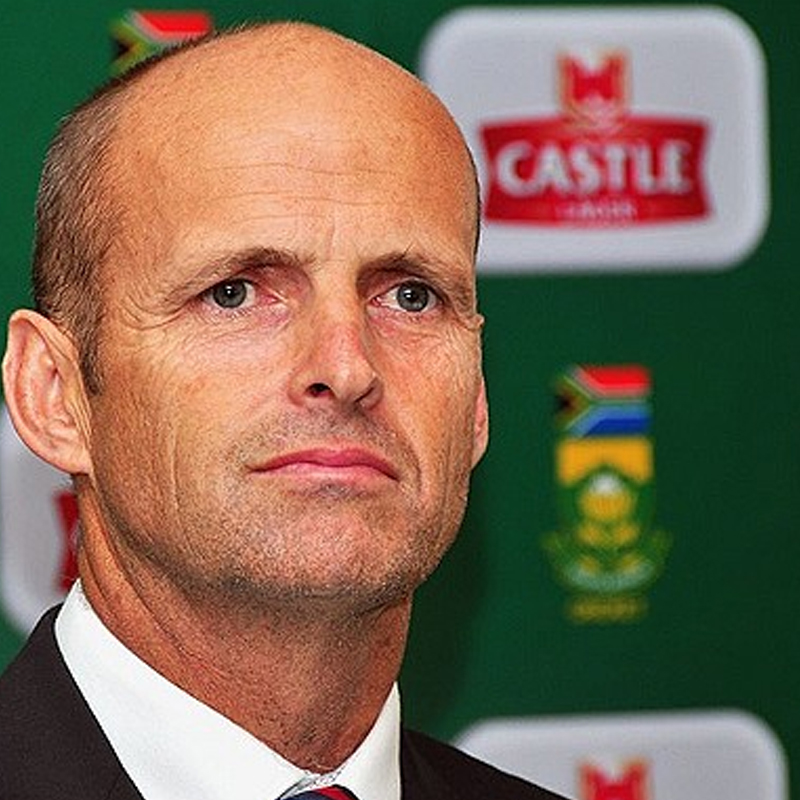
    MUMBAI: The Unitech Cup, the tri-series between India, Sri Lanka and South Africa, gets underway on Ten Sports on Monday, 14 August 2006. The channel has announced that former South African opener Gary Kirsten will be a member of its ‘straight Drive’ team.

    This announcement comes a few days after the channel terminated the contract of Dean Jones after the former Australian batsman inadvertently let out a remark calling a South African bowler a terrorist. In an official release the channel said, “The highly offensive nature of the comments has no place in cricket, sport and society as a whole and we deeply regret that such comments were broadcast.

    “Ten Sports is owned by a citizen of the United Arab Emirates and the company employs a staff drawn from a diverse cross section of nationalities, cultures and religions. We have a zero tolerance policy for any expression of racial stereotyping and prejudice and condemn in the strongest possible terms the comments made by Mr Jones.”

    Kirsten says, “I am very excited to be joining the team. It will be my first time on Straight Drive and I couldn’t have asked for a better series to be involved in.”

    One major activity the channel conducted around this series was the Eleven To Lanka Contest. Basically, anybody could participate. All one had to do was take a picture of oneself along with 10 other people. They could be friends, family or total strangers. It then had to be sent to Ten Sports’ site along with a slogan that explained why your team should be chosen. The channel claims to have received 2,000 entries. The winners will be announced shortly.