Tag: India

  • ‘Size of ready to eat market Rs 700 m.’ : Ravi Naware – ITC Foods Division CEO

    ‘Size of ready to eat market Rs 700 m.’ : Ravi Naware – ITC Foods Division CEO

    ITC Foods, the foods division of ITC Limited has built many brands and sub brands through aggressive advertising and marketing moves. This year the foods division is expected to add about Rs 10 billion to ITC’s annual turnover. ITC has recently announced the launch of their sub brand of biscuits – Sunfeast Sachin’s Fit Kit under their flagship and umbrella brand Sunfeast to coincide with the World Cup that will be played over the next few weeks in the West Indies.

    ITC Foods Division CEO Ravi Naware shared some insights into the various aspects of the business with Indian Television Dot Com’s Tarachand Wanvari. Excerpts from the interview.

    Excerpts:

    The promotion spends in the World Cup, what would be the proportion for them vis-?-vis your annual spends? You must have a separate budget for the World Cup. Could you share the figures?

    Of course, we have budgeted a specific amount for the World Cup. The World Cup is expensive so it’s a fairly decent percentage.

    You have said that a major portion of the World Cup spends budget will be towards promotion of Sachin’s Fit Kit, could you speak some more on this?

    I think if we don’t put money behind this brand, we’ll be doing a disservice to ourselves. We have launched the brand with Sachin’s name associated with it. On its own it’s going to be high profile from the reception point of view. I don’t mean that we are doing a razzmatazz kind of a launch. Sachin’s Fit Kit and the World Cup, the whole thing matches.

    How big is the ready to eat market?

    I really don’t have a number, because I find that the ready to eat market is not very well defined. You get tinned rasgollas. Will you include them in ready to eat? Some people do, because that is ready to eat, processed, cooked and packed. The definition is not very clear on that segment. If we stick to ‘so to say’ dinner table items, but then rasgollas can also be a part of the dinner table item, we’re talking primarily about vegetable curries, paneer, chicken, birayanis, dals, this is the kind of market we construct, then we have close to 48 per cent market share. But then you go and ask someone else, they are very likely to say that claim is too high.

    By your definition, who would be number two and three in the ready to eat market?

    No 2 would be MTR Foods, next would be Kohinoor. But then there could be disputes too, because I also make halwas like gajjar ka halwa, moong dal ka halwa, we include those. Comparatively, biscuits or soft drinks have become well defined markets. So you won’t include potato chips in the biscuit segment. You don’t include fruit juices with soft drinks. Its undefined, but not a huge category.

    What about your Kitchens of India brand of ready to eat? How does it compare with Aashirvaad ready to eat?

    Both would be about equal in size. Plus, we have a fairly large export market, which add a fairly large proportion to our sales. Only Kitchens of India are exported.

    So what is the size of the ready to eat market?
    It’s approximately Rs 600-700 million, the way we look at it.

    If you are building a branded business, the brand must acquire power, stature and then you can generate the consumer pool from that

    How are your Pastas doing?

    We’ve got some very, very loyal customers who are quite happy with the performance. We’ve launched Benne Vita. Many people know how to make good pasta sauce, but the pasta is difficult to make. Earlier one had to buy imported pasta, now they can buy our Benne Vita 400 gm pack.

    You are competing with Nestle’s Maggi in terms of noodles with your pasta? Has it reached anywhere near that stage?

    Well I suppose in terms of the mental space we are competing with Maggi. But we are small and Maggi is large. It is a different product, which by now is a fairly standard one. There are lots of unbranded noodles also available in the market, maybe a similar genre, because that’s become a very popular item. Others are also getting into it.

    Compared to the existing players, you are new, just four or five years into foods Aren’t you spreading yourself with so many products?

    In 2002, when we entered the food business, if you wanted to enter almost any food product you would have competition that had already established itself. Nestle had a fairly large range of products, they have been in India about 60 years, Parle is about 60-70 years old, Britannia has been around for almost a 100 years. Then take tea or coffee, you had Tata, HLL or instant mixes, there was MTR and Gitz.


    Pasta has been introduced by us for the first time in India. If you say that we compete with noodles, then noodles have been around for 25 years or more. We are late entrants which is a fact of life. And as a late entrant you don’t want to get into chocolates. Cadbury and Nestle are already there in that space. You name any category, dairy products – you have Amul and several others already there. In that sense, there was hardly any totally new “New category” where we could enter.


    We decided to enter into those categories where we felt that we had some inherent competitive advantage. For example, when we entered atta (wheat flour), we said that we’d leverage our entire e-choupal connection. Having entered into atta and this area, we thought that we would enter into the wheat vertical space. So we got into biscuits, we got into pastas, and there are other products ideas based on wheat which would be relevant.


    Through e-choupal we buy larger and larger quantities of wheat, and at that stage, there are scale economies which give us benefits, selectivity, we can choose the right kind of wheat for the right kind of product and so on. Secondly we got into confectionaries because India has 3 million cigarette selling shops. ITC was present in those shops for the last several decades. Most of these cigarette selling shops also sell candy. So we thought that we’d have that advantage in distribution.


    This is how we chose the broad categories that we would enter where we felt that we had some competence, some in-house capabilities.


    For Kitchens of India, we had all the great recipes from our hotels. So we could make a Dal Bukhara, we could make a Chicken Chettinad, we could make a Paneer dish and so on. That was how we selected the products, otherwise, for me it was impossible to find a completely new line that we could get into.

    Do you have advantages because of your e-choupal initiative?

    We do have some advantages, we are able to source wheat through e-choupal for our atta (wheat four). We are market leaders with 15 per cent market share in the branded atta segment, which is upwards of Rs 30 billion in India. The market size `is across all brands, not just the ones that advertise. This means regional brands too.

    So what about bread, that too is a wheat vertical, isn’t it?

    Bread is a very, very difficult industry. It also requires specialized distribution. Just having a distribution network is not enough. You need to have trucks that need to got out at 3 in the morning, then you go distribute the bread, on the return you collect money. There are spoilages in bread, maybe 10-12 per cent of the bread gets spoilt, the manufacturer has to take it back. It requires a completely different distribution channel and method.


    Pepsi and Coke were already into handling bottles and liquids, they have given out coolers to their retailers, for them it was a natural entry into drinking water. Their distribution and the storage at the retail end fitted in well with their existing setup so they could launch the Aqua Fina and the Kinleys drinking waters. We didn’t find that kind of synergy with what we had for bread. I think it’s a multi local industry or a national brand industry. Each locality has its own famous bakery.

    Over the five years that you have been here, are you satisfied with all genre’s of products, or do you feel that you could have done better somewhere?

    I am very happy and very satisfied with the progress. Of course some things move much faster, some move slower. I think in Sunfeast we have had a very good run so far. Today we’re clearly the number 3 player and there is a very apparent and a visible gap between no. 3 and no. 4. A year ago that gap wasn’t so very visible. Apart from a size of 8 per cent, I think Sunfeast as a brand has acquired a good standing, a good stature in the market and in the consumers mind. And that to me is a prerequisite for building a business. If you are building a branded business, the brand must acquire power, stature and then you can generate the consumer pool from that.

  • Catholic forum forces Discovery to cancel plans to air documentary on ‘Tomb Of Jesus’ in India

    Catholic forum forces Discovery to cancel plans to air documentary on ‘Tomb Of Jesus’ in India

    MUMBAI: Looks like Catholics in India are more than a little touchy when it comes to Jesus on film and television. Earlier this year, they had opposed the movie The Da Vinci Code. The film was eventually released with a note before and after the film that it was a work of fiction.

    Now the Mumbai-based Catholic Secular Forum (CSF) has forced Discovery to cancel plans to air the documentary The Lost Tomb Of Jesus. As has already been reported by Indiantelevision.com, the programme claims to show that scientific analysis of limestone ossuaries (bone boxes) and physical evidence found in a 2,000-year-old tomb in Talpiot, Jerusalem, provide credible new information that the tomb once may have held the remains of Jesus of Nazareth and his family.

    James Cameron served as executive producer on the show. It has been directed by Simcha Jacobovici. The documentary, which will have its global television premier tomorrow (4 March), claims to present the latest evidence from experts in Aramaic script, ancient DNA analysis, forensics, archaeology and statistics

    In India, the CSF had written to Discovery in New Delhi requesting it to refrain from broadcasting the feature. CSF argued that the show trivialises the credibility of the Bible and the Christian faith.

    CSF secretary Joseph Dias was quoted in reports as stating that the show hurt religious sentiments in a pluralistic society and was an attempt to commercialise religion for selfish profit and commercial gains or cheap publicity.

    With references to Jesus as a human being with a family; mentions of Judah as the secret offspring of Jesus through Mary Magdalene; a portrayal of Mathew, one of the writers of the Gospels, as a maternal relative of Jesus and a mention of the burial of Jesus’ siblings in the same tomb, the CSF says the documentary attacks the basic tenets of Christianity.

    While cancelling plans to telecast it in India, Discovery “expressed regret that the channel had inadvertently hurt religious sentiments of the Christian community”. the CSF had threatened an agitation on the day of telecast and legal action if the channel went ahead with the telecast.

    The CSF even sent a memorandum to Prime Minister Manmohan Singh and other ministers, including information and broadcasting minister Priyaranjan Dasmunsi, demanding that the telecast be scrapped.

    CSF is also looking to prevent the release of the book and DVD in the country.

  • Australian and India to collaborate in field of entertainment

    Australian and India to collaborate in field of entertainment

    NEW DELHI: India and Australia can work together to build a new era of cooperation and understanding in the field of entertainment.

    This consensus emerged when a high-level business delegation from Australia led by the Minister of Trade Mr. Warren Truss held an interactive meeting with the who’s who of Indian industry and important trade bodies.

    It was generally decided that India and Australia can engage in various mutually beneficial joint activities for both the countries. Secretary General Mr. Supran Sen who was representing the Guild described the interaction as fruitful and said several issues of common interests to both countries were discussed.

    The Australian High Commissioner Mr. John McCarthy was also present on the occasion.The Guild members said they were committed to the endeavor of exploring new avenues to its members for globalizing Indian cinema.

  • ‘The focus for Nick in 2007 is to drive reach’ : Nina Elavia Jaipuria – Nick India vice president & general manager

    ‘The focus for Nick in 2007 is to drive reach’ : Nina Elavia Jaipuria – Nick India vice president & general manager

    While Viacom’s smallest wonder, Nick India wants to be synonymous with fun and laughter, the network seems to have found the perfect fit in Nina Jaipura as a head for the channel. With ‘all smiles’ Jaipuria epitomizes the values that the channel stands for and bursts into sudden bouts of laughter as she describes her favourite shows on the channel like Bakkom, the funny bear, which she gladly advices her team to watch (even at work) to de-stress. Although, the channel entered the Indian terrain in 2000, there has been a singular lack of activity, but better late than never, the Nick team seems to have finally got their act together. In a free flowing conversation with Indiantelevsion.com’s Renelle Snelleksz, Jaipuria outlines the game plan for Nick in India, and the efforts to sprint ahead in 2007.

    Excerpts:

    On recently assuming the position to spearhead operations at Nick, what strategy have you outlined to up its presence in India this year?
    During the latter half of 2006, we made several programming and grid changes as well as modified content strategy to get our content right. We also made inroads into distribution and we are now No. 2 in distribution with about 42 per cent C&S connectivity in the country today. Following this we doubled our time spent by 110 minutes, similarly the market share of Nick also doubled from 6 to 12 per cent over 2006. Once all this fell into place we got a ‘sticky’ audience.

    Having said that, the focus for 2007 is to drive reach for the channel because just having a sticky audience is not good enough, you need to increase the ratings. We will use this year to establish our brand and characters. Basically, it is a year for consolidation since we now have the content right and with distribution and promotion in place, now it’s about driving reach.

    How does the channel plan to implement awareness building initiatives?
    The way we want to do this is through a 360 degree marketing approach and while we have our on-air presence and promotion we are also going to step outside the channel as well.

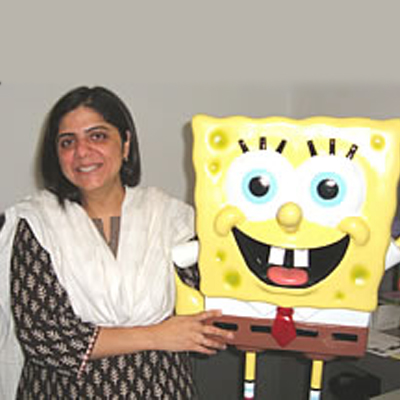
    In fact, we started our marketing activities last year with the ‘Masti Dosti’ contest and the marketing campaign we did around it. It was about consolidating all the pieces and putting it together for the kids, so while we did school contact programmes, we also did cross channel promotions and even painted school buses with Nick themes. In addition, we did a lot of meet and greet sessions for kids, because it involves getting kids to learn about the characters. We are planning to continue to extensively use school contact programmes with our brand ambassadors SpongeBob and Patrick. In fact, we are also looking at bring Dora from Dora The Explora to India this year for our pre-schoolers.

    By taking these characters into malls, multiplexes and getting them to run alongside kids during the Mumbai Marathon we wanted to give them a touch and feel experience as well as sample shows on the channel. That’s how we intend to look at Nick in the way forward.

    You will also see us across many other channels where kids are viewing other shows. We will have syndicated blocks and Nick advertising on Sony, Max, Zee and Zee Cinema. In addition, we are also into regional channels like an ETV Marathi or Zee Bangla. We are reaching out to kids through various means, as you have to touch them at their touch points.

    In the kid’s television space how will Nick differentiate itself from growing competition?
    As a channel we stand apart from the rest and what differentiates us is that everything on our channel today is something that is going to make you laugh. We are a comedy destination and this is the stand we want to take forward.

    The laughter quotient actually operates as a brand filter for all content that goes on our channel. The second aspect of our content is that it has to be appropriate in terms of being absolutely safe and completely non-violent. Therefore it goes through the gatekeeper, which is the mother and we have her trust as well. The content is also universal in terms of gender and is age appropriate catering to kids in the entire 4-14 age group.

    Apart from this, we do have a message for younger kids as well, with the Nick Jr. block which is a mix of education and entertainment. It’s about edutainment where you learn while you play and in which every story has a moral.

    Nick has been a leader in international markets especially US and UK. However, it hasn’t been able to deliver the same results in India despite its launch in 2000. Why so?
    Well it’s all about timing. The focus of the network is now on Nick which was not there earlier. We now have a core structure which is aligned to the business objectives of the channel. In fact we already saw it happening in the last quarter of 2006 and we will see more activity this year.

    We will continue to create a loyal audience and keep delivering on content that has been adopted globally, which has placed us in the first and second position in most countries.

    Why are Indian kids not yet hooked onto Nick, despite its seven year existence in India? Is it that they cannot relate to the content?
    It’s not about kids not liking the content on Nick, but more about kids not sampling the content on the channel because it’s not been out there for them. Once we spread awareness, we will get kids hooked as the content will speak for itself.

    It’s about how much we can do and how fast we can do it.

    Nickelodeon recently unveiled a virtual community playground ‘Nicktropolis’ – What about an interactive website for the channel in India?
    We are also looking at launching a grand website for ourselves as what you see today is a very small portion of it. It will be very comprehensive, telling kids about the initiatives at Nick, it will have all the shows and characters and of course it will host several contests and games. It will give kids a chance to interact and play around with these characters.

    In today’s digital environment, is there effectiveness in reaching out to kids via the mobile phone?
    I think this is a metro specific phenomena, as most kids have access to their parents’ phones, so its still too early to say now, but it will definitely grow. Therefore, all our websites have a mobile SMS function for contests and activities. Once we believe that kids have direct access to this medium we will get onto downloads, ring tones and wall papers. We have already started with digital based products with the SpongeBob PC game.

    Can we expect to see an expansion on the merchandise front?
    We tied up with Bombay Dyeing for bed linen, a SpongeBob PC game has been developed and is available at Planet M, Dora the Explora apparel range has been unveiled and can be found in Landmark and Pyramid and a whole collection of party products in Big Bazaar and Hypercity.

    We have also kicked off what is called a ‘Nicksters Club’ using a database, to send out monthly flyers via snail mail or email. Along with giving kids activities to do, it also announces their birthdays and sends out a little gift to them, which is nice gesture from the channel.

    Apart from International acquisitions, do you think it’s time to strengthen localized programming, a strategy that several other kids’ channels have also adopted?
    The strength of Nick lies in its pedigree and the of kind that has been produced for over 27 years in various countries. That content has proven itself across the world therefore we need to first optimize on the content that we already have. There is a lot of scope to bring that content to India, package it and give it an Indian flavour and then roll it out to kids.

    While we may look at local productions sometime in the future, currently there is a great opportunity to cash in on the pedigree that exists with us. Kids are not really very culture specific, they are so universal in nature that everything works for them, and it’s really how you deliver it.

    Will the channel introduce any new shows?
    Yes, in fact we will launch two acquired shows Tumoya Island and Meteor and The Mighty Monster Trucks on the pre- school block Nick Jr. this month.

    Any plans to bring to Indian initiatives like ‘Kids Lets Just Play’ that encourage children to go outdoors and play or the ‘Kids Choice Awards’?
    It is just a matter of time, as the focus currently is to create a presence that will connect with kid’s, activities such as these will then be a follow up. These are our own International properties and there is no reason why we will not bring them here. But there is still time for that, first we need to establish a larger viewer base.

    What is the time line that has been set to achieve this?
    My clock is already ticking! (She laughs) There is really no time line, it’s about how much we can do and how fast we can do it. Like I said, the intent is there we just have make it happen.

    Could you elaborate on the NDTV Media’s role and some of their activities? Which new advertisers have been roped in and by how much has ad sales increased?
    The last quarter has been good for us even in terms of ad sales, we put the infrastructure in place by outsourcing this to specialists like NDTV Media. They have helped us rope in four main new sponsors for SpongeBob Pakdra Pakdri contest including LIC as the main sponsors, co-presenting sponsors Maggi rice noodles Mania and associate sponsors Perfitti’s Big Babool and Tata Sky. Britannia, Liberty Shoes and Zapak.com are a few more advertisers that joined in, so we look forward to a happy year on that front with a lot more brands joining us.

    As for the ad sales increase, it would be an abnormal percentage to mention, as you could almost say we started from scratch, however we look forward to many more initiatives and NDTV is surely going to have its hands full.

    Currently, what’s the management structure like in terms of a marketing, content and creative team?
    Under my stewardship I have a programming director – Anu Sikka, a marketing director – Shalu Wadhwa, on air promotions – Shuchita and a research director – Shatrupa Thakar and a team of about 18 youngsters.

    What do you perceive as the way forward for a kid’s broadcaster in the highly competitive scenario in India? What is the biggest challenge in catering to kids?
    There is long way to go, we need to get to the top of the chain and that’s the intent right now. The kid’s category has always been dynamic and competition will continue to be there but there is definitely space for more players, giving more choice to the viewer.

    The challenge lies in the fact that kids have a short attention span so if you don’t capture them in the wink of an eye you might as well not at all. At any point of time if the child is surfing channels, you should be able to grab his attention, therefore everything that you put on your grid of the channel makes a huge difference.

  • PC sales in first half of 2006 touch 2.96 million

    PC sales in first half of 2006 touch 2.96 million

    MUMBAI: Mait, the apex body representing India’s IT hardware, training and R&D services sectors, has announced the findings of its review for the first-half of financial year 2006-07.

    The total PC sales between April and September 2006, with desktops computer and notebooks taken together, grossed were 2.96 million units, registering a growth of 19 per cent over the same period, last fiscal.

    The buoyant mood in IT consumption was led by growth in the Nnotebook consumptionsales, that which grew by 180 per cent, while consumption of sales in of desktops grew by eight per cent. PC sales are projected to cross 6.5 million units in fiscal 2006-07, given With the strong sound macroeconomic conditions and buoyant buying sentiment in the market, led by demand from various industry verticals, PC sales are expected to cross 6.5 million units in fiscal 2006-07..

    The second quarter ending September 2006, witnessed PC consumption sales exceededing 1.75 million units, registering a growth rate of 46 per cent sequentially over the previous quarter and 19 per cent year-on-year.?? Desktop sales crossed 1.5 million units with 48 per cent sequential growth while notebooks sales grossed totalled 0.25 million units with 38 per cent sequential growth.

  • India and the Cannes Film Fest

    India and the Cannes Film Fest

    MUMBAI: Eight months down the line, and there’s nostalgia and a longing to be in Cannes again. The Cannes Film Festival had this habit of growing on you. The high cost of living (hotel and apartment rates in Cannes rise four to six times offseason rates during the fest), and the punishing schedules for the press conferences and for the screenings notwithstanding. (Bed time is 2:30 am, awakening time is 7:00 am as the first screening is at 8:30 am and it’s a 20 minute walk from one’s apartment to the Palais des Festivals’ Grand Auditorium).

    2007 is the 60th year of the Cannes Fest, the 60th year of India’s indedpendence and a great deal of gigs are planned highlighting the world’s second or is it most attractive economy.

    Hopefully, the volume of noise will be higher this year because India’s efforts get lost in the cacophony that is the mark of the festival. The American studios, the UK independents, the Chinese film makers, Latin American and European directors attract so much of the limelight, that India’s efforts simple don’t make much of an impact. Of course, the Indian media will send back reports saying how well India is doing at Cannes, when the truth is far from that.

    Hopefully, the Indian pavilion along the Croisette will be better organized this time around. The CII – which puts the Indian participation together – needs to be patted for the initiative, but a little more organization on the ground, will mean so much for the industry. Obviously, it is learning from its experiences and this year it promises that it will be an eyepopping experience for all.

    The Indian independent film makers group – which had got the support of the Reliance group’s Adlabs in the form of a pavilion – apparently is going to be back. In a much bigger way, says film maker Aditya Bhattacharrya. “It’s become a movement globally, Almost any independent Indian outside of India who is making movies has become a part of it,” he says. “It’s good for the movie business.”

    The nostalgia that wells up is that of Tom Hanks charming one and all even as the da Vici Code got blasted as a disaster by all,Jon Voigt mumbling in an undecipherable language,. the gorgeous Maria Belluci, the maverick outlook of Wong kar Wai, the applause that Babel, Volver, Pan’s Labrynth, received, among many other classy movies which were presented at the festival.

    From the Indian perspective there is the victory of animatrix Gitanjali Rao who won a couple of awards being the sole Indian flag bearer. She in her way charmed one and all by her grace and dignity at the film mart. Then there was this group of French girls who came up to this writer pleading to meet with Karan Johar and Shah rukh Khan. The former was there they were told, the latter would not be coming. But did they meet him? Then there was the Omkara book launch, the Jagmohan Mundra’s Provoked, WEG India’s Avinash Jumaani’s lavish party near the old port, Sunil Doshi’s screening of Mixed Doubles in the Palais, the Film Producer Guild party which had more Indians than the overseas trade which is what it was meant to attract.

    In its 60th year, India’s entertainment barons have an opportunity to set things right. And leave no stone unturned while attempting to do it.

    Below is a snapshot of Cannes Film Fest 2006

    Films in competition

    * L’Amico di famiglia – Paolo Sorrentino
    * Babel – Alejandro González Iñárritu
    * Crónica De Una Fuga – Israel Adrián Caetano
    * Il caimano – Nanni Moretti
    * Iklimler – Nuri Bilge Ceylan
    * Fast Food Nation – Richard Linklater
    * Flandres – Bruno Dumont
    * Indigènes – Rachid Bouchareb
    * Juventude Em Marcha (Colossal Youth) – Pedro Costa
    * El Laberinto del Fauno – Guillermo del Toro
    * Laitakaupungin valot – Aki Kaurismäki
    * Marie-Antoinette – Sofia Coppola
    * Quand j’étais chanteur – Xavier Giannoli
    * La raison du plus faible – Lucas Belvaux
    * Red Road – Andrea Arnold
    * Selon Charlie – Nicole Garcia
    * Southland Tales – Richard Kelly
    * Summer Palace – Lou Ye
    * Volver – Pedro Almodóvar
    * The Wind That Shakes the Barley – Ken Loach

    Films out of Competition

    * The Da Vinci Code, by Ron Howard (Opening Film)
    * Transylvania,by Tony Gatlif (Closing Film)
    * United 93, by Paul Greengrass
    * X-Men: The Last Stand, by Brett Ratner
    * Over the Hedge, by Tim Johnson, Karey Kirkpatrick
    * Election 2 (aka Triad Election ), by Johnnie To
    * Clerks II, by Kevin Smith
    * Silk, by Su Chao-pin
    * Shortbus, by John Cameron Mitchell
    * An Inconvenient Truth, by Davis Guggenheim
    * Boffo! Tinseltown’s Bombs and Blockbusters, by Bill Couturie
    * Volevo Solo Vivere, by Mimmo Calopresti
    * Bamako, by Abderrahmane Sissako
    * Ici Najac, a vous la terre, by Jean-Henri Meunier
    * Avida, by Benoit Delepine
    * El-Banate Dol (aka These Girls ), by Tahani Rached
    * Zidane, A 21st Century Portrait, by Philippe Parreno ,Douglas Gordon
    * Nouvelle Chance, by Anne Fontaine
    * The House Is Burning, by Holger Ernst
    * Chlopiec na galopujacym koniu (aka The Boy on the Galloping Horse ), by Adam Guzinski

    Un Certain Regard

    * 977 – Nikolay Khomeriki
    * A Scanner Darkly – Richard Linklater
    * Bihisht Faqat Baroi Murdagon – Djamshed Usmonov
    * Bled Number One – Rabah Ameur-Zaimeche
    * Cum Mi-am Petrecut Sfarsitul Lumii – Catalin Mitulescu
    * El Violin – Francisco Vargas Quevdeo
    * Gwaï wik – Oxide Pang & Danny Pang
    * Hamaca Paraguaya – Paz Encina
    * Il Regista Di Matrimoni – Marco Belloccio
    * La Californie – Jacques Fieschi
    * La Tourneuse de pages – Denis Dercourt
    * Luxury Car – Chao Wang
    * Meurtrieres – Patrick Grandperret
    * Paris, je t’aime – Gurinder Chadha, Bruno Podalydès, Gus van Sant, Ethan Coen, Joel Coen, Walter Salles, Daniela Thomas, Christopher Doyle, Isabel Coixet, Suwa Nobuhiro, Sylvain Chomet, Alfonso Cuarón, Olivier Assayas, Oliver Schmitz, Richard LaGravenese, Vincenzo Natali, Wes Craven, Tom Tykwer, Gérard Depardieu, Frédéric Auburtin, Alexander Payne
    * Salvador – Manuel Huerga
    * Serambi – Garin Nugroho, Tonny Trimarsanto, Viva Westi, Lianto Luseno
    * Suburban Mayhem – Paul Goldman
    * Taxidermia – György Pálfi
    * Ten Canoes – Rolf de Heer
    * The Unforgiven – Jong-bin Yoon
    * 2:37 – Murali K. Thalluri
    * Uro – Stefan Faldbakken
    * You Am I – Kristijonas Vildziunas
    * Z Odzysku – Slawomir Fabicki

    Winners

    * Palme d’Or (Won by Ken Loach for The Wind That Shakes the Barley)
    * Grand Prix (Won by Bruno Dumont for Flandres)
    * Prix de la mise en scène (Won by Alejandro González Iñárritu director of Babel)
    * Prix du Jury (Won by Andrea Arnold for Red Road)
    * Prix du scénario (Won by Pedro Almodovar for Volver)
    * Prix d’interprétation féminine du Festival de Cannes (Won by the cast of Volver including Penelope Cruz)
    * Prix d’interprétation masculine du Festival de Cannes (Won by the cast of Indigènes)
    * Prix un certain regard (Won by Chao Wang for Luxury Car).

  • Last-ditch attempt on for cricket broadcast on DD, AIR

    Last-ditch attempt on for cricket broadcast on DD, AIR

    NEW DELHI: With talks breaking down between Prasar Bharati and Nimbus Sports on sharing the live feed of the India-West Indies and the India- Sri Lanka ODI series to be played over the next four weeks, the national broadcaster today indicated that it will make a last-ditch attempt in the interest of them viewers to call Nimbus back to the negotiating table.

    Information and broadcasting ministry sources told indiantelevision.com that in case no agreement was reached, the government may issue an ordinance to implement the Downlinking/Uplinking Guidelines issued by the ministry in November 2005.

    The guidelines make it compulsory for sports telecast rights holder channels to share the live feed of important sporting events with Doordarshan and AIR by entering into a commercial agreement. The terms provide for revenue sharing of 75:25 in favour of the rights holders.

    Prasar Bharati said that negotiations which had been going on for two days had broken down in view of new conditions laid down by Nimbus Sports, the rights holders for the BCCI organized cricket events in India, which were unacceptable to the national broadcaster.

    Prasar Bharati and Nimbus Sports had entered into an agreement in February 2006 for telecast of the India –England series. Prasar Bharati had preferred another agreement on similar lines. But the national broadcaster said Nimbus put forward new conditions – which deviated from the Uplinking/Downlinking Guidelines and were unacceptable to Prasar Bharati.

    Nimbus suggested a 15 minute deferred telecast on Doordarshan’s terrestrial channel referred ‘AS LIVE’. Thus, people having Cable TV would get live feed on NEO SPORTS and those watching DD will see it 15 minutes later.

    This proposal was straightaway rejected by Prasar Bharati CEO BS Lalli who said “it is unacceptable to divide the citizens into two categories – one getting to eat freshly baked bread and others stale stuff.”

    “Equity and propriety demands that uniform clean feed of international quality is made available to all viewers,” he added.

    Nimbus also suggested exclusion of Doordarshan’s free-to-air DTH – DD Direct Plus from the live feed sharing agreement. But the Guidelines cover DTH medium as well.

    Prasar Bharati has been demanding sharing of feed to enable universal viewing of cricket matches. Doordarshan’s terrestrial channel – DD National – has three times higher viewership than the number one satellite channel in the country, according to the Indian Readership Survey 2006.

    With no breakthrough, 55 million terrestrial TV homes, DTH households and cable homes without Set Top Boxes in CAS implemented areas will not be able to watch the Indian team in action against the Caribbeans and the Lankans.

    Prasar Bharati had asked Nimbus Sports to at least allow broadcast of commentary on All India Radio to enable millions of radio listeners to catch latest score, but Nimbus said: “If there is no agreement on Television, there can be no agreement on radio either.”

  • India-WI series: DD, Nimbus talks fail; govt looks set to ram through ordinance

    India-WI series: DD, Nimbus talks fail; govt looks set to ram through ordinance

    NEW DELHI: The talks between rights holder Nimbus Sports and Prasar Bharati over sharing of telecast signals of the upcoming India-West Indies cricket series have broken down. And with the government having finalized the provisions of an ordinance on the compulsory sharing of “sporting events of national importance”, the chances of it being promulgated are now high, say government officials.

    The formula Nimbus proposed was that DD agree to a 15-minute delayed telecast transmission beyond Neo Sport’s actual live telecast, saying that DD should use the term “As Live” for their transmission.

    Nimbus also did not agree to DD showing the matches on its DTH platform DD Direct Plus.

    The top official of DD reportedly reacted to the proposal terming it as totally unacceptable. “We cannot have someone having freshly baked bread and others stale stuff,” DD mandarins asserted.

    Nimbus has said if at all it shares the feed, the signals have to be encrypted so that it reaches houses only on the terrestrial network and not those that get DD signals through cable TV.

    However, Prasar Bharati officials, citing previous government orders and court rulings that they claim have gone in their favour, are demanding that they should get live feed of the cricket series, without any conditions, and that it also be shared on DD’s DTH platform.

    Following the breakdown of talks DD officials have gone back to taking the cover of the Uplink-Downlink Guidelines that perforce allow DD to get the telecast feed.

    While officials were hesitant to actually state that the ordinance was on its way, they admitted that it “looks like either tonight or tomorrow it is most likely to be issued”, if Nimbus did not agree to go by the guidelines.

    Prasar Bharati officials also said that the provisions of the Sports Broadcasting Signals (Compulsory Sharing with Prasar Bharati) Bill 2007 has been drafted and if the ordinance comes through, it will be a precursor to the Bill. “If the ordinance comes, they will not be able to flout it,” the officials said.

    Meanwhile, Prasar Bharati officials said that there was little time now to generate the advertisements for the first game, “but we have go the ads lined up. It is just the question of ringing the bell”.

    “Hopefully, there will be a three-day gap between the first and second matches and ads generated by Prasar Bharati can be aired,” the officials said, adding that there were government as well as corporate advertisers lined up.

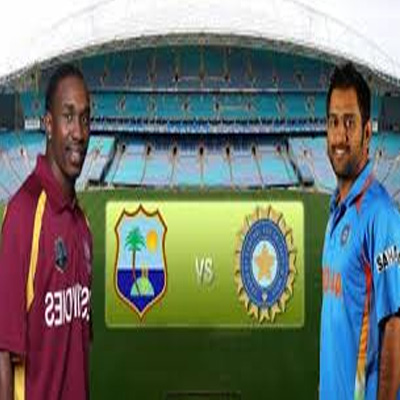
    India and West Indies will play four one-day matches during January 21-31. The series will be followed by Sri Lanka’s tour to India in February.

  • SET Network to telecast all the Matches during ICC Cricket World Cup 2007

    This World Cup, don’t miss any of the matches: catch the Group stage matches on MAX, SAB & PIX. All Super Eight matches, Semis & Finals to be simulcast on MAX and SAB, in English and Hindi respectively.

    MUMBAI: This summer, viewers can get set for a grand cricketing feast from the 13th March to 28th April 07 as the SET Network announces the schedule for the telecast of the biggest event of the cricketing calendar in the last 4 years – The ICC Cricket World Cup 2007. Viewers will get to enjoy all 51 matches, as the SET Network will bring a world class feed of the ICC Cricket World Cup 2007 Live across its 3 channels – MAX, SAB and PIX.


    MAX will continue to blend the excitement of cricket with its inimitable dose of entertainment – “extraaa innings”. All the matches of the ICC Cricket World Cup 2007 will be telecast live. The coverage starts with “extraaa innings” from 5pm onwards on all match days on MAX and SAB.


    Kunal Dasgupta, CEO, SET India Private Limited said, “MAX has always garnered an unprecedented television viewership during Cricket tournaments. For the ICC Cricket World Cup 2007 we have made every effort to provide the viewers with unique access to live world class coverage and also ensuring that not a single match will be missed.”


    Rohit Gupta, Executive Vice President, Ad Sales & Revenue Management, SET India Private Limited said, “ICC Cricket World Cup is the biggest Television Event which happens once every 4 years and reaches out to nearly 80% of the C&S audience. And to make it even bigger this time around we will show almost all the matches on SAB in Hindi as well. Thus the platform for the ICC Cricket World Cup 2007 matches will be far bigger as we cater to a much larger and varied audience. It’s a huge value add for the advertisers since previously we only had 12 matches on SAB and now we will be airing all the matches. We are sure of a far greater reach with a bigger platform for ratings and viewership.”


    The upcoming cricket tournament in 2007 will feature 16 teams allocated into four groups of four. Within each group, the teams will play each other in a round-robin format and the top two teams will advance to the “Super Eight” round. The telecast schedule includes all group stage matches to air on MAX, SAB & PIX while the Super Eight Series matches and will be aired on MAX and simulcast in Hindi on SAB.


    Reliance & Nokia are the co-presenters for the broadcast of ICC Cricket World Cup 2007. Hero Honda, Maruti, ITC Foods, Pepsi, Videocon, LG and Aditya Birla Group are the associate sponsors.


    Schedule for the ICC Cricket World Cup 2007


    Date Max Sab Pix
    13th March West Indies v Pakistan    
    14th March Australia v Scotland Kenya v Canada  
    15th March Sri Lanka v Bermuda Zimbabwe v Ireland  
    16th March England v New Zealand South Africa v The Netherlands  
    17th March India v Bangladesh India v Bangladesh Pakistan v Ireland
    18th March Australia v The Netherlands England v Canada  
    19th March India v Bermuda India v Bermuda West Indies v Zimbabwe
    20th March New Zealand v Kenya South Africa v Scotland  
    21st March Sri Lanka v Bangladesh Zimbabwe v Pakistan  
    22nd March New Zealand v Canada Scotland v The Netherlands  
    23rd March India v Sri Lanka India v Sri Lanka West Indies v Ireland
    24th March Australia v South Africa England v Kenya  
    25th March Bermuda v Bangladesh    

    SECOND STAGE – SUPER EIGHT SERIES. Matches to be simulcast on Max and Sab.

    Date Match
    27th March D2 v A1 (West Indies v Australia)
    28th March A2 v B1 (South Africa v Sri Lanka)
    29th March D2 v C1 (West Indies v New Zealand)
    30th March D1 v C2 (Pakistan v England)
    31st March A1 v B2 (Australia v India)
    1st April D2 v B1 (West Indies v Sri Lanka)
    2nd April B2 v C1 (India v New Zealand)
    3rd April D1 v A2 (Pakistan v South Africa)
    4th April C2 v B1 (England v Sri Lanka)
    7th April B2 v A2 (India v South Africa)
    8th April A1 v C2 (Australia v England)
    9th April D1 v C1 (Pakistan v New Zealand)
    10th April D2 v A2 (West Indies v South Africa)
    11th April C2 v B2 (England v India)
    12th April B1 v C1 (Sri Lanka v New Zealand)
    13th April A1 v D1 (Australia v Pakistan)
    14th April A2 v C1 (South Africa v New Zealand)
    15th April B2 v D1 (India v Pakistan)
    16th April A1 v B1 (Australia v Sri Lanka)
    17th April A2 v C2 (South Africa v England)
    18th April D1 v B1 (Pakistan v Sri Lanka)
    19th April D2 v B2 (West Indies v India)
    20th April A1 v C1 (Australia v New Zealand)
    21st April D2 v C2 (West Indies v England)
    24th April Semi Final 1: 2 v 3
    25th April Semi Final 2: 1 v 4
    28th April Final
  • IPTV subscribers in Asia Pacific expected to reach 27.4 million by 2013: Frost and Sullivan report

    IPTV subscribers in Asia Pacific expected to reach 27.4 million by 2013: Frost and Sullivan report

    MUMBAI: The Frost and Sullivan research service titled Asia Pacific IPTV Market provides an in-depth analysis of IPTV scenario in 12 markets across Asia Pacific.

    The research service identifies the market demand, competitive landscape, key drivers and restraints for the IPTV market.

    Further, the study presents detailed forecast patterns for revenues and ARPU trends for various countries in Asia Pacific. In this research service, Frost and Sullivan’s expert analysts thoroughly examine the markets of Australia, China, Hong Kong, India, Indonesia, Malaysia, New Zealand, the Philippines, Singapore, South Korea, Taiwan, and Thailand.

    Growth of Broadband Spurs IPTV Deployments

    Internet Protocol Television (IPTV) is fast making headway across the entire Asia Pacific region. The deployment of IPTV in the region has been further hastened by the explosion of broadband in various high growth markets across Asia Pacific, even as service providers across the region have invested heavily in the network infrastructure required for offering these services.

    IPTV has generated a new revenue stream, amidst dwindling fixed line revenues, and rapid advancements in compression, transmission, and watermarking technologies have enabled more and more service providers to jump onto the IPTV bandwagon. In line with these trends, the Asia Pacific IPTV market is set for considerable growth over the forecast period, with the number of IPTV subscribers expected to increase from the existing 1,47,000 to 27.4 million by 2013.

    However, poor broadband infrastructure in key growth markets such as China, India, and the Philippines coupled with lack of quality content have restrained the growth of IPTV in the region. Furthermore, access to quality content has been a common challenge for service providers.

    The analyst of this research service said, “While partnerships with content providers and broadcasting companies go a long way in securing access rights, the cable TV providers or the IPTV market leaders already have exclusive access to this content. This arrangement makes it difficult for other service providers to scale their service to meet the users’ requirements.”

    China and India expected to be high growth ,arkets

    With respect to individual regional markets, Hong Kong is already a mature market for IPTV services, and is expected to be heading toward saturation by 2009. China and India are perceived as high growth markets for IPTV by 2009. By 2013, China along with Hong Kong is expected to contribute nearly 60 per cent of the total Asia Pacific IPTV revenues. With 47.8 million subscribers, China has the largest broadband subscriber base in Asia Pacific in 2006, out of which nearly 70 per cent are residential subscribers.

    In Australia, IPTV is entering a crucial stage in its development, moving away from a technology under trial, into full commercial deployment. While it could take another three years for IPTV to enter the growth stage, service providers’ early adoption of IPTV services and aggressive pricing strategies are expected to contribute to the success of the technology in Australia.

    Presently, IPTV is deployed in China, Hong Kong, Malaysia, Singapore, South Korea, Taiwan, and Thailand. The service is expected to be introduced in India and the Philippines in 2007, and despite the lack of bandwidth in most markets, the demand for interactive entertainment has lured service providers to offer IPTV-based content in the form of video-on-demand (VoD) and channel-based offerings.

    Analyst further added, “As the service providers take the first few tentative steps, response from IPTV users has been positive in most markets. Service providers need to look beyond immediate revenue opportunities to understand the long-term importance of IPTV as a carrier distribution platform, over which many consumer communication and entertainment services can be offered simultaneously.”