Tag: India

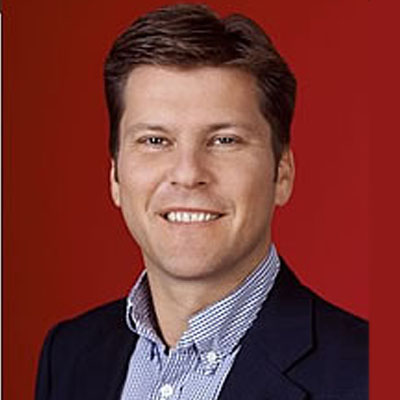
  • ‘Though reality shows are expensive, the yields are also high’ : Deepak Dhar – Endemol India country head

    ‘Though reality shows are expensive, the yields are also high’ : Deepak Dhar – Endemol India country head

     Riding the reality format boom, Endemol is stepping up efforts to grab a slice of the fiction content market in India. The company is also planning to foray into regional language content and is in talks with broadcasters like Sun TV, Raj TV and Maa TV.


    In an interview with Indiantelevision’s Nasrin Sultana, Endemol India country head Deepak Dhar also talks about the company’s venture into gaming and Call TV format shows.


    Excerpts:

    Most of the shows that Endemol introduces in India are based on international format. What kind of research and creative inputs do you work on to add local flavour to it?
    Whenever we get an international show format to India, we always try to adapt it to the local market. There is certain amount of local creativity that is allowed on the format shows. We try to draw and pull in expertise from other countries and learn from how they are doing the show there.


    We follow certain standards and practices while adapting an international format. Our in-house Indian teams make sure that the format is tailored to suit Indian sensibilities so that audiences can watch the content with their families around.


    For example our international property Fear Factor, which has done so well in other countries, was spiced up in India according to the need. Unlike its international version, Khatron Ke Khiladi had 13 female celebrity contestants.


    With the 13 female contestants in such difficult situations, we delivered nail biting thrill and competition. This was the first time that these female models were making public appearance without make-up. Besides, the Akshay Kumar-factor gave us an upper edge this time in the show.

    Does the India division of Endemol own any original format? Are you selling your format show to other foreign broadcasters?
    Endemol India owns the rights for the musical show Mission Ustad on 9X. The show was produced in association with United Nations. The show featured AR Rehman along with various singers who performed to achieve eight millenium development goals set by the UN. In the show, the contestants also composed and performed original tracks.


    We are in talks with an UK broadcaster to sell the rights of the show. We hope to seal the deal in two to three months.

    What about your most popular show The Great Indian Laughter Challenge?
    We do not hold any rights of The Great Indian Laughter Challenge. Star India holds rights for the format and the show. Endemol India only produces it.

    Besides Fear Factor and Big Boss, what are the other format shows that Endemol India is launching in the local market?
    We are in talks with a couple of Indian broadcasters to launch some of the format shows that we had brought rights to in Mipcom last year. Right now we are looking to launch format shows like Divided, Set For Life. Wipe Out, Divided and 1 vs 100.

    At the last Mipcom, Endemol had bought rights of shows like Kids are Alright and 11 Cameras for the Indian market. What is the reason that you have not yet launched them?
    These shows are very advanced in its nature to fit with the Indian viewers. They would not have accepted it then. We are launching them in India soon.

    Although Indian broadcasters and producers have tasted success with reality, it is still fictions that work well with all kinds of viewers in India

    What went wrong in your not-so-good experience with fictions like Jamegi Jodi for 9X and Full Masti 88.2 for Sab TV?
    Although Indian broadcasters and producers have tasted success with reality, it is still fictions that work well with all kinds of viewers in India. Our weekly sitcoms have drawn good response. We are building up on that front.

    How aggressive are you on the fiction front and will it be in the same comedy space?
    We have a full fledged fiction division in Endemol India. This time we are trying to get away from the comedy genre. Currently we are working on two fiction-based shows in different genres. We are launching a fiction show, Miley Jab Hum Tum, on Star One.

    What steps are you taking to tap the rapidly growing regional space?
    We will be foraying into regional language markets very soon. We have already firmed up our team. Starting with the South, we will get into producing shows for Marathi and Bengali channels. In the South, we are talking to Sun TV, Raj TV and Maa TV.

    With reality shows being so expensive, do you think regional channels can afford them?
    Why Not? Though reality shows are expensive, the yields are also high. Regional players are ready to fork out money for such shows and reap the returns.

    What are the other areas that you are stepping into?
    Endemol is expanding its business in India. Besides producing shows, we are getting into other areas like gaming and call TV format shows.

    What are the shows that you are looking at to develop into the game software?
    We will develop gaming software on the format shows. We are planning a strategic alliance with a gaming company. We will hold the gaming rights for all these shows.


    Some of the format shows that we are looking to develop into gaming software include Deal or No Deal, Set for Life and 1 vs 100, among others.


    We are also planning to release DVDs with respective broadcasters on various shows.

    Could you elaborate on Call TV shows?
    Call TV is a show wherein viewers can interact with the TV programme host through a mobile. The theme for Call TV shows may vary from astrology to cooking recipe. These shows will be mostly in the non-prime time band.


    As of now, Call TV initiative is at the initial stage of formation. We will be introducing th Call TV shows by the year-end.

    For Call TV shows, are you talking to any Hindi news channels?
    We are in talks with some of the Hindi news channels.
  • ‘Our business model in India will be driven by subscription revenues’ : Bruce Tuchman – MGM Networks executive VP

    ‘Our business model in India will be driven by subscription revenues’ : Bruce Tuchman – MGM Networks executive VP

    The English movie channel genre will have a new aggressive player in MGM. After making the channel available on Dish TV, the largest direct-to-home operator in India, MGM Studios has inked a five-year distribution deal with Star Den. The aim is to make the channel widely available across cable TV networks, DTH and IPTV platforms.


    MGM is looking at subscription revenues and will be advertising-free – at least for the time being. The channel is priced at Rs 6 for the cable TV market and Rs 3 for DTH.


    In an interview with Indiantelevision.com’s Ashwin Pinto, MGM Networks executive VP Bruce Tuchman talks about the expansion plans for the channel in India and other markets.


    Excerpts:


    Why did it take MGM so long to enter the Indian market?
    We have participated in India before through our licensing deals with Zee and Sony. We learnt a lot from that. India is a growing market and offers huge opportunities. We decided to come with a 100 per cent ownership so that we could control our destiny.

    Didn’t you realise the opportunity a bit too late as channels have to now contend with carriage fees not just on cable but on DTH as well?
    Some channels started operating in this market more than 10 years back. That may have been good. But it is also a great time now with digitalisation growing. India is also on a high-growth story.

    Why did MGM choose Star Den for distribution?
    We did our first deal with Dish TV independently. That will stay as it is. But getting meaningful and broader penetration would have been a real challenge if we were to do it ourselves. We decided on Star Den as they have a strong bouquet of channels. We have good Hollywood content and have a library of 4100 films. Star Den will represent us on cable TV, DTH and IPTV platforms.

    Will carriage fee not hurt the business in a genre that is not growing too fast?
    We do not plan to pay carriage. We have a brand and a track record that stands out. This puts us in a good position to occupy a lot of capacity without paying carriage.

    Would you look at presence on analogue cable and still not pay carriage?
    We are looking for as much distribution as possible. The subscription base is large and it will provide an attractive revenue base. Our business model here will be driven by subscription revenues.

    Our TG would be people who are interested in Hollywood movies and who have a connection with the MGM brand. We are not a channel that showcases blockbusters

    Will MGM carry advertising?
    Not for now. Globally we have advertising on some feeds. However our dominant source of revenue is subscription. Models will evolve and adapt though. We don’t know what we will do here in the future.

    In a genre that already has established players like HBO and Star Movies, what value does MGM bring to the table?
    We are the MGM brand. We have a deep connection with the glamour and aura of Hollywood. We do things like having celebrity testimonials, going behind the scenes of films, etc.


    Besides, digitalisation offers room for many players. In India there are tens of millions of people who want to watch Hollywood films. In the US there are scores of film channels and not just five or six. Consumers want this kind of choice. It is key to have a brand that people stick to and trust.

    Could you offer an overview of the programming strategy?
    We will handpick titles from our huge library. We do a lot of stunting. We do thematic programming nights. In the evenings, we focus on genres like comedy, action. We also focus on key stars and we try to be flexible and creative with what we do.


    Our channel caters to people who want to expose themselves to sophisticated and eclectic film choices. We are not looking to just get attention through new releases. While there is a value to that, people often watch that film and then forget about it. Our library is classic and modern. We have films from different eras.

    Will your core target audience be more elderly skewed?
    Our TG would be people who are interested in Hollywood movies and who have a connection with the MGM brand that is glamorous and well known. We are not a channel that showcases blockbusters that one soon forgets about. Our aim is to show films that define an era. Films that will be shown over the coming year include Woody Allen’s classic Manhattan, Network, A Passage to India, Midnight Cowboy, The Pink Panther Strikes Again and Mystic Pizza.

    Does MGM acquire movies from other studios to show on the channel?
    The MGM library is so large that it can be programmed forever in a manner of speaking. We are doing The Hobbit. We also have Bond films and the Pink Panther franchise. New movies are being made here. We also have the Rocky films.

    Would you look at a dubbed feed to expand penetration in India?
    We are in English at the moment. If we expand deeply and there is consumer demand for it, I would not rule it out.

    What kind of marketing activities are being planned?
    We have just entered into a distribution arrangement with Star Den. We have to sit down and figure out how we are to promote the channel. It could be through television, print etc. We will also do events.

    How has MGM gone about strengthening its worldwide TV distribution business?
    We are growing well. We keep adding new countries. Three weeks back, we announced that we had a great summer across Central and Eastern Europe. Just to give you a frame of reference, in 2002 we had no branded channel presence in Europe. Now we are in over 30 European countries. In June we launched in Italy on Sky Italia.
     

    In Asia we did not have a presence five years back. Now we are in most countries in Asia. We have three channels in South Korea. We are also present in Singapore, Malaysia, Vietnam and Indonesia, among other countries. Our aim is to be as widespread as possible. We will keep an aggressive pace of development.

    Outside the US, which are your key markets?
    We have penetrated Western Europe nicely. Italy, Spain, Germany are key markets.
    In the US, MGM has tied up with Comcast for an action-oriented VoD offering. How did this deal come about?
    There is big demand in the US for on demand content. Comcast is a leader in this space. It was a god idea and launched with fanfare. In Germany, the MGM channel is being distributed on the mobile. We want to get our content delivered across all forms of distribution.
    How has MGM stayed as an independent firm even after Sony took a 20 per cent stake in the company?
    A couple of years back, people were asking whether MGM was independent. We have clarified that MGM is a vibrant and independent entity. We were also innovative in our approach. We came up with an innovative partnership with Tom Cruise. We brought him in as a partner owner of United Artists. We are co-producing The Hobbit.
     

    We are also embracing new media. We are featured on itunes. We do not just have a legacy but are also vibrant and look to the future.


  • ‘It is a good time to launch specialised channels as they help break through the clutter’ : Rahul Johri – Discovery India senior VP

    ‘It is a good time to launch specialised channels as they help break through the clutter’ : Rahul Johri – Discovery India senior VP

     Discovery is in restructuring mode. Earlier this year, it announced a reshuffle at the top to handle India operations. And the India office, which was reporting directly in to the Discovery headquarters at Silver Spring, Washington DC, will now come under Singapore as part of the integration strategy.


    On the content front, Animal Planet introduced a Hindi feed in April to increase penetration. Discovery Travel and Living is eyeing to put its personality-driven shows at the 10 pm slot.


    The company is also adding new channels like Discovery HD to grow the market in India.


    Indiantelevision.com’s Ashwin Pinto caught up with Discovery India senior VP, GM Rahul Johri to find out more about the company’s aggressive plans in India.


    Excerpts:

    What is the main reason behind the restructuring that took place in Discovery recently?
    Discovery went into local markets in Europe a few years back, and this yielded very good results. Applying the same model, the Asia Pacific region has been broken up into six – the Saarc countries which include India, China, Japan, North Asia, Australia/New Zealand and South East Asia (Thailand, Malaysia, Indonesia, Singapore).


    In India, people have moved up a level. I have management responsibility for India while Rajiv Bakshi looks after marketing. Then there is a regional managing director who sits in Singapore.


    We now work and coordinate with Singapore. The response time is much quicker.


    Earlier when we reported to Washington, the time zones were different. Also, what is a priority for us may not be as important for them. Now operations are easier in terms of taking decisions and getting clearances.

    How does the new operational structure help Discovery India?
    Discovery Asia has a strong infrastructure. This will now be more accessible to us. We can approach opportunities on an Asia wide basis as opposed to simply focussing on one country. For instance if a local production is being done out of India or Singapore, it can then be expanded to include other Asian countries. Solutions can be provided to enable this. On the client side also, we can provide solutions more easily so that they get visibility across the region and not just in one country.

    What are the key focus areas for India?
    Collaborating with the other regions in Asia to drive growth will be important. Sharing of content and resources will be key. We will also strengthen the branding of our channels by making the content more definitive. We will keep refreshing content across all the channels so that audiences get what they want to watch.

    Are you looking at growth through launch of more channels?
    Yes! As the Indian television market matures, it is a good time for specialised channels to launch as they help break through the clutter.


    We have 14 channels and we will bring what we feel will click the best. Discovery HD is definitely a channel we are keen on bringing to India. Discovery Science is another channel that we feel would work well here. Of course, it is also important for cable to go digital. Otherwise getting carried gets difficult.

    Discovery has launched Planet Green, a new channel for environment, in the US. Do Are there plans to launch in India?
    The channel has just launched in the US. A band of the channel will launch in Southeast Asia. We will see how viewers respond to it. We will test the programming in India and then decide on whether or not to launch the channel here.

    Starting Hindi feed worked for our two channels as there is a lot of commentary. This won’t work in Discovery Travel and Living

    In terms of revenue, how important is India within Asia?
    India is one of the top markets along with Japan, Australia and New Zealand. Subscription plays a key role everywhere. In India there has been strong growth in ad sales.

    How is Animal Planet faring after going Hindi?
    The most important thing was the Hindi feed being introduced in April. Now we are able to compete better with National Geographic. Going Hindi was, thus, a progressive step. We play to the core strength of the channel which is focussing on the animal kingdom. We also have hosted shows.

    Will you be doing a Hindi feed for Discovery Travel and Living?
    No! It worked for our other two channels as there is a lot of commentary. In Discovery Travel and Living, though, it will not be natural to see, for instance, two Chinese people speaking in Hindi.

    How has Discovery Travel and Living evolved as a brand since launching four years back?
    DTL is perceived as being a distinctive lifestyle channel for upmarket viewers. People are now familiar with our anchors like Nigella Lawson. They also identify with individual shows like our biker content. We keep refreshing our programming. We bring new shows regularly.

    What have been the programming highlights for the channel this year?
    We did a show with Manish Arora. We are doing two more India productions which will premiere later this year. Our big show now is Cheese Slices. Food is a popular genre for us. So we will kick off a show, Indian Food Made Easy, which will be hosted by Anjum Anand.


    We will be launching a multimedia campaign to push our 10 pm slot. This is because our viewers tune in a little later. Personality-based shows will air at this time, seven days a week. The message of the campaign is that at this time you will see hosts like Nigella Lawson, Ian Wright and Anthony Bourdain; the campaign theme will focus on the most recognisable faces on the channel. This will be the largest campaign ever done for the channel.

    Is the aim to bring in appointment viewing?
    This is one of the goals. The campaign will showcase our biggest properties. We are hoping that it will help expand the reach of the channel and drive in new viewership. It is important that our campaign not focus on just one show. By pushing a band, the recall will be high among viewers.

    In what way is the programming strategy being fine tuned for local audiences?
    When we started, we had very little India content. We now produce shows from India. Every global show that is being produced, has a segment on India. So if Anthony Bourdain does a new season, he will visit India as well. This is how the relevance of India is growing. Ian Wright used to just host Globetrekker which is about backpack travel. Most of our viewers do not do that. So we tweaked it and now Wright does VIP Weekends. He visits the best hotels globally.

    Has the thematic weekend concept worked?
    It has done well and the thematic weekends are continuing. But over time our aim is to build a theme across a day – rather than having one theme continuing everyday. Our aim is to strengthen the genres. For instance if you take shows like Anthony Bourdain and Cheese Slices, it is not just about food. It is also about travel, visiting new places. Different genres get intertwined.

    What do you look for in a local show?
    We always look out for good local concepts. Our aim is to have a definitive show in a certain genre. Once we have decided on this, then we go with the best talent. So we roped in Manish Arora to do a fashion show. He is suited for television as he is so colourful.


    Our shows have to have an individual and distinctive personality. They need to be of the same class and quality as the other shows that we air. There can’t be any compromise as the same shows travel abroad and showcase India to the world.

    What are the other time bands that DTL is developing outside the 10 pm slot?
    We are also looking at the midnight to 1 am time slot. People watch us at that hour. I think that some channels are missing out on viewership by not concentrating on this audience. They simply run repeats at this hour. Many people work till late and then watch television.
    Is it difficult to get clients to commit serious monies for Discovery Travel and Living with the economy in a downturn?
    Our market is on an upswing. Our TG has not been impacted by the downturn. We have over 600 brands with us including L’Oreal and the car companies. Volkswagen is starting a marketing campaign and they are using our channel as a vehicle. Packaged good companies also advertise with us. Companies that want to target the premium audience cut out wastage completely when they come to us.

    What are the tentpole properties coming up for Discovery?
    Ultimate Olympics is a show that we will air. It looks at the work that has gone behind putting the Olympic Games together. The show gets over a day before the Games start. Another show that will air is Download. This focusses on stories from the internet like the competition between EBay and Amazon.


    We will also celebrate Nasa’s 50th anniversary with a show When We Left Earth. Nasa has given us footage of the Apollo Missions. This is the first time that Nasa has done this.

    What is Discovery’s new media strategy?
    We already have our website. For the mobile, 3G has to happen; the phones have to support rich media content. Right now one is still with ring tones and music tones.
  • ‘We have seen double digit revenue growth’ : Rajesh Sheshadri – NGC India senior VP content and communication

    ‘We have seen double digit revenue growth’ : Rajesh Sheshadri – NGC India senior VP content and communication

    With DTH growing in the country and cable addressability expected to spread more channels, special interest broadcasters are looking to increase their offerings. One of these is the National Geographic Channel (NGC). The broadcaster is looking to bring four more channels in the near future.

    Indiantelevision.com’s Ashwin Pinto caught up with NGC India senior VP content and communication Rajesh Sheshadri to find out about the network’s growth plans in India.

    Excerpts:

    NGC is looking to launch more channels in India. Could you shed light on this?
    The four new Nat Geo channels that we plan to launch in India have already proven to be popular in countries where they are currently available. Nat Geo Music, Nat Geo Wild, Nat Geo Adventure and Nat Geo HD allow us to expand our commitment to quality programming and to create specialist channels in genres which are at the very heart of the National Geographic brand.

    The core channel will continue to expand its successful contemporary science, technology and exploration strands and will be clearly differentiated from the specialist Nat Geo Channels.

    Our aim is to offer compelling programming across genres and we feel that this is the right time to launch new channels that will cater to the growing public appetite for high quality television viewing.

    When is the launch happening?
    We have applied to the government for the licenses. We are looking to launch these channels within a month after we get the approval. We would look to launch all four of them together as the impact would be much more.

    Is there a gap that these channels are looking to fill in an environment where audience expectations are growing exponentially?
    Absolutely! All the channels are unique in their category. There are no other channels that compete with them. We need to create channels to cater to the maturing taste of our audience.

    Will local content play a key role in these new channels like it does for NGC and THC?
    Yes! 15 per cent of content on our existing channels is local. We want to hit this mark as soon as possible for our new channels as well. It could happen within the first quarter of launch. Local content will allow us to connect in a very effective manner with our TG.

    Distribution is going to be a huge problem for the new channels with cable networks demanding high carriage fee. How do you plan to tackle this?
    We will have to plan our distribution strategy carefully and see that we are present with those operators and platforms who best serve our TG. There is no need for us to be present en masse.

    What is the core TG for these channels?
    The programming on these new channels is targetted at audiences eager to stretch the boundaries of their knowledge about the world they live in. In some cases, the channels will target the same demographic but clearly a different psychographic.

    Nat Geo Wild will appeal to the entire family: men, women, children, from 6-60 years old.

    Owing to the technology involved, Nat Geo HD will attract premium, affluent households in the bigger cities. With the enhanced picture frame composition, sharper picture quality and surround sound system, National Geographic Channel HD will deliver more intimate, closer to life and theatre-like experiences. The channel will feature explorers and cutting-edge filmmakers. It will showcase documentary programmes, stories and credibility that viewers expect from us.

    Nat Geo Adventure, whose DNA is around travel, adventure and culture, will be targeted towards the 18+ age group while Nat Geo Music is targetted at an older audience above 25 years.

    As far as your two existing channels go, what kind of revenue and viewership growth are they seeing?
    Both the channels have grown significantly in terms of viewership and revenues over the last few years. They have registered double digit growth in revenue over the last year. We are also seeing an increase in viewership and in time spent on the two channels.

    What prompted the rebranding of The History Channel?
    In its two years of existence in India, The History Channel had established itself as a credible authority and owner of the theme of history. The strategic shift allowed us to move the channel to the next phase of evolution and broad base its appeal.

    The History Channel’s fresh and stylishly packaged look and feel has been created and designed internally to reflect a much more distinctive on-air presence. The primary objective behind this makeover was to make history entertaining for our audiences. The look is more edgy and young.

    What are the major tentpole properties coming up for it?
    History Rocks, one of our biggest properties this year, is currently on air and will go on till September. A 17-part series, it brings together concerts, documentaries and interviews featuring rock icons of yester years and offers a glimpse into the life of these rock legends.

    We organised a series of rock concerts across Delhi, Mumbai and Bangalore featuring some of the best Indian rock bands including Parikrama (they performed at the first History Rocks concert held on 23 May in New Delhi), Galeej Gurus (performed on May 30 in Bangalore) and The Works (performed on 5 June in Mumbai)

    Going forward, you will see more big-ticket activities. We will air Warriors, a new series from 4 July every Friday night at 9 PM, which will comprise spectacles based on the lives of eight men who shaped the world around them, either by sheer force of will, genius, courage or even greed.

    Another series that is in the pipeline is an eight-week show called Human Weapon, starting 21 August every Thursday night at 10 pm. This new series features two martial arts adventurers, who embark on a journey to reveal the history behind the different forms of combat.

    Chinese Whispers is a series wherein each episode will challenge an accepted fact to uncover the truth behind history’s most intriguing topics – using the latest DNA and underground technology and new archaeological evidence. This new series will be aired every Wednesday night at 10 pm starting 3 September.

    Is THC also creating TG specific slots like for women and kids?
    Yes, we have specific slots for women and children as well. We have a band in the afternoon that caters to women. For the children, we have a weekly slot on Sundays called THC Classroom. THC classroom showcases curriculum relevant content for school children. We believe that this band will help make history more entertaining and engaging to children.

    Fifteen per cent of content on our existing channels is local. We want to hit this mark as soon as possible for our new channels as welle
    In what manner has THC grown its community outreach programmes like Save Your History over the past few months? How important is it from a brand building perspective?
    Save Your History is a concept that we believe in since it brings history closer to an individual. However, last year there was an internal realisation that we had to make this concept into a much bigger initiative than initially planned.

    Such platforms are important for us as The History Channel is committed to making history entertaining. Initiatives such as these allow people to share and collaborate on entertaining facets of the genre. Currently, we are revising our plans for this initiative. We’ll be able to share these plans once we firm up the details.

    In terms of local shows, are you talking with local production houses to explore ideas?
    Yes we are. We are always looking at ways to localise the channel. We believe that local content always has that additional traction with viewers.

    The Mission properties have been key for NGC. What have the learnings been from doing this over the years?
    Over the years, Mission properties have become synonymous with NGC, which I think is a great achievement given the clutter in the market and the absence of clearly differentiated content. From our perspective, the largeness and the uniqueness that is associated with it puts a lot of responsibility on us too.

    We don’t want to commoditise that positioning and hence we are very careful when it comes to using the ‘Mission’ name for any property. We, therefore, need to ensure that the topic being covered is also unique and a first.

    Before deciding on a subject, what are the key elements that you look for? How much research goes into it?
    A Mission property by definition is a ‘by India, for India‘ property. Through the Mission property, we look forward to reach out to a larger segment of people. The idea, therefore, should have a broad based appeal, should be locally relevant and above all should be in sync with our philosophy of making viewers ‘Think again‘. The idea here is to take viewers to places where no one else can. It has to, therefore, be unique and an unparalleled 360-degree experience.

    What is next in this regard?
    There are always a lot of ideas but a Mission property is a big initiative. It requires a lot of planning and background work. We are planning to launch a Mission this year and will share the details soon.

    Are there any changes going to be made in terms of how NGC is programmed like time slots, genres?
    Right now, we are focussed on building specific nights. We have our existing slot of Megastructures on Thursdays at 8 pm, which is performing extremely well. We plan to build that slot. Later this month, we will be premiering a new series Super Factories on that slot. Super Factories takes viewers inside the shop floor of iconic brands like BMW, Corvette, etc.

    We also have Brand New Sunday, which showcases our newest and best programmes. We are looking at renewed product and communication to strengthen these slots.

    Over the next three months, we have an exciting and interesting line up. We have Long Way Down featuring Hollywood superstar Evan Mcgregor, World’s Deadliest Animals and Food Lover’s Guide to the Planet. All these are extremely informative and entertaining shows and we believe that these properties will get the requisite traction from the viewers.

    On the advertising front, how are the two channels faring?
    We had an inventory growth of 15 per cent on NGC and 30 per cent on THC. We also had a 10 per cent increase in the number of active clients on the channels. These I think are great indicators of how the revenue is shaping up.

    What are the kinds of solutions that long term clients can avail of that go beyond just the 30-second spot?
    At Nat Geo, we take pride in seeing each brand as a unique entity and offering innovative solutions that best suit the advertiser’s needs. Our association with brands like Godfrey Phillips Bravery, Lufthansa, Titan and Makemytrip.com are examples of our ability to go beyond the brief and delivering out of the box solution for our partners.

    With our latest initiatives ‘Lufthansa Nat Geo Genius‘ and ‘Trapped‘, we went way beyond the conventional 30-second spot and incorporated our sponsors’ messaging in a simple yet effective manner without it looking like a forced fit for viewers.

    Godfrey Phillips Bravery has been honouring the brave since 1990 and we found there was a natural fit between their mission and the essence of our series ‘Trapped‘, which was to showcase and salute the strength of human endurance, will and determination. Similarly, our internationally acclaimed game show’s Indian edition, Nat Geo Genius was a perfect platform for Lufthansa to reach out to its target audience.

    As part of the innovative tie-up with Titan, we created an exclusive commercial for their new Aviator range using the exclusive footage on fighter planes from our ‘Top Gun’ series. For makemytrip.com, we created a special adventure zone on their website by sharing assets such as Nat Geo adventure wallpapers and screensavers to boost their adventure travel segment.

    These associations demonstrate our ability to provide integrated marketing solutions to our partners and going beyond the conventional commercial time.

    Abroad, broadcasters have started to create separate channels for the mobile and Internet. Content is specifically tailored for them. How far away are NGC and THC from doing this?
    For NGC, we have mobile-ready content. We have a complete range of short form virals (30-45 seconds), mobisodes (3-4 minutes), ringtones, wallpapers, text based content, etc. We are in talks with both mobile service providers and handset providers to launch NGC on the mobile.

    We are already present on the Plus application on 57827. We run regular SMS contests on the channels to engage with our viewers. In addition to the mobile space, we are also making significant investments in the online space. We are redesigning the NGC website and the new version should be launched in the next couple of weeks. The NGC website, going forward, will function as a full fledged destination in itself.

    The English entertainment space will see new entrants over the next two years. Do you see this growing viewership for the genre or will it simply increase fragmentation?
    Today, every brand must make that additional effort to connect with the consumer whose needs and wants are changing by the day. As long as a channel owns a clearly defined space in the mind of the consumer, fragmentation wouldn’t really matter.

    National Geographic Channel and The History Channel have a clear and distinct positioning in the mind of the viewer. All initiatives by the channels are to reinforce this distinct positioning, and as long as we keep doing that, the launch of other channels will not affect us.

  • ‘We are talking with global companies to set up a studio to develop content’ : Rohit Sharma- Zapak Digital Entertainment COO

    ‘We are talking with global companies to set up a studio to develop content’ : Rohit Sharma- Zapak Digital Entertainment COO

    With a war chest of $100 million (Rs 4 billion), Reliance Entertainment’s online gaming portal Zapak is looking to invest in infrastructure and expand even beyond the frontiers of India. The portal is going to launch in China, Pakistan and the UAE.


    In an interview with Indiantelevision.com’s Ashwin Pinto, Zapak Digital Entertainment COO Rohit Sharma talks about the global plans of the gaming portal and the steps that are being taken to reach there.


    Excerpts:

    When George Soros picked up a 3 per cent stake in Reliance Entertainment for $100 million, how big was Zapak as a valuation attraction?
    It was definitely a point of attraction as it is one of our oldest businesses. Since Zapak is one of the most successful internet companies in India, it gives value to investors. However, I cannot talk about valuations. The investment has helped us understand what our value is and how we can scale it up.

    How much is Zapak going to invest and what is the breakeven period?
    Since gaming is still at a nascent stage in this country, the breakeven will not happen before four to five years. We are investing $100 million over the next five years. In terms of operational expenditure, we have to invest in manpower, bandwidth and marketing activities. In terms of capital expenditure, we are investing in infrastructure as well as technology and content. Our costs will go up each year as the business grows.

    What are the lines of synergy Zapak is drawing with the other verticals of Reliance Entertainment?
    We have the movie business with Adlabs. A lot of content alliancing will happen here as we acquire content, produce and co-produce it. Zapak will also develop content based on these movies.


    There are strong synergies between Big Flicks and Zapak as both are located in the internet space. Bigadda is our social networking site and the audience is similar. So we do a lot of cross-promotional activities. And with our FM radio business, we use it as an advertising medium.


    Thus, if we take the gaming piece in the entertainment space, there is a lot of content syndication, retail syndication and advertising opportunities that are possible.

    What are the trends being seen in online gaming in India?
    Zapak is setting the trends here as there is no other online gaming player in India per se. We have a 70-75 per cent market share in terms of revenues and the number of users which is four million right now. We are also attracting good advertising and so we are witnessing an upwards trend.


    The learning for us is that the user wants compelling content. Therefore, publishers/developers like us need to invest in the right kind of content. The content, whether global or local, has to be high-end in terms of graphics, artwork, game play and design.

    The kids genre has done well for us. Zapak Girls also does well as do our action oriented games. But cricket is our biggest property

    Who comprises your TG?
    Surprisingly consumers have an equal ratio between the top cities and B, C towns and cities. Males in the age group 12-25 are the core TG. Having said that, however, youngsters below 12 are increasingly playing on Zapak. They are becoming stickier towards gaming.

    How does the market size for online games compare with mobile gaming?
    If you look at developed gaming markets like China, Korea and Vietnam, online gaming has surpassed mobile gaming. In countries that have a strong PC and online penetration, online gaming offers a better user experience. The best part about online gaming is that you can form communities that you cannot have on the mobile.

    Could you shed light on the strategy being followed to increase the product portfolio?
    When we started, we focused on casual games, which is the low hanging fruit. There is no point getting hardcore games to non-gamers. We brought in world-class casual games into the country. We work with over 50 studios globally.


    Having built a critical mass of gamers, we want to expose them to better content. We are going into the next phase which is to bring in casual hardcore games and hardcore games.


    Hardcore games are played in cafes and most cafes do not have the right PC specifications and infrastructure for this. This is why we started our gameplexes across the country. We will have almost 10,000 seats by the end of this year. We started our gameplex business in the big cities and towns. Now we have expanded to smaller places like Jaipur where we are also getting good traction.

    What have been your top five properties?
    The kids genre has done well for us. Zapak Girls also does well as do our action-oriented games. But cricket is our biggest property. You need to have a hybrid model. Generally, in business it is a 80:20 ratio where 20 per cent of content gives you 80 per cent of traction.


    However, in casual online gaming, the long tail is also important. A lot of people who come back, also want to check out the catalogue in addition to consuming the same content twice or thrice. Therefore, you need to build on your catalogue.

    Zapak has done activities to get women and children involved in gaming. What prompted this?
    The 12-25 male TG is still being built up. It has not been fully tapped. However, we have gone into early segmentation. We want every gamer in this country to relate with Zapak. We want to have a product and a service for everyone including a four-year-old kid. Therefore, we have been broad basing our offerings.

    Does Zapak also focus on game development?
    We have a small in-house team but we don’t do actual game development. We outsource it. We work exclusively with studios both in India and abroad. We drive the game ideation, concept and documentation. Then they do the rest. We work with our sister company Jump Games. We work with a Delhi-based company Saffronage. However, by and large, we work with studios outside India.


    There have been technological advances from a product point of view. Casual games are now incorporating social networking phenomena. Community features which are possible due to technology are growing in importance. The more features you have and the better customer relationship management setup you have, the better is the traction you will get.

    Is Zapak also looking at acquisitions in the gaming space?
    Yes! We will be aggressive in this regard both in India and abroad. Our targets would include game developers. In India, nobody has the competence to develop a game from scratch to finish. Besides acquiring content, we are also talking with global companies to set up a studio which could serve as a factory to develop content.

    What are the different revenue sources for Zapak and how important is advergaming in the mix?
    Advertising is our main revenue stream at the moment. Casual games are a portal business. We also get some revenue from our cafes and our cards business as well as events that we do. Subscription revenue will come in when we get into offering hardcore games. Users either purchase the product or subscribe on a monthly or a weekly basis. Our first product here will be three casual MMOG titles which will be launched in May and June.


    Could you give me examples where Zapak has done innovations for clients?
    With McDonalds, we did a deal where you buy a “Happy Meal” and get a product from Zapak. With Dominos, we did an innovation around a gaming pizza which was accompanied with goodies. We also tied up with MTV for games around their show Roadies.


    There is talk about how gaming is evolving into a social activity with massively multiplayer online games (MMOG). What is your view on this?
    If you look at countries like China and Korea, it is the stickiest social networking opportunity. Other entertainment options do not engage on a social level. In a virtual world, though, you live a virtual life. Already in our cafes, you see thousands of kids who live in a virtual environment.


    The BCCI is kicking off the IPL in April. Are you looking to work with the franchisees to develop properties?
    Yes! We are working with franchisees to develop properties that aim to reflect the sport.


    Does cricket work better than Bollywood for games?
    Yes! This is partly because cricket has gameplay built in. With film, you have to think about a strategy that can fit. We have worked with Bipasha Basu and Salman Khan. We also did successful games around the film Cash. However, even in Hollywood, games out of films are not generally successful. Spiderman was an exception, though. The challenge for us is to tailor Bollywood content so that it is suitable for gameplay.


    Apart from cricket, are you looking at other sports?
    We are looking at tennis and F1. We also feel that table tennis will translate well as an online game. We recently did a successful tennis game that Apollo sponsored. In terms of working with official sports bodies like Fifa, their licence fees are too high to justify a good RoI in India at this point of time.


    What is the way forward to combat the lack of skill sets in game development in India?
    Gaming has to be more widely accepted as an activity and profession. Companies from abroad have to come in and invest. We cannot grow this space all by ourselves.


    How did the concept of “Zapak Corporate Gamer Challenge” come about? Do you foresee a time when gaming will be viewed as a professional sport in India?
    We have a division called Zapak Live. This division organises conferences, events, tournaments, etc. We realised that a lot of casual gaming happens in the office. So it seemed like a good idea to take it to an offline level where corporates can take part. The response was good. I see no reason why gaming cannot be looked at as a sport in India a few years down the line.


    One of your recent marketing innovations revolved around offering people the chance to win cash by constantly playing. How was the response to that?
    It was a loyalty programme for the portal. For each activity done, participants got points. It was a three-week programme. We also do other marketing innovations. We had done a series of short films to create awareness for our e-mail product. We also do a lot of viral activities which have included spoofs on films like Sholay. We also did innovative stuff in loos in multiplexes.


    Finally, is Zapak looking at expanding abroad?
    We are looking to launch our portal in China, Pakistan and the UAE. You will see launches from the next quarter. Our USP is content that is not India-centric; it appeals to a global audience. It is a question of customisation from a language point of view.
  • ‘Asia contributes 25-28 per cent of our ad revenues out of which 10 per cent comes from India’ : Jonathan Davies – CNN International exceutive VP ad sales

    ‘Asia contributes 25-28 per cent of our ad revenues out of which 10 per cent comes from India’ : Jonathan Davies – CNN International exceutive VP ad sales

     As the television landscape in India gets more fragmented, channels try to come up with customised solutions for clients by trying to understand their business requirements better. Such is the case with CNN International.


    CNN says that more revenue is coming out of India, particularly with local companies going global. The tie up with IBN has also been a big help in this regard.


    Indiantelevision.com’s Ashwin Pinto caught up with CNN International executive VP ad sales Jonathan Davies to find out more about the international news network’s prospects in India.


    Excerpts:

    How has CNN International fared over the last couple of years?
    We have fared strongly. In the last five years, we have recorded double digit growth. There aren’t many channels operating in mature markets that have seen this kind of growth level.


    There are three key drivers for us. Our digital businesses have grown rapidly. The website has been able to monetise eyeballs; we are also seeing growth in developing markets like in Asia, Africa and Middle East; the area of sponsored content has also grown in terms of collaborative partnerships.

    In terms of CNN’s overall ad pie how much do Asia and India contribute?
    About 25-28 per cent of our revenue comes from Asia, out of which India contributes 10 per cent. This has seen a huge growth over the last five years. India used to contribute two per cent of the revenue from Asia.


    In the Asian market, CNN International is seeing quick growth in Japan and Korea.

    How has the tie-up with IBN helped CNN in India?
    It increases the profile of the CNN brand among the Indian advertisers. The IBN deal was not designed to be a huge revenue earner but to establish brand saliency. Advertisers in India have become more familiar and comfortable with CNN as a result of our alliance with IBN.


    As more Indian companies want to be present on the world stage, they require a global platform to reach out. We can provide the global platform. Already you have a situation where the Tatas have bought out Jaguar and Land Rover. The more this happens, the more CNN will benefit in the coming years.


    Besides manufacturing and consulting, Indian companies in sectors like BPOs are moving up the value chain globally. We are looking to tap these sectors.

    Which are the key advertiser categories for India?
    Tourism is one of the key categories. We are also looking to tap conglomerates like ABG. Airlines are also important as they are looking to go global. However, India is still an under-developed market for us. But through the CNN IBN tie up, we are laying the foundations for a market that will take off in the coming years.


    India will follow a similar pattern like the Gulf States. Over the five years Abu Dhabi, Dubai, Qatar and Bahrain have seen huge growth in terms of clients.

    Apart from travel and tourism, which are the categories that are emerging in Asia?
    The financial segment, consumer electronics and airlines like Singapore Airlines are growing.

    India is still an under-developed market for us, but through the CNN IBN tie up we are laying the foundations for a market

    The Indian market is getting more fragmented with a plethora of launches in the news space and other genres. How has this impacted CNN?
    Fragmentation works in our favour. With the marketplace getting more confusing, clients tend to go to those places that they know and trust – like CNN. Our levels of churn have gone down. Rolex has been with us for 11 years. Cathay Pacific has been with us for 15 years. We also add new clients in different parts of the world, which is encouraging for the future. Trust is becoming an increasingly valuable commodity for brands. I am not just talking about news channels here. It also applies to governments and the financial sector, among others.

    Besides the ‘Eye On India’ initiative, is CNN International looking at more local Indian content that would allow you to attract more advertisers in the sub-continent?
    It is not necessarily that we will do only those stories that gets revenue for us. We highly place value on interesting stories. India is an interesting country. We have invested in more newsgathering resources in India. We have got people in Chennai. Now that we have more people in India we can generate more stories from this country.


    Currently we are doing an Eye On initiative. This will focus on in-depth stories from India. Investment companies will tie up with us for this initiative.

    One major initiative from CNN International was the launch of the Task Group late last year. What was its purpose?
    The travel and tourism sector is important for us. The aim is to offer expertise to any client in that industry. We give them the tools and ammunition to make their campaigns more effective. We work in a consultancy role so that a travel board can explain to their state about why they are taking marketing steps. They can explain that an ad showing beaches will create economic growth. We help film commercials for tourism organisations.


    We have worked with the Indian ministry of tourism. We helped them expand their business and offerings in other regions. In the latter part of 2006, we had in an initiative to promote India around the world in association with India’s ministry of tourism, produced a series of six advertorials.


    The vignettes aired for several months. We look at a country and understand the dynamics of their business. We then help them market it better.

    From a brand building perspective how important was CNN’s eco-tourism event in India in December?
    The environment has been the key theme in CNN programming for many years. Countries wanted to know more about eco tourism and it’s potential. Our event helped educate state tourism ministers on what eco tourism is all about.


    Horizons 2007 was organised in conjunction with ministry of tourism. We got local and international experts offering their views. Next year we will be doing an initiative around the infrastructure business, which is related to tourism. The event will also be held in India.

    Could you shed light on innovations done with clients that go beyond the 30-second ad spot?
    With Nokia we did an initiative that spanned different platforms. Phones of our journalists had a Nokia widget, which could be tracked on our site as they traveled across the world. Journalists submitted blogs from their locations. This was a marrying of technology with our editorial interests. We have worked with Suzlon to embed their brand in our environmental solutions content. The perception and understanding of this company has gone up as a result.


    We have a show called Principal Voices, which is sponsored by Shell. It looks at developmental issues around the world. We bring experts whether it is education or environment or in other areas from around the world to have a debate.

    How has CNN changed in regards to perception among clients?
    If you go back to a little over a decade, people felt that CNN offered an American view of the world. Research shows that perception about CNN has changed. It is now seen as a channel that offers a global perspective. We offer programming from around the world. While our CNN US network is a strong resource, we use it only when relevant like the US Elections. Clients see that global issues like credit crunch and food crises are tackled in an objective manner with multiple perspectives, which attracts viewers.

    Is CNN packaged with the other Turner channels or is it sold separately?
    No, we work with our sister channels in other areas but not in advertising. That is because the CNN audience is very different from the audience of the other Turner channels. The news audience tends to be more upscale. Other Turner channels get clients who are more mass market focussed.

    Does CNN do roadshows, events for clients?
    Yes, we do. However we try to make it more client-specific as opposed to exposing them to the whole world of CNN. We are introspective. We look at our business offerings and see how clients can benefit from being associated with us. We try to show people what we can do as opposed to telling them about our capabilities.
     

    We did an initiative with the Clinton global Initiative a few years back. We did a film on this and invited clients to watch CNN in action and see the kind of people that the CNN brand can bring together. Clients met Bill Clinton, which was a good endorsement for CNN.

    Now social media sites like Youtube and Facebook are competing with traditional media for eyeballs and ad revenue. How is CNN adapting to this?
    We launched ireport.com earlier this year. It is a separately managed organisation, which allows any viewer from around the world to upload video programming. This is a viewer-moderated initiative. They can discuss key issues. The best ones that are done by citizen journalists are put on CNN.
  • ‘We’re not going in with a pistol, we’re going with a cannon’ : Rajesh Kamat – Colors CEO

    ‘We’re not going in with a pistol, we’re going with a cannon’ : Rajesh Kamat – Colors CEO

     Rajesh Kamat, CEO of Viacom18’s Hindi GEC Colors, has a clear mandate – to ensure his upcoming channel a position amongst the top 3 players in the category within a year of launch.


    In a genre where Colors is the 10th entrant, Kamat has his task cut out and will have to bring to bear all the experience he garnered in earlier stints as MD of Endemol India and senior VP commercial & business planning at Star India.


    Speaking to Indiantelevision.com, Kamat gives his take on the whys and wherefores of the most expensive channel launch activity ever undertaken by a Hindi GEC.


    Excerpts:

    What would you term as the core TG for Colors?
    While we propagate programming that appeals across, if I have to specify a core TG, 15 to 34 is a number I would peg ourselves on.


    In a GEC, the 15 to 34 is what gets you your first one third. The 25 + is where the loyal audience starts. What we’re doing is, we’re getting the early adaptors and the initiators in the first phase. Once we get that, we’ve made our entry into the single TV households. That’s when you start consolidating. And the consolidation phase is actually your 25+ female. Though males would come in, that consolidation phase would focus on the female.

    That aspect of your programming focus is not reflected in either Fear Factor or in Mohe Rang De, the two shows that have been showcased thus far?
    Not right now. What happens is, with these differentiated and disruptive programmes is that you lock in your first eyeballs. With big movies as well.

    So you will have a big band for movies?
    Absolutely.

    But where will they come from? Isn’t the market more or less locked in as far as movie titles are concerned?
    These will be new ones. Now the market is moving towards syndicated movies – first airing, second airing, third airing… So there are quite a few lots floating around.

    Your entry into viewer mind space will therefore be with these tent pole shows and movies?
    I would not say entry into mind space. But the invitation card to viewers, if I can put it this way, would possibly have highlights on these. Because these are the ones that will actually draw the attention of the early adaptors and initiators.


    But while doing this, we will have the conventional shows that we believe will compete in the long running rating game.

    Audience flow at an earlier point used to be from a Kasautti… to a Kahaani… and then on to a Kyunki. Because they (the majority) liked the same kind of shows. Those days are gone

    Will you be putting out your big movie titles in this six month window?
    Absolutely. Be it big ticket reality shows, be it events, be it movies; that’s where you’ll get the sampling. As for differentiated content, it would be a Mohe Rang De, typically.


    We see it that 300 GRPs is the target. But it is all this activity in the initial six months that will give us the 100 GRPs (base to build on).

    How will you crack the balance 200?
    Once you cross 100, it is all about adding 3, 5, 10 GRPs week on week That is what will take time. This is not a T20 game.

    Isn’t that something that all the channels in the chasing pack (to Star Plus and Zee TV) have failed to crack? How to cross the 100 GRP barrier?
    Imagine is three-four months old. I take it as a compliment (to them) when somebody tells them that they can’t go beyond a 90 or a 100. To get to a 90 was not simple. A Star One with all the clout of the Star network behind it opened with a 19 GRP, 9X was 20. Imagine opened at 55, and went to 89 in a short time. But from now on, the growth will be slow.

    Which raises the question for you? These past three months has seen Imagine make a fast take-off and 9X slowly and surely build its story. That means among the new entrants two have already succeeded and are fighting it out for the third position. And way above them we have the strong number 1 and 2. Is that how you’re looking at it in terms of the distance you have to cover?
    Not quite. It is not necessarily going to be a 2 + 2. It could well be a 1 + 3. If that becomes the game, the difference between a 300 and a 150 might grow larger. And Star might gain back whatever its premium was, if at all. That remains to be seen.


    But if we have such a scenario, the balance three, 150 and 300, or 150 and 100 or 150 and 120 there’s a game. Two players at 120 each and one player at 80, is better than one player at 150.


    Again, this whole game is about sustenance. It’s financial investors versus strategic investors. What is the mindset? Are you looking at ‘first year I have to extract this much money’?

    You’ve identified six months as the time frame to embed yourself in viewer mind space. That all three new entrants might succeed is not a scenario that most experts have even considered, let alone thought possible?
    If you take the US as an example, three networks used to account for 90 per cent eyeballs. Today the same three networks get 35 per cent eyeballs.


    Even in India, where people used to talk about 70 per cent of the audiences flowing from one show to another, is a thing of the past. Now, there is nothing like saying I go from this show to this show on the same channel. It doesn’t go vertical. You actually migrate between channels based on the shows you like. That’s how the viewership pattern is going.


    And it’s not also as if the same person in the same household is watching. You’re aggregating different types of eyeballs. There is no linearity in terms of audience flow.


    Audience flow at an earlier point used to be from a Kasautti… to a Kahaani… and then on to a Kyunki. Because they (the majority) liked the same kind of shows. Those days are gone.

    So if we were to draw a one liner on why players like yourself believe you are not too late getting into this game, it would be because linearity in terms of watching schedules are a thing of the past?
    Absolutely. People will watch shows and come in and go out. That’s what it is and that’s what we’re moving into as a market.

  • ‘We are the second stickiest channel in the category today’ : Nina Elavia Jaipuria – Nick India VP and GM

    ‘We are the second stickiest channel in the category today’ : Nina Elavia Jaipuria – Nick India VP and GM

    Driving Nick India from a market share of a mere 9 per cent to 18 per cent has been a phenomenal journey for Nick India VP and GM Nina Elavia Jaipuria. The eight-year old kids’ channel got its act together last year and since then there has been no looking back. After years of relative reticence, popular characters Spongebob, Ninja and Perman are lifting the channel up.


    In an interview with Indiantelevision.com’s Richa Dubey, Jaipuria reveals what strategy worked for Nick and how she plans to grow the kids’ channel in a fiercely competitive marketplace.


    Excerpts:

    Nick has taken its channel share from 9 per cent in January 2007 to 18 per cent by the year-end. What has led to this fast growth?
    There was no fixed mantra but just a few insights which helped us get to the position where we are now. To feel the pulse of the kids, we built a connect with them, Indianised the channel and went beyond traditional TV.


    Everything done on the channel was done in a fashion to connect with kids – right from the way we packaged our shows, to dubbing and selecting the content, and scripting them.


    We have been very innovative in marketing our channel. We add an Indian flavour to whatever we do. For example, we celebrated festivals like Janmashtami by putting slime in the handi. We did Holi with Holi flash.

    While every channel in the genre is trying to do the same, how did you ensure to look different?
    Our first effort was to Indianise the channel and that worked wonders for us. It helped us in building affinity with kids.


    We interacted with kids more and more. We were no more a passive channel that they used to watch. We became a regular destination for them. We built a bond with the child and at every point of time the kid could have a dialogue with us through IVRS, SMS or through our website. There were initiatives like “Bhoot Aya,” “Chaddhi Buddy,” etc. which kept the kids engaged.


    In 12 months, we did some 19 initiatives. This means that at any given point of time, a kid could actually interact with us.

    Nick was perceived to be a very western channel. Wasn’t that a hindrance in getting the kids’ eyeballs?
    Yes, for a while, Nick was thought of as a very western channel with shows that were international. We acquired shows from the Asian territory and Indianised them. Shows like Perman, Munnabhai, Ninja Hatori. were Asian and brought a lot of Indianness on the channel.

    How interactive was Nick with kids?
    Interactivity is not just about interacting but about having a lot of fun. A lot of ideas were out of the box. Through initiatives like “Chaddhi Buddy,” where we ran a contest, we took best friends Spongebob and Patrick to the winner. Several other initiatives like Lot Pot, Pakda Pakdi, Masti Dosti, Chak De Ninja wih Ajay Jadeja or Gift Mangta, etc. helped us build the connect. Fundoo Star was another very innovative initiative whereby we got the kids on the TV.


    Engagement is very important as it keeps kids away from the remote. Our programming was such that it made them not to surf in and out of the channel, and made it very sticky for the kids. Following this, channel stickiness grew by 40 per cent. We are the second stickiest channel in the category today.

    What was the 360-degree approach you adopted?
    The other thing was enhancing the connection with a 360-degree approach. We went to places where kids were present. If they were watching general entertainment channels (GEC), then we had our ads on the GECs so that we got noticed by our TG and their parents. We promoted ourselves on the channel which families and kids together watched. We had promotions running across shows like Sa Re Ga Ma Pa Lil Champs, Voice of India and Boogie Woogie, which are popular among kids and families.


    We also did a lot of activities in shopping malls and schools. Nick went beyond TV and made it tangible. Kids could touch and feel their favourite characters, and that is the ultimate thing for them.


    Today it is all about viral and word of mouth. We also went on to retail our properties across various categories – apparels, story boards, PC games, water bottles, etc. Nick characters also appeared in Diamond Comics.

    We would utilise our foreign library first and only then would we get into local content

    In terms of programming, how have you distinguished yourself from the other channels?
    As a kids’ broadcaster, it is important to realise that kids come to TV for relief. They want to be away from teachers and parents through Nick. We are a clean and responsible broadcaster. Within the genre, we offer a variety of programming. Our shows have slapstick comedy and silent humour, and even if there is a little action, it only adds to the humour.


    We realised that movies are a big source of entertainment for kids. So we launched “Nick Home Cinema” which has so far done very well.

    Could you please elaborate on your summer line-up?
    A new show Niender will kick off on 21 April. We also have a couple of new movies like Dinotopia and Under the Black Flag.


    We will show an entirely new series of Ninja Hatori and Perman which will be aired back to back. We are also planning interactive stuff around Mother’s Day which falls on 11 May.

    Like others in the genre, do you also have plans to foray into local content production?
    Kids’ content knows no boundaries. We have such a huge library worldwide and it has been popular. We would utilise it first and only then would we get into local content. It is just a matter of time. There is a lot of content still to be exploited. Until we have utilised all of that, I don’t think we will go ahead and manufacture it.

    Do you think that frequent channel launches are affecting the kids’ genre?
    No, not at all. In fact, the genre has grown and it’s all due to the offerings of the other channels. A kid does not want to watch a GEC. S/he needs to be given something different.


    There has been an increase in kids viewership. Kids are continuously getting enticed by the channel offerings. GECs do not focus on kids at all. The more focused and customised the offerings, the better is the growth of the category.


    Moreover, pester power is also influencing parents to let kids spend more time in front of TV.

    How much has passive viewership helped the channel?
    The trend is slowly changing. It’s now parents spending more time with kids on the kids’ channels. Kids’ programmes are very inclusive so the parents can also watch along with their kids. A lot of co-viewing is happening.

    Advertisers are taking advantage of that?
    Pester power and passive viewership have helped the channels in terms of advertisements. A lot of FMCGs, insurance and telecom brands have started advertising on kids’ channels. None of these directly target kids, but they obviously understand that co-viewing is happening.


    We ourselves started with 17 brands and now we have around 80 on board.

    Even GECs show kids’ programmes during weekends. Do you see that spoiling your Sunday line-up of shows?
    I would not deny that anything that is catering to a kid is a threat to us. Kids are not channel loyal; they are programme loyal. A kid watches a particular channel because of the show. The fact is that there is a lot of scope in kids, and so GECs are catering to them. Kids will watch a good film on any channel. But as a core kids’ broadcaster, we provide a complete 360-degree experience to the kids. We have our own set of marketing initiatives which make us stand apart.

    How do you ensure that Nick reaches to kids beyond TV in tier-2 cities?
    We normally try and reach cities in the Hindi speaking markets (HSM). We select key cities in UP, MP, Rajshthan and other parts in north India such as cities like Badodara, Surat, Ajmer, Jaipur, Allahabad, Varanasi and few others.


    We are available to around 24 million C&S homes.

    Do you have any plans to expand in the southern market?
    Our audio feed is available in English. We will consolidate our presence in HSM and only then explore the southern market. In Chennai, we are available in Cas (conditional accesss system) homes.


    We have syndicated some of our shows like Dora-the Explorer and Avtaar to Sun Network’s Chutti TV. We also have a tie-up with Jet Airways, who play our shows on the flights.

    Is there an increase in ad sales during vacations?
    Yes, there is but not much as it is seasonal. As far as viewership is concerned, vacation-watching contributes 20 per cent of the channel’s total audiences.
  • ‘Shows that are optimistic, hopeful, aspirational resonate well with viewers’ : Todd Miller – SPTI Asia executive VP, MD

    ‘Shows that are optimistic, hopeful, aspirational resonate well with viewers’ : Todd Miller – SPTI Asia executive VP, MD

     Last year Sony Pictures Television International (SPTI) set up an office in India. The aim was to get more closely involved with the market and help it grow by offering content in the form of formats. SPTI is also looking at developing more local content from India which can travel overseas. Indiantelevision.com’s Ashwin Pinto caught up with SPTI Asia executive VP, MD Todd Miller to find out more.


    Excerpts:

    When you say that SPTI is the Asian Hollywood Studio what does it mean?
    We are by ownership an Asian company. We pride ourselves that our business combines the best of US and Asian content. As a distribution company we offer locally relevant content and global content.


    SPTI has distribution, a networks segment and a production business. We are the most active of the US studios in terms of producing and distributing Asian content across Asia. So it positions us in a unique way from the others who only focus on US content. Asia is the fastest growing region for us. Korea, China, East Asia and India are key for us.

    Could you talk about the partnerships SPTI has with local Asian players in terms of co-producing with them and distributing their content overseas?
    We make and distribute content. On the film front we have been active making films like Crouching Tiger, Hidden Dragon. Recently we started to make Indian films. Sawaariya was our first film. We also distribute content on behalf of key Asian partners. With CJ Media in Korea we distribute films and shows.


    We distribute it not just in Asia but also outside. This enables our partners to access a wider market for Asian content. So we add value for our business partners. We have also worked with CCTV in China to distribute their show The Stories of Han Dynasty.

    How has SPTI boosted its production facilities and distribution network over the last couple of years?
    We have a strong distribution practice as there is great content to sell. On the distribution side to get closer to clients we set two offices last year – one in India in October and the other in Korea. We want to have a local presence and develop relationships on the ground. We already have offices in Tokyo, Beijing, Hong Kong and Singapore.


    So from a footprint perspective we have Asia well covered from a distribution point of view. On the production front we did a lot of work in South East Asia for formats last year. This year we will focus on India.

    How important is India and what is the gameplan to grow the business here?
    This year we will sell formats to India. Power of 10 is one show. It is a primetime game show and airs on CBS in the US. We are also planning to a local version of Ripley’s Believe It Or Not. We also have a lot of scripted formats as well like telenovellas from Latin America. Our dubbed films area is also growing. We were one of the first studios to offer local dubbing of films to channels.


    A year from now I can give you examples of how the formats are being developed. Emerging platforms will open up more business avenues. We recently did a deal with Dish TV for pay per view films.

    Are you also looking to create IP as well?
    Through films we are already doing this. Sony is also doing this with its Hindi channel. With AXN we are looking to create original shows that can travel. One of these will be a magic show.

    Have you formed any deals with Indian companies besides the Sony companies in terms of long term partnerships?
    We are talking with parties. One of the things that we pride ourselves on is that we develop relationships with major players across the TV spectrum. These are broadcasters, new media clients.


    We sell content to many players beyond just the Sony channels. India is a top five market for us in Asia. As new delivery platforms emerge we support them. As we continue to beef up our distribution infrastructure I would hope that one would see Sony content consumed across all the digital platforms.

    Are you also looking at co-productions in India?
    Our focus is on growing the format business. Once this area is up and running then we will look at other areas.


    We recognise the potential in India. We have been doing business for well over a decade in this country. Our management looks to India to be a major driver. One of the advantages we have is that we have different assets (channels, film division, the electronics business) that are already present. We have interesting pieces that often work together.

    We want to have a local presence and develop relationships on the ground

    What have the learnings been in terms of what works and what does not across the region?
    Great content from the US sells. But we also recognise the power of locally produced content and its connection with viewers of each country and even each state. In general though shows that are optimistic, hopeful, aspirational tend to resonate well with viewers across the board.

    A lot of your content comes from the US. What impact will the WGA strike have on this?
    It is having a big impact in terms of scripted shows. We are hopeful that the issue will be resolved soon.

    Viva Laughlin was cancelled by CBS after just two episodes. Do you feel that such an unusual format would have worked better on a cable network like USA Network where there is not so much pressure on ratings?
    It is quite possible that it might have done well there. Truly original shows sometimes do need time to find an audience.


    US networks are impatient and they have to be as they are ratings focussed. They do not have the luxury to wait for numbers to grow.

    Besides Damages what are the other high profile shows from Sony US that will debut in India?
    We are looking forward to Cashmere Mafia. It stars Lucy Liu. It is about a group of successful, powerful women friends living and working in New York. The show will come to AXN soon.

    SPTI also tailors content of shows for the mobile in Asia. From a production point of view what are the challenges?
    Our strategy is to make content for mobile and various digital platforms. Taking a multi platform approach allows us to spend more money on our content which results in better production values. At the same time we are not too dependent on any one platform from a revenue standpoint. So a show like Afterworld is a good example of how we are creating content for multiple platforms.


    Last year we acquired all television, Internet, digital sell-through, gaming and mobile rights to Afterworld, which is a futuristic 2.5D animated episodic property. This marked SPTI’s first-ever acquisition of a project for exploitation across all of these platforms.


    At the same time we also have a catalogue which we can and have repurposed for the mobile. This is what we call ‘minisodes’ which are edited versions of full length episodes of famous TV series Like Charlies Angels. It is a short but complete burst of entertainment. In some parts of Asia where 3G has a high penetration like Korea we are getting really good feedback on our mobile video content. We are also expanding our linear channels into the mobile space. We have created a mobile extension of AXN and Animax.

    When will these services come to India?
    Our mobile content is already available on all key carrier platforms in India through local partners such as Hungama Mobile. Hungama Mobile won the first Meffy (Mobile Entertainment Forum Award) awarded to an Asian company for their campaign on our Casino Royale mobile content.

    Digitisation offers the opportunity to launch more channels. Does SPTI have plans in this regard?
    Yes! We are extremely bullish on India and the region. AXN recently launched a new channel AXN Beyond in East Asia. It is a supernatural, sci fi channel that complements AXN.


    It also showcases out of the ordinary shows such as The Dresden Files, a mystery/fantasy series based on the books by Jim Butcher and has actor Nicolas Cage as one of the executive producers. The lead character, Harry Dresden, is a professional wizard and reluctant hero who often helps the police with cases involving ‘unusual’ circumstances.


    Another highlight is a sci-fi series called PainKiller Jane which is based on the cult comic book series of the same name. It stars Kristanna Loken as Jane Vasco, a.k.a. PainKiller Jane, she is recruited to contain the threat of Neuros – individuals with superhuman neurological powers. However, she soon discovers that she has a super power herself – that she cannot be killed, but she can still feel the pain.

  • ‘Sports broadcast ad market to grow to Rs 7 billion this year’ : Rukin Kizilbash – Taj Television India GM

    ‘Sports broadcast ad market to grow to Rs 7 billion this year’ : Rukin Kizilbash – Taj Television India GM

    It has been a busy and somewhat testing time for Ten Sports. Last year Zee took a 50 per cent stake in its parent Taj Television while this year the channel has had to make do without any India cricket showcase. As a result, it has had to push other properties.


    Additionally, a plethora of cricket rights that it holds come up for bidding in the coming months. Indiantelevision.com’s Sibabrata Das and Ashwin Pinto caught up with Taj Television India GM Rukin Kizilbash to find out more.


    Excerpts:

    How has not having India cricket this year impacted Ten Sports?
    It has impacted us quite a bit. It is a fact of life that things are not as smooth without India cricket. For each India series you make in the region of Rs 700 million to Rs 1 billion. Last year, Ten Sports had one series. The year before, there were two.


    However our reach and GRPs have not been impacted. This is in part due to WWE (wrestling). Our reach is at 30 per cent.


    Next year should be better though as we will have India’s tour of Zimbabwe and Sri Lanka.

    But wouldn’t it be a crucial phase for Ten Sports as two prime properties – Pakistan and Sri Lanka boards – come up for bids next year?
    It will be a crucial 12 months for us as the rights for Pakistan, Sri Lanka and West Indies come up for renewal. But we expect to renew our contracts.

    Will the acquisition price for these rights shoot up with Sony back in the race and the others showing hunger to pocket more cricket properties?
    I don’t think that the acquisition price will shoot up drastically. India, after all, visits them just once in four years. So when you buy board rights, you basically buy one India tour. It is not like the ICC events where India always participates.

    Why is it that you recently bought the South Africa rights for just one year?
    We got the rights for South Africa and Zimbabwe for one year. We will hopefully get these rights for five years once the current period gets over. India visits South Africa in 2010.

    Is cricket saturated in terms of ad rates?
    No! We believe that the spot rate can keep going up. To give you a parallel, in the US a 30-second spot for the Super Bowl sells for $2.5 million. For us it sounds unbelievable but in the US clients like Budweiser and Microsoft are willing to spend $25 million on one match. They create campaigns just for that event. An India series costs $4 million to sponsor. So there is room to grow.


    We sold the India Pakistan series last year for Rs 350,000 for a 10-second spot. I believe that ESPN Star Sports sold the final of the T20 World Cup for Rs 750,000 per 10 seconds. The next India versus Pakistan series could see spots sold for Rs 500,000 per 10 seconds – or even more. Advertisers realise that India cricket is the only way to reach the entire country at one shot. Even the highest rated soap does not reach the entire country. Its primary audience is the Hindi belt.

    Which is why the sports broadcasting market is going to see ad revenue growth this year?
    We expect the sports broadcast ad market to be in the region of approximately Rs 7 billion this year, up from Rs 4.5 billion a year ago.

    Industry estimates Ten Sports’ ad revenue to be around Rs 600-700 million this year. Is this true?
    I can’t comment on our revenue figures.

    In terms of rates, how do India cricket series stack up
    against each other?

    India versus Pakistan would be number one, followed by the series against Australia. A series against South Africa would be third. Clients need India cricket to create a big bang. Also a lot of the ad rates depend on when a series is held. Is it coinciding with the summer season or Diwali?

    To what extent did T20 rejuvenate cricket?
    It turned the sport upside down. It is certainly worth a lot more from an advertisers perspective than a 50 over ODI. The ratings for the T20 World Cup were double what you got for the India Australia ODI series. There is a lot more viewer retention as it lasts for just three hours. The instant cricket that T20 offers fits in with today’s lifestyle.

    IPL and ICL will not get in each other’s way. One initiative is from the governing body, while the other is from a private player trying to boost the game’s popularity and reach. They can co-exist

    Have ratings gone up for other sports?
    Not substantially. There has been some growth though for tennis, soccer. Moto GP has also shown a decent jump. We have gone from maybe 0.2 to 0.4.

    And what about ad rates?
    We are seeing a surge in football. When we telecast the World Cup in 2002, we got an ad revenue of $2.5 million. We believe ESPN Star Sports got around $8.5 million this World Cup.


    The ad revenue you get from a non-India series like Australia versus South Africa is probably about the same as what you make for a season of Uefa Champions League.

    How do you view the opportunities for broadcasters to grow other sports in India?
    The opportunities are there for other sports to grow. Soccer, hockey, tennis are doing quite well, which we are trying to develop. Having said that, Indian cricket drives the sports broadcasting space. The challenge is to take the other sports on par with India cricket.


    We have to figure out how to deliver more TRPs and revenues from these sports. India will evolve from being a one sports nation but it will take time – and a lot of marketing effort from sports broadcasters to push these properties.

    Can you offer an example of a non cricket sports event that has grown through nurturing?
    A good example of nurturing is the soccer World Cup. The response it got last year surpassed all expectations.


    When EPL first started airing in India not many people were familiar with it. It has developed over the years due to sustained coverage. We will be doing the same with our properties including motorsports.

    What marketing innovations are being done by Ten Sports to push these events?
    We are doing an On Tour innovation. This is a six-month on-air promotion and the sponsors are Tata Sky, Idea and McDonalds. We take four contest winners each month for a different event. We started off in September with WWE in Paris. In October we took them to Kuala Lumpur for the MotoGP. This month is the Uefa Champions League and next month is Sri Lanka Cricket.


    In January, we will be featuring South Africa cricket. In February, there will be horse racing in Dubai. And we are marketing them in different ways.

    Do you see Olympics becoming bigger in India this time?
    I would rather say that the Olympics as an event was bigger in the 1970s and 1980s compared to now. For next year I have heard that ESPN is looking to air it, besides DD. If that happens then the event will get a bigger marketing push that usual. Still the fact that Indian participation in the Olympics as well as performance is limited means that interest will accordingly be limited.

    What are the rights you have recently bagged?
    We have bought the soccer rights to the Dutch and French leagues. We believe that if we nurture them they can over the next three years reach the status of EPL.


    In terms of upcoming rights, the Australian Open tennis Grand Slam rights are currently being bid for. Wimbledon rights come up next year.

    There is a trend of sports broadcasters doing long-term deals with a few clients. Is Ten Sports examining this route?
    No! We prefer to do yearly deals as we know exactly what is on our calendar. Also if you do a long-term deal, you do not know what the ad rates will be the next year and the year after that. You could be under-selling.


    Another issue is that if I say lock in Pepsi for three years, then I exclude Coca-Cola and who knows? Maybe next year Coca Cola ups their marketing budget and launches three new products. I miss out on that action. With long-term deals you run the risk of ticking off companies by blocking them completely off the channel. These companies will then be more than happy to hop on to a rival channel.

    How do you see the ICL and IPL faring?
    ICL will rock. At the moment there is some uncertainty as it is a new format. But once it starts, it will catch on in a big way. You have established names, good production values, good stadium facilities. There will be Bollywood glamour. So it will be a fun experience for the family.


    While it is early for me to say anything about IPL, I don’t think that they will get in each other’s way. One initiative is from the governing body while the other is from a private player trying to boost the game’s popularity and reach. They can co-exist.

    After acquiring stake, why did Zee decide to sell ads through Ten Sports for its own sports channel?
    We already have a dedicated ad sales team in place. We are selling ICL for them. We are selling it on air while they are selling it on-ground. Sometimes we package some of Zee Sports’ properties along with our channel. At other times like for Indian soccer, it is done separately.


    It also depends on the client. If say someone like an LG is spending Rs 10 million, he may want to split it between the two channels. So we work out a package. We have products that Zee Sports does not have and vice versa. So it helps us sell better. It is a joint effort in terms of sales.

    Are you looking at organising a sports event at a
    grassroots level?

    Yes! We are working with Zee. We have identified three sports and we are deciding how to go about things. We might create an event from scratch or we might associate with an existing one and take it to another level. Zee is working with soccer. ESPN is working with hockey. We too are looking at a sport.

    In terms of other sports, do you see soccer or hockey
    becoming a number two sport?

    It is difficult to say which will come out on top. Hockey has picked up with our recent win and the whole Chak De spirit. Unfortunately, we are not playing in the Champions Trophy. Hockey has had its ups and downs. In terms of soccer, the Champions League is taking off. Both sports will depend on how India fares at them. But currently, soccer is bigger than hockey.

    How is Ten Sports gearing up for new media? And is marketing on the mobile going to go beyond just SMS?
    We are planning to do this next year. We are talking with Idea and Reliance in terms of how to take this forward. We are looking for a bigger platform.

    You did a film innovation last year where you aired
    sports films. Are you planning more of the same?

    Absolutely! We are planning to have the next batch soon. It is a question of getting sports movies. We are currently showing a series Simply the Best. Each episode looks at a great sports person like Sir Donald Bradman, Jesse Owens. Mohammed Ali, Sachin Tendulkar.

    Is a one-sport channel like a Golf channel economically
    viable with new distribution platforms like direct-to-home emerging?

    I think that a couple of years down the line it will be. When DTH reaches 5 million homes, you will see niche channels dedicated to topics like cooking, golf, travel and action adventure coming up.