|
World Wrestling Entertainment (WWE) has emerged as one of the strongest TV brands in India, providing sports broadcaster Ten Sports a daily diet of popular content.
While US stays as its main revenue earner, WWE’s international revenues make up 26 per cent, or $135 million, of its total pie. UK, Australia and France are its top three markets in terms of size, but the fan base in India is growing. So is WWE’s efforts to market the property as it recently brought down one of its Superstars Kane for a promotional visit to Mumbai and Delhi.
Despite the enormous proliferation of content in the market, WWE is a significant force within the entertainment and pop culture.
In an interview with Indiantelevision.com’s Ashwin Pinto, WWE president, International Andrew Whitaker unveils the company’s growth plans in global markets.
Excerpts: |
|
|
Why do you think WWE is so effective in connecting with audiences globally? |
|
|
In terms of revenue and business generated, how much comes from outside the US? |
|
|
Where does India fit in? |
|
|
Ten Sports recently started airing WWE content in the same week as the US. Is this practice followed by most broadcasters globally? |
|
|
Do you have a special relationship with Ten Sports? |
|
|
|
|
The last time the WWE had a full tour here was back in 2002. How come there has not been more activity in this regard?
Outside of the US, we deliver around 80 live events per year. While we do not have any confirmed tour dates for India at the moment, we hope to return in the near future. |
|
|
Has the number of tours in Asia gone up over the last couple of years? |
|
|
Which of your four divisions has grown the most over the past year? |
|
|
What increase has there been in revenues derived from television licensing fees over the last five years? |
|
|
Are you looking at other areas like licensing and merchandising to grow the WWE brand in India? |
|
|
WWE reported a drop in the first quarter revenues. By when do you expect to see a turn around?
By comparison, WrestleMania XXIV in 2008 occurred on 31 March and was included as part of our first quarter results that same year, contributing approximately $31.3 million in revenues and 7.1 million in profit from across our various business lines.
All in all, despite a challenging economy, WWE stock actually outperformed other entertainment companies on both stock price performance and total return basis for the first quarter of 2009. WWE was actually up 4.2 per cent on a stock price basis versus the likes of CBS, Dream Works and Walt Disney Company, who were all down. |
|
|
With the economic slowdown, how is WWE looking to manage costs more efficiently? |
|
|
Could you shed light on how the WWE is using new media?
This makes us a larger site than those of professional sports leagues, such as the NFL and Major League Baseball, and in 2008 WWE was the second most searched term on Yahoo! after Britney Spears.
We have also launched localised websites in a number of international markets including Spain, Italy, Portugal and, of course, India. In India, WWE has partnered with Sify to deliver a local Indian website. WWE content is also available to fans via on and off portal mobile platforms across the globe. |
|
|
In terms of getting in fans at on ground events and driving pay-per-view buys, who are your top three performers at the moment?
The great thing about WWE Superstars and Divas is that they each hold a different appeal for different fans. While one fan will follow Rey Mysterio or John Cena, another will be a Jeff Hardy supporter. WWE offers something for everyone and that diversity comes to life at live events just by observing the amount of different WWE Superstar signs that are being held and merchandise worn by the fans. |
|
|
What have the learnings been from making movies through WWE Studios?
The success proves that there is an immense appetite from our fans to see their favourite WWE Superstars undertaking movie roles for their enjoyment, either in cinemas or on DVD. It has also highlighted some exceptional talent among several WWE Superstars for applying their acting skills to the big screen. |
|
|
How do you view competition like TNA which airs on another sports channel?
However, WWE is a significant force within entertainment and pop culture. Within our specific entertainment genre, we clearly are the industry leader. While TNA is pro-wrestling, WWE is entertainment. |
Tag: India
-
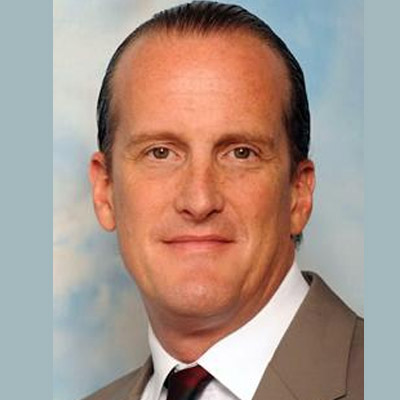
‘India is fast becoming one of WWE’s most important international markets’ : Andrew Whitaker- WWE president, International
-
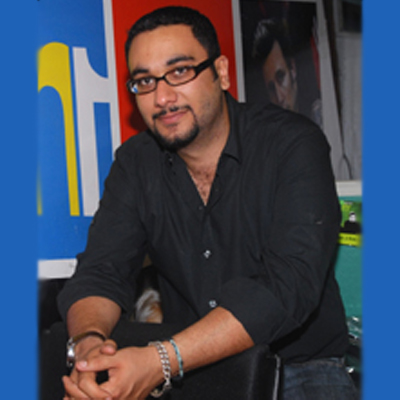
‘We are getting into the broader international entertainment space’ : Ferzad Palia – Vh1 India associate GM
In May, Viacom18’s international music and lifestyle channel Vh1 started the makeover process. Repositioned as an international entertainment channel, it ushered in new shows and introduced a new tag line ‘Vh1 – Get with it’.
Vh1 will, thus, stand on three legs – music, shows, and fashion and lifestyle. Music, however, will still constitute 50 per cent of the programming mix.
In an interview with Indiantelevision.com’s Ashwin Pinto, Vh1 India associate GM Ferzad Palia says 25 shows will be launched during the fiscal and the new-look image will result in a 100 per cent revenue growth.
Excerpts:
What factors prompted the rebranding of Vh1 to an English GEC?
We launched in 2005 when there was a need to fill the gap for international music. Music channels had all gone desi and mass. Vh1 came in as a flanker and a need gap fulfiller for lifestyle and international music. It has now been four years and we have achieved our targets. We have repopularised international music. We have also ensured that good international acts come into the country.In 2008 we did research as we felt there was a new need gap. The lifestyle shows on our channel like Pimp My Ride were popular. The audience felt that we were taking the lead towards differentiated international entertainment. This buoyed us into getting into the broader international entertainment space.
Music still constitutes 50 per cent of our mix. But now we are also going towards international entertainment with a renewed vigour.
What about content repositioning?
The channel has a new look and feel to it. Our tagline is ‘Get with it’ and is demonstrative of our brand, personality and content that is new and cutting edge. We bring in trends from across the world. We have launched four reality shows in the Monday-Thursday 11 pm slot. We also launched an animation show, South Park. The good news is that these shows cut across our TG.Our focus for the next few weeks will be to launch content that allows people to gather information on entertainment on a real-time basis. We will look at new gadgets, gizmos, Formula One and Hollywood.
Vh1 currently stands on three legs – music, shows, and fashion and lifestyle.
What is the brand philosophy of Vh1?
Vh1 is a combination of entertainment and edutainment. The brand is young and vibrant. The tagline, ‘Get with it,’ expresses that.What value is Vh1 looking to bring to the English general entertainment landscape?
While other general English entertainment channels run similar shows, our product mix is different and daring. Nobody has taken the lead on international music. Going forward, you will see that Vh1 will cover the fashion and lifestyle segment the most.I don’t think that we fit into the English GEC space per se. Our focus is on international entertainment and it covers different formats.
Who is your TG?
Our TG is 15-45 SEC A,B. Most of our viewership comes from the southern metros. The interesting thing is that the mature audience from 25-45 watches us as much as the youngsters do due to the variety in our offerings.Our audience is 60 per cent male. We talk to different audiences at different time bands. Youngsters watch us in the morning, early in the evening and also after 11 pm which is when we air reality shows. The mature audience tune in at around 9 pm and, to an extent, early in the morning. While we do Hip Hop hustle for the youth, we also have Vh1 Jazz Masters for the older and more discerning viewer. Our analysis tells us that our audience watches news to get information – and then for entertainment they tune in to Vh1.
‘We have 110 advertisers on board. We expect 100 per cent revenue growth for the year‘Could you talk about the shows that allow Vh1 to be differentiated and daring?
Pimp My Ride is about taking a thrashed automobile and making it a wow machine. The audiences took note of us with this show. Then our positioning got accentuated with a show called Yo Ma Ma (it is about kids trash talking each other). This concept had never entered India. This was a big point. All our shows have had some sort of twist. Punked with Ashton Kutcher gave birth to MTV Bakra. The difference is that Kutcher punks his celebrity friends. We launched Saturday Night Live.We will launch 25 shows this fiscal.
What are the plans for the weekend?
Sunday Brunch with Jim Morisson will return. This airs rare, unseen footage about an artist. We are launching a party block from 10:30 pm-2 am on Saturday and Sunday. We also air stacks of episodes of shows like South Park on the weekend for people who might have missed out on episodes over the week. At the same time we are conscious of not repeating our content too much.You had mentioned giving people the latest news on fashion and Hollywood. How would this work?
Content will be filmed and shown weekly. So we will launch a weekly show on Hollywood called The Scene over the next 10 days. We have a daily show at 10 pm from Monday to Friday, Daily 10, which is about the 10 top things that have happened in the world of entertainment. It is slightly gossipy in nature. Then there is The Fabulous Life which is one of our flagship shows. It takes you into the lives of the rich and famous celebrities. We also have a show that profiles what happens each week in the world of fashion. Another show BG Racing on Track is about Formula One. It tells you what happened in the previous race and also goes behind the scenes with the drivers and sees what they are doing and where they are partying.What marketing activities is Vh1 doing to spread awareness among viewers and advertisers about the repositioning?
We have done a high decibel outdoor campaign. We used radio. We tied up with about 50 gyms and salons across the country. We use this as an activation platform. We are also on Facebook and Yahoo.Are you looking at creating local versions of any of your international shows?
Yes! However we will be very selective in what we do or else there will no difference between us and competition. We are in the process of finalising a few concepts. A Pimp My Ride India is a distinct possibility.Then we will be doing an initiative called India Rules later this year. Here we will take Indian Acts abroad and give them an international platform. For us , it is a reverse migration and cross pollination of ideas.
We have a lot of local talent but there is no platform to allow it to go to the next level. We feel that it is our responsibility to give them a platform. This I would like to clarify will not be a hunt for a rock band. Anybody with musical talent can approach us. Our message is that the world is waiting for you.
What are Vh1’s plans on the events and digital space?
We constantly do on-ground experiential events. We bring down international artists often. We are now looking at the consumer product space. A lot of brands have evinced interest in associating with Vh1 as there is synergy. We are looking at like minded brands. They have to be premium and have a certain amount of audience respect. Categories could be telecom, handsets, apparel, footwear. The tie ups will be in the nature of products and services.We will also make a big play on the digital space. It could involve packaging content for the mobile and the Internet.
Do you see the brand tie up business growing to become a significant source of revenue, apart from advertising?
It will eventually be a big source of revenue. At this point of time, our objective is to build the brand.How is the channel being pitched to advertisers?
It is being pitched as a unique content channel. The way we integrate brands sets us apart. These days you have to work harder for every rupee. Nokia has an express music phone. We created a show Nokia Vh1 Playlist. Viewers decide what plays here; they send us their playlists. Nokia’s brand proposition is touch, play, share. On Nokia’s site you can see the playlist. When we play the song, your mug shot comes along with a few lines like why you like Bryan Adams’ song Summer of 69. You could dedicate it to your girlfriend.We started it last year as a weekly and now as it worked, we have made it a daily show. With Airtel we have an initiative Hello tunes Made Easy.
How many clients do you have?
We have 110 advertisers on board. We expect 100 per cent revenue growth for the year. The client list is diverse from a 50 paise candy to a Rs 500,000 jewelry set. We have not been affected by the slowdown to the extent that we had originally feared. -

‘When you are a market leader, it’s necessary to shake things a little’ : Ashish Patil- MTV India GM and senior VP creative and content
MTV India was primarily known for music, comedy, spoofs and “Fully Faltoo” attitude. The team of Cyrus Oshirdar (creative and content), Cyrus Broucha and Cyrus Sahukar was giving its viewers a “no-tension” dose of comedy and music.
In 2007, Viacom and Network18 got together to create a joint venture. What followed was the redrawing of the roadmap for MTV. The positioning changed and music became shorter in line with its new image of being a youth entertainment channel.
The man in charge of this content revamp was Ashish Patil as he churned out shows that would stand the new look – Its My MTV. From Fully Faltoo to Kick Ass and from Bakra to Splitsvilla, MTV has scored points in segmenting, targeting and positioning for the youth.
The channel has also extended its wings in the US, New Zealand and Australia.
In an interview with Indiantelevision.com’s Gaurav Laghate, MTV India GM and senior VP creative and content Patil says that the game has just started.
Excerpts:
Is the ongoing producer-plex owner’s tussle affecting MTV as there is no new music release to lap up for content?
We have in any case reduced our music content as a strategic move. Moreover, whatever music we play is full length, which comes out after 1-2 months of release. So far we have enough of new music to run on the channel.Why are you going less on music and more on non-music content?
We have repositioned ourselves as not just a music but a music-plus-masti (fun) channel. It is a youth adda (hangout) channel now. Last year we were playing approximately 70 per cent music content, which we have reduced to 45 per cent at present. By the end of this year, we will be having only 25 per cent of music content.What was the need for this change in identity?
There was consumer as well as a business need. Research suggested that youth is looking out for much more than just music. Youth has needs ranging from style, fashion, romance, passion, thrill, and much more.And so far as the business goes, the music pie is limiting. Music as a commodity is playing everywhere; so eyeballs are limiting and revenues have hit a ceiling.
Even the market leader in the music channel genre had to change?
You have to grow the product. And it’s necessary to shake things a little or else the leader will also get stagnant. The world has gone too far and to get our core audience’s eyeballs, we have to lead the other mediums as well. Also a lot of emphasis is on packaging, looks and graphics, apart from content.So what is the new positioning of MTV?
We have created a new category for ourselves where we are no longer a niche channel. Nor are we a general entertainment channel. We are laser focused on the needs of the youth and have evolved as a mass youth channel. Many players tried to copy us, but failed as it is a very difficult path to tread.‘Music as a commodity is playing everywhere. So eyeballs are limiting and revenues have hit a ceiling‘How will you describe your TG?
Our core audience is the 18-21-year-olds. Within that demographic, it is the SEC A in the metros particularly Mumbai and Delhi. Our next target extension is viewers among the age group of 15-24 years, SEC AB 1 lakh towns, in the Hindi speaking markets. Beyond that, we look at the 12-35-year-olds (SEC AB, All India 1 Lac+ towns).This target audience is very fickle and impatient. If they don’t like something, they have multiple options to switch over to. And anything that catches youth eyeballs is competition for me. Be it malls, gizmos, movies, mobiles, ipods, internet, etc.
So that is why you are making your presence felt on internet and other space?
The intent is to take MTV to every place where the TG is. Be it web, mobile, on-ground, merchandise. It’s a circle of lead, reflect and affect – one leading to the other. I will follow my viewer everywhere. You see the kind of response we have on the Roadies community on Orkut. It has over 300,000 members now. We have tied up with PVR Cinema, Inox, T.G.I.F., cafes etc for our shows. Roadies merchandise is available in more then 20 categories. We are tapping audiences everywhere by reaching out to them.But don’t you think some of the content is not fit for small towns, or non-metros?
I don’t think that content is not fit for people in the smaller towns. Youth everywhere have same aspirations; the core of youth is the same. So my content is appreciated throughout by my TG – be it metros like Delhi, Mumbai, Bangalore or non metros like Gwalior, Indore, Chandigarh etc. Also, some of the content may be more evolved. But in such cases, I do have a simpler version on the same premise for mini metros or small towns. The idea is to have a spectrum of content for different people.Is your programming strategy confined to unlicensed thrill, living on edge and speed?
Not just that. It is, of course, one part of it. But we have other shows like On The Jobs, which talks about alternative careers; ibibo Superstar (the making of stars); Splitsvilla (intense romance); Roadies (which has a cult following now); and who can forget MTV Bakra (known for its wit). Then we have spoof movies, which are well received.So my aim is to cater to all the needs of my TG. We are now building on our franchise. Earlier I had only Roadies as a fixed offering on Saturdays at 7 pm. Now I have shifted it to Sundays and got the highest opening for Splitsvilla season 2 on Saturdays.
So you mean you are now getting appointment viewing?
Absolutely. As I said, earlier we used to launch shows on Saturdays at 7 pm band. I had a great following there, courtesy Roadies. It was a gamble when I shifted it to Sundays, but it did well for us. Now I have viewers for Saturday as well as Sunday. Also, in December, I launched Haven @ 7 on weekdays. So I am taking baby steps to get more viewer attention. I am already getting more viewership than many general entertainment channels (GECs).So what are the plans ahead?
As I said, I am taking baby steps. We have just started. From making just one Roadies two years back, we launched many new shows last year. This year, we will launch even more shows. Recently, with Force India we have launched The Fast and The Gorgeous and are coming up with Pulsar MTV Stunt Mania soon.How has the JV between Viacom and Network18 helped in MTV’s growth in India?
In many ways. It has been a fabulous ride since the JV has been formed. It is in many ways kind of a vitamin supplement. Earlier, it was MTV and Nick supporting each other and suddenly I have the strength of a full network; it’s much more than just financial support.Also, both (Viacom and Network18), as players, are front-foot batsmen. It has put our transition in the fourth gear. Our efficiency has increased and so has our brand value, distribution, marketing, headcount and infrastructure.
Have we seen MTV’s revenues grow over the last couple of years?
We have doubled the revenues during this period. We are expecting a 30 per cent growth this year.Ad sales accounts for 65 per cent of our revenues, of which 5 per cent comes from international clients. Around 15 per cent comes from affiliates, which is also increasing. 15 per cent comes from Viacom Brand Solutions (client lead stuff, events and advertiser funded programming) like The Fast and The Gorgeorus, Stunt Mania etc. The remaining 5 per cent comes from L&M and movie previews (Ghajini).
Also, we are opening up supplementary revenue streams through mobile, web, and even through ticker. Our ticker has a fan community on social networking sites and advertisers want to be there.
-

‘As there is no clear No. 2 sport in India, NBA has an opportunity to take that spot’ : Emilio Collins – NBA senior VP international development & partnerships
Cracking the Chinese wall, the National Basketball Association (NBA) plans to break into the Indian market and become the No. 2 sporting power within five years.
Last week the NBA inaugurated a dedicated basketball court at Nagpada in Mumbai, the first in a series of courts that it plans to develop in line with its long term commitment to grow the sport in India.
For the first time, the NBA also opened up its live matches to the online viewers in India.
In an interview with Indiantelevision.com’s Ashwin Pinto, NBA senior VP international development and partnerships Emilio Collins talks about the other plans that the company has to grow the market for basketball in India.
Excerpts:
Could you talk about the strategy NBA has employed to grow its reach globally over the last couple of years?
Our strategy starts with media. This means getting television reach and forming partnerships with other digital outlets to grow the reach of the NBA brand. Post this, we focus on building the sport out. This is done by creating more basketball opportunities. We aim at providing more access to the game like infrastructure development.Which are your top five markets outside the US and where does Asia fit in this?
China is our biggest market. It represents 40 per cent of our international business. Over the last six years, there has been substantial growth in that market. Philippines, Korea and Japan are the other key Asian markets where the basketball population is very high.In Europe there is tremendous relevance in Turkey, Spain, Italy, the UK and Russia. A lot of our international players come from Europe and so the relevance is very high. Latin America is a big priority for us, especially Mexico and Brazil. We have recently started to look at the Middle East.
Did the NBA see good revenue growth last year?
The NBA is growing at a significant clip at 20 per cent a year. I cannot talk about numbers, though. Asia contributes a little over 50 per cent while Europe accounts for 35 per cent. Latin America makes up the rest.How much do television license fees contribute?
Media license fees contribute 50 per cent. This is followed by sponsorship and consumer products.Why didn’t you push NBA into the Indian market earlier and how big a market opportunity do you see here now?
The biggest challenge that we face at the NBA as far as our international business is concerned is how to size up opportunities simultaneously. We wanted to ensure first that we managed China correctly. A lot of resources went there.India is one of our focus markets now, along with the Middle East and Latin America. The emerging middle class provides a big opportunity for us here. Basketball can play a big role in the development of sports infrastructure. The appetite for sports and entertainment is growing which has been proven with the success of the IPL. The NBA also fuses sports and entertainment. The IPL has successfully tapped into this combination.
How do Indians perceive the NBA as a brand?
The brand value is very high. We are in the unique position where the best basketball players from around the world play in the NBA. So if you grow up and get exposed to basketball, you automatically aspire to be a part of the NBA. Our players are global icons and by the sheer nature of the presentation of our game, players become larger than life personalities and figures; they are fused into the world of pop culture and entertainment. This has enhanced the status of the NBA brand.How tough is India as a market for the NBA to grow, particularly since it is a one-sport nation?
This, in fact, marks an opportunity for us as we want to be number two. In a market where there is no clear number two, there is an opportunity for growth side by side with the number one sport that is cricket.Our strategy revolves firstly around building the sport. We want to provide more access to the sport through infrastructure development. Then we want to get involved with the community and develop activities around it with our local partners. We can use basketball as a means to contribute to the community. Thirdly, we plan to expand the reach of NBA Lifestyle and offer opportunities to fans to experience the NBA. This can be done through basketball competitions, interaction with players and most importantly through broader media distribution.
Where do you see the NBA in India five years down the line?
The NBA has a long-term development plan for India. Our goal is to make basketball the No. 2 sport in India in the next five years.‘Outside the US, China is our biggest market. It represents 40% of our international biz. Philippines, Korea and Japan are the other key Asian markets where the basketball population is very high. India is one of our focus markets now‘You have successfully grown the NBA in countries like China and Japan. Are there any learnings from that brand building process which you would want to apply to India?
We have learnt the most from China. It all starts with spreading the NBA brand through television. This is then followed up with on-ground activities mixed with community initiatives. To make a court for the Nagpada neighbourhood and make this the epicenter of social and physical activities for them would make a difference to the community. This is critical to all the markets where we operate.Secondly, we want to introduce the sport to new audiences. This means going into schools and teaching basketball fundamentals through a Junior NBA initiative. We also want to create participation. We can use the Nagpada court to have tournaments there.
We bring the NBA Lifestyle experience to the market. In the USA, we will be going into malls over the summer and bringing the experience to fans like slam dunk on a small court. One can play NBA videogames. You can meet NBA players and really feel the NBA experience.
Finally, we want to bring the NBA competition to India. We will bring NBA teams to compete in an exhibition game. But before doing this, the infrastructure in India has to develop at a faster pace.
How is the deal with Star Sports working out?
They have partnered with us for many years – in fact, since 1993. In addition to showing our games live on Fridays and Saturdays, they are also increasingly showing repeats during primetime. This is very important in terms of broadening the awareness of the NBA. We go beyond this by offering highlights and condensed programming that allow fans to connect.Then there is behind the scenes programming. We focus on what our players are doing in the community and on what our teams are doing day in and day out. We look at contributions teams make in their key markets. It is about capturing what the NBA brand is about in different markets across the US.
Is there interest from other Indian and Asian television broadcasters as well for the NBA content?
There is significant interest from other Indian and Asian television broadcasters for NBA content. We are in discussions with various local Indian media outlets to distribute our content in different ways to appeal to Indian fans.Does the NBA do a lot of tie ins for film and TV shows?
The NBA works with a variety of TV broadcasters and film studios to tie in the League’s content – from product placement to guest appearances by NBA players, etc. The NBA brand and its players are a significant part of pop-culture and films and TV shows leverage the League as a platform to reach its target audiences.Would this avenue be explored in India?
Integrating NBA content within TV and film is an important component in creating local relevance for our brand in India. We are developing strong relationships with broadcasters and film studios in India to showcase the lifestyle and pop-culture appeal of our League, teams and players. We have already begun to integrate with Bollywood. This past November, the NBA hosted two Bollywood stars – Lara Dutta and Dino Morea – for an all-access VIP weekend in L.A. NBA Entertainment documented their experience and produced a 30 minute program which aired on ESPN in India on Christmas Day last year.Are you looking at specials which can serve as value adds?
In a game played by LA Lakers, Dino Morea and Lara Dutta took part in many activities around the Staples Centre. We produced a half-hour special with ESPN Star Sports. We will do more activities like this down the road. It helps if that many Bollywood celebrities are fans of basketball. We can create shows on the experiences of Bollywood celebrities with the NBA.In addition, there are opportunities for reality-based content. There could be a talent search contest about finding the next great Indian basketball player. We are talking with ESPN Star Sports in this regard as well as with other platforms.
What kind of content does NBA offer on the mobile?
It is crucial in India as there are hundreds of millions of subscribers in India. We need our content using this platform. Photos, ringtones, wallpaper and then as 3G comes in, we would offer highlights. This will all be in addition to standard scores and statistics. -

‘If you don’t innovate, somebody else will take it from you’ : Sir John Hegarty – BBH chairman & worldwide creative director
Sir John Hegarty stands tall in whatever he does. Starting Bartle Bogle Hegarty (BBH), of which he is chairman & worldwide creative director, four years into the run the agency was voted Campaign magazine’s Agency of the Year in 1986. Awards galore have seen been following the man who launched the famous Levis “Live Unbuttoned” campaign. In 2007, Hegarty received a knighthood in the Queen’s birthday honours for services to advertising.
At Goafest 2009, Hegarty explained why recession is the best time to be in advertising as it induces innovation and makes change acceptable.
In an interview with Indiantelevision.com’s Tarachand Wanvari, Hegarty talks about the current status of the advertising industry, the need to address the digital medium and the fantastic future of television as people can now watch it from anywhere.
Excerpts:
How different are the agencies and clients in India as opposed to those in the Western world?
People always talk about what’s different, but there are more similarities. You really have to understand the complexities of India, the diversity of its culture. You also have to remember that advertising is about converting people, it’s about unifying people. Great ideas unify people, and that’s what you are looking to do. Music’s done it, painting’s done it, films have done it, why can’t advertising do it?Everyone’s speaking about the new media. But is the industry, the client ready for it?
Yes, everyone’s speaking of the industry not being ready and responding to it. I mean, this is probably the most competitive business you can be in. I can start an agency tomorrow – we just started one. It’s not a difficult thing to start an agency. I think agencies are moving as fast their clients allow them. I think that it’s more often that I found that clients often talk a good digital story, but when it comes to actually doing it, they are rather hesitant. Certainly BBH is responding and so is the industry. We are looking at how we put these things together and how we create a roadmap for our client. I think we are doing as much as we can, but we can only be so far in front.Are the agencies ready for the new media – technologically and with manpower skills?
I still think that it’s a developing market and you are looking at how far ahead are consumers. You can look at Japan, I mean they are tech-mad. They live their lives on the mobile. They are texting each other, which is not the case here in India. You have got to look at the market place and see what is it doing and how is it doing it and then respond to that. I think agencies are by and large doing that in India.Audio visual is one of the best forms of communication. What do you think is going to happen next – television episodes, internet access, voice communications on the mobile or a hand held device? Are we ready with the content?
The first thing that we fundamentally believe is that the world’s going to go mobile. There’s no question. You are going to take your devices with you. You will still want to sit down in front of the television at home, you know three hours of cricket, it’s fantastic, I just love doing it. But you are also going to be taking it with you. Television has got a fantastic future if it realizes that people can now watch television anywhere. Imagine if you had a newspaper etched on stones, you couldn’t carry it with you to read. Television is going to have an ever expanding influence in my view, because people love watching it.But are we ready with the content?
It’s very hard to be ready with the content when the audience is not there yet, when they haven’t got the devices. It’s going to take another five to ten years when we have fantastic devices with great screens that give us actual clarity of picture. I have watched bits of television on an i-Phone. It’s brilliant, and I think it will happen more and more, but it won’t stop me watching TV at home.‘If you just narrowcast, then you are not going to be talking to the expanding market. And in a funny way, people talk about narrowcast. The world actually is going broadcast‘People are talking of mobisodes for TV consumption on mobile devices, because one can’t capture facial expressions and fine details on the small screen. Do you think that there is an opportunity to create more mobile-centric television content with which agencies could weave in their ad strategies?
I think I’d rubbish that. People’s eyes adjust. I have watched a bit of Star Wars on the i-Phone. Of course it’s not the same as watching it on a flat screen television, but, then, that too is not the same as watching it on cinema screen. We are incredibly adaptable and will adjust. You put the device closer to your eyes, so the ratio changes. It’s got to do with entertaining the mind, how you embellish it with sound and visual. We’ll see what people want to watch on the very very small screen and what they want to watch on the big screen.Where do you think the industry is headed here in India? I mean during one of panel discussions we had people saying that there is no recession in the industry, despite the fall in ad agencies revenue. Do you think that the industry needs a bigger shock to awaken and realise that they are going down economically?
I can’t answer that. I think that people are being na?ve if they are saying that there is no recession. There is a recession, a downturn, that is a reality. If they don’t respond to it, they are going to go out of business. As I said before, this is an extremely competitive industry. You don’t need any special training to start an agency, you don’t need any licence. You don’t need a Phd, you just need courage. If you don’t innovate, if you don’t change, if you don’t move forward, somebody else will take it from you. But I think recessions are very good at getting to accept change and that’s what we should be focusing on. I think the advertising industry has a fantastic future.Digital has one of the best ways to measure the success of any campaign. For television advertisements, even today people depend on Tam’s peoplemeters which can never give a true reach picture. Yet, marketers are allocating a major chunk of their budgets for conventional media, rather than digital media.
I consider digital as more than just a medium, it is a whole lifestyle change the way people communicate. I think you have got to be very careful about how you use it. I will quote a little – a very very important quote – ‘A brand isn’t just made by the people who buy it. A brand is also made by the people who know about it.’ That’s a very very important point! That is fundamental to the future. Broadcast – you define broadcast in some sense or another – you won’t convert, you won’t build a fantastic brand. If you just narrowcast, then you are not going to be talking to the expanding market. And in a funny way, people talk about narrowcast. The world actually is going broadcast. -

‘We will build on our global franchises and get other local content to create an environment for ratings’ : Antoine Villeneuve- Walt Disney TV International (India) SVP & MD
The Walt Disney Company acquired Hungama TV in 2006 for $30.5 million, a sign that two of its global channels needed a local muscle to fight the might of Turner International in the kids TV turf in India.
The Cartoon Network-Pogo duo still lead the space as the mouse house is busy finding the right content mix for its three channels. Disney Channel is positioned as a kids-driven family channel while Hungama TV is eyeing kids in the 4-14 years age group. Jetix is for the 6-10-year-old boys.
The challenge for Disney is not just to gain more audiences but also to drive up revenues in a genre that is seeing slow growth.
In an interview with Indiantelevision.com’s Anindita Sarkar, Walt Disney Television International (India) senior vice president and managing director Antoine Villeneuve talks about the need to build on Disney’s global franchises while filling in the other pieces of content without disturbing the brand values.
Excerpts:
Disney Channel has failed to make a mark in India, as is evident from the ratings. What are the corrective steps you are taking?
Our task is to build on our global franchises and get other local content to create an environment for ratings. But all this has to fit into the ‘Disney’ brand values.Being a kids-driven family channel, we have had to add other pieces of content. For the first time ever, we have moved ahead to acquire Bollywood content to draw in more eyeballs. We have bought two Aamir Khan movies, Hum Hai Rahi Pyaar Ke and Jo Jeeta Wohi Sikander, which will be showcased on 12 April and 3 May.
The core focus of the channel, however, is the tween segment (8-12 age group) and to increase penetration we have made the channel available in Hindi as well. We are building all the necessary bricks, but staying within the essence of the brand and the positioning of the channel.
Which are the franchises you are maximising your investments on?
Hanna Montana is appearing as a marketing phenomenon in India. She is on the path of a big success and we are taking her to the next level. We are increasing the ‘touch points’ with her so that kids can get more engaged. She appears in season 3 on 10 April and we are organising the ‘Big Pop Star’ event in India wherein the winning star will get a chance to meet Hanna. We also have a few more on ground marketing plans for Hanna to bring the character closer to the Indian kids.The Hanna Montana movie releases in May which is sure to have a great impact on building the brand value of this franchise in India.
The other big property we are building is High School Musical. We are giving it a bigger dimension as season 4 kicks off soon.
Why are ratings coming only from the locally acquired live action content?
There has been an effect on ratings, but when it comes to a brand connect with the kids it is with our franchise properties. The best example of this is Hanna Montana. Our endeavour is to build a localised experience through Hanna Montana and our other properties. We have succeeded in this.How have you positioned Hungama TV after acquiring it from UTV?
The three channels that we have are positioned separately and do not cannibalise audiences from each other. Hungama TV is transmitted only in Hindi and is positioned as a mad-comedy and fun channel devoted to the 4-14-year-olds. Also, its content is mainly driven by Japanese animation.The channel has slipped from its top position. How do you plan to revamp it?
We are creating three new bands from 13 April. We have acquired two live action shows, Hatim from Star and Dharam Veer from NDTV Imagine. We will be introducing them under the action band, Dum Powder.The Trouble Soda band will feature shows such as Doraemon and Ninjaboy Rantaro while Fun Gas will showcase Shinchan and Asari Chan.
Hungama TV will have all new shows this summer and the three bands will play on the theme ‘Mad fun with Adventure.’ We will also launch the mega summer contest – the Indian Pyjama League – on the channel, starting 11 May.
On the movie front, we will be showing titles such as Andaz Apna Apna and Fantiastic 4 this summer.
‘kids GRPs are undervalued in other markets as well. More marketing solutions have to be offered and advertisers have to realise the real worth of the kids segment‘Jetix has been more successful in the south. What are you doing to elevate its status in the north?
Of the two global channels, Jetix is a more defined channel as it has only action adventure content and is targeted at only boys between the age-group of 6-10. We have made it available in four languages – English, Hindi, Tamil and Telugu. We are happy that it is faring well in the south and have no plans to make special efforts to push it in the north as we have our other two channels to address the Hindi speaking markets.How do you plan to beef up your summer lineup this year?
Apart from showing Bolywood films, we will be exploiting our own classics from the Disney library. The channel will feature titles such as Return to Neverland, Atlantis: Milo’s return, Mulan, 101 Dalmations 2 and Secret of the Magic Gourd. All these will be featured on the Disney channel. Pirates of the Caribbean: Dead Man’s chest will premiere for the first time in Hindi on 5 April.We will also be launching brand new shows on Disney such as Wizards of Waverly Place, Sony with a chance, Imagination Movers and Aaron Stone. Aaron Stone will launch on 15 May and will be the story of Aaron, a master in video gaming. Summers will also see the second season of Mickey Mouse Club House (MMCH).
For Jetix, we are launching the ‘Spectacular Superhero Summer Operation’. Under this brand, we will have all new superhero shows ( Zoran/ World of Quest/Ratman/ Power Rangers RPM).
We will also carry new episodes of Hero, Detective Conan and Inspector Gadgets. Furthermore, we will show various martial arts and action adventure movies such as George of the Jungle 2, Hulk and X men.
Why is the revenue from kids TV not proportionate to its audience share?
The kids GRPs are undervalued in other markets as well. More marketing solutions have to be offered and advertisers have to realise the real worth of the kids segment. In India this is evolving and we are already seeing new categories such as financial services, FMCG and digital stepping in as advertisers. -

‘With the launch of the kids channel, we are ready to scale up the verticals’ : Rajiv Sangari- Spacetoon India MD & CEO
It has been a long wait outside the ring. After building up verticals in the licensing, publishing and merchandising space, Spacetoon has launched its kids channel to combat against multinationals like Turner, Walt Disney and Viacom in the tough Indian market.
A licensing and merchandising deal with Emerging Media, owner of the IPL winning team Rajasthan Royals, has put the company on a totally different pedestal. Talks are also on with a few other sporting goliaths to expand the L&M portfolio.
Spacetoon Kids TV, however, will evolve as the prime property and will guzzle over 50 per cent of the company’s Rs 1 billion investment plan.
In India, the group has floated Kids Media India (KMI), a company that will take care of the TV and licensing business. Kids Animation India is the other arm that will look after the publishing activities.
The shareholding has also been restructured with Japanese firm Animation International holding 51 per cent stake in KMI. Dubai-based Spacetoon Media Group holds the remaining with a small stake as sweat equity resting with Spacetoon India managing director and CEO Rajiv Sangari.
In an interview with Indiantelevision.com’s Anindita Sarkar, Sangari talks about the company’s growth plans across the verticals.
Excerpts:
What took you so long to launch in India?
Since the germination of the idea way back in 2004-end, we have spent a long time testing the market. As the Indian economy and the TV industry went on a zoom and prices skyrocketed, we had to rethink our strategies as we were going to occupy a niche space. With distribution, marketing and all kinds of operational spends going beserk as Hindi general entertainment channels got launched, it would have made no business sense to launch a kids channel. Frankly, it would have been a business hara-kiri. Now the prices have corrected and things are much more in control. Despite an overall bleak scenario and a tough advertising market, launching at this moment definitely makes more business sense.The shareholding for the Indian venture has changed with Japanese firm Animation International (AI) holding 51% stake in Kids Media India. Was the delay partly caused by this?
Both Spacetoon and AI have relations since the last 25 years and they have been partnering and co-operating with each other on many businesses together. Hence, changing of the hands in shareholding doesn’t have much to do with any kind of interest level subsiding or increasing. It is a strategic move by both partners of re-strategising and restructuring their operations amongst themselves. Most of the East and South East Asian operations, for example, will be monitored by AI, while most of the Western Asian, European and Eastern European operations will come directly under Spacetoon. I would term this as strategic restructuring.Spacetoon was in talks with investors to raise money. Is that plan still on?
Spacetoon was in talks with a few players and we had already determined 3-4 of them at various stages of our discussions. But most of them wanted to basically take advantage of the position of our fund raising, rather than sharing our passion. Either they wanted majority stake or at some point they wanted us to exit. This did not go with our strategy for India.Though we realise that for taking our verticals to the next level we require some support, we are equipped as of now to handle it on our own. But if we get an extra push in terms of a partner who can value our strength, experience and hard work which has gone behind making the company and the brand what it is today, we will definitely look at the possibility. India’s economy and retail can only grow and we have 360 million kids. We require a partner who thinks and aligns with us for long term.
Did you first focus on developing the licensing, publishing and merchandising platform before stepping into the kids broadcasting space?
That is the business model Spacetoon has followed in other markets. We are doing the same thing here. For over a period of 3 years now, other than TV launch, we have successfully launched our licensing, publishing and merchandising divisions and are very soon launching our own IP programmes.We are glad that we did not divest then. We have done the tough job of laying out a platform for licensing and merchandising. After the launch of the kids channel, the time has come for us to scale up the verticals.
How much is Spacetoon investing in India?
We plan to invest Rs 1 billion over three years. Out of this, about 50 per cent upwards will be consumed by the TV operations.Why did KMI decide to launch a kids channel when the genre has actually shrunk a bit last year and the revenue size at Rs 150 crore is still too small to take in so many players?
We need to realise that kids business is not driven completely by TV broadcasting. Unlike general entertainment channels, ad revenue is important but not the only source of income in the kids genre. It’s always the ancillary units like merchandising, publishing, etc. which will help it take to the next level. And TV business is a long term game.‘Kids business is not driven completely by TV broadcasting. Ad revenue is important but not the only source of income in the kids genre. It’s always the ancillary units like merchandising and publishing which will help it take to the next level‘Earlier, Spacetoon Kids TV was looking at investing Rs 250 million for carriage in delivery platforms such as cable TV networks and DTH. However, that number has been scaled down. Why?
Haven’t others too? It’s simple, the market today doesn’t allow us or anyone to do so. I hear from some sources that most of the top to small TV channels have slashed down their distribution disbursements. And, especially in kids genre, you just can’t support such a large distribution budget.The channel is still not well distributed. How are you planning to tackle this and by when do we see it more visible?
Our focus is not only to tap the Tam cities but also other markets. As of today, our estimates are that we have penetrated over 10 million homes and we expect to do over 15 million by the middle of this year. By year-end, we should be touching 25 million homes. And, don’t forget, it’s only four weeks since we launched. We realise it will take minumum 3-4 months before we start getting visible across all markets.What are the distribution deals you with stitched with the MSOs and the DTH operators?
We are in talks with the direct-to-home operators. As far as cable goes, we are available in some Hathway Cable & Datacom networks. We have also signed up other cable operators, particularly for their digital viewers. Distribution is a gradual build-up.Spacetoon Kids TV will have to jostle with seven existing channels to tap into 360 million kids in India. How do you find space in this tough market?
Each one of us has a different style, programming methodologies, and formats. Our channel will be focusing a lot on moral and social values, packaged with lots of entertainment content.What is the different positioning you are taking?
Spacetoon will divide the day into 10 planets. Unlike running half-hour episodes back to back, we will be giving the kids a mix of several things. There will be fillers which are moral based, messages, ads, packaging, promos, etc. This will ensure a different look during the whole day.Do we also get to see localised content as part of the programming mix?
We definitely are looking towards creating localised programming very soon. This will be mostly live action-based programming. There are discussions going on with various producers to this effect.What are your other marketing plans and spends for the channel?
We will be creating a touch base by tapping thousands of schools in India. We realise that if we have to tap the minds of the kids, there is no better place than their learning ground – school. We are creating a very good value-based school-contact programme, a key area where most of our energy is going to be focused in the first year.We will also be having events from April onwards in high public areas like malls.
What is the revenue Spacetoon is projecting and how does it break up in terms of the channel and other verticals?
I would not want to put across numbers now. Nobody can predict the forthcoming financials in today’s market. But our major revenue driver will be merchandising, which is in full throttle. Following that are our publishing and licensing activities. As for TV revenue, we are expecting it to start from the later part of the year. It will take us some time to penetrate the market and grab space in the minds of the kids.What are your expansion plans in terms of licensing and merchandising?
We have tapped over 69 licensees in the last 14 months. These are translating into products that will get into the market during the course of this year. We already represent some top companies in the world for licensing and there are few more coming our way in the next few months to make our portfolio more robust and meaningful.We observed that our portfolio was tilted more towards the boy category. But now with Hello Kitty and Garfield coming our way, I think we have one of the best characters in the girls genre.
What are your plans with Rajasthan Royals?
We are in hot pursuit to come out with products before the first week of April when the IPL kicks off. We have already worked out our strategies to tap the right licensees who will be able to add value to this fantastic brand on the ground level through merchandising.We have a three-year deal with Emerging Media and are targeting Rs 200 million of retail business in the first year. Since the time is very short, we are channelising all our resources towards this.
We are also in discussions with few more goliaths from other sports, especially big international clubs. We hope to stitch deals with some of them soon.
-
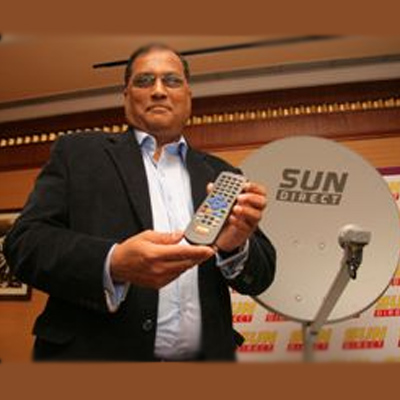
‘Pricing and creation of bouquets is our big differentiator’ Tony D’silva – Sun Direct COO
Kalanithi Maran is building his DTH empire on one key proposition: pricing. Mopping up two million subscribers in his home turf, Maran expects to taste success in the northern pockets of the country with the very same recipe.
Armed recently with Hindi content and sports channels, Sun Direct has launched in Mumbai and will be quickly moving to other markets as a pan India direct-to-home service. The target: six million subscribers by FY’10.
Sun Direct plans to invest Rs 35 billion in the venture over two years, out of which Rs 20 billion will have been consumed by the end of this fiscal. A large chunk of this will be towards providing set-top boxes (STBs) free.
Malaysia-based Astro has taken a 20 per cent stake in the company for Rs 5.90 billion. Sun Direct is a zero-debt company and there are no plans to raise further money through dilution of equity.
Sun Direct’s ARPU (average revenue per user) is the lowest among all the DTH operators, ranging between Rs 85-90. But the costs are tightly controlled and the company hopes to break even in six years.
In an interview with Indiantelevision.com’s Sibabrata Das, Sun Direct COO Tony D’Silva speaks about the company’s ambitious growth plans.
Excerpts:
How much is Sun Direct investing in the DTH venture?
We have an investment plan of Rs 35 billion over two years. We would have consumed Rs 20 billion by the end of this fiscal. We are pumping in the balance Rs 15 billion by FY’10.How much has Astro put in so far?
Astro had made a commitment of putting in Rs 5.90 billion for a 20 per cent stake in Sun Direct. The full amount has already come in. The promoters have invested the rest of the amount. We are a zero debt company.Is there a plan to raise further money through equity?
We have no such plan. We are considering whether it would make sense for us to raise debt and sit in excess liquidity at a time when the money market is tight. No decision has been taken in this regard. The promoters are ready to pump in whatever it takes to grow the business.Since Sun Direct is offering STBs free, wouldn’t the company have to absorb huge losses?
The loss for this fiscal would be in the region of Rs 4.50 billion. This is very much a part of our business plan. For anybody who wants to build scale, the only way forward is to acquire customers with high subsidy offers. We have already mopped up two million subscribers and are looking at ending FY’09 with a base of three million. High volumes will help us reach break even as our costs are not as high as the others.Even when Sun Direct’s ARPU is the lowest among all the DTH operators?
We have grown in the southern region and our current ARPUs are at Rs 85-90. We don’t see them going up significantly even after our launch in Mumbai and the rest of India. In the volumes game, the margins will improve once you reach a particular threshhold of numbers. Our infrastructure cost is also less than the other DTH operators. We will break even in six years. ‘Astro has put in Rs 5.90 billion. We are a zero debt company and expect to break even in six years‘
Is your content cost also lower than many of the other DTH operators?
Our content cost is 45-50 per cent, one of the lowest in the industry. We have not done MG (minimum guarantee) deals with broadcasters. Our main strategy is a la carte pricing.What is your customer acquisition cost?
When we made our initial purchases, the STBs were costing us $55. But the economic meltdown is driving down the prices and our STBs currently cost $45.The advertising budget for this fiscal is Rs 1.5 billion. We aim to spend a similar amount in the next fiscal unless the market dynamics changes drastically.
Our customer acquisition cost is Rs 4500. But with our pricing strategy, we expect to garner six million subscribers by FY’10.
The pricing strategy can attract wrong customers. Isn’t it a dangerous model to have if your churn rate is high while the customer acquisition cost is steep?
We have a five per cent churn rate. We realise that it is important to have a lower churn.What is the strategy Sun Direct has adopted to repeat its success model outside its home turf?
While 99 per cent of our current two million subscriber base comes from the south, we have an aggressive pricing policy which will help us garner subscribers from the other pockets of the country. Our regional package, “My Pack,” will create hype in the market and drive our growth everywhere. Our bouquet of packages are value for money as we have custom designed packages for every state and region. We spent considerable amount of time since our launch last December.We have also introduced a Hindi package. The ‘Shine Pack’ is available at Rs 499 and Rs 999 for five and 10 months respectively.
We have the highest number of add-on packages, ranging from Rs 6 to Rs 195. And the sports channels are available on a la carte rates.
Doesn’t it make sense to offer sports channels in packages?
The rates are too high for us to offer the sports channels in basic tiers or in bundles. We recently added the three ESPN Star Sports channels into our offerings. They are available on a la carte rates – ESPN and Star Sports are priced at Rs 38 each per month while Star Cricket costs Rs 32. Ten Sports is priced at Rs 20 while Zee Sports costs Rs 15. We are in negotiations with Neo.Why was your launch in Mumbai delayed?
Adding Hindi and sports channels in the bouquet took time and the launch in Mumbai was delayed by a shortage of supply in STBs. There has been heavy snowfall in China and Beijing Olympics also delayed the supply of boxes. So during the festival season of Diwali, we did not have STBs to sell. Now the supply is comfortable and we are in a position to launch in other parts of the country.Have you added more STB manufacturers into your list of vendors?
Our STB suppliers are China-based Coship and Korean firm Homecast. We have just added Samsung into our list.Have you launched high-end STBs?
We have, but only in the southern market. They are priced at Rs 10,000 and are made by Homecast. Only a couple of hundreds have moved and we are just testing the waters.Are you lining up premium content?
We feel the market is too early for premium and interactive content. Our first task is to be successful as a pan India operator. The creation of bouquets and pricing has to be a big differrentiator.Some DTH service providers are advertising their Hindi movie offerings. Is Sun Direct going to create such content to grab viewers outside the south?
We don’t have any such plan at this stage. We are examining whether we should do that or go for HD. We have space for 5 HD channels. This will be for the top-end of the market and give us higher ARPUs.Has Sun Direct approached Isro for more Ku-band transponders?
We have asked Isro for two more transponders. We offer 200 channels including 23 radio channels and video-on-demand. We are fortunate that we are co-located on the same satellite used by DD Direct Plus and so can get their channels without consuming our own bandwidth. -
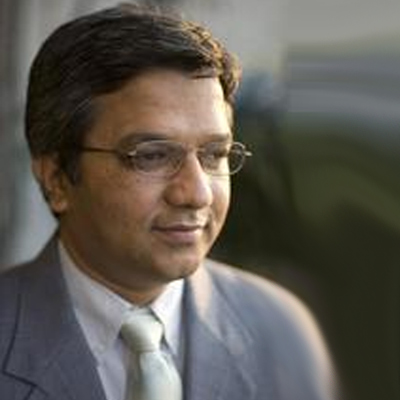
‘We are entering into an era where capital will be scarce’ : Citi Venture Capital International managing director India region head PR Srinivasan
There may be pressure on Citigroup Inc. to remove the flab with the US government agreeing to infuse $20 billion of capital as part of a rescue package, but Citi Venture Capital International (CVCI) is drawing up plans to make acquisitions at attractive valuations. Out of the $4.5 billion fund, it is yet to invest $3 billion, almost a third of which will pour into the Indian market.
Though CVCI has made only one media investment in You Telecom, a broadband and cable TV company, it is also eyeing the direct-to home (DTH) and Hindi entertainment broadcasting space.
In an interview with Sibabrata Das, Citi Venture Capital International managing director India region head PR Srinivasan talks about the opportunities of investing in various sectors including media at a time when capital is going to be scarce.
Excerpts:
Being in the midst of an unprecedented global economic turmoil, how comfortable is Citi Venture Capital International (CVCI) in its funding structure to grab buying opportunities in Indian media companies?
We have a $4.5 billion fund, out of which $3 billion is yet to be invested. We have already invested $500 million in India. We are likely to pump in a further $750 million-$1 billion in this market while the balance will be put in China, Eastern Europe, etc. You Telecom has been our only investment in the media and entertainment sector. But as asset prices come down, we are open to picking up stakes in other verticals within the media sector.Have you initiated talks with any of the media companies?
We see a good investment opportunity in DTH and are talking to one player. We may also start looking at TV channels in the Hindi general entertainment space, if they come at attractive valuations and are managed well. Even if we are headed for a slowdown, the truth is that people will still want entertainment. Since we have already acquired You Telecom, we are not looking at parallel investments in the cable TV sector. We would expand and make further acquisitions through You Telecom.Since CVCI has a running investment in a broadband and cable TV company through You Telecom, why is it that you are eyeing a competing distribution platform like DTH?
There is space for all three forms of carriage – DTH, cable TV and IPTV. No form of distribution is superior or dominates over the other. In the US, both cable and DTH enjoy substantial market shares. The only country which has a single dominant platform is UK where DTH has a content advantage in form of exclusive sports telecast rights. India, however, has a content-neutral policy. The regulatory framework is also in favour of independent distributors and is neutral to broadcasters. The DTH sector also has a 20 per cent equity cap for broadcasting companies.The main cost in DTH is advertising. Unlike cable which has a capex requirement in the distribution architecture, DTH doesn’t have a wired cost. If you get scale in DTH, you will become profitable. The expense mix will change with volumes. But in India with so many players getting into the business, not all will get the scale.
When CVCI bought out British Gas’s broadband business, was the investment attractive because the infrastructure of You Telecom could be used for cable TV service?
You Telecom had world class network built to FCC standards. We were clear that we would buy this asset and wait for both competition and regulation to fall in place so that this can be developed into a last mile home entertainment network. When the government came out with Cas and DTH became active, digitalisation got a push. For the cable TV business to grow, there was need for competition, the right market, and the right regulation. We are in that environment today. India is in the early stages of having second TV – so we could have a situation where we have both cable and DTH.Were you not in discomfort because the cable TV sector has too many players and there is very little of last mile ownership with the multi-system operators (MSOs)?
In terms of reaching homes, cable with 80 million does much better than telecom. The sector needs to get more organised; it is only a matter of time before this happens. The cable industry in India is a marathon and not a sprint. Though there is a capex requirement and last mile is still not under control of the MSOs, the mix looks good once you have a base of one million digital subscribers.‘For the cable TV biz to grow, there was need for competition, the right market, and the right regulation. India is in the early stages of having second TV – so we could have a situation where we have both cable and DTH‘Why did You Telecom take so long in moving into cable TV service?
Our efforts to do the video business evolved with the DTH industry. We acquired a 50 per cent stake in Bangalore-based Digital Infotainment, a small-sized cable network, to make our foray into the cable TV business. We also took a majority in Scod18 Networking, an association of cable TV distributors in Mumbai. We have cable TV operations in Mumbai, Bangalore, Vizag and Dharwad in Maharashtra.In You Telecom, CVCI has 85 per cent stake. How did you restructure the equity structure as the government allows only 49 per cent FDI (foreign direct investment) in a cable TV company?
We floated Digital Outsourcing, the company that would handle cable TV business. Tulsi R Tanti and his family members, promoters of Suzlon Energy Ltd, have acquired 49 per cent stake in this company. You Telecom India owns 36 per cent while the rest is held by high net worth Indian individuals.How much is You Telecom investing to expand its business?
You Telecom plans to pump in Rs 4 billion over the next two years to expand its cable TV and broadband business. If we decide to go for Headend-In-The-Sky (HITS), we will require another Rs 1.5 billion. We have 1.3 million cable TV subscribers and expect this to go up to three million. We have seeded 60,000 digital set-top boxes and expect to touch one million in the next 18 months. The cable business will grow through setting up own headends, acquiring networks and forming joint venture partners in different geographies. There is a lot of entrepreneurial talent in the cable community and we want to tap into that.Do you have an aggressive plan in acquiring last mile operators?
The challenge in cable is to get direct points. We bought 5000-7000 points. Our strategy is to own last mile, but all in good time. Our plan is to own a headend and then acquire the last mile. The valuations for last mile were inflated because people thought there was abundant capital available.Have the valuations dropped drastically?
For the last three years, there has been abundant capital and liquidity. Though we purchased at 18-24 months revenue, there were MSOs who bought at 30-40 months turnover. That kind of money is not available; we will not get financing for making purchases like that any more.Most of the mid caps have fallen over 80 per cent. The last mile business has to follow along those lines. People are not going to bid prices up. It is only a matter of time before people accept the new world realities. We are entering into an era where capital will be scarce. Business plans will have to evolve accordingly.
Do you see yourself in an advantageous position because you are sitting on cash at a time when the credit markets are frozen and capital is hard to get?
Money is not going to be available on tap. This will impact the way the new financial system is going to be reshaped. Every sector will feel the jolt. As new broadcasters need to raise capital, MSOs who have planned carriage revenues over the next 2-3 years to support their business models will find the going very hard. Many of them will have to redraw their plans.It is a good time to have cash. For those who are investing now, the returns will be higher than the previous years.
-
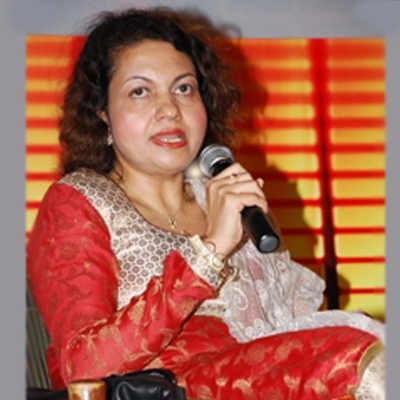
‘The commercialisation of IPTV will happen as we have a policy in place now’ : Sujata Dev – Time Broadband Services Pvt. Ltd co-founder, CEO & MD
Having stitched a deal with state-owned telecom major Bharat Sanchar Nigam Ltd (BSNL), Time Broadband Services Ltd (TBSL) is preparing for an IPTV roll out in 20 cities across Uttar Pradesh and the eastern region of India.
Armed with an investment from Dubai Investment Group, the company has worked out on the technology front with H.264 AVC, Verimatrix encryption system and Amino set-top boxes.
In an interview with Indiantelevision.com’s Gaurav Laghate, TBSL co-founder, CEO & MD Sujata Dev talks about the challenges that are in store for IPTV operators in India and the company’s growth plans.
Excerpts:
Why has a serious IPTV roll out not happened in India despite telecom majors like Reliance, Bharti and Tatas showing an interest in it for the last few years?
The commercialisation of IPTV will happen now as the legislation has thrown some clarity on the policy issue. The Telecom Regulatory Authority of India (Trai) has also given its recommendations. When these were still dark areas, the telcos were in the trial stage. A proper IPTV roll out should happen within the next six months.Aren’t there areas of concern as the government is yet to give the nod to some of Trai’s recommendations?
The policy is not clear whether IPTV providers can downlink directly or it has to be churned through the cable operator. Then there is the pricing issue. We need a similar policy like it is for DTH or digital cable in Cas (conditional access system) areas. If IPTV has to compete with other digital addressable delivery platforms, it has to have a level playing field. For the same content, you can’t have a different pricing.There is also the ‘must carry’ clause for eight Doordarshan channels while in case of cable it is four. This will occupy 16 mbps (2 mbps per channel). Copyright for IPTV is another challenging area.
Time Broadband had a franchisee deal with MTNL for providing IPTV a few years back. Why no roll out happened since then while other players like IOL Broadband and Aksh Optifibre went ahead to launch their services?
Since there was no IPTV policy, we didn’t want to launch commercially. There was no copyright definition for IPTV content. The technology was also evolving. Besides, MTNL worked out a different revenue sharing system with later franchisees like Aksh. We are sorting out our issues with MTNL.What was the roadblock on the technology front?
We had decided on ADSL2+ technology. For a market like India where there is 2 mbps on the last mile, you will need H.264 AVC which was evolving as a technology. We have Amino set-top boxes (STBs) and Verimatrix encryption system.Since you were under arbitration with MTNL, what was it that attracted Dubai Investment Group (DIG) to take a 40 per cent stake in your company through its subsidiary Dubai Ventures?
They were attracted by the knowledge base that we had acquired. DIG has a telecom and IPTV presence in many markets. Time Broadband will be the new technology company which will support their projects in different markets. We have launched IPTV over 2.5G mobile platform in Malaysia. They see us as futuristic telecom company.‘We are be profitable once we reach a 2.5 million subscriber base. For achieving this target, we will require an investment of around Rs 7 billion‘How much has DIG invested into the project and who are the other shareholders?
The company has pumped in close to Rs 1 billion. DIG will continue to invest. We will become profitable once we reach a 2.5 million subscriber base. For achieving this target, we will require an investment of around Rs 7 billion. Aniyan Kutty Kunju, the chairman of Jai Hind TV (a Malayalam news channel), is another shareholder.How will you manage to have 2.5 million IPTV subscribers?
We have signed up with BSNL to roll out IPTV on their network across 20 towns in Uttar Pradesh and the eastern region of India. We are also looking at MTNL. Unlike the private telecom operators, these two state-owned majors have the last mile connectivity. Besides, as content aggregators we have the advantage of even doing business with all the telcos. We are also optimistic about IPTV on mobile phones once 3G opens up in India.We have created a lot of content for mobile, as the screen and user habits are different. We have lifestyle, yoga, spiritual, music and sports content. We have tied up with IMI for music and different producers for other content.
What makes you so bullish when the private telecom operators like Reliance, Bharti and Tatas have jumped into DTH as they feel IPTV can have slow growth in the Indian market, at least in the short run?
The USP of IPTV is the interactivity which is not present in cable or DTH. IPTV has room for interactive and premium content. As for the telcos, they may work out a business model where they offer channels through DTH and rely mainly on interactivity for their IPTV success.In Korea, gaming has driven IPTV while in Hong Kong it is exclusive and premium content which has brought in subscribers. In India, interactive services and e-learning may drive IPTV.
State-owned telcos BSNL and MTNL have gone in for non exclusive franchisees to develop their content delivery network. Do you see business feasibility for all of them?
BSNL and MTNL are limiting their franchisees. Some of the franchisees may have entered to boost their value as they are listed entities. We are in as we see a serious business opportunity in IPTV. We realise that with low ARPUs (average revenue per user) and subsidy on STBs, profitability can come only after five years. IPTV is more part of telecom. We have a serious investor in DIG and have a business plan knowing the hardships of the Indian market.For acquiring content like movies, how successful have you been to work out revenue share arrangements with rights owners?
We believe that is the best model to be in. We have done some deals along these lines. There can also be a MG (minimum guarantee) system for a certain number of subscribers, after which a revenue share model can be arrived at.