Tag: India

  • ESS launches event management arm in India

    ESS launches event management arm in India

    MUMBAI: ESPN Star Sports, Asia’s leading sports broadcaster, has announced the launch of its on-ground division ‘Event Management Group’ in India.

    The company further announced that PepsiCo India has signed on EMG to manage the on-ground events of its mega football league, Pepsi T20 Football, in India.

    As a part of the deal, ESPN Star Sports is producing and showcasing the Pepsi T20 Football tournament in a special eight episode series. The EMG is also managing the School Quiz 2012 where it has roped in HDFC Life as the title sponsor. While on-ground initiatives around the HDFC Life School Quiz 2012 have already started, on-air telecast of the Quiz begins on 1 June.

    EMG manages and promotes premier sporting events around Asia. EMG specialises in creating, managing, promoting, consulting, producing and syndicating leading sporting events such as the KIA X Games Asia, KL World 5s and Guinness 9-Ball Tour. With over 1000 events in 11 countries, all events organised by EMG, enjoy regional broadcast across Asia through the ESPN and Star Sports channels.

    ESPN Software India Executive Vice President Sanjay Kailash said, “Our Event Management Group has firmly established itself across Asia Pacific with world class products designed to engage and entertain sports fans. It offers an exciting business opportunity in the India market as well. We can bring our deep international experience into play; create tailor made events and offer interesting and innovative marketing solutions using multiple platforms of ESPN Star Sports. I am sure corporates will see lot of value in what EMG has to offer.”

  • ‘India is among our top 10 markets’ : Discovery Networks International president, CEO Mark Hollinger

    ‘India is among our top 10 markets’ : Discovery Networks International president, CEO Mark Hollinger

    India is one of Discovery‘s key priority markets along with Latin America where there is tremendous scope for pay-TV growth.


    Bullish about digitisation in India, Discovery has plans to expand its portfolio of channels. The latest addition in the menu: Discovery Kids from the second quarter of this calendar year.


    In an interview with Indiantelevision.com‘s Ashwin Pinto, Discovery Networks International president, CEO Mark Hollinger talks about the company‘s growth markets and its expansion plans in India.


    Excerpts:

    How important is India as a growth market for Discovery?
    India is the biggest growth market for us. It is among the top 10 markets globally for us. The combination of the government being very open to international channels, the digitisation process and the great fit between the Discovery brand and the culture of India makes this country a high priority market for us.

    Discovery has launched in many genres. When are you launching the children’s channel?
    We will launch Discovery Kids in the second quarter of this calendar year. The content will be global. We are also looking at local content. As networks grow, we have tended to have locally produced content in the mix. Discovery Kids in Latin America produces some of its own content. In India too time there will be global as well as local content as we go along.

    Is the timing right given that the kids genre is struggling?
    We tend to be long term investors. When we launched a new channel in Spain, people thought that we were crazy as unemployment rate is as as 22 per cent in that country. But we saw that there was an opportunity for us and we went ahead and launched.


    So whether a market is up or down at any point of time doesn‘t matter; there is space for a more education-focussed network like ours. And India, moreover, highly values education. The digitisation process is beginning and is a good opportunity for us. We are not worried about the kids genre business at all.

    Will the education component be your differentiating element?
    Yes! The other kids channels are similar. We are not Scooby Doo. We are about how you do things, when do you do, why you do. It is inquisitive in nature. Education is an important part of society. But at the same time we are not naive to think that it is just going to be education that people will tune into; it has to be entertaining as well. This was the very genesis of Discovery when John Hendricks first started it.


    The channel will have a healthy dose of entertainment and also satisfy the curiosity of viewers in an entertaining way. The good news is that India is a young country. There are millions of kids below the age of 14 and so the market is big.

    ‘Flagship brands have a strong place in the market. We are in a better position to survive audience fragmentation than our rivals‘

    The challenge here is that niche channels have to rely excessively on ad revenue. By when do you see subscription starting to contribute in a serious manner?
    That is a big question in terms of the impact of digitisation on the affiliate revenue stream. If you look at the international portfolio, our channels are weighted towards affiliate. 70 per cent of revenue outside the US is affiliate.


    When we start in a market, there is a 100 per cent affiliate revenue and then we move towards advertising. India obviously is an ad sales market. But it is hard to sit here and say what the affiliate revenue stream is going to be. We can hope that digitisation will affect carriage fees and other things.

    For the digitisation process to succeed in terms of cut off dates being achieved, what needs to happen?
    For the cable operators, it is going to be a giant challenge. If you think just about the logistics it is going to be a huge task – acquiring enough set top boxes, distributing them, getting people to understand what is going on and creating the customer service capability.


    Forget about fancy things like DVRs. Just to get the infrastructure in place is an enormous challenge. Luckily for us, we can watch it from afar. But once it is in place, then there is an opportunity and sort of a challenge for programmers to take advantage of digitisation. We have done it successfully in other markets.

    Do you think that the 30 June deadline will be met for the metros?
    We met some MSOs recently and they are pretty much prepared for it. Moreover, a set top box is not such a novel thing now. There are 25-30 million STBs already in DTH homes. I don’t think that the deadline is a challenge. It will be managed.

    How will digitisation change OneAlliance’s relationship with MSOs?
    This relationship will become stronger. When change happens, there is bound to be some chaos. There will be disturbance and that is the time when if you are part of a strong bouquet, you can navigate through things.


    We have a great team on the ground and great brands. When The OneAlliance was started, there was no digitalisation in India, no DTH. Now that there is DTH, the OneAlliance has only become stronger.

    Will you now make a concerted effort at marketing yourself to Indian consumers so that they choose you?
    This is already happening. On DTH more and more people choose us and the digital ratings of our channels are high. We offer quality content that people globally pay for. In India there is sensational television on other channels that target eyeballs at any cost. But as we move towards a digital environment, we are better prepared with quality content.

    Discovery is in several languages in India. Could you talk about the importance of localisation?
    It is important from a content point of view, from a feed structure point of view and from a language point of view. Discovery is in five languages. We are evaluating other language launch possibilities. Some of the other players have possibly gone a little bit overboard, but we have found that local language results in higher viewership in that region.

    More players are entering the infotainment and lifestyle space in India. Will this cause fragmentation?
    There is fragmentation of viewership happening. We are, however, in a better position to survive audience fragmentation than the other companies.

    Discovery spends $1 billion towards programming. Are content investments going to be affected by the global downturn?
    No! The content that we invest in is evergreen. Moreover, we can ammortise investments across 210 markets due to the nature of our products. A show will have at least a four-year life. This allows for a longer timeline in terms of investing in shows.

    Which are the main focus areas for Discovery?
    India clearly is one focus market. Latin America is also a big priority market for us; there is pay television growth to be had from there. In Brazil pay television was hampered, but now ownership has changed and pay-TV penetration is growing substantially. Poland and Russia are also big growth markets for us.

    What is the big challenge you face this year?
    It differs from market to market. In the US pay TV has a 90 per cent penetration rate. The pay TV growth there will not happen in terms of penetration. So you will see the impact of OTT and if there is enough of an upside to counterbalance any cord cutting, that may happen. Again it is hard to know if Netflix and Amazon will continue to be successful the way they have been. This is not an issue in other markets.


    I would say that the big challenges are the impact generally of broadband or free platforms like DTT on pay television. Can pay TV penetration continue to grow? In some countries, there are regulatory issues. Some markets like Brazil have become more protectionist as of late in terms of local Brazilian content and local channels being required on packages. The availability of alternative platforms is both a big challenge and a big opportunity.

    There has been a certain amount of operational restructuring within Discovery like the removal of the COO position. Is the basic aim to be more cost effective?
    I would say that the changes were more on the US side of the business rather than on the international scene. The international business has remained largely intact in terms of its structure. The changes were made not due to cost reasons. We have an active CEO in David Zaslav. He likes to have as few layers as possible between people who run the US business and himself. The aim is to have a better handle on the business as opposed to saving money.

    Last year you split Europe into two business units. What prompted this move?
    We used to have what I think was a bit of an odd structure. The UK is an entirely separate business. Then all of Europe, Middle East and Africa are another kind of business. UK has a lot in common with the other western European markets – slow pay TV penetration and DTT kind of opportunities.


    Then you have Central, Eastern Europe and the Middle East and Africa which are much more growth markets. There is still expansion to be done. These are more entrepreneurial markets. So we split along the lines of Western Europe as one unit and then Central, Eastern Europe, Middle East and Africa as another unit. We did not add a region. The international business still has four regions. We just restructured Europe to grow Western Europe and put common markets together.

    Could you talk about Discovery‘s strategy to penetrate new markets like Colombia?
    What we tend to do with new markets is to go in first and establish distribution. So we opened new offices in Central and Eastern Europe. We opened a sizeable office in Moscow. We opened other offices in places like Kiev, Almaty and Sofia.


    There is an opportunity in Colombia and it is our fourth biggest market in Latin America. We earlier only used a local representative for ad sales. We opened an office there for the primary purpose of ad sales while offices in Europe were opened for affiliate purposes.

    In Spain you are free to air. Are you expanding your free to air portfolio?
    This expansion has been a Western European phenomenon. In Spain pay TV has been at 30 per cent penetration for the last decade. It hasn’t grown.


    So now in Germany, Spain and in the UK, we have launched free to air channels. They complement the pay business and are not intended to replace it. They have allowed us to grow at a time when the overall Western Europe pay TV business is not growing. This is harder to do in other markets as there is not a big enough digital terrestrial platform or there are ownership restrictions.

    In Korea you did a partnership with CMB. Why?
    Korea is a difficult market to get into and almost impossible without a local partner. Tom (Discovery Asia Pacific MD) did an enormous amount of legwork. He spent a lot of time in Korea. It is a strong economy and very well penetrated from a pay television point of view and from a broadband point of view. So it has always been an important market for us to get into. We had to pick the right partner and have the right kind of structure in place.

    How did the JV with Oprah Winfrey for a channel come about?
    Everybody knew that Oprah would be ending her show and moving to a new business. People in the media industry wondered what that business would be. David Zaslav sold her the idea that her brand and the Discovery brand’s missions were very well suited for each other.


    That is how it happened. We have ambitions for the channel in terms of finding markets internationally for it. Tom is a proponent for markets in the Asia Pacific where he feels that the channel will fare well. Oprah created a lot of buzz when she came down to India. This has also been the case in Australia and in other markets around the region. But we first want it to be well established in the US.

    Discovery bought Betty in the UK, its first such acquisition of a production company. Are you looking at more such acquisitions?
    It is not yet part of Discovery‘s grand strategy to get into production. But we will see whether owning production is a strong addition to our business model or not. But I will not say that we are actively looking at other companies. We will wait and see how the Betty acquisition plays out.

  • India, Hollywood working on ways to collaborate

    India, Hollywood working on ways to collaborate

    MUMBAI: The ball has started rolling for more collaboration and cross pollination of knowledge, technology and talent between two of the world’s largest film communities – Hollywood and India.


    The Motion Picture Association of America (MPAA) chairman, CEO Senator Chris Dodd participated in an event of the LA India Film Council during the 2012 Ficci Frames Convention to discuss how to push this partnership forward.


    The event included the announcement of the Council’s governing body, the premiere of a “sizzle” video highlighting the initiative, and a presentation of the Council’s enhanced website. A special Council publication commissioned from Ernst & Young providing further information about the LA and Indian industries was released and plans for upcoming activities, including film premieres and conference events, were discussed.


    Dodd said, “The LA India Film Council is a natural corollary to the rapidly increasing creative, technological and location partnerships developing between the two countries and promises to set new benchmarks in the world of cinema. On the behalf of the MPAA, and as a big fan of Indian cinema, I wish the Council great success in the future”.


    The LA India Film Council was set up in 2010, as part of a declaration between the city of Los Angeles and the Indian film industry. The initiative aims to explore mutual opportunities in fostering and encouraging partnerships between the two influential film industries.


    Filmmaker and producer Ramesh Sippy said, “We can learn from schools in LA. We should learn from each other. Create and enrich each other‘s knowledge, strengths and experiences. I feel the council can only take us forward. One thing is for sure, it will bring people of two cultures closer together.”


    Hollywood is looking at the growing Indian market even as its threatical revenues from overseas have overtaken that of US. A flood of 3D movies has also made the products popular in tough markets like China.


    “India is a preferred destination for a lot of films, and I think the LA India film council will hugely benefit both countries. We could co-create film schools and schools of technology. The mingling and merging of the two cultures is essentially the desire behind a co-production”, said filmmaker Shekhar Kapur.


    The Council focuses on developing and strengthening motion picture production, distribution, technology, content protection and commercial cooperation between the two filmmaking communities. Members of the Council’s governing body comprise powerful film guilds, government organisations, industry experts and leading companies in the areas of VFX, animation and post production from both Los Angeles and India.


    Actor Anil Kapoor said, “Without a body like this people may get connected with wrong people. A body like this can help and support those who seek guidance”.


    In recent years, the Indian film industry has globalised its reach as producers have improved the international marketability of their films by building partnerships with international domain experts. More and more producers in India are considering foreign locales to shoot their films. Previous big budget Indian productions filmed in Los Angeles include: Kites (2010), My Name Is Khan (2010), Kambakkht Ishq (2009), Kaante (2002) and Pardes (1997)


    Other joint ventures and co-productions between individual Hollywood studios and Indian production houses over the past two years alone include: Ek Deewana Tha (2012), Dum Maro Dum (2011), Stanley ka Dabba (2011), Force (2011) and Engeyum Eppothum – Tamil (2011).


    Indian investment in Hollywood has also been steadily increasing, most notably with Indian entertainment conglomerate Reliance Entertainment’s (A.DAG) acquisition of DreamWorks SKG and the launch of YRF Entertainment in Los Angeles.


  • BRICS Youth Short Film Festival in Delhi to feature over 35 films

    BRICS Youth Short Film Festival in Delhi to feature over 35 films

    NEW Delhi: Over 35 short films from the BRICS countries – Brazil, Russia, India, China and South Africa – will be screened in a three-day festival to be held in the capital from 13 March.

    Around 31 films including four from Russia and the rest from India will be in competition. A block of short films from South Africa and one film each from Brazil, Russia, and China are in the non-competition section.

    ‘Film Dialogue 2012’, the BRICS Youth Short Film Festival, is being organised jointly by Delhi’s Citizens Film Forum and the Russian Centre for Science and Culture.

    The films include documentaries, short fiction films, animation films, and those with drama and action.

    According to Vimal Mehta of the Forum, the festival is aimed at encouraging young filmmakers from these countries and offer them a platform.

    The best films will receive awards and all films that take part will be given certificates of participation.

  • Tushar Unadkat to receive Trailblazer Award in Canada

    Tushar Unadkat to receive Trailblazer Award in Canada

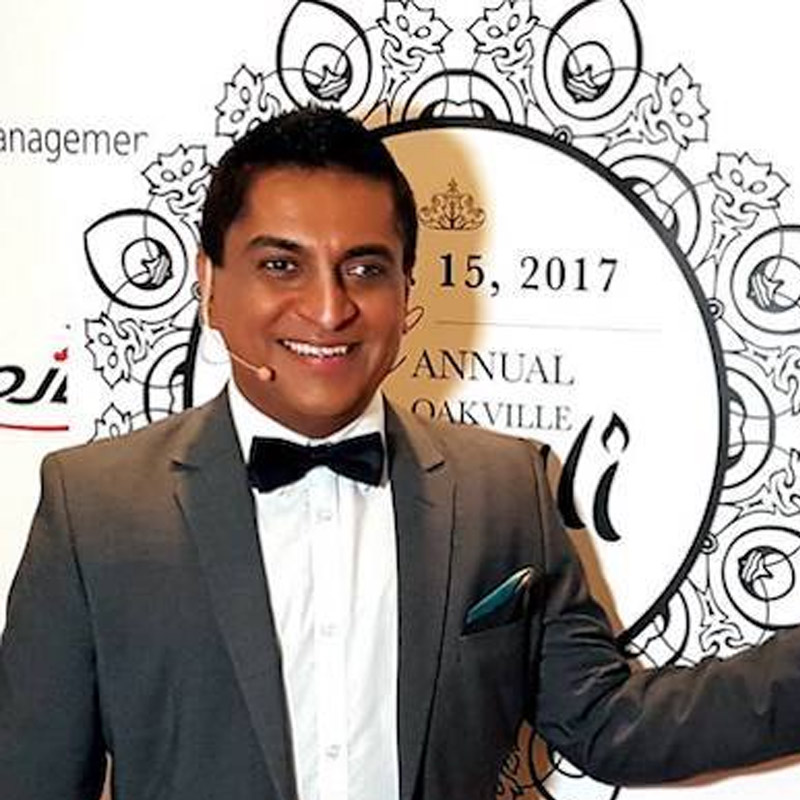
    NEW DELHI: Mukta Advertising Creative Director and CEO Tushar Unadkat who recently produced a film in Canada is to be honoured by ReelWorld as the Trailblazer at the 12th Annual Film Festival to be held from 11 to 15 April in Toronto.

    For ReelWorld, a trailblazer is an up-and-coming voice contributing to Canada’s multi-ethnic framework and entertainment industry, making strides through innovation.

    Created in 2002, the Trailblazer Award recognises the accomplishments of ethnically diverse Canadian entertainment industry professionals whose work has broadened our horizons. Over the past ten years, ReelWorld has recognised some of Canada’s brightest talent for their ability to bring innovative stories and to forge a bright future for the Canadian entertainment industry.

    Unadkat holds a Master in Design degree from University of Dundee, Scotland and Honors in Photography from University of Wolverhampton, England. In the past decade, Tushar has executed art direction in the film, fashion, advertising and events industry in USA, England, Scotland, France, Germany, Netherlands, India and Canada.

    Winning 14 international awards, he has worked with Oscar winning producers and editors in the past as the Production Designer making a significant name in the Western Cross-Over Film-Industry and earning credits on more than 25 feature films in his portfolio.

    Currently enrolled on a Business Edge programme at Rotman School of Management, University of Toronto, Unadkat produced a cross-over Bollywood-Hollywood genre feature film – Surkhaab – scheduled to theatrically release this summer in U S, Canada and India.

  • Bigelow’s film on Osama to be shot in Chandigarh

    Bigelow’s film on Osama to be shot in Chandigarh

    MUMBAI: Shooting Hollywood films in India has reached a peak with Hurt Locker director Kathryn Bigelow deciding to shoot her film, based on terror mastermind Osama bin Laden’s capture, in Chandigarh.


    According to the director, the reason for choosing India as the key location to shoot the film instead of Pakistan where the actual series of events took place, was primarily because the Pakistani authorities shot down her request to shoot there. Now Bigelow has zeroed in on locations that similarised that of Pakistan.


    It is said that the crew, having landed a few days ago, will start shooting in and around Chandigarh from 24 February. The cast will be joining the crew shortly.


    The film stars Jessica Chastain (nominated for Oscars in the ‘Best Supporting Actress’ category for The Help), Chris Pratt (of Moneyball fame) and Joel Edgerton.

  • Indo-Aussie series: ODIs get 2.12 TVR

    Indo-Aussie series: ODIs get 2.12 TVR

    MUMBAI: The ongoing ODI Tri series between India, Australia and Sri Lanka has delivered a TVR of 2.12 for the first three matches.


    There is a huge gap in the ratings, though, when India is
    playing. The highest rated match was for the first contest between India and Australia, which got a TVR of 2.94. The fact that India is playing in a competitive manner bodes well for the ratings, going forward.


    However, the Australia versus Sri Lanka match did not even touch a TVR of 1.


    In comparison to the ODIs, the ratings for the India-Australia Test matches were poor. The four Test, where India fared poorly, got a TVR of 0.74. In the earlier 2007-08 series down under where India fared well, the average ratings stood at TVR of 1.45. Not surprisingly this time the fourth test fared the worst with a TVR of 0.49 as India had lost the series by then.

  • India West Indies Test series average at 3.76 TVR

    India West Indies Test series average at 3.76 TVR

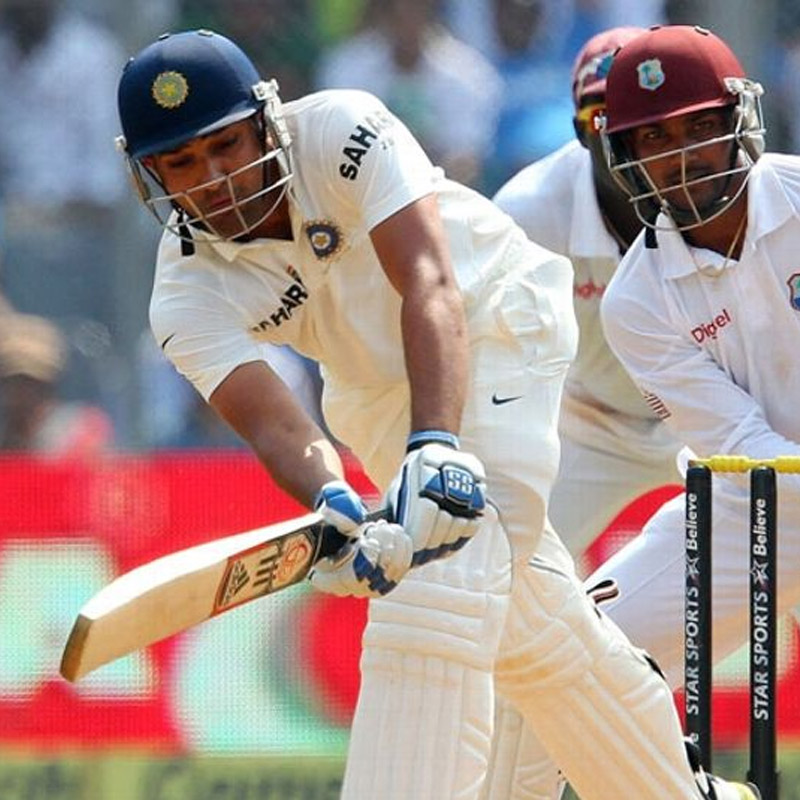
    MUMBAI: Debunking the notion that viewer fatigue might happen with India cricket taking place almost every month, the recently concluded three match Test series at home between India and West Indies averaged a TVR of 3.76 on Neo Cricket according to Tam data for c&s 4+ market.

    This was much better compared to the TVR of 2.49 that the away three match Test series between the two countries had managed on Ten Cricket earlier in the year. Of course timings also played a big role in the performance in addition to the fact that the big names were present.

    Not surprisingly the highest rated match this time was the drawn match in Mumbai where both teams finished on the same score. That match got a TVR of 4.36. All the three Test matches crossed a TVR of 3. This shows that if the quality of the match is good and India is doing well then viewers will tune in.

    MPG India senior director R Venkatasubramanian called the delivery amazing for Test cricket. “The series had exciting cricket being played. Each match was interesting and there were turning points.”He adds that the CPRP for both the India West Indies series away and at home was satisfactory.

  • Miditech brings ‘Whose Line Is It Anyway?’ To India

    MUMBAI: Delhi-based production company Miditech has partnered with Hat Trick International, the distribution arm of UK independent production company, Hat Trick Productions, to bring its popular improvisational comedy TV show, Whose Line Is It Anyway? to India.

    The deal will see Hat Trick and Miditech build the brand in India both across television and live events.

    Hat Trick Productions was founded in 1986 and is one of the most successful production companies in UK today. Their output is immediately identified with popular and award-winning programming, light entertainment, comedy and drama, and is now also emerging into digital media.

    Miditech head of development Nivedith Alva said, “This past year alone Miditech has been instrumental in bringing some of the biggest formats in the world such as Survivor and The Voice to India. Whose Line is it Anyway? is a big step for us because it is not just about bringing another global television brand to India, it‘s the relationship with Hat Trick and their comedy expertise that excites us even more. The stand up comedy market is really the next big thing in entertainment and we hope to play a major part in it.”

    Hat Trick International group commercial director Paul Cohen said, “The potential for Whose Line in India is huge, both through television and live events as the comedy market in India expands. Miditech is the ideal partner for us as their track record in bringing internationally renowned formats to India is second to none. We look forward to seeing Whose Line on Indian screens in 2012.”

    Miditech, founded in 1995 by the Alva Brothers, Niret and Nikhil, is recognised for television programming across all genres. Its client list includes broadcasters such as Turner (Pogo/Imagine), News Corp (Star Plus/Star World/Star Gold/Channel [V]), the Zee Network , BBC, Disney, Doordarshan, Viacom18 (Colors/MTV), Times TV Network (Zoom), Multi Screen Media (Sony/Sab/Max) and Real Global Broadcasting (Real/Food First).

  • SAFF gets going in Goa

    SAFF gets going in Goa

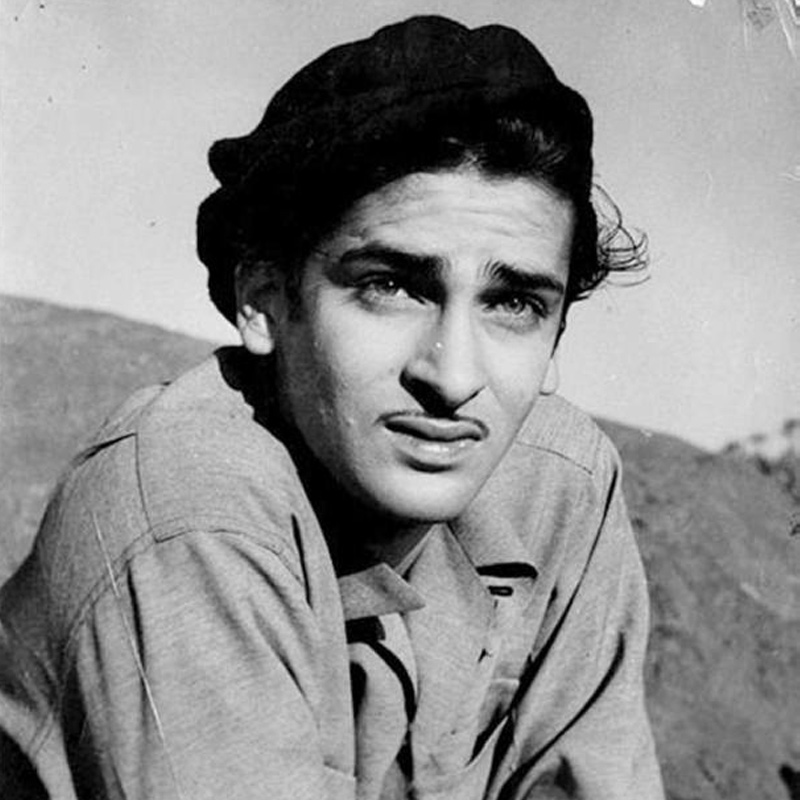
    MUMBAI: The South Asian Film Festival (SAFF) got going in Goa yesterday with the screening of the Shammi Kapoor and Sharmila Tagore-starrer Kashmir ki Kali, screened as a special tribute to the late star.


    The festival was declared open by Goa chief minister Digambar Kamat in the presence of Randhir Kapoor and Rajeev Kapoor, the scions of Kapoor family among representatives of South Asian Countries who were present at the ceremony.


    Randhir Kapoor was felicitated by the state chief secretary Sanjay Srivastava in honour of the contribution of the Kapoor family to Indian Cinema. “Cinema knows no boundaries. Its just an emotion that we create. We should have lot of cultural exchange amongst the south Asian nations,” said Kapoor responding to the felicitation.


    The festival‘s theme is ‘Dissolving Boundaries‘ – spreading the message of togetherness and oneness amongst the South Asian Countries including Afghanistan, Bangladesh, Bhutan, India, Maldives, Nepal, Pakistan and Sri Lanka.


    Bhutan is the focus country for SAFF 2011. The annual festival will also pay tribute to Bangladeshi film maker Tareque Masud who was one of the two prime witnesses of the International War Crime Tribunal. Incidentally, Tareque was killed in a fatal bus accident near Dhaka on 26 August.