Tag: India

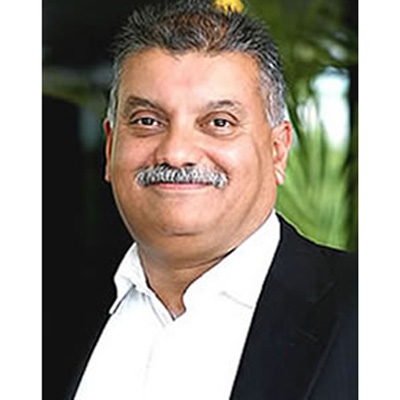
  • ‘The last 20 years belong not to Star but to Zee’ : Star India CEO Peter Mukherjea

    ‘The last 20 years belong not to Star but to Zee’ : Star India CEO Peter Mukherjea

    Peter Mukerjea became the CEO of Star India at a crucial period of satellite television history in India when the relationship between two media moguls Rupert Murdoch and Subhash Chandra had soured.


    led Star against India’s homegrown broadcasting business of Chandra and took its flagship Hindi general entertainment channel (GEC) Star Plus to the top in 2000, the position it still enjoys after he quit to try his hands at his own private equity-backed broadcasting venture.


    The former Star India CEO admits that the last 20 years of private television broadcasting belong to Subhash Chandra despite himself being at the helm of a significant piece of Indian broadcasting history by successfully leading Star India.


    In a tete a tete with Indiantelevision.com’s Sibabrata Das, Mukerjea speaks candidly about how Chandra has outrun Star and Sony and today “runs the most effective broadcasting network, has a thriving cable business and was the first to launch DTH in India”.


    Excerpts:


    Q. Rupert Murdoch and Subhash Chandra started as allies and formed a joint venture. But this relationship turned stormy by the time you became Star India CEO. How bitter was it?
    The relationship with Zee was initially harmonious. But as News Corp started becoming more grounded in the Indian market and established its capability, Chandra’s views on Star, Murdoch and a multinational broadcaster changed.


    That in a way was inevitable to happen. So long as Star was in English and Zee in Hindi, the two companies operated in two ecosystems. The moment Star started Hindi content, Chandra saw it as a violation of the joint venture agreement and there was a major shift in relationship between the two partners.


    Q. And the beginning of the pay TV industry in India also helped in Chandra taking a hostile approach?
    Yes, it built a hostile environment. Alongside the personal stresses and strains, pay TV was becoming a reality in India. Murdoch has experienced pay TV in other markets and successfully developed it in his sprawling media empire. Chandra knew this.


    Though the two also ran an equal joint venture in Siticable (the cable TV outfit), there was mutual suspicion. The partnership became frigid and fell apart.


    I was in the hot seat as CEO. And the only way to progress was for Zee to buy out News Corp’s stakes in the joint ventures – which they eventually did. Having finished with that task, Star got an opportunity to do a total Hindi entertainment channel. Punit Goenka (son of Chandra and now in charge of Zeel and Zee News Ltd ) was a baby then and Chandra was running the company.


    Q. Were Chandra and Murdoch bitter even when they met after they split?
    Even when the meetings were pleasant, there was always tension in the background. Both were media moguls in different parts of the world and there was mutual respect. But it was always laced with a fair amount of rivalry.


    Q. In your early days as CEO, how did you find Chandra’s aggressive attacks?
    There were lots of questions put in Parliament and Star was accused of repatriating money from India and showing obscene content (Star Movies). Some of these were public petitions but we suspected that they were from our competitors. We, though, had no proof that they were Zee-backed.


    ‘Lobbying, having deeper pockets, being able to hire better executives – all these don’t matter. In love and war, all is fair. As a piece of history, it is Chandra who started DTH first in India. He has a strong presence in cable and runs the most effective broadcasting network in India. It is only in sports broadcasting that he needs an international partner‘


    Q. Murdoch always wanted to be the first to launch direct-to-home (DTH) operations in India. So what made Chandra beat Murdoch in this race?You can say it is because of lobbying or whatever. But the truth is that Chandra launched the first DTH platform in India. And he deserves credit for that.


    Q. Even Murdoch is known as a lobby master. Is that how you see this as a neutral proposition?
    Lobbying, having deeper pockets, being able to hire better executives – all these don’t matter. In love and war, all is fair. As a piece of history, it is Chandra who started DTH first in India.


    Q. So who would you say ruled the first 20 years of private satellite television broadcasting in India?
    The last 20 years surely belong to Chandra. He runs the most effective broadcasting network in India today. He has created an Indian product and has built a phenomenal international business with that content. He is the first to set up a regional-language network across India. And he has a strong presence in DTH and cable.


    Q. You say this even though you used to work in Star and later head it?
    Yes, you have to give credit to the man. He has worked so hard getting back, despite being knocked off in Hindi entertainment business in 2000. That was the time he expanded into different languages. Chandra has helped Zee stay probably as the largest broadcasting business in India today and as a publicly listed company. He had a longer part of the rule in these 20 years.


    Zee has outrun everybody else. It’s not Star, not Sony but Zee which is the leader of the pack. And this despite not having the backing of the multinationals which have an advantage in bringing truck loads of money. Look at the impact he has had in Indian society and entertainment culture. Zee has connected deeply with the Indians.


    Q. Do you see Chandra becoming a leader in sports broadcasting?
    He has to find an international sports partner. Though India is just cricket, he needs to step out of the base and bet much bigger. If he has higher risk-taking ability in sports and finds an international partner to provide richness in content, Zee will become a strong competitor to Star in sports broadcasting.


    Q. But didn’t he bid the highest for the ICC World CUP and also the BCCI rights?
    You can blame that on pedigree. The sad truth is that if you are a decision maker in allocating sports rights, you may go for a lower bid which has greater capability rather than give it to the one whose monetary bid was higher.


    Q. Chandra is now stepping into local languages in overseas markets like Middle East and Russia. Is the timing good?
    After building a solid business in India, Chandra is now stepping out to other parts of the world. There are great opportunities in eastern Europe or the entire Soviet Union country base. Parts of America are also a good hunting ground.


    I think it is a great strategy. Chandra has built the capability, the resources and the relationships. And it is not a bad time to strike. News Corp is going through a crisis and a lot of management time is wasted on external issues rather than businesses. Zee can capture market share and grow it.


    Q. Do you think Zee’s over-the-top (OTT) platform has a fair chance to succeed?
    There are serious rights issues and OTT is not still an open book. The bulk of the revenues in OTT is in the movie business. Chandra will have to wait it out. But it is creditable to pursue OTT and see it as a future growth business. Even in India, OTT will happen and grow alongside TV.


    Q. Would you have loved to work as CEO of Zee?
    That is difficult to say and I have never thought of it. I have never spent time with Chandra to understand him as an individual and what his goals are. A lot depends on the personal chemistry that you share with your personal boss. If goals do not match, then that relationship can’t work.


    Q. How much does an organisational culture matter?
    The promoter always brings a certain kind of personality into the organisation. But a lot depends on the CEO rather than the owner in influencing that culture; he brings his style and charm to the operations of the company.


    There are many critics who say the corporate culture in News Corp is not as wonderful as it is supposed to be. Citing the phone hacking issue, they say the organisational culture is wrong. There is, thus, no fixed solution to corporate culture.
  • Titanic director’s production firm files for bankruptcy

    Titanic director’s production firm files for bankruptcy

    MUMBAI: Digital Domain Media Group Inc, the production outfit of Titanic director James Cameron has filed for bankruptcy protection and will be selling its operating business to a private investor for $15 million.
    The company, which won Academy Awards for Titanic and has given special effects in films like Transformers and Pirates Of The Caribbean, filed for bankruptcy protection in the US bankruptcy court along with a Canadian court.
    With operations in Florida, California, Canada, India, China and Abu Dhabi, the company has assets of $205 million and debt of $214 million in Chapter 11 papers filed by the company.
    Private investment firm Searchlight Capital Partners has agreed to pay $15 million for Digital Domain Productions, the key operation outfit of Digital Domain Media Group. Currently there are three films in its pipeline that includes Ender‘s Game, The Giant Killer and G.I. Joe: Retaliation.

  • Reliance Ent. to release its Punjabi film simultaneously in India and Pakistan

    Reliance Ent. to release its Punjabi film simultaneously in India and Pakistan

    MUMBAI: Reliance Entertainment is gearing up to release its forthcoming Punjabi film Ajj De Ranjhe simultaneously in India and Pakistan on 7 September.

    A first for any Punjabi film, the film has got a nod of Pakistan‘s authority for its simultaneous release across the border.

    The film, a presentation of Reliance Entertainment and renowned Punjabi industry stalwart Manmohan Singh, will also be simultaneously released in Canada, New Zealand, UK, America, Australia and European countries.

    Ajj De Ranjhe features Gurpreet Singh (Guggi), Kimmy Verma, Aman Dhaliwal, Gurleen Chopra and Deep Dhillon.

  • Dentsu shops in India, takes 51% stake in Taproot

    Dentsu shops in India, takes 51% stake in Taproot

    MUMBAI: Japanese advertising giant Dentsu is on a shopping spree. After snapping up UK-based media buying company Aegis in July for $4.9 billion, Dentsu has taken a controlling 51 per cent stake in creative agency Taproot to step up its expanding footprint in India.

    Founded by Agnello Dias and Santosh Padhi, the young Indian agency has grabbed the limelight with creative campaigns like ‘Har Ek Friend Zaroori Hota Hai‘ and ‘Joh Tera Hai Who Mera Hai‘ for Airtel and ‘Change the Game‘ for Pepsi. This year in Cannes, Taproot won a Gold Lion at Cannes along with Ramesh Deo Productions for the ‘I Am Mumbai‘ film for Times Group‘s publication ‘Mumbai Mirror.

    Says Dentsu India Group executive chairman Rohit Ohri, “Taproot has, very quickly, become one of the most respected communication agencies in India. In fact, Aggie and Paddy are globally recognised and celebrated creative talents. We are delighted that they have chosen to partner with Dentsu. This alliance will give a significant fillip to our growth plans for India. Our collective vision is not to be the biggest but to be the best in the industry.”

    Partnering with Dentsu will enable Taproot to offer a more comprehensive bouquet of services to their clients and across larger market geographies. The Indian agency has 33 full-time employees and a roster of clients such as PepsiCo, Airtel, The Times of India, Polycab, Marico, Karbonn Mobiles, Myntra.com, Mumbai Mirror, Nirma, DSP BlackRock Mutual Fund, UTV Bindass, and UTV Stars.

    Taproot will continue to operate independently under the management control of its current leadership. “We will ensure that Taproot’s independent spirit and fiercely creative culture stays intact. It will just have a lot more firepower added through integrated communication execution capability and an all-India network,” Ohri says.

    Taproot has been exploring options to get a strategic partner that would provide it funding and expansion opportunities. Says Dias, “While we are doing alright on the creative front, we felt that we needed to add a bit more logistical and service capabilities across markets. With Dentsu as our partner we feel we can scale up several areas of our operations very quickly without losing what has been working for us so far.”

    Adds partner Padhi, “Most importantly, we are assured that this alliance will be mutually beneficial to Taproot India and also to each one of its employees going forward, without changing our creative offering or the nature of the relationships we share with all our clients.”

    In january 2011, Dentsu had expressed its ambitions to grow fast in India by buying out its local joint venture partner to take full control. The price: $2.4 billion for Sandeep Goyal-promoted Mogae Media‘s 26 per cent stake each in Dentsu Communications, Dentsu Marcom and Dentsu Creative Impact.

    A wholly owned subsidiary of Dentsu Inc., Tokyo, the Dentsu India Group comprises three standalone full-service advertising agencies—Dentsu Communications, Dentsu Marcom and Dentsu Creative Impact—as well as Dentsu Media and Dentsu Digital.

    Also Read :

    Dentsu to acquire Aegis for $4.9 bn

    Young Indian indies can bloom under consolidation wave

    Dentsu buys out JV partner in India

  • ZeeQ brings internationally – acclaimed animated shows to India

    ZeeQ brings internationally – acclaimed animated shows to India

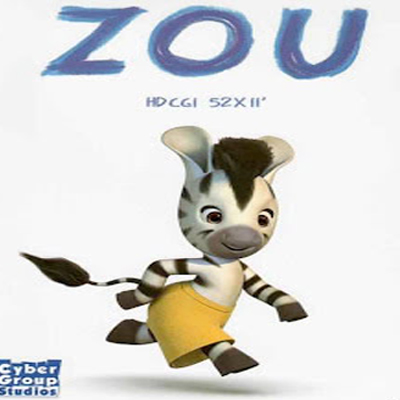
    MUMBAI: ZeeQ, India’s first edutainment channel is all set to launch the animated seriesDinosaur Train and Zou in India. The channel has acquired the Indian rights for these series which cater to the preschooler audiences.

    Dinosaur Train has been honored by the Parents’ Choice Silver Honor TV series award, which is a mark of acceptance by parents as a preferred choice for their toddlers’ TV viewing. The half-hour show features two animated episodes with a real paleontologist interacting with kids who love to explore the world around them. Dinosaur Train, the Emmy nominated series, starting today, will air every Monday to Thursday at 4:30 pm on ZeeQ.The second offering is Zou, a French hit animated preschool series, which follows the adventure of a lovable five-year-old Zebra. The show subtly touches every theme of early childhood and aims to inculcate family values in children. Zou has been broadcasted in more than 140 territories and in 24 different languages around the world. The series became a worldwide success within a year of its telecast in the UK. Starting 28 August, Zou will air every Wednesday and Thursday at 2:00 pm on ZeeQ.

    With the launch of Dinosaur Train and Zou, ZeeQ aims at strengthening its preschooler program portfolio. Some of the other well-known preschooler animated series that air on ZeeQ are from the CBeebies brand namely Teletubbies, Charlie and Lola and 3rd & Bird.
    Commenting on the development, ZeeQ business head Subhadarshi Tripathy says, “ZeeQ has been working towards bringing in content that is in the best interest of children and their parents. Both the series provide clean and safe content for preschool children. While Dinosaur Train helps in building scientific thinking through the content of the show, Zou aims to inculcate lessons about growing up and family values. Such educative series help in early childhood brain development and instill moral values at their tender age.”

    ZeeQ caters to the 0-14 year age segment. The channel currently airs a mix of live-action and animated shows. Some of its prominent shows include Teenovation, Science with BrainCafé, Word Match and M.I. Four – The Multiple Intelligence Quiz.

  • Marc Webb ecstatic with response to The Amazing Spiderman in India

    Marc Webb ecstatic with response to The Amazing Spiderman in India

    NEW DELHI: Renowned director Marc Webb, whose latest film The Amazing Spiderman is continuing to create newer records in India, has said Spiderman ‘is a character that many Indians have grown up with and hold dear to their hearts.‘

    In a letter thanking Indian audiences for giving it the largest opening for any Hollywood film in India, Webb said, “We are honoured to be part of the continuing legacy of Spiderman in India.”

    “We hope that you will continue to offer us the same support in the weeks to come as The Amazing Spiderman continues its record-breaking run at the Indian box office,” he concluded.

    ‘The Amazing Spiderman‘, one of the few films from Hollywood that was released in India on 29 June prior to its international release on 4 July, opened with over 1000 prints which is the largest ever release for a Hollywood film in the country.

    The film was released in 3D, 2D and IMAX formats, and in four languages – English, Hindi, Tamil and Telugu.

    One of the world‘s most popular comic characters, The Amazing Spiderman tells an untold story of the Peter Parker tale. The new film stars Andrew Garfield, Emma Stone, Rhys Ifans, Denis Leary, Campbell Scott, and India‘s Irrfan Khan with Martin Sheen and Sally Field.

    The film is directed by Marc Webb from a screenplay written by James Vanderbilt, based on the Marvel Comic Book by Stan Lee and Steve Ditko. Laura Ziskin, Avi Arad, and Matt Tolmach are producing the film in association with Marvel Entertainment for Columbia Pictures.

  • India, Poland sign audio visual co-production agreement

    India, Poland sign audio visual co-production agreement

    NEW DELHI: India and Poland have signed an agreement that will make it easier for filmmakers from both the countries to collaborate in filmmaking and also lay down the extent of financial contributions (usually ranging between 20 – 80 per cent).

    Besides, the agreement has provision for both co-producers to make effective contributions, modalities of sharing honours and prizes and exporting films.

    The audio visual co-production agreement was signed by Information and Broadcasting Minister Ambika Soni and Polish Minister of Culture and National Heritage B Zdrojewski at Warsaw.

    The agreement establishes a legal framework for relations regarding audio visual co-production, especially films including animation and documentary films for the cinema and TV, as well as films intended solely for dissemination on analogue or digital data carriers. The agreement shall remain in force for a period of five years from the date of its entry into force.

    The signing of the agreement ensures better partnership and collaboration between enterprises and institutions which produce, distribute, and disseminate films. The inter-governmental co-production agreements are umbrella agreements, under which private, quasi-government or governmental agencies enter into contracts to produce films together. The films so produced are treated as national films in both countries and such films cannot be treated differently from a domestically produced film in each of the co-producing countries.

    One of the key highlights of the agreement is the coverage of filming and animation work, including the storyboard, layout, key animation and in between as well as sound recording. The purview of the agreement also covers laboratory processing activities and facilitates movement of film equipment and associated infrastructure required for co-production. The agreement would also facilitate producers, screenwriters, directors, technicians, actors and other specified personnel to enter and briefly stay in each other‘s country.

    Currently, as part of the initiative, the Government has signed co-production agreements with Italy, UK, Northern Ireland, Federal Republic of Germany, Brazil, France and New Zealand.

  • India, Poland to sign pact on exchange in film sector

    India, Poland to sign pact on exchange in film sector

    NEW DELHI: Information and Broadcasting Minister Ambika Soni, now on a visit to Poland, is expected to sign an Audio visual Co-production Agreement with the Polish Minister of Culture and National Heritage B. Zdrojewski to provide a legal framework for promoting production of films for Cinema and Television.

    As part of the initiative, India has signed co-production agreements with Italy, UK, Northern Ireland, Federal Republic of Germany, Brazil, France and New Zealand.

    One of the key highlights of the Minister’s three-day visit from 3 to 5 July visit is expected to be discussions regarding preservation of film Heritage at the National Film Archives of Poland. It is expected that the initiatives taken by the Government for promoting film preservation and film restoration through the National Film Heritage Mission will be shared with the Polish Government.

    The Minister is also expected to highlight the potential of the Indian film Industry in the context of promoting India as a ‘Filming Destination‘. The Polish authorities would be detailed about the initiative of the Ministry to establish a Films Commission to promote single window clearance for necessary permissions to foreign production companies and film makers. It is expected that this idea will also facilitate film tourism in the country. This would not only result in increased visitor influx and therefore greater earnings, but also generate increased employment opportunities for the indigenous film sector.

    The visit is expected to highlight the initiatives taken by the Government for Centenary Celebrations of Indian Cinema and the enhanced participation of Poland during the International Film Festival at Goa later this year.

    During the visit, the Minister is expected to have detailed discussions with her Polish counterparts in the Broadcasting and Films sector. On the agenda is also the meeting with the officials of the Polish National Television, TVP. It is expected that experience of Doordarshan as a public service broadcaster with nearly 1500 transmitters will be shared in terms of programming, content development, infrastructure roadmap and reach.

    The possibility of bringing synergy and promoting cooperation between the activities of the two national broadcasters would also be explored in the areas of training exchange programmes, sharing of technology, content development including software and possibility of promoting DD through its DTH platform in countries such as Poland.

    The discussions will include ways to enhance cooperation between the Directorate of Film Festival and Polish Government. The endeavour would be to organise Film Festivals in both countries as per mutually agreed terms and conditions. During the last film festival at Goa, a special package on spot light on Poland was organised.

  • ‘We have been growing at 9-10 per cent every year’ : Viacom18 EVP and GM Sonic and Nickelodeon India Nina Elavia Jaipuria

    ‘We have been growing at 9-10 per cent every year’ : Viacom18 EVP and GM Sonic and Nickelodeon India Nina Elavia Jaipuria

    Nina Jaipuria, the EVP and GM for Sonic and Nickelodeon India, is bullish about the kids genre despite the challenges that exist. Jaipuria, who has been at the helm of Nick for more than five years, is hopeful that the channel will bounce back to its 2009 position when it topped the genre.


    In an interview with Indiantelevision.com‘s Javed Farooqui, Jaipuria says that Sonic, the action and adventure channel that launched in December last year, will also witness growth. She sees the viewership of kids channels going up in the Southern market, where the local GECs still hold a stranglehold on family viewing.


    Excerpts:

    You have been at a GEC (Sony) and since last six years, you are handling kids channel. Which genre do you find more challenging?
    Both the genres are equally challenging. But to my mind, capturing the kids is more challenging as they get bored faster. Kids have shorter attention span. Saas-bahu serials can run for 10 years and you don’t get bored but try doing that with children. It’s impossible… which really means that you have to innovate that much more quickly and stay ahead of the curve.


    Unlike GEC where you need non-fiction to get the eyeballs and then the fiction takes care of your bread and butter, I think there is no such concept in kids genre. I think it’s a tougher category also because we have huge pipeline issues and the timelines. A GEC channel can produce a show in two months but for us it will take two years because it is animation. So the pipeline is so much tougher and therefore we have to plan that much in advance. Having said that, the GEC category is also difficult because we are talking about a scale that is very large and thanks to competition, the risk there only gets higher.


    However, if you build kids loyalty, then it is about how you keep them going. Your challenge is how you can bring them to the channel day after day.

    Despite being third in the pecking order, why does the kids genre not command the kind of ad revenues it should?
    It is hugely under-indexed and that has been going on for a long time. We were given for free and there is a CPRP benchmark that no advertiser is willing to pay that much.


    However, advertisers have started believing that kids have a lot of peer pressure, purchasing power and influence on family purchases. And, therefore, you see advertisers coming to the kids category. But it is growing slowly and steadily. Five years back, the market was Rs 1.4 billion and today it has grown to Rs 2.5 billion.

    Will slowdown have an impact on ad spends?
    In 2009, when there was a slowdown, we did not really witness it as much because a large portion of advertisers who advertise on kids channels are FMCGs, food & beverages and toys, which did not cut back that much compared to radio or print because they have more local advertisers and more of retail and finance.

    Coming to Nick, position wise the channel has slipped to No. 2 or 3. How do you plan to get back on top?
    We are the number two or number three player in the category. Summer has been good and thanks to all the new content that has gone on the channel, we will continue to retain our number there position.


    We retained the top position for two years and I think that is a long enough time. We hope to come back (to the top position). Everything that goes up has to come down, these are all cyclical vagaries of the business.

    ‘Sonic and Nick are two different brands. While Nick is humour and little of action, Sonic is a hardcore action and adventure brand‘

    Oggy and the Cockroaches was one of your tentpole properties. This has now shifted to Cartoon network. What do you think about your other properties?
    My tentpole property is Ninja Hattori and I would have also said Oggy and the Cockroaches but it has now moved to Turner (Cartoon Network). But Oggy gave us a good result for the three years that it was with us. So with all due respect, these are vagaries of the business and we are planning to build our own properties. We have Keymon Ache, of which we have already done 26 episodes and have greenlighted the second season of the show.


    We launched Power Rangers and now we have new Power Rangers coming back. Then after Samurai, we have Super Samurai. We have the third one as well in 2013. Thus, we will have a lot of Power Rangers as a property to build. Then there is Kung Fu Panda that we will build. So we will have a lot of solid shows post the Oggy also.

    What are the genres you are looking to build content for Nick?
    When we started, it was a mix of humour, comedy and various strands of it – slapstick comedy, silent comedy, family comedy shows and Keymon kind of shows.


    Kung Fu is a mix of comedy and action which according to me is the only show of its kind which had comedy and action put together. But slowly we realised that our kids are moving towards action even from a category point of view. Look at what’s happening with video games. So we believe that there is a little bit of action required on Nickelodeon. The only action show we are showing on Nick is Power Rangers Samurai so that those kids who want action don’t go anywhere.

    What about Sonic?
    Sonic and Nick are two different brands. While Nick is humour and little of action, Sonic is a hardcore action and adventure brand. So we have shows like Ultraman, Jackie Chan, Super Strikers, and Ghost at Schools.


    Sonic has done very well to get 8 per cent share in a difficult category as children are slow to changing habits. I think there was a gap in the market as no channel was offering 24X7 action and adventure as a proposition. So kids had to go to MTV Roadies, Fear Factor or once on a while they would go to play video games or watch movies like Dabangg. This gap we fixed with Sonic.


    When kids are growing up, they are shying away from watching kids’ channels. But they were not big enough to go to MTV or Vh1. So we found out a nice gap as well as target audience. In fact, Sonic is doing very well in Mumbai, Delhi and Kolkata. We have got an eight per cent market share within six months and 22 per cent reach in 85 minutes of time spent, as of last week.

    What are your revenue expectations from the two channels?
    We have been growing at 9-10 per cent every year and I hope that we continue to grow at that range. From revenue perspective, ad sales is the big brother. Subscription is not significant at this stage but should grow post digitisation. After that comes licensing and merchandising, but they are taking only baby steps.

    How are you growing the L&M biz?
    We are increasing our character base and with that we are increasing our product range. We have 55 licensees on board this year across categories. We can grow this with depth and width. What I mean by width is that we increase characters. Every single character grows into every single product category. When I talk about depth, we look at every single category in the life of a kid.


    We have launched footwear with Metro shoes, we also have toys of popular characters like Dora, Ninja and Spongebob. TI Cycles is going to offer co-branded Dora The Explorer and Ninja bicycles. We also have DVDs and VCDs coming for Keymon and Dora.

    Talking about content, still most of the content on your channel remains animation. Why is it so?
    Except Power Rangers and Ultraman, almost all of our content is animation. The reason we do so much animation is because kids come to the category for two reasons: one is to get rid of boredom and second is get rid of all pressures. And animation is the only alternate universe, which allows them to enter the fictionary and imaginary world which allows them to get rid of boredom. Try to do that with live action and you can never achieve it as it is as real as it can be. Because we are a tailor-made category for children, animation will always be the fulcrum.

    But kids’ channels are experimenting with Hindi movies also.
    Even I don’t understand that. I put movies on Sonic because I think adventure as a genre is served with movies. But we put on kids’ movies like Jurassic Park that are catering to that genre.

    But is it to prevent them from shifting to other genres?
    I think they are passive viewers. They are captive audiences to what they watch and, therefore despite fragmentation, the category continues to grow. The fact is that kids continue to come back to the category because the content is tailor-made for them. The only reason why the viewership hasn’t grown to the extent it should have is because India is largely a single television household.

    To what extent did the IPL impact the genre?
    Fortunately for us, we don’t have a fixed prime time slot. And it never had much of an impact because for us we have viewership throughout the day and IPL matches were at 4 pm and 8 pm. It’s not like a GEC where 8 pm is prime time.


    We do have 12-3 pm and 6-8 pm as primetime slots. And the best thing about the country is that in some cities, kids go to school in the morning and in some cities in the afternoon. So somebody is watching us at all hours of the day.

    While the kids genre is seeing growth in the HSM, the same cannot be said about the South market. Why?
    That is because all of us are late entrants to the South market. We launched our Tamil and Telugu feed for Nick one year back. Also, kids in those markets have been watching the local content for very long in their own language. But it’s picking up.

    How much do you focus on digital medium for connecting with your target audience?
    To me, digital is important because our TG is more digital savvy than you and me put together. Interactivity has become a large part in the kids’ space today because they have access to mobile and internet. They communicate with us on nickindia.com or sonicgang.com. We also have Power Rangers games on both these websites, besides downloads and wallpapers. There is a lot of interactivity that is happening there. Then we have contests happening on Facebook. The Keymon game on Nokia has got two million downloads. We have over 200,000 fans for Nick on Facebook and over 100,000 fans for Sonic.

    What are your plans for the year?
    We have two big shows coming up on Nick – Cedric and Tony and Alberto. Cedric is about a boy who is mischievous and wants his grandfather to help but normally they are more in trouble than out of it. Tony and Alberto is about the story of a boy and a dog. Both are very mischievous and funny shows talking about the 9-10-year-old boys. The shows will be coming on air in July. We have two new shows coming on Sonic as well – Ghost at Schools and Teenage Mutant Ninja Turtles.

  • MTV outlines characteristics of India‘s youth

    MTV outlines characteristics of India‘s youth

    MUMBAI: For India‘s youth marketers, there are three important characteristics that they need to keep in mind before tapping into this segment.

    The youth function as one. Each individual in distinct and the
    instinct is to maintain this distinction. Individuality is something that the youth refuse to trade with while continuing to display cohesive behaviour as a group.

    The second significant trait is that while being modern in thinking and expression, India‘s youth values the family. While society norms do not seem to bother them, parental perceptions and approval still matter.

    The third thing to notice is that the youth today, thanks to the high levels of exposure, is already inspired. What it wants is engagement.

    These are the findings of a research report by MTV on the attitudes and preferences of the youth. The research explores how the youth view themselves, what makes them tick and their modes and methods of expression.

    Empowered with information and digital platforms, youth has the ability to start revolutions, trends and movements that transcend demographics and geographies. In a crude way, they behave as one family where each member is in sync with the other.

    They present a unique case of participation, collaboration and competition. They are constantly involved in an informal match of one-upmanship through the various media available to them. Knowing is no longer enough. Being the first to know and having accurate up-to-date information separates the uber cool from the cool. Eighty nine per cent research online before making any purchase decision. They operate on multiple screens and live in the fast lane. They are the new age social butterflies aptly renamed digital butterflies.

    When asked whether they feel that the youth has the power to change or influence society, 72 per cent responded with assertion that they do feel so. An average 26 per cent were not too sure about it and a paltry two per cent believed that this was not the case. This shows the confidence that the youth has in itself and the conviction for making a difference as a unit.

    The youth of today is a participative lot. 42 per cent said that they would participate in a movement for a cause that affects them. This feeling was resonated across religions and genders. The study showed that females are slightly more participative with 46 per cent agreeing to participate while 41 per cent males responded positively. The research also showed that the will to participate in a movement is strongest among self starters (48 per cent), followed by students (42 per cent) while the salaried show least inclination (37 per cent). The younger age group between 15 and 21 years ie more likely to get involved in a movement (43 per cent) as opposed to those between 22
    and 24 years (40 per cent).

    They are largely independent of media influence when it comes to making significant decisions. The most important factor in decision making for the youth today is personal experience (32 per cent), followed by parent appreciation (26 per cent) and family approval as a whole (24 per cent). The least to affect the youth’s decision making process is media appreciation and fame (two per cent). Being
    particular about maintaining their identity, the youth co-creates content. With the digital platform, it is now possible to comment, criticize, applaud, modify and reinvent content.

    The social norms do not deter the youth from exercising their personal identities. When asked about the importance of society in decision making, 56 per cent replied that while the societal perceptions do bother them, they will go ahead with their decision if they feel they are right. Thirty seven per cent blatantly refused to acknowledge the society’s views while eight per cent admitted to never wanting to go against society sanctions. While more males were resistant to societal norms (39 per cent) than females (28 per cent), the fairer sex felt more strongly about going ahead with their decision, societal norms notwithstanding, on the basis of personal conviction (65 per cent) as opposed to males (54 per cent).

    The youth act as influencers in their own circles. When asked whom they feel they can influence the the maximum, the popular answer was parents (82 per cent felt so). Parents were followed by peers (57 per cent), siblings (39 per cent), professional colleagues (36 per cent), girlfriend/boyfriend (35 per cent) and social network connections (34 per cent). The government (15 per cent), brands/companies (12 per cent) and legal authorities (11 per cent) figured in the bottom three of the youth’s perceived spectrum of influence list.

    The youth of today is a passionate lot, given that they see logic in the cause. They prefer using their minds, weighing the pros and cons and then commit to a cause. According to the study, the youth find that corruption is the most significant societal issue that affects them today (21 per cent). This is followed by unclean surroundings (19 per cent), the issue of reservation or quota system (17 per cent) and pollution (eight per cent). Surprisingly, illiteracy (to per cent) and poverty (three per cent) got the least attention from the youth.

    The research stumbled across the concept of relevant causes versus glamour trends. While the former refer to more realistic and directly impacting issues like bad canteen food or ragging, the latter refer to causes that have gained momentum and are akin to trends. While relevant causes calls for high levels of involvement, glamour trends earn the youth participation points.

    When asked what motivated them to be a part of the movement, neither relevant causes nor glamour trends emerged winners. Forty one per cent of the sample size said that the reason for participation was that it was the need of the hour. Fifteen per cent participated as it had a direct impact on their lives while two per cent participated under peer pressure.

    The youth of today uses the mobile device as its primary tool for communication. Mobile phones have gained importance for not only receiving and making calls, but also in maintaining an online presence. Forty per cent of the youth today use the mobile to search Internet sites for various things while 41 per cent use it to access Facebook and eight per cent use it to tweet on the move.