Tag: India

  • Graphic India appoints Salil Bhargava as COO

    Graphic India appoints Salil Bhargava as COO

    MUMBAI: Graphic India, a character entertainment company, has appointed former Jump Games CEO Salil Bhargava as Chief Operating Officer (COO). The company is focused on creating leading characters, comics and stories for the Indian youth market through mobile and digital platforms.

    Bhargava, an veteran in the industry and brings more than twelve years of experience in media, entertainment and digital companies in India and overseas, will report to Sharad Devarajan, Co-Founder and CEO of Graphic India.

    CA Media, the Asian investment arm of The Chernin Group, had acquired an undisclosed large minority stake in Graphic India in January this year.

    Commenting on the new appointment, Graphic India Co-Founder & CEO Sharad Devarajan said, “Salil has been a leading force in pioneering India‘s mobile entertainment industry over the last decade and I am delighted to bring his experience to Graphic as we build a digital media company that transforms the Indian character entertainment industry with new heroes and stories to inspire the world.”

    Commenting on his appointment, Bhargava said, “I am thrilled to be joining Graphic India which is setting new boundaries in creativity for character entertainment in India. Sharad and his team bring an unparalleled level of experience in this space and there cannot be a more exciting company to work with as we pioneer digital initiatives to make Graphic‘s unique and ground breaking content available across every digital device in the country.”

    Salil has a Bachelors Degree in Commerce from Symbiosis College of Arts & Commerce, Pune. He has studied at Michigan State University in USA and holds an MBA degree from Eli Broad Graduate School of Management.

    Graphic India‘s stories include, Ramayan 3392A.D. and The Sadhu, both currently in development as Hollywood feature films; 18 Days, a reimagining of the great eastern epic, the Mahabharata, by acclaimed graphic novel creator, Grant Morrison; Chakra The Invincible, the first superhero for India from legendary creator Stan Lee; and numerous other heroes and stories.

  • India-based British documentary wins second prize in Audience Awards at Berlinale

    India-based British documentary wins second prize in Audience Awards at Berlinale

    NEW DELHI: Salma, an India-based documentary by British filmmaker Kim Longinotto, has received the second place in Panorama Audience awards at Berlinale.

    Salma chronicles the life of a woman from south India who was locked by her parents on reaching puberty and decided to fight her way back to the outside world twenty-five years later. She is now a well-known poet.

    The Panorama Audience Award has been given since 1999. During the Berlinale, movie-goers were asked to rate the films shown in the Panorama section and over 28,000 votes were cast and counted altogether. This year the Panorama presented 52 productions from 33 countries, of which 20 were documentaries.

    The 63rd Berlin International Film Festival will come to a close on February 16 with the presentation of the awards.

    The first prize for documentaries went to The Act of Killing by Joshua Oppenheimer which is a Denmark/Norway/Great Britain collaboration. The third prize went to A World Not Ours by Mahdi Fleifel (Lebanon/Great Britain/Denmark).

    In fiction, the prizes went to: The Broken Circle Breakdown by Felix van Groeningen (Belgium/Netherlands); Reaching for the Moon by Bruno Barreto (Brazil) and Inch‘Allah by Ana?s Barbeau-Lavalette (Canada/France).

  • PM applauds celebration of Indian cinema centenary in France

    PM applauds celebration of Indian cinema centenary in France

    NEW DELHI: Prime Minister Manmohan Singh has said that the decision of French film Festivals including Cannes to celebrate the centenary of Indian cinema will further strengthen cultural relations between India and France.

    Singh said this in a statement to the Media during the state visit of French President Francois Hollande to India in New Delhi today:

    Singh said culture is as strong a binding force as any between India and France and a new Cultural Exchange Programme was signed today.

    The second edition of “Bonjour India” is being organized currently in India.

  • India heading towards oligopoly in sports broadcasting: Zeel Sports Business CEO Atul Pande

    India heading towards oligopoly in sports broadcasting: Zeel Sports Business CEO Atul Pande

    The events in 2012 could be an indicator at how the sports business will look going forward. An oligopoly, with two primary broadcasters driving the business. This is a similar model to what happens internationally, where one or two large broadcasters drive the business and share most of the content and the platform play. Sports viewing will become more expensive, innovation will drive broadcaster hooks to drive affiliation, and High Definition will start becoming a real player in the business. By definition, therefore, being marginal will not remain an option. And yes, some definitive steps will be made towards profitability.

    This was a very LIVE heavy year. Almost 50 days of live India cricket, and more than 200 days of international cricket from other boards. Fully loaded IPL with nine teams, all the key European football leagues broadcasting most of their wares, new Indian leagues coming up with live products ensured that the sports enthusiast has enough to watch throughout the year.

    Sports penetration increased to 22 million households. The genre share continues to hover around 6 per cent. Most of this is now split between two broadcasters and they are must have bouquets to have for any platform worth its value in a very scattered broadcasting market.

    Internet continued to emerge as a credible platform. With more than three million tablets in India and 15 million broadband users, and growing at a substantial rate, it will become a platform of choice for some users eventually, and it continues to be a space to watch out for. Ten Golf launched an iPad and iOS application for live streaming and the response has been very encouraging. We will see much action on the Streaming side of the business in this area, and pricing scenarios will begin to evolve this year as the user base settles down.

    Indian cricket changed hands once again on record payouts. Cricket viewership growth remained tepid across the board. Football continued its spectacular growth by increasing its reach to 11 million households and in the metro markets it is a credible and a driver product. While the other sports remained marginal, they continue to demonstrate growth and build affiliation. Football content prices are now starting to demonstrate the cricketsque growth rates of the 90s and will put the revenue model of the product under pressure going forward.

    Much touted digitisation has commenced, and could be a game changer for the industry. As I write this, there is confusion on the ground but the landscape is quite positive. Clearly, sports will become a part of high value packs of the operators and full pricing delivery will kick in for discerning customers. To that extent, delivered penetration at the platform level will improve for all players, driving significantly enhanced revenues at the erstwhile analogue customer and the platform levels. This revenue action has been demonstrated at the DTH operators for the last couple of years, and the same should translate at the analogue level now. The key issue I see is the timing of the new industry structure, which may set back the real delivery by a few months as the packaging, MSOs and their LCO brethren settle down in the new regime.

    The other issue that will become transparent and lead to debate is the whole pricing paradigm around niche, and especially sports channels. My hypothesis is that some of the current channels at their current pricing will find it difficult to sustain their operations and the regulator will have to look favorably at pricing changes for key sports channels. There is a market for highly niche, high value channels that needs to be developed. High value and pay per view solutions will have to be considered and approved to help these products retain their quality and their business models. This is an imperative, which cannot be postponed anymore, and the niche and sports operators will have to espouse these causes with the decision makers.

    As we move to a new stage in the sports broadcasting arena, I also see a new dawn in the rural sporting landscape. This is one area where, because of the way sports channels have evolved and have become largely urban, up market products, there has been lack of focus, and initiative. I forecast 2013 as the year when we will see the birth of some rural leagues in India. I see Kabaddi and Kushti (Wrestling) as products, which will garner immediate traction and will be able to generate sponsor support too. The interesting thing to notice would be placement of these products – how do the sports channels with their urban mindset deliver these products to their eventual viewers and build credibility in this segment. So watch this space for some interesting action.

    As the sports broadcasting has moved to the next stage in India, the last few years have been extremely trying financially for the business. The financial model which has evolved mandates that 70 – 80 per cent revenue of the business comes out of the subscription vertical, and most of the acquisition strategy is built around that. The industry has been suffering because the cable analogue side of the business has not supported it as much as it should, and I hope in 2013 all of us collectively are able to drive that part of the business for consumer and enterprise value.

    We deserve it, to support our viewers, our investors and other stakeholders to achieve their ambitions. And above all, to help support local Indian sport and sportsmen, who deserve continued backing from the key stakeholder – the broadcaster – who helps monetise the industry. Make us healthy folks, and watch us give back to them to drive Indian sport to the glory it deserves!

    Have a terrific 2013.

  • Room for smartphone growth in emerging countries: Nielsen

    Room for smartphone growth in emerging countries: Nielsen

    MUMBAI: While smartphones have gone mainstream in many regions around the globe, adoption among emerging countries is still developing. According to new research from Nielsen, China is the only country among the high-growth Bric (Brazil, Russia, India, China) markets where smartphones are predominant, owned by two-thirds of Chinese mobile subscribers as of the first half of 2012.

    In contrast, feature phones—devices with no touchscreen, QWERTY keypad or operating system—are still dominant in India and Russia, owned by 80 per cent and 51 per cent of mobile subscribers, respectively.

    There’s no clear favourite type of mobile device in Brazil, with mobile ownership split between 44 percent feature phones, 36 per cent smartphones and 21 per cent multimedia phones (touchscreen and/or QWERTY keypad, but no operating system).

    Much the same manner as social media, smartphones–with their advanced functionality and access to a multitude of apps–influence everything from consumers’ interaction with both brands and each other, to and shopping and purchase decisions.

  • Haasan approaches CCI in Vishwaroopam release row

    Haasan approaches CCI in Vishwaroopam release row

    MUMBAI: Actor and film maker Kamal Haasan has moved the Competition Commission of India (CCI) against certain theatre associations. Haasan alleged that these bodies restricted the release of his film Vishwaroopam report the Press Trust of India.

    A senior official from CCI told PTI, “”We have received a complaint from Kamal Haasan (related to Vishwaroopam)…We are likely to take a call on the issue next week.” The complaint has been filed by Haasan‘s production house Rajkamal Films International.

    Meanwhile, Haasan has virtually ruled out the premiere of his film Vishwaroopam on the Direct-to-Home (DTH) platform ahead of its release in theatres. He has reportedly admitted a ‘change of mind‘ on proceeding with his controversial decision that had met with stiff resistance from a section of exhibitors.

    “I have changed my mind on having the premiere (on DTH platform ahead of releasing it in theatres). I will discuss (with DTH partners) on how close or far to release date (will be a DTH show),” he said.

    Hassan observed that he had taken into account suggestions from many to consider the ‘good health‘ of Tamil cinema industry before going ahead with his decision.

    “Many had requested me to take into consideration the good health of the industry and proceed with DTH. It is my primary duty to make it happen,” he said after consulting with exhibitors and theatre owners here.

    He also said that talks were on with DTH players on the issue but declined to divulge on the matter. “They have been kind to me. Will say later when the film will come on DTH,” he said.

    Haasan said the film will be released in Tamil and Telugu on 25 January as announced earlier but its Hindi release will be finalized only after further talks with industry associates.

    The tech-savvy actor-filmmaker‘s decision to have a premiere of his much anticipated trilingual action film on DTH caused ripples in the multi-million rupee Tamil cinema industry, with a section of theatre owners deciding to boycott the film.

  • ‘We need to get India more established within the Interbrand network’: Interbrand London CEO Graham Hales

    ‘We need to get India more established within the Interbrand network’: Interbrand London CEO Graham Hales

    Months after Omnicom‘s buyout of DDB Mudra Group, brand consultancy Water Interbrand has been renamed Interbrand India from 1 January.

    Interbrand, known for its annual report on Best Global Brands, will provide to India its list of Most Valuable Indian Brands in this quarter.

    Interbrand London CEO Graham Hales says the world has seen a complete digital revolution taking place across markets. This means that most customers’ first interactions with a brand will now take place digitally.

    He feels this has added democracy to marketplaces. This wasn’t there previously and adds pressure on organisations to deliver on their promise to customers.

    Hales spoke to Indiantelevision.com‘s Ashwin Pinto about the best brands list, the plans for India, the challenges that brands face in a fast changing environment and how a brand like McDonald‘s repositioned to appeal to a broader customer base.

    Excerpts:

    Q. How important is India for Interbrand vis-?-vis the rest of Asia?

    A. As an international business we need to have a presence in India. India offers tremendous potential. While there are some strong Indian brands, they have international marketplaces where they can prosper more deeply.

    Q. How is the integration of Water with Interbrand working out?

    A. It is going smoothly. We hope to welcome them to the Interbrand family next year. Processes are taking place to get them on board more deeply.

    Interbrand has a way of doing things. We have basic toolkits that people need to have greater fluency in to operate comfortably. It means consistency in terms of services that we offer clients.

    Q. What is the gameplan for India?

    A. We need to get India more established within the Interbrand network. Then we have to grow the business given the opportunities in India‘s economic environment. If the pace grows, it will be determined by the commerciality of the business.

    Q. Which are your top three markets?

    A. The US is the biggest. After that it tends to follow the patterns of global commerce. In Asia, we have two offices in China, one in Singapore, Japan, Korea. 


     ‘In the last couple of years, some changes have taken place in the branding space. One of the things is the tightening of the economy. We also have had a complete digital revolution taking place across markets. This means that most customers’ first interactions with a brand will now take place digitally. You have social media attached to that now where people are able to give their opinions about brands. This has added democracy to marketplaces’


    Q. In India people think of a brand as just a name and fancy logo. What are the other elements in creating successful brands?

    A. A brand has many touchpoints where it may spring to life. While a logo might be a point of identifying one organisation from another, there are opportunities in terms of how an organisation uses its people, its behaviours, its products and services. The channels it uses and the way it communicates is also important. All this should be directed by the brand. Metrics allow you to understand a brand from an internal and external perspective.

    Q. Does having local offices make it easier to handle differences in culture and attitudes towards global brands?

    A. We offer international benchmarks of best practices for our management. But we also have local people who understand the culture, placement of the brand within a particular market, and fluency over the consumers in that market. Local talent represents consumers.

    Q. What strategy has Interbrand followed in the past couple of years to grow its presence globally?

    A. We continue to advise and help organisations create and maintain brand value. Our services are linked to how a brand drives value into an organisation. We have 40 offices in 36 countries. We are the only consultancy that has brand valuation sitting at the heart of the business. Everything that we do links back to helping organisations create brand value. We have created processes that help organisations manage their brands.

    Q. What are the challenges Interbrand faces due to economic slowdown?

    A. Markets are moving faster than they have before despite the economic slowdown. Consumer‘s attitudes are moving quickly. So brands also have to move fast. They have to make sure that they are changing at the pace of their markets.

    One of the interesting things of the slowdown is that organisations have focussed on the supply side of their business in terms of keeping costs down as low as possible. But they also should look at managing the demand side of their business where brands have a role to play.

    That is where customer loyalty comes from. That is what gives the security to a big company to make investments in the future. The opportunities lie in the strength of brands giving a competitive edge to organisations. These opportunities are deep and significant.

    Q. Over the past couple of years what changes have happened in the branding space?

    A. One of the things is the tightening of the economy. We also have a complete digital revolution taking place across markets. This means that most customers‘ first interactions with a brand will now take place digitally. You have social media attached to that now where people are able to give their opinions about brands.

    This has added democracy to marketplaces. This wasn‘t there previously and adds pressure on organisations to deliver on their promise to customers.

    Q. Is flexibility in terms of how Interbrand serves clients more important given the difficult economic climate?

    A. You have to be able to have agility to move in the way that the market wants you to move. You have to listen very carefully to your clients to understand how you can best help them. Any effective consultancy has to be agile to the marketplace.

    Q. Could you give me a few examples in the past couple of years of working with clients to create identification, differentiation and value?

    A. We have worked extensively with Hyundai to make them understand how their brand drives its value. You can link that back to what you should be doing more as a business to enable yourself to become a stronger brand to continue to compete across the marketplace.

    Hyundai has become a bigger and a more significant brand globally. A few years ago Hyundai was not present in some markets and did not necessarily drive consumer choice. We help organisations understand where the value of their brand comes from. We help them understand the strategy that they should pursue to get their brand to be stronger and apply more competitor advantage to give the brand a better opportunity to drive consumer choice in the marketplace.

    Q. With offline and online brand experiences constantly intertwining, brands need to stay actively engaged with consumers. How does Interbrand ensure that its clients do this?

    A. One of the fundamental shifts that has changed is that purchase used to feel like a linear device. People had a disposition to shop for a brand in a particular category. They would go to a retail store to experience brands and decide which brand they wanted to buy.

    Now it is a more dynamic and chaotic process. People will consider a purchase and go online. This adds brands in and takes brands out before they arrive at the point of purchase. So the whole process has become more chaotic and more exciting. There are different routes to go to market now.

    We help organisations understand how their brand should come to life within markets. Therefore we decide on the digital strategy that they should have to maximise the role of their brand.

    Q. Do brands like Apple follow a common trajectory to become powerful?

    A. All these things are idiosyncratic. Any brand that has a clear idea of its own personality will understand how it should use opportunities in a market to help navigate decisions. So if a brand just tries to replicate what competitors do, it is not going to end up being distinctive or differentiated. Great brands are business strategy brought to life. They deliver a seamless experience across products and services, physical spaces and places, internal culture and communications.

    Apple in its history has succeeded in innovating. They have thought very deeply about that. They have humanised their technology very effectively and so it does not feel like another technology. It feels like a brand in its own right that happens to be in the technology market. They have a number of things growing right.

    Q. In terms of managing a brand‘s reputation that has been built over the years ,what are the key things to keep in mind?

    A. You to have to be clear about what the brand idea is. You have to show that commitment to the brand idea so that the organisation can respond to it. It can then feel authentic inside the business. You have to protect the brand zealously which is what Samsung did in its patent fight against Apple. You have to move responsibly in the market.

    You have to understand what is different about the organisation. This has to be driven so that it is understood. There are 10 brand strength factors that we monitor to find out about the health of a brand and find opportunities for its continued growth.

    Q. Coca-Cola has been number one in your list for a long time. Technology companies have also grown. What separates them from the rest of the pack?

    A. Coca-Cola has a 126 year history. That provides an opportunity for them. There are 3500 products within the Coca-Cola portfolio. Around 1.8 billion Coca-Cola products are consumed on a daily basis. Can it keep pace with challenges is the question.

    Google has moved beyond its core product offering into more diverse offerings. These will give greater revenues in the future. The financial performance of a brand will depend on its ability to create brand value.

    Q. Yahoo! no longer has the presence that it once did. Where do you see it going from here?

    A. Yahoo has been on the decline for the past 10 years. Although the web portal pioneer is the fourth-largest site on the internet and has an audience of millions, it has been making news not for its achievements, but for its missteps.

    Yahoo struggles to compete in search, email, and data sharing. Acquisitions such as Flickr have been underutilised. Without fully developing social elements, Flickr ceded ground to Facebook and Instagram. On top of that, Yahoo‘s revenues have been waning for years and its content, while a dominant force in online news, needs to evolve.

    Potential buyers have been circling the troubled company for the past two years and, so far, no one has been able to revive the ailing brand. Enter Marissa Mayer – a former Google executive, now Yahoo‘s CEO. A bold hire by anyone‘s estimation, there is now more hope than ever for a turnaround at Yahoo.

    Q. So you see Yahoo! possibly being able to become more competitive?

    A. Yes! The company has potential to make a comeback: it has strong brand recognition, a vast audience, and despite challenges, revenues are up. Yahoo must realise that the content it‘s now developing will come to define it as a brand and that, in a world overflowing with information, differentiation has never been more important.

    Q. Nokia has struggled and has fallen in the list. Is that because they failed to see changes in market dynamics?

    A. Nokia has struggled to innovate at a pace and parity with the likes of Apple and Samsung. It has fallen behind from where it was in ascendancy some years ago. It has struggled to keep pace with the market and keep its technology working in tune with consumers demands.

    Q. What is your take on Disney?

    A. Disney is still a much loved brand and has great opportunities in the future. It is just a question of whether it can keep pace and maintain relevance in the market that it is serving. It needs to create great movies that work for kids and contemporary audiences. It shouldn‘t only rely on the warmth of yesteryear.

    Q. Is it a question of a company just living on legacy?

    A. Legacy is good for a brand. It is a question of how they are using that legacy to project themselves into the future. To thrive in the long term, Disney must rediscover its core as a global entertainment powerhouse — and reclaim its standing as one of the world‘s great innovators. Few companies have a heritage so rich, meaningful and worthwhile to millions of people of all ages and backgrounds around the world. That is not something to be squandered; it is something to build upon.

    Q. Finance brands like Barclays were hit by the Libor scandal. What do they need to do to regain lost ground?

    A. These brands have struggled since the 2008 downturn. They should be significant to us. With an aging population globally, we need to get better financial planning into our lives. But they need to create products and services that we feel a proximity towards. They have a lot of work to do to bring trust back into them.

    Q. Auto has been going through a tough time. How is this segment faring?

    A. Automotive brands are becoming more attuned to the emotional connection consumers have with their cars. This has caused many automakers to develop more effective, technologically savvy ways to reach target markets and help prospective buyers better relate to car brands.

    Audi‘s digital showroom, Audi City, is revolutionizing the future of retailing by combining digital product presentations and personal contact with dealers. Similarly, Ford is working hard to improve MyTouch, its in-car communications and entertainment system. Brands like BMW and Hyundai are investing in global brand campaigns and are becoming more digitally connected and tailored to narrower target groups. For the most part, the entire industry appears to be focussed on engaging customers and prospects in a more relevant and personalised manner throughout the entire purchase cycle.

    Q. Luxury brands have proven resilient despite the slowdown. What is the reason for this?

    A. Despite the current economic landscape, all of the luxury brands in this year‘s report increased their brand value. As the meaning of luxury shifts, this year‘s top luxury brands reflect a changing global consciousness – with success dependent not only upon a portfolio of superior products and superb quality of service, but also a strong cohesive brand, a formidable digital presence, and reputation that is timeless, elevated, and refined. The 2012 Best Global Brand report includes seven luxury brands: Louis Vuitton, Gucci, Hermes, Cartier, Tiffany and Co., Burberry and Prada.

    Q. Where do you see Sony moving as a brand?

    A. Sony remains a leader when it comes to innovation and creativity, but even with a strong portfolio of sub-brands such as Bravia, Vaio, Cybershot, Playstation and Xperia, Sony continues to see challenges.

    The silo structure of the brand inhibits its ability to build brand value across platforms and products. Disruptions following last year‘s disasters in Japan, financial distress globally, and a loss of leadership in key categories have put pressure on the brand. Determined to revitalise the business, Sony has unveiled an array of new products: three new Xperia smartphones, a new splash-proof Tablet, a hybrid laptop VAIO PC, a new NEX camera with built in Wi-Fi and enhanced NFC enabled headphones and audio devices.

    Additionally, Sony unveiled its first 4K TV, an 84″ showstopper promising a totally immersive experience. Building on the impact of this “product offensive,” Sony‘s “Make.Believe” message is reigniting the brand and inspiring people to rediscover this once-dominant leader. With a unified brand message, plans to increase its marketing spend by 30 per cent, and a ‘laser-focused‘ new CEO, Sony looks like it‘s serious about a comeback.

    Q. How do you see Facebook evolving?

    A. The forthcoming year poses some major hurdles for Facebook. The migration of users to its mobile platform is surging by 67 per cent year-on-year, a good sign that Facebook remains relevant. The migration to mobile has resulted in one-third of Facebook users spending less time on the traditional site than they were just six months ago. Facebook must determine how to make mobile profitable very soon and without alienating users. But if there‘s a service that can combine relevant content with an ad model, Facebook seems more than up for the challenge.

    Q. How has McDonald‘s benefitted from more focus on brand management?

    A. McDonald‘s, the leading global foodservice retailer, stands out because of its exceptional brand management, significant global presence, leadership in sustainable practices and admirable approach to consumer engagement. McDonald‘s has more than 33,500 restaurants in 119 countries and the Golden Arches continue to expand, most notably in Asia.

    The company deftly manages its franchise model, delivering a remarkably consistent customer experience while still allowing for locally relevant menu and service variations (such as home delivery in India and China). The company is also working to respond to critics by increasing the number of healthy menu options and effectively communicating its sustainability efforts to both customers and employees, building energy saving and waste reduction into staff incentives.

    Demonstrating its commitment to brand development, McDonald‘s is repositioning itself to appeal to a broader audience, particularly by redesigning its outlets and making them more modern, comfortable, and upscale. The McCafé experience is another example of McDonald‘s flexibility and its efforts to appeal to a broader group of customers.

    On the digital front, McDonald‘s “Make Your Own Burger” campaign in Germany and the Netherlands used crowdsourcing to generate new recipes and promotions. The campaign created significant digital buzz and positioned the brand as a digital innovator, helping to further build the brand‘s strength.


  • MicroAd establishes subsidiary in India

    MUMBAI: Japanese online ad platform MicroAd, Inc has established MicroAd India Pte Ltd, a local subsidiary, in India to launch its ad platform business in the country.

    The recently established company will offer the “MicroAd BLADE” service, an integrated management platform for display advertisements, to advertisers and agencies. It aims to have a total of 250 companies adopt its products by September 30, 2013.

    MicroAd possesses original targeting technologies and ad platforms that serve optimum advertisements based on the advertiser‘s goals. It decided to establish this local subsidiary in India because the provision of services is possible in India due to its language (English) and currency.

    According to a 2012 prediction, the online ad market in India is around $480 million. Compared to the mass media ad market (such as television, newspapers, and magazines) the market scale is rather small, but it is a market that will grow in the future. The annual growth rate is predicted to be between 33 per cent and 40 per cent.

  • India named guest country at next year’s Cannes fest

    India named guest country at next year’s Cannes fest

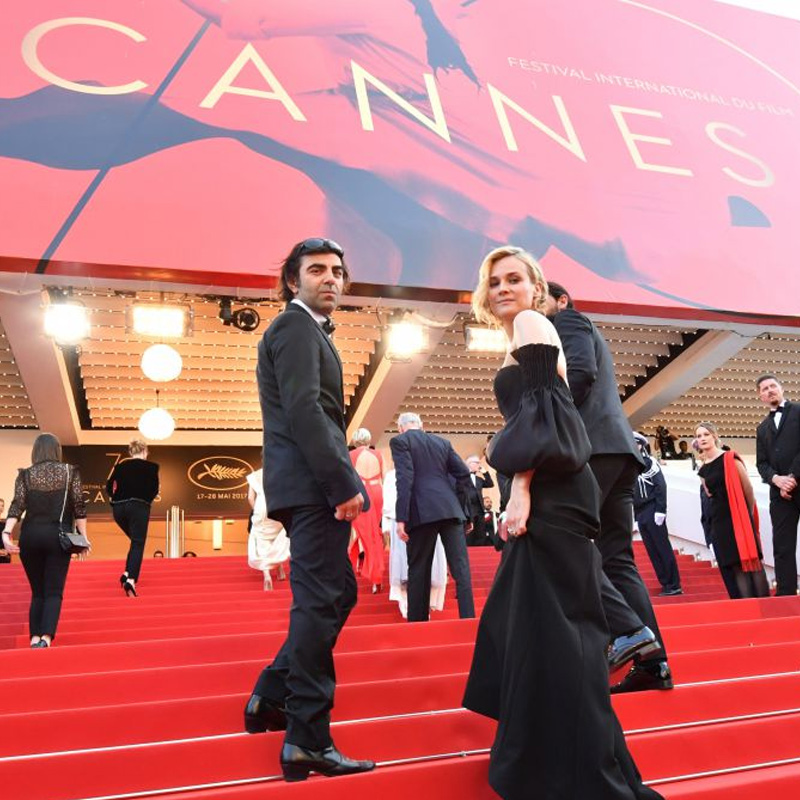
    MUMBAI: The Cannes film festival has announced that it will invite a large delegation from the Indian Film industry next year to Cannes to celebrate hundred years of Indian Cinema. With this move, India becomes the third ‘Guest Country‘ at Cannes film festival following Egypt in 2011 and Brazil in 2012.

    "Cannes belongs to each and every one of us who contribute towards creating it step by step. We want the festival to be open to new ideas and diversity can only enrich it. I have been attending IFFI for past 4-5 years and it gives me immense pleasure to invite India as the guest country.

    "The Festival de Cannes is delighted to celebrate one of the most important countries in the world of cinema, a country with a prestigious history and tradition, one whose current day and creative impulses are a perennial example of vitality," averred Director of Film Department Cannes Christian Juene.

    Juene is here to attend the 43rd International Film Festival of India (IFFI)and NFDC Film Bazaar.

    The Festival de Cannes will be held from 15 to 26 May, 2013.

  • India, Spain ink pact for movie co-production

    India, Spain ink pact for movie co-production

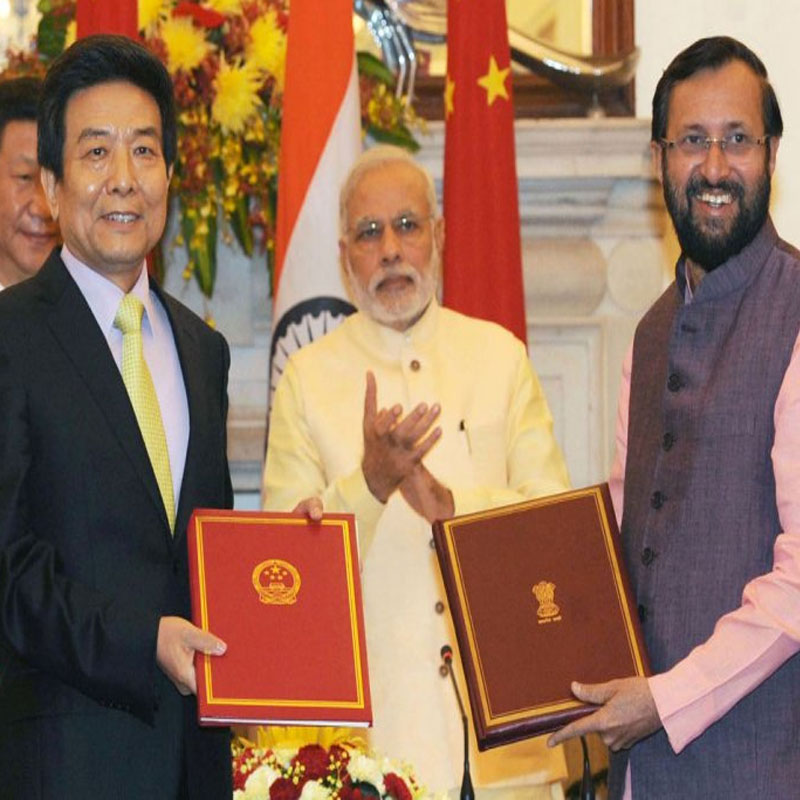
    NEW DELHI: India and Spain have signed an agreement which among other things provides opportunities for both the countries to pool their creative, artistic, technical, financial and marketing resources to co-produce films.

    The Audio visual Co-production Agreement has been signed to improve cooperation between the two countries in this sector. The agreement was signed between Information and Broadcasting Minister Ambika Soni and Jose Garcia Margallo Y. Marfil, Minister for Foreign Affairs and Cooperation, Kingdom of Spain.

    The agreement establishes a legal framework for relations regarding cooperation between the two countries in the audio visual field thereby facilitating the development of the audio visual industry. The framework for co production includes feature films, documentary and animation films.

    The co-production would provide an opportunity to create and showcase ‘soft power’ of our country. It would also lead to generation of employment among artistic, technical as well as non-technical personnel engaged in the arena of film production including post-production and its marketing, thus adding to the country’s GDP. The utilisation of Indian locales for shooting raises the visibility/ prospects of India as a preferred film shooting destination across the globe. It will also lead to inflow of foreign exchange into the country and transparent funding of film production.

    Currently, as part of the initiative, the Government has signed co-production agreements with Italy (2005), the United Kingdom (2005), Germany (2007), Brazil (2007), France (2010), and New Zealand (2011).