Tag: India

  • Get set for festival celebrating animation and VFX

    Get set for festival celebrating animation and VFX

    MUMBAI: ABAI one if India’s primary associations supporting the digital and creative arts sectors is organising Abai Fest 2013 at the University Grounds in Mysore on the 6 and 7 December 2013. This is going to be the first ever festival screening exclusive footage from all over the world in “animation and visual effects”.


    “Computer Graphics has become part and parcel of International and local content creation in film and television. It provides the digital intermediation needed by filmmakers, directors and studios to mount bigger and bolder stories, themes and projects. Too little of how this is done has been exposed to the Indian public,” said ABAI & Country Head – Technicolor India president Biren Ghose.


    Gravity, Superman, Man of Steel, World War Z, The Croods, Epic, Skyfall, Life of Pi and many other recent releases are testimony to the fact that computer graphics (CG) in digital production is now the new norm in filmmaking.


    India is rapidly becoming a global hub for major VFX production and the domestic film industry is also adopting CG rapidly as a tool helping the director to go beyond the limits of the camera.


    “Not enough awareness and screenings of animation and VFX takes place and we want to be a ‘melting pot’ venue for fun, discussion, participation and exclusively presenting content in this part of the world. Not much ‘animation’ is seen outside of the few cartoon channels,” said Ghose.


    The festival would bring some of the world’s latest showcase featuring the best of what has been created in the recent past. Directors, producers and professionals will be at hand to present, meet, discuss and exhibit the state of the art.

    “This will help open minds, hearts and doors in animation, gaming and visual effects (VFX). Come join us in experiencing the fun and festivity,” concluded Ghose.
     

  • Krrish 3 now ties up with Worldoo

    Krrish 3 now ties up with Worldoo

    MUMBAI: India’s home grown superhero Krrish has been creating a sense of excitement and enthusiasm in India and the world over with his engaging promotions for the forthcoming film Krrish 3. Keeping up this momentum Krrish has now made his way into worldoo, an ever evolving online ecosystem for kids where they can live, express and play.


    This partnership will enable its users to get a glimpse into the world of their favourite superhero and have exclusive access to the avatars of Krrish and Kaya from this superhero movie franchise. Registered Worldoo users can unleash their creativity and get set into Krrish modes by sprucing up their homes on worldoo with interesting and exclusive themes from the movie.


    Worldoo members will also be eligible to participate in a special Krrish 3 contest and stand a chance to win some exiting prizes. All they need to do is visit the Community centre in the Mainland and answer a few simple questions about the movie. Lucky winners will also stand a chance to win posters signed by Hrithik Roshan and few other exciting goodies.


    Worldoo head – experience and brand Harsh Wardhan Dave said, “We want our worldoo kids never to miss out on the most popular and entertaining stuff that’s happening out there. We realise the kind of following that Krrish has with kids and we have decided to associate with them. Through worldoo, kids have a special chance to win cool merchandise. We are confident that this will add value to the experience of our worldoo kids.”


    The association with worldoo is a part of the digital marketing campaign for Krrish 3 spearheaded by Hungama Digital Media Entertainment. Hungama Digital Media Entertainment MD & CEO Neeraj Roy said, “Kids today are spending a large share of their day online via various connected devices- be it computers, tablets or event connected TVs. The worldoo platform will enable kids to learn in the playway method. Moreover the worldoo platform is fun and safe for kids to engage with on a regular basis. The popularity of our very own super hero will encourage kids to explore a different world online.”


    The worldoo team is constantly working towards creating content that adds value to the overall time a child spends online. Partnering with the Krrish series was a step in that direction, going forward the team is looking forward to working with brands which are effectively willing to collaborate and add to the ethos to create responsible global citizens of tomorrow.

  • Huawei India to launch $ 10 million campaign in Jan 2014

    Huawei India to launch $ 10 million campaign in Jan 2014

    BENGALURU: Huawei India plans to launch a multi-media campaign come January 2014, revealed Huawei India Devices sources. To that extent the company is evaluating offers from advertising agencies that have been submitted.


    “We’ll be taking a decision in about a week’s time about the agency that will create the campaign,” revealed the sources. “The $ 6-10 million campaign will cover corporate branding as well as products, devices,” added the source.  Huawei plans to use television, outdoor, print and digital for its mass media communications.


    The company is planning a three phase campaign revealed the source further. Initially, it’ll be about brand building over the first six months, followed by a sustainability campaign over the next six months, culminating with a leadership campaign.


    Huawei officials were in Bengaluru late last week for the India launch of what the company claims is the thinnest mobile at 6.18 mm in the world – the Huawei Ascend P6. The P6 is being touted as the current flagship smartphone in India by the company, and will feature in lot of the company’s communications. Earlier, the phone model had its global launch in the fashion capital of the world – London on 18 June, 2013. Huawei plans to launch other phone devices as well as products including tablets in India.


    Huawei Devices India president Victor Shanxin said, “The Ascend P6 has already received a tremendous response from global consumers over the last few months, offering unsurpassed technology with a design that is simply stunning.”


    Victor revealed that Huawei had received orders totaling five million units of the P6 from across the geographies where it had been launched and had completed supplies of around three million P6 handsets so far since the launch on 18 June.
     

  • Simba enters Tier 2 cities with 100 stores by 2014 in India

    Simba enters Tier 2 cities with 100 stores by 2014 in India

    MUMBAI: SimbaToys, one of the largest toy manufacturers in the worldand slated to be the largest toy chain in India is all set to expand its reach to Tier 2 cities. Following the opening of existing stores across Mumbai,Delhi, Bangalore and Chennai the company is now ready to extend its reach to Orissa, Rajasthan, Gujarat and Chhattisgarh over next few months.

    Commenting on the expansion Shree Narayan Sabharwal, Business Head, Simba Toys India stated “In India, almost 70% of the toy market is unorganized. Simba Toys mission is to let kids play with better quality and safer toys. The idea behind SIMBA stores in India is to establish them as your neighborhood toy store. Through which good quality products come closer to mass consumer across all cities in India, as it’s difficult to have easy access to such toys in India.”

    “We are planning to open 50 outlets across the country by the end of this year”, he further added. German – based toy brand, Simba Toys entered the Indian market through an exclusive franchise arrangement in 2010. Simba Toys opened its first Simba store in 2012 in Mumbai, the financial capital of India.

    Eighteen stores of SIMBA are already operational in diversified locations across the country which includes Delhi-NCR, Madhya Pradesh, Bangalore Mumbai, Gujarat, Uttarakhand and Chennai. The product range includes Back to School range, Steffi, Majorette, Art and Craft, Music.

  • Siti Cable reports significant improvement in EBIDTA in Q2-2014

    Siti Cable reports significant improvement in EBIDTA in Q2-2014

    BENGALURU:  The painstaking rollout of the digitisation of India’s cable TV ecosystem and the depreciation of the rupee are taking their toll – both positively and negatively –  on national MSOs.  Take the case of Essel Group company Siti Cable Network Limited (Siti Cable), the erstwhile Wire and Wireless (India) Ltd (WWIL). Its latest quarter (Q2-2014) shows that the company has shown an improvement in its EBIDTA to Rs 32.98 crore which is 74 per cent higher than the previous corresponding quarter last fiscal.  It’s bottomline is however stained red in  Q2-2014 with a negative PAT of Rs 21.87 crore, almost double (173 per cent) the negative PAT of Rs (-12.65 ) crore the company had reported during the corresponding quarter (Q2-2013) last year. However, the loss is lower than the Rs (-27.07) crore for the immediate preceding quarter (Q1-2014).  


    Let us look at some other numbers for Siti Cable in Q2-2014


    Operating revenue in Siti Cable’s case is primarily generated from subscriber related income especially from digitisation, income from bandwidth charges, ad income, STB activation charges and other operating revenues.


    The cable network reported total revenue of Rs 162.94 crore for Q2-2014, which was 56.7 per cent more than the Rs 103.98 crore for Q2-2013 and 12.9 per cent more than the Rs 144.29 crore in Q1-2014.


    Total expenses for Q2-2014 at Rs 129.96 crore were 57 per cent more than the Rs 85.06 crore for Q2-2013 and 15 per cent higher than the Rs 113.1 crore for Q1-2014.


    Siti Cable claims that it is the only MSO in India which shares 25 per cent carriage revenue with local cable operators. A big chunk of its expense is carriage sharing, pay channel and related costs in the latest quarter. The company spent Rs 65.46 crore in Q2-2014 towards this head, which was 21.7 per cent higher than the Rs 53.03 crore for Q2-2013 and six per cent more than the Rs 61.8 crore during the immediate preceding quarter Q1-2014.


     Siti Cable’s main operating expenses include cost of goods and services, employees’ cost, selling and distribution expenses and other expenditure. Its major cost item was cost of goods and services recorded as Rs 82.7 crore during the quarter (Q2-2014)  representing 51 per cent of the total revenue in comparison to Rs 62.15 crore in Q2-2013, representing 60 per cent of the total revenue.


    Siti Cable’s Selling and Distribution Expense for Q2-2014 at Rs 12.42 crore was more than quadruple (424 per cent) the Rs 2.93 crore for Q2-2013 and more than double (225 per cent) the Rs 5.51 crore for Q1-2014. Its administrative expense at Rs 25.44 crore for Q2-2014 was almost double (95 per cent more) than the Rs 13.03 crore for Q2-2013 and 22.7 per cent more than the Rs 20.74 crore in Q1-2014.


    Another major cost item was foreign exchange fluctuation due to Rupee devaluation during the Q2-2014, which has been recorded at Rs 7.69 crore, says the company; the corresponding figure for Q1-2014 was Rs 5.11 crore.


    Siti Cable chairman Subash Chandra said, “The industry is at an inflexion point where creating the valuable ecosystem for all stake holders be it consumer, broadcaster or last mile local cable operators will ensure sustainable growth. We see immense opportunity for digitization in India in the years ahead.”


    Siti Cable CEO V D Wadhwa said, “We are pleased to report a healthy performance in the second quarter of the year, our total revenue and EBITDA in the quarter grew to Rs 162.9 crore and Rs 33 crore, a growth of 57 per cent and 74 per cent respectively over last fiscal. Our growth was largely due to greater focus on subscription revenue despite low seeding of STB’s during the quarter. We shall continue to focus on business expansion and revenue maximization in coming quarter.”


    Siti Cable informed BSE that the board of directors of the company at its meeting held on 23 October 2013, inter-alia, has approved the appointment of Anil Kumar Malhotra as manager of the company for a period of three years.

  • India leads in those using video conferencing for new businesses

    India leads in those using video conferencing for new businesses

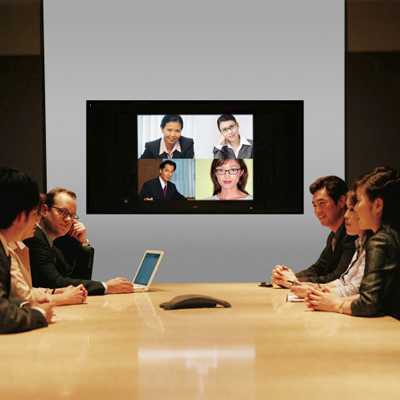
    NEW DELHI: Polycom, has announced that almost all (96 per cent) business decision makers believe video conferencing removes distance barriers and improves productivity between teams in different cities and countries, with India, Brazil and Singapore showing significant usage.

    According to the “Global View: Business Video Conferencing Usage and Trends” survey of more than 1,200 business decision makers, conducted by Redshift Research and commissioned by Polycom, video conferencing is an essential tool helping improve team collaboration and closing the physical and cultural gap between colleagues doing business across distances. 

    India leads the way in using video conferencing for new business with 60 per cent of respondents saying they use or would use video conferencing for new business. This was followed by Russia and Brazil at 49 and 44 per cent, respectively.  Across the globe, 38 per cent of respondents use video, or would use video, for new business.

    The survey found that video is becoming more pervasive in businesses across the globe.  When asked to choose their preferred methods of communications today, respondents ranked video conferencing third (47 per cent) after e-mail (89 per cent) and voice/conference calls (64 per cent), and those same business leaders and managers expect video to be their most preferred collaboration tool in three years (52 per cent), followed by e-mail (51 per cent) and voice/conference calls (37 per cent).  Respondents who use video conferencing today said the three biggest advantages are: better collaboration between globally dispersed colleagues (54 per cent), greater clarity of topics being discussed (45 per cent) and more efficient meetings (44 per cent).

    Over three quarters of decision-maker respondents (76 per cent) are now using video conferencing at work with 56 per cent of video users taking part in video calls at least once a week.  The survey found that in Brazil, India and Singapore that number jumps up significantly, as more than two-thirds of respondents in those countries use video conferencing at least once a week. 

    The survey also revealed that 83 per cent of respondents, and almost 90 per cent of those in their 20s and 30s, use consumer video conferencing solutions at home today, and almost half of all respondents use video conferencing at home at least once a week. 

    “The growing popularity of video conferencing at home, especially by millennials entering the workforce, is a big driver of increased preference for and adoption of video collaboration in the workplace,” said Polycom EVP and chief marketing operator Jim Kruger.

    “Some key factors to making video as popular in the office as it is at home is ensuring it’s easy to use, providing a high quality connection, delivering enterprise-grade security, and participants’ willingness to accept and adapt to cultural differences as they communicate across borders.  We’re seeing businesses around the world defy distance every day using video collaboration, including increasing productivity, enhancing employee engagement, improving time to market and helping to save lives,” he added. 

    The study also showed that laptops and desktops are the most popular devices for business video conferencing (75 per cent of respondents), followed by conference rooms (48 per cent) and mobile devices (42 per cent).  As video conferencing continues to become more pervasive, in three years laptops and desktops are still expected to be the most preferred device (72 per cent), while mobile devices and conference room usage will increase to 55 and 51 per cent, respectively.

    The survey provided sharp insights from video conferencing users into which behaviours constitute an ideal video meeting, and which are distracting for business decision makers. 

    The survey found the top three most important criteria for an ideal video meeting are: the ability to hear everyone clearly (69 per cent); technology that is straight forward and easy to use (60 per cent); and Good eye contact with colleagues/ everyone is clearly visible (58 per cent).

    Respondents who use video conferencing said the most distracting things, which should be avoided during video meetings, are: Mobile phone going off during a meeting (58 per cent), people attending from inappropriate places – e.g., public transit, in stores (52 per cent), people who are multi-tasking or look distracted – e.g., tapping on keyboard – (51 per cent), and inappropriate background distractions such as colleagues, music, noise (50 per cent).

    The Polycom survey shed light on different opinions between users of video collaboration in various countries, where one activity may be distracting in one country but accepted in another. 

    When asked if people not wearing business attire was a distraction, respondents from India, Singapore and Poland topped the list (30, 26 and 21 per cent, respectively), and on the other end of the spectrum, 13 per cent or fewer of respondents in the UK, France, Russia and The Netherlands find attire to be a distraction.

     In the Asia-Pacific (APAC) region, international communications (between colleagues in different countries) ranked as the most important use of video conferencing (65 per cent), versus 57 per cent for inter-country communications. 

    The U.S. leads the way in leveraging video conferencing for recruitment and hiring, as 32 per cent of video respondents said they use or would use video for this purpose, followed by APAC at 28 per cent.  

    In the Europe, Middle-East and Africa (EMEA) region, respondents were mostly using video conferencing to empower flexible working environments, which was cited as the second highest reason for using the technology, after “connecting with colleagues across the country.” 

    As access to video conferencing increases to virtually all employees with a mobile device or laptop, the survey found that video users in various business functions within organisations use video to defy distance in slightly differing ways: 

    CEOs and founders rated flexible working and inter- office/local meetings (50 per cent each) as their top reasons they use or would use video conferencing, followed by international meetings (46 per cent), new business/sales and company/department meetings (39 per cent each), and during an average week, the marketing function uses video collaboration the most frequently (64 per cent use video at least weekly) in an organisation, followed by IT/engineering and facilities (62 per cent use video at least weekly).  However, when it comes to daily usage of video at work, the HR function is the power user (32 per cent indicate they use video conferencing daily), followed by sales executives (28 per cent indicate they use video conferencing daily). The IT/engineering and manufacturing/supply chain functions are most likely to use video collaboration for international meetings, with 61 and 58 per cent of respondents, respectively, saying they use or would use video to collaborate face to face with colleagues internationally. In fact, according to the survey results, these are the two job functions that use video collaboration more for international meetings than local, in-country video meetings.

    All respondents, regardless of role, predominantly used video conferencing for inter-office meetings, followed by international inter-office meetings. Overwhelmingly, respondents said it is important to try and understand different country cultures when meeting using video conferencing (97 per cent) and 89 per cent of respondents called for etiquette rules to be established to help them better use video conferencing for business. 

    To help business better navigate these differences and drive more effective use of video conferencing, Polycom is launching Polycom’s Guide to Collaborating Across Borders, an insightful new guide designed to help readers understand the nuances of doing business across the globe.  This guide is one of several new resources for business leaders across almost every enterprise function – from IT to HR to the C-suite – to learn how video conferencing can help them defy distance and achieve their goals more quickly and efficiently. 

  • CareerBuilder Releases Striking Differences in Typical Workdays Around the World

    CareerBuilder Releases Striking Differences in Typical Workdays Around the World

    MUMBAI :  A new global study from CareerBuilder shows that a typical day in the office is not so typical across the globe: When you look at the average workday in the 10 largest economies around the world, you begin to see how alike workers can be—and also where they differ the most. The global survey, conducted online by Harris Interactive© from May 9 to June 5, 2013, included more than 5,000 hiring managers and human resource professionals in countries with the largest gross domestic product.

    INFOGRAPHIC:http://cb.com/1gnMhxK

    Driving vs. Public Transportation

    While the 10 countries surveyed have the largest economies on the planet, they also have some of the largest populations, but instead of taking public transportation or using other ways of getting to work, the majority of workers indicate they drive themselves to work every day,
    •    U.S. 82%
    •    Brazil: 74%
    •    China: 69%
    •    Germany: 63%
    •    France: 62%
    •    Italy: 60%
    •    Russia: 60%
    •    U.K.: 58%
    •    India: 52%
    •    Japan: 44%

    Suit and tie optional

    Of the 10 surveyed countries, India is the only place you’ll see the majority of workers in business formal attire (50 percent), such as suits. In every other surveyed country, business casual (e.g., slacks, button-down shirts, sweaters) is the standard dress code as below
    •    U.S. 64%
    •    Brazil: 57%
    •    Italy 51%
    •    UK: 51%
    •    Russia: 50%
    •    China: 49%
    •    France: 45%
    •    Germany: 45%
    •    Japan: 42%
    •    India: 36%

    Communication preference

    Although everyone might seem to be glued to their smartphones, tablets and laptops these days, face-to-face conversations still rule the workplace. In all 10 surveyed countries, in-person communication beat electronic messages such as emails, texts and instant messages by large margins, with phone conversations being the least used.

    •    U.S.: 
    o    Face-to-face: 59%
    o    Digital: 30%
    o    Phone: 10%
    •    UK:
    o    Face-to-face: 68%
    o    Digital: 20%
    o    Phone: 11%
    •    France:
    o    Face-to-face: 79%
    o    Digital: 15%
    o    Phone: 6%
    •    Germany:
    o    Face-to-face: 73%
    o    Digital: 15%
    o    Phone: 13%
    •    Italy:
    o    Face-to-face: 66%
    o    Digital: 23%
    o    Phone: 11%
    •    Russia:
    o    Face-to-face: 80%
    o    Digital: 10%
    o    Phone: 9%
    •    India:
    o    Face-to-face: 60%
    o    Digital: 23%
    o    Phone: 17%
    •    China:
    o    Face-to-face: 81%
    o    Digital: 16%
    o    Phone: 2%
    •    Japan:
    o    Face-to-face: 42%
    o    Digital: 32%
    o    Phone: 27%
    •    Brazil:
    o    Face-to-face: 45%
    o    Digital: 32%
    o    Phone: 23%

    Socializing with coworkers

    Socializing with coworkers outside of office hours can be a good way to learn about your colleagues or relax after a hard day at work. Yet, not everyone is eager to participate. Workers in China and India are more than twice as likely to attend social events than workers in Germany and the U.S.When asked do you socialize with coworkers, the following said yes,
    •    China: 98%
    •    India: 93%
    •    Brazil: 76%
    •    Russia: 68%
    •    Japan: 66%
    •    France: 64%
    •    UK: 55%
    •    Italy: 53%
    •    US: 41% 
    •    Germany: 38%

    Hours spent at work each week

    The number of hours workers spend at work is pretty consistent around the world, but while Chinese workers spend slightly less time at work each week, they report (29 percent) bringing work home with them at least once a week, higher than the other countries.
    How many hours do you work each week?
    •    31-40: U.K. (47%), China (46%)
    •    41-50: Japan (48%), U.S. (47%), India (46%), Germany (44%), Brazil (43%), Italy (42%), Russia (40%), France (37%)


    How often are youbringing work home?
    •    US: 
    o    1 Day a week: 18%
    o    Never: 26%
    •    UK:
    o    1 Day a week: 17%
    o    Never: 30%
    •    France:
    o    1 Day a week: 19%
    o    Never: 32%
    •    Germany:
    o    1 Day a week: 19%
    o    Never: 39%
    •    Italy:
    o    1 Day a week: 25%
    o    Never: 43%
    •    Russia:
    o    1 Day a week: 25%
    o    Never: 39%
    •    India:
    o    1 Day a week: 26%
    o    Never: 29%
    •    China:
    o    1 Day a week: 29%
    o    Never: 30%
    •    Japan:
    o    1 Day a week: 18%
    o    Never: 59%
    •    Brazil:
    o    1 Day a week: 22%
    o    Never: 30%

    Taking vacation

    When asked how many days they took off from vacation, workers had strikingly different answers depending on where they live. Italian workers took off the fewest days, with the nearly two-thirds majority taking 7 days or fewer (64%). Forty-six percent of Japanese workers took more than 35 days off, more than workers in any other countries.
    •    0-7 days:
    o    Italy: 64%
    o    UK: 29%
    o    Brazil: 20%
    •    8-14 days:
    o    India: 34%
    o    U.S.: 27%
    •    15-21 days:
    o    China: 28%
    •    22-28 days:
    o    Russia: 35%
    o    France: 25%
    •    29-35 days:
    o    Germany: 30%
    •    35+ days: 
    o    Japan: 46%

    Survey Methodology

    This survey was conducted online within the U.S., Brazil, China, France, Germany, India, Italy, Japan, Russia and the U.K. by Harris Interactive©on behalf of CareerBuilder among400 to 2,279 hiring managers and human resource professionals (employed full-time, not self-employed, government and non-government) in each country between May 9 and June 5, 2013 (percentages for some questions are based on a subset, based on their responses to certain questions). With pure probability samples ranging from 400 to 2,279, one could say with a 95 percent probability that the overall results have a sampling error between +/- 4.9 and +/-2.05 percentage points. Sampling error for data from sub-samples is higher and varies.

  • Contract appoints Mayur Hola as ECD

    Contract appoints Mayur Hola as ECD

    MUMBAI: Mayur Hola has joined Contract India as executive creative director, based in Delhi.


    Prior to this, Mayur was with McCann on some of the most talked about and award winning campaigns like Pan Vilas’ ‘Shauq Badi Cheez Hai’ and the Nescafe – Shankar-Ehsaan-Loy work, for which his team won an integrated ABBY and the marketing campaign of the year at the CMO Asia awards.


     “Mayur is a fantastic new addition to our rapidly growing Delhi branch, and he will lead the creative charge of that office from here on. In the last few years, his work on brands like Nescafe, Dish TV, and Chevrolet, has been noticed, applauded and awarded. Plus he is a fabulous team-builder, so I am positive that with him on board, Contract, Delhi is going to be a revved up, happy place”, said Contract’s NCD Ashish Chakravarthy on the appointment.


    This would be Mayur’s second stint at Contract. He started his career in advertising with McCann as a writer, where he spent close to seven years over three stints. At McCann he launched the life insurance brand PNB MetLife with its ‘Be Double Sure’ work, conceived the madness of Dish TV’s ‘Dish Sawaar Hai’ campaign and carried forward the power brand Chevy Cruze for GM in addition to the most awarded Nescafé campaign.


    Over the course of his career, Mayur has worked with TBWA where he headed the Delhi office, Grey and Contract.

  • India Just Suited Up!

    India Just Suited Up!

    MUMBAI: Comedy Central, India’s preferred laughter destination is known to engage its audience with not only clutter breaking content but also with promotion ideas that attract all English entertainment viewers. Keeping up with the excitement around the most awaited show on English television, Comedy Central welcomed Suits Season 3 with a bang on October 7, 2013. The channel promoted the show through a 360 degree marketing campaign labeled ‘Everybody is getting into SUITS!’

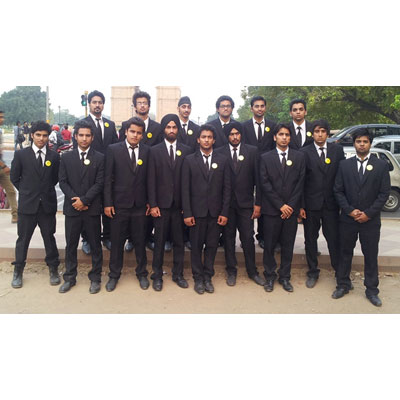
    As party of the overall marketing campaign, a massive on-ground activity was planned leading up to the show. Starting October 4th, groups dressed in slick suits were seen across places ranging from prominent landmarks like heritage properties, metro stations and famous streets to the most, Oddest of places like, libraries, malls & sea facing promenades in Bangalore, Kolkata, Mumbai & Delhi. The activity was a huge success, generating buzz & direct integrations with more than one lakh people

    Apart from the on ground promotion, the channel also tied up with multiple BTL partners to innovatively amplify the Suits communication. The channel tied up with India’s leading dry cleaners Pressto & dry cleaned suits were returned to customers with SUITS messages on them. Promotion in Gold’s Gym’s involved funny captions in the men’s locker rooms about how Men looked compared to Harvey Specter, while women were cockily urged to control themselves with a live size poster of him in their washrooms!

    Promotion partners also included Café Coffee Day outlets, Crossword bookstores, Big Cinemas, Cocoberry, Bookmyshow.com, moneycontrol.com, In.com & mydala.com. To add reach, the campaign also involved Print, Outdoor & heavy digital & Radio promotion across all major cities in the country. The channel also focused on trade marketing with promotions across all major advertising sites both in & outside leading media agencies in Delhi & Mumbai.

    To top off the entire marketing effort, Comedy Central also engaged fans and media personnel to enter in a contest with winners getting a chance to LIVE THE HARVEY LIFE with a 2N/3D day stay at Taj lake Palace in Udaipur, with a Jaguar car service, gourmet food & spa sessions that will make winners feel like the character & get a first hand taste of good life & larger than life persona!

    Commenting on the premier of Suits Season 3, Ferzad Palia, Sr. Vice President and General Manager – English Entertainment, Viacom18 Pvt. Ltd, says, “Comedy Central has always been an innovative brand when it comes down to finding ways to market our shows & reach out to viewers. Here, we have taken a very simple yet powerful idea like “Everybody is getting into Suits” and pushed it to the next level by actually getting everyone in India to wear Suits. I am very happy with the response that we have got from fans, with a number of people turning out in suits & expressing their love for the show”

    The channel has become a one stop destination, catering to viewers with witty humor and great comedy through its day long line up of shows. Staying true to its philosophy, this October it takes the wit & energy up another notch!

    Garnier Men presents Suits Season3 Powered by Micromax on Comedy Central. Mon- Thu 10PM

    Promotion partners also included Café Coffee Day outlets, Crossword bookstores, Big Cinemas, Cocoberry, Bookmyshow.com, moneycontrol.com, In.com & mydala.com. To add reach, the campaign also involved Print, Outdoor & heavy digital & Radio promotion across all major cities in the country. The channel also focused on trade marketing with promotions across all major advertising sites both in & outside leading media agencies in Delhi & Mumbai.

    To top off the entire marketing effort, Comedy Central also engaged fans and media personnel to enter in a contest with winners getting a chance to LIVE THE HARVEY LIFE with a 2N/3D day stay at Taj lake Palace in Udaipur, with a Jaguar car service, gourmet food & spa sessions that will make winners feel like the character & get a first hand taste of good life & larger than life persona!

    Commenting on the premier of Suits Season 3, Ferzad Palia, Sr. Vice President and General Manager – English Entertainment, Viacom18 Pvt. Ltd, says, “Comedy Central has always been an innovative brand when it comes down to finding ways to market our shows & reach out to viewers. Here, we have taken a very simple yet powerful idea like “Everybody is getting into Suits” and pushed it to the next level by actually getting everyone in India to wear Suits. I am very happy with the response that we have got from fans, with a number of people turning out in suits & expressing their love for the show”

    The channel has become a one stop destination, catering to viewers with witty humor and great comedy through its day long line up of shows. Staying true to its philosophy, this October it takes the wit & energy up another notch!

    Garnier Men presents Suits Season3 Powered by Micromax on Comedy Central. Mon- Thu 10PM

  • ADC India Communication to grow its presence in India

    ADC India Communication to grow its presence in India

    BAMGLORE:  ADC India Communication Ltd [BSE: ADCT] whichoffers the full range of KRONE products and is a leader in broadband connectivity,announced today new management appointments. The leadership changesre-enforce the company’s commitment to India and helps strengthen its position as a leading provider of next gen network infrastructuresolutions for the telecom, broadcast &entertainment and enterprise markets. Mr. S. Devarajan has been appointed Chairman of the Board of Directors of the company and Mr. J. N. Mylaraiah has been appointed the Managing Director of the company.

    An Indian IT industry veteran, Mr. S.Devarajanhas over 30 years’ experience in the technology industry. He was the Managing Director at Tata Elxsi, and also the Managing Director at Cisco India. He was instrumental in building Cisco India as the globalization center east. Devarajan made the historic turnaround of Tata Elxsi to a profitable venture in the mid-1990s.He also is the formerpresident of Manufacturers Association for Information Technology (MAIT) a former member of the IT hardware task force and IT vision task force set up by the Chief Minister of Karnataka.

    Commenting on the appointment, Mr Devarajan, Chairman of the Board, ADC India Communications, said, “I am delighted to be part of this pioneering company. ADC has had a strong foothold in the broadcast & entertainment market in India and its Krone line of products has been synonymous with connectivity in the telecommunication space.We intend to grow the business by capitalizing on the strong brand name that it has in these verticals to grow our market share. ADC has a robust and technologically advanced product line in fiber and is committed to capture a significant part of that market.”

    “With this strategic move, we aim to build a robust network foundation for our clients which can seamlessly transition between legacy and future access technologies cost effectively,” said Mylaraiah, the newly appointed Managing Director of the company. He further added,“we recognize the trust that ADC Krone has built amongst its stakeholders for the past 20 years and would like to reiterate the fact that we are the only source for genuine KRONE products in the industry. Krone products will remain a strong component of our overall product portfolio along with our innovative copper, fibre, FTTX and wireless solutions.”

    The company will focus on expansion into newer territories in India as well SAARC countries: Bangladesh, Srilanka and Nepal. ADC India will also launch new products and services in the areas of DAS Passive components, FTTA, CTTA, PTTA, and standard compliant modules to cater to the growing demand for delivering, voice, data, video and wireless services.

    In December 2010, ADC Telecommunications, Inc. (Nasdaq: ADCT) was acquired by TE Connectivity (NYSE: TEL), a world leader in connectivity.. In India, ADC India Communications is a separate legal entity with its stock trading in BSE and TE Connectivity India Pvt Ltd having majority shareholding.