-
CALIFORNIA: Sony Pictures Entertainment today announced that Man Jit Singh has been named President of Sony Pictures Home Entertainment (SPHE), reporting to Michael Lynton, CEO, Sony Entertainment, Inc., and Amy Pascal, Co-Chairman, Sony Pictures Entertainment.
-
Man Jit, who was previously Chief Executive Officer, Multi Screen Media Pvt. Ltd. (MSM), the operating company that manages Sony Pictures Television’s TV networks in India, will continue as Non-Executive Chairman at MSM while transitioning from his role in the Television division to his new role in Home Entertainment.
-
N.P. Singh, formerly Chief Operating Officer at MSM, has been appointed Chief Executive Officer, managing Sony Pictures Television’s Indian TV networks. N.P. will report to Andy Kaplan, President, Worldwide Networks, Sony Pictures Television.
-
“Man Jit is a savvy global executive with a long track record of success at Sony Pictures, having built our Indian TV channels into high-performance, high-margin businesses. I am confident in his vision for Sony Pictures Home Entertainment and his ability to provide strong leadership for the division as the marketplace continues to evolve,” said Lynton.
-
Under Man Jit, Sony Pictures Television’s Indian TV networks leveraged changing technologies and consumer behaviors to grow into some of the most profitable and highest-rated channels in the market.
-
At SPHE, Man Jit will continue the studio’s focus on reducing overhead costs, while growing high-margin businesses.
-
“As the ways in which consumers experience our content continue to change and multiply, our organization and its strategy for delivering content must evolve to meet the demands of the market. I look forward to building on the foundation of innovation and operational discipline at SPHE to position this business for future growth,” said Man Jit.
-
On N.P. Singh’s appointment to CEO of MSM, Man Jit added, “NP and I have worked closely together as equal partners these last five years and the success of the company is largely due to his efforts. The time has come for him to lead the company to the next level and I fully expect the innovations he brings as CEO will ensure we have years of success ahead. As the Non-executive Chairman of MSM, I look forward to supporting NP and will continue to remain involved with the Indian television industry.”
-
In his new role at MSM, N.P. will continue to focus on developing original, local-language programming and expanding the audience for MSM’s eight highly-profitable channels across India and the more than 70 countries around the world where they are viewed.
-
Man Jit Singh has a strong background in technology, entertainment, and consumer products, with over 20 years of experience in global operations. He has worked in North America, Europe, Asia and Australia. Since 2009, he has overseen Sony Pictures Television’s Networks business in India, which includes SET, SAB, PIX, AXN, MIX, SIX, LIV and MAX. Man Jit was previously Chairman of the Board of Directors of MSM. He spent much of his early career in general management consulting, and he held senior positions at firms including Sibson & Co., LLP in Los Angeles, The Cast Group AG in Zurich, Switzerland and Los Angeles, and Cresap in Los Angeles. Man Jit began his career at Nestle India.
-
N. P. Singh originally joined MSM in 1999 and has been Chief Operating Officer of MSM since December 2004, overseeing day-to-day operations at the company’s highly profitable TV channels and working closely with Man Jit on long-term strategies for continued growth. Previously, Singh served as Chief Financial Officer. Before joining MSM, N.P. held Chief Financial Officer roles at Spice Telecom and Modicorp, and was Controller at Modi Xerox Limited, in addition to other positions.
-
Sony Pictures Entertainment (SPE) is a subsidiary of Sony Entertainment Inc., a subsidiary of Tokyo-based Sony Corporation. SPE’s global operations encompass motion picture production, acquisition and distribution; television production, acquisition and distribution; television networks; digital content creation and distribution; operation of studio facilities; and development of new entertainment products, services and technologies. For additional information, go to http://www.sonypictures.com.
-
Media Contact:
Charles Sipkins
310-244-5651
Charles_Sipkins@spe.sony.com
Tag: India
-
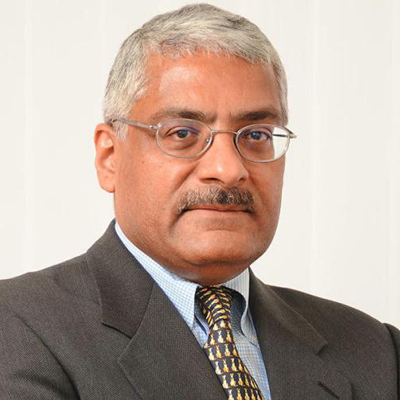
Sony Pictures Ent appoints Man Jit Singh president of Sony Pictures Home Ent
-
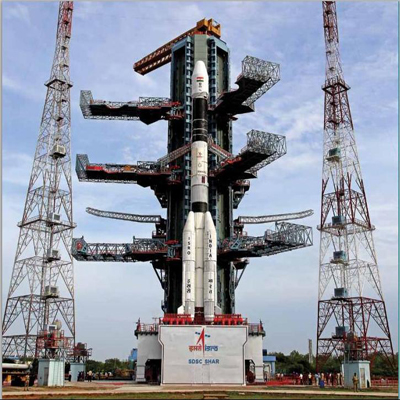
2014’s first space mission to be India’s GSAT-14
MUMBAI: The first time it was about to launch in August 2013, a technical snag forced an abortion. But now, India’s Indian Space Research Organisation’s (ISRO’s) twenty third communication satellite GSAT-14 by the is all set to be launched into space on 5 January 2014 on the Geosynchronous Satellite Launch Vehicle (GSLV)-D5. The launcher will propel the bird into a Geosynchronous Transfer Orbit (GTS) after which it will use its own propulsion system to reach its geostationary orbital home at 74 degrees east longitude.
The mission is important for ISRO which has been seeking to get a piece of the satellite launch action globally. But it has found things difficult since four out of the seven launches of GSLV have been failures and three previous attempts to use indigenous cryogenic engine have also ended up in a mess.

The previous attempt to blast off GLSV into space in August 2013 was aborted following a fuel leak which developed in its engine hours before launch. ISRO worked on it and gave it a better metal covering, following which it has decided to give it another shot.
A three stage rocket – the first stage runs on solid fuel, the second on liquid fuel and third on a cryogenic engine – the GSLV- D5 will be carrying the 1982 kgs (lift off mass) GSAT-14, which will be replacing GSAT-3 that was decommissioned in 2010. The new satellite’s structure is based on ISRO’s two ton weighing (I-2K satellite bus). The satellite has six Ku band (51.5 dBW EOC-EIRP) transponders, six C band (36 dBW EOC-EIRP) transponders and two Ka band beacons and will be co-located with INSAT-3C, INSAT-4CR and KALPANA-1.
Most of the C- and Ku-band capacity on GSAT-14 will be utilized for long distance education and telemedicine, while the Ka band transponders will help in studying rain and atmospheric effects. This ninth operational geostationary satellite is expected to have a mission life of 12 years and will be able to provide enhanced broadcasting as compared to GSAT-3 for the whole of India.
According to the ISRO website, the mission has three main objectives- to augment the in-orbit capacity of extended C and Ku-band transponders and to provide a platform for new experiments such as fiber optic gyro, active pixel sun sensor, Ka band beacon propagation studies and thermal control coating experiments.
The 29 hour countdown to the launch began at 11:18 am on 3 January with the launch time set as 4:18 pm on 4 January from its launch pad at Satish Dhawan Space Centre (SDSC SHAR) at Sriharikota in Andhra Pradesh. GSLV-D5 is expected to have a 17 minute, eight second flight duration. If successful, this will be 2014’s first space launch as SpaceX’s launch of Thaicom-6 has been postponed from 3 January to between 6 and 9 January. The Elon Musk backed company decided to go in for a later liftoff as problems had emerged with Falcon 9 rocket’s fairing.
If ISRO’s GSLV-D5 successfully plants GSAT- 14 into orbit, it is likely to have a beneficial spinoff which it badly needs. It could lead to orders to build more rockets that can carry payloads of up to four tonnes. Till now ISRO has been using the Polar Satellite Launch Vehicle (PSLV) that carries loads of around a tonne.
The mission will be telecast live on Doordarshan and on the web from 3: 52 pm on Sunday.
-
India-A hotbed for news channels
“To improve is to change, to be perfect is to change often.” This quote from Winston Churchill is in my opinion the best way to describe 2013 for the Indian television market scenario and BBC Global News, the parent company of BBC World News and bbc.com.
Let’s first take a broad look at the changes in the Indian market. While regulation forced the industry to adopt digitisation, it is commendable that the industry responded and today MSOs have had around 70 to 80 per cent success in seeding STBs in phase I and phase II. Digitisation has happened and is progressing – but at the moment that is only the technical side. Addressability remains a concern. But large changes such as this in markets as humongous and diverse as India are bound to take time. Our outlook is positive and we are hoping that once business models start to take shape, this change will be positive for all stakeholders. But there is no doubt that traditional models are being disrupted. The cable industry will have to look at differentiation, quality of service and value added services to drive revenue growth. The capacity constraint that drove carriage revenues is likely to moderate with digitization. There is demand for niche content. New launches are happening in the super-niche format. The demand for Pay-TV is growing with increase in the availability of premium content. Consumers are willing to pay for HD content. Cable operators have also started offering HD-enabled STBs.
The other major change is the pattern of consumption of content. Viewing has become personal with the consumer demanding and expecting flexibility in terms of timing, volume of content consumed and place of consumption. Increasing mobile & broadband penetrations and affordability of smarter devices are offering alternative digital distribution platforms. Consumption of live TV on-the-go and catch up TV is on the rise. All these are very positive changes that signal well for the robust growth of the industry.
It has also been a year of evolution for BBC Global News. We moved into state of the art brand new studios in the heart of Central London in what is easily the world’s largest and most advanced newsroom. Both in anticipation and in response to audience trends, we have successfully converged our news operations to deliver the best multimedia, multi platform international news. Our improved look on TV, our website, our apps – all these make for a greatly enhanced experience for the consumer. Our new brand campaign ‘Live the Story’ is not just an advertising tool, it is an ethos for the way we approach content and we want to reinforce that message in the market. It is in recognition of this ethos that World News America received an Emmy award for “Best continuing coverage of a news story” for Ian Pannell and Paul Wood’s reports from Syria. And among our many editorial highlights was the 100 women season with Mishal Husain’s exclusive interview with Malala featuring not just on BBC World News but across all BBC platforms domestic and international. Indeed one of the catalysts for 100 Women was the Delhi gang rape attack in December last year.
It is great to see the audience responding to us. In India, BBC World News has maintained its status as the leading international English news channel among the country’s affluent, influential opinion leaders, business decision makers and frequent international travellers, according to the latest Ipsos PAX survey. BBC World News also beats India’s domestic news channels to take the number one spot amongst the highly desirable, upscale audience. BBC Global News, including BBC World News and bbc.com is the only news brand across TV, online and mobile to show quarter on quarter growth. Social media is equally important for us to improve our engagement and we continue to achieve important audience milestones on Twitter. @bbcworld now has more than 5 million followers and @bbcbreaking has passed the 8 million follower mark.
As economics and politics in India become even more interesting with the country entering election mode, we have just announced a season of programmes focusing on India to air in February 2014. India Direct will delve behind the headlines to bring audiences insight on our country as we strive to be significant player on the global stage. The India Direct season will give BBC audiences around the world the opportunity to see everyday life in India. Through programmes like Fast Track, One Square Mile and Working Lives, the BBC’s unrivalled network of journalists explore the issues faced by people here – from the economic opportunities and challenges to living life at every level of society; from its traditions and history to future plans and innovations. We are looking forward to what promises to be a really insightful coverage of India. We also hope to bring an international perspective to the coverage of the elections. As the world focuses on India, our journalists will also showcase India to the rest of the world with our global coverage.
The world of media and journalism is very dynamic and India is a vibrant market. We believe that the changes in the media landscape are all positive; we ourselves are steadily progressing in tandem with global trends and certainly have a very positive outlook for India. We believe that the market respects and appreciates our content and that our ability to provide superior international news content on multiple platforms will differentiate us and keep us growing.
(Preet Dhupar is BBC Global News COO for India. The views expressed in the above article are the author’s personal views)
-

Social network scams double in 2013
MUMBAI: According to Bitdefender, a security vendor, social network scams targeting users of sites like Facebook have nearly doubled in 2013 as compared to 2012.
The company also revealed that it was expected as social media scammers are likely to fool people and double their profits during the holidays.
“There are two simple steps that will ruin your Christmas: click on a free voucher scam, and complete the `intelligence’ surveys that ask for your credentials and your mom’s maiden name. Not even Santa Claus will help you recover the money and personal details you lose,” Bitdefender chief security strategist Catalin Cosoi told the media.
Bitdefender advised social media users to think twice before clicking on dubious Christmas messages that ask them to complete endless surveys.
-
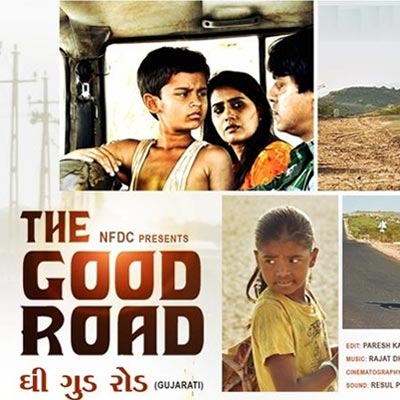
India’s The Good Road out of the Oscar race
MUMBAI: Gyan Correa’s much publicised The Good Road is out of the race for the Foreign Language Oscars. Nine features will advance to the next round of voting in the Foreign Language Film category for the 86th Academy Awards. Seventy-six films had originally been considered in the category.
Even earlier, The Good Road, Correa’s directorial debut that intertwines three stories in the hostile and remote Kutch in Gujarat, had a bumpy ride – when it invited the wrath of The Lunch Box team, which felt that Correa’s work stood little chance at the Oscars.

The films, listed in alphabetical order by country, are: Belgium, The Broken Circle Breakdown, Felix van Groeningen, director; Bosnia and Herzegovina, An Episode in the Life of an Iron Picker, Danis Tanovic, director; Cambodia, The Missing Picture, Rithy Panh, director; Denmark, The Hunt, Thomas Vinterberg, director; Germany, Two Lives, Georg Maas, director; Hong Kong, The Grandmaster, Wong Kar-wai, director; Hungary, The Notebook, Janos Szasz, director; Italy, The Great Beauty, Paolo Sorrentino, director; Palestine, Omar, Hany Abu-Assad, director.
Foreign Language Film nominations for 2013 are being determined in two phases. The Phase I committee, consisting of several hundred Los Angeles-based Academy members, screened the original submissions in the category between mid-October and December 16. The group’s top six choices, augmented by three additional selections voted by the Academy’s Foreign Language Film Award Executive Committee, constitute the shortlist. The shortlist will be winnowed down to the five nominees by specially invited committees in New York and Los Angeles. They will spend 10 January to 12 January viewing three films each day and then casting their ballots.
The 86th Academy Awards nominations will be announced live on16 January, 2014, Thursday in the Academy’s Samuel Goldwyn Theater.
-

Bloomberg TV India Autocar India awards felicitate the automobile Industry
MUMBAI: Bloomberg TV India and Autocar India magazine presented the The Bloomberg TV India Autocar India Awards 2013 – 14 yesterday.
The winners were felicitated at a glittering ceremony in Mumbai in the presence of minister of petroleum and natural gas Dr M Veerappa Moily, Planning Commission advisor to DCH (Infrastructure) Gajendra Haldea and others from the corporate world who came together, to salute achievers from the automotive sector.
A total of 24 awards were given away across two and four wheeler segments. The award function was presented by Reliance General Insurance and powered by Mobile 1.
At the awards, in the four wheeler segment, Ford EcoSport made a sensational debut by winning the ‘Car of the Year (Jury’s Choice), while Honda won the ‘Manufacturer of the Year’. In the two wheeler segment, KTM 390 Duke won the Bike of the Year (Jury’s Choice). The list of award winners across all categories is annexed.
Speaking about the awards, Bloomberg TV India business head Amrit Rai said, “As the leading business news channel we give viewers a clear understanding of various industry sectors. Both Bloomberg TV India and Autocar India – a mighty combination come together to present the most credible automotive awards in India today. With a dedicated team tracking, analysing, de-mystifying the automotive sector for the Indian viewer and a commitment to present facts. These awards are indeed a result of the team’s year long efforts to present and celebrate excellence.”
The jury panel that selected the winners from the top contenders in each category comprised of experts like Autocar India editor Hormazd Sorabjee; Autocar Show editor Renuka Kirpalani;Autocar India deputy editor and What Car? India editor Shapur Kotwal; Autocar Show consultant editor Kartikeya Singhee;; India’s leading automotive Historian and restorer Manvendra Singh;Two Wheeler Autocar India editor Rishad Cooper; motocross rider C S Santosh.
-
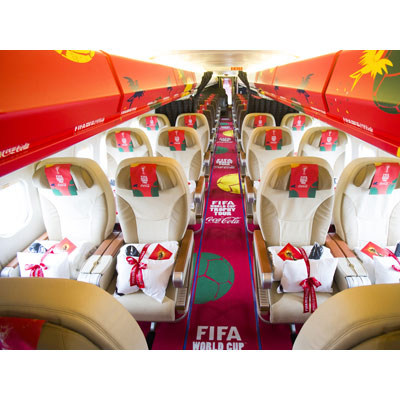
Coca-Cola is all set to bring the Football Frenzy to India
MUMBAI: The Countdown has begun for the arrival of the ultimate FIFA World Cup™ Trophy Tour by Coca-Cola in Kolkata.
Football fans will get a chance to dive into the madness of Football and be part of Football history with a once-in-a-lifetime photo op with the original, solid gold FIFA World Cup™.
The Trophy is currently in Bhutan and is all set to fly to Kathmandu tomorrow, following which it will be coming down to Kolkatta for a 3-day football festivity
Over the last one month, Kolkata has been living the football madness with celebrations across city paras and communities as part of Coca-Cola’s 2014 FIFA World Cup™ Campaign. Special events were held across the city in celebration of Kolkata’s passionate love for the game. Thousands of fans got the opportunity to win tickets to a special Trophy interaction open for consumers, to be held on 23rd December.
The FIFA World Cup™ Trophy Tour by Coca-Cola is on its longest journey to date, visiting 88 countries over a span of 9 months.
On this third global FIFA World Cup™ Trophy Tour by Coca-Cola, World Football’s greatest prize will be travelling 149,576.78 km (That’s 3.75 times round the world!!) reaching to over 800,000 people with this special Football experience.

Did you know these facts about the Trophy ?
· The Trophy bears the engraved years and name of each FIFA World Cup winner since 1974
· The authentic, one of a kind FIFA World Cup™ Trophy weighs 6.175 kg and is made of solid 18ct Gold
· The Trophy cannot be won outright – The winners receive a gold plated replica
· The Trophy can only be held by former winners, current winners and the heads of State -
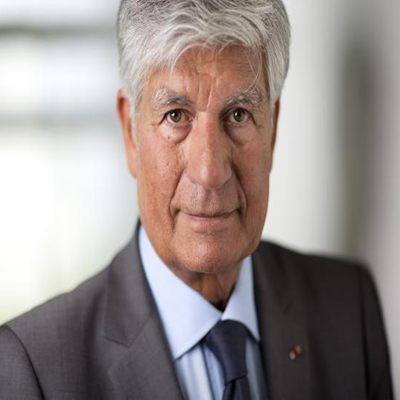
Publicis’ Levy gets bullish on India
MUMBAI: If the chairman and CEO of a multinational advertising and public relations company comes to India, then canards are definitely going to gain currency.
And that CEO happens to be Publicis Groupe’s Maurice Levy, who signed the deal with the Omnicom Group to create a $35 billion mega-agency, journos would not be faulted for wondering why. To everyone’s dismay, Levy told a select group of the media that his current trip to India falls in the category of a “regular visit”.
“I was here last in 2011 and thought it’s high time I visited again. I have always said that India is a major market for us and we want to build the group here,” said Levy.
Industry has been speculating whether that “building” includes possibly picking up equity in the fiercely independent Sam Balsara run Madison World who has recently stated that his agency is open to collaborations. Levy very intelligently deflected this question by saying that that the group has made investments in the country and will continue to do so as there is a cesspool of talent here.”
Among the agencies Publicis runs in India include: Publicis India, Leo Burnett, Saatchi & Saatchi, Starcom, ZenithOptimedia, Razorfish and Digitas.
Levy further elaborated that “according to the World Bank, India will have the largest number of middle class income group members by 2030, surpassing even China. Hence, we have to strategically make moves. India is a very strategic country for us.”
He believes that since the country has a great deal of knowledge in IT and digital, it should take advantage of that skillset rather than just become an ‘outsourcing’ nation.
When asked about the importance of digital media today and in the future, Levy quipped, “Publicis was the first group to invest in the sector. In 2006, we had said how digital is going to be one of the most important pillars of the emerging markets and started investing in it.”
He pointed out that a large share of Publicis’ revenue comes courtesy the digital space and that the firm is heavily invested in it already. “In 2011, there were 100 people working in the digital sector in India and now there are around 1500 people. Globally, there are over 20,000 people devoted to the sector.”
He also highlighted that “emerging markets contributed roughly 25 per cent” to the group’s turnover and his aim is to bring it to “35 per cent by 2017.”
As everyone waits for the Publicis-Ominicom merger to get the official nod from the EU, the US and China, Levy too has big dreams and expectations from it. Without revealing too much on how progress the fusion process has made and who will head the combined entity in India, Levy said that it will only benefit the clients of both the companies.
“The law doesn’t allow me to speak about it unless and until all procedures are done. And till then we will work as competitors but the future will be all about offering a wide range of platforms to the client. For me, it has always been how can I make it more valuable for the client. And it will continue to be so.”
When asked if there have been any ‘disagreements’ with Ominicoms’s president and CEO John Wren, Levy laughingly responded by saying, “Yes of course. He’s American and I’m French.”
He further added, “A French poet has written that boredom comes from uniformity and it will be true for me as well. Over and again, I have always said that collaborations is the way forward though they can be challenging. When we acquired Saatchi & Saatchi, all we had to do was cross the channel but it turned out to be a major challenge because of our differences. Such things are bound to happen but there is no fun if there aren’t such challenges.”
However, the group’s number one competitor WPP CEO Sir Martin Sorrell has been very vocal about the merger and even gone on to call it the merger of ‘unequals’ and that it won’t last a long time. On it Levy responded that he only comments on what he knows best and that’s his company and work. “From the way he (Sorrell) has been speaking about it, it seems like it has become a part of his job!” he added wittily.
-
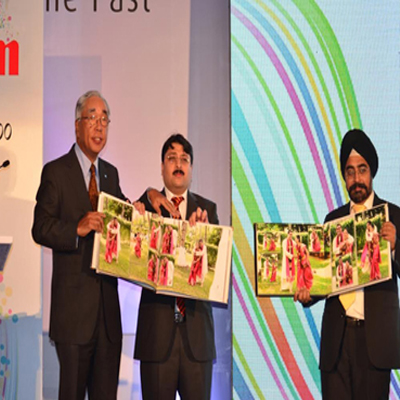
Canon India targets digitising Rs 3000 crore photo print market with DreamLabo 5000
BENGALURU: Canon India (Canon) announced its entry into the Rs 3000 crore photo printing market in India, and more specifically the Rs 300 crore digital printing market with the introduction of the USD 500,000 (About Rs 3.2 crores) priced DreamLabo 5000 commercial inkjet printer equipment, with the intent of targeting the retail photo and album printing industry. This launch makes India the first country in South Asia where the DreamLabo 5000 machine is being installed says the company.
Canon India President and CEO Kazutada Kobayashi, said, “Canon has always been at the forefront of bringing innovative products to customers. With this latest business entry, we are hoping to strengthen our ability to meet the printing needs of professional and wedding photographers. With the DreamLabo 5000, we clearly want to establish innovation leadership in India. For us at Canon India, this is not just a new machine, but the technology that can revitalise the entire industry and open up substantial new business opportunities. Canon is setting a new benchmark for the production printing of high quality photos with this launch.”
Globally, DreamLabo merchandise has been positioned as premium item. The company is following a systematic approach with DreamLabo 5000. It started with a leading photolab in each region and then expanded the presence in that country or region. Its first customer for the DreamLabo 5000 in India is Bangalore-based 100 year old, 22 photo lab store chain G K Vale. G K Vale clocks revenues of about Rs 50 crore annually.
GK Vale Managing director Anand Sukumar said to www.indiantelevision.com, “DreamLabo 5000 will help our bottom line, and will not make a very major impact to our bottom line. We have received a good response and may even buy a second machine.”
A campaign is being planned by both Canon India and G K Vale to attract commercial clients. Some of the ideas being mulled at Canon are including a small flyer or a booklet with each of the 20,000 digital SLRs’ that it sells monthly, in-store promotions at Canon Image Squares, among others. Industry sources reveal that Canon India is likely to spend around Rs 0.75 crore to Rs1 crore during the next calendar year towards above the line (ATL) and below the line (BTL) activities for promotion of its partners such as G K Vale. Canon India spends around Rs100 crore towards brand building, marketing, ATL and BTL activities. Dentsu handles the creative duties for Canon India.
GK Vale spends about Rs 1 crore annually, but with the installation of the DreamLabo 5000, it will double its advertising spends on social media, print and outdoor and local radio.
Commercial printing business contributes just about Rs 95 crores or 5 per cent to Canon India’s top line, revealed Canon India executive vice president Alok Bhardawaj. Canon expects revenue of just Rs15 crore during the next calendar year and is targeting revenue of Rs100 crore from this stream over a five year period.
-

BBC Worldwide sells Dancing with the Stars to Cambodian Broadcasting Service
MUMBAI: BBC Worldwide has announced that hit entertainment TV format Dancing with the Stars has been licensed to Cambodian Broadcasting Service (CBS). The series will air on CTN, Cambodia’s most watched terrestrial channel.
The announcement marks the debut of Dancing with the Stars in Cambodia. It is also BBC Worldwide’s first format sale in the country.
One of BBC Worldwide’s most popular global brands, Dancing with the Stars has been licensed in 49 countries, and a version of the show has been seen in over 75 countries, with over 220 series to date. Local versions of Dancing with the Stars air in countries as diverse as Lebanon, India and Russia.
The brand has also extended into live events, gaming and digital properties. In Asia, the format has been sold in Thailand, Vietnam, Japan, China, South Korea and two versions in India. In India, the sixth and latest season of the Hindi version, Jhalak Dikhhla Jaa has achieved its best audience figures to date for Colors. The grand finale pushed the show to the top of weekend programming nearly doubling the ratings from 2012.
The company thinks that Cambodia is an important market to grow in terms of business in Asia and thus it is looking at expanding there. Earlier, BBC World News, BBC Lifestyle and BBC Knowledge were launched in the country.
The series is set to premiere in mid 2014.