Tag: India

  • ‘Peanuts Re-imagined’ at MipJunior 2014

    ‘Peanuts Re-imagined’ at MipJunior 2014

    CANNES: “We are looking closely at India,” said Peanuts Worldwide SVP media Kim Towner during the MipJunior keynote which focused on the glorious 50 years of Peanuts and the 65th anniversary of the comic strip. While Peanuts may make in-roads to India in the future, currently the important markets for it are Japan, China, Brazil and Germany, apart from the US and France. 


    The keynote themed: ‘Peanuts Re-imagined’ was moderated by author and consultant Christopher Erbes and was attended by France Télevisions executive director Julien Borde, Normaal Animation producer Alexis Lavillat and Towner. It focused on the new TV series, a huge theatrical premiere and many other innovative initiatives being undertaken by Peanuts.  


    The year is big for Peanuts which has restored its entire library to 4K quality for modern viewers. “We have re-signed the deal with ABC for five years,” announced Towner. Not only this, the company has done production deals with Fox and Blue Sky as well. Talking about the other developments, Towner said that Peanuts: The Movie, a 3D CGI animation will see its premier in November 2015. “With development budget of $100 million, the movie will be distributed in over 100 countries. Another $100 million will be put for marketing the property,” she said.


    With audience moving towards digital, Peanuts is also looking at partnering with a major gaming company. “We will announce the partnership soon,” added Towner. With this, Peanuts aims at building on the 15 million downloads of its existing apps. Currently, the animation sees one billion social media impressions in a year. “We see 1.8 million engagements at any given week,” she said, while adding that “2015 is the year of Peanuts.”


    Talking about its strategy on apps, Towner said that while currently most of the apps are games for kids, they do realise the diverse audience.


    The key to Peanut is to make it funny and heartwarming for kids. “We want to find humour for kids,” said Lavillat.


    Giving a background to the new show, which will be a seven minute episode, Borde said that Peanuts has been re-imagined, since family oriented programming is important for television today.

  • Yahoo! may lay off staff in Bengaluru to scale-down India operations

    Yahoo! may lay off staff in Bengaluru to scale-down India operations

    NEW DELHI: Yahoo is reducing the size of its operations in Bangalore, including possible layoffs. The operations in Bangalore are the largest engineering facilities of the Internet company outside its California headquarters.


    The company said, in a statement, that it was consolidating “certain teams into fewer offices” in Bengaluru but it would continue to have a presence there. It is learnt that the move comes more than a week after activist investor Starboard Value LP publicly pressured Yahoo to cut what it referred to as a “bloated” cost structure.


    Yahoo, a one-time Internet pioneer, is trying to revive stagnant revenue growth under the leadership of CEO Marissa Mayer, who took over two years ago. According to the sources, Yahoo had roughly 2000 employees in Bengaluru in March 2013.


    One of the sources said that at the time, Mayer was considering the option of bringing certain jobs from India back to Sunnyvale, California, to unite more of Yahoo’s product development at the home base.


    “As we ensure that Yahoo is on a path of sustainable growth, we’re looking at ways to achieve greater efficiency, collaboration and innovation across our business,” Yahoo’s statement said.

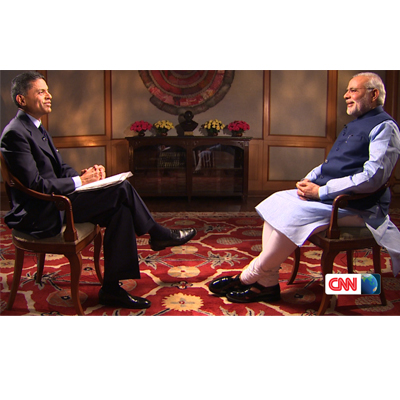
  • Narendra Modi speaks to Fareed Zakaria on India’s world relations

    Narendra Modi speaks to Fareed Zakaria on India’s world relations

    MUMBAI: Narendra Modi’s much awaited interview with CNN International took place on 21 September 2014. Here is the transcript of the interview with CNN’s Fareed Zakaria.


    Fareed Zakaria, Host, CNN GPS: Prime Minister thank you so much for doing this.


    Narendra Modi, Prime Minister, India:  Thank you.


    Zakaria: After your election people have begun asking again a question that has been asked many times for the last two decades, which is, will India be the next China. Will India be able to grow at 8-9% a year consistently and transform itself and thus transform the world?


    Modi: See, India does not need to become anything else. India must become only India. This is a country that once upon a time was called ‘the golden bird’. We have fallen from where we were before. But now we have the chance to rise again. If you see the details of the last five or ten centuries, you will see that India and China have grown at similar paces. Their contributions to global GDP have risen in parallel, and fallen in parallel. Today’s era once again belongs to Asia. India and China are both growing rapidly, together.


    Zakaria: But people would still I think wonder can India achieve the kind of 8 & 9% growth rates that China has done consistently for 30 years and India has only done for a short period.


    Modi: It is my absolute belief that Indians have unlimited talent. I have no doubt about our capabilities. I have a lot of faith in the entrepreneurial nature of our 1.25 billion people. There is a lot of capability. And I have a clear road-map to channel it.


    Zakaria: China’s behavior in the East China Sea and the South China Sea over the last two years has worried many of its neighbors. The head of the governments in Philippines and Vietnam have made very sharp statements worrying about it. Do you worry about it?


    Modi: India is different. It is a country of 1.25 billion people. We can’t run our country if we get worried about every small thing. At the same time, we can’t close our eyes to problems. We are not living in the eighteenth century. This is an era of partnership. Everyone will have to seek and extend help mutually.  China is also a country with an ancient cultural heritage. Look at how it has focused on economic development. It’s hardly the sign of a country that wants to be isolated.  We should have trust in China’s understanding and have faith that it would accept global laws and will play its role in cooperating and moving forward.


    Zakaria: Do you look at China and feel that it has been able to develop as fast as it has, really the fastest development in human history, because it is an authoritarian government, because the government has the power to build great infrastructure, to create incentives for investment. Do you look at that and think to yourself that that would be — that there is a price to democracy that you have to do things a little bit more slowly.


    Modi: If China is one example, then democratic countries provide another example. They have also grown fast. You can’t say that growth is not possible because of democracy.  Democracy is our commitment. It is our great legacy, a legacy we simply cannot compromise. Democracy is in our DNA.


    Zakaria: So you don’t look at the power of the Chinese government and wish you had some of that authority.


    Modi: See, I have seen the strength of democracy. If there were no democracy then someone like me, Modi, a child born in a poor family, how would he sit here? This is the strength of democracy.


    Zakaria: From the strength of democracy to the strength or weakness of the crucial relationship between the US and India. Mr. Modi goes to the White House next week.  This after he was actually banned from even stepping on U.S. soil for many years. How does he see relations between the two nations?  Also, I ask about India’s recent record of terrible crimes against women. The Prime Minister will tell me what his government intends to do about it.


    ..BREAK..


    Zakaria: And we are back with more of my exclusive interview with India’s Prime Minister, Narendra Modi. Next week, he will make his first trip to the White House, warmly welcomed by the Obama administration. That’s quite a turnaround for a man who was placed on a blacklist by the George W. Bush administration in 2005 and, for many years, denied a visa to enter the United States. The ban stemmed from an incident in 2002, when he was chief minister of India’s state of Gujarat. Modi was criticized for failing to quell riots there, riots that, according to a U.S. government report, killed more than twelve-hundred people, the majority of the dead were Muslim.  Modi is Hindu.  Modi has been exonerated three times by India’s Supreme Court, notes the New York Times.  The Obama administration reversed the ban and has been courting Modi actively. Has Modi any qualms about warmer ties with India? I asked him.


    Zakaria: There are many people in the United States and some in India who wish that the United States and India were much closer allies. The world’s oldest democracy, the world’s biggest democracy, but somehow that has never happened and there have always been these frictions and difficulties. Do you think it is possible for the United States and India to develop a genuinely strategic alliance?


    Modi: I have a one word answer: Yes. And with great confidence I say “yes”. Let me explain. There are many similarities between India and America. If you look at the last few centuries, two things come to light. America has absorbed people from around the world and there is an Indian in every part of the world. This characterizes both the societies. Indians and Americans have coexistence in their natural temperament. Now, yes, for sure, there have been ups and downs in our relationship in the last century. But from the end of the 20th century to the first decade of the 21st century, we have witnessed a big change. Our ties have deepened. India and the United States of America are bound together, by history and by culture. These ties will deepen further.


    Zakaria: So far in your contacts with the Obama administration, you have had several cabinet members come here. Do you feel that there is a genuine desire from Washington to try to upgrade the relationship with India substantially?


    Modi: Relations between India and America should not be seen within the limits of just Delhi and Washington. It’s a much larger sphere. The good thing is that the mood of both Delhi and Washington is in harmony with this understanding. Both sides have played a role in this.


    Zakaria: With regard to Russia’s action in Ukraine. India has not been particularly active.  Do you, how do you view Russia’s annexation of the Crimea.


    Modi: Firstly, whatever happened there, innocent people died in a plane accident. That’s very saddening. These are not good things for humanity in this age. There is a saying in India that the person who should throw a stone first is the person who has not committed any sins. In the world right now, a lot of people want to give advice. But look within them, and they too have sinned in some way. Ultimately, India’s view point is that efforts need to be made to sit together and talk, and to resolve problems in an ongoing process.


    Zakaria: One of the areas that India has come on to the world scene or people have read about and heard about it, which has been unfortunate has been violence against women. This issue of rape. Why is it do you think that there is this problem of, it seems persistent discrimination and violence against women in India and what do you think can be done about it?


    Modi: Look, us political pundits shouldn’t tangle ourselves up in knots by searching for the root cause of this problem. More damage is done by statements from political pundits. Dignity of women is our collective responsibility. There should be no compromise in this matter. There should be no erosion in the law and order situation. We have to revive the family culture in which a woman is respected and considered equal, her dignity encouraged. The main thing here is girl child education. By doing so the possibility of empowerment will increase. On August 15, my government pushed ahead a movement called: educate the girl, save the girl.


    Zakaria: Next on GPS, the head of al Qaeda says he’s opening a franchise in India. What does Prime Minister Modi have to say about that? I’ll ask him.  Also, when you lead 1.25 billion people, the pressures mount.  How does Mr. Modi relax? You’ll find out, when we come back.


    ..BREAK..


    Zakaria: Earlier this month, Osama bin Laden’s successor as head of Al Qaeda – Ayman Al-Zawahiri – announced in an almost-hour long video that the terror organization was going to open a new branch in India. India’s Muslims are a minority – just over 13 percent of the population, versus more than 80 percent of the population that is Hindu. And, thus far, the cause of “jihad” amongst that Muslim minority in India hasn’t taken off at all, certainly not as it has across the border in Pakistan. At a time when terror is atop the headlines, I wanted to get Mr. Modi’s thoughts on al Qaeda’s plans for his country.


    Zakaria: Ayman al-Zawahiri the head of al Qaeda has issued a video and an appeal trying to create an al Qaeda really in India. In South Asia he says but the message was really directed towards India and he says he wants to free Muslims from the oppression they face in Gujarat, in Kashmir. Do you think, do you worry that something like this could succeed?


    Modi: My understanding is that they are doing injustice towards the Muslims of our country. If anyone thinks Indian Muslims will dance to their tune, they are delusional. Indian Muslims will live for India. They will die for India. They will not want anything bad for India.


    Zakaria: Why do you think it is that there is this remarkable phenomenon that you have a 170 million Muslims and there seem to be almost no or very few members of al-Qaeda. Even though al-Qaeda is in Afghanistan and of course there are many in Pakistan. What is it that has made this community not as susceptible?


    Modi: Firstly, I am not the authority for doing a psychological and religious analysis on this.  But the question is, whether or not humanity should be defended in the world? Whether or not believers in humanity should unite? This is a crisis against humanity, not a crisis against one country or one race.  So we have to frame this as a fight between humanity and inhumanity. Nothing else. 


    Zakaria: A year or two from now, what would you like people to say, that these are the things Narendra Modi has managed to accomplish in terms of actions in office.


    Modi: See the biggest thing is that the people of the country have faith. That trust should never break. If I can win the confidence of the people of India, not from my speeches, but by actions, then the power of 1.25 billion Indians will come together to take the country forward.


    Zakaria:  One final question. How do you relax? What do you enjoy doing when you are not working?


    Modi: Look, I’m not the “not-working” type. I derive pleasure from my work. Work gives me relaxation too. Every moment I am thinking of something new: making a new plan, new ways to work. In the same way that a scientist draws pleasure from long hours in the laboratory, I draw pleasure in governance, in doing new things and bringing people together. That pleasure is sufficient for me.


    Zakaria: Do you meditate? Do you do Yoga?


    Modi: I’m fortunate that I was introduced to the world of yoga. That has been very useful to me. I always advise everyone to make this a part of their lives


    Zakaria: You gave a long speech about the benefits of Yoga. Explain what you see them as.


    Modi: See, sometimes we notice our mind works on one thing, the body on another, and time brings us in conflict. Yoga synchronizes the heart, the mind, and the body. That is Yoga.


    Zakaria: And that was Narendra Modi, the new prime minister of India in his first interview in office.


  • Luxury goods market in India on a lower growth curve

    Luxury goods market in India on a lower growth curve

    MUMBAI: As the global economy recovers, the luxury industry is growing accordingly. Not unexpectedly, growth is disproportionately focused on the Asia Pacific region.


    In 2012, India had the fastest growing luxury markets in the region. The country grew much faster than China, but lost steam due a lack of sustenance of the growth, which once made the country an attractive market. Today, the Indian luxury goods market appears to be on a lower growth trajectory as pointed out in the Deloitte Touche Tohmatsu (DTTL) first annual report on ‘Global Powers of Luxury Goods’.


    “The entire luxury goods market in India has seen a significant dip in the growth rate and is likely to see a couple of more turbulent years. However, the long term outlook remains positive and India’s luxury market is expected to rise with a strong performance. To supplement this long term growth trajectory, holistic implementation of new reforms and initiatives by stakeholders and regulators would only facilitate the vision” said Deloitte senior director Gaurav Gupta.


    The report says that the very rapid growth of recent years have created a bottle neck leading to inflation this has caused the central bank to tighten its monetary policy to control inflation and stabilise the currency; hence, further slowing the booming market. From the regulatory side, there was not much of a focus to implement reforms that could boost productivity, unleash, more investment and induce a faster growth rate in the sector.


    ‘Global Powers of Luxury Goods’ highlight the fact that along with Indian markets, many emerging markets like China, Brazil and Russia have seen deceleration of growth in the past year. This follows a period of rapid growth that was driven by several factors. Going forward, the emerging world is likely to have a year or two of disappointing growth while imbalances are unwound. However the long term view remains positive.


    In the last five years the expanding global middle class in the emerging markets has supported growth in the luxury sector and is continuing to grow through 2018. According to Euromonitor the emerging markets like Asia Pacific, Latin America, Middle East and Africa combined together accounted to 9 per cent of the luxury market in 2008 these figures spiked to 19 per cent in 2013 and is expected to leap up to 25 per cent in 2025.


    The developed economies like US and Europe benefits from the emerging markets. Over the 2012 to 2017 Euromonitor projects China to lead the tourist expenditure growth followed by India and the other emerging Asian countries. The appetite for American and European brands in the underpenetrated markets is strong and growing many luxury companies to expand its international presence hence creating opportunities in emerging markets like India.


    The world’s 75 largest luxury goods company generates total goods sales of $171.8 billion. Three of the top ten companies are conglomerates.

  • 95% of the world’s online public conversation about TV is on Twitter: Rishi Jaitly

    95% of the world’s online public conversation about TV is on Twitter: Rishi Jaitly

    MUMBAI: The new trend that is creating waves in India these days is the usage of social media while watching television and specifically writing about television content on the platforms. Speaking about this growing trend was Twitter India market director Rishi Jaitly at the TV.Nxt conference in Mumbai.


    Jaitly said that Twitter believes that it is a realisation of the dream of the inventor of the printing press, Johan Guttenberg and today it has become a platform that has truly frictionless content consumption capability and frictionless content expression and publishing. This has led to it producing nearly 500 million tweets a day with 76 per cent users from mobile phones.


    He stresses that Twitter encourages people to think of it not as a website but as a mobile microphone which has led to 40 per cent people only consuming content but 60 per cent users consuming as well as contributing. “When you go on YouTube or Wikipedia, you don’t feel ‘oh I must upload a video’ or ‘oh I must edit this page’ but on Twitter people feel this need to tweet, which is fantastic!” says Jaitly.


    Recently, Twitter launched its analytics for everyone to track. This, because it has become important to know not just the reach but the ‘live reach’ of tweets as well. Jaitly highlights that 75 per cent of impressions are created within an hour of publishing a tweet.


    Talking about the relationship between television and Twitter he shared some statistics that during the Indian Premiere League, 75 per cent of tweets had been sent during the match. In the UK, 40 per cent of Twitter traffic in the evening is about TV and globally 95 per cent of the world’s online public conversation about TV is happening on Twitter.


    Research agency Nielsen found that shows that rate high, drive conversation on Twitter but a third of the time, buzz on Twitter can drive ratings. Two years ago, Nielsen came to the social media company saying that advertisers wanted to know how alive its audience was. So, Twitter offered its data set to create Nielsen Twitter TV ratings for shows in real time, every night.


    An added bonus to advertisers is that when viewers are engaged on Twitter while watching content, they are less likely to tune away during ads and more likely to recall them. Jaitly points out that the non-fiction entertainment genre is most conducive to public buzz due to its high engagement tactics such as voting or reaction to eliminations, led by sports and news and increasingly by drama and fiction.


    Jaitly compares his platform to a sofa, where everyone is watching TV together including the talent, anchor, brand and friends. “This 3D holistic experience is where we think the world is moving and when you optimise on that experience, you optimise for the success of your business,” he says. However, success on Twitter is about personifying oneself by having executives, talent, mascot and machines on the platform. This is why businessman Anand Mahindra is so popular and so is Homer Simpson, the character from the popular series The Simpsons, who tweets during off season and extends the life of the show. Says he, “You win on Twitter when you bring a collection of voices together and when you get your viewer to tweet, you convert him into a marketer.”


    According to him, even brands today are engaged in telling stories. “We believe media is moving to where audiences crave content that is personal, mobile and interactive,” he says.


    In India, its top priority is to drive growth. This is supported by advertisers and brands who want to be a part of Twitter conversations through its product ‘promoted tweets’. But it ensures that it doesn’t interfere in a user’s newsfeed. Meanwhile, adapting to the multiple languages of the country, it allows tweets in all Indian languages including translation.

  • Media offices turn tricolour for Independence Day 2014

    Media offices turn tricolour for Independence Day 2014

    MUMBAI: The country is gearing up to celebrate India’s 68th Independence Day. The patriotic fervor is in the air. Everything from channels to radio stations, newspapers, magazines and even the digital space have donned the colours of the tricolor.


    With every individual busy with their hectic lives, Independence Day is the only day where people across the country come together to celebrate regardless of their caste, creed or religion. As the I-Day nears, Indiantelevision.com takes a look at how different media organisations are celebrating this day at their offices.


    Doordarshan Mumbai


    * The pubcaster Doordarshan’s Mumbai Kenra led by its head Mukesh Sharma  has decided to throw a special Independence Day  eve dinner for a select group of invitees from the cities glitterati and bring in Independence Day, reminding Indians of another generation of what happened when India attained independence on 15 August 1947. A flag hoisting ceremony will follow in the morning on 15 August followed by breakfast.


    Zee News


    * Coming up with an innovative exercise for the I-day, Zee News is launching a campaign ‘My Earth My Duty’, under which symbolic plantation will be done at its office and also at locations like Wagah Border, Lucknow, Udhampur and Delhi. The organisation will also have a ‘Best Tiranga Girl and Boy Contest’, awarding the best dressed employees. Meanwhile, the Zee TV office will be accessorised with Tri Colour balloons and all the employees will be treated with sweets for the occasion.


    SureWaves, Bengaluru


    * With patriotism in the air, employees at SureWaves, Bengaluru have decided to wear attire that in some ways reflects the Indian flag’s tri-colour on 14 August followed by a get-together in the office where quiz and some impromptu games are planned. The company is also toying with the idea of flag hoisting and is thinking of initiating a drive towards waste management at home. If it can, it plans to bring in an expert who will speak to the company team and their families about waste composting and waste conversion to manure depending on the expert’s availability. They are also trying to distribute small Bundi packets to remind the employees about childhood days in the school.


    Group M


    * While India’s leading media agency’s GroupM’s  office has already been decorated with balloons in tri-colour, chocolates will be distributed to the employees.


    NDTV Good Times


    * For a special Independence Day celebration, the whole of NDTV Good Times’ office will be seen in ethnic, wearing a mix of saffron, white and green.


    Tata Sky


    * The DTH operator has also decided to deck up its office with saffron, white and green balloons, suiting the occasion along with snacks and songs. Knowledge will be tested with a special Independence day quiz.


    While a number of media offices have something special planned for the day, a few of them like India TV, Times Now, NDTV, Sony, Atria, Star Network’s Kannada GEC – Suvarna have nothing special planned for Independence Day.


    As different offices celebrate Independence Day in their own special way, we at Indiantelevision.com wish you a Happy 68th Independence Day. We will be donning ethnic wear, sing patriotic songs, ending with the national anthem. Jai Hind!

  • Pakistan announces its Wave WKL team ‘Lahore Lions’

    Pakistan announces its Wave WKL team ‘Lahore Lions’

    MUMBAI: After cricket, it’s Kabaddi’s turn to help boost diplomatic ties between India and Pakistan. The government of Punjab (Pakistan) under the leadership of Chief Minister Mian Mohammed Shabaaz Sharif have come forward and have consented to participate in the upcoming Wave World Kabaddi League.


    The official team will be called Lahore Lions and will comprise national players like Babar Waseem, Lala Abaidulla, Shafiq Ahmad Chisti and Akmal Shazad Dogar. While the team will be managed and supervised by Punjab (Pakistan) directorate general of sports, the venture will be headed and monitored by Punjab (Pakistan) DG sports Usman Anwar.


    The league matches will start from 9 August and Lahore Lions will play its first match against Vancouver Lions on 10 August in London. Commenting on the association, Lahore Lions manager Mohd. Waqas said, “Kabaddi is a popular sport in Pakistan. We are very elated to announce our representation in Wave WKL. It will be a proud moment for us to represent our country in the league across the globe. I wish the team stupendous success in the league.”


    Wave WKL senior VP and Punjab Kabaddi Association president Sikander Singh Maluka said, “We welcome this initiative of Pakistan and thank them for their continued support. This move by the government of Punjab in Pakistan to participate in this mega event through their franchise Lahore Lions will make the matches more exciting and fun-filled. I am sure that it will be a great, entertaining league for everyone to watch.”


    The official media launch of Lahore Lions is expected to happen on 7 August 2014 at the Punjab CM’s secretariat at Lahore. Wave WKL chief advisor Puneet Singh Chandhok confirmed the same and said, “The officials of both sides are expected to be a part of this launch including Pakistan Punjab CM Shahbaaz Sharif, chairperson Public Youth affairs Authority Pakistan, Rana Masood, Sports Minister, Punjab (Pakistan) and Sikander Singh Maluka. Lahore Lions is also expected to host the sports weekend at Punjab stadium, Lahore wherein all the other Kabaddi teams will also play against each other.

  • DTH sector in India to grow sales at 19 per cent CAGR between 2013-18: MPA

    DTH sector in India to grow sales at 19 per cent CAGR between 2013-18: MPA

    MUMBAI: India’s direct-to-home (DTH) satellite pay-TV sector remains a growth oriented industry with significant potential for strategic and financial investors, according to a new report published by Media Partners Asia (MPA).


    The report, entitled ‘India DTH Market Overview–Key Dynamics & Future Outlook’, forecasts that India’s DTH pay-TV sector will generate revenues of $ 4.04 billion by 2018, a CAGR of 19 per cent from $ 1.71 billion in 2013 and by 2023 the sector will generate revenues of $ 5.6 billion. In an earlier report, MPA had said that the DTH active subscriber base will increase from 37 million in 2013 to 60 million by 2018 and 70 million by 2023. This implies a 39 per cent share of the overall market by 2023 and a 56 per cent share of the digital pay-TV market.


    DTH operators have been working together to improve the overall economics for the business by reducing the amount of free viewing offered to new subscribers and recalculating the incentives dealers receive for renewing subscriptions.


    ARPU growth, according to the report, will be partially limited as DTH expands nationally, with low-income homes coming into the mix, although MPA sees a greater contribution from high- ARPU HD subscribers. According to the report, HD represented 6.9 per cent of the total active DTH base in 2013; which MPA expects to grow to 16.1 per cent by 2018 and to 20.1 per cent by 2023. MPA sees total DTH ARPUs expanding from $ 4.0 per month in 2013 to $ 5.7 by 2018.


    Digital TV (DTV) has started to gain widespread acceptance across consumer households in India, driven largely by the growth of DTH satellite pay-TV platforms. Data from MPA indicates that DTV penetration, including digital cable and digital free and pay DTH platforms, has grown from less than 1 per cent in 2006 to 46 per cent as of 31 December 2013.


    The six DTH pay-TV operators in the market have in aggregate contributed to 23 per cent penetration as of 31 December 2013, providing a level of market leadership due to superior capitalisation and a stronger consumer focus built around product strength and innovation, including tiering, HDTV and DVR services.


    “DTH operators have been working together to improve the overall economics for the business by reducing the amount of free viewing offered to new subscribers and recalculating the incentives dealers receive for renewing subscriptions. ARPU growth will be partially limited as DTH expands nationally, with low-income homes coming into the mix, although we also see a greater contribution from high-ARPU HD subs. HD represented 6.9 per cent of the total active DTH base in 2013; we expect this to grow to 16.1 per cent by 2018, and to 20.1 per cent by 2023,” said MPA India VP Mihir Shah.


    Key market trend highlights of the report:


    Rational focus: Operators are increasingly focused on growing profits as opposed to solely increasing volume, often at the expense of profitability. As a result, operators have increased their basic prices, while at the same time reducing the trade margin arbitrage by Rs 200-250 to minimise rotational churn. Although subscriber additions post October 2011 have witnessed some slowdown. According to MPA both the quality of subscribers and ARPUs will continue to improve going forward.


    DTV mandate: MPA believes that the implementation of mandatory cable digitisation by the government will be an important catalyst for growth in the DTH sector. DTH operators are relatively well positioned due to the strength of their B2C businesses (as opposed to B2B approaches amongst cable MSOs) and their experience and investment in tiering, subscriber management and billing and sales and marketing. In addition, as part of its reforms, the government has now permitted international companies to own up to 74 per cent of cable and DTH platforms.


    HD penetration: As per MPA’s report, HD penetration will grow significantly in the future, rising from less than 7 per cent of active DTH subscribers currently to over 20 per cent by 2020. MPA’s estimates are based on benchmarks in the US, UK, Latin America and Southeast Asia. In the UK, incumbent DTH operator BSkyB currently has more than 50 per cent of its subscriber base adopting HD. Malaysia’s Astro has also demonstrated laudable rates with 49 per cent penetration at present on its DTH platform. Increase in HD channel offering is critical for growth in HD penetration. However for some of the mature global operators, MPA sees HD penetration as a percentage of total subscribers capping out at 60-65 per cent.


    Upside capped by tax and regulation: A ~30 per cent drain of gross DTH subscription revenues – comprising a 12 per cent service tax, 8-10 per cent entertainment tax and a 10 per cent license fee – continues to hamper the industry’s ability to improve profitability. Although industry stakeholders are lobbying the government to change the license fee terms and make deductions based on adjusted gross revenue, these are yet to be finalised. A further cap on future industry upside comes in the form of spectrum issues resulting from the absence of an open skies policy that would allow DTH operators to directly source transponder capacity from foreign satellite operators, as opposed to the current system of going through the Indian Space Research Organisation’s (ISRO’s) commercial arm Antrix.


    Consumer proposition, technology key to future subscriber additions: Ramping up subscriber additions as analog cable subscribers turn to digital will largely depend on the consumer proposition offered by the DTH and cable operators. Gaining an increased share of new subscribers will hinge on designing and marketing innovative and simple packaging structures, bearing in mind that analog cable subscribers are used to an all-you-can-eat single package structure. Technology will also be key, as compression standards and middleware deployed by operators will play a crucial role, though not immediately visible, in differentiating service offerings and providing HD and value added services (VAS) such as interactive services, 3D and VoD.

  • Only 70 per cent of the Indian pay-TV market will be digitised by 2023: MPA report

    Only 70 per cent of the Indian pay-TV market will be digitised by 2023: MPA report

    MUMBAI: The process of digitisation in India currently seems to be stuck in limbo. Even with several deadlines being set, the country doesn’t seem to have progressed much even in digital addressable systems (DAS) phase II, let alone phases III and IV. A new report from Media Partners Asia (MPA) has predicted key findings about the cable and DTH industry in India between 2013 and 2023.


    It expects the next five years to be a period of robust growth of India’s pay-TV market. MPA projects that the pay TV industry in the country will grow from $7.4 billion in revenue in 2013 to $12.3 billion by 2018.


    The growth in revenue will be equal to an average annual growth rate of 11 per cent between the years 2013 to 2018. By 2023, it expects the industry to generate revenues of approximately $ 16.4 billion. The findings by MPA were published in the report ‘India Pay-TV and Broadband-Future Trends’.


    The study states that by the end of 2013, India had approximately 65 million paying digital subscribers. MPA projections indicate that only 70 per cent of the Indian pay-TV market will be digitised by 2023.


    The total number of TV households in India is currently pegged at around 160 million with nearly 20 million on terrestrial only. This will be the growth opportunity for alternative platforms as cable and DTH will find it unviable to penetrate into the interiors of the country. The Ministry of Information and Broadcasting (MIB) has given a deadline of 31 December 2014 for completion of digitisation. If one goes by the MPA report, India has a long way to go for 100 per cent digitisation.


    From 2015 to 2017 will see an upward trend as DAS will take off in phase III and IV areas. After 2017, the time will be for consolidation and monetisation as subscriber growth will decelerate.


    While the growth during 2009 to 2013 was driven by volume, the next five years will be led by average revenue per user (ARPU). At the end of the 2018, pay TV subscribers will hit 165 million and by 2023, it will be 180 million. This implies a long term penetration of 80 per cent.


    The growth will also give wide space for alternative platforms such as Doordarshan-owned Free Dish, headend-in-the-sky (HITS) and over-the-top media (OTT) apart from cable and DTH, which will address the need gap between TV households and pay TV subscribers.


    DTH industry revenues are expected to reach $4 billion by 2018 and $5.5 billion by 2023. This will be due to healthy subscriber additions from 2014 to 2016 and by improved churn and suspension management. The active DTH subscriber base is expected to grow from 37 million in 2013 to 60 million by 2018 and 70 million by 2023. Thus, DTH will have a 39 per cent share of the pay-TV market by 2023 and 56 per cent share of the digital market.


    MPA predicts that the total digital cable subscribers will be 50 million by 2018 and 55 million by 2023. Digital cable conversion will shoot up from 29 per cent in 2013 to 48 per cent by 2018 and 50 per cent by 2023. This will enable growth in cable broadband. It expects share of cable in the fixed broadband market to grow from 6 per cent to nearly 15 per cent from 2013 to 2023.


    The projected total pay-TV channel revenues for broadcasters, including advertising and subscription will grow from $3.3 billion in 2013 to $6 billion by 2018 and $8.3 billion by 2023.


    Meanwhile the pay-TV ad market is expected to grow at 8.6 per cent CAGR over 2013 to 2023 while broadcaster subscription revenues are expected to grow at 11.3 per cent over the same period. This will be due to improved macro-economic conditions, sub-segmentation of existing genres and new advertiser categories.


    “The Indian market is important because of its accessibility for global media distributors and investors and its high levels of pay-TV penetration. Ever changing regulations are destabilising but the government’s DAS mandate will be an important catalyst while improved supply side factors, including healthy financial markets and investments from international strategists are also critical,” says MPA India VP Mihir Shah.

  • N Srinivasan confirmed as ICC chairman

    N Srinivasan confirmed as ICC chairman

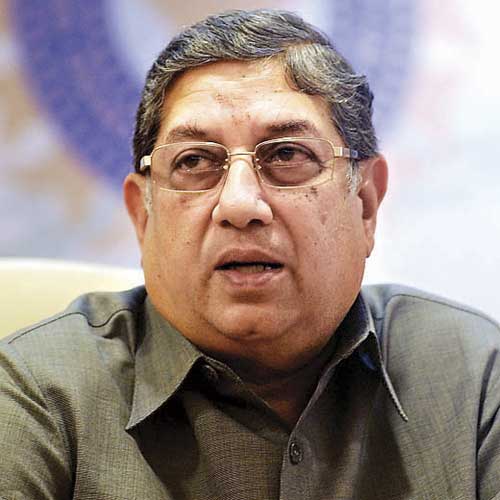
    MUMBAI: Narayanaswami Srinivasan has been confirmed as the International Cricket Council (ICC) chairman after the 52-member full council approved amendments to the ICC’s Memorandum and Articles of Association at the annual conference in Melbourne.

    Srinivasan was nominated by the Board of Control for Cricket in India (BCCI) for the top position and will assume charge following the conclusion of the ICC annual conference week.

    The approval of the constitutional changes, which flowed from an ICC Board resolution taken in Singapore on 8 February and finalised on 10 April, also means that a new executive committee was formed, which will report to the ICC Board.

    The initial chair of the executive committee will be Cricket Australia’s chairman, Wally Edwards, while the chair of the ICC’s finance and commercial affairs committee (F&CA) will continue to be England and Wales Cricket Board’s chairman, Giles Clarke.

    Srinivasan said it was an honour to become ICC chairman and promised that the ICC will continue to play a leading role in the promotion and development of the global game.

    “It is an honour to be confirmed as the chairman of the International Cricket Council,” said Srinivasan, adding: “I will leave no stone unturned in trying to strengthen the pillars and foundations of our sport, both on and off the field. I want to ensure that cricket retains and grows its popularity, and that the ICC plays a leading role in this global growth.”

    “I want to see more strong teams in international cricket. For this to be achieved, we all need to work hard to develop local talent in our countries. Naturally, there will be more support to those who first show they can help themselves. The ICC is a members’ organisation and the pathway is now there for any member to play test cricket or in the major ICC events if it performs well enough over a sustained period of time.”

    Srinivasan congratulated outgoing ICC president Alan Isaac for his contribution.” Isaac has been an inspirational president of the ICC. He provided guidance to everyone during his two-year term and all three international formats remain incredibly popular. The game is unquestionably stronger than it was at the start of his term,” he said.

    The annual conference also saw Mustafa Kamal become the eleventh president of the ICC.

    Kamal said: “This is a memorable and historic day for Bangladesh cricket. On this day 14 years ago, Bangladesh became the tenth test playing country. Today, a Bangladeshi becomes the eleventh president of the International Cricket Council. Thank you for bestowing this honour on Bangladesh and me.”