Tag: India

  • Dentsu acquires French cross-activation agency ZoneFranche

    Dentsu acquires French cross-activation agency ZoneFranche

    MUMBAI: Dentsu Aegis Network has acquired the Paris based cross-activation agency ZoneFranche SAS, which has strengths in experiential marketing.


    Founded in 2004, ZoneFranche has steadily captured an increasing share of the growing activation market, and is currently one of the leading agencies with a focus on consumer brand experience and experienced value.


    The company also offers a wide range of communications services including digital, mobile, advertising and promotion solutions that leverage social media, customer relationship management (CRM), and other marketing activities to enhance the purchasing experience. These innovative, high-quality services have earned it high praise from prominent companies in France as well as in other countries.


    Post-acquisition, ZoneFranche will become part of experiential marketing agency psLIVE, one of the Dentsu Group’s specialist brands. During the next 12 months, psLIVE will be realigned as MKTG, the Group’s lifestyle marketing brand headquartered in New York and one of its nine global network brands.


    As was reported earlier by Indiantelevision.com, in India Dentsu recently acquired Brian Tellis’ Fountainhead Entertainment, which will be merged with psLIVE.

  • Superdry collaborates with Pepsi MTV Indies for music property

    Superdry collaborates with Pepsi MTV Indies for music property

    MUMBAI: British brand Superdry has partnered with Pepsi MTV Indies for a unique music property – Superdry Krunk Live Sessions, which will brings together some of the hottest young musicians in the country alongside some of India’s best visual artists.


    This first of its kind show, which will launch on 29 October at 7 pm and will be aired from 7 – 7:30 pm. Superdry Krunk Live Sessions aims to showcase how visuals, when combined with music, can accentuate the whole experience, making it truly unique.


    The show is a six episode series, where each episode will feature three – four original collaborations between musicians and visual artists. This will be followed by musicians and visual artists talking about their background, musical inspirations and their collaborations on the show.


    The show will also have an on-ground extension as every episode will also be followed up with a gig featuring the artists in the respective episode. These performances will be held across cities like – Mumbai, Pune, Delhi, Chandigarh, Hyderabad and Bangalore.


    Some of the well-known Indie music artists to be seen on the show will be – Kumail, Ox7gen, Nicholson, Donn Bhat, Madboy/Mink, Alowala, AquaDominatrix and Your Chin. The visual artists who will be collaborating with these musicians include – Moebius, Wolves, Transhuman Collective, Godgamut and Oblique.


    The show will be hosted by DJ Mo City aka Mohammed Abood, a music entrepreneur and DJ with a passion for authentic music from all around the world. DJ Mo City will also interact with these artists while they create these sounds and visuals, taking the audiences on a Visual Musical Extravaganza.


    Superdry business head Manu Sharma said, “Superdry globally, has a long standing association with music. We have always believed in curating the freshest sounds from across the planet and making them accessible to our customers through our in store and sound cloud playlists #SuperdrySounds. With Superdry Krunk Live Sessions we are extending our global philosophy to the Indian Independent music scene and are very excited to collaborate with MTV Indies on the property.”


    Pepsi MTV Indies EVP and business head Aditya Swamy added, “We play in the world of subcultures and with his brand new production we are bringing together the world of electronic music beyond EDM and a form of art that’s beyond graffiti. Stylized and futuristic, this is brand new chapter in the space of collaborations, a space where sound and sight meet. It is hugely encouraging to have the support of a cult brand like Superdry in bring this cutting edge content to urban audiences across India. Step Up and Discover.”

  • BARC week 41: Sun TV is No 1 channel on All India basis

    BARC week 41: Sun TV is No 1 channel on All India basis

    MUMBAI: Despite the controversy surrounding its owners in recent times, Tamil general entertainment channel (GEC) – Sun TV has come out as the numero uno channel across genres on an All India basis with BARC India’s rural data rollout, and is even ahead of popular Hindi GECs like Star Plus and Colors.

    In week 41 of the BARC India data, Sun TV emerged as the leader across genres in the All India (Urban + Rural) market with 1153449 (000Sums).

    Hindi GECs, which dominated the Top 10 channels chart were Star Plus in the second spot, Colors at third and Zee TV in the fourth spot. The free to air (FTA) channel Zee Anmol grabbed the second position, while Star Utsav was in the seventh position, followed by Life OK in the eight spot.

    While the chart for the Top 10 channels across genres was mostly dominated by Hindi GECs, apart from Sun TV, another regional channel, which managed to appear on the list was ETV Telugu in the ninth position with 447160 (000Sums).

    Two Hindi movie channels namely Star Gold with 546919 (000Sums) and Zee Cinema with 427533 (000Sums) were amongst the top 10 channels across genres in the sixth and tenth position respectively.

  • BARC rural roll out sees Zee Anmol, Star Ustav in top 5 Hindi GECs

    BARC rural roll out sees Zee Anmol, Star Ustav in top 5 Hindi GECs

    MUMBAI: The Broadcast Audience Research Council (BARC) India released the much awaited all India data, which includes rural India, a first in the country. With the introduction of rural data, Zee Network’s free to air (FTA) channel Zee Anmol and Star India’s Star Utsav have managed to find their place in top five Hindi general entertainment channels (GECs) in week 41.


    DD National registered an Average Time Spent (ATS) of 53 mins and 39 secs, which is the highest among Hindi GECs. 


    In the Hindi GEC space, Star Plus maintains its leadership and grabbed the first position with 804214 (000Sums) followed by Colors in second slot with 708747 (000Sums) in week 41.


    Zee Network’s FTA channel Zee Anmol jumped to number three with 609189 (000Sums), while Zee TV managed to hold the fourth position with 588017 (000Sums). In fifth spot was Star Utsav with 500809 (000Sums).


    Life OK with with 459427 (000Sums) and DD National with 381659 (000Sums) grabbed the sixth and seventh positions respectively. Sony Entertainment Television with 371261 (000Sums), Sab with 280409 (000Sums) and Rishtey with 270072 (000Sums) garnered the eighth, ninth and tenth slot respectively.


    Highlights of BARC India Week 41 (10-16 October) ratings: 

    · Star Plus maintains its leadership with 804214 Rat (000s) followed by Colors at 708747 Rat (000s).

    ·  Zee Anmol jumps to number three with 609189 Rat (000s).

    ·  DD National registered an Average Time Spent (ATS) of 53 Min 39 Sec highest among Hindi GECs. 

    ·  Rishtey is amongst top 10 Hindi GECs with 270072 Rat (000s).  

    ·  In the news genre, Times Now maintains its leadership with 560 Rat (000s) followed by CNN IBN at 233 Rat (000s).

    ·  Sports sees major spike in ratings. Star Sports 1 holds number 1 position with 162592 Rat (000s) on the back of Paytm ODI Trophy 2015- India vs South Africa.

    ·  Star Gold becomes No 1 Hindi Movie channel with 486374 Rat (000s) with the premier of Bajrangi Bhaijaan.

    ·  Aaj Tak is number one in Hindi News genre with 72067 Rat (000s).

    ·  Sun TV with 1092231 Rat (000s) topped the Tamil GEC genre. It also becomes the No 1 channel on All India basis ahead of Star Plus and Colors.

    ·  ETV Telugu maintains No 1 position in Telugu GEC market with 424252 Rat (000s). 

    ·  Colors Kannada maintains its ranking order in the Kannada GEC space with 211268 Rat (000s).

    ·  Zee Marathi with 116598 Rat (000s) leads the Marathi GEC genre.

    ·  In the Malayalam GEC genre, Asianet topped the chart with 413385 Rat (000s).

    ·  Star Jalsha tops Bengali GEC space with 241463 Rat (000s).

    ·  Discovery Channel stays ahead of competition with 6433 Rat (000s).

    ·  Kids genre sees spike in ratings, Nick is the number one kids channel with 97227 Rat (000s).

    ·  MTV is the No 1 Youth channel with 14219 Rat (000s).

    ·  ET Now tops the English Business news genre with 484 Rat (000s).

    ·  Movies Now maintains its leadership in English Movies genre with 3200 Rat (000s) followed by Sony Pix at 1893 Rat (000s). 

    ·  Zee Café maintains its leadership in English Entertainment genre with 103 Rat (000s). 


    “I am delighted to present to the Broadcast and Advertising industry the All India Ratings. We have been able to give to the country a view of ‘What India Watches’ as promised,” said BARC India CEO Partho Dasgupta.

  • Smartphones & pay TV growth in China & India to spur A-Pac VOD demand: FMI report

    Smartphones & pay TV growth in China & India to spur A-Pac VOD demand: FMI report

    MUMBAI:  A-Pac rules and how. The Asia Pacific region is slated to overtake Western Europe as the second largest market for video on demand (VOD) services by 2020. And the growth in the region is going to be driven by the insatiable demand for smart phones in the fast growing economies of China and India.  The Asia Pacific VOD market is expected to touch revenues of $80.5 billion, fuelled additionally by the consumer hunger for pay TV services too in the region. From 13 per cent share of the global VOD sales in 2014, it is expected to rise to 22 per cent in the next five years. These are the findings of a US-based Future Market Insights (FMI) report released recently.


    Titled Video on Demand (VoD) Market: Global Industry Analysis and Opportunity Assessment 2014-2020 the FMI report  states that the demand for pay-TV services will continue to remain strong during the forecast period 2014 to 2020. The study has stated on a global scale the VOD market will scale $263 billion by next year.


    Popularity of Pay TV services, especially digital cable services, is increasing on account of deployment of 4K Ultra HD technology. Pay TV service providers are focusing on clubbing several advanced technologies, such as ITV and DVBS-2 based MPEG-4 video format with HD DTH. Integration of these technologies has given consumers a broad array of options to choose from, increasing the Pay TV subscriber base.


    The report sub-segments the global VOD market into seven major regions in which North America and Western Europe are the two largest markets globally currently.


    The North America VOD market is expected to surpass US$ 100 billion mark by the end of this year.  Proliferation of connected devices and increased spending on video services is expected to fuel the market in North America in the near future.


    As is the global trend, pay TV services account for the bulk of the revenues in North America as well. Valued at US$ 91.6 billion in 2014, the Pay TV services market in North America is expected to reach US$ 103 billion by the end of 2016.


    Cisco, SeaChange, Massive, and Pace are among the leading software players in the global VOD market whereas the leading service providers include Netflix, Amazon, iTunes, and Hulu.


    The Western Europe VOD market is expected to reach a valuation of US$ 55.6 billion by the end of 2015. Demand for VOD services in Western Europe is growing at an annual rate of over 4%. The key players in the Western Europe VOD market include Agama Technologies, Exterity, Youview, BBC, and Orange. 

  • Sony Six & TNA to live telecast Mumbai’s Impact Wrestling event; to search for India’s next wresting star

    Sony Six & TNA to live telecast Mumbai’s Impact Wrestling event; to search for India’s next wresting star

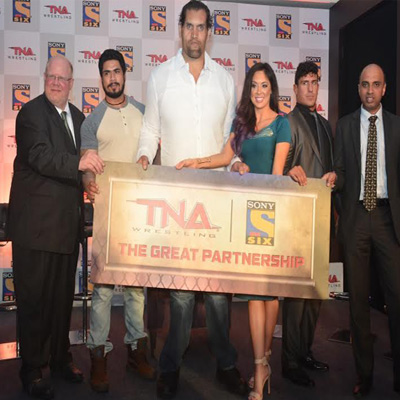
    MUMBAI: Multi Screen Media’s (MSM) sports TV channel Sony Six will be broadcasting three live Total Nonstop Action (TNA) wrestling events in December, which are scheduled to take place in Mumbai from 2 – 4 December. 


    In a first for India, Sony Six will air the international sporting event live, featuring the stars and knockouts of TNA’s flagship Impact Wrestling. The final show TNA One Night Only: Mumbai on 4 December will be broadcast live in India, the United States and all around the world. It may be recalled that, in February this year,  Sony Six inked a long-term broadcast deal with TNA wrestling, which runs through 2022.


    At present, three stars will be part of the live telecast in India, the United States and around the world. These include:  India’s Mahabali Shera who is TNA’s first ever Indian wrestler; former TNA world heavyweight champion Ethan Crater 3 and Knockout Rebel.  


    Additionally, Sony Six and TNA have also partnered for the second time to search for India’s next big wrestling talent, who will join Mahabali Shera on the TNA roster. This will give aspiring wrestlers from India an opportunity to be showcase their skills on a global platform. Shera was TNA’s first ever Indian find in 2014, who was crowned after a year-long talent search led by TNA Hall of Famer and Olympic Gold medalist Kurt Angle.


    Sony Six business head Prasana Krishnan said, “We started this initiative two years ago. It has been one of our flagship properties, which is growing phenomenally. The number of viewers in calendar year 2014 exceeded 90 million at many stages. Wrestling is very much connected in India as it is played at the grass root level, which gives great potential as content. After cricket, it is the most viewed sports in the country and that makes it a natural candidate for investing and expanding in India.”


    TNA executive vice president of television and talent relations John Gaburick added, “This is only the beginning, we are following break-to-break approach and we look forward to become part of Indian wrestling community and build our relation in years to come. To start with, we are looking forward to explore and find new talent from different cities and states. As long as we keep finding new talents, we will be ready to invest.”


    Further discussing the content for the program, he said, “We want to show Mumbai to the world, we don’t want to just to set up a wrestling show here but also be part of the wrestling community in India. For that we have created original content for the Indian market in terms of touching field brand in the market.”


    Pro wrestling has been introduced in India before, when Jeff Jarrett introduced Ring Ka King. Initially, it got good ratings with a stiff competition from competitors. However, the let down was the content, which failed to sustain in the long run.


    This in turn gave TNA insights for further investment. Speaking on revenue generation and investments, Krishnan said, “Local sponsors will come in but for now our focus is on getting the event right. When you have a successful event, revenue always follows.”


    TNA’s fare is not the only action sport which attracts Indian audiences, World Wrestling Entertainment (WWE) also has a strong following. Talking about competitors, Krishnan said, “We are looking forward to initiatives taken by TNA, starting from the live broadcast of the show and second edition of the talent hunt for TNA’s  roster. They are very focused and committed, and in the long run, it will definitely show some results in big way. The show will be one of a kind.”


    Gaburick asserted, “WWE is older than us, they had a big head start in terms of brand growth compared to what we are today. But we have more impact in the community and it is the first foundation block for any organisation. Keeping the history of sports in India in mind, we will embrace it and make a mark in Indian market.”


    Present on the occasion, Dalip Singh Rana also known as ‘The Great Khali’ said, “I’m very much excited about the collaboration between Sony Six and TNA wrestling. It will be a boost for the Indian wrestling market and the talent hunt will providea  platform for young talents in India.”


    Commenting on the possibilities of collaboration with Singh, Gaburick said, “Having worked with him before in WWE, I think we both understand the importance of Indian market for wrestling. He wishes to be part of the program and it is about timing and scheduling and getting the deal done. I think we have a bright future for wrestling in India.”

  • India’s ‘Court’ to compete with films from 80 countries at Oscars

    India’s ‘Court’ to compete with films from 80 countries at Oscars

    MUMBAI: India’s official entry to the Oscars – Court – will be competing with films from 80 countries in the Foreign Language Film category for the 88th Academy Awards.


    The Oscars have this year received film entries from 81 countries in this category including Paraguay, which is a first-time entrant.


    The Marathi language film Court is directed by Chaitanya Tamhane. Giving Court tough competition will also be renowned director Majid Majidi’s Iranian film Muhammad: The Messenger of God, which is Iran’s official entry to the Oscars this year.


    On the other hand, Paraguay’s maiden film entry for the Oscars is titled Cloudy Times, directed by Arami Ullón.


    The 2015 submissions for the Foreign Language Film category are:


    Afghanistan: Utopia directed by Hassan Nazer

    Albania: Bota directed by Iris Elezi, Thomas Logoreci

    Algeria: Twilight of Shadows directed by Mohamed Lakhdar Hamina

    Argentina: The Clan directed by Pablo Trapero

    Australia: Arrows of the Thunder Dragon directed by Greg Sneddon

    Austria: Goodnight Mommy directed by Veronika Franz, Severin Fiala

    Bangladesh: Jalal’s Story directed by Abu Shahed Emon

    Belgium: The Brand New Testament directed by Jaco Van Dormael

    Bosnia and Herzegovina: Our Everyday Story directed by Ines Tanovic

    Brazil: The Second Mother directed by Anna Muylaert

    Bulgaria: The Judgment directed by Stephan Komandarev

    Cambodia: The Last Reel directed by Sotho Kulikar

    Canada: Félix and Meira directed by Maxime Giroux

    Chile: The Club directed by Pablo Larraín

    China: Go Away Mr. Tumor directed by Han Yan

    Colombia: Embrace of the Serpent directed by Ciro Guerra

    Costa Rica: Imprisoned directed by Esteban Ramírez

    Croatia: The High Sun directed by Dalibor Matanic

    Czech Republic: Home Care directed by Slavek Horak

    Denmark: A War directed by Tobias Lindholm

    Dominican Republic: Sand Dollars directed by Laura Amelia Guzman, Israel Cardenas

    Estonia: 1944 directed by Elmo Nüganen

    Ethiopia: Lamb directed by Yared Zeleke

    Finland: The Fencer directed by Klaus Haro

    France: Mustang directed by Deniz Gamze Erguven

    Georgia: Moira directed by Levan Tutberidze

    Germany: Labyrinth of Lies directed by Giulio Ricciarelli

    Greece: Xenia directed by Panos H. Koutras

    Guatemala: Ixcanul directed by Jayro Bustamante

    Hong Kong: To the Fore directed by Dante Lam

    Hungary: Son of Saul directed by Laszlo Nemes

    Iceland: Rams directed by Grímur Hákonarson

    India: Court directed by Chaitanya Tamhane

    Iran: Muhammad: The Messenger of God directed by Majid Majidi

    Iraq: Memories on Stone directed by Shawkat Amin Korki

    Ireland: Viva directed by Paddy Breathnach

    Israel: Baba Joon directed by Yuval Delshad

    Italy: Don’t Be Bad directed by Claudio Caligari

    Ivory Coast: Run directed by Philippe Lacote

    Japan: 100 Yen Love directed by Masaharu Take

    Jordan: Theeb directed by Naji Abu Nowar

    Kazakhstan: Stranger directed by Yermek Tursunov

    Kosovo: Babai directed by Visar Morina

    Kyrgyzstan: Heavenly Nomadic directed by Mirlan Abdykalykov

    Latvia: Modris directed by Juris Kursietis

    Lebanon: Void directed by Naji Bechara, Jad Beyrouthy, Zeina Makki, Tarek Korkomaz, Christelle

    Ighniades: Maria Abdel Karim directed by Salim Haber

    Lithuania: The Summer of Sangaile directed by Alante Kavaite

    Luxembourg: Baby (A)lone directed by Donato Rotunno

    Macedonia: Honey Night directed by Ivo Trajkov

    Malaysia: Men Who Save the World directed by Liew Seng Tat

    Mexico: 600 Miles directed by Gabriel Ripstein

    Montenegro: You Carry Me directed by Ivona Juka

    Morocco: Aida directed by Driss Mrini

    Nepal: Talakjung vs Tulke directed by Basnet Nischal

    Netherlands: The Paradise Suite directed by Joost van Ginkel

    Norway: The Wave directed by Roar Uthaug

    Pakistan: Moor directed by Jami

    Palestine: The Wanted 18 directed by Amer Shomali, Paul Cowan

    Paraguay: Cloudy Times directed by Arami Ullón

    Peru: NN directed by Hector Galvez

    Philippines: Heneral Luna directed by Jerrold Tarog

    Poland: 11 Minutes directed by Jerzy Skolimowski

    Portugal: Arabian Nights – Volume 2, The Desolate One directed by Miguel Gomes

    Romania: Aferim! directed by Radu Jude

    Russia: Sunstroke directed by Nikita Mikhalkov

    Serbia: Enclave directed by Goran Radovanovic

    Singapore: 7 Letters directed by Royston Tan, Kelvin Tong, Eric Khoo, Jack Neo, Tan Pin Pin, Boo Junfeng, K. Rajagopal

    Slovakia: Goat directed by Ivan Ostrochovsky

    Slovenia: The Tree directed by Sonja Prosenc

    South Africa: The Two of Us directed by Ernest Nkosi

    South Korea: The Throne directed by Lee Joon-ik

    Spain: Flowers directed by Jon Garano, Jose Mari Goenaga

    Sweden: A Pigeon Sat on a Branch Reflecting on Existence directed by Roy Andersson

    Switzerland: Iraqi Odyssey directed by Samir

    Taiwan: The Assassin directed by Hou Hsiao-hsien

    Thailand: How to Win at Checkers (Every Time) directed by Josh Kim

    Turkey: Sivas directed by Kaan Mujdeci

    United Kingdom: Under Milk Wood directed by Kevin Allen

    Uruguay: A Moonless Night directed by German Tejeira

    Venezuela: Gone with the River directed by Mario Crespo

    Vietnam: Jackpot directed by Dustin Nguyen


    The 88th Academy Awards nominations will be announced live on 14 January, 2016 at the Academy’s Samuel Goldwyn Theater in Beverly Hills.


    The 88th Oscars will be held on 28 February, 2016, at the Dolby Theatre in Hollywood. The Oscar presentation will be televised live in more than 225 countries and territories worldwide.


  • Is India ready to embrace 4K Ultra HD?

    Is India ready to embrace 4K Ultra HD?

    CANNES: Ever since Star Sports broadcast a few important matches in 4K Ultra HD featuring the Indian team during the ICC Cricket World Cup earlier this year, a question hovering on many a lips is: Is India ready to embrace 4K Ultra HD?


    On Day 1 of Mipcom 2015, a panel comprising Videocon d2h deputy CEO Rohit Jain, Indiantelevision.com founder, CEO and editor-in-chief Anil Wanvari, BT Media & Broadcast VP Mark Wilson-Dunn and Travel XP CEO Prashant Chothani precisely attempted to answer this very question.


    Starting out, Jain gave an overview of how the direct to home industry has grown over the years and also how Videocon d2h has been a frontrunner in the recent past in terms of contributing heavily in helping India become a completely digitised country. “The last couple of years have seen some significant changes in how the television and broadcast ecosystem has evolved. India is among the fastest growing economics, and the biggest advantage is having an audience of 670 million under the age of 25 years,” he stated.


    “India also has the second largest market for Pay TV connections with 150 million homes. There are challenges of over-the-top (OTT) players coming in globally and India in a big way, but that must not be a hindrance for innovators like us to continue bringing about the best changes and continue being thought leaders in our space,” he added.


    Continuing the discussion and bringing a more global perspective to things, BT’s Wilson-Dunn said, “I honestly believe that India is a very strong content oriented market and has the right ingredients to grow as a 4K consuming audience. With the recently successful test of waters with the Cricket World Cup in India, it has certainly given a lot of confidence to us that India and Asia as a whole is ready for 4K consumption.”


    The panel agreed that sports would play a major role in establishing the future of 4K as well along with other live events and movies. “We are currently investing heavily in creating only 4K content and are confident that within the next two years, 4K will be huge in India,” said a confident Chothani. “I am currently also looking for the right partners for the distribution of the channel globally and I can already see the benefits of producing in 4K initially than going back and reinvesting in migrating from HD to 4K.”


    Indiantelevision.com’s Wanvari was more cautious in his approach on how India will embrace 4K. “I am sure 4K is the natural progression from HD, and with players like Prashant already investing heavily on creating the content pipeline, is an encouraging sign for the future of the content roadmap of the country. Although, the transponder space, which is currently available, is a cause of major concern and could be a downer for the spirits of many content distribution platforms like a Tata Sky and Videocon d2h,” he opined.


    The panel also discussed how 4K would ideally be for a niche audience, which would be in a position to generate higher average revenue per users (ARPUs) for distribution platforms that are currently generating anywhere between $3-4 on a monthly basis that could go up to $10-15 with 4K being introduced.


    At the end, the consensus amongst the panelists was that in the next five years, India will see a sizeable growth in the number of 4K content available on linear platforms, but these are still early days and one can only play the waiting game as the bigger challenge that still lies ahead is complete digitisation and accountability of users of content in the country.

  • India early adapter of new technology but not IPTV: Dataxis

    India early adapter of new technology but not IPTV: Dataxis

    NEW DELHI: India stands out as an early adapter of latest technology despite being a price sensitive market, according to a Dataxis Research report.


    While on the one hand, India has the highest DTH subscribers as well as HDTV subscribers, on the other, public sector companies MTNL and BSNL have given up their hopes on IPTV. Airtel, ACT and Reliance are retaining the service only in few circles.


    India, Pakistan and Sri Lanka are the three countries with active IPTV subscriber base in the SAARC region.


    IPTV is still evolving and is not widely accepted as a pay-TV model by SAARC countries. The total active IPTV subscriber base in SAARC (adding these three countries) will be around 270,000+.


    Sri Lanka’s IPTV subscriber base contributes to nearly 48 per cent of the overall SAARC IPTV subscribers, followed by Pakistan and India with about 33 per cent and 18 per cent respectively.


    Sri Lanka and Pakistan are showing high interest in pushing IPTV. On the other hand, Nepal’s internet service providers are planning to launch commercial IPTV services by the end of 2015.


    Meanwhile, the video markets of 12 East Asia Pacific countries tracked by Dataxis are forecast to generate total digital video revenues of $4.31 billion in 2017 – surpassing the physical video market for the first time driven by fast-growing, high-speed broadband penetration.


    APAC Video Market 2015 analyses the transformation of the video market across the 12 countries covered over the period 2007-18, including physical and digital video unit sales, rentals, revenues and forecasts, as well as profiling each market and the individual digital video services available.


    The four main markets in the region (Australia, Japan, New Zealand and South Korea) together accounted for about 96 per cent of total digital and physical video revenues end-2014, with Australia and Japan alone generating about $5.4 billion in physical video revenues, representing more than 90 per cent of total physical revenues across the region.


    However, South East Asia is plagued by piracy and the official physical video market is almost negligible. Unauthorised CDs, VCDs, DVDs and CD ROMs proliferate due to the lack of affordable digital content and low disposable incomes. Indonesia, for example, had 5.75 million Pay-TV subscribers by end-2014, but only two Pay-TV players offered VOD services and Dataxis estimates that just 1.5 per cent of Indonesian TV households will be VOD-enabled by 2018. 

  • ISRO successfully launches Astrosat along with six foreign satellites

    ISRO successfully launches Astrosat along with six foreign satellites

    MUMBAI: The Indian Space Research Organisation (ISRO) has been having a swell 2015. Just a few days after its Mars Orbiter completed a successful one year around the Red planet, ISRO has now launched its first dedicated multi wavelength space observatory along with six foreign customer satellites.


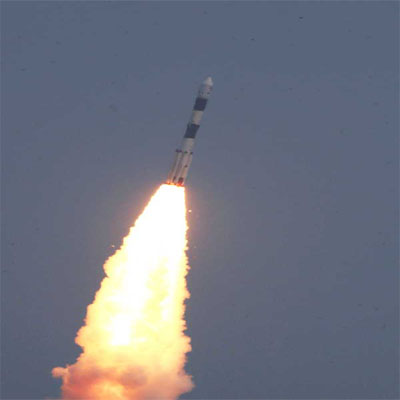
    In its 31st flight (PSLV-C30) conducted today (28 September, 2015), India’s Polar Satellite Launch Vehicle (PSLV) successfully launched Astrosat – multi wavelength space observatory and six foreign customer satellites into a 644.6 X 651.5 km orbit inclined at an angle of 6 deg to the equator. The achieved orbit is very close to the intended one. This was the thirtieth consecutive success for PSLV.


    PSLV was launched in its heaviest ‘XL’ version with six strap-on motors of the first stage. The launch took place from the First Launch Pad at the Satish Dhawan Space Centre SHAR (SDSC SHAR), Sriharikota, the spaceport of India.


    The 320 tonne, 45 m tall PSLV-C30 carrying seven satellites including the 1513 kg Astrosat, lifted off at 10:00 Hrs IST. About 22 minutes after lift-off, Astrosat was successfully placed in orbit and separated from the fourth stage of PSLV-C30. The separation of all the six co-passenger satellites was completed in the subsequent three minutes. The seven satellites carried by PSLV-C30 together weighed about 1631 kg at lift-off. 


    After a 50 hour smooth count down, the 320 ton PSLV-C28 was launched with the ignition of its first stage. The important flight events included the ignition and separation of the strap-ons, separation of the first stage, ignition of the second stage, separation of the payload fairing after the vehicle had cleared the dense atmosphere, second stage separation, third stage ignition and third stage separation, fourth stage ignition and fourth stage cut-off.  


    Through 30 successful flights during 1994-2015 period, PSLV has launched a total of 84 satellites including the seven satellites successfully launched today. The vehicle has repeatedly proved its reliability and versatility by successfully launching satellites into a variety of orbits including polar Sun Synchronous, Geosynchronous Transfer and Low Earth orbits of small inclination thereby emerging as the workhorse launch vehicle of India. 


    So far, 51 satellites have been launched by PSLV for customers from abroad. Today’s launch of six co-passenger satellites by PSLV-C30 was facilitated by Antrix Corporation Limited, the commercial arm of ISRO, a government of India Company under the Department of Space (DOS). 


    Soon after its separation from PSLV-C30, the two solar arrays of Astrosat were automatically deployed and the Spacecraft Control Centre at the Mission Operations Complex of ISRO Telemetry, Tracking and Command Network (ISTRAC) at Bangalore took control of Astrosat.


    Astrosat is India’s first dedicated multi wavelength space observatory. This scientific satellite mission endeavours for a more detailed understanding of our universe. Astrosat is designed to observe the universe in the Visible, Ultraviolet, low and high energy X-ray regions of the electromagnetic spectrum simultaneously with the help of its five payloads. 


    Astrosat was realised by ISRO with the participation of all major astronomy institutions including Inter University Centre for Astronomy and Astrophysics (IUCAA) of Pune, Tata Institute of Fundamental Research (TIFR) at Mumbai, Indian Institute of Astrophysics (IIAP) and Raman Research Institute (RRI) of Bangalore as well as some of the Universities in India and two institutions from Canada and the UK.


    In the coming days, Astrosat will be brought to the final operational configuration and all its five scientific payloads will be thoroughly tested before the commencement of regular operations.