Tag: India

  • India will be the fastest-growing economy in 2016: GroupM

    India will be the fastest-growing economy in 2016: GroupM

    MUMBAI: Even as WPP’s GroupM has revised down its global ad investment growth predictions to 4.5 per cent in 2016 ($22 billion incremental) from the earlier 4.8 per cent in its bi-annual global advertising expenditure forecast, the agency has said that India will be the fastest-growing economy in 2016. The agency has raised the 2016 forecast for India by two points to 15 per cent. India is a beneficiary of cheaper oil, as is its Next 11 neighbour Pakistan, which GroupM also upgraded in the forecast.

    For 2015, GroupM predicts ad investment growth of 3.4 per cent ($17 billion incremental) in 2015, which is also below its predictions at midyear for 2015 that stood at four per cent.

    Moreover, Brazil, Russia China and India (BRIC) will represent 23 per cent of measured global ad investment in 2016, a proportion which has grown every year since they began measuring it in 2000, and GroupM continues adding a point a year for the BRICs in its modelled forecast through to 2020.

    The forecast is published in GroupM’s biannual worldwide media and marketing forecast report, This Year, Next Year. The intelligence is drawn from data supplied by WPP’s worldwide resources in advertising, public relations, market research and specialist communications by GroupM’s Futures director Adam Smith.

    “The outlook remains tough. Marketers’ constrained pricing power in a deflationary world, a macro trend, prompts ongoing focus on cost control versus investment and this colors our outlook. Continued strength across the majority of the BRIC and Next 11 countries, notably mainland China, is a highlight of the forecast, but the Eurozone is still struggling to find traction. While our outlook is overall positive, we recognise the downside risks of financial pressures in faster growth markets and the changing profile of China’s external demand,” Smith said.

    Mainland China remains the largest contributor to global advertising growth, but GroupM has revised downward its 2015 forecast from 8.7 per cent to 7.8 per cent, and the 2016 forecast is also slightly reduced from 9.6 per cent to 9.1 per cent. GroupM observes that Chinese consumer demand remains strong, supported by wage growth, urbanisation, property wealth and supportive governmental policy. However, on the external side, less demand for primary resources, less foreign direct investment (FDI), less local tourism, and the impact of domestic goods and services replacing imports are among the top reasons for ad market slowdowns in Taiwan and Hong Kong.  

    Russia is at risk of another step down in the oil price, but absent another shock, a soft Ruble and room to ease rates could assist quick recovery. GroupM expects a short, sharp ad recession of 13 per cent in 2015 followed by two per cent growth in 2016. And despite the Olympic summer, GroupM revises Brazil’s 2016 down from nine per cent to seven per cent. There, household spending continues to shrink as unemployment potentially reaches a ten-year high. 

    The Eurozone now accounts for only 11 per cent of global advertising, and Eurozone consumer price inflation remains near-zero; monetary policy is set to ease just as that of the USA may tighten. Zero ad growth is forecast in France in 2016, and German and Italian annual ad growth for 2016 is anticipated to fall only between one and two per cent. Spain shows the Eurozone’s strongest recovery, but advertising investment in Spain will still be 55 per cent smaller in real terms relative to its 2007 peak. In Europe, outside the Eurozone, high employment and other very positive trends make the United Kingdom the fastest-growing mature ad market in the world and the number three contributor to global ad growth in 2016 behind China and the US.

    In terms of investments across media types, the shift of advertiser investment to digital, of course, remains the biggest trend. GroupM maintains its midyear forecast and anticipates digital growth of 14 per cent in 2016, commanding 31 per cent of global ad budgets. This is a deceleration from the 17 per cent growth predicted for 2015. The slower but ongoing strength of digital springs from many sources including organic take-up, technical innovation, advances in value, viewability and validation, automation and efficiency, better creative work, and the mastery of data.

    “Facebook is addressable and targeted at scale with requisite tools and automation that make it easy for advertisers to understand and use; so it is reaping advertising growth of 50 per cent globally, including Instagram. Organic Google website revenue is growing remarkably fast too at 25.5 per cent, and they have streamlined YouTube into a complement to broadcaster VOD, even if it is not yet a real challenger on price or quality,” said GroupM global president Dominic Proctor. 

    “We see that digital’s data and automation capabilities are inspiring the evolution of all media — in all markets across the globe — but digital will continue its powerful growth and market share gains. This is despite the challenges in the digital space such as viewability, fraud, measurement and currency, all of which we expect to be solved by market forces,” Proctor added.

    GroupM believes 2015 will be the first year that absolute spend in traditional media went backwards in the ‘new world’ (Latin America, Central & Eastern Europe, and Southeast Asia). Only a half-point fall is predicted, but this marks rapid deceleration from the 17 per cent growth recorded as recently as 2010. New world newspaper advertising first went negative for growth in 2012, followed by magazines in 2013. China’s advertiser exodus from TV to digital gave the extra push required to make 2015 a negative for traditional media in the new world. These trends are anticipated to ease slightly in 2016.

    Globally, print media’s share of advertising will stand at 18 per cent in 2016, according to GroupM. Print’s long-standing run-rate of annual loss is slowing from two points of share to one, but GroupM notes it is too soon to call it a stabilization. The medium is embracing digital distribution, but only the strongest franchises are replicating their eminence in the digital domain. Common obstacles include fragmentation, chronic loss of reach, and lack of common standards in audience measurement and trading.

    Traditional TV continues to stand up well. TV accounted for nearly 44 per cent of global ad investment at its peak in 2012; since then it has shed about a point a year. China is responsible for most of this loss because TV advertising became more rationed and regulated while the digital ecosystem grew by leaps and bounds. The USA by contrast is perhaps the least-regulated and most competitive TV ad market, and its TV ad revenue share loss is less than the global average. It would look even healthier if its digital gains were properly consolidated with its traditional linear top line.

    “TV’s share is rising in almost as many countries as it is falling and contributors to the forecast identified three themes of untapped potential: relaxing regulation, improving the quantity and quality of VOD ad inventory, and format innovation. But every medium is in the midst of transformation; some to accelerate growth, others to decelerate share losses; and GroupM, as ever, plays a central role with the voice of the advertising customer to help shape the market to the advantage of our clients,” added Proctor.


  • Internet advertising to takeover television by 2018: forecasts ZenithOptimedia

    Internet advertising to takeover television by 2018: forecasts ZenithOptimedia

    MUMBAI: India, Indonesia and Philippines emerge as hot spots of ad spend growth as per ZenithOptimedia’s Advertising Expenditure Forecast of December 2015. These are the only three markets in which adspend is growing at double-digit annual rates . Between 2015 and 2018 the report estimates Philippines to expand by USD 1.2 billion dollars at growth rate of 13% a year, while’s India’s ad spends will increase to USD 3 billion also at 13% a year.

    Indonesia is expected to show the biggest growth at 17 % a year, touching USD 4.1 billion.

    Calling it Fast Track Asia bloc comprising of China, India, Indonesia, Malaysia, Pakistan, Philippines, Taiwan, Thailand and Vietnam, the report further mentions that ad expenditure in Fast-track Asia will  grow at 8.9% in 2015, and at an average rate of 8.4% a year between 2015 and 2018, down from 14.7% a year between 2009 and 2014.

    Having said that, even with their growth rates slowing down China will continue to be one of the biggest contributor to the global ad spends which is estimated to reach USD 579 billion at a growth rate of 4.7 % by 2016. Between 2015 and 2018, China is expected to contribute 24 percent of the global  ad expenditure only preceded by the US at 26 percent. The UK comes third, contributing 7%, and Indonesia fourth, contributing 5%. Not to mention, the top five of the ten biggest contributor to the global ad expenditure is expected to come from the Fast Track Asia countries, by 2018. Overall, rising markets will contribute 54% of additional ad expenditure between 2015 and 2018, and to increase their share of the global market from 37% to 39%.

    “Growth of the global ad market is being driven by advances in technology, especially mobile and programmatic tech,” said Steve King, ZenithOptimedia Worldwide CEO Steve King. “But television remains by far the most important channel for brand communication, and online video, its digital offshoot, is increasing the audiovisual share of global display advertising.”

    The report also singles out internet to become the most preferred medium of advertising with internet advertising command 36.6 per cent of global advertising, overtaking the current largest advertising medium, television by 2018. Looking at the ad market as a whole, television’s share peaked at 39.7% in 2012, and is estimated at 37.7% in 2015, before falling back to 34.8% by 2018.

    The report highlights paid search as one of the key reasons for televisions loss of adspend share. Paid search is essentially a direct response channel (together with classified), while television is the pre-eminent brand awareness channel which is expected  to remain so for many years to come.  Television offers unparalleled capacity to build reach, while online video offers pinpoint targeting and the potential for personalisation of marketing messages. Both are powerful tools for establishing brand awareness and associations. As per the report, television will account for 44.7% of display expenditure  in 2015, and 42.9% in 2018.

    Within internet advertising, mobile advertising will emerge as the leading platform with it overtaking desktop and accounting for 50.2% of all internet advertising.

    Mobile advertising will total USD 114 billion in 2018, up from USD 50 billion in 2015. Moreover, according to the report, mobile advertising is responsible for almost all of the growth in global adspend. The report forecasts  it to grow at an average rate of 32% a year between 2015 and 2018, and to contribute 87% of all of the new ad money added to the global market during these years.

  • Onefootball bags English Premier League digital streaming rights for India

    Onefootball bags English Premier League digital streaming rights for India

    MUMBAI: Football app Onefootball has bagged the digital streaming rights package within India for the English Premier League (EPL) covering the next three seasons – 2016-17, 2017-18 and 2018-19.


    Additionally, sports radio station talkSPORT, which is the global audio partner of the Premier League, has also reached agreement with radio broadcasters and streaming companies in Ghana, Nigeria and Australia to carry talkSPORT’s live English Premier League audio commentary throughout the three football seasons.


    Citi FM in Ghana and Nigeria’s Nigeria Info are long-standing partners of talkSPORT who have each been awarded rights packages for a further three seasons.


    Eon Sports Radio is a new sports radio network, which plans to launch nationally in Australia in 2016 with a entertaining blend of original and licensed sports programming. As well as EPL audio rights, talkSPORT has also agreed to share other programming content with Eon Sports Radio, to include sports talk, interviews and features from talkSPORT’s award-winning UK output.


    As global audio partner of the Premier League, talkSPORT controls an exclusive package of international audio rights  until 2019, allowing the station to broadcast official live commentary of all 380 Barclays Premier League matches in any language to listeners around the world outside of the UK and Republic of Ireland.


    talkSPORT’s international tender process for the 2016-17 – 2018-19 seasons is continuing, with further licensing rounds scheduled in various key territories during December.


    talkSPORT director of international Jimmy Buckland said, “Today’s announcement is great news for football fans in India, Ghana, Nigeria and Australia. We’re delighted to be extending our relationships with some long-standing partners whilst welcoming a new partner in Australia. Eon Sports Radio has an ambitious plan to create Australia’s first new national sports radio network and talkSPORT looks forward to playing its part in the network’s upcoming launch.”


    UTV Media COO Scott Taunton added, “talkSPORT International has grown rapidly over the last three years, establishing a strong network of international broadcast and streaming partners. As global audio partner of the Premier League until 2019, talkSPORT is uniquely positioned to enable brands, broadcasters and streaming platforms tap into international audiences’ ever growing interest in the world’s most exciting football league.”


    talkSPORT is an official broadcaster of the Barclays Premier League, the 2016 UEFA European Football Championships, the FA Cup, England football internationals and the Capital One Cup.

  • ‘The next billion YouTube users are going to come from India:’ Ajay Vidyasagar

    ‘The next billion YouTube users are going to come from India:’ Ajay Vidyasagar

    MUMBAI: Even as Google CEO Sundar Pichai prepares for his India trip with a mandate to outline the company’s vision for the new smartphone users in the country later this month, YouTube has trained its eyes on India in a big way. With a global community of over one billion people that gives anyone the power to create something that everyone can watch, YouTube APAC director of partnerships Ajay Vidyasagar is of the opinion that the next billion users of a platform like YouTube are going to come from a market like India.

    Citing Pichai’s example, Vidyasagar adds, “Senior leaders at Google are very excited about India. India is one of our most valuable opportunities in the world. YouTube is already a mainstream platform in the country. The next billion users of a platform like YouTube are going to come from a market like India.”

    As a definitive step towards its vision for YouTube’s growth in India for churning out original local content, the company has launched YouTube Space Mumbai – the destination for web content creators and aspiring YouTube stars. YouTube Space Mumbai is India’s first and the world’s 8th YouTube Space.

    When asked what influenced the company’s decision to set up YouTube Space in India, Vidyasagar points out a few important stats. “While the year on year growth for YouTube globally is 60 per cent, in India the growth in watch-time has been a whopping 80 per cent. Needless to say India is a very important growing market for us. YouTube Space Mumbai is just one of the many initiatives the company has in store for the country.”

    Not just as a country of viewers, but as content creators too India has seen a steep rise. “There has been a growth of 90 per cent year on year, when it comes to uploading videos to YouTube in India. So getting Spaces to further empower the creators in the country was the obvious next step,” Vidyasagar informs.

    Moreover, YouTube users in India have also made an exponential shift on mobile devices to watch videos. “This year we saw 55 per cent of the total viewership on YouTube in India coming from mobile devices alone. It’s the first quarter when mobile device viewership eclipsed desktops.”

    When asked what this means in a country where mobile marketing is just setting up a roadmap unlike a developed market like China, and how it can impact a YouTube content creator’s revenue, Vidyasagar says, “Our way of looking at mobile or desktop viewership is fundamentally ‘bought and sold’ on a promise of a video view, which is pretty much the same thing on any device. Therefore monetisation isn’t a challenge, even if the device changes. We actually have figures to show now that monetisation is pretty much the same in all devices.”

    Further explaining the monetisation process in YouTube and how the platform gives advertisers a plethora of choices, Vidyasagar shares, “Our advertising team sells reserve advertisements and auction advertisement inventory. The skippable ads that you see are part of a suite that we offer in auction advertising. What ad will be placed on the channel is not decided by the creator but by the buyer of the advertising space. As an advertiser you can choose to buy from the reserve, which means to buy an ad in a specific channel at certain time in a certain volume. And you pay for specific price. But in an auction, you actually bid for an ad to be placed on the platform. So it is not creator led but advertiser led; we give the advertisers a lot of choice in the process.”

    A veteran in broadcast media from his earlier stints at Star TV and Sun TV, Vidyasagar shares how differently a VOD platform such as YouTube functions.

    “When I came to Google, I really thought YouTube is going to be a lot similar to television and very quickly I realised how wrong I was. In a lot of ways, television is a one way communication. You expect the audience to come at a certain hour to a certain television station and then go away. Everything about television is very different in terms of consumption and engagement from a platform like YouTube. Interactivity amongst creators is what drives YouTube and its community at heart. The single biggest difference for me has been realising the power of how creating, sharing and commenting plays such a big role in what was originally a one way communication,” he offers.

    Comparing the television medium to online, Vidyasagar says that in his stint with television, it was mainly the opinion of a handful of decision making people that was more often than not reflected in shows. “On television, we got a very filtered version of what people thought about the content. But when content goes out on YouTube, I have a pretty strong idea of what people actually think about it. This makes you very responsible over what you put out there as a content,” he says.

    That said, both YouTube Spaces global head Lance Podell and Vidyasagar stress the need to get more and more Indians be active on YouTube. While infrastructure and lack of uniform access of internet through the country, specially in Tier II and III cities remains a challenge, the duo is happy to inform that their previous marketing initiative YouTube Offline, which was first introduced to India, has borne fruit and shown a 500 per cent growth in usage across the country. Additionally, a slew of services are being thought of to pull in more users to the platform, Vidyasagar informs.

    With an aim to attract tens of thousands of fully functional content creators who can add to the YouTube community and also inspire others, the 4G wave in the country will only add an impetus to facilitate the video network’s plans in India.

  • India boasts of 830 TV channels even as MIB cancels permission of 125

    India boasts of 830 TV channels even as MIB cancels permission of 125

    NEW DELHI: The total number of television channels uplinking from or downlinking into India has risen to 830, with the permission of as many as 125 channels cancelled by the Ministry of Information and Broadcasting (MIB).


    Thus, the government had given permission to a total of 955 channels, which included those who have been later denied permission.


    Of the permitted channels, 398 are news and current affairs channels while 432 are general entertainment channels (GECs).


    Twenty channels including seven news channels have been permitted to uplink from India but not downlink within the country, as of 30 November, 2015. 


    A total of 725 channels including 349 GECs are allowed to uplink and downlink in the country while 85 including 70 GECs are uplinked from overseas but allowed to downlink into TV homes in the country.


    Star India brought into its fold the Maa cluster of channels including Maa TV, Maa Movies, Maa Music, and Maa Gold. NGC Network India launched National Geographic, Nat Geo Wild, Nat Geo Wild HD, Nat Geo People HD, Nat Geo Music HD, National Geographic HD, Fox Life and Fox Life HD in other Indian languages. Eenadu TV launched ETV Life, ETV Plus and ETV Abhiruchi that are Telugu channels permitted for uplinking. Additionally, Colors TV launched Colors Infinity and Colors Infinity HD.


    Other channels that received permission this year include 9X Bajao (earlier 9X Bajaao and 9X Bangla), Rengoni, Asianet HD, Australia Network, Da Vinci Learning (non-news channel), Sharnam, Tulsi TV (earlier Vedas Om TV); the multi-lingual Sree TV, Naaptol HD (earlier All Time), Media One Life in Malayalam and English; Sangeet Marathi; MNGK Star in English and Indian languages; Ishwar in English and Indian languages; Baby TV HD; Seven Sisters Rainbow; Positive Health; Shubh TV; Swadesh News; Cartoon TV (earlier Maha Mazza); Teleshop; Home Shop 18 Tamil; V S Entertainment; Nick HD+ (earlier Bandhan); Veria Living and Zee Café HD (for downlinking).

  • Zee TV slots ‘India’s Best Dramebaaz’ season 2 at 9.30 pm

    Zee TV slots ‘India’s Best Dramebaaz’ season 2 at 9.30 pm

    MUMBAI: Come 12 December and Zee TV is all set to launch the second season of kid’s reality series India’s Best Dramebaaz. The show will be aired on Saturday and Sunday in the 9.30 pm time slot. 

    The channel has roped in Surf Excel as the presenting sponsor and Patanjali Dantkanti as the co-powered by sponsor for the show.

    This time round, director Sajid Khan joins Sonali Bendre and Vivek Oberoi on the judges’ panel. The show will be hosted by Rithvik Dhanjani and Ravi Dubey.

    Speaking about the format of the show’s second season, Zee TV business head Pradeep Hejmadi said, “The new season of India’s Best Dramebaaz looks out for children with an ability to diffuse any tension and instantly brightens your mood with their ability to entertain. The format will be same with minor changes. This time we are giving them feedback in a very nice manner. We are calling them for homework and also helping them on how they can make it better.”

    He further added, “Through this season, we have a special concept of piggy bank (Gulak) wherein as they perform their points will go to the bank. If they leave the show at any point, they will have the opportunity to encash the money and take it back with them. There will never be a sad moment for the kids. Besides starting with Lil Champs itself, we made sure that the kids get exposure to the main industry. Even here our aim is to get as many guests on the show as possible so that we can give the kids more exposure.”

    The channel has even taken into consideration feedback from the last season and made changes in the show. One major change was to tone down the bold content. “We have cut down the shooting schedules. Also, we have seen to it that kids don’t face any parental pressure and perform the way they want to,” Hejmadi said.

    In first season, Zee TV aired the show in the 9 pm time slot. Speaking about the time shift, this season he informed, “We have seen that 9:30 pm is a good time because family aggregates more nicely post this time. We got enough views and feedback for the 9.30 pm time slot. That’s the reason we brought the non-fiction time to 9:30 pm.”

    India’s Best Dramebaaz is meant to bring alive the kids talent in the most endearing manner to the audiences.

    The key TG of the show is women, kids and teens and both the communication as well as the touch points have been arrived at keeping the nature of the show and the TG and target markets in mind.

    The audio – visual blitzkrieg will be further amplified via the digital, print, on ground and radio platforms. Digital will not merely be restricted to promos but will have customised Dubsmashes created by Zee stars that will take them to their ‘dramebaazi’ days as kids. This will be amplified through the Zee TV social media clout.

    The show launches at the cusp of the holiday season and mall activations will be used to get the kids and parents live the ‘dramebaazi’ quotient by a simple ‘wheel of dramebaazi’ game. Additionally, radio promotions will ensure that a complete 360 surround is created to ensure maximum tune-ins.

    Speaking about the role that rural data will play in content creation, Hejmadi asserted, “We used to go to small areas and test the content. We always make sure that our content is acceptable across the nation. Having that is an  acknowledgement of rural popularity. We will continue to look at the patterns. So, the content creation will remain the same.”

  • Consumers expect more devices to be connected with netizens as forerunners: Ericsson report

    Consumers expect more devices to be connected with netizens as forerunners: Ericsson report

    MUMBAI: A research conducted by Swedish telecom gear maker Ericsson Consumer Lab named ‘A Networked Life’ stated that consumers expect more devices to be connected as there are endless options for connectivity. It also predicts that more connected devices will ultimately lead to redefined networked lifestyle needs.

    Consumers have only now begun to enter the era of networked lifestyles, and they expect greater mobility and an increasing number of devices to become connected.

    The report states that consumers recognize the benefits of various devices in their life becoming connected; the analysis has been broadly classified in three categories viz. overall, un-recognised and netizens.

    Data for the report has been gathered through 45,290 face-to-face and online interviews with people form the age group of 15-69 years old, representing about 1.2 billion people across 24 countries including Brazil, Canada, China, France, Germany, India, Indonesia, Italy, Japan, Norway, Sweden, the UK and the US.

    Chile with 32 per cent, South Korea with 29 per cent and Brazil with 28 percent have the highest penetration of internet users.

    The forerunners of the networked lifestyle are the netizens who spend more time online on a wider range of services than others. They comprise 17 per cent globally.

    The report says that 65 per cent of netizens participate in a sharing economy, compared to 9 per cent of un-networked. They spend the most amount of time on the internet.

    Also that 98 per cent of netizens own more than one device (smartphone and other devices like a laptop or tablet).

    For instance, research and analysis showed 52 per cent surveyed internet users want their TVs to be connected to the internet. Whereas 24 per cent of consumers also state that they are using services that allow them to use a movie, TV show or video on one device and then resume playing from another device.

    Based on research in 12 countries, it was found that the average number of devices connected to the internet has increased to 4.1 devices in 2015 as compared to 3.1 devices per household in 2014. Because of this, consumers are spending more time online incorporating digital services and devices with everyday activities.

    The report says that video streaming apps have the potential to become main stream on a global scale in the near future; which could potentially have large ripple effects on the entertainment industry.

    In terms of India the report states that the percentage of Netizens in India stood at 48 per cent. And it has one of the highest levels of peer-to-peer sharing at 79 per cent among the local netizen community. A sizeable 56 per cent of people in India feel it is easier to find products and services on the internet than through friends and family.

    Ericsson Consumer Lab Director Vishnu Singh said, “The reason for people’s increasing use of the internet is that their perceived value of it is growing along with the rise in usage. The networked lifestyle is all-inclusive because the benefit for each individual user increases as more people participate in the internet.”

    The report states that Brazil, China and Colombia are the countries to have high numbers of netizens who use the internet less than once a week or not at all.

    Whereas countries like Germany and US with lower proportions of netizens in highly industrialized countries are balanced by a larger distribution of those who use the internet with some regularity.

  • Facebook’s Mark Zuckerberg on India, Internet.org, net neutrality

    Facebook’s Mark Zuckerberg on India, Internet.org, net neutrality

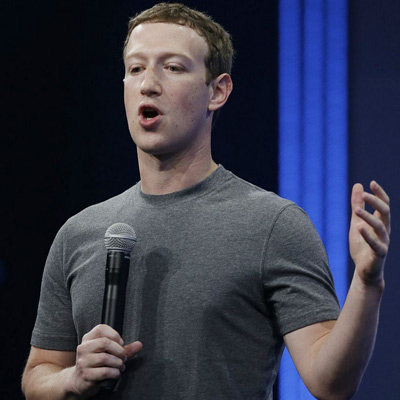
    MUMBAI: Facebook co-founder and CEO Mark Zuckerberg has set his sights on the Indian market in a big way, which according to him is one of the key markets for the social networking company.


    In his second visit this year to the country, the young entrepreneur visited the Indian Institute of Technology (IIT) Delhi, where close to 900 students attended the Question & Answer session.

    Zuckerberg addressed issues such as Net Neutrality, internet access as well as Facebook’s initiatives to invest in India.

    Speaking at the event, Zuckerberg said that his mission was to connect everyone in India to the internet.

    According to a UK based consultancy We Are Social and Facebook India, of the 1.49 billion people who check Facebook at least once a month, more than 130 million are in India. It is more than anywhere outside the US and the number has been rising in recent years.Facebook had 118 million users in 2014 as compared to a year earlier, which was 93 million.


    Zuckerberg explained that Facebook’s initiative Internet.org has nothing insidious but aims to provide connectivity for access to education, health care and financial services to millions of Indians. Internet.org was launched in 2013 for a global effort to provide web access to unconnected users in the developing nations.


    Speaking on the investment on Artificial Intelligence Systems, Zuckerberg said, “AI is really exciting. We will be able to see smarter computers being built. With AI, it’s going to be less about products and making the existing ones smarter. We are working on a project where AI can describe photos to blind people. Second example, right now the best way to let people know you are safe in terms of a crisis is by yourself or through your friends. In the future maybe satellites and other technologies can help with this.”


    He said that almost three million people said they were safe by using Facebook’s safety-check feature after the recent earthquake in Afghanistan. “When there’s a disaster all you want to know if your loved ones are safe,” he said.


    He further spoke on Net Neutrality saying, “Most of the people pushing for net-neutrality already have access to Internet. But those who aren’t, can’t sign an online petition for an increase in the Internet. We all have a moral responsibility to look out for those who don’t have access and make sure the rules don’t get twisted to hurt those who don’t have a voice.”


    Later, taking to his Facebook page, he posted an update about the Townhall Q&A in Delhi saying, “We just wrapped up our Townhall Q&A in Delhi! People asked great questions about how we can connect everyone in India to the internet, how we provide everyone with a great education and how to build a strong company. I really appreciate these Q&AS. Hearing what you care about makes Facebook better. Thanks to everyone who asked a question or tuned in!”

  • Ofcom to hold spectrum auction in 2016 with ?70 million reserve price

    Ofcom to hold spectrum auction in 2016 with ?70 million reserve price

    MUMBAI: UK communications regulator Ofcom will be releasing valuable new airwaves by holding a high-capcity spectrum auction that could be used to meet the growing demand for mobile broadband services. It has set reserve prices totalling ?70 million for the spectrum.


    The auction is planned to take place in early 2016 for the spectrum, which has been made available by the Ministry of Defence as part of a wider Government initiative to free up public sector spectrum for civil uses.


    A total of 190 MHz of high-capacity spectrum is being made available in two bands – 2.3 GHz and 3.4 GHz – which are particularly suited for high-speed mobile broadband services, because they can carry large amounts of data. This is equivalent to around three-quarters of the spectrum released by Ofcom through the 4G auction in 2013.


    Ofcom spectrum group director Philip Marnick said, “Spectrum is the essential resource, which fuels the UK’s wireless economy. This auction is an important step in ensuring that the UK has the wireless capability to deliver and support new technology. We’re responding to rapid change and innovation in the communications sector, which is placing greater demands on spectrum. Part of our plan to meet this demand is by making new spectrum available and allowing it to be used in a number of different ways.”


    More spectrum for mobile broadband


    There will not be a cap on the amounts bidders can buy. Ofcom believes that any cap could prevent a bidder from buying large blocks of adjacent spectrum. Large blocks have the potential to support very fast download speeds, meaning even faster mobile broadband for consumers, which helps pave the way for 5G.


    The auction is designed to be fair and transparent, enabling the spectrum to be awarded to those who can put it to the most efficient use in the best interests of consumers. Ofcom proposes to auction the spectrum in lots of 10 MHz for the 2.3 GHz band and 5 MHz for the 3.4 GHz band.


    Many existing mobile handsets from major manufacturers, including the Apple iPhone 6, HTC Desire and Samsung Galaxy, are already compatible with the 2.3 GHz spectrum. The band is so far being used for high-speed 4G mobile broadband networks in ten countries outside Europe, including China, India and Australia.


    The 3.4 GHz band is currently being used for 4G wireless broadband in six countries including the UK, Canada and Spain.


    Planning for the future

    Demand for mobile data services is expected to rise considerably in the coming years. To address this, more spectrum is needed – together with new technology to use spectrum more efficiently, and networks of small wireless ‘cells’ to provide greater capacity over local areas.


    Ofcom supports industry and research groups to enable these developments and ensure the UK’s wireless infrastructure continues to play a central role in the growing digital economy.

  • Mariam Zamaray’s Insight into Ultra HD TV

    Mariam Zamaray’s Insight into Ultra HD TV

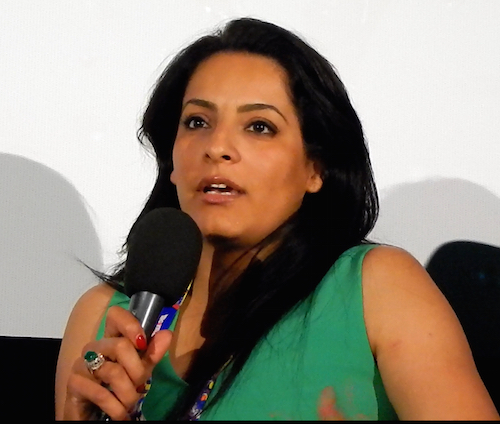
    Mumbai: At first glance, you would think she is a host of a television show or an on-screen talent. But don’t make that mistake when you meet up with the very attractive Television Entertainment Reality Network (TERN) CEO Mariam Zamaray who recently launched Insight at MipCom in Cannes. A factual entertainment, youth-targeted, cross media  ultra high definition channel (UHD or 4K TV), it is currently beaming over Europe, Russia, Australia and India.

    The lady knows her television for sure, having worked with Fox International Channels in Amsterdam for a couple of years as channel manager in the previous decade. She later founded Luxury Life a life style cross media format with which she was associated for eight years. And she also got into bed with WizCraft’s IIFA Awards which were held in Amsterdam in 2005 as its local partner.

    Around a year  or so ago, Mariam decided to launch Insight, a UHD or 4K channel, with the backing of General Satellite from Russia and other foreign investors.  To start with she build up a strong management team: Qunita Baars (formely of Fox International Channels), Marjolein Duermeijer (previously head of international sales and development, Tuvalu Media) and Natalie Boot (2waytraffic and Sony Pictures Television interactive manager).

    For production, she roped in leading studios and format owners such as Strix, Kiem, Zodiak Media, among others. For beaming the channel, she hired satellite operator SES Platform Services ( the bird it is beaming from is Astra at 19.2 degrees East), and for online and post-production she hired Dutch company, United4All.  

    “SES was challenged by our requirement of four feeds,” says Mariam.

    More challenges awaited her. There wasn’t adequate 4K content being produced at a frame rate of 50p, most of the productions were at 25p. Additionally, technicians understanding cameras (one shot well underwater, but was not so well indoors)  were few and far between. Online and post-production studios did not have the storage capacity or the processing and rendering power. All these meant costs, and costs.

    But she did not let these hurdles deter her. Her enthusiasm got SES executives coming back to her with a solution within three months. And United4All  decided to invest in post-production gear and storage in order to handle Insight’s high demands.  

    “The producers had no idea how to shoot in 50p 4K.  Most of the UHD shoots were being done at 25 fps. We did 200 days of research and had workshops with them,” she says. “They went out and shots. And when they came back with the product, it looked good and my team gave it the go ahead. If we liked it, we were sure the audience would also like it.”

    Programming includes original factual entertainment shows such as Spartan X (Strix), On The Run (Zodiak Media), Dracula (Strix), 7 Days (Kiem), and Power &… (Kiem). Shows already on air include Around the World in 80 Tricks, Diamond Geezers and Gold Dealers,

    For Europe, InsIght is free to air and is available both as a linear live TV service and as an app for non-linear on-demand content and can be viewed on multiple devices. “Viewers can engage and shape the programmes they watch and they are very interactive,” says Mariam.


    The company has partnered with joiz Global for this interactivity and big data and social management.


    Insight’s  grab and share interface which allows viewers to reduce the duration of the content they are currently tuned into as per the convenience is something Mariam is banking on. “Consumers can also button down their idea underneath the video and can also upload it on social media platforms. We want to showcase the current trends over technology and content and make it available for the young generation,” she says.

    The channel went live in Europe on 5 October at MipCom in Cannes; and on 8 October in India. It has a 200 hours of 4K programming, most of it original and produced with only 41 hours being acquired.   Mariam is looking to commission and have another 200 hours of 4K content ready by Q2 2016. Additionally, she has ambitiously expressed that she would like to produce a major sports event by October 2016.

    The channel claims It is reaching out to 60 million homes courtesy its partnership with DTH service TriColor (which is linked to General Satellite) in Russia and Information TV Network in India and SES.  In india she had a chat with iTV CEO Kartikeya Sharma, who was a college mate and a deal was struck.

    While it is free to air and commercial free  in Europe, it is being positioned as a pay TV service for India, Asia, Latin America.


    “We are not looking for immediate revenues. I am against inserting advertising breaks for the first nine months in Europe. We will however offer drop down menus to advertisers. But India will have a different feed which will have ad breaks,” she says.

    She is confident of revenues from India as it is a priority market for the business, along with Russia.


    “The Indian DTH operators are enthusiastic and prices for 4K sets are also coming down. We will be pushing both the 4K and HD feeds. Advertising too will play a role,” she says.

    Content syndication is one of the revenue streams which will keep providing cash flows to TERN. “We are looking for buyers from the US and Canada,” she expresses. “And we are licensing content to mobile operators too. We will be managing the talent which is on the channel as well as licensing the music and our original formats. That will keep our cash register ringing.”