Tag: India

  • Spotify Q4 strikes a chord with record-breaking 16 per cent revenue uptick

    Spotify Q4 strikes a chord with record-breaking 16 per cent revenue uptick

    MUMBAI: Spotify has cranked up the volume on success, wrapping up 2024 with a Q4 that hit all the right notes. The music streaming powerhouse saw nearly every key metric outperform expectations, proving that when it comes to growth, Spotify is playing a chart-topping hit.

    The platform’s monthly active users (MAUs) surged to 675 million, marking a 12 per cent year-on-year (YoY) increase, while premium subscribers climbed 11 per cent to 263 million. Clearly, more people than ever are hitting play on Spotify’s offerings, and the company isn’t skipping a beat.

    Revenue swelled to €4.24 billion, reflecting a 16 per cent YoY increase, with both premium and ad-supported segments driving the momentum. The premium segment alone raked in €3.7 billion, up 17 per cent, fueled by strong subscriber growth and an uptick in average revenue per user (ARPU). Meanwhile, ad-supported revenue reached €537 million, a seven per cent annual rise, even as the global ad market faced turbulence.

    Spotify’s advertising business continued its ascent, with both music and podcast ad revenue showing solid gains. However, pricing softness in some regions tempered overall ad growth. Automated sales channels played a pivotal role in pushing ad revenue higher, especially in fast-growing markets. The ad-supported gross margin rose to 15.1 per cent, an increase of 351 basis points (bps) YoY, reflecting smarter monetisation strategies and enhanced content efficiencies.

    Not to be outdone, Spotify’s gross margin soared to 32.2 per cent, a resounding 555 bps increase YoY. And for the real showstopper: the company recorded an operating income of €477 million—its highest ever—securing its first full year of operating profitability.

    In the realm of free cash flow (FCF), Spotify turned the dial all the way up. The company generated €877 million in Q4, pushing its total FCF for 2024 to a record-breaking €2.3 billion. That’s a lot of cash dancing to the beat of Spotify’s success.

    With the company in full growth mode and its financials singing a happy tune, 2025 looks like another year where Spotify will keep the hits—and the numbers—rolling.

  • Ad wars 2024: Who ruled TV screens and who got washed away?

    Ad wars 2024: Who ruled TV screens and who got washed away?

    MUMBAI: Television advertising in 2024 wasn’t just background noise—it was prime-time gold, stealing the spotlight from even the most dramatic soap operas. According to TAM AdEx – 2024 Television Advertising Recap, TV ad volumes surged 14 per cent compared to 2020, proving that the battle for consumer eyeballs is still raging.

    Globally, television ad spending is expected to touch $177 billion, with India alone seeing a nine per cent rise in TV ad expenditures compared to 2023. The second quarter alone saw a six per cent growth over the first, while the fourth quarter took a six per cent dip—probably because people were too busy binge-watching holiday specials to pay attention to ads.

    But who poured in the most cash? Which industries turned up the volume? And which brands refused to be skipped? Buckle up—this one’s a wild ride through the world of TV ads.

    Who was buying all that airtime?

    If you turned on your TV in 2024, you were likely bombarded with ads from the food & beverages sector, which took a massive 21 per cent share of ad volumes, proving that snack cravings and screen time go hand in hand. Not far behind, personal care/personal hygiene lathered up with 16 per cent. The household products sector scrubbed in at 9 per cent, because apparently, nothing pairs better with your TV drama than a cleaner floor.

    But who ruled the ad wars? Hindustan Unilever dominated with 16 per cent of all ad volumes, closely followed by Reckitt Benckiser (India), which boasted five out of the top ten most advertised brands. If you feel like every other commercial was selling you a soap or detergent, you weren’t wrong.

    If you thought soap operas were dramatic, the real drama happened in the soap advertising department. Toilet Soaps dominated the charts yet again, refusing to be flushed away. Laundry detergents, toothpastes, and floor cleaners scrubbed into the top 10, proving that cleanliness is next to advertising greatness.

    Quarterly showdowns

    2024 was a tale of peaks and dips. The second quarter flexed its muscles, rising by six per cent over Q1, only for Q4 to slump by six per cent compared to Q3. Maybe by year’s end, consumers had perfected the art of muting commercials.

    Despite the dips, 92 per cent of all TV ad volumes came from just five channel genres—dominated, unsurprisingly, by general entertainment channels (GECs) and news. If nothing else, advertisers know exactly where the eyeballs are.

    Which brands stole the spotlight? The award for most persistent ad on TV goes to Harpic Power Plus 10x Advanced, which climbed over 60 spots to claim the top brand of the year. It was followed closely by Dettol Toilet Soaps, Dettol Antiseptic Liquid, and Jiocinema App. Because what’s better than watching ads? Watching ads about an app that shows more ads!

    Surprisingly, digital brands also made a larger impact, with e-commerce and fintech stepping up their ad spends. The TV ad game isn’t just about FMCG anymore; the tech world wants a piece of your screen time too.

    Co-branding went bonkers. Indian cinema blockbusters and brands continued their love affair in 2024, with Pushpa 2 leading the charge, accounting for 21 per cent of co-branded ads. The film with the most brands fighting for screen time? Fighter, which partnered with a record 13 brands—making sure even if the movie didn’t knock out box-office records, it definitely conquered ad slots.

    Who surprised us?

    While the usual suspects stayed strong, some underdogs made surprising leaps. Paints saw a 51 per cent increase in ad secondages, because who doesn’t love a fresh coat of paint before their favourite reality show? Travel and tourism ads doubled, surging by 100 per cent, as people started daydreaming about vacations rather than just watching them on TV. But the real showstopper? Beauty accessories/products grew a jaw-dropping 303 times, proving that looking good isn’t just for movie stars anymore.

    And the exclusive advertisers? Over 4,010+ new advertisers joined the television ad game in 2024. Leading the pack was Velnik India, proving that fresh faces aren’t just for reality TV anymore. From fintech to online shopping platforms, new players saw TV as the ultimate stage to make their mark.

    If you thought TV ads were taking a back seat, think again—because brands are still duking it out for your attention like it’s prime-time gladiator combat. As long as there are eyeballs to mesmerise and remotes to misplace, ad makers will be there, squeezing their pitches between your favourite shows. Industry experts predict that 2025 will bring even smarter AI-driven ad placements, hyper-personalised content, and interactive ads that might just talk back if you ignore them.

    So, buckle up for more soaps (literally and figuratively), more snacks (because snack ads are never going away), and an avalanche of co-branded spectacles. If 2024 was a preview, 2025 is shaping up to be the full-length feature film of advertising dominance.

  • WPP hires former Accenture executive Prashant Mehta to lead its India GDC

    WPP hires former Accenture executive Prashant Mehta to lead its India GDC

    MUMBAI:  WPP is betting big on India. The creative transformation company early on 12 December announced that it was pumping more bucks into India by scaling up its global delivery centre  (GDC) operation in the country. It has brought on board  former Accenture executive Prashant Mehta as managing director to lead it with the responsibility of accelerating its growth globally, with the highest concentration of talent based in India.

    The specialist capability hub, which is accessible to all WPP agency teams around the world, will be headquartered in India. This further commitment to the market follows the November 2024 announcement of a new campus in Chennai,  WPP’s third after Mumbai and Gurugram.

    India’s is among its top 10 growing markets and a major source of tech innovation and creativity, and the company has been strategically scaling up its GDC team in the country.. Building on the company’s 11,000-strong workforce in the country, the GDC takes advantage of the significant resources and strong foundation of specialist expertise already in place to further accelerate WPP’s presence in the market.

    The GDC currently employs 10,000 people around the world and plays a critical role in WPP’s business transformation and simplification strategy. It unlocks WPP’s best-in-class specialist capabilities such as cloud modernisation, hyper-personalisation, composable commerce, VR and XR experiences, generative AI and product engineering to offer fully integrated and innovative solutions for clients. These services will complement existing agency expertise across media, content, customer experience (CX), commerce, technology, data and design.

    Prashant is an experienced digital transformation expert and joins WPP from Accenture, where he was global managing director of global assets at Accenture Song, responsible for its generative AI-led asset strategy, delivery and adoption. Prior to Accenture, he was the global chief product and delivery officer for Dentsu Creative & Experience, and group VP at Publicis Sapient.

    “Our GDC enables agency teams and their clients to tap into specialist expertise and new capabilities, “ said WPP CEO Mark Read. “It is underpinned by WPP Open, our AI-driven operating system for marketing transformation, fuelling growth and connecting the dots across our business. I welcome Prashant to WPP and look forward to working with him to develop our offering.”

    WPP  country manager for India CVL Srinivas, added: “As we look to drive further growth and transformation in and from India, we are excited to welcome Prashant Mehta onboard. The expertise of our team in India makes it the prime location to power our clients’ needs with a scaled world-class GDC.”

    Prashant Mehta pointed out: “It is an honour to be leading the WPP GDC, which has been built to evolve with the changing demands of our clients while delivering the highest standards of excellence. I look forward to working with our integrated teams as we harness AI and creativity to transform how we deliver growth for our clients.”

  • How flexible workspaces are redefining the new normal: Incuspaze’s Ekta Dewan

    How flexible workspaces are redefining the new normal: Incuspaze’s Ekta Dewan

    MUMBAI: The pandemic was more than a global upheaval—it was a reset button on how we live, work, and connect. For some, Covid-19 was a storm that shattered routines and brought grief, but for others, it sparked a quiet revolution. Office commutes dissolved into hazy memories of traffic jams, replaced by a patchwork of Zoom calls, barking dogs, and the aroma of freshly brewed coffee wafting through home offices.

    It wasn’t just a change; it was an awakening.

    But in the chaos of reimagined workflows, a counterintuitive trend began to surface. As people left traditional offices behind, they didn’t just disappear into isolation. They sought something new—something that fused the independence of remote work with the camaraderie of a shared environment.

    Enter the coworking space: an ecosystem where flexibility meets creativity, and the hum of innovation drowns out the humdrum.

    In India, a land of endless reinvention, coworking spaces have taken root as more than just a trend—they’re a movement. With the market poised to explode from $761.9 million in 2023 to a staggering $2,842.2 million by 2030, as per reports from NMSC.

    Amid this transformative wave, Incuspaze’s Ekta Dewan steps into the spotlight, offering a candid perspective on why coworking spaces are not just a fleeting response but the future of work itself. In an exclusive conversation with Indian Television’s Sreeyom Sil, she lays bare the art and science of creating environments where ideas thrive, where walls don’t confine, and where the pulse of collaboration beats strongest.

    Welcome to the office renaissance—one desk, one conversation, and one bold vision at a time.

    Edited excerpts

    On the difference between co-working spaces and managed office spaces.

    Co-working spaces are shared environments ideal for startups, freelancers, and small businesses. They offer flexibility in membership options, such as hot desks, dedicated desks, and private offices, alongside amenities like high-speed internet and communal areas. However, they often have limitations in terms of privacy and customisation.

    Managed office spaces, on the other hand, are fully private and tailored to the specific needs of a business. These offices provide more control over layout, branding, and design, making them suitable for medium to large teams. They also offer a professional environment with privacy, stability, and essential services like maintenance and security, all managed by the provider.

    At Incuspaze, we cater to diverse needs by offering both options, ensuring businesses can scale and adapt seamlessly.

    On  an innovative digital sales strategy that has worked for Incuspaze.

    Digital strategies have been pivotal in converting inquiries into memberships. One of our most effective campaigns was the #ThinkIncuspaze initiative, launched in Bangalore. Rather than merely advertising office spaces, we positioned our offerings as a lifestyle—highlighting flexibility, creativity, and community.

    This people-driven campaign resonated deeply, generating significant traction on social media and ground-level engagements. By connecting emotionally with our audience, we turned leads into loyal members.

    On how  Incuspaze is leveraging AI and predictive analytics in its operations.

    AI and predictive analytics are game changers. By studying customer behaviour and demand patterns, we forecast occupancy and optimise revenue streams. We’ve also partnered with customer communities to harness ideas and create growth opportunities.

    The IT industry’s shift from traditional analytics to a blend of data, voice, and video analytics further informs our strategies. These investments allow us to revolutionise customer lifecycle management and enhance user experiences.

    On the key metrics  used to measure the success of digital ad campaigns.

    We focus on metrics like lead conversion rates, customer engagement, and ROI. Our campaigns are designed to create a strong brand recall. For example, we emphasise our unique selling propositions (USPs) in every campaign, whether it’s flexibility, innovation, or community-driven workspaces.

    Optimising ROI involves refining these campaigns based on analytics and continuously building trust with our audience.

    On the role of festive campaigns in fostering long-term member retention.

    Festive promotions do generate initial interest, but our focus lies in converting that interest into loyalty. We achieve this by providing seamless onboarding and personalised services.

    During festive seasons, we highlight our vibrant culture and collaborative environment, offering potential members a glimpse into the Incuspaze experience. Our campaigns emphasise value beyond aesthetics, ensuring we foster lasting relationships.

    On a campaign that reflects your storytelling evolution.

    The #ThinkOfficespaceThinkIncuspaze campaign exemplifies our evolved approach. We moved beyond highlighting physical attributes and focused on telling stories about collaboration, community, and growth.

    This campaign particularly resonated in Bangalore, connecting deeply with entrepreneurs and startups. By showcasing our spaces as hubs of innovation and lifestyle, we built a narrative that distinguishes us in the crowded marketplace.

    On the trends  that are shaping the flexible workspace industry in 2024.

    Several trends are shaping the industry. The hybrid work model has increased demand for scalable solutions like hot desks and private offices. Wellness-focused amenities, such as ergonomic furniture and air purification systems, are now essential.

    Technology integration, like IoT-enabled smart offices and seamless video conferencing, is transforming user experiences. Sustainability is also crucial, with eco-friendly designs and energy-efficient systems gaining traction.

    Bangalore, with its robust tech-driven economy, has emerged as a leader in this segment, accounting for over 17 per cent of seat leasing in Q1 2024. Large corporations, especially GCCs and tech firms, are driving this growth by opting for agile, cost-effective office solutions.


  • Why India and New Zealand Have Strengthened Bilateral Relationships with Exports

    Why India and New Zealand Have Strengthened Bilateral Relationships with Exports

    How India and New Zealand have strengthened bilateral relationships with Exports

    India and New Zealand have diplomatic links that date as far back as 1950, but they have recently made efforts to strengthen their bilateral relationship with exports.

    With India being one of the largest and fastest-growing economiesin the world, it makes sense that New Zealand is making its relationship with them a priority.

    New Zealand’s Growing Exports to India

    A trade relationship has developed between New Zealand and India for agriculture, food products, and other in-demand goods and services such as tech, supporting everything from AI and industrial machinery to online casino gaming. It really is a broad spectrum of industries.

    India’s target market for New Zealand includes wool, protein products, and apples. Right now, agricultural exports account for roughly NZ$520 million of New Zealand’s annual exports to India.

    With this increase in trade, they’re hoping to enhance New Zealand’s economy and satisfy the growing need for high-quality agricultural imports. Top-level contacts and exchanges, along with the Joint Trade Committee (JTC) economic forums, are some of the ways they are trying to strengthen trade relations.

    Collaborative Opportunities in the Indo-Pacific Economic Framework

    The partnership between India and New Zealand under the Indo-Pacific Economic Framework for Prosperity (IPEF) is working well and improving their trade relations.

    IPEF’s specific purpose is to promote regional economic integration through global supply chains, trade, investment, and other core areas of interest. Both countries’ involvement with IPEF is strengthening science and technology cooperation related to climate technologies, sustainable infrastructure, and economic development.

    Initiatives like the Clean Economy Agreement see New Zealand supporting India’s environmental and climate-related objectives, while India matches New Zealand with a big market for its climate-related technological advancements.

    Education and Cultural Exchange Creating Economic Growth

    On top of the goods and services trades, education has become the third pillar of relations between India and New Zealand.

    The Indian diaspora in New Zealand is rapidly expanding thanks to the nation’s reputable courses geared toward business, technology, and engineering. They’re having a positive economic impact by creating job opportunities with payments of school fees and creating deep bonds in both nations.   
    Cultural exchange is equally important in promoting these bonds.

    It’s also worth mentioning the excitement the Indian community in New Zealand has for their culture, bringing to life festivals like Diwali and uniting Indians in New Zealand with locals.

    Addressing Trade Barriers and Exploring New Agreements

    Trade barriers like tariffs and specific non-tariff barriers (NTBs), along with sanitary and phytosanitary regulations that apply to agricultural products, are just a few of the trade impediments faced by India and New Zealand.

    In negotiations and discussions at high levels, both countries have been looking to remove these hurdles and make bilateral trade easier. One of the notable developments was the Mutual Recognition Agreement for organic products, which will facilitate trade by easing procedures on certifications.

    India and New Zealand have also undertaken measures to overcome the logistical and quality control problems that are often present with exports such as kiwifruit, cow’s milk, dairy products and cut flowers. These measures will improve trade between the countries and create a better business environment for firms on both sides.

    The growing trade relationship between India and New Zealand will positively impact both countries. It signals an increased level of shared economic aspirations and appreciation of each other’s economic capabilities. Now that they are better positioned to deal with trade barriers and invest in developing contacts, there is a great opportunity for India and New Zealand to grow their collaboration even more in a changing world economy.  

    Disclaimer: This article does not have journalistic/ editorial involvement of indiantelevision.com. indiantelevision.com group or its websites does not endorse/ subscribe to the contents of the article/advertisement and/or views expressed herein.

    The reader is further advised that Online Casino, Betting, Online Gaming , Crypto products, Financial Investments/Engagement , NFTs, Products associated with health, wellness, and food are unregulated and can be highly risky. There may be no regulatory recourse for any loss from such transactions or risk associated with health conditions.

    Indiantelevision.com group shall not in any manner, be responsible and/or liable in any manner whatsoever for all that is stated in the article and/or also with regard to the views, opinions, announcements, declarations, affirmations etc., stated/featured in the same. The decision to read hereinafter is purely a matter of choice and shall be construed as an express undertaking/guarantee in favour of indiantelevision.com (indiantelevision.com group) of being absolved from any/ all potential legal action, or enforceable claims. The content may be for information and awareness purposes and does not constitute financial advice. 
     

  • Anuj Tandon joins venture capital firm Bitkraft Ventures as partner

    Anuj Tandon joins venture capital firm Bitkraft Ventures as partner

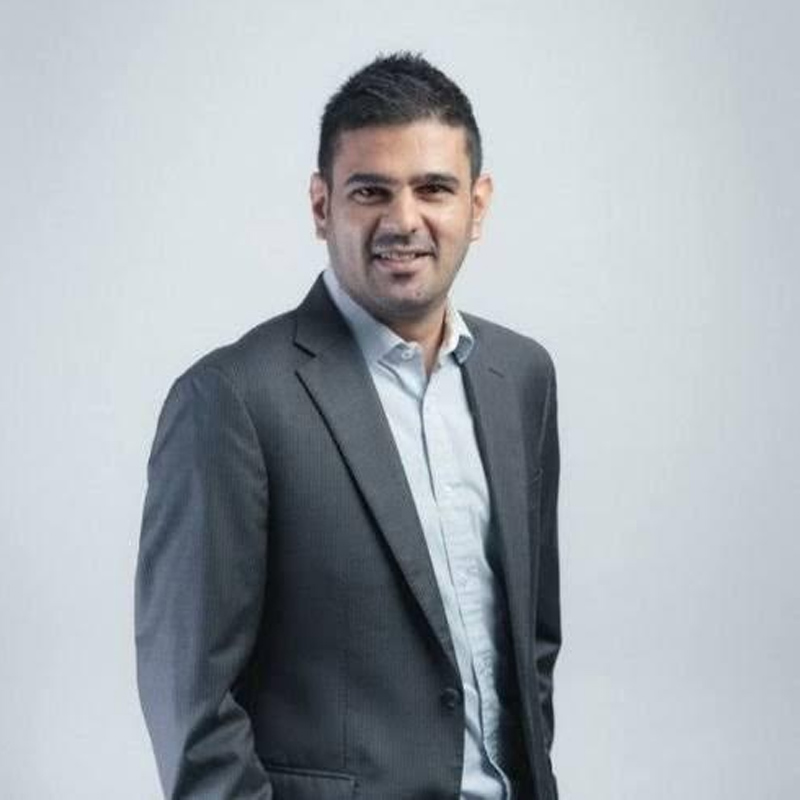
    MUMBAI: When Anuj Tandon announced his departure from the Rajan Navani-owned JetSynthesys  as CEO of its gaming division the question on every one’s mind was, where was he headed. Well, a short while ago he announced that he was back to doing what he does best: finding new studios and startups in gaming and interactive media by joining as a partner in one of the largest gaming and interactive media venture capital firms  globally, Bitkraft Ventures, leading its India initiatives. 

    Said he on Linkedin: “One of the biggest ecosystem gaps in emerging and new markets like India and Mena  in gaming and  interactive media is the lack of a peer network of founders and  mentors who push you to become better. Bitkraft  has  deep global expertise in this sector and 100-plus  portfolio companies and global mentor network and team –  I am pretty sure Indian entrepreneurs  will benefit immensely with Bitkraft India presence and localised strategy.”

    Each of Bitkraft’s investments, the company says, are contributing to the construction of the virtual worlds and economies of tomorrow.


  • Tadiran Telecom to invest $10 million annually in IP phone manufacturing in India

    Tadiran Telecom to invest $10 million annually in IP phone manufacturing in India

    MUMBAI: Securing a visionary investor is the spark that fuels every entrepreneur’s ambition, and for Tadiran Telecom, it’s a dream realised with purpose. In a landmark move blending opportunity with innovation, the Israel-based leader in unified communications has unveiled its commitment to invest over $10 million annually in India, marking a new chapter in its 26-year journey in the country. Partnering with DCM Shriram, Tadiran is set to produce 100,000 cutting-edge IP telephones each year—a transformative step that underscores its unwavering belief in India’s potential as a global manufacturing hub.

    Tadiran Telecom CEO Moshe Mitz stated, “We plan to make 1,00,000 IP telephones in India every year. This is a conservative number. We have allocated $10 million for one year for our manufacturing project. Investment will increase based on the performance.”

    IP telephones, designed for businesses and supporting multiple communication functions, including conference calls, will be classified under class two equipment, making them eligible for government procurement.

    Mitz confirmed that Tadiran’s current business is driven 70 per cent by software and 30 per cent by hardware. This manufacturing initiative represents the first phase of the company’s ambitious expansion in India. “If we achieve success in meeting manufacturing targets, then we will launch our phase two expansion in India for software development,” Mitz added.

    The company has already initiated discussions with a leading Indian software giant to collaborate on software development in phase two of its plan.

    DCM Shriram president Rudra Shriram highlighted the group’s commitment to the partnership, noting that this is its first foray into electronics manufacturing. “Tadiran Telecom has the technology. We are putting in place a dedicated team for manufacturing their products. Besides manufacturing, our group will provide all supply chain support to Tadiran Telecom, including warehousing and logistics,” he said.

    Tadiran’s investment aligns with India’s growing focus on local manufacturing and advanced technology solutions. As Mitz remarked, “Manufacturing is phase one of our expansion plan in India. If successful, phase two will focus on software development, further solidifying our commitment to India.”

    This initiative underscores Tadiran’s strategy to bolster its hardware manufacturing capabilities while exploring advanced software development partnerships in the Indian market.

  • Megha Kotian Kataria joins AppLabs.ai in UAE, India sales head role

    Megha Kotian Kataria joins AppLabs.ai in UAE, India sales head role

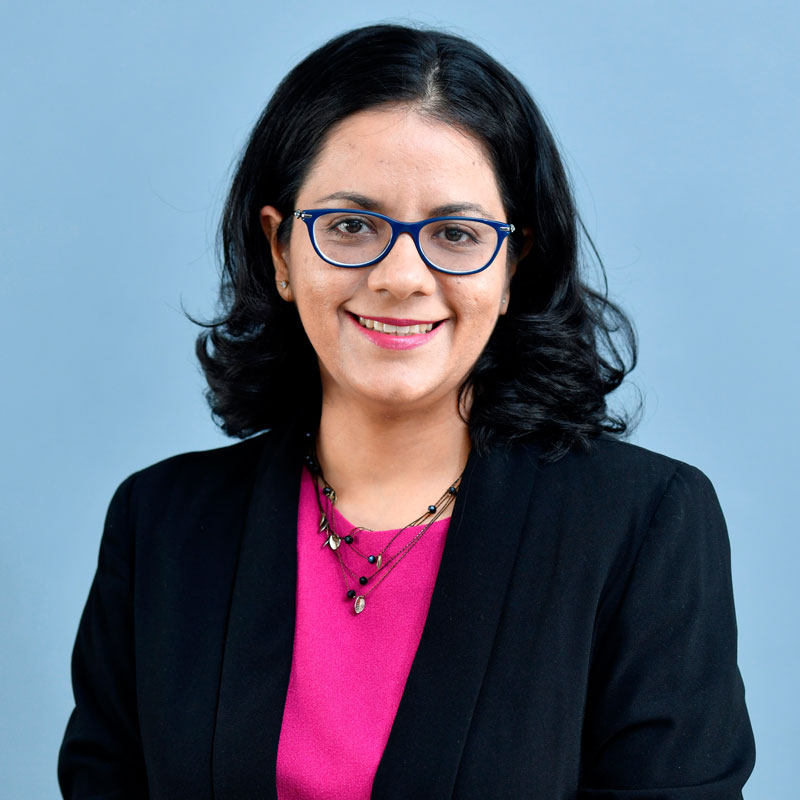
    MUMBAI: Megha Kotian Kataria has joined adtech firm  AppLabs.ai as sales head for UAE and India. Kataria holds an MBA in marketing and has  over a decade of experience in the digital media adtech industry.

    Throughout her  career, she has worked with a wide range of brands, agencies, and networks across multiple regions, including India, the Asia-Pacific, the United Arab Emirates, and the United States. Among them: Apnext, Veve,Siteplug, Affinity Global, Buzz-Meter, Manhattan Communications and Ogilvy & Mather.

    Said Megha on linkedin: “The ad tech space is evolving rapidly, and I’m thrilled to be part of a team that’s shaping the future of how brands engage with consumers. This is an incredible opportunity to work at the intersection of innovation, data, and digital marketing, where I’ll be leading the sales strategy and helping brands harness the power of advertising solutions Looking forward to collaborating and pushing the boundaries of what’s possible in digital advertising.”

    .

  • Business Today unveils 21st edition of the Most Powerful Women in business, honours winners

    Business Today unveils 21st edition of the Most Powerful Women in business, honours winners

    Mumbai: Business Today celebrated the 21st edition of the Most Powerful Women in Business list on November 8 in Mumbai. The event brought together visionary women leaders, entrepreneurs, and executives from diverse sectors to discuss key challenges and new opportunities for women in Indian business.

    Union minister of commerce and industry, Piyush Goyal, was the chief guest at the event. He alongside India Today Group vice-chairperson and executive editor-in-chief Kalli Purie, unveiled the MPW Special Issue of the magazine, which featured the inspiring stories of the women leaders who made it to this year’s prestigious list.  

    Addressing the stalwarts and guests, Goyal emphasised India’s enduring respect for female leadership and praised the National Democratic Alliance (NDA) government’s initiatives to empower women.

    He also highlighted India’s resilience to potential tariff increases from the US after Donald Trump’s re-election, stating, “India is regarded as a trusted partner by the democratic world.” He also assured that India was willing to reduce tariffs on products where there is little competition, such as heavy motorcycles from Harley Davidson.

    This year, Business Today recognised 60 women leaders across various industries, with 12 new faces added to the list, showcasing the increasing diversity and dynamism of female leadership in India. Alongside these new honourees, four returning achievers highlighted the consistent excellence and evolution in their fields. Two leaders were inducted into the Hall of Fame, having been a part of the list a record seven times, underscoring their profound and enduring impact on the business landscape.

    This year’s event was centered around the theme “Balance. Work. Life. Safety” focused on the delicate balance women strive to maintain between their professional and personal lives. It also addressed the need for greater gender equity and inclusivity in business.

    Distinguished honourees were Schauna Chauhan, CEO of Parle Agro; Ananya Birla, Founder & Chairperson of Svatantra Microfinance; Prabha Narasimhan, MD & CEO of Colgate-Palmolive (India); Prativa Mohapatra, VP & Managing Director of Adobe India; Ameera Shah, Executive Chairperson of Metropolis Healthcare; and Padmaja Ruparel, Co-founder of Indian Angel Network, among others. To know about the full list, log on to https://btmostpowerfulwomen.com/2024/

    During a thought-provoking panel discussion, Prabha Narasimhan, MD & CEO of Colgate-Palmolive (India) highlighted the underappreciation of women’s contributions. “Grit, Gumption and Guts are common to men and women both. What makes it interesting for women as we tend to undersell ourselves a little bit,” she said.

    Indian Angel Network co-founder Padmaja Ruparel emphasized the societal barriers women face and the importance of embracing risk. “Women always had a tough time. In most societies, not just India, people have preconceived notions about women. That’s the first challenge. The second point is that the women are not grown or nurtured to take risks in their workplace,” said Padmaja.

    Prativa Mohapatra, VP & Managing Director of Adobe India and Pavitra Shankar, MD of Brigade Group also shared their personal journeys of resilience and leadership.

    In another insightful session, Edelweiss AMC MD & CEO Radhika Gupta, celebrated women’s innate multitasking abilities. “Women are natural multitaskers without any professional training and spreadsheets. Multitasking is a tremendous skill in leadership… So, what we traditionally refer to as feminine skill sets are those which are required in the workplace,” she said.

    Shefali Goradia, Chairperson of Deloitte South Asia, and Amisha Vora, Chairperson & MD of Prabhudas Lilladher Group, discussed the importance of self-belief and the need to close the gender gap in corporate leadership. Shefali said that in India there is still a lack of equal seats for women at the high table despite awareness, while Gupta urged women to move from being cautious savers to confident investors, encouraging them to extend their financial stewardship beyond the household.

    The theme of work-life balance was a key point of reflection throughout the day. Nirupa Shankar, Joint MD of Brigade Group, observed that the idea of “work-life balance” is evolving, with more emphasis now on work-life integration. Devita Saraf, Chairperson & CEO of Vu Group, echoed this thought and stressed the importance of setting clear boundaries to maintain focus and mental well-being.

    Since its inception in 2003, Business Today’s Most Powerful Women in Business list has served as an important platform to recognize women who have made significant contributions to their industries. This year’s event not only celebrated the accomplishments of these remarkable leaders but also underscored the critical need to address gender disparities and create an environment where women can truly thrive.

  • Goibibo adds star power to Its roaster of brand ambassadors with Dynamic Duo Kalidas-Jayaram

    Goibibo adds star power to Its roaster of brand ambassadors with Dynamic Duo Kalidas-Jayaram

    Mumbai: Goibibo, one of India’s beloved travel brands, onboards the iconic father-son duo Jayaram and Kalidas as its brand ambassadors. This announcement furthers Goibibo’s localised approach to brand communication and product curation.

     The announcement coincides with the launch of the brand’s first digital film starring the dynamic duo. The film references a popular scene from ‘Panchatanthiram’ keeping the trope of recreating iconic movie scenes, as previously demonstrated by the brands iconic #Goibebo campaign starring Kareena Kapoor Khan who was onboarded as the brand ambassador last year.

    The film leverages cultural cues as much as it does language to build a connection with its audiences in Tamil Nadu and Kerala, delivering a story that resonates with audiences while infusing specific travel contexts with a fresh perspective.

    Goibibo CMO Raj Rishi Singh said, “In an era where travel preferences evolve rapidly, and no two trips taken are alike, Goibibo recognizes the need for tailored experiences not just in terms of products/services, but also in terms of brand communications. Collaborating with Jayaram and Kalidas was a natural choice, given their remarkable ability to resonate with audiences of all ages. Through humour and relatability, we aspire to empower travellers in the southern states of India to make better travel choices with Goibibo.”

    Jayaram and Kalidas added, “As brand ambassadors, we are delighted to embody the rich culture and cinematic heritage of Tamil Nadu and Kerala. Through this partnership, we aim to integrate Goibibo’s value proposition into our community, creating memorable travel experiences that resonate with all of us. We look forward to a wonderful journey with Goibibo and our audience.”

    The campaign, conceptualized by the agency Mind Your Language!, underscores Goibibo’s commitment to delivering unparalleled value to customers, offering an extensive selection of hotels, discounts and much more. The brand remains focused in its mission to facilitate seamless and informed travel experiences for adventurers, whether with friends or family.

    Founder and CCO Deepan Ramachandran and Mind Your Language! co-founder and creative director Pandiyaraj M shared, “Our collaboration with Goibibo marks a significant milestone, promising an iconic journey that solidifies its standing as a leading travel player. As their South India experts, we’re thrilled to introduce the legendary duo from Panchathanthiram, Jayaram and Kalidas, as the perfect travel companions. Through this campaign, we aim to match the energy and fun of national ads, infused with local insights and flavors, ensuring a memorable experience for all.”