Tag: India

  • Goldman Sachs to up stake in cable TV MSO DEN Networks; to invest Rs 142.43 crore

    Goldman Sachs to up stake in cable TV MSO DEN Networks; to invest Rs 142.43 crore

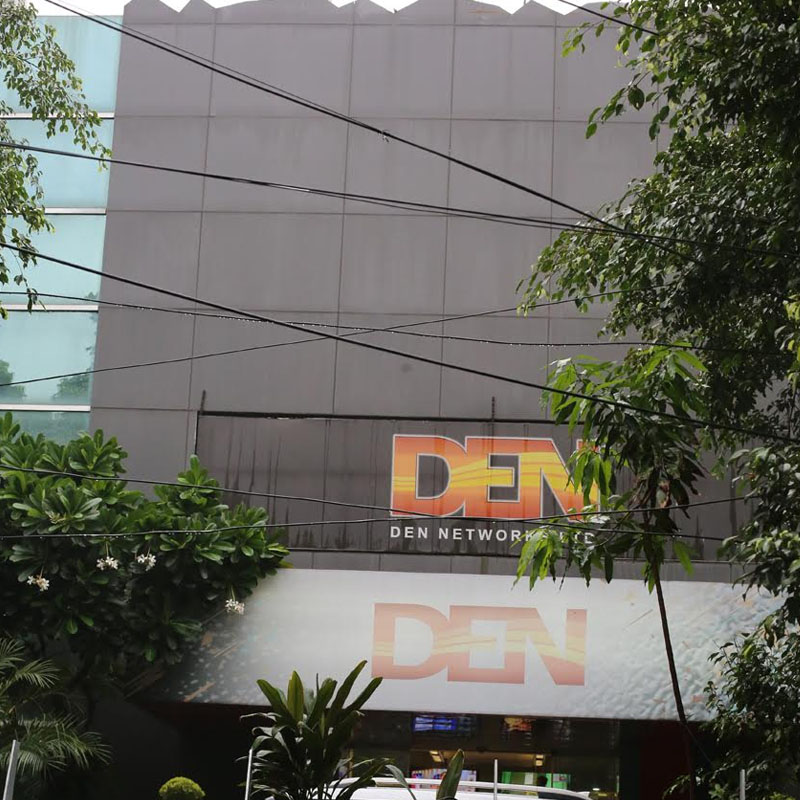
    MUMBAI: MSO DEN Networks has proved the naysayers – who have been carping that the Indian cable TV sector is as insipid as dry sawdust – wrong. The company’s existing shareholder Goldman Sachs is picking up 1.58 crore equity shares at a price of Rs 90 per share via a preferential allotment. This will take Goldman Sachs’ equity stake in DEN up from 17.79 per cent to 24.49 per cent and involve an injection of much needed capital to the tune of Rs 142.43 crore. The divestment is expected to trim promoter stake in the company to 37 percent.

    Board approval for this transaction came through yesterday and the company is seeking its shareholders’ nod through an extraordinary general meeting which is scheduled for 14 October 2016. DEN Networks informed the BSE about its intentions yesterday.

    Media observers say that the Indian cable TV ecosystem – including the government, the regulator TRAI, broadcasters, MSOs and cable TV operators – has stumbled in the digitization process which was mandated by the ministry of information and broadcasting four years back. They have also been saying that investor sentiment towards the sector is pretty weak. Shares of most leading Indian cable TV companies have been depressed, and have been parked at lows.

    However, DEN Networks has been taking steps to correct the perception. It has brought back its CEO SN Sharma who has since been working on raising revenues and profitability.

    The Goldman investment should come as a shot in the arm for DEN Networks as well as the Indian cable TV sector which is grappling with reinventing its business model.

    The company’s CFO Manish Dawar told CNBC TV18 that the company will be utilising the funds to invest in the broadband business as well as to reduce its debt. Earlier, this month, it had got board approval to demerge its broadband/internet service provider (ISP) business undertaking into its wholly owned subsidiary Skynet Cable Network . The company’s ISP business had a turnover of around Rs 40 crore in FY-2016.

    Dawar told the business news channel that DEN’s performance is on the upswing. “In Q1 we have already turned positive on EBITDA basis and if we were to look at I am talking about pre-activation which is what the investors wanted to kind of look at, so, therefore Q1 on cable business we are already EBITDA positive. Broadband is progressing very well, we have been able to reduce our losses tremendously over the last one year,” he said. “TV-Shop we are very close to break even. So, if you were to look at on a consolidated basis also, in the current quarter and I am talking about on a like-to- like basis, last quarter we were at minus (–) Rs 5 crore and the current quarter is positive Rs 5 crore on consolidated basis.”

    Investors greeted the Goldman Sachs announcement with delight. DEN Networks shares hit a high of Rs 85 during day trading yesterday only to close at Rs 80.85 – a rise of 3.5 per cent. The company’s share had hit a 52 week high of Rs 133 (21 September 2015) and it had dropped to a low of Rs 60.50 on 15 February 2016.

    The company also made an investor presentation yesterday in which it stated that its digital rollout is progressing well. Of the 13 million subscribers it has, almost 9.8 million of them have upgraded to digital in Q1 2017. Five million of these are in DAS Phase I & II areas with the remainder being in Phase III and phase IV.

  • China, India world’s largest Internet markets

    China, India world’s largest Internet markets

    NEW DELHI: India has overtaken the United States to become the world’s second largest Internet market, with 333 million users, trailing China’s 721 million.

    A new report released by the UN Broadband Commission for Sustainable Development also confirms that just six nations – including China and India – together account for 55% of the total global population still offline.

    While Internet access is approaching saturation in richer nations, connectivity is still not advancing fast enough to help bridge development gaps in areas like education and health care for those in poorer parts of the world, according to the 2016 edition of The State of Broadband report.

    Globally, an estimated 3.9 billion people are not using the Internet. But, the report estimates that, between them, China, India, Indonesia, Pakistan, Bangladesh and Nigeria account for 55% of all unconnected people, while 20 countries – including the US – account for a full 75% of those not using the Internet.

    These findings suggest that targeted efforts in just a few key markets could help enormously in redressing the gaping ‘digital divide’ between those who are online and those still offline.

    India also recently overtook the US to become the world’s second-largest smartphone market, with an estimated 260 million mobile broadband subscriptions.165 countries have deployed ‘4G’ high-speed mobile networks. As smartphone penetration reaches near-saturation in the US, Europe and mature markets in Asia like Japan and Korea, India and Indonesia in particular are expected to drive future growth.

    According to latest ITU figures, by end 2016 3.5 billion people will be using the Internet, up from 3.2 billion last year and equating to 47% of the global population. The top ten developing countries for household Internet penetration are all located in Asia or the Middle East.

  • China, India world’s largest Internet markets

    China, India world’s largest Internet markets

    NEW DELHI: India has overtaken the United States to become the world’s second largest Internet market, with 333 million users, trailing China’s 721 million.

    A new report released by the UN Broadband Commission for Sustainable Development also confirms that just six nations – including China and India – together account for 55% of the total global population still offline.

    While Internet access is approaching saturation in richer nations, connectivity is still not advancing fast enough to help bridge development gaps in areas like education and health care for those in poorer parts of the world, according to the 2016 edition of The State of Broadband report.

    Globally, an estimated 3.9 billion people are not using the Internet. But, the report estimates that, between them, China, India, Indonesia, Pakistan, Bangladesh and Nigeria account for 55% of all unconnected people, while 20 countries – including the US – account for a full 75% of those not using the Internet.

    These findings suggest that targeted efforts in just a few key markets could help enormously in redressing the gaping ‘digital divide’ between those who are online and those still offline.

    India also recently overtook the US to become the world’s second-largest smartphone market, with an estimated 260 million mobile broadband subscriptions.165 countries have deployed ‘4G’ high-speed mobile networks. As smartphone penetration reaches near-saturation in the US, Europe and mature markets in Asia like Japan and Korea, India and Indonesia in particular are expected to drive future growth.

    According to latest ITU figures, by end 2016 3.5 billion people will be using the Internet, up from 3.2 billion last year and equating to 47% of the global population. The top ten developing countries for household Internet penetration are all located in Asia or the Middle East.

  • India lags in fixed broadband, but ahead in mobile: ESCAP

    India lags in fixed broadband, but ahead in mobile: ESCAP

    NEW DELHI: India had just over 100 million fixed broadband subscriptions in 2015 as compared to Iran and Japan which had more than 250 million.

    There were only 1.3 fixed broadband subscribers per 100 inhabitants in the country as against South Korea which had 40.2 per 100 inhabitants and China and Hong Kong which had 31.9. India stood at the 40th place, even below its immediate neighbours Bangladesh and Sri Lanka.

    However, a map of fixed broadband subscriptions per 100 inhabitants in Asia and the Pacific in 2015 shows India as the most developed country in this regard.

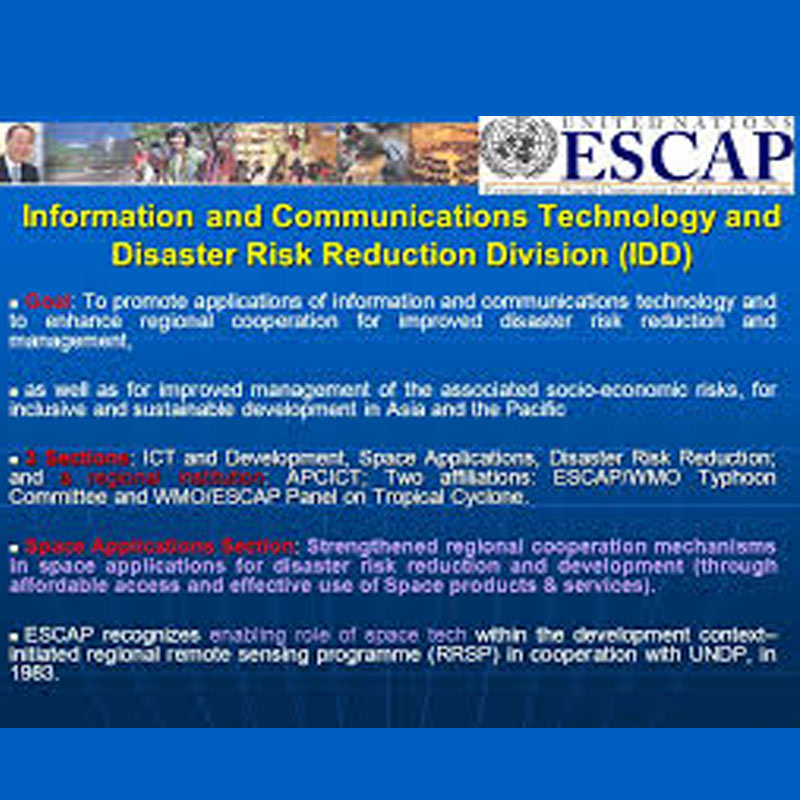
    These facts were revealed by the State of ICT in Asia and The Pacific 2016 Report by the Information and Communications Technology and Disaster Risk Reduction Division of the United Nations Economic and Social Commission for Asia and the Pacific (ESCAP).

    South and South-West Asia, Sri Lanka, Turkey, India and the Islamic Republic of Iran progressed well in both online services and telecommunications infrastructure development between 2008 and 2014. Other countries such as Bangladesh and Maldives performed well predominantly in the development of the telecommunications infrastructure.

    India has risen from just under 4 to around 5.5 out of seven in online services index among South Asian countries between 2008 and 2014.

    India was also among the top active mobile broadband subscriptions per 100 inhabitants in the Asia-Pacific region in 2015 with 120 million subscribers in 2015, the study showed.
    Disaster Risk Reduction Division.

    In 2015, China announced the One Belt One Road (OBOR) initiative, based on six economic corridors corresponding to the Silk Road. These economic corridors (China-Mongolia-Russia Corridor; New Eurasia Land Bridge; China-Central Asia-West Asia; China-Pakistan; Bangladesh-China-India-Myanmar; and China-Indochina Economic Corridor) aim to promote connectivity of these economies with China through infrastructure, trade and investment based on the original Silk Road’s pathway.

    The Global NGO Online Technology Report found that there are diverse regional differences in how NGOs worldwide utilize online technology. Within Asia Pacific, the report notes that the NGOs’ use of online technology varies greatly from subregion to subregion. For instance, India has hundreds of thousands of NGOs likely to come online in the next five years, while internet access throughout South-East Asia is growing as smartphone sales soar across the country. In Australia and Oceania, Europe and North America, NGOs’ use of web and e-mail communications, online fundraising tools, and social media is high, but NGOs in Asia, Africa and Latin America lag behind.

    Lack of a robust internet infrastructure is suggested to be a potential cause for this NGO divide. The report remarks that social, economic and political factors have either hastened or hindered the development of the infrastructure, and thereby also the uptake by the NGO sector.

    In a discussion on net neutrality, the paper says “Free Basics, formerly known as Internet.org, has sparked discussions in India and is one such case of net neutrality. This initiative pursues telecom companies in emerging markets, such as India — the world’s second largest market — to provide their customers free access to Facebook and entailing websites willing to play by its rule.”

    TechCrunch notes that these Facebook rules make it difficult to build competing social network or messaging applications. In February 2016, the Telecom Regulatory Authority of India (Trai) announced the prohibition of internet services such as Free Basics, claiming that they offer discriminatory tariffs for data services on the basis of content. While this may be a victory for neutrality supporters, others might be disappointed with the outcome as the goal of the Facebook initiative is to connect people who may otherwise not have internet access. The ruling will be in place for two years but may be open for review — it is still an open question whether the project will succeed in the long term.”

    The competition for spectrum has significant impact on the cost and affordability associated with broadband networks and access. As observed in the cases of the recent fourth generation (4G) spectrum auctions in India and Thailand, the quests for bandwidth and frequency would intensify along with the demand for mobile access and services, and subsequent need for more extensive broadband infrastructure.

    The report says Asia-Pacific countries are expanding their investments in the ICT infrastructure. For instance, in July 2015, the Chinese State Council announced the plan to develop underground telecommunication networks connecting 10 cities, which will be funded by the USD 160 billion bond programme designed for infrastructure projects.

    A mobile operator in India announced its plan to invest USD 9 billion for their mobile broadband network expansion in the next three years.

    Maldives will soon have USD 25 million nationwide fibre optic submarine networks of 1,200 kilometres to provide high-bandwidth services throughout the island nation. A mobile operator in Brunei announced plan for a nationwide Wi-Fi network rollout through more than 60 hotspots.

    The report found that connectivity still constrains not only ICT development but also various socioeconomic development opportunities. For instance, an UNCTAD report found that despite the unparalleled promise of the digital economy, the main barrier to B2C transactions in Asia and the Pacific appear to be the low internet penetration, the relatively poor postal reliability, and the low number of secure servers, which are essential for online shopping sites.

    China has demonstrated an exponential increase in fixed and mobile broadband, while slowest growths have been detected among LDCs, LLDCs and SIDs. The persistent challenge is that one-third of ESCAP member-countries have made only negligible progress over the last 15 years. In these countries, broadband access is still largely unavailable and unaffordable, while the gap as compared to the fast-growing economies is widening. Some sub-regions, such as Central Asia, seem to have made more holistic progress. The report also conducted descriptive statistical analysis using standard deviation on fixed broadband subscriptions per 100 inhabitants so as to statistically understand the digital divide.

    The results showed that Europe is the only region that has demonstrated a reduction in the broadband digital divide, while in Asia and the Pacific, it
    is in fact widening.

    Despite the increasing spotlight on newer technologies such as the IoT that aims to connect millions of devices and machines worldwide, the region still suffers from the lack of ICT connectivity, and mobile devices are mainly used for communication and entertainment.

    The report found that some countries have focused on broadband access expansion over online content and service development, but, in the long run, both infrastructure and content should be developed in tandem. The telecommunications investment seems to co-relate with fixed broadband subscriptions more strongly than with mobile broadband, indicating the investment-intensive nature of the fixed broadband infrastructure, which is a prerequisite for e-commerce.

    The report also found that weak regulatory framework might be associated with slow broadband growth.

    Regional broadband initiatives, such as the Asia-Pacific Information Superhighway, have become an essential and strategic development intervention that will shape the future of the region, the report concludes.
  • India lags in fixed broadband, but ahead in mobile: ESCAP

    India lags in fixed broadband, but ahead in mobile: ESCAP

    NEW DELHI: India had just over 100 million fixed broadband subscriptions in 2015 as compared to Iran and Japan which had more than 250 million.

    There were only 1.3 fixed broadband subscribers per 100 inhabitants in the country as against South Korea which had 40.2 per 100 inhabitants and China and Hong Kong which had 31.9. India stood at the 40th place, even below its immediate neighbours Bangladesh and Sri Lanka.

    However, a map of fixed broadband subscriptions per 100 inhabitants in Asia and the Pacific in 2015 shows India as the most developed country in this regard.

    These facts were revealed by the State of ICT in Asia and The Pacific 2016 Report by the Information and Communications Technology and Disaster Risk Reduction Division of the United Nations Economic and Social Commission for Asia and the Pacific (ESCAP).

    South and South-West Asia, Sri Lanka, Turkey, India and the Islamic Republic of Iran progressed well in both online services and telecommunications infrastructure development between 2008 and 2014. Other countries such as Bangladesh and Maldives performed well predominantly in the development of the telecommunications infrastructure.

    India has risen from just under 4 to around 5.5 out of seven in online services index among South Asian countries between 2008 and 2014.

    India was also among the top active mobile broadband subscriptions per 100 inhabitants in the Asia-Pacific region in 2015 with 120 million subscribers in 2015, the study showed.
    Disaster Risk Reduction Division.

    In 2015, China announced the One Belt One Road (OBOR) initiative, based on six economic corridors corresponding to the Silk Road. These economic corridors (China-Mongolia-Russia Corridor; New Eurasia Land Bridge; China-Central Asia-West Asia; China-Pakistan; Bangladesh-China-India-Myanmar; and China-Indochina Economic Corridor) aim to promote connectivity of these economies with China through infrastructure, trade and investment based on the original Silk Road’s pathway.

    The Global NGO Online Technology Report found that there are diverse regional differences in how NGOs worldwide utilize online technology. Within Asia Pacific, the report notes that the NGOs’ use of online technology varies greatly from subregion to subregion. For instance, India has hundreds of thousands of NGOs likely to come online in the next five years, while internet access throughout South-East Asia is growing as smartphone sales soar across the country. In Australia and Oceania, Europe and North America, NGOs’ use of web and e-mail communications, online fundraising tools, and social media is high, but NGOs in Asia, Africa and Latin America lag behind.

    Lack of a robust internet infrastructure is suggested to be a potential cause for this NGO divide. The report remarks that social, economic and political factors have either hastened or hindered the development of the infrastructure, and thereby also the uptake by the NGO sector.

    In a discussion on net neutrality, the paper says “Free Basics, formerly known as Internet.org, has sparked discussions in India and is one such case of net neutrality. This initiative pursues telecom companies in emerging markets, such as India — the world’s second largest market — to provide their customers free access to Facebook and entailing websites willing to play by its rule.”

    TechCrunch notes that these Facebook rules make it difficult to build competing social network or messaging applications. In February 2016, the Telecom Regulatory Authority of India (Trai) announced the prohibition of internet services such as Free Basics, claiming that they offer discriminatory tariffs for data services on the basis of content. While this may be a victory for neutrality supporters, others might be disappointed with the outcome as the goal of the Facebook initiative is to connect people who may otherwise not have internet access. The ruling will be in place for two years but may be open for review — it is still an open question whether the project will succeed in the long term.”

    The competition for spectrum has significant impact on the cost and affordability associated with broadband networks and access. As observed in the cases of the recent fourth generation (4G) spectrum auctions in India and Thailand, the quests for bandwidth and frequency would intensify along with the demand for mobile access and services, and subsequent need for more extensive broadband infrastructure.

    The report says Asia-Pacific countries are expanding their investments in the ICT infrastructure. For instance, in July 2015, the Chinese State Council announced the plan to develop underground telecommunication networks connecting 10 cities, which will be funded by the USD 160 billion bond programme designed for infrastructure projects.

    A mobile operator in India announced its plan to invest USD 9 billion for their mobile broadband network expansion in the next three years.

    Maldives will soon have USD 25 million nationwide fibre optic submarine networks of 1,200 kilometres to provide high-bandwidth services throughout the island nation. A mobile operator in Brunei announced plan for a nationwide Wi-Fi network rollout through more than 60 hotspots.

    The report found that connectivity still constrains not only ICT development but also various socioeconomic development opportunities. For instance, an UNCTAD report found that despite the unparalleled promise of the digital economy, the main barrier to B2C transactions in Asia and the Pacific appear to be the low internet penetration, the relatively poor postal reliability, and the low number of secure servers, which are essential for online shopping sites.

    China has demonstrated an exponential increase in fixed and mobile broadband, while slowest growths have been detected among LDCs, LLDCs and SIDs. The persistent challenge is that one-third of ESCAP member-countries have made only negligible progress over the last 15 years. In these countries, broadband access is still largely unavailable and unaffordable, while the gap as compared to the fast-growing economies is widening. Some sub-regions, such as Central Asia, seem to have made more holistic progress. The report also conducted descriptive statistical analysis using standard deviation on fixed broadband subscriptions per 100 inhabitants so as to statistically understand the digital divide.

    The results showed that Europe is the only region that has demonstrated a reduction in the broadband digital divide, while in Asia and the Pacific, it
    is in fact widening.

    Despite the increasing spotlight on newer technologies such as the IoT that aims to connect millions of devices and machines worldwide, the region still suffers from the lack of ICT connectivity, and mobile devices are mainly used for communication and entertainment.

    The report found that some countries have focused on broadband access expansion over online content and service development, but, in the long run, both infrastructure and content should be developed in tandem. The telecommunications investment seems to co-relate with fixed broadband subscriptions more strongly than with mobile broadband, indicating the investment-intensive nature of the fixed broadband infrastructure, which is a prerequisite for e-commerce.

    The report also found that weak regulatory framework might be associated with slow broadband growth.

    Regional broadband initiatives, such as the Asia-Pacific Information Superhighway, have become an essential and strategic development intervention that will shape the future of the region, the report concludes.
  • India’s weather satellite INSAT-3DR launched successfully

    India’s weather satellite INSAT-3DR launched successfully

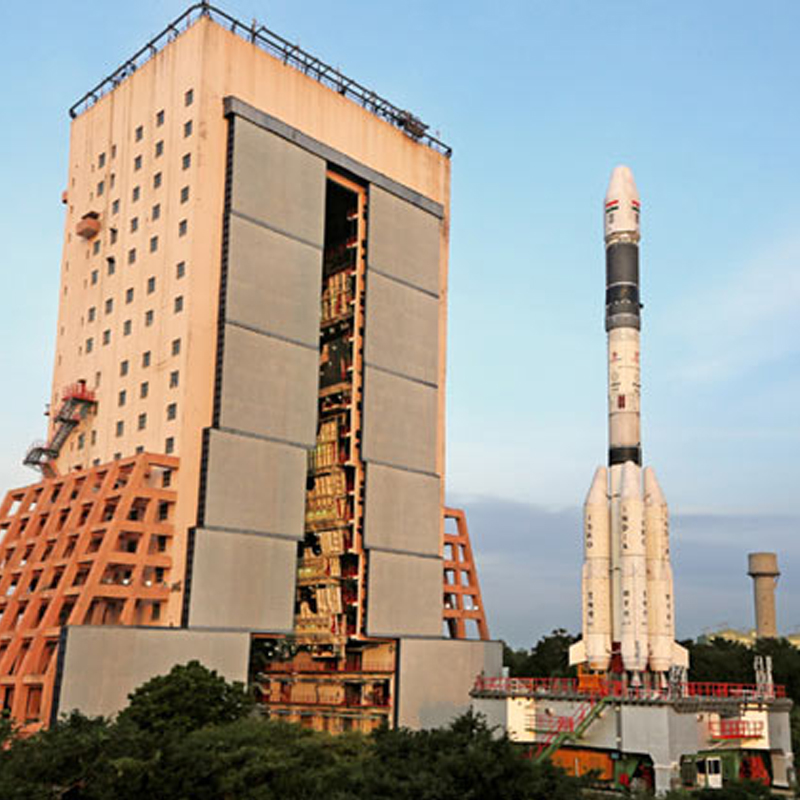
    MUMBAI: India’s Geosynchronous Satellite Launch Vehicle, equipped with the indigenous Cryogenic Upper Stage (CUS), on Thursday, successfully launched the country’s weather satellite INSAT-3DR, into a Geosynchronous Transfer Orbit (GTO) in its tenth flight (GSLV-F05). The achieved orbit is very close to the intended one.

    This flight of GSLV highlights the success of ISRO in mastering the highly complex cryogenic rocket propulsion technology

    The launch took place from the Second Launch Pad at the Satish Dhawan Space Centre SHAR (SDSC SHAR), Sriharikota, the spaceport of India. This was the first operational flight of GSLV equipped with CUS and the fourth to carry the indigenous CUS.

    This GSLV flight was the third consecutive success achieved by GSLV carrying indigenous CUS. The 2211-kg INSAT-3DR is the heaviest satellite to be launched from India.

    In its oval shaped GTO, the INSAT-3DR satellite is now orbiting the earth with a perigee (nearest point to the earth) of 169.76 km and an apogee (farthest point) of 36,080.5 km with an orbital inclination of 20.62 deg with respect to the equator.

    After a 29 hour 40 minutes countdown, the 415 tonne, 49 metre tall GSLV-F05 carrying INSAT-3DR, lifted off at the rescheduled time of 16:50 hrs IST. The 40-minute delay in the launch was due to an anomaly observed in the functioning of a pressure release valve in the liquid Oxygen filling ground segment which was resolved later.

    At 4.8 seconds before the countdown reached zero, the four liquid propellant strap-on stages of GSLV-F05, each carrying 42 tonne of liquid propellants, were ignited. At count zero, and after confirming the normal performance of all the four strap-on motors, the 139-tonne solid propellant first-stage core motor was ignited and GSLV lifted off. The major phases of the flight included the core motor burn-out, strap on burn-out, ignition of the second stage, separation of the core motor together with strap-ons, payload fairing separation, second stage separation, CUS ignition and its timely shut down after satisfactory performance.

    About 17 minutes after lift-off, INSAT-3DR was successfully placed in GTO.

    Soon after, the solar array of INSAT-3DR was automatically deployed and the Master Control Facility (MCF) at Hassan in Karnataka took control of the satellite.

    Like its predecessor INSAT-3D which is providing service from orbit since 2013, INSAT-3DR is an advanced meteorological (weather observation) satellite built by India to provide a variety inputs essential for accurate weather forecasting. For this, it is equipped with three payloads (instruments), namely, a Multispectral Imager, Sounder and weather Data Relay Transponder.

    INSAT-3DR also carries a satellite aided Search and Rescue Transponder that picks up and relays alert signals originating from distress beacons of maritime, aviation and land based users.

    In the coming days, INSAT-3DR’s orbit will be raised from its present GTO to the final circular Geostationary Orbit (GSO) by firing the satellite’s Liquid Apogee Motor (LAM) in stages. The satellite will be commissioned into service after the completion of orbit raising operations and the satellite’s positioning in its designated orbital slot of 74 degree East longitude in the GSO and in-orbit testing of its payloads.

  • India’s weather satellite INSAT-3DR launched successfully

    India’s weather satellite INSAT-3DR launched successfully

    MUMBAI: India’s Geosynchronous Satellite Launch Vehicle, equipped with the indigenous Cryogenic Upper Stage (CUS), on Thursday, successfully launched the country’s weather satellite INSAT-3DR, into a Geosynchronous Transfer Orbit (GTO) in its tenth flight (GSLV-F05). The achieved orbit is very close to the intended one.

    This flight of GSLV highlights the success of ISRO in mastering the highly complex cryogenic rocket propulsion technology

    The launch took place from the Second Launch Pad at the Satish Dhawan Space Centre SHAR (SDSC SHAR), Sriharikota, the spaceport of India. This was the first operational flight of GSLV equipped with CUS and the fourth to carry the indigenous CUS.

    This GSLV flight was the third consecutive success achieved by GSLV carrying indigenous CUS. The 2211-kg INSAT-3DR is the heaviest satellite to be launched from India.

    In its oval shaped GTO, the INSAT-3DR satellite is now orbiting the earth with a perigee (nearest point to the earth) of 169.76 km and an apogee (farthest point) of 36,080.5 km with an orbital inclination of 20.62 deg with respect to the equator.

    After a 29 hour 40 minutes countdown, the 415 tonne, 49 metre tall GSLV-F05 carrying INSAT-3DR, lifted off at the rescheduled time of 16:50 hrs IST. The 40-minute delay in the launch was due to an anomaly observed in the functioning of a pressure release valve in the liquid Oxygen filling ground segment which was resolved later.

    At 4.8 seconds before the countdown reached zero, the four liquid propellant strap-on stages of GSLV-F05, each carrying 42 tonne of liquid propellants, were ignited. At count zero, and after confirming the normal performance of all the four strap-on motors, the 139-tonne solid propellant first-stage core motor was ignited and GSLV lifted off. The major phases of the flight included the core motor burn-out, strap on burn-out, ignition of the second stage, separation of the core motor together with strap-ons, payload fairing separation, second stage separation, CUS ignition and its timely shut down after satisfactory performance.

    About 17 minutes after lift-off, INSAT-3DR was successfully placed in GTO.

    Soon after, the solar array of INSAT-3DR was automatically deployed and the Master Control Facility (MCF) at Hassan in Karnataka took control of the satellite.

    Like its predecessor INSAT-3D which is providing service from orbit since 2013, INSAT-3DR is an advanced meteorological (weather observation) satellite built by India to provide a variety inputs essential for accurate weather forecasting. For this, it is equipped with three payloads (instruments), namely, a Multispectral Imager, Sounder and weather Data Relay Transponder.

    INSAT-3DR also carries a satellite aided Search and Rescue Transponder that picks up and relays alert signals originating from distress beacons of maritime, aviation and land based users.

    In the coming days, INSAT-3DR’s orbit will be raised from its present GTO to the final circular Geostationary Orbit (GSO) by firing the satellite’s Liquid Apogee Motor (LAM) in stages. The satellite will be commissioned into service after the completion of orbit raising operations and the satellite’s positioning in its designated orbital slot of 74 degree East longitude in the GSO and in-orbit testing of its payloads.

  • Leveraging culture for greater understanding among BRICS nations

    Leveraging culture for greater understanding among BRICS nations

    NEW DELHI: The BRICS (Brazil, Russia, India, China and South Africa) should leverage the culture, filming techniques and the market of the member nations to increase greater understanding and foster people-to-people exchange.

    This was the common view of BRICS delegates at a press meet just before the BRICS Film Festival in the capital.

    Those present at the press conference included Mr Hugo Lorenzetti Neto (Brazil), Mr Kirill Razligov (Russia), Mr C. Senthil Rajan (India who is Director of Film Festivals), Mr Zhou Jiandong and Ms Monica Newton (South Africa).

    The discussions focused on the similarities and differences in the cinema of the five BRICS countries, while focussing on the exchange of cultural diversities and techniques used by the cinema of these nations.

    ‘Building Responsive, Inclusive & Collective Solutions’ (BRICS) is the aim of the merger of the five coutries, aimed at enhancing bilateral and friendly relations. In the BRICS Summit 2015 held in Russia, Prime Minister Narendra Modi introduced the BRICS Film Festival, an addition to the yearly summits that would connect masses through the exchange of culture and art.

    ”Films made in a country connect to at least one of the other nations. The movies for the festival have been specially selected to showcase culture, art and history of the countries they are made in.” said Neto.

    Razligov said: “Discussions made at the BRICS Film Festival will help us better understand the complexities and art of film making by the member nations. We all need to work in cooperation and create films together to bring people closer.”

    Speaking on the occasion, Rajan said, “The BRICS Film Festival will begin a new journey to witness the growth of the rich cinema of the five countries. This step will be leveraged as a bridge to take cinema making to a new level through the exchange of techniques, art and ideas. Furthermore, the festival will serve as an opportunity for the people to interact and learn the culture of the participating nations.”

    Highlighting the role of cinema in creating friendly relations, Jiandong said, “Indian films from the period of 1970 to 1980 were quite famous in China and today we have movies like Xuan Zang, where the actors of China and India have worked together to create a masterpiece. Cinema plays a key role in creating harmonious relations as the films speak universal language to the world.”

    “The BRICS Film Festival is the first of its kind, which will bring the masses together. This festival is an amazing canvas to exchange the art work of the five countries that has never been done before. For a young country like South Africa, the sphere of innovation and development in cinema is large, where we are learning from the member nations.” added Ms. Newton.

    The cultural diversity of the nations will also be portrayed through the Craft Fair organized at the festival, where the member countries will set up their stalls with souvenirs and products for sale. At this five-day bioscope of culture, art, films and food, one can explore exclusive cuisines from all the BRICS nations at the Food Court, arranged in the festival venue.

    Starting tomorrow, the film festival will have special meets with the cast and crew from the five nations, movie screenings and Film Panchayats, panel discussions with renowned personalities on the topics ranging from Cinema and Nation building, Women in BRICS Cinema, BRICS coproduction , Opportunities and Challenges, etc.

    Twenty films – four each from Brazil, Russia, India, China and South Africa – are to feature in the first government level BRICS Film Festival toi be held in here early next month.
    Malayalam movie Veeram will be the opening film for the festival being held from 2 to 6 September at Siri Fort Auditorium.

    They jury is headed by eminent Kannada filmmaker T S Nagabharana. Other members are producer and curator Francis Vogner do Reis from Brazil; Kirill Razlogov of Russia who has served as a special adviser for 11 years on film history and international affairs to the President of Goskino of the USS; Hou Keming of China who is a professor of the direction department of Beijing Film Academy and chairperson of the China Children’s Film Association and the president of China International Children’s Film Festival; and Ms. Xoliswa Sithole of South Africa who is founder and director, of Nayanaya Pictures and the founding member of Filmmakers against Racism.

  • Leveraging culture for greater understanding among BRICS nations

    Leveraging culture for greater understanding among BRICS nations

    NEW DELHI: The BRICS (Brazil, Russia, India, China and South Africa) should leverage the culture, filming techniques and the market of the member nations to increase greater understanding and foster people-to-people exchange.

    This was the common view of BRICS delegates at a press meet just before the BRICS Film Festival in the capital.

    Those present at the press conference included Mr Hugo Lorenzetti Neto (Brazil), Mr Kirill Razligov (Russia), Mr C. Senthil Rajan (India who is Director of Film Festivals), Mr Zhou Jiandong and Ms Monica Newton (South Africa).

    The discussions focused on the similarities and differences in the cinema of the five BRICS countries, while focussing on the exchange of cultural diversities and techniques used by the cinema of these nations.

    ‘Building Responsive, Inclusive & Collective Solutions’ (BRICS) is the aim of the merger of the five coutries, aimed at enhancing bilateral and friendly relations. In the BRICS Summit 2015 held in Russia, Prime Minister Narendra Modi introduced the BRICS Film Festival, an addition to the yearly summits that would connect masses through the exchange of culture and art.

    ”Films made in a country connect to at least one of the other nations. The movies for the festival have been specially selected to showcase culture, art and history of the countries they are made in.” said Neto.

    Razligov said: “Discussions made at the BRICS Film Festival will help us better understand the complexities and art of film making by the member nations. We all need to work in cooperation and create films together to bring people closer.”

    Speaking on the occasion, Rajan said, “The BRICS Film Festival will begin a new journey to witness the growth of the rich cinema of the five countries. This step will be leveraged as a bridge to take cinema making to a new level through the exchange of techniques, art and ideas. Furthermore, the festival will serve as an opportunity for the people to interact and learn the culture of the participating nations.”

    Highlighting the role of cinema in creating friendly relations, Jiandong said, “Indian films from the period of 1970 to 1980 were quite famous in China and today we have movies like Xuan Zang, where the actors of China and India have worked together to create a masterpiece. Cinema plays a key role in creating harmonious relations as the films speak universal language to the world.”

    “The BRICS Film Festival is the first of its kind, which will bring the masses together. This festival is an amazing canvas to exchange the art work of the five countries that has never been done before. For a young country like South Africa, the sphere of innovation and development in cinema is large, where we are learning from the member nations.” added Ms. Newton.

    The cultural diversity of the nations will also be portrayed through the Craft Fair organized at the festival, where the member countries will set up their stalls with souvenirs and products for sale. At this five-day bioscope of culture, art, films and food, one can explore exclusive cuisines from all the BRICS nations at the Food Court, arranged in the festival venue.

    Starting tomorrow, the film festival will have special meets with the cast and crew from the five nations, movie screenings and Film Panchayats, panel discussions with renowned personalities on the topics ranging from Cinema and Nation building, Women in BRICS Cinema, BRICS coproduction , Opportunities and Challenges, etc.

    Twenty films – four each from Brazil, Russia, India, China and South Africa – are to feature in the first government level BRICS Film Festival toi be held in here early next month.
    Malayalam movie Veeram will be the opening film for the festival being held from 2 to 6 September at Siri Fort Auditorium.

    They jury is headed by eminent Kannada filmmaker T S Nagabharana. Other members are producer and curator Francis Vogner do Reis from Brazil; Kirill Razlogov of Russia who has served as a special adviser for 11 years on film history and international affairs to the President of Goskino of the USS; Hou Keming of China who is a professor of the direction department of Beijing Film Academy and chairperson of the China Children’s Film Association and the president of China International Children’s Film Festival; and Ms. Xoliswa Sithole of South Africa who is founder and director, of Nayanaya Pictures and the founding member of Filmmakers against Racism.

  • Twitter India kicks off #GoLive bootcamps

    Twitter India kicks off #GoLive bootcamps

    MUMBAI: Twitter has expanded its Indian outreach to empower agencies and brands it works with to capitalize on live, always-on moments and video innovation through the platform. The outreach program in India is anchored by a three-prong strategy: gamified learning through DIY postcards, new deep dive courses for its Flight School online education programme, and a new series of multi-city #GoLive agency bootcamps.

    “The digital space moves at lightning speed, change is the only constant. Agencies know of Twitter, but not many know how best to leverage our latest tools in a way that adds value for their clients. To help increase the understanding as our platform and the industry evolves, we are working to engage more with marketers around the world so that they and their clients can use Twitter more effectively to reach and engage with target customers,” says Simon Brockman, Head of Agency Development, APAC & MENA, Twitter.

    Gamified learning going back to basics

    Twitter India will send weekly ‘Did You Know’ cards to agencies over a six week period, to help agencies in achieving their marketing goals through gamified learning. These ‘Did You Know’ cards will contain interesting facts and trivia about Twitter’s advertising solutions, share best practices on how to target and build an audience on the platform, and deliver research insights to agency representatives. On the corresponding Friday, there will be trivia quiz hosted from @TwitterAdsIN open to employees of participating agencies to test that week’s knowledge.

    New modules available to agencies and brand marketers globally

    For marketers seeking to advance their digital prowess, Twitter Flight School serves as the go-to resource for agencies and brand marketers to stay on top of the latest innovations on the platform and ideas to maximize campaign results. More than 7,900 representatives from brands and agencies in the region has registered for the free online education program so far. Within a week in India, nearly 600 agency representatives have signed up for the program.

    Twitter has added new deep dive modules to Flight School that support marketers who are keen on leveraging premium content advertising from top broadcasters, sports leagues, and content creators. Marketers can explore content partnerships with Twitter Amplify, scale optimisation with Twitter Ads, and maximize TV campaign results with Twitter integration. Upcoming modules include the latest video on Twitter and direct response features, key drivers of engagement for advertisers on Twitter.

    Twitter kicks off #GoLive agency bootcamps in Asia

    Finally, Twitter kicks off a series of #GoLive agency bootcamps across Asia, including India, this August. The bootcamps are half day learning sessions for agencies comprising of intensive training workshops aimed at bringing together Twitter experts from marketing, research, product, and brand strategy to facilitate best practice sharing.The the first round of bootcamps will be conducted for some of the key agency partners including GroupM, Omnicom Media Group & Publicis Media. Later in the year, the program will be scaled to include some of the other agency groups too.

    More than 20 of these training sessions will be held with agencies across India, Indonesia, Philippines and Singapore between August and September.

    Here are some perspectives from the agencies:

    “At MEC India, to perpetually be in beta mode is a philosophy we aspire to. With so much going on around us, we place a big premium on staying updated. We find Twitter’s Flight School and agency outreach programme very valuable towards that end,” Gangs T Gangadhar, Managing Director of MEC South Asia.

    “Digital is developing at a rapid speed and we want to maximise this moment for our clients in real-time. The #GoLive training sessions and Flight School from Twitter ensure that we are topping the digital game, aligned to the needs of our teams, while helping us elevate as a Group.” – Gregory Fortune, Head of Trading, Southeast Asia, Publicis Groupe

    “The age of “Precision and Addressability” has arrived and as agency leaders, we need to be at the forefront to best advise our clients on their brand strategies and campaigns in this fast changing Digital landscape. I am excited to see Twitter making the effort to help upgrade agency skills with Twitter Flight School and the agency bootcamp. We look forward to closer collaboration with Twitter to take our agency to greater heights,” Yasir Riaz, Managing Director of Starcom Indonesia.