Tag: India

  • Video brands’ India ad spends to rise 19% by 2022: Zenith Report

    Video brands’ India ad spends to rise 19% by 2022: Zenith Report

    KOLKATA: There is no denying that the advertising market has been in the doldrums for most of the year, owing to the Covid2019 pandemic. However, video entertainment ad spends are projected to shrink just 0.2 per cent in 2020 across ten key markets, according to the recent Zenith Business Intelligence – Video Entertainment report.

    Video entertainment advertising will far outperform the ad market as a whole, which will drop by 8.7 per cent across these same markets. Moreover, India and Spain will be top of the table when it comes to ad-ex growth through 2022.

    The report concluded that the resilience of video entertainment ad spend in the face of a global pandemic and subsequent recession is the result of increased demand from consumers, increased supply of content, and intense competition among video brands for viewers.

    Faced with spending much more time at home, consumers have turned to video content to keep themselves informed and entertained. In France, for example, TV viewing time was 30 per cent higher year-on-year in April and was still 11 per cent higher in August.

    Investment in advertising by online video brands has far outpaced traditional television recently. In the US, online video brands increased their ad budgets by 142 per cent in 2019, while television brands increased their spending by 15 per cent.

    In the UK, ad spend by online video platforms increased by 79 per cent, while ad spend by traditional television grew 34 per cent. In both markets, television broadcasters and pay-TV platforms pushed up spending temporarily in response to their new competition, but this will prove unsustainable in the face of ongoing decline in their revenues, both Covid2019-related and structural.

    In contrast, online video platforms have continued to raise their budgets to exploit the current window of opportunity to build a loyal customer base. Each platform is spending heavily to ensure that they are top of mind while consumers consider which ones to commit to for the long term.

    “Consumers are now faced with a vast and confusing array of programmes and films vying for their attention,” Zenith global managing director Christian Lee said . “Video brands need to cut through this complexity and give consumers entertainment that matches their personal preferences with minimum fuss. Brands that provide compelling experiences and act as more than just repositories of content will be best positioned for growth in the long term.”

    Here are a few highlights from the report:

    Lockdown has made digital even more vital to video brands

    Video entertainment brands spend more on digital advertising, out-of-home and cinema than the average brand. Their reliance on out-of-home and cinema has posed a particular challenge this year, as they have been forced to compensate for lost audiences from empty cities and closed cinemas. This means even more digital spending, which is forecast to rise from 53 per cent of total video entertainment spend in 2019 to 57 per cent in 2020.

    Video entertainment ad spend to exceed 2019 peak by 1.2 per cent in 2022

    While video entertainment is expected to substantially outperform the market in 2020, Zenith forecasts it to underperform over the next two years, with no growth in 2021 and 1.3 per cent growth in 2022. Online video platforms will have less capacity to raise budgets after spending heavily in 2020, and traditional TV broadcasters will be weighed down by shrinking revenues from TV advertising and pay-TV subscriptions. Nevertheless, Zenith expects video entertainment ad spend to be 1.2 per cent higher in 2022 than it was in 2019, while overall advertising will still be 0.6 per cent below its 2019 peak.

    Spain and India to lead growth in video entertainment ad spend

    The stable headline figures for growth hide considerable variation between the 10 markets. In 2022, video entertainment brands are forecast to spend 27 per cent more than in 2019 in Spain, and 19 per cent more in India. Meanwhile, spending is expected to decline by 5 per cent in the US and 7 per cent in Australia over the same period.

    Spain and India both have fast-growing appetites for video-on-demand, especially on smartphones in India. India’s television ad market also enjoys rapid long-term growth – unlike in most Western countries – and should bounce back quickly in 2021.

    The US is the only market where video entertainment ad spend is expected to continue to decline after 2020, as rising online revenues fail to compensate for the ongoing declines in TV advertising and pay-TV subscriptions, reducing available ad budgets. The video industry is healthier in Australia, but here the ad market as a whole is retrenching after the sudden halt to Australia’s 29 years of unbroken economic growth, so video brands can maintain a share of voice without raising budgets.

  • Spotify registers 320 million monthly active users in Q3

    Spotify registers 320 million monthly active users in Q3

    NEW DELHI: Audio streaming service Spotify has reached 320 million monthly active users in the third quarter with a 29 per cent year-on-year growth. Successful marketing campaigns in India, as well as the July launch in Russia, have driven the growth.

    “From a content consumption standpoint, global consumption hours surpassed pre-COVID levels during the quarter, and all regions have fully recovered. Consumption trends by the platform have returned to normal usage, including in-car listening hours which is now above the pre-COVID peak. Usage on connected devices inside the home, which saw a spike during the lockdown, also remains above pre-COVID levels.,” the company stated.

    Its premium subscribers base grew by 27 per cent year-over-year to 144 million in the quarter. The platform saw strong subscriber growth across all regions, with added benefit from new market launches in Russia and surrounding territories. Russia has been the most successful new market launch to date and represented the largest portion of subscriber outperformance for the quarter.

    Total revenue of $1,975 million grew 14 per cent year-over-year in Q3; premium revenue grew 15 per cent to $1,790 million while ad-supported revenue rebounded nicely, growing 9 per cent. Within premium, average revenue per user (“ARPU”) of $4.19 in Q3 was down 10 per cent year-on-year.

  • Mipcom Online Plus attracts sizeable Indian presence

    Mipcom Online Plus attracts sizeable Indian presence

    MUMBAI: Mipcom began its virtual edition of the annual content syndication get together on 12 October. Titled Mipcom Online+, it is based on a high end artificial intelligence driven platform called Grip, developed by a sister tech firm under Relx group, of which organiser Reed Midem is a part.

    The virtual exhibition has proved to be a smash hit with more than 6,000 professionals – including 800 virtual exhibitors and 26 country pavilions – and 2,200 buyers participating virtually from 100 countries.

    Reed Midem was initially considering to run both digital and physical versions in Cannes like it has done for decades, but dropped the idea because of the continuing Covid2019 menace. It pivoted quickly and, over a month, attracted sizable participation – probably the most by a trading market in its online avatar in 2020.

    Read more news on Mipcom 

    “We are very pleased to be receiving strong support from the industry which is quite excited about meeting online in the current international environment when meeting in person from around the world is not yet possible,” said Reed Midem TV division director Laurine Garaude. “We are, of course, sad not to be meeting in Cannes for the 36th Mipcom. But we are also excited about the new Mipcom experience that we are creating online.”

    Mipcom Online Plus has attracted several initiatives and partners such as Korea Country of Honour, A&E Networks, Nippon TV, Sony and Televisa.

    The highlight of this year’s edition is the continued presence from the Services Export Promotion Council (SEPC) virtual pavilion, with more than 12 companies coming under its umbrella and taking advantage of the cost benefits it offers.

    “Mipcom is one of the important markets we have identified to help push Indian entertainment exports,” says SEPC chairman Manek Dawar. “We wanted to be aggressive, but we will wait for next year’s edition in Cannes and really fire on all cylinders.”

    SEPC has roped in content export veteran Hirachand Dand to spearhead its entertainment division. The online SEPC initiative is being headed by SEPC deputy director general Abhay Sinha.

    Overall, more than 70 executives from India’s media and entertainment sector – covering TV, TV production, animation, distributors of TV shows and films, dubbing services – are taking part in Mipcom Week which is slated to end on 16 October. However, the platform will be open for screenings, virtual meetings, networking and matchmaking till 17 November.

    “I am really delighted with the India presence at Mipcom Online Plus,” says India, Pakistan, Sri Lanka, Bangladesh representative Anil Wanvari. “Content syndication and trading has been at a low because of Covid2019. For many companies it is a crucial revenue stream. I am really hoping the next few days and weeks will help kickstart this engine for India’s content folks.”

  • How Tata Communications is growing India’s e-sports market

    How Tata Communications is growing India’s e-sports market

    NEW DELHI: Heightened internet penetration and increasing base of smartphone users has helped generate a positive hype fore-sports and gaming in India. Amounting to 15 per cent of the global total, Indian gamers are leading the change in how gaming and tournaments are perceived in the country. The process has been further accelerated by the Covid2019 pandemic, which has drawn a significant chunk of Indian players and viewers online.

    Technology is playing a key role in this process and Tata Communications has been at the forefront of enabling these technical interventions. Elaborating on how the company is leading the next generation of e-sports and gaming community into the future with its robust systems, global head media and entertainment Dhaval Ponda addressed the audience on the day one of the first Games, E-sports & More Summit (GEMS), organised by Indiantelevision.com and AnimationXpress.com.

    He said, “We have the experience of working within the industry in the US, South Korea, and Europe. And we have worked with not only publishers but also technology platforms to individual gamers. We are looking at the gaming sector to evaluate the monetisation opportunities to give us a significantly better industry and significantly better experience as a community.”

    Tata Communications is now striving to provide technical support to the Indian e-sports and gaming community across three key areas: digital infrastructure, streaming platforms, and production and broadcasting.

    “Digital Infrastructure is something that is very close to us. The global submarine cable infrastructure is owned and operated by the Tata group. Currently, one-third of the internet infrastructure, from a consumption standpoint, is supported and managed by Tata Group and this can be the vehicle for every single aspect of viewing interaction; whether it’s streaming, or playing on mobile/iPad/PC and posting the content – the nearest CDN server will be able to do it. Also, these streams are in real-time,” he elaborated on the first aspect.

    He added that their servers are running on low latency that gives a niche experience to the viewers without any lag in video quality.

    Earlier this year, Tata Communication had also announced the launch of a 100G media backbone in collaboration with Swedish communication equipment maker, Net Insight, to enable broadcasters, sports organizations, OTT companies, and E-sports businesses to offer streams with up to 4K UHD resolution. Ponda promised to take it up to 8K UHD quality.

    The conglomerate is already involved in remote production of some of the biggest e-sports and gaming tournaments, from completely virtualising the production to getting it on cloud servers.

    “These are the points for people to consider where they can deliver a unique experience. An ultra-low-latency delivery is something that is absolutely vital for e-sports and gaming and this is something that will become a core component of the viewing experience. So by ultra-low latency, we are talking about a second or two-second delay between the event actually taking place and consuming it on a platform or video stream that we put live anywhere in the world,” he said.

    Additionally, Tata Communications has set its sights on creating an exceptional pre-game and in-game experience for players. “Our comprehensively managed security service also includes DDoS attack detection and mitigation along with web application firewall and unified threat management. It is very important for the publishers too because one DDoS attack in a big event will mean people going somewhere else,” he said.

     Ponda signed off by saying that things are looking pretty exciting when it comes to e-sports in India. “We’re attempting to take it mainstream, which means at par with tier-1 sports, whether it be football or rugby, or cricket.” 

  • Amazon India enables neighbourhood stores for festive season

    Amazon India enables neighbourhood stores for festive season

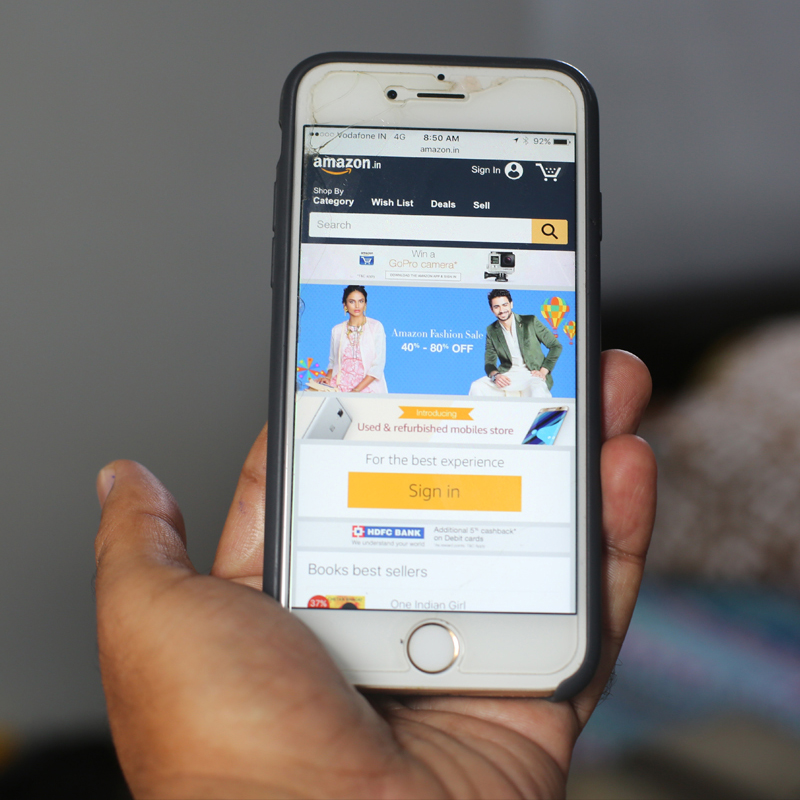
    Bengaluru: This festive season, over 100,000 Amazon-enabled local shops, kiranas and neighbourhood stores from across India have geared up to serve customers. More than 20,000 offline retailers, kiranas and local shops from “Local Shops on Amazon” program are participating in their first “Great Indian Festival” to cater to customers in their cities and across India, selling everything from daily essentials to large appliances and from home décor items to gifts and fresh flowers. 

    The program has witnessed remarkable response from retailers from across India and has scaled rapidly in just five months; with more than 40 per cent of the sellers coming from outside the top 10 cities. The success of the “Local Shops on Amazon” program underlines Amazon India’s commitment to work closely with the vast network of neighborhood stores across India, integrating e-commerce into their operations through focused initiatives such as Amazon Easy, I Have Space, and Amazon Pay Smart Stores.

    Amazon India VP Manish Tiwary said, “This festive season we are focused on helping our sellers and other MSME partners grow their business and bounce back from the recent challenges. In the last few months we have seen businesses of all sizes increasingly adopt technology into their business. The integration of Amazon’s programs with 100,000+ ubiquitous neighbourhood stores – for selling online, to help customers buy online, to make deliveries and enable contactless payments – is a testament of the adaptability and inventiveness of Indian entrepreneurs. We hope that this Great Indian Festival will bring them growth and success as they get ready to serve millions of customers across India”.

    Local Shops on Amazon is a new program that was launched in April this year to help bring offline retailers, kiranas and local shops online. The program has scaled rapidly within 5 months of launch and now has more than 20,000 retailers in 400 cities. Today, thousands of offline retailers from Meerut to Ludhiana, Saharanpur to Surat, Indore to Ernakulum and Kanchipuram are part of this program. Local Shops on Amazon offer a wide range of products including fresh flowers, home and kitchen products, furniture, electronics, books and toys amongst others.

    Amazon Easy enables assisted shopping experience for new to e-commerce customers. They can place an order on Amazon.in with guided assistance from the store staff and pick up the order from the store or get it delivered at their doorstep. An upgraded ‘Amazon Easy’ store format has recently been launched offering a touch & feel product experience and integrating multiple Amazon services through a single touchpoint. The first such store is now operational in Bengaluru. The upgraded format stores will soon be expanded to other parts of the country.

    Amazon Pay Smart Store is currently enabling 15,000+ neighbourhood shops to provide a contactless shopping experience to their customers. With Amazon Pay Smart Store, customers can simply scan the store’s QR code using the Amazon app to explore the products available in the store. After selecting the products, they wish to buy they can check out with Amazon Pay, which gives them a choice of using UPI, balance, or credit or debit cards.  Customers can on-the-spot convert a transaction into an EMI, and avail exciting rewards from their banks or through Amazon Pay.

    Amazon I Have Space

    Ahead of the festive season, Amazon has also strengthened its flagship ‘I Have Space’ (IHS) delivery program, now comprising of more than 28,000 neighborhood and kirana stores in close to 350 cities. Under the ‘I Have Space’ program, Amazon India partners with local store owners to deliver products to customers within a 2 to 4 kilometers radius of their store, allowing them to supplement their regular income and generate more footfalls.

  • India to reach 66 million SVoD users in 2025, report says

    India to reach 66 million SVoD users in 2025, report says

    KOLKATA: The rapid surge of OTT consumption in India is not anymore limited to free usage. A recent report has underlined that the subscription-based model is holding a potential future. India will reach 66 million paid subscribers in 2025, analyst firm Digital TV Research estimates.

    While the Indian market is estimated to triple its subscriber base in 2019, the entire APAC region will also see a substantial increase. The region will have 467 million SVoD subscriptions by 2025, up from 267 million in 2019.

    China will remain the largest contributor at 2025 too with 279 million subscribers. Japan will add 18 million subscribers to reach 40 million. Among other markets, South Korea will exceed 25 million and Australia will surpass the 18 million mark slightly.

    “Although China dominates the region, there will be plenty of growth elsewhere. Netflix will have 44.4 million subscribers by 2025; closely followed by Disney+ [including Hotstar] with 43.6 million,” Digital TV Research principal analyst Simon Murray said.

    This is not the only report which is indicating a huge subscriber growth in the next decade. To capture the opportunity, all the international players are ramping up their investment in premium content while local players are also rising to prominence on the back of consumer insights.

  • PivotRoots bags digital mandate for GoI’s study in India initiative

    PivotRoots bags digital mandate for GoI’s study in India initiative

    MUMBAI: PivotRoots, a full service independent digital agency, has bagged the digital media mandate for EdCIL’s "Study in India" initiative. 

    “Study in India” is managed by EdCIL as mandated by ministry of human resource development and aims to make India a preferred destination for higher education among foreign students. India being 3rd in position in terms of higher educational network with ~38000 Colleges and ~800 universities, aspires to attract 1.5 to 2.5 lakh international students by 2022. With the Study in India initiative, the government aims to double India's market share of global education exports from less than 1 per cent to 5 per cent in five years which plays an imperative role to boost the economy. 

    PivotRoots founder and MD Shibu Shivanandan said, “We are proud and excited to partner with EdCIL, in their endeavour to strengthen India's position as a global education hub. We look forward to work very closely with the team on integrated solutioning through data & technology, to connect with students across markets and build preference to study in India. It is indeed a proud moment for the entire team to get to work on such initiatives.”

    The "Study in India" win marks an important milestone for PivotRoots as it joins hands with the government to bolster Indian Education system and help the students outside of India to experience our diverse culture. 

    Follow Tellychakkar for the consumer facing news & entertainment

  • Zirca Digital to represent Fandom in India

    Zirca Digital to represent Fandom in India

    Mumbai: 360-degree digital solutions provider Zirca Digital Solutions has been appointed as the exclusive advertising sales representative in India of global entertainment platform Fandom. As part of the partnership, Zirca will work towards maximising Fandom’s advertising revenue potential, build the brand’s presence and expand its pool of demand partners in the region. Fandom helps fans explore, contribute to, and celebrate the world of movies, TV and gaming. With a global audience that is young and influential, Fandom reaches over 200 million monthly uniques and encompasses over 400,000 fan communities.

    Zirca Digital Solutions MD Karan Gupta said, “Consumption of pop-culture entertainment is dynamically changing across the world and India is no exception. We are excited to be associated with Fandom. This is a huge development for us, and we are all geared up to deliver our best-in-class services to them.”  

    Zirca Design Solutions CEO and director Neena Dasgupta said, “Fans’ relationship with pop-culture entertainment is now more engaging, direct, and personalised than ever. We are delighted to represent one of the most respected fan-trusted brands in India. We are confident that through our collaborative approach we will be successful in creating and delivering cutting-edge digital advertising solutions for Fandom in the Indian market.”

    “Fandom speaks the language of fans and helps marketers establish credibility,” said Fandom chief revenue officer Ken Shapiro. “Our ability to harness fan passion combined with Zirca’s innovative sales solutions will enable us to reach consumers in new and effective ways.”

    Fandom Asia VP sales Paul Davies added, “We are thrilled to be working with Zirca to expand our marketing partnerships in India. Together, we can help more advertisers in India achieve results.”

    Follow Tellychakkar for the consumer facing news & entertainment

  • Criteo appoints Taranjeet Singh as MD for Southeast Asia, India

    Criteo appoints Taranjeet Singh as MD for Southeast Asia, India

    MUMBAI: Criteo, the global technology company powering the world’s marketers with trusted and impactful advertising, has appointed Taranjeet Singh, as managing director, Southeast Asia (SEA) and India, to lead this critical market for the company. Singh will steer Criteo’s business strategy for the region, driving continued growth and building on the company’s current portfolio of customers which include Love, Bonito, Shopback, K&K Fashion, Tugo.vn, Tata CLIQ, and NYKAA.

    Starting in New Delhi, Singh will oversee Criteo’s operations in SEA and India. He will work closely with the company’s regional leadership to strengthen Criteo’s current advertiser and partner relationships and spearhead new business development.

    “Taranjeet brings a rich experience of more than 17 years of leadership experience within the media and technology industry in Asia Pacific,” said Kenneth Pao, executive managing director for Asia Pacific, Criteo. “This pandemic has transformed many businesses. It has caused brands big and small to quickly pivot their marketing strategies to adapt to this new normal and social distancing economy. We are fortunate to be able to add Taranjeet to our leadership bench as we help our customers and partners provide as much value to their customers as possible during this time. We are also excited to have him on board to help propel the company’s vision to power marketers globally with trusted and impactful advertising.”

    “Online commerce is now the lifeblood for consumers. Online retail sales in SEA are experiencing a higher uplift in 2020 compared to last year, with peak sales growth of 141 per cent seen the week of 23 March. According to a consumer survey conducted by Criteo, the India report shows that half of consumers say they’ll purchase more online because of COVID-19 especially the millennials.  The need for the internet is more pronounced than ever during this period. As brands adapt their marketing strategies to meet the current online demand, they need to continue to be customer-centric and focus on providing solutions for consumer concerns and pain points,” added Singh. “I look forward to working with some of the best talents in the industry to leverage Criteo’s scale and expertise to help our customers and partners be trusted brands to their consumers.”

    Singh joins Criteo after nearly two years at ZEE5 India, an online video-on-demand platform. He was Chief Revenue Officer and Business Head, where he helped establish the revenue and business operations in the company. Prior to ZEE5, Singh’s leadership roles included serving as India Country Director for Twitter and Sales Director for BBC News, where he was responsible for commercial operations.

    Criteo ended the first quarter 2020 with over 20,000 commerce and brand customers, adding close to 1,000 new clients (net) compared to Q1 2019, while maintaining close to 90 per cent client retention rate. Criteo’s header-bidding technology now connects to over 4,600 publishers across the Web and App and reaches about 40 per cent of all its publishers via Criteo Direct Bidder.

    Follow Tellychakkar for the consumer facing news & entertainment

  • Will COVID-19 help Netflix repeat 2019 subscriber gains?

    Will COVID-19 help Netflix repeat 2019 subscriber gains?

    MUMBAI: As Netflix is about to unveil its all-important quarterly results amid expectations that the ongoing pandemic will boost subscriptions, Futuresource Consulting reflects on 2019 as being its best ever year for net subscriber additions (net adds), highlighting countries which are showing significant momentum.

    Netflix gained nearly 28 million subscribers in 2019, driven by many countries which saw the highest yearly net adds since the service launched, indicating that they remain in an accelerating phase of growth. In Germany, Futuresource estimate there was an additional 2 million net sign ups, as Netflix continues to challenge incumbent Amazon Prime Video for the top spot.

    Japan grew by 1.7 million subscribers, significantly beating its previous highest additions. South Korea increased by 1.5 million, double the net adds of the year before, and we also saw Italy, Spain and India, among others, all posting their best year yet.

    With the ongoing COVID-19 pandemic shows no signs of abating, increasing the quantity of leisure time spent indoors, Futuresource expects to see Netflix’s next quarterly reporting to indicate how its library of fresh content, provided at good value for money, has driven strong uptake of both new and returning subscribers.

    What is impressive is that many of these countries, particularly Japan, South Korea and Germany have had a relatively long gestation period, during which the global streaming giant experimented with the content length, type and format which appealed most. Subscriber net adds growth reaching the highest level to date is typically indicative of key shows resonating with the audience and therefore becoming topics of discussion within society.

    It is this word-of-mouth and social media traction which inspires new consumers to sign up in order to “see what all the fuss is about”. This therefore creates a self-fulfilling prophecy, generating ever more attention and therefore translating to impressive growth figures, as we saw in 2019.

    Further subscriber growth has come from partnering with telcos and pay-TV operators. Combined billing and allowing consumers to remain within a Pay-TV user interface has added more access points to a growing list of connected devices and TVs it’s available on. Moreover, some operators such as Sky have taken this arrangement to a new level and provided slick integration of Netflix’s content into a carousel along with other premium third-party content, such as hit HBO shows.

    Furthermore, even within established markets such as Brazil, the UK, France, Australia and the Nordics, subscriber growth has continued, which highlights the broad appeal Netflix has. Once it has attracted subscribers, the voluminous content throughout and high quality of said content helps it maintain subscription growth. The UK for example saw subscriptions increase by 2 million in 2019, equal to its previous best ever year just one year prior, but arguably more impressive since it is now taken in 40 per cent of UK households.

    Country by country, Netflix continues to localise and work out what resonates with consumers. The continued momentum in Netflix subscriptions is now also against a backdrop of an increasingly dynamic and diverse competitive landscape. However, the high-profile new service launches are at least in the short term, complementary. In its key countries, Netflix remains the staple service, with the vast majority of SVoD households choosing to subscribe. As we head beyond the lockdown, the key objective won’t just be how many subscribers Netflix adds, but also how it will continue to retain existing subscribers.