Tag: India Today Group

  • NBA, DUJ condemn attack on journalists outside Patiala House courts in Delhi

    NBA, DUJ condemn attack on journalists outside Patiala House courts in Delhi

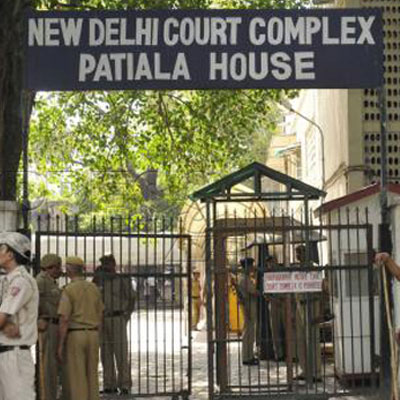
    NEW DELHI / MUMBAI: The News Broadcasters Association (NBA) has condemned the assault by lawyers and others on journalists and cameramen, especially women journalists, who were reporting from Patiala House Court ON 15 February.

    The incident occurred when JNU Students Union president Kanhaiya Kumar was to be produced in the Court. 

    Condemning the incident and terming it as an attack on the freedom of the press, NBA president Rajat Sharma called it a cowardly attack meant to intimidate journalists carrying out their work in disseminating news and information, a service that is essential for any democratic society. 

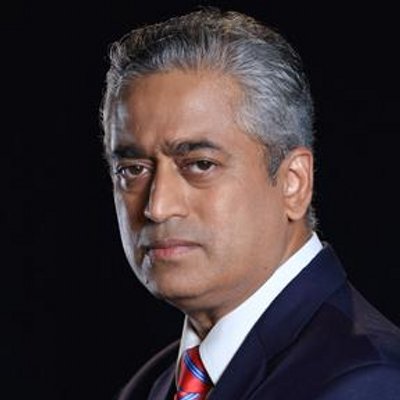
    Senior journalist and India Today Group consulting editor Rajdeep Sardesai said, “The journalists are rightly showing solidarity to what happened yesterday at the Patiala House. What happened yesterday was unexpected. The way the lawyers acted is just shocking. The journalists should definitely unite and stand as one against this.”

    Expressing his doubts on the credibility of the lawyers present at the Patiala Court, he added, “Who are these lawyers? They behaved more like politicians. Denoting the media with such terms is just not accepted.”

    NDTV India senior executive editor Ravish Kumar said, “It is good to see journalists showing solidarity and coming together but the problem is that there are still many journalists who have not united to fight against this. What happened yesterday in the premise of a court is shocking. It is the right of any person to get a lawyer. The terrorists also get lawyers and the lawyers have taken up such cases in the past. The problem is that the lawyers have started to behave like judges. They should follow the ethics taught to them in their law schools.”

    CNN-IBN executive editor Bhupendra Chaubey opined, “I genuinely believe that this is a threat to the expression of one’s views in today’s politics. This type of lynch mob is dangerous and has to be tackled soon. It is good to see journalists coming together to fight this. This looks like a new definition of nationalism, which is being written now in our country. Nationalists and anti-nationalists are now defined by the ruling party but that is ideally supposed to be an individual’s decision. The way it has happened is just not acceptable.”

    Earlier, the Delhi Union of Journalists had also condemned the attack at Patiala House as well as at the campus. The DUJ has given a call for observance of a Black Day on 19 February.

    The Union strongly deplored the beating up of journalists, students and teachers in the Patiala House Courts by “goons.” Several of them including a few journalists were severely injured and had to be taken to the hospital.

    The DUJ said it was “surprising that though there was a heavy presence of the Police, it refused to intervene despite repeated requests by those who were being beaten up.”

    The DUJ demanded the immediate arrest of all those who indulged in this violence. “It is the responsibility of the police to provide protection to journalists who were discharging their duty,” it said.

    Congress spokesman Kapil Sibal later said at a party briefing that a matter in this connection had been mentioned in the Supreme Court and was likely to be heard tomorrow (17 February).

  • NBA, DUJ condemn attack on journalists outside Patiala House courts in Delhi

    NBA, DUJ condemn attack on journalists outside Patiala House courts in Delhi

    NEW DELHI / MUMBAI: The News Broadcasters Association (NBA) has condemned the assault by lawyers and others on journalists and cameramen, especially women journalists, who were reporting from Patiala House Court ON 15 February.

    The incident occurred when JNU Students Union president Kanhaiya Kumar was to be produced in the Court. 

    Condemning the incident and terming it as an attack on the freedom of the press, NBA president Rajat Sharma called it a cowardly attack meant to intimidate journalists carrying out their work in disseminating news and information, a service that is essential for any democratic society. 

    Senior journalist and India Today Group consulting editor Rajdeep Sardesai said, “The journalists are rightly showing solidarity to what happened yesterday at the Patiala House. What happened yesterday was unexpected. The way the lawyers acted is just shocking. The journalists should definitely unite and stand as one against this.”

    Expressing his doubts on the credibility of the lawyers present at the Patiala Court, he added, “Who are these lawyers? They behaved more like politicians. Denoting the media with such terms is just not accepted.”

    NDTV India senior executive editor Ravish Kumar said, “It is good to see journalists showing solidarity and coming together but the problem is that there are still many journalists who have not united to fight against this. What happened yesterday in the premise of a court is shocking. It is the right of any person to get a lawyer. The terrorists also get lawyers and the lawyers have taken up such cases in the past. The problem is that the lawyers have started to behave like judges. They should follow the ethics taught to them in their law schools.”

    CNN-IBN executive editor Bhupendra Chaubey opined, “I genuinely believe that this is a threat to the expression of one’s views in today’s politics. This type of lynch mob is dangerous and has to be tackled soon. It is good to see journalists coming together to fight this. This looks like a new definition of nationalism, which is being written now in our country. Nationalists and anti-nationalists are now defined by the ruling party but that is ideally supposed to be an individual’s decision. The way it has happened is just not acceptable.”

    Earlier, the Delhi Union of Journalists had also condemned the attack at Patiala House as well as at the campus. The DUJ has given a call for observance of a Black Day on 19 February.

    The Union strongly deplored the beating up of journalists, students and teachers in the Patiala House Courts by “goons.” Several of them including a few journalists were severely injured and had to be taken to the hospital.

    The DUJ said it was “surprising that though there was a heavy presence of the Police, it refused to intervene despite repeated requests by those who were being beaten up.”

    The DUJ demanded the immediate arrest of all those who indulged in this violence. “It is the responsibility of the police to provide protection to journalists who were discharging their duty,” it said.

    Congress spokesman Kapil Sibal later said at a party briefing that a matter in this connection had been mentioned in the Supreme Court and was likely to be heard tomorrow (17 February).

  • India Today Television & Twitter partner to launch Town Halls

    India Today Television & Twitter partner to launch Town Halls

    MUMBAI: India Today Television has joined hands with Twitter in an exclusive partnership for conducting Town Halls on the social media platform.

    The Twitter Town Halls will give an opportunity to followers on Twitter to engage with news makers, opinion makers and other eminent personalities.

    Twitter followers can tweet their questions and the personality/guest will respond to the same during the Town Hall. This will be aired on India Today Television. The partnership also extends to the group’s Hindi news channel AajTak for relevant guests.

    The India Today Group and Twitter have already aired Town Halls with Shah Rukh Khan and Kamal Hassan. The third episode in the series featuring Sri Sri Ravi Shankar will be aired this week-end.

    India Today Group group editorial director – broadcast & new media Kalli Purie said, “Our sole objective through social media is to engage our followers and viewers in a dialogue on issues of national and global importance. Twitter Town Hall is a great format to ideate, debate and celebrate the spirit of freedom of expression. We trust that our social media followers are equally well informed to ask the right questions of their leaders. We will be rolling out many such templates to empower our end users.”

    Twitter vice president – media for Asia-Pacific, Middle East and North Africa Rishi Jaitly added, “Twitter Town Halls have been used by global business and political leaders to connect with their followers and audiences at large for some time now. Twitter is the only platform in the world that is public, conversational, and real-time. The beauty of the platform is that it allows users to engage with influential personalities from different walks of life, and gives them a voice to be heard. This Twitter Town Hall will give users a chance to talk to and engage with influential icons and leaders from different walks of life for the first time.”

    The India Today Group has over 6.26 million Twitter followers across its news handles.

  • India Today Television & Twitter partner to launch Town Halls

    India Today Television & Twitter partner to launch Town Halls

    MUMBAI: India Today Television has joined hands with Twitter in an exclusive partnership for conducting Town Halls on the social media platform.

    The Twitter Town Halls will give an opportunity to followers on Twitter to engage with news makers, opinion makers and other eminent personalities.

    Twitter followers can tweet their questions and the personality/guest will respond to the same during the Town Hall. This will be aired on India Today Television. The partnership also extends to the group’s Hindi news channel AajTak for relevant guests.

    The India Today Group and Twitter have already aired Town Halls with Shah Rukh Khan and Kamal Hassan. The third episode in the series featuring Sri Sri Ravi Shankar will be aired this week-end.

    India Today Group group editorial director – broadcast & new media Kalli Purie said, “Our sole objective through social media is to engage our followers and viewers in a dialogue on issues of national and global importance. Twitter Town Hall is a great format to ideate, debate and celebrate the spirit of freedom of expression. We trust that our social media followers are equally well informed to ask the right questions of their leaders. We will be rolling out many such templates to empower our end users.”

    Twitter vice president – media for Asia-Pacific, Middle East and North Africa Rishi Jaitly added, “Twitter Town Halls have been used by global business and political leaders to connect with their followers and audiences at large for some time now. Twitter is the only platform in the world that is public, conversational, and real-time. The beauty of the platform is that it allows users to engage with influential personalities from different walks of life, and gives them a voice to be heard. This Twitter Town Hall will give users a chance to talk to and engage with influential icons and leaders from different walks of life for the first time.”

    The India Today Group has over 6.26 million Twitter followers across its news handles.

  • ‘Too much of sensation, not enough sense; too much of Delhi, not enough on the rest:’ Rajdeep Sardesai

    ‘Too much of sensation, not enough sense; too much of Delhi, not enough on the rest:’ Rajdeep Sardesai

    ‘Main zindagi ka saath nibhaata chala gaya,’ is the song that you hear when you call him. With a journalistic experience of 26 years in print and television specialised in covering national politics, this man lets his work do the talking for him. He has never abandoned hard hitting real life stories behind his brand name and has always been open and unbiased about his thoughts. Known for his fearless coverage of news and love for music, he is none other than India Today Group consulting editor Rajdeep Sardesai.

    He is also the author of 2014: The Election that Changed India. Sardesai started his career in 1988 and entered television journalism in 1994. He has bagged several awards for his journalistic excellence. Known for his humble nature and love towards his family, cricket, music, food and news, Sardesai has seen the struggle for a byline in print to an anchor on TV news channel.

    Speaking to Indiantelevision.com’s Megha Parmar, Sardesai sheds some light on PM Narendra Modi, his new hire, social media trends and the big stories witnessed in 2015.

    Read on:

    2015 was all about PM Modi traversing the world… to countries far and wide. Do you believe news channels did justice to the coverage? Don’t you think it was more about discussing his wardrobe choices and pondering about the purpose of him visiting a country rather than putting light on other important ones?

    PM Modi travelling to different parts of numerous countries is just one part of the insight. There are lots of other insights to it. If you see from his point of view, his visits abroad are his highlights. I think no Prime Minister has ever got such coverage before. Manmohan Singh had also travelled to as many countries as Modi in his tenure as a PM, but we didn’t see any coverage on that. Modi is known by his nature and is a great showman. Be it his trip to San Francisco or his trip to Australia, he knows what will sell. Talking about if we did justice to the coverage, I think yes, we did manage to highlight few other important details behind his visit. Having said that, I have also observed that many a times TV news channels act more like cheerleaders and not as journalists while covering such stories.

    In your book, ‘2014 The Election that Changed India,’ you mention about being neutral towards Modi. How difficult was it for you to remain neutral after covering what happened in 2002?

    The 2002 riots have affected me and as an observer I have the right to question politicians and criticise them. The book is my perception on where I stand on Modi. I have just put down my views about the same in my book. I share strong feelings with what happened back in 2002.

    How difficult was it to let go a channel that you had built from scratch? How has been your journey with the India Today Group so far?

    It was very difficult to part ways from the channel. That has been the most emotionally and professionally difficult decision of my life. Talking about the India Today Group, the journey has been good so far. They have been very supportive and have allowed me journalistic freedom and that’s what I value more than anything else.

    Indian media went bonkers over the Sheena Bora case, was it really required or was it simply another way of pleasing the voyeur in us?

    Frankly, it was not required at all. In my view, it’s just an example of how sensationalism replaces sense. The fact though lies that it was indeed a great news story. Mother killing a daughter story is always going to be a great news story. Having said that, we could have covered it much better. We could have laid down many facts than going into so much of gossip and trivia. We lacked on showing less facts, which needed to be covered. It was a big story. But the two questions that are to be asked is, the proportion i.e. did we over cover it and secondly, did we focus more on gossip and trivia and not facts?

    Has the age of a neutral journalist gone? Do anchors or journalists have to start taking sides?

    I don’t want to use the word neutral but according to me the age of the serious journalist, who takes up journalism seriously is under serious threat. A serious journalist would like to do stories beyond what was done in the Sheena Bora case. I don’t think we as journalists should be limited in our thoughts. Though few organisations believe in the idea that unless he or she does not take a strong stand about something, the viewers will be confused. Therefore they resort to taking sides at times for the sake of a strong position. A journalist should always push himself and should be hungry to get something exclusive and unique from a story.

    You voiced your opinion on how news channels missed the bus on the Chennai floods coverage. What steps can be taken by news broadcasters to ensure that this doesn’t happen again?

    The way out is to realise that there is a world beyond Delhi. We need to change our mindset. It is just with the mindset of the people. They have to change their mindset and have to understand that news is not only about Delhi. We followed the Nepal story better than what we did for Chennai floods and we should ask ourselves the reason behind this. I think every big story should be covered in a major way by not restricting ourselves to demographic boundaries.

    Do you think journalists are under threat from people or do you believe that social media is acting as a threat too? Can it affect the newsrooms on what stories to be followed through its trends?

    I don’t think it is a threat. I think social media is a gift to us. One can and should always try to use social media more creatively and constructively. We can’t follow social media just because of the trends or the #tags. It can be a great source of information for good stories. It can play as a compliment to the journalists. But if you only follow what is trending on Twitter or the ‘masala’ on Facebook, then I don’t think we are utilising social media to its fullest.

    If there is a large group on social media that follows me but still targets me, I take pride in that. I have the right to dissent just like everyone but you cannot abuse me. People have to understand what role we as journalists have to play in society.

    Talking about social media affecting newsrooms, today a company can fix the #trends. If the newsrooms get influenced by it, it’s terrible and I think one needs to re-think about what he is exactly trying to do by resorting to such things.

    Do trending #tags like presstitutes bother you?

    It bothers me deeply. It bothers me more because it came from a minister who used such kind of a language. I think and strongly believe that General VK Singh owes an apology to journalists for using that word in the manner he did. And the unfortunate part is that if the ministers do it, then the public will also resort to such things. They will also say that journalists are ‘presstitutes.’ There will be a few journalists who may have done a few things you could object to, but still you can’t use such words. It’s a very unfortunate word and I am sorry to say that a minister has used such a word. Twitter is a double-edged sword. As I said, it can be a great source of information or it can be a deadly aggregator of hate and anger that targets people and will lead on to building enemies. 

    Your views on the usage of the keyword intolerance and the way it was ridiculed.

    I think the way it began was unfortunate. In our country there is so much of threat that even if I give you a serious answer someone will object to it. It’s not about intolerance or religious intolerance. It’s about the lack of respect towards someone’s viewpoint. If I say something you don’t agree with, you might get angry and call me anti-national. That troubles me. India is an extremely tolerate country in many ways. What we are losing is our capacity to listen to the other side’s point of view. I think we need to get some perspective behind this entire debate and we should realise that we need to have a dialogue with each other. Everyone is saying their own thing and moving away in the society, which is not leading any of us to a logical conclusion.

    Is there a reason behind the profession attracting so much of negative criticism in the society?

    I think the fact is that we as journalists have also somewhere lost our way. We have lost our moral compass. We tend to do things sometimes in a manner that it’s bound to face criticism. It’s not that we can hide from that. We are also involved in it. If you mix sense with sensation, there will be people commenting ‘yeh toh nautanki hi karte hai.’ If you reduce a studio to a fish market, people will point fingers at you. But it still does not justify the use of words like ‘presstitiutes.’

    A few days back Harsha Bhogle said how he no longer understood television and its role in sport when he came across young journalists and their obsession with negativity because their editor would not allow anything that was non-confrontational, not aggressive or demanding. What do you have to say about this?

    I am an optimistic. I myself believe that we should have more positive stories. I myself try to do at least one positive story in a day. I agree that there is too much of negativity currently, and you need to have more positive feel-good stories as well. But that doesn’t mean that journalists should abandon negative stories. When there is a negative story, we will obviously have to report it. If in a 24 hours new channel, we cannot see one positive story then there is something wrong and we have to rectify that. It’s all about proportion; cover the Sheena Bora case but don’t cover it at the expense of the other news. Cover other news, but don’t cover it at the expense of the Chennai floods.

    Will we soon see TV news divided into two parts? Debates and News?

    I think viewers are tired of what many of the news channels are providing them. I know it’s a staple diet in the news space; but it is the cheapest way of doing journalism. Getting five people in the studio and making them fight is cheap. It doesn’t cost you much. The viewers want different ways of stating factual information from you. It will work but not in the long run.

    With growing competition, news channels have to witness a fight of breaking news first. What is your take on that?

    The thing about being first is the most stupid thing that you can have in journalism. It is stupid to go through this ‘tamasha’ of who breaks it first. What is important is the way you write and interpret it rather than being the first to break it. Breaking news at one level is breaking down now.

    Is digital gradually taking over TV when it comes to breaking news? What should news broadcasters be doing to keep the TV news audience enact?

    Yes I think so. I think earlier TV was the first resource for information. The traditional is losing its importance now. I think we will have to do much more quality stuff. Quality differentiating news is the need of the hour. The future is about quality and not quantity. The quicker the media changes its working structure; the lesser the TV channels will have to worry about its audience. They will follow the news channels eventually.

    Should ratings determine the editorial strategy as only few people have meter boxes whereas there are so many digital followers of the news channels? Is it fair to curate content for people meters and forget the followers?

    I think we should be conscious about ratings but it cannot decide content, in my view. Content should be decided on the basis of quality. If you give out quality content, you will get good enough ratings in the long run. The system itself is so flawed, that you cannot have ratings to decide your content. It is definitely unfair for the followers who are not a part of the ratings. In the end, we would be left pleasing and entertaining the people rather than enlightening them with quality news.

    Your views on the declining standards of news media is no secret. Where do you think news went wrong in 2015?

    One of the stories that we missed out in this year is Chennai floods. We did not cover it properly in the early days. Later on it was good. The first part wherein Chennai was being hit by the floods is something that I would call as our failure. We have to move beyond the Delhi centric view of the world. And I still think that we tend to focus more on the sensation element rather than on the sense.

    The other one is the Sheena Bora case and how we covered it. I personally enjoyed covering the Bihar elections where I was talking to the people and not the politicians. I think you can cover politics differently and not only through politicians. I think there is too much of sensation, not enough of sense and too much of Delhi, not enough coverage on the rest.

    Will 2016 also see news going the HD way? Is it the need of the hour?

    I think so. But even that depends on the economics of the channel. I don’t think at this moment news channels are going that way. Economically it doesn’t make sense to me. I am sure it will happen in a year or two.

    What will you advise young igniting minds who aspire to be journalists?

    To the evolving mindset I will suggest to keep your minds free and open to ideas. Always be passionate about news and never force your mind towards anything.

  • Aaj Tak taps into rural audience with new show

    Aaj Tak taps into rural audience with new show

    MUMBAI: National Hindi news channel Aaj Tak is looking at tapping into rural audiences with its new show titled – Aaj Tak Ka Gaon Connection.


    The special series is tailor-made for the rural audience connecting India and Bharat like never before.


    Rural India is a large, underserved market amounting to around 70 per cent of India’s total population (Census 2011) and contributing to about half of the India’s GDP. The villages in India play a crucial role in not just making or breaking governments but also play a defining role in the economy and growth of the nation as a whole. The rural audience is going through a metamorphosis and is changing at a sociological and cultural level. Understanding the need to give apt coverage to this very important and wide section of India, the channel launched the new show. 


    With Aaj Tak Ka Gaon Connection, the channel plans to provide a full spectrum of rural news – from hard subjects to inspirational stories, problems, issues and a perspective that is fresh and uniquely rural.


    The show will be hosted by senior journalist, lyricist and scriptwriter Neelesh Misra, who is also the founder and editorial director of India’s first ever rural newspaper Gaon Connection.

    India Today group CEO Ashish Bagga said, “The launch of Aaj Tak Ka Gaon Connection is just another step that underlines our channel’s thought leadership and the consistent effort to break new ground. The series will fill a long standing void that this vast audience base has been feeling.”


    The series will not  only keep rural India updated on issues that matter but will also give a glimpse of their world to the viewers across towns and cities.

  • India Today’s ‘So Sorry’ series bags jury award for best animation

    India Today’s ‘So Sorry’ series bags jury award for best animation

    MUMBAI: India Today Group’s So Sorry series of politoons has bagged the jury award for best animation at the fourth Kolkata Shorts International Film Festival. 


    Jury members led by national and international stalwarts in film making selected winners from over 400 entries from 35 countries. The capsules of the animation series are live across TV, internet and mobile and have already created a massive following.


    India Today Group group CEO Ashish Bagga said, “This award strengthens our belief in innovation, which is at the core of the India Today Group programming. Humour and wit in the So Sorry series is used effectively to reflect the public sentiment on the current political drama in the nation. I would once again like to congratulate the team for coming up with such a superior product that is yet to find any competition.”

  • Delhi’s largest Indian music festival ‘Swar Utsav’

    Delhi’s largest Indian music festival ‘Swar Utsav’

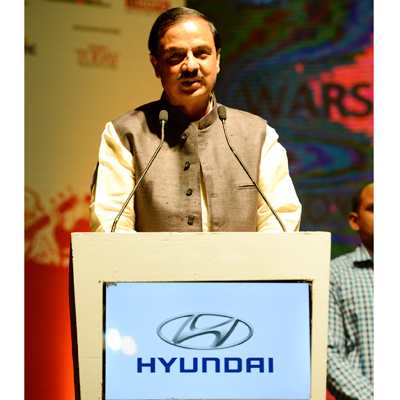
    MUMBAI: The much awaited 3 day music festival ‘Swar Utsav’ took place in Delhi this weekend. Festival was inaugurated by Dr. Mahesh Sharma, Minister of State of Culture, Tourism and Civil Aviation; Aroon Purie, Chairman & Editor-in-Chief, India Today Group and Mala Sekhri, COO, Music Today.


    The 3 day festival was a treat to Delhi’s music lovers. The uniqueness of this festival lied in its capacity to attract the best talent in all genres of Hindustani music namely devotional, classical, sufi, folk, fusion and now even Bollywood.


    Day 1 featured Classical performance Raga By Moonlight by Pandit Ajoy Chakrabarty followed by a fusion concert, Confluence which had maestros like Ustaad Shujaat Hussain Khan (Sitar), Pandit T. H. Vikku Vinayakram (Ghatam), George Brooks (Saxophone) and Ajay Prasanna (Flute).


    Day 2 of Swar Utsav started early morning with devotional rendition, Divinity by Pandit Channulal Mishra who kept the audience spell-bound under the bright sun. The evening was a soulful affair with Qawwali by Warsi Brothers and mesmerising Sufiana Kalam by Hans Raj Hans.


    Day 3 began with Gurbani session, Shabad Kirtan by young Ashupreet Kaur. And the finale was grand with Bollywood singer KK.


    The three days of mesmerising music under nature’s bliss came to an end with people asking for more. Dignitaries present at the closing ceremony included  Minister of State for Information & Broadcasting Col. Rajyavardhan Singh Rathore, Mr. Rakesh Srivastava, Senior Vice President, Hyundai Motors, Mala Sekhri, COO, Music Today among others.


    Swar Utsav 2014 was embraced with much warmth by Delhi and the way audience turned up in thousands despite of chilling weather is really phenomenon.


    Speaking about the event, Aroon Purie, Chairman & Editor-in-Chief – The India Today Group said “Swar Utsav was started by the India Today Group in 2000 and soon became the largest Indian Music Festival in Delhi. We, at The India Today Group are proud to be reviving this grand stage and bringing the best musicians in the country together for Delhi’s citizens.”


    The annual music festival which won many accolades, had maestros performing and thousands of fans listening to them under the stars, is back with the immense support of many partners including Hyundai as the presenting partner.


    The festival partners include Liberty, Organic India, Sahitya Kala Academy, The Punjabi Academy, Minsitry of Culture Government of India, and DDA amongst others.


  • Wanted to name my book ‘TsuNaMo’, says Rajdeep Sardesai

    Wanted to name my book ‘TsuNaMo’, says Rajdeep Sardesai

    MUMBAI: “I had initially thought of naming it ‘TsuNaMo: The Election That Changed India’,” says one of India’s most recognised journalistic faces on television.

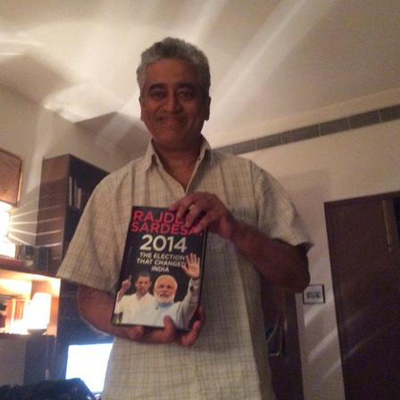
    Rajdeep Sardesai, who quit Network18 as IBN18 editor in chief in July this year and later on joined the India Today Group as consulting editor, recently launched his book ‘2014 : The Election That Changed India’.  The book tracks the story of the 16th Lok Sabha elections with a media insider’s view.

    The man with over 26 years of experience in the field first thought of writing a book last year but it was only in July, this year that he thought of penning his expertise. Sardesai was initially approached by Penguin Publishers to write a biography on Prime Minister Narendra Modi but he says he felt that he was more qualified as a journalist to write about the elections than just a biography.

    When asked why he chose 2014 elections to write the book on, he informs “I have been covering elections since 1989, but this was a historic election. For the first time, we had a non-Congress single political party winning by a huge and thumping majority. It was an election that saw the emergence of a larger than life Modi image, extensive media coverage along with new styles of campaigning that were very different from the past. The book while focuses on the 2014 elections has slices of elections from the previous years as well,” says the veteran.

    He provides three reasons why journalists and media students should pick up the book. “First, this was the biggest election we have seen so far. It documents a slice of history that people would want to be a part of. Secondly, people love to read good stories. With my 26 years of journalism experience, I have compiled interesting anecdotes of many years that bring to life many personalities from the political field. Thirdly, TV programmes today are like fast food while a book is like good wine that people will enjoy indulging in,” he says.

    Sardesai who singlehandedly wrote the book of 135,000 words without a team, informs that he was helped by Centre For The Study of Developing Societies (CSDS) for valuable statistics and insights. CSDS along with CNN-IBN together kept audiences abreast about election trends. He mentions that his wife Sagarika Ghose was the one who helped boost his confidence and pushed him to write the book. “She really energised me. She, in fact, is the book writer in the family. My daughter helped me out on the computer and printouts while my son set the deadline for me that was before his holidays began,” adds Sardesai.

    He is extremely happy with the response that the book has garnered, so far, as audiences have already termed it as a page turner. “One does not have to be politically obsessed to read the book. It is accessible for all to read,” he says.

    He is glad that even politicians have taken a liking to the book which goes for its second print next week.

    Talking about the marketing aspect for the book he says that while films by actors like Shah Rukh Khan need marketing to promote a film, for a book it boils down to the quality of prose and content.

    When asked if he plans to write another book on the elections or his autobiography, he chuckles and says “No, not for now. I will take a break of at least one year from book writing,” he concludes.


  • India Today Group – Animated Video Cartoons ‘So Sorry’ bag the FICCI BAF Award

    India Today Group – Animated Video Cartoons ‘So Sorry’ bag the FICCI BAF Award

    MUMBAI: India Today Group’s Cutting Edge animated video cartoon series ‘So Sorry’ receives yet anotherrecognition by sweeping the FICCI BAF 2014 award in the Open Category.


    Speaking on the occasion Mr.AshishBagga, Group CEO India Today Group said, “The series has effectively been illustrating the lighter side of Politics in the action packed election season.  Humour and wit that reflects on the current political drama in the nation is an awesome reflection on the public sentiment”


    The impact of animation is in delivering in a lighter vein, the most serious of issues, while topicality keeps the spirit of ‘So Sorry’ alive. The inventiveness of So Sorry lies in the fact that it needs no words. It is even free of age or any bias. The capsules are live across TV, Internet and mobile going viral within days of launch.