Tag: India Today Group

  • Word Play Returns as Sahitya Aaj Tak Turns Delhi into a Lit Fest

    Word Play Returns as Sahitya Aaj Tak Turns Delhi into a Lit Fest

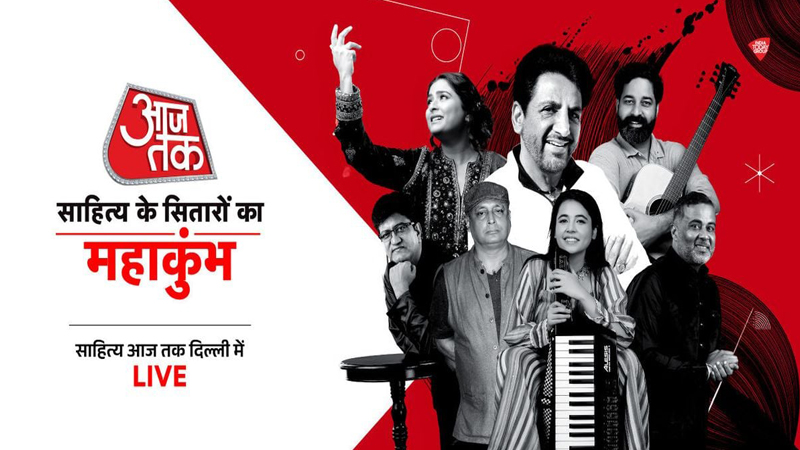
    MUMBAI: Delhi’s about to get a serious case of literary fever and no one’s complaining. The India Today Group organized and much-loved Sahitya Aaj Tak is back from 21 to 23 November 2025, transforming the Major Dhyan Chand National Stadium into a buzzing playground of poetry, prose and performance.

    Now in its latest edition, the three-day fiesta promises to be a heady mix of words, wisdom and rhythm, with over 30 celebrated voices from literature, music and performance coming together to make language sing again.

    This year’s line-up reads like a who’s who of India’s creative scene Piyush Mishra, Kumar Vishwas, Imran Pratapgarhi, Varsha Singh Dhanoa, Malini Awasthi, Neha Kakkar, Namita Dubey, Manoj Muntashir, and Jasbir Jassi each bringing their unique flavour of expression to Delhi’s cultural calendar.

    From soulful shayari to pop beats, Sahitya Aaj Tak 2025 is where a verse meets a voice and rhythm meets reason. Whether you’re there for Kumar Vishwas’s philosophical masterpiece Apne Apne Ram (which will feature across all three days), or Neha Kakkar’s chart-topping energy, the event promises moments that move the heart as much as they make you hum.

    Adding a contemplative layer are thematic sessions like Jeewan Ki Jagrukta: Kitni Zaruri…, delving into mindfulness and awareness in today’s whirlwind life. Another highlight, Rahgeer Live…, brings together poetic voices like Marham, Deveshi Sahgal, and Rahgir, blending verse and melody into one mesmerising flow.

    As always, the festival’s magic lies in its ability to make literature feel alive not confined to dusty pages or late-night screens, but performed, sung, debated and celebrated. With folk icon Malini Awasthi, Punjabi powerhouse Jasbir Jassi, and Hargun Kaur adding melody to the mix, it’s a feast for the senses as much as the soul.

    Registration for the festival is now open on sahitya.aajtak.in.

    So mark your calendars and charge your creative batteries because for three days this November, Delhi won’t just speak, it’ll rhyme, sing and soar.


  • Business Today’s AI summit 2025 sets stage for India’s tech tomorrow

    Business Today’s AI summit 2025 sets stage for India’s tech tomorrow

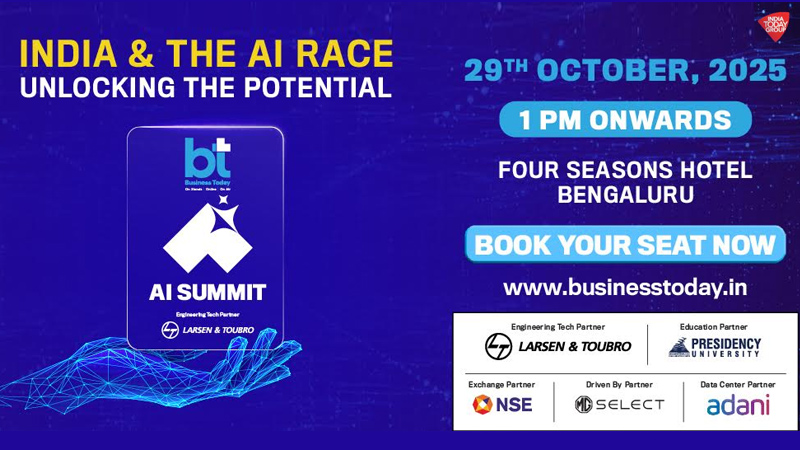
    MUMBAI: It’s brains meet bytes this week in Bengaluru, as Business Today gears up to host the AI Summit 2025, a high-powered gathering designed to script India’s next big leap in artificial intelligence.

    Happening on 29 October 2025, the flagship event by India’s leading multi-platform business news brand from the India Today Group will convene policymakers, tech visionaries, researchers, and industry leaders under one roof to shape the country’s AI roadmap.

    Arriving at a time when artificial intelligence has shifted from buzzword to backbone of modern economies, the summit, backed by the Indiaai mission, aims to explore how India can lead the charge in responsible, inclusive, and human-centred AI adoption.

    The impressive line-up includes some of the sharpest minds across business, academia, and technology: Infosys chairman & co-founder Kris Gopalakrishnan, Microsoft India & South Asia COO Himani Agrawal, Accenture MD & lead – India business Saurabh Kumar Sahu, Mckinsey & Company partner Aparajita Puri, Kpmg India partner & national leader – industrial manufacturing S Sathish, L&T Construction corporate centre head R Ganesan and Fractal CTO Shashidhar Ramakrishnaiah.

    Through a mix of keynote sessions and power panels, discussions will range from AI-driven manufacturing and data intelligence to smart governance, sustainable innovation, and digital inclusion. The event promises to deliver a panoramic view of how AI is rewriting India’s economic and industrial playbook.

    As one of the most anticipated events in India’s tech calendar, the summit will also be broadcast across Business Today’s vast multi-platform network, spanning print, broadcast, and digital, ensuring that the ideas shaping the nation’s AI future reach millions.

    Register here: https://subscriptions.intoday.in/businesstoday-ai-conference/registration
     

  • Business Today powers up with AI Summit 2025

    Business Today powers up with AI Summit 2025

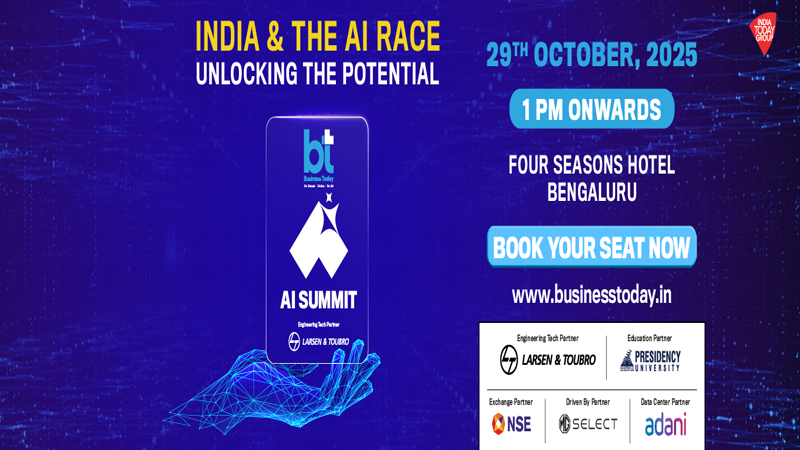
    MUMBAI: When intelligence meets innovation, the future takes shape. Business Today, India’s leading business news platform from the India Today Group, is bringing together the brightest minds under one roof for the Business Today AI Summit 2025, being held today in Bengaluru.

    At a time when Artificial Intelligence has leapt from buzzword to boardroom, the summit aims to decode how India can harness its power responsibly, inclusively and at scale. Backed by the India AI Mission, the event marks a key milestone in India’s journey to becoming a global hub for ethical AI innovation.

    The summit’s power-packed line-up features some of the biggest names across technology, policy and industry, including Infosys co-founder and chairman Kris Gopalakrishnan; Microsoft India & South Asia COO Himani Agrawal; Accenture managing director & lead India business Saurabh Kumar Sahu; McKinsey & Company partner Aparajita Puri; and Fractal CTO Shashidhar Ramakrishnaiah. Also joining them are L&T Construction’s R. Ganesan and KPMG’s Sathish in India.

    Through a series of keynotes and panel discussions, the Business Today AI Summit 2025 will explore how artificial intelligence is transforming industries, from manufacturing and finance to healthcare, education and sustainability. It will also examine how India can lead the global conversation on ethical and human-centric AI deployment.

    As the buzz around AI continues to grow, this summit promises to cut through the hype and focus on what truly matters: how intelligence, both human and artificial, can power progress.


  • From print to AI how news keeps up with times

    From print to AI how news keeps up with times

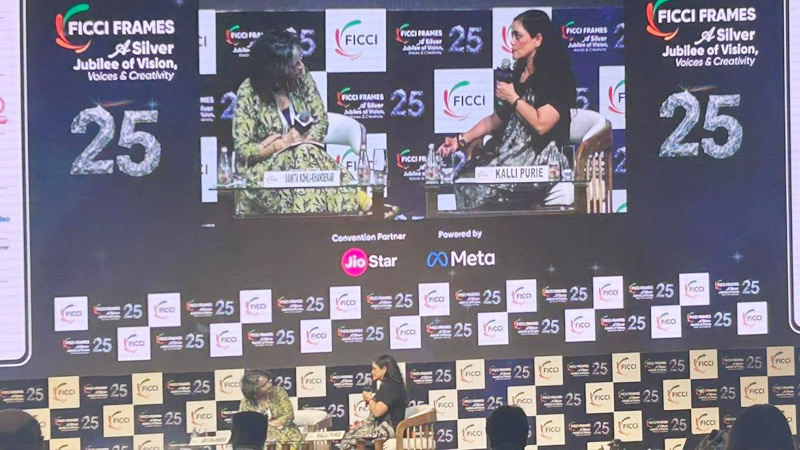
    MUMBAI: Wake up, check your phone, catch a podcast, scroll a story, news never sleeps. At a lively session on “Credibility in the Age of Chaos & Media’s Role in Shaping India’s Identity,” India Today Group vice chairperson and editor-in-chief Kalli Purie joined Business Standard columnist and author Vanita Kohli-Khandekar, to explore how a 50-year-old brand stays relevant in a 24 by 7 media whirlwind.

    Purie reflected on longevity and adaptation. “Fifty is the new 25. Men age, magazines don’t,” she said, highlighting how India Today has evolved from a fortnightly publication to producing over 120,000 content pieces every month across print, video, podcasts, social media, and live events.

    Kohli-Khandekar added a sharp perspective on the challenge of capturing audience attention in a saturated media environment. “Where does news lie in this era of short stories, micro dramas, and podcasts? How does it stay relevant and profitable?” she asked, emphasising the need for integration across platforms to maintain trust and impact.

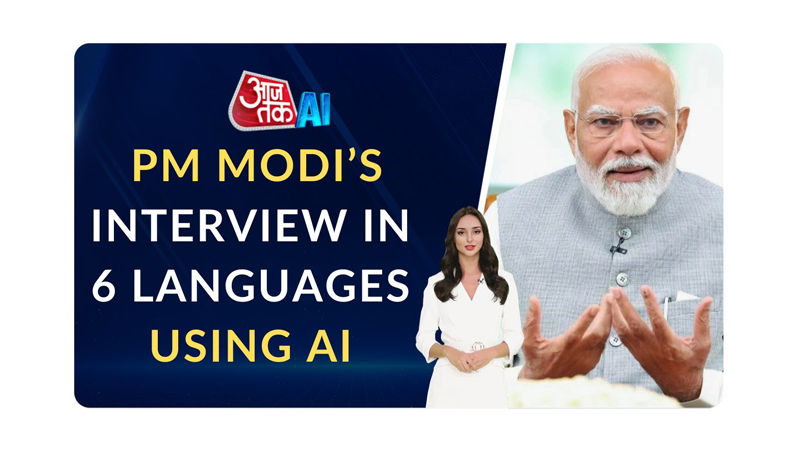
    The discussion turned to technology and AI, where Purie revealed some pioneering initiatives. From AI anchors covering Bihar elections to AI-assisted translations and folk music storytelling, India Today has been embracing innovation to increase efficiency, reduce monotony, and explore new revenue streams. “AI is like a sandwich,” she quipped. “Human bread with AI in between. The human touch has to remain.”

    Purie stressed that technology alone cannot replace credibility. “You are a primary source. People want news from a human perspective, on the ground. AI cannot tell that story… yet,” she said, hinting at a future where robots might cover hazardous assignments while humans oversee the narrative.

    The session also highlighted India’s media identity in a global context. Purie noted, “People want sources from their own country. Digital imperialism is real, but Indian media has to assert its relevance.” Kohli-Khandekar added that 24 by 7 connectivity requires news organisations to adapt fast, integrate teams across platforms, and keep audiences engaged with stories that matter locally and globally.

    The conversation showcased how a legacy brand like India Today balances tradition and innovation, human insight and artificial intelligence, local identity and global perspective. Purie’s parting thought summed it up perfectly: staying credible, creative, and connected is the ultimate headline.

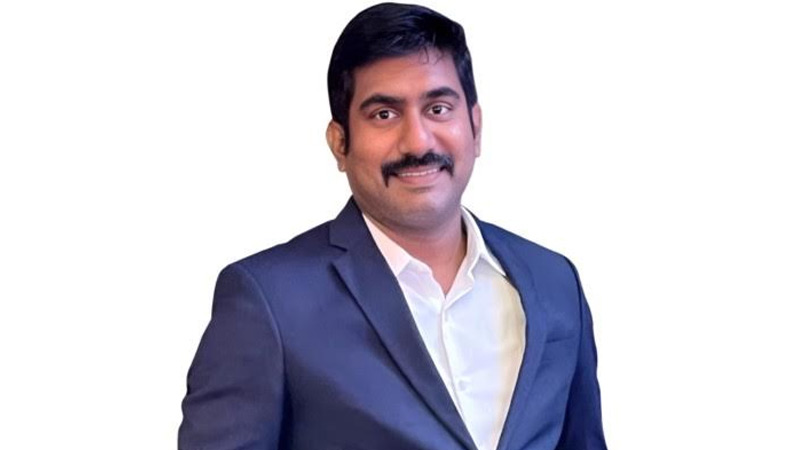
  • Haresh Anil Kumar joins SPR India as head of marketing

    Haresh Anil Kumar joins SPR India as head of marketing

    MUMBAI: SPR India has appointed Haresh Anil Kumar as its new head of marketing, marking a strategic addition to the company’s leadership team.

    Kumar brings more than 18 years of experience spanning media, automotive and real estate marketing. Before joining SPR India, he served as head of marketing at Thanthi One, where he led integrated campaigns across broadcast, digital and OTT platforms. His previous roles include regional manager at Verse Innovation, regional manager for cinema advertising at Inox Leisure, and regional sales and strategy lead (South India) at PVR Limited.

    Earlier in his career, he held leadership positions at India Today Group, Zee Entertainment Enterprises, and Bennett Coleman & Co (The Times of India), driving revenue growth, media partnerships and branded content innovation. He began his career in banking at Yes Bank before moving into media and brand strategy.

    At SPR India, Kumar will oversee integrated ATL and BTL marketing, digital campaigns and brand partnerships, with a strong focus on ROI and measurable outcomes. His appointment comes as the developer sharpens its brand identity in a competitive luxury and mixed-use real estate market.
     

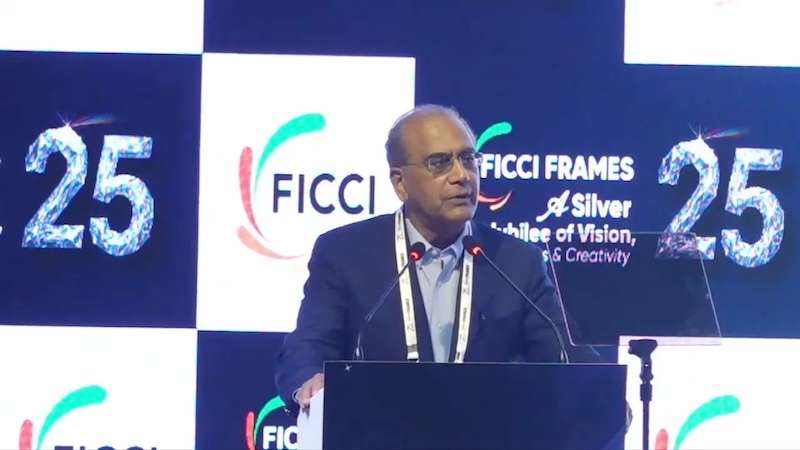
  • India’s news industry is eating itself, warns veteran publisher

    India’s news industry is eating itself, warns veteran publisher

    MUMBAI: Fifty years in the media business buys you the right to speak bluntly. Aroon Purie exercised that right at Ficci Frames 2025 in Mumbai, delivering a blistering critique of India’s news industry—an ecosystem he says is simultaneously massive, unprofitable and increasingly compromised.

    The numbers are staggering. India has over 140,000 registered publications, 375 twenty-four-hour news channels (with more in the pipeline), and a broadcasting industry employing 1.7 million people. Delhi alone wakes up to dozens of English and regional newspapers daily. No other country comes close to this scale. Yet 99 per cent of news channels lose money.

    The problem, Purie argues, is structural. India’s news industry runs on what he calls “raddi economics”—newspapers priced so low that readers profit from selling them as scrap. Broadcasters pay cable operators carriage fees just to reach viewers, a practice that persisted even after digitisation. The Telecom Regulatory Authority of India’s price controls strangle market forces, treating cable television like wheat or rice. “The government has made a mess of the broadcasting industry due to lack of foresight and regressive policies,” Purie said.

    Worse still is the funding model. With consumers paying next to nothing, advertisers bankroll nearly the entire industry. “When journalism’s survival depends almost entirely on advertising from corporations and governments, its independence is under a constant threat of compromise,” Purie warned. The hand that gives can also take away.

    Enter what Purie calls “billionaire news channels”—industrial houses launching news operations not as businesses but as tools for influence and access. They have deep pockets and no profit motive, destroying economic models for legitimate players. “Their entrance makes the public believe that every channel is a mouthpiece for a vested interest,” he said. It’s the only business, Purie noted drily, where the industry loses money yet people queue to enter it.

    Digital promised salvation but delivered more of the same. Publishers chased scale and eyeballs, giving content away for free. Google, Facebook, YouTube and Twitter became the world’s “new editors-in-chief”, controlling distribution and monetisation whilst producing no journalism. They hoover up over 70 per cent of total media revenue—digital advertising now claims 55 per cent of all ad spending—leaving crumbs for actual newsrooms. The algorithm rewards outrage and virality, not depth or accuracy. “Newsrooms that once invested in reporters now have to invest in SEO specialists,” Purie said.

    Artificial intelligence poses the next existential threat. AI can scrape, synthesise and regurgitate news without credit or revenue, summarising five articles into one paragraph. “What happens to the original news organisations—the ones who pay reporters and fight court cases—when our content is scraped?” Purie asked. It’s a question the industry is only beginning to grapple with.

    Purie, whose India Today Group reaches 750 million viewers, readers and subscribers, doesn’t claim to have all the answers. But he’s clear about the solution’s shape: stop apologising for journalism’s value, innovate business models, and persuade audiences that credible news is a public good with a price. “A subscription is not just a transaction; it’s a vote for the kind of media you want to exist,” he said.

    After five decades navigating disruption—from print to television to digital to AI—Purie’s diagnosis is stark. The old models are broken, the new gatekeepers ruthless, and professionally generated content under siege. Yet he remains defiant. “Disruption is not the enemy, it’s the new normal,” he said. “The real question is, do we have the courage, imagination, innovation, resilience and integrity to seize it?”

    Whether India’s news industry can answer that question may determine the health of its democracy. No pressure, then.

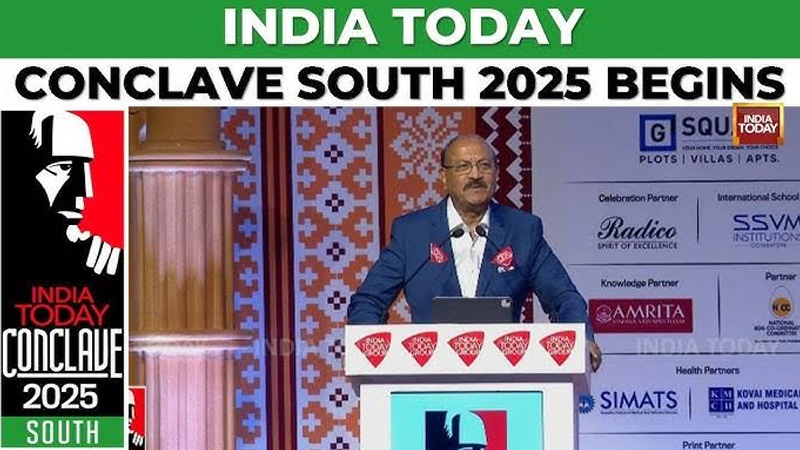
  • South India drives growth, contributes one-third of GDP: Chengappa

    South India drives growth, contributes one-third of GDP: Chengappa

    MUMBAI: South India is the nation’s true economic powerhouse, declared India Today, group editorial director, Raj Chengappa, as he opened the India today conclave south 2025 in Coimbatore.

    In his welcome address, Chengappa noted that though the six southern states account for just 20 per cent of India’s population, they contribute nearly one-third of the country’s GDP. He called this unmatched productivity proof of the region’s economic dynamism, underscoring its pivotal role in shaping India’s growth story.

    Chengappa urged a change in perspective: South India should no longer be viewed as “down south” but as “up south,” reflecting its leadership across development, technology, governance, and culture.

    The two-day conclave, held on September 8–9 in Coimbatore, Tamil Nadu, brings together leading politicians, policy thinkers, entrepreneurs, cultural icons, and innovators. Under the theme ‘Ideas from the south, for the nation’, sessions will explore transformative forces shaping the region, from disruptive technologies and governance models to emerging economic opportunities and cultural identities.

    Over the years, the south conclave has become a premier platform for dialogue, sparking debates on governance, entrepreneurship, and technology. Building on this legacy, the 2025 edition aims to showcase how ideas from the south are increasingly aligned with national aspirations and how the region’s contributions are steering India’s socio-economic future.

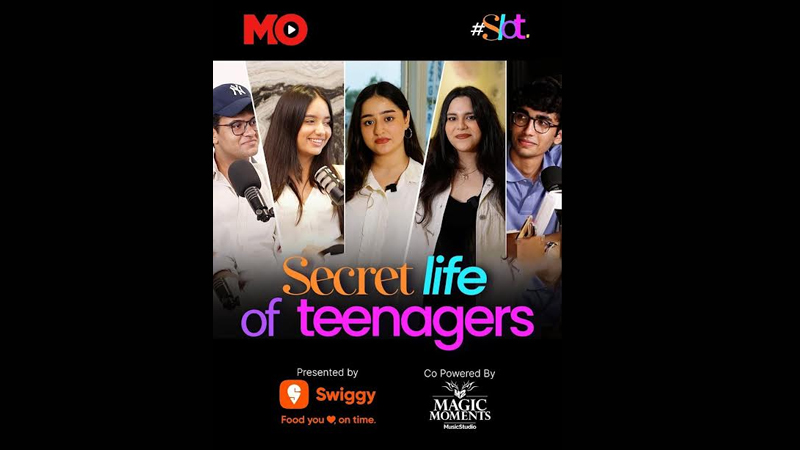
  • Teen spirit unfiltered as MO lifts the lid on Secret Lives of Teenagers

    Teen spirit unfiltered as MO lifts the lid on Secret Lives of Teenagers

    MUMBAI: When teens start talking, the world better listen. MO India Today Group’s Instagram-first Gen Z brand has rolled out a bold new experiment: Secret Lives of Teenagers (SLOT), a six-part Insta-first series that puts today’s young voices front and centre, no filters attached.

    Presented by Swiggy, the show assembles a group of outspoken, curious, and sometimes chaotic teenagers many of them students at top global universities who dive headfirst into the themes that define their generation. Think identity crises, ambition vs burnout, heartbreak and hookups, rebellion, mental health, and, of course, life lived perpetually online.

    The conversations are raw, hilarious, and painfully real, giving audiences parents, educators, marketers, and even brands, a rare peek into the psyche of Gen Z. For teens themselves, SLOT functions as a loudspeaker for experiences often sidelined: finally their truths, in their own words.

    What makes the format different is its Insta-first DNA. SLOT was born under MO, the India Today Group’s cultural playground for youth, designed to talk in the internet’s native language reels, memes, podcasts, and behind-the-scenes storytelling. With this series, MO flexes its credentials as a space where Gen Z can be messy, funny, and thoughtful, all at once.

    India Today Group vice chairperson and executive editor-in-chief Kalli Purie explained: “With SLOT, we’ve created a space that’s raw, real, and completely Gen Z no borrowed narratives. Digital-first brand MO and SLOT bring out the spontaneity of social storytelling. It doubles up as a resource for anyone wanting to understand Gen Z India.”

    Backing it, Swiggy Food Marketplace CEO Rohit Kapoor will close every episode with his take on the “Gen Z vibe” for CMOs. As he put it: “Gen Z don’t follow trends, they set them. They’ve rewritten how we eat, shop, and live online. SLOT is a front-row seat to their world raw honesty, humour, and bold perspectives. For brands or parents trying to understand Gen Z, this is the place to start.”

    From Shoshthi to shindoor khela, festivals may belong to tradition but SLOT belongs to a generation intent on rewriting the rules of growing up. And on Instagram, where attention spans shrink and stories disappear in 24 hours, these teenagers are proving their own stories might just last longer.

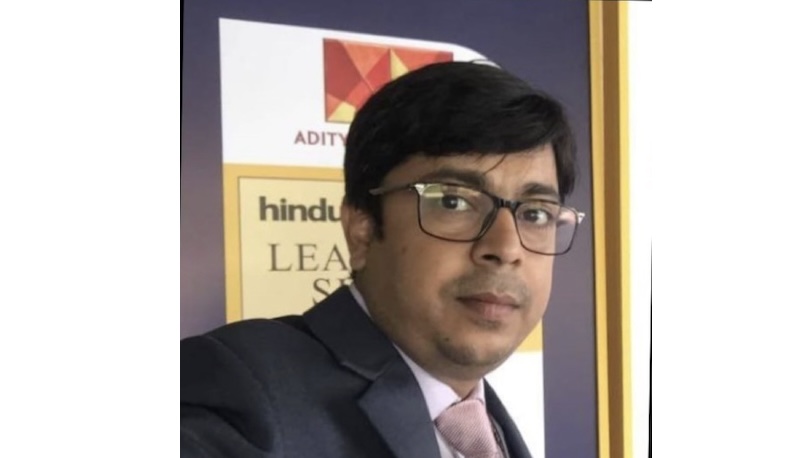
  • Avanish Kumar takes charge of government digital business at NDTV

    Avanish Kumar takes charge of government digital business at NDTV

    NEW DELHI: NDTV has named Avanish Kumar as head of digital business (government), tasking him with leading its engagement with ministries, departments, PSUs and state bodies at a time when government advertising and campaigns are becoming increasingly digital.

    Kumar joins from the India Today group, where he spent more than two years as chief manager of government business. There he managed the Business Today “Multiverse” – spanning the magazine, businesstoday.in and BTTV – with a sharp focus on monetising digital assets, building state and central government associations, and positioning the brand as media partner for investor summits and public events. He also worked directly with political parties to craft campaign solutions across platforms.

    Before India Today, Kumar was head of media marketing at Bharat Prakashan, publisher of Organiser and Panchjanya, where he managed pan-India teams and drove digital and content-marketing strategies for clients. He earlier served as business head at Flame Advertising, handling PSU and BFSI accounts, and was instrumental in developing government activations across radio, print, digital and cinema.

    Kumar cut his teeth in the private-sector media houses. At Hindustan Times, he generated advertising revenue across print, digital and radio while monetising flagship events such as the Hindustan Times Leadership Summit, Mint Energy Conclave and HT Palate Festival. At The Hindu, he focused on government features, supplements and sponsorship deals, working with ministries on campaigns such as “Incredible India”. His early years were spent at Nava Bharat, liaising with ministries and advertising agencies for media plans.

    Across these roles, Kumar has built a reputation as a government-business specialist with deep relationships across ministries, state information departments, investment boards and advertising agencies. His skill set blends digital marketing, media sales and event monetisation – areas critical for broadcasters and publishers as government spending increasingly shifts from print to online.

    At NDTV, Kumar’s brief is clear: maximise public-sector partnerships, align with government communication priorities, and grow digital revenues. His appointment comes as NDTV, part of the Adani group, looks to strengthen its foothold in digital news while navigating a fiercely competitive and politically sensitive landscape.

  • Bihar’s big Baithak stirs poll pot with politics, policy and plenty of punch

    Bihar’s big Baithak stirs poll pot with politics, policy and plenty of punch

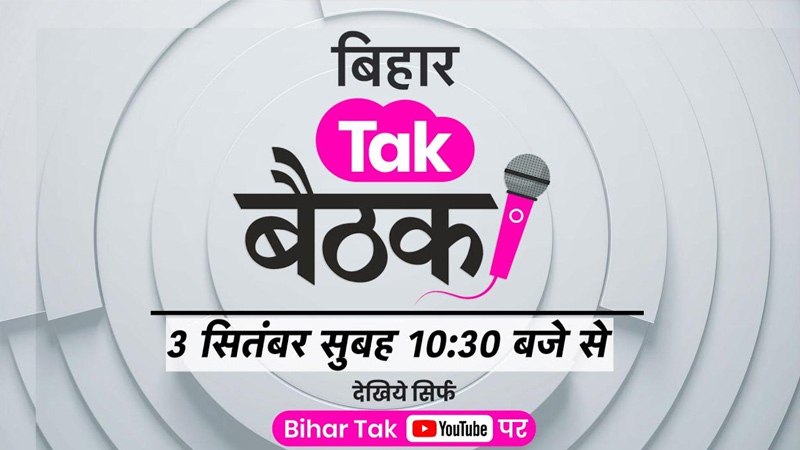
    MUMBAI: When Bihar talks, the nation listens and this time, it’s over a Baithak. Bihar Tak, the digital-first news platform from the India Today group, set Patna buzzing today with its flagship event ‘Bihar Tak Baithak’, a no-holds-barred adda of power, policy and politics.

    With Assembly elections looming later this year, the stage was stacked with heavy hitters and fresh voices alike. From JDU’s executive national president Sanjay Jha to BJP’s Nitin Nabin, Jan Suraj founder Prashant Kishor to RLM supremo Upendra Kushwaha, the Baithak read like Bihar’s who’s who of political strategy. Cabinet ministers Jeevesh Mishra, Ashok Choudhary, and Santosh Manjhi joined the conversation, alongside development commissioner S. Siddharth, VIP chief Mukesh Sahani, MP Shambhavi Choudhary, and former union minister Shahnawaz Hussain.

    What unfolded was a marathon of candid interviews, debates and panel discussions on governance, development and the state’s election agenda straight talk for a state hungry for answers. “Bihar Tak Baithak reflects our commitment to amplifying voices from the heart of Bihar,” said TAK Channels Milind managing editor Khandekar. “As the state heads towards a pivotal election, the need for transparent, meaningful conversations is greater than ever.”

    The event, watched by an audience both in Patna and online, offered a digital bridge between policy and people, with every exchange streamed on the Bihar Tak Youtube channel. With more than a dozen leaders, ministers and influencers in the hot seat, this Baithak wasn’t just small talk, it was Bihar talking to itself and to India.