Tag: India Radio

  • Election Commission to allot time to five state assemblies for poll broadcast on DD, AIR

    Election Commission to allot time to five state assemblies for poll broadcast on DD, AIR

    NEW DELHI: All India Radio and Doordarshan, which provides a platform to political parties for their poll broadcasts before election, will also organise panel discussions or debates at the Kendras/Stations for the forthcoming elections, for the state assemblies of Rajasthan, Madhya Pradesh, Chhattisgarh, Mizoram and the National Capital Territory of Delhi.


    The eligible party can nominate one representative for this programme, but only the Election Commission of India will approve the names of coordinators for the panel discussion and debates in consultation with the Prasar Bharati Corporation.


    The Commission, in the previous years, has worked out a schedule to provide different time slots for poll broadcasts to different parties.


    Only the ‘national parties’ and ‘recognised state parties’ will be eligible to avail the facility of the broadcast and telecast time.


    A base time of 45 minutes will be given to each party uniformly on the Regional Kendras  of  Doordarshan network and All India Radio network in the States/UT of Rajasthan, Madhya Pradesh, Chhattisgarh, Mizoram and NCT of Delhi. The additional time to be allotted to the parties has been decided on the basis of the poll performance of the parties in the last assembly election. The facilities will be available at the Regional Kendra of the All India Radio and Doordarshan in the states and then will be relayed by other stations within the states.


    In a single session of broadcast, no party will be allotted more than 15 minutes.


    The period of broadcast and telecast will be between the last days of filing the nominations and will end two days prior to the date of the poll. However, there will be no telecast or broadcast during the 48 hours before the polls close, as per specific provisions of the Representation of People Act, 1951.


    Prasar Bharati, in consultation with the Commission, will decide the actual date and time for broadcast and telecast. This will be subject to the broad technical constraints governing the actual time of transmission available with the Doordarshan and All India Radio.


    The guidelines prescribed by the Commission for telecast and broadcast will be strictly followed. The parties will be required to submit transcripts and recording in advance. The parties can get this recorded at their own cost in studios that meets the technical standards prescribed by Prasar Bharati, or at the Doordarshan/All India Radio Kendras.


    Alternatively, they can have these recorded in the studios of Doordarshan and All India Radio by advance requests. In such cases, the recordings may be done at the State Capital and at timings indicated by Doordarshan/All India Radio.


    Time Vouchers will be available in the denomination of five minutes with one voucher having time allotment from one to four minutes. The parties will be free to combine them suitably.


    Introduced for the first time for the Lok Sabha elections in 1998, the scheme of free broadcasts was extended by the Commission to the State Assemblies held after 1998 and General Elections to the Lok Sabha in 1999, 2004 and 2009.


    With the amendments in the Representation of People Act 1951, “Election and Other Related Laws (Amendment) Act, 2003”, and the rules notified in that, equitable time sharing for campaigning by recognised political parties on electronic media now has statutory basis.


    In exercise of the powers conferred by clause (a) of the Explanation below section 39A of the Representation of People Act, 1951, the Central Government has notified all such broadcasting media that are owned or controlled or financed wholly or substantially by funds provided to them by the Central Government, as the electronic media for the purposes of that section. Therefore, the Commission has decided to extend the said scheme of equitable time sharing on electronic media through Prasar Bharati Corporation to the ensuing General Elections to the State Legislative Assemblies.

  • Over 29,500 DTH sets provided free by the government in 16 states

    Over 29,500 DTH sets provided free by the government in 16 states

    NEW DELHI: A total of 29,782 direct-to-home boxes are set to receive Doordarshan’s free-to-air DD Direct Plus, including 20,397 in hilly areas of Himachal Pradesh, which have been provided by the government to 16 states where terrestrial signals are not easily available.

    These include 2,277 in Rajasthan and 1,942 in Madhya Pradesh, according to the Information and Broadcasting Ministry.

    Doordarshan provides free-to-air with a bouquet of 59 TV channels (19 Doordarshan channels and 40 other TV channels). DTH signals can be received by using a set top box and small sized dish receiver units.

    As these signals can be received anywhere in the country except Andaman and Nicobar Islands, DTH service in C-band with bouquet of 10 channels is in operation in the Islands.

    The DTH sets have been provided in various states for uncovered areas as part of DTH Scheme and Special NE package (Phase-I).

    Prasar Bharati has informed that 21 channels of All India Radio are available through the platform throughout the country.

    S.No.
    Name of the State
    No. of DTH sets provided
    1.
    Arunachal Pradesh
    108
    2
    Assam
    332
    3
    Chhattisgarh
    528
    4
    Gujarat
    1253
    5
    Himachal Pradesh
    20397
    6
    Jammu & Kashmir
    500
    7
    Karnataka
    1500
    8
    Madhya Pradesh
    1942
    9
    Manipur
    108
    10
    Meghalaya
    107
    11
    Mizoram
    106
    12
    Nagaland
    108
    13
    Rajasthan
    2277
    14
    Sikkim
    108
    15
    Tripura
    108
    16
    Uttarakhand
    300

  • ‘We have stepped up work on digitalization for Prasar Bharati’ : Baljit Singh Lalli – Prasar Bharati CEO

    ‘We have stepped up work on digitalization for Prasar Bharati’ : Baljit Singh Lalli – Prasar Bharati CEO

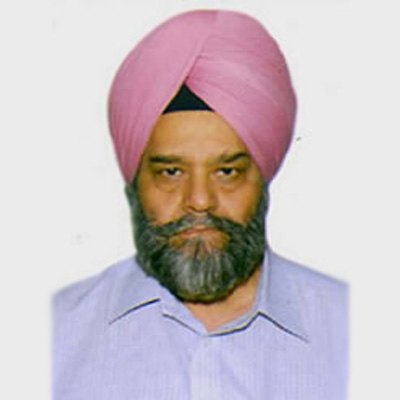
    Baljit Singh Lalli, who took charge as chief executive officer of Prasar Bharati at the end of December 2006, is an Indian Administrative Service officer of the 1971 batch from the Uttar Pradesh cadre with vast administrative and managerial experience spanning over three decades.


    In an interview to indiantelevision.com’s BB Nagpal, Lalli answered various questions relating to the falling revenue of Doordarshan, the cricket telecast rights controversies and other issues.


    Excerpts:

    Doordarshan’s gross revenue fell by about Rs 1300 million to RS 8,182.2 million in 2006-07, as compared to RS 9,469.6 million in 2005-06. But the gross revenue of All India Radio rose marginally by RS 148.2 million to RS 2,836.5 million in the same period. To what do you attribute these losses?
    As you know, Doordarshan has lost around RS 3400 million because it did not have the telecast rights for cricket. If you do not count what we lost because of cricket, the revenues of Doordarshan have actually gone up as far as other programmes go. But we have already made up RS 2 billion. On the other hand, AIR earned just under RS 96.4 million from the World Cup 2007.

    Why is it that Prasar Bharati wakes up so late to bid for the cricket telecast rights and then has to pass a mandatory sharing legislation?
    I cannot answer that because it happened before I joined. But you must understand that the amount for bidding for rights for up to five years is more than what a public broadcaster can afford. As far as the legislation is concerned, it is necessary to understand that the Uplinking and Downlinking Guidelines issued in November 2005 were clear on mandatory sharing of rights for terrestrial showing, but were being violated by the rights holders.

    For a long time, Prasar Bharati has been talking of strengthening its marketing strategy, but the results do not seem to be showing?
    That is not true. As I said, we have made up a lot of the losses caused because of not having telecast rights. We have now taken steps to streamline the marketing procedures. Also, the attempt is to bring in greater synergy between All India Radio and Doordarshan. We have set up a committee and sent out new proposals to our marketing people in Mumbai, Kolkata, Chennai, Guwahati and other places.


    AIR has already made more than five times the projected revenue from cricket. You should also not forget that Prasar Bharati is a public broadcaster and cannot resort to generating revenues the way some other channels can. At the same time, we are now having closer monitoring of the marketing activity, and are also recruiting professionals for the work.

    A Comptroller and Auditor General Report talks of losses on various counts, including arbitrary fixation of advertisement rates for feature films to favour certain filmmakers. How will you ensure proper checks and balances?
    I have not seen the report so far, and in any case it relates to 2004-05. We have now put a new system in place for acquiring films. We will now be able to get the best films at competitive rates, through a policy that will be completely transparent. The films will be selected in good time. The Grading Committee in Doordarshan will then categorise the films as specified in the policy. No individual producer or filmmaker will be shown favours of any kind.

    An Acquisition Policy announced by Doordarshan to acquire quality programmes has reportedly led to scams including submission of duplicate or blank tapes?
    Yes, I am aware of this case. The matter relates to October-November last year when new programmes were being acquired for the DD Urdu Channel. Our internal inquiry showed that around 250 blank tapes had been submitted along with other programmes. A committee of officers in Doordarshan is inquiring into the matter and would be able to identify those guilty and action would be taken, irrespective of whether it is only outside producers or someone within Doordarshan. As no money had been paid to any producers so far, there is no question of any loss of revenue on account of this. I am in principle opposed to acquiring old programmes, and this had been done under a policy announced before I joined.

    But this has already led to an order for transfer of senior officers in Doordarshan who have been in their posts for more than six years?
    That order has nothing to do with the tapes. In fact, I issued that general order separately for transfer at Supervisory levels. And all sections of employees have welcomed it. The section of employees most affected by this, the Programme Staff Association of AIR and DD, has sent me a letter welcoming this decision.

    You had announced earlier that Prasar Bharati would switchover to the Indian satellite Insat-4B by June. Is that work on schedule and how many transponders will you be using?
    Yes, we are shifting DD Direct, the Direct-to-Home service, to the Insat-4B from 1 June. We have been assured by the Indian Space Research Organisation that we will not face any shortage of transponders. We will initially be using five transponders but can ask for more whenever needed.


    The shift from the Netherlands-based NSS 6 will not only mean savings in foreign exchange, but also clarity in picture since the Indian satellite is better placed than the European satellite. Prasar Bharati pays NSS around RS 225 million annually. The initiative was motivated by patriotic instincts. Insat-4B is located in a geostationary orbit of 93.5 degrees East, which is closer to Indian than NSS 6, which is located at 95 degrees East.

    What about the commitment by Isro to Sun TV because of the loss of Insat-4C?
    I am aware of the reported commitment by Isro, but this will not affect DD’s requirement. The Insat-4B has 12 KU band and as many C band transponders for communication and broadcasting services. DD Direct will be able to beam up to 10 channels from each transponder. It presently beams around 32 channels of which 26 are its own, but this number is expected to go up to 50 with private FTA channels becoming available.

    What are you doing to effect a smooth transition to Insat-4B?
    We have held meetings with cable operators, hardware manufacturers and multi system operators to familiarize them with the changes that will have to be made to reach out to 4.8 million viewers of the free-to-air DD Direct. Doordarshan has circulated a four-page brochure to educate viewers and service providers about the changes to be made to their dish antennae and in the set top boxes. Though the service providers will make these changes, this can be done even by subscribers themselves. Each antenna has to be rotated (with the person standing behind the dish antenna) clockwise by 1.5 degrees to the right and tilted up by 1.5 degrees.


    DD’s DTH would be available across five transponders in the KU Band on Insat-4B, on the frequencies 10990, 11070, 11150, 11490 and 11570 MHz on vertical polarisation and a uniform symbol rate of 27500 ksps.

    We have now taken steps to streamline the marketing procedures. Also, the attempt is to bring in greater synergy between All India Radio and Doordarshan

    Will DD Direct continue to be Free-to-air?
    For the present, yes. We do not see it becoming encrypted in the near future.

    The Planning Commission’s Sub-Group on ‘Going Digital’ has recommended that Doordarshan should commence digital terrestrial transmission by the 2010 Commonwealth Games, and should have a phased approach for going digital covering all the seven mega cities by 2011 in the first phase and the rest of the country by 2013.
    Yes, the Report had also recommended a group chaired by me with some private broadcasters like Star, Zee, Sony, Eenadu etc. and their major MSOs to examine an 11-stage process. We will also consider introduction of HDTV in a phased manner starting from Delhi (2008-09), extending it to all the six mega cities to ensure coverage of Commonwealth Games in HDTV format in 2010.


    We have made some proposals which are with the Planning Commission. In fact, this is a major thrust area in the Eleventh Five-Year Plan. I personally met officials of the Planning Commission recently and gave a projection of RS 5000 crore (RS 50 billion).


    Has Prasar Bharati begun working on plans for optimum coverage of the Commonwealth Games?
    Yes. In fact, I have had one meeting with Mr Suresh Kalmadi, President of the Indian Olympic Association and Chairman of the Organising Committee for the Games, and told him we will need financial support for adequate coverage of the Games. I will be meeting him again shortly.

    A Technical Group had been set up to examine Encryption Mandate for DD signals, particularly for cricket telecasts. There appears to be a lot of disagreement among members of the Group on the issue. What is the position about this?
    Yes, the Ministry had set up a Group headed by AIR Director General Brajeshwar Singh to go into the issue. The report of the Group has already been submitted to the Information and Broadcasting Ministry, and perhaps you should be asking the question there. As far as I know, the report was unanimous.

    Prasar Bharati had announced a policy on telecasting series based on Indian Classics. What is the progress on that front?
    The work is going as planned. The Committee met recently and cleared twenty to twenty-five proposals related to Hindi, Punjabi, Bangla, Gujarati and Telugu classics. Filmmakers like MS Sathyu, Gulzar and Muzaffar Ali have been commissioned for some of the classics.

    The concerned Parliamentary Standing Committee has expressed its displeasure over the progress in Digitalisation and building of archives for Prasar Bharati?
    We have stepped up the work on digitalization. We will be able to work even after the Archives are shifted to the Central Production Centre Building in Sirifort Village. This will be done in the next two or three months after DD News shifts to the DD Building in the Mandi House area. Meanwhile, digitalization of broadcasting in the public broadcaster would be completed by 2017. Out of the 64 Doordarshan studio centers, 17 had been fully digitalized while another 30 were partly digitalized.

    DD India is available via Satellite all over the world, but there are few takers even in countries with large Indian population. DD has had to tie up with local cable operators in the United Kingdom recently. What are you doing to popularized Indian channels in other countries?
    Doordarshan has launched two channels DD India and DD News in the United Kingdom with the help of Rayat Television Enterprises Ltd. following an agreement with Prasar Bharati for the distribution of these channels in UK for a period of five years.


    DD India has seven Hindi and six English news bulletins daily, while DD News has 19 English and 24 Hindi news bulletins daily respectively. Although both these satellite channels are free to air and could be seen anywhere in the world, this is the second time that Prasar Bharati has entered into an agreement with a distributor to ensure the channels reach viewers’ homes.


    Prasar Bharati also has a similar arrangement in the United States with companies owned by persons of Indian origin. The aim will also be to reach out in the Middle East, Malaysia, the rest of Europe, Canada and so on, and the broadcaster has invited ‘Expressions of Interest’ from entrepreneurs in these countries.

    Prasar Bharati Act has provision for Broadcasting Council which never came into existence. Will this become redundant under the new Bill that provides for a Regulatory Authority?
    I think you should ask the Ministry to answer that question. I can only tell you that we have urged the Ministry to strengthen our hands, and have asked for extra funds to be invested in public service broadcasting.

    Doordarshan has launched the Digital Video Broadcasting – Handheld (DVB-H) as a Pilot Project in Delhi. What about other cities?
    The Pilot Project is aimed at reaching mobile phones within a radius of 12 kilometers of the Doordarshan television tower on Parliament Street in New Delhi. After watching the outcome of the launch of this service in Delhi, the system will be replicated in Mumbai, Kolkata, and Chennai. The service is initially free to air and the channels available are DD National (DD 1), DD News, DD Bharati, DD Sports, DD Urdu, DD Punjabi, DD Bangla and DD Podhigai. The scheme is ‘vendor neutral’ and any mobile provider with a compatible handset can download the signals and transmit them. I hope the number of channels would be raised to ten to 15 in the next few months.

    There have been promises for increasing a scientific temper in the country through the media. The private channels have not done much, and DD’s efforts in the initial years also appear to have come to a stop?
    That is not true. We recently launched Mike Pandey’s series at an appropriate time, and have commissioned the Bedi Brothers to make a new series. We have finalised an MoU with Vigyan Prasar of the Department of Science and Technology to encourage a scientific temper. Programmes have been made earlier also for Science Channel which is a joint venture of Isro and Vigyan Prasar under Department of Science and Technology (DST). Till August 2006, 60 episodes have been transmitted. The programmes are being transmitted on DD-1 as a 30-minute capsule, and programmes are aimed at children in the age group 12 to 18.

    What specific programmes are being telecast to mark 150 years of the freedom struggle?
    DD has identified a series of programmes from its own archives, like Bharat Ek Khoj by Shyam Benegal based on Jawaharlal Nehru’s The Discovery of India, Swaraj by Manju Singh, and Colours of Freedom by Buddhadeb Dasgupta. DD has also commenced telecast of Dr Girish Karnad’s series Swarajnama.