Tag: India Pakistan series

  • Pakraman 1, 2, 3… fatigue setting in?

    Pakraman 1, 2, 3… fatigue setting in?

    MUMBAI: One can have too much of a good thing! Even cricket is not immune to this phenomenon. The following data which deals with the India Pakistan series over the past three years shows why.

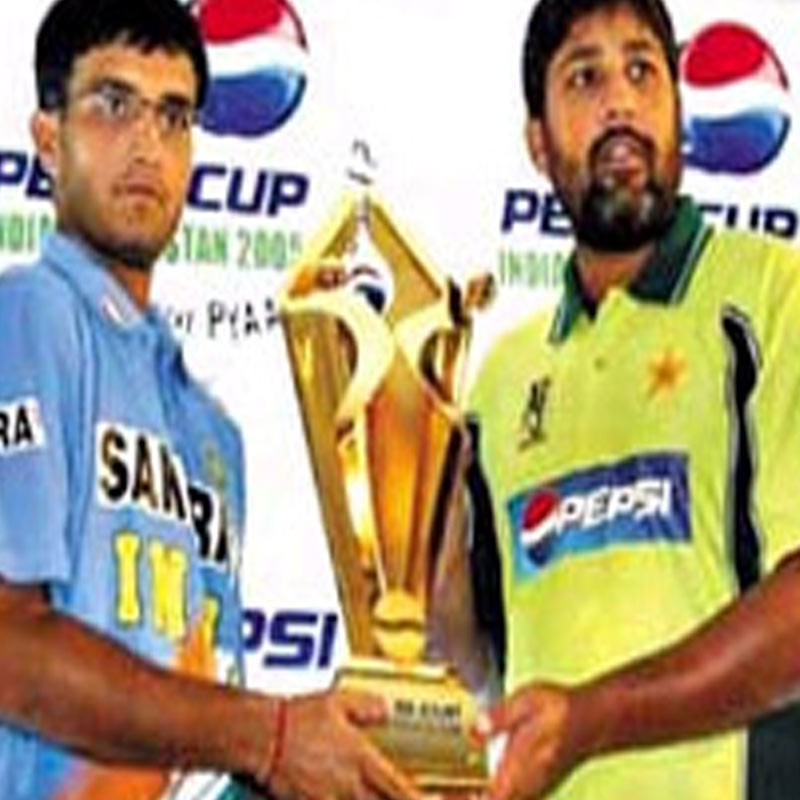
    Back in 2004, when India toured Pakistan after a long time, there was a huge sense of anticipation. Some of the ODIs on Ten Sports alone got TVRs of 10 and 12. The deciding ODI when DD is factored in delivered a magnificent combined TVR of over 22.

    After this one would have thought that the sky was the limit. Wrong! In 2005 when Pakitan came down the maximum rating that DD was able to get was 6.68 for the ODIs. The average ratings was 4.41. This time around even with India winning the series the average rating on Ten Sports was 5.50. Ten Sports got a high of 6.86 for the fourth ODI.

    For those wondering whether the sharing of feed had an impact this may come as a surprise. DD would not have added much. Ten Sports in fact managed better ratings than DD for the ODIs. Viewers clearly prefer Ten Sports to DD though the coverage may be exactly the same. It may be recalled that Ten had shared its ‘dirty’ feed with DD.

    For the week 12 -18 Feb 2006 c&s 4+ Tam data shows that Ten Sports’ coverage of the ODIs got far better ratings than DD. In the Tam Top 100 c&s 4+ Ten Sports came in at number 11 and 12 for the third and fourth ODIs at a TVR of 6.9 and 6.8. The broadcaster also comes in at number 23.

    DD meanwhile, came in at number 55 with a TVR of 2.7. Clearly viewers are not searching for the pubcaster on their remote control.
    There is still the question of fatigue. An industry observer expressed some concern over this. After all ad rates are going up. However, he says that cricket will continue to attract a premium in terms of sponsorship as it has a passionate following that nothing else on television can match. He also points to the fact that any show once it has been on air will start experiencing fatigue. Perhaps with cricket the feeling is that it is immune.

    The big question than is what kind of ratings would be delivered should India play a match with Pakistan during the Champions Trophy that takes place in September (telecast on Set Max and DD). Most observers believe the ratings will be better. That is because this is a unique event that does not happen too often (whatever may be the BCCI’s views on the matter). The same logic holds true for the World Cup. Some food for thought at a time when the BCCI has decided to have a series against Australia practically every year from 2007.

    If there is a constant though in all this it is the fact that Test matches ratings were low compared to ODIs even in 2004 and will probably stay that way. Of course the period of play is much longer.

  • Uncertainties continue to plague Indian sport

    Uncertainties continue to plague Indian sport

    India is not a sporting nation. Nothing sells in India except cricket. Haven’t we heard these before? A nation of a billion people is yet to win an individual Olympic gold medal and the tally in the last hundred years is three bronzes and a sliver. Hockey, (once) a national game, has deteriorated so much that we haven’t even managed to hold a national championship for several years!

    However, all is certainly not lost on the sporting front. Some of the events in 2004 proved beyond doubt that India could well attract unprecedented money and huge global events to its shores in the coming years.

    Cricket first. Cricket began the year on a high note with the India-Pakistan series attracting extraordinary attention and advertising rupee. Ten Sports reaped huge benefits from investing in the telecast rights of the series that no one believed would actually take place with the asking rate for the 10 second spot reaching a record high of over $ 11,000 for the last ODI.

    The India-Pakistan series also witnessed high drama in the Supreme Court as the exclusive telecast of the cricket series was ordered to be shared with Doordarshan in ‘public interest’. While there should be clear distinction between ‘what’s in public interest’ and ‘what the public is interested in’, the immediate need is to end the uncertainty surrounding the telecast of cricket series involving India. Though Ten Sports may not have lost much in rupee terms, the case may not be the same for ESPN STAR Sports for the recently held India-Bangladesh series as the distribution revenues are critically dependent on the exclusive telecast of India playing series.

    Sports broadcasters are investing millions of dollars to buy telecast rights, they have a right to be reassured that their interests will be protected by the legal system during the terms of the contracts. The need of the hour is for the Information & Broadcasting Ministry to legislate a comprehensive regulation settling, once and for all, the issue of telecast rights involving India, for cricket as well as for all the other sports.

    Two other issues severely affected and exposed the Indian cricket. First, the telecast rights for the international cricket played in India. Zee Telefilms bagged the cricket rights at an astounding sum of over $ 300 million only to find the Board canceling the entire bid process after being challenged in the High Court. While the award of rights is being contested in the Supreme Court, Zee must consider itself lucky as India’s on-field performance has dipped considerably, and the advertisers are not paying the high premium on India cricket they paid for the India-Pakistan series.

    Second, the high profile drama enacted during the BCCI elections. The High Court set aside the elections, and appointed a retired Supreme Court judge to run the Cricket Board. Thankfully, the Supreme Court overruled the High Court order and requested the earlier committee to look after the day-to-day operations of the Cricket Board till the matter is heard before a bench.

    The Supreme Court is yet to give its final verdict on both the issues. Also awaited is the ruling on the fees Doodarshan needs to pay to Ten Sports and ESPN STAR Sports, for the telecast of the India-Pakistan and India-Bangladesh series respectively.

    The issues clearly prove a point beyond doubt. The stakes are reaching a crescendo and the government along with each participant must ensure that all the regulatory uncertainty does not hamper the growth of cricket in the country. The Indian fan is keeping the game of cricket alive around the world, and today he desperately needs a reassurance that on the field activities are more interesting than the off-the-field ones.

    On a positive note, the high cost of cricket is making the advertisers seriously look to other sports. The sports which have started attracting the advertisers’ attention include football, motorsports, golf, tennis, athletics among others.

    The biggest sporting attractions this year were the Olympics and Euro 2004. The Indian Olympic Association got itself embroiled in the controversy right from the start with the Olympic Torch being relayed by ‘film celebrities’ at the cost of Olympic performers. It was a disgrace to see Malleshwari, the only Indian woman Olympic medalist, being made to run a non-descript stretch on the outskirts of Delhi while the celebrity actors were hogging the media glare. To add insult to injury, some actors even made bigger fools of themselves on national television. The athletes should have followed the example of PT Usha, who rightfully refused to participate.

    It would be an understatement to say that the televised coverage of Olympics on DD Sports was below par. DD not only missed the live coverage of several important events, the commentary team was awfully amateur to say the least. Accepted that it must be a mammoth task to pick and choose the coverage of several exciting simultaneous events, Olympic Games are meticulously organized with utmost precision and the telecast schedules of various sport are known much in advance. DD could have planned and marketed the event to ensure larger audiences. The Olympics rights come to DD at almost no cost, and there is no desire on part of the broadcaster to make it a commercial success.

    Euro 2004, on the other hand, was an ideal example of how to promote unknown sports events to the masses. ESPN STAR Sports did a superb job of generating enormous excitement around the Football event held once in four years. Not many knew that it was last held in 2000, and was featured on Indian television. The excitement held on in spite of the two totally unknown teams featuring unknown players reaching the final. In contrast, the Copa America, despite featuring well-known South American teams, failed to generate any interest among viewers because of inadequate marketing efforts.

    India lost the hopes of organizing a Formula One event in Hyderabad in 2007 with Chandrababu Naidu losing the state elections. The Andhra Pradesh state government along with McKinsey & Co. had put in considerable efforts to create a viable economic model to hold a part of the world’s biggest sporting spectacle in India at a cost of around $500 million. The Government was inches close to signing an agreement with Bernie Ecclestone whose sharp instincts made him to hold it back till the state assembly elections. Though efforts are being made revive the project, the political equation looks too tricky for an early approval. Although Mumbai-Pune belt is better equipped to hold a Formula One event, the possibility of holding a Formula One event in Maharahstra appear quite bleak due to lack of any serious efforts by the state government.

    Grand Prix World Championship (GPWC), the organisation that represents car makers BMW, Ferrari, Mercedes-Benz and Renault, plans to launch a breakaway series in 2008. Formula 1 teams are not satisfied at the present arrangement under which they receive only around 23 per cent of the revenues. GPWC is in talks with potential circuits and who knows, India could well be on their map!

    Moving on to other sports, February 2004 witnessed one of the biggest non-cricketing sports events being held in the form of Standard Chartered Mumbai Marathon. The event generated unparalleled hype, and though the live telecast of the event left a lot to be desired, full marks to the organizers who put up a very good show and the several thousands who landed on the Mumbai roads to participate. Standard Chartered Bank supports several marathon races around the world and it is commendable that they have supported the initiative in India at a considerable cost.

    We also saw India-Pakistan hockey test series being played in Pakistan and India. In comparison to the cricket series, the Hockey series hardly moved the masses or raised passions. It appears that Hockey, though still India’s national game, has clearly lost its glory. The Indian Hockey Federation is all set to revive hockey through PHL. The efforts of the IHF along with ESPN Star Sports, are laudable, though in my opinion it may take years of extra-ordinary performance at the world stage for Indian Hockey to regain its shine.

    There’s some more good news for Indian sports. Several media agencies have set up special teams to evaluate and support sports events. Clients have traditionally been investing in sports events directly with no back support and evaluation from the media agencies. Realising this, the media agencies have taken the plunge and are actively looking for ready-made or tailored sports properties on behalf of clients. Just to site an example, toy maker Funskool recently organized a tremendously successful ‘National Monopoly Championship’ across four cities with the national winner participating in the World Monopoly Championship! Let’s hope that the move will attract a lot of non-traditional sponsors to sports.

    Overall, 2004 has been a good year for sports where we have seen more money flowing into cricket as well as other sports. India truly offers tremendous opportunity to locally organize some of the world’s top sporting events in football, motorsports, tennis, golf and chess. The economic viability exists due to over 90 million television homes the country has on offer. But what Indian sport undoubtedly lacks today is forward planning and the organizational skills required to convert opportunities into a successful televised event. Needless to say, we also need sharp marketing brains and enough risk takers.

    Samir Kale, MD, CMCG and president, SportzPR