Tag: India Inc

  • “Increasingly Indian brands are recognising that embracing the LGBT community has to be an ongoing process” – Insight Cosmetics Mihir Jain

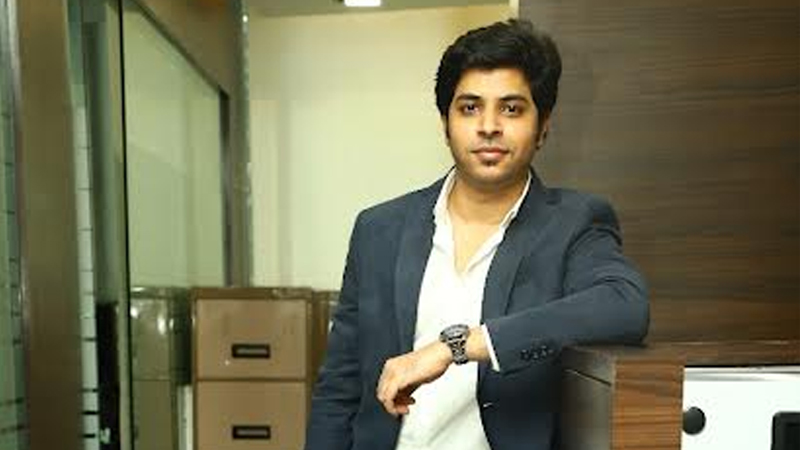
    “Increasingly Indian brands are recognising that embracing the LGBT community has to be an ongoing process” – Insight Cosmetics Mihir Jain

    June is Pride Month – a time when rainbows pop up across corporate India, from brand logos to Instagram grids. But behind the hashtags and the colourful symbolism, a tougher question lurks: is this genuine progress or just another seasonal PR parade?

    Over the years, India Inc. has inched forward in recognising sexual diversity. But is it truly embracing the LGBTQIA+ community, or simply ticking the inclusion box for 30 days a year? To explore this, Indiantelevision.com turned to leaders in the advertising and marketing fraternity.

    The result? A split screen. Some argue meaningful strides have been made; others insist we’re barely past square one.

    In the first of two interviews in our Executive Dossier series, Rohin Ramesh sits down with Mihir Jain, sales and marketing director at Insight Cosmetics — a homegrown beauty brand that belongs to the first category who points out that a lot of progress has been made. He believes Pride isn’t a campaign, but a compass. For Jain, inclusion runs through everything: who gets cast in ad films, how transgender and non-binary employees are supported at work, and what it means to be truly representative in an industry long dominated by narrow norms.

    He also unpacks how shifts in law — from the Transgender Persons (Protection of Rights) Act, 2019, to the Supreme Court’s evolving take on queer partnerships — are nudging brands to think broader and better.

    Is Indian marketing still stuck in a heteronormative bubble? Is LGBTQIA+ storytelling breaking into Tier II and III markets? And what do Gen Z and Alpha really expect from brand narratives?

    For companies like Insight, Pride isn’t just a parade — it’s a promise.

    Excerpts from the conversation follow.

    On brands evolving from symbolic gestures during pride month to sustained representation in product design, hiring policies, partnerships and campaigns that sparked conversation vs those that felt like rainbow-washing.

    The evolution of Pride marketing has shifted from token gestures to more deliberate, long-term inclusion strategies. Brands are increasingly embedding LGBTQIA+ representation into product design, hiring policies, and year-round collaborations. At Insight Cosmetics, we’re taking conscious steps in that direction by collaborating with LGBTQIA+ influencers and gradually opening our platform to ensure everyone feels seen. The distinction lies in consistency; representation must extend beyond a single month and into the everyday DNA of the brand. Activations that really ring true are those that stem from authenticity, not perceived as “rainbow-washing.” In order to really make a difference, though, inclusion must be an enduring and considered brand commitment.

    On creative, PR, and digital agencies working to ensure LGBTQ+ stories are told authentically, with lived experience and not just layered filters.

    Ad agencies, PR agencies, and digital agencies are becoming the go-to facilitators of authentic LGBTQIA+ narratives. The shift these days is towards co-creation alongside the community, not for them. Lived experience narratives have emotional depth and cultural richness that cannot be matched by any design filter. At Insight Cosmetics, we ensure our partnerships with LGBTQIA+ creators are real, respectful, and rooted in their own stories, not just filtered narratives. This model of partnership values unique voices without losing sincerity and inclusivity in content. In this way, agencies and brands collectively drive storytelling that captures the actual diversity and authenticity of queer experience.

    On Indian brands showing up for the queer community throughout the year, or only when it trends.

    Although Pride month tends to be a catalyst for visibility, true inclusion cannot be time-sensitive. More and more Indian brands increasingly understand that embracing the queer community has to be an ongoing process. At Insight Cosmetics, we’re working to make our platform inclusive throughout the year  not just when it trends, but as a continuous commitment. At every level of partnership to policy formation within our organization, we labor throughout the year to make representation a core value. The goal is to make LGBTQIA+ visibility the norm in brand space, not only when it’s trendy, but as a continuous commitment to values and advocacy of diversity.

    On the data about LGBTQ+ inclusion driving brand loyalty, especially among Gen Z and millennial consumers.

    Today’s consumers, especially Gen Z and millennials, expect brands to take a strong position on inclusion. Numbers show that this segment compensates brands that express a genuine commitment to LGBTQIA+ rights with more engagement and loyalty. Performative action is readily called out and dissected. At Insight Cosmetics, we see this reflected in how engaged and supportive our audience is when we partner with LGBTQIA+ creators in meaningful ways. These collaborations not only validate our values but also enhance customer trust. Inclusion is no longer a choice for brands; it is a key driver of loyalty and relevance for a socially conscious consumer marketplace.

    On brands showing solidarity without falling into legal or cultural backlash traps, given the legal grey areas around same-sex marriage in India.

    In a litigious landscape where homosexual marriage is still a gray area, brands have to walk with courage and cultural care. The discourse has to be on validating identities, not commodifying stories. At Insight Cosmetics, we aim to create a safe, inclusive space through representation and collaboration, while being mindful of cultural context and the lived realities of the LGBTQIA+ community. By keeping an eye on lived experience and avoiding tokenism, brands can demonstrate authenticity.

    On facilities being provided within the organisation for cross dressers and transgenders and lesbian, for instance transgender toilets.

    Workplace inclusivity begins with transparent and inclusive hiring processes. At Insight Cosmetics, we’re committed to building a safe and inclusive work environment for all individuals, regardless of gender identity or sexual orientation. Our hiring is open and welcoming to transgender, non-binary, and LGBTQIA+ individuals.

    On brands ensuring they’re not misrepresenting queer identities in Tier II and Tier III towns, since majority LGBTQIA+ marketing in India remain urban-centric.

    It’s true that a lot of LGBTQIA+ marketing in India focuses on urban audiences. To avoid alienating or misrepresenting queer identities in Tier II and III towns, brands need to engage with local voices, use relatable storytelling, and avoid stereotypes. At Insight Cosmetics, we’re mindful of representation across geographies and are working toward more inclusive content that resonates beyond metros, while staying respectful of different lived experiences.

    On the representation of the LGBT community in ad films being around their sexual preferences or as stereotypes only.

    While earlier ad films often reduced LGBTQIA+ representation to stereotypes, spoofs, or tokenism, we’re now seeing a welcome shift. More brands are portraying queer individuals as real people with full identities, beyond just their sexual orientation. At Insight Cosmetics, we believe in telling authentic, respectful stories where everyone is seen as human first, not as a label or trend.

    On marketers rethinking the idea of the ‘Indian family’ in their narratives, post the 2022 Supreme Court ruling recognising cohabiting same-sex couples.

    The 2022 Supreme Court ruling was a landmark moment, encouraging marketers to slowly expand their definition of the ‘Indian family.’ While the heteronormative lens remains dominant, we are seeing more brands beginning to embrace diverse family structures in their narratives reflecting evolving social realities and the importance of inclusivity.

    On the LGBT market being a big enough market in India to be targeted for products specially designed for them.

    The LGBTQIA+ community in India is a growing and influential market, with increasing visibility and purchasing power. While many products are designed to be inclusive for all, there is potential for offerings tailored to specific needs like gender-neutral cosmetics, skincare for diverse skin types, and products that celebrate individuality. At Insight Cosmetics, we focus on creating versatile products that resonate with everyone, including the LGBTQIA+ community.

    On where the right attitude towards the LGBTQ+ community in an organisation truly begins — leadership, middle management, or peers.

    The right attitude towards the LGBTQIA+ community begins at the leadership level, as inclusive values need to be modeled from the top down. That said, middle management and peers play a crucial role in carrying those values into day-to-day interactions and creating a truly supportive environment.

    On your plans for pride month

    For pride month, we’re excited to do an Instagram influencer campaign featuring a prominent gay influencer. He will be doing a get ready with me video showcase makeup skills and sharing his personal journey of coming out and navigating societal challenges. Through this authentic storytelling, we aim to celebrate individuality and foster greater acceptance.

  • Business Today unveils jury for 13 edition of India’s Best CEOs Awards

    Business Today unveils jury for 13 edition of India’s Best CEOs Awards

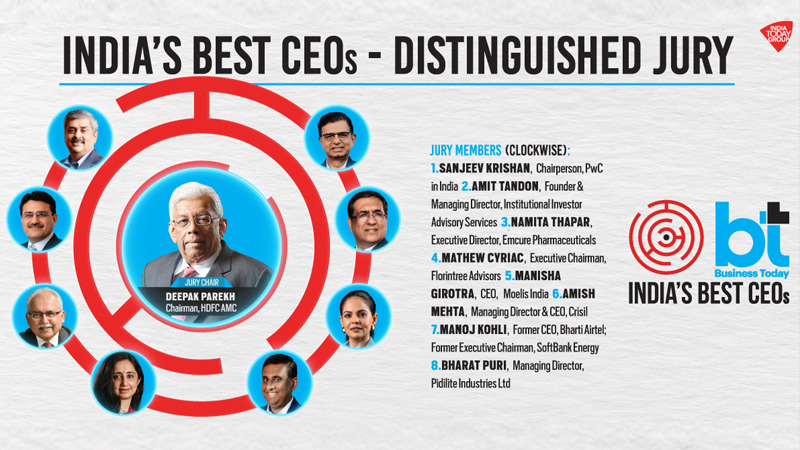
    MUMBAI: When it comes to celebrating corporate brilliance, Business Today leads the way. The 13 edition of BT India’s Best CEOs Awards is set to recognise the extraordinary leadership shaping India Inc., with the winners being adjudicated by a distinguished jury on 27 January 2025 in Mumbai.

    The prestigious annual awards, designed to honour excellence across industries, will be chaired by HDFC AMC chairman Deepak Parekh. A luminary in India’s financial sector, Parekh is celebrated for his visionary leadership and transformative contributions.

    Joining Parekh is a panel of ten eminent business leaders, bringing unmatched expertise and insight to the table:

    1. Bharat Puri, Managing Director, Pidilite Industries Ltd

    2. Sanjeev Krishan, Chairperson, PwC in India

    3. Manoj Kohli, Former CEO, Bharti Airtel; Former Executive Chairman, SoftBank Energy

    4. Amit Tandon, Founder & Managing Director, Institutional Investor Advisory Services

    5. Amish Mehta, Managing Director & CEO, Crisil

    6. Namita Thapar, Executive Director, Emcure Pharmaceuticals

    7. Manisha Girotra, CEO, Moelis India

    8. Mathew Cyriac, Executive Chairman, Florintree Advisors

    This stellar panel will evaluate CEOs on key performance parameters such as financial performance, strategic direction, successful M&A deals, shareholder returns, global expansion, and turnaround achievements.

    The awards programme selects its nominees from the BT 500 list, which ranks India’s largest firms by market capitalisation. In addition to its main categories, the awards feature special honours like Business Icon of the Year, Lifetime Achievement, and Impact Leader of the Year.

    For over a decade, PwC in India has served as a trusted knowledge partner, ensuring the evaluation process remains credible and rigorous. Their continued association underscores the legacy of integrity and excellence that defines these awards.

    The winners of the 13 BT India’s Best CEOs Awards will be revealed during a grand event on 21 March 2025 in Mumbai. This highly anticipated ceremony will celebrate the achievements of leaders whose contributions continue to inspire and transform Indian business.

    The BT India’s Best CEOs Awards are more than just accolades—they are a testament to the vision, resilience, and innovation that drive India’s economy. The 13 edition promises to once again spotlight those who have led with distinction and paved the way for a brighter, more prosperous corporate landscape.

  • Moneycontrol launches #BullishOnIndia campaign

    Moneycontrol launches #BullishOnIndia campaign

    Mumbai: Moneycontrol, India’s leading markets and finance platform, has launched the ‘Bullish On India’ campaign to showcase India’s rising economic might, as it emerges stronger from the pandemic amid a sluggish world economy.

    The campaign aims to analyse the key drivers of India’s economic growth while fostering awareness about the unparalleled potential the nation offers at a time of a global economic slowdown.

    ‘Bullish On India’ will put a spotlight on India’s vast economic landscape to provide investors, businesses, and readers with comprehensive insights into the factors propelling India’s growth trajectory. With detailed analysis of macroeconomic factors like manufacturing, demography, economy, markets and India’s rising stand in the global leadership, ‘Bullish on India’ has been presented as a data backed campaign that underlines India’s resilient economic growth in a world grappling with recession.

    The platform has also launched an eBook which evaluates the main factors influencing India’s economic growth while raising awareness of the unprecedented potential the country has to offer.

    With the nation set to become the third largest economy soon, the campaign captures various facets of India’s growth story through a unique editorial series, which will see contributions from leading names from finance and policy.

    The campaign has also drawn applause from both India Inc and the government.

    Prime minister Narendra Modi reacting to Moneycontrol’s ‘Bullish on India’ campaign on 19 August called India’s economy a beacon of hope amidst global challenges. He remarked that the future holds promise, due to the nation’s steadfast determination.

    He also emphasised how important it is to continue on this upbeat path and ensure the well-being of the country’s 1.4 billion people.


    Congratulating Moneycontrol on launching the #BullishOnIndia campaign, minister of commerce and industries Piyush Goyal said, “Optimism is in the air and spirits are high, there is a newfound confidence in India. Thank you, Moneycontrol for your support to this optimism. I am an optimist, I believe each one of you is equally optimistic, equally confident, equally ready, and willing to fulfil your duties to make India the global superpower, make India amongst the top three economies of the world, and ensure that every Indian has a better future. Our generations ahead will remember this generation as the people who created the India story.”


  • India Inc has no-deal with Covid stress on working minds

    India Inc has no-deal with Covid stress on working minds

    Mumbai: So, May was mental health awareness month. Not surprisingly, along with everything else, Covid-19 has taken a toll on our anxiety and stress levels too. As the pandemic’s second wave sweeps across the country, it is inducing a considerable degree of fear, distress, and alarm in the population at large, and especially among the working professionals.

    The economic repercussions of the ongoing pandemic have made Indian professionals vulnerable to job uncertainty, financial instability, and bleak company outlook while continuing to work remotely, according to a LinkedIn workforce confidence index (WCI) report on mental health.

    “The ongoing stress around the three Rs — Remote work, Return to work, and Risk of exposure — are adversely impacting the mental health of Indian professionals,” said LinkedIn, India country manager Ashutosh Gupta.

    The pandemic also impacted, in particular, working women and their ability to focus on work, with a major part of the household and childcare responsibilities falling on their shoulders at home- further highlighting the gender disparity in our society. Many professionals experienced financial uncertainty with salary cuts, lay-offs, job instability, and unemployment looming large.

    PRE-COVID

    It is a known fact that even pre-Covid, workplaces added to mental health concerns while doing little to address them.

    “Indians are among the most overworked workers globally while earning the lowest minimum statutory wage in the Asia-Pacific region, barring Bangladesh”, as per a study on the state of mental health in Corporate India by Gi Group India. The report does a comparative analysis of the working hours per week in India, as against the US and the UK. India stands at 48 – 50 hours while the US is at 40 and the UK a cool 33 hours.

    “There are 1.2 million registered companies in India out of which only 1,000 provide EAPs (employee assistance programmes) for mental health. How India Inc fares on the mental health index is very clear by this statistic. It is also a cry for help as the magnitude of mental health issues among Indian workers is increasing at an alarming rate.” GI Group MD Marcos Segador Arrebola told ET.

    So how does India Inc fare on the mental health index ?

    The Covid-19 impact

    As per the GI group survey, due to the Covid-19 lockdown: 29 per cent of the employees surveyed suffered due to erratic work schedules and 21 per cent suffered due to reduced salariesPIC:

    The contingency did affect organizations to the point of being a serious call-for-action. And, 48 per cent of the employers surveyed reported having taken cognizance of mental wellness concerns. Of this, 29 per cent believe they have been able to identify issues and provide an appropriate form of assistance. While the rest are at various stages of inadequacy, 9 per cent of the employers seem helpless in this regard.

    According to PeakMind.in-Empowered Emotionally, clinical psychologist Shefalika Sahai, the pandemic situation threw most of our coping mechanisms out of the window with anxiety and panic taking over. “According to the data from the Center for Disease Control and Prevention(CDC), the number of adults reporting symptoms of anxiety or depressive disorder increased from 11 per cent during the pandemic, which also resulted in many organisations launching free mental wellbeing helpline numbers.”

    We are seeing many organisations leading creative and innovative engagements and collaborations with experts to build the morale and mental wellbeing of the employees. In that sense, Covid-19 has been a mixed bag for issues concerning mental wellness. Awareness and accessibility leapfrogged and taboos surrounding it significantly diminished.

    Hospitality firm Oyo rolled out a set of initiatives for its employees to alleviate their stress levels amid the coronavirus pandemic, including four-day working in a week and flexible infinite paid leaves. OYO Rooms CEO Ritesh Agarwal wrote about the company’s new initiatives on Twitter.

    The online food tech unicorn Swiggy also announced that it will be moving to a four-day work week for May.

    Gi Group Head for Staffing Business Sonal Arora said, “Although raising awareness is an essential part of the solution, the concept of a well-defined action plan has been lacking and a majority still struggle due to restricted sources of assistance.”

    Given the rising anxiety levels among employees, several organisations are revealing their compassionate side by offering staff a much-needed break from work. Many companies acknowledge that in such dark times, it’s essential to go beyond mere words of being a ‘people-first organisation’ and ensure that caring actions towards each and everyone’s well-being are prioritised.

    Realty developer Godrej Properties provided its employees a five-day complete break from office work to allow its teams to “recuperate emotionally” in the backdrop of the ongoing pandemic.

    “The work from home burnout is real and the last thirteen months of Covid and the second wave have taken a toll on people; emotionally and mentally. As a company, it is our responsibility to be with our employees and we understand that in tough times like these, everyone deserves a break,” said Godrej Properties MD and CEO Mohit Malhotra. This applied to nearly 2,000 permanent employees of the company and around 600 contract employees working across all its locations in India.

    Ericsson India has launched an employee wellness programme that is focused on interventions around their physical, financial, emotional, and social wellbeing. In addition, the organisation has set up a 24X7 Employee Assistance Programme to provide one-to-one support to its employees.

    Visionet Systems set up a dedicated helpline for its employees, providing free mental health professionals, via phone or text.

    “We have close to 4500 employees across three centres in India and unless they are all moving in the same direction, are feeling safe, appreciated and financially protected, we cannot expect the company to do well,” Visionet Systems MD and country head Alok Bansal told Businessworld.

    Vestige Marketing started a Covid-19 support initiative, called SAMVAAD- a platform wherein the HR and the management regularly connect with teams and departments to acknowledge their efforts, listen to their concerns, provide support and inspire and motivate them.

    While these and many other companies have set the ball rolling and taken some initiatives towards employees’ mental wellness the question remains, is it enough for a country as vast as India?

    There is a dire need for corporates to factor in mental wellbeing in their regime and inculcate measures for the mental well-being of employees. Covid-19 is a wake-up call for employers to sensitize their organizations and formalize their mental wellness approach.

  • Covid relief: India Inc shows it cares, puts employees’ wellbeing before profits

    Covid relief: India Inc shows it cares, puts employees’ wellbeing before profits

    MUMBAI: As the second wave of Covid2019 batters the Indian subcontinent, there is little doubt that we are staring at a humanitarian disaster of humongous proportions. Even as the country struggles to cope with what is possibly a deadly new variant of the Coronavirus, organisations are going out of their way to show solidarity with their workforce.

    Recently, Reliance Industries announced that it has decided to give employees their entire bonus for 2020-21, acknowledging their commitment to the company in a challenging year. It also launched an inoculation drive for all its employees, their family members, and stakeholders from Friday.

    Earlier, FMCG major HUL announced it will cover for the vaccination of around three lakh people, which include not only its employees and their families but also those in its extended ecosystem.

    Across India, as cases surge and precious lives are being snuffed out, companies are pressing the pause button on chasing quarterly targets and are instead going the extra mile to help afflicted employees and their loved ones.

    Showing empathy  through enhanced employee benefits

    Many companies have become generous with employee benefits and leaves, granting special wellness leaves, vaccination leaves, and reduced work-day weeks for their employees, along with providing staff access to mental and health care services.

    Online food delivery platform Swiggy has rolled out a four-day work week for employees for the month of May, keeping in mind the mental and physical well-being of its employees. Workers have also been given the flexibility to choose the four days they want to work in a week.

    Companies like Tata Steel, Google, Amazon, Schneider Electric, Deloitte and more have provided their employees with 14 special sick leaves for them to recuperate and recover.

    Some companies like ITC, Optum and Phillips have provided their employees with unlimited leave policies. These companies have allowed the affected ones to rest with a clear-cut mandate of not to resume work until they recover.

    According to Human capital solutions and services provider GI Group India VP & head HR Upasana Raina, “The mental well-being of everyone in the organisation is key to each person’s individual success that finally ties up into the success of the collective.” She added that apart from ensuring that 100 per cent of their workforce has WFH facility, the agency also “encourages employees to take time for themselves to strike a healthy balance between work and family.”  

    Personal finance app Branch has also implemented the “unlimited paid time off for dealing with the physical and emotional trauma”. Branch India MD Sucheta Mahapatra says, “With the second wave, we understand that most employees are physically and mentally affected either personally or in their social circles. The health coverage will now cover Covid Related hospitalisation. We have internally formed a Covid employee taskforce to evaluate and work on various work streams to support employees during these times.” 

    Telecom and IoT services provider Teliolabs CEO Amit Singh says, “We have formed a Covid response team with a doctor, finance, HR and system admin teams to ensure proper help to the team members in case of any Covid related query, hospital admissions etc. We are also extending our medical insurance and term insurance policies for better coverage in these difficult times.” This is in addition to giving paid leave to employees falling sick owing to Covid.

    Insurance tech provider SE2 Digital Service LLP head HR Sumit Bhatia shares some of the initiatives the company has put in place to ensure their employees are safe and reassured during the pandemic situation: “Reimbursement of RTPCR tests and vaccination costs, health insurance that includes Covid related hospitalisation, 24×7 free doctor access, stress management (EAP) support, 14 days of special Covid leaves in case any associate is detected positive, and in the unfortunate scenario of an associate’s demise due to Covid – monetary coverage for family (beyond Term Life Insurance)- SE2 will pay the associates’ full one-year salary (including 100 per cent of the variable pay) or Rs 10 lakh (whichever is higher) to the family.”

    AI-driven online automobile marketplace Droom has announced a Rs 1 crore budget to combat Covid for its employees and dealers’ community. It has launched programs for its 20,500+ dealers to assist in pharmaceuticals, vaccination, medical assistance and provide isolation wards with basic medical facilities. It has also increased its medical insurance coverage by five times this year, providing medical coverage group insurance for employees’ parents, and has even launched a telemedicine consultation for mental and physical health free of cost.

    Converting office spaces into Covid isolation & vaccination centres

    Besides providing benefits, some companies have taken a step further and converted office spaces into isolation centres and hospitals for employees and their kin.

    HDFC Bank has converted three of its training centres in Gurugram, Bhubaneswar and Pune into isolation facilities for its Covid-affected employees. These facilities have been equipped with first-line assistance and will have round the clock nurses and visiting doctors. The facilities include setting up vaccination camps. In addition, it has also tied up with many hotels across the country to provide isolation facilities, basic amenities and basic medical checks.

    Similarly, TCS has set up Covid Care Centers across 11 cities in India and entered into arrangements with hotels that have hospital tie-ups. Employees and their families can avail emergency medical financial assistance, apart from the health insurance facilities offered. In fact, many IT firms are setting up hospital beds in their campuses with oxygen and ventilator support to support employees and their families to deal with the acute shortage the country is facing.

    Droom has also converted its Sector 15 office into an emergency response center with telemedicine services, nurses, and all basic healthcare facilities.

    Further, Amazon, ITC, Capgemini, RPG Group, and Cognizant have also set up Covid-care centres either on their own, or through tie-ups with hotels or hospitals at this critical time when the country’s healthcare system is getting overburdened.

    Bry-Air, DRI and Artemis have organised vaccination camps for their employees, while Fortis recently arranged drive-thrus for Panasonic, Jindal Steel, Coforge, Honda Motorcycles and Scooters.

    IT majors like TCS, HCL Tech, Tech Mahindra, Infosys have introduced Covid201919 test centres to help their staff avoid exposure by visiting crowded test centres and waiting in long queues.

    Assuring monetary aid

    Companies are also taking measures to ensure the long-term financial stability of their staff and their families. Zomato announced that it would provide 100 per cent of the deceased employee’s income for two years to the family. Paytm’s Vijay Shekhar Sharma said the company will continue to pay salaries to the families of deceased employees throughout the current financial year

    Cars24 CEO Vikram Chopra recently won a lot of love on social networking site LinkedIn for an internal mail he sent out to all his employees urging them to buy whatever it was that they needed for the treatment of themselves or a family member, without worrying about its price.

    He wrote, “Need oxygen or medicines but only available in black at a very high price and without any proof? Please just buy whatever you need, from whatever source you get it. Don’t worry about a proof to be produced to the company or how it costs,” adding “Send us an email and we will transfer money asap.” He further wrote that the company will also try to arrange medicines, or oxygen and whatever else is required, while stressing that “We will pay you advance or reimburse all costs, whichever is faster. I repeat, no proofs required.”

    Setting up Covid helpline & resource access  

    Software giant, TCS has set up a Covid help desk for employees to seek any assistance required, along with a 24×7 TCS Medical Hotline to reach doctors and TCS Cares services for counselling.

    HDFC Bank too is providing e-consultation with doctors through apps including Apollo 24/7, MediBuddy, PharmEasy Apps, with PharmEasy helping with delivery of medicines as well. Additionally, the bank has also provided access to e-consultation with empanelled psychologists through these apps.

    Several companies, including PricewaterhouseCoopers, Accenture, Grofers, Cars24, Deloitte have announced that they will sponsor the cost of vaccines for their employees and some for their families as well.  

  • ‘Digital India Conclave 2014’ to intensify the ‘Digital India’ initiative

    ‘Digital India Conclave 2014’ to intensify the ‘Digital India’ initiative

    MUMBAI: The Narendra Modi led Indian government officially clicked through the ambitious ‘Digital India’ programme a few months ago. The vision is simple: to usher India into the digital age where each and every citizen can experience the impact. But this simple vision will require a lot of hard graft and investment towards the right kind of infrastructure.

    As a bridge between this vision and reality, India Inc. along with FICCI, Invest India and Chase India is organising a ‘Digital India programme’, a series of online and offline activities pivoting around two roundtables in New Delhi and Washington DC.

    India Inc. has created its own ‘Digital India’ initiative which ties in with the India-US Partnership Hub to bring in a series of online and offline programmes. It will explore the ‘Digital India’ vision and trigger dialogue to plug into this bold new programme.

    This online-offline integrated programme brings in perspectives and participation from senior policy decision makers within government and industry around a discourse to achieve the following objectives:

     • Identify the challenges and opportunities in the ‘Digital India’ initiative
    • Identify synergies that can be created between industries and the government to successfully implement the initiative
    • Explore how the India US collaboration could help achieve the ‘Digital India’ vision
    • Involve key stakeholders in defining a roadmap that will lead to a truly ‘Digital India’
    • Produce a series of online and offline activities to facilitate discourse culminating in a bespoke online publication
    • India is finally coming of digital age and we aim to provide an incisive new digital hub for this new age.

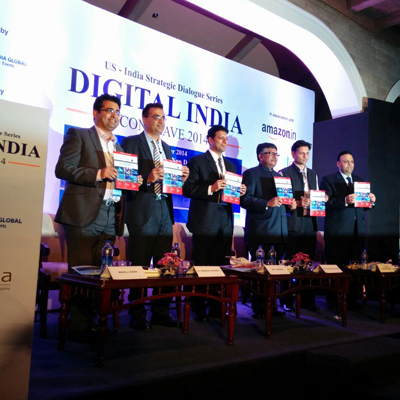
     Commenting on the initiative, Avian Media CEO and Chase India director Nitin Mantri said, “We are proud of this association with India Inc and a key aspect of this initiative is our first Digital India Conclave to be held in New Delhi on 5 December 2014. The sessions will focus on the prominence of the digital advancement across sectors and the requirement to streamline digital with the core business in order to initiate the Digital India initiative.”

    The conclave is in association with Amazon.in, Google and Qualcomm is supported by TCIL and NIXI and is the first phase of the programme which will bring together around 100 -150 key stakeholders across government/public sector, the private sector as well as other influencers such as think tanks, media and specialist experts.

    The first conclave of the ‘Digital India’ Programme is on 5 December 2014 in Delhi while the second conclave will be held in Washington in January 2015.