Tag: India Digital Operators

  • IDOS 2014: Are STBs high on QC?

    IDOS 2014: Are STBs high on QC?

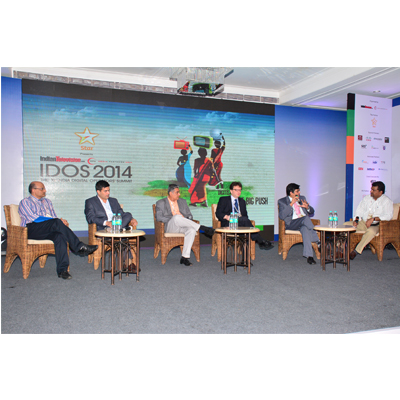
    GOA: As high as 38 million set top boxes (STBs) have been rolled out in phase I and II of digitisation, but as for the quality, a lot of these boxes were described as ‘dabbas’. Of the total number of boxes, a tiny percentage was high definition boxes and even of those, several were found faulty. The session on ‘Technology Shifts in Indian Pay TV’ during the recently concluded India Digital Operators’ Summit (IDOS) 2014 at Goa, started with these crucial facts.


    The government has decided to push digitisation of phase III and phase IV to December 2015 and December 2016 respectively, citing indigenous manufacturing of boxes as the main reason for the extension. The big question now is, ‘Are the Indian manufactures ready for the 100 million boxes needed in the next 24-30 months?’


    “Contrary to the expectations of many, yes, we are ready,” said Mybox executive director Amit Kharbanda.


    With the ‘Make in India’ concept, the government is not just promoting the Indian manufactures, but is asking the international manufacturers to come to India and create hardware here. “When you talk of manufacturing of STBs, the basic requirement, after the components, is the capacity for big production. According to our calculation, if there is a requirement for 100 million boxes, and we break it to 40-45 million boxes per year, the SMT capacity required is 26 machines, and if we remove all the big international manufactures, India will still have SMT capacity with an availability of 46 machines,” informed Kharbanda.


    The next question which many have been asking is how has the extension benefited the STB manufacturers? “We have been growing from the time we entered the manufacturing space. After digitisation, we knew we had to supplement the market and so we increased our capacity by about 30-40 per cent. Right now we have the capacity of 5 million boxes per annum, of which 60 per cent is utilised by our captive customers and 40 per cent is for other consumers. But considering the experience we have, we can easily expand our capacity,” said Videocon Group head trend electronics Jagdish Bangad.


    The question, according to Kharbanda is not about if we can manufacture 45 million STBs in one year, the question is, considering there are 300 components in a STB, “will we have those many Broadcom or other chips makers in India, and this, keeping in mind that we are not the only country buying it?” Kharbanda questioned.   


    For Broadcom MD Rajiv Kapur, the chip output is extremely high. “We produce more than two billion chips annually. The issue is not production of chips, neither is capacity an issue. The main thing now is that we should be a little careful about our expectations. One doesn’t want to go down the path of over preparing and over- producing and compromising on the maturity which is needed to develop quality in a supply chain,” said Kapur.


    He also cautioned the industry, that in order to achieve the target of the 100 million boxes in the given time frame, one should not start cutting the corners on quality.  


    Cisco, which works closely with a number of multisystem operators (MSOs) in the country and also the STB manufacturers, is agnostic to whether the boxes are made in India, China or Korea. “We welcome the move that the Indian government is keen to promote manufacturing locally,” said Cisco director John McCorkindale adding that they haven’t changed their strategy for the country with delayed digitisation.  


     According to Logic Eastern CTO Vineet Wadhwa, one needs to keep the backend support ready. “One of the key points is that most of us are just concentrating on the manufacturing skills or strengths. But, this is just a part. More thoughts need to go when one plans on scaling,” he said adding that the industry needs funding.


    “We are dealing with tier II and tier III markets. The amount of support needed for tier II and III markets don’t help me when I go to tier IV MSOs. For every three or four tier III MSOs, one needs at least one or two support personnel and for every five support personnel, you need one support manager,” informed Wadhwa.


    He also highlighted that with the different types of CAS, boxes, networks etc, the complexity of managing a network 500-2000 km away over mobile phone is difficult. This means that the manufacturers will also need to set up a support team. “They will have to have deep pockets,” he added.


    A very crucial point that came out during the session moderated by Castle Media director Vynsley Fernandes was that while the capability and technology exists in India, the fundamental challenge is that tier III and IV markets have huge pricing issues. One needs to understand from the LMOs, how much their subscribers will be ready to pay.


    Kharbanda pointed out that the industry which has a target of manufacturing 100 million boxes, if it could even produce 50-60 million boxes, will start a cycle that will help them in the long run. “The fact is that we have to come together as an industry and we need support from the MSOs as well,” said he.


    According to McCorkindale tier III and IV MSOs want to control everything on their own. “They want good quality and want more power to increase their ARPU,” he said.


    For Kapur, delayed digitisiation is actually good. “I feel we were going too fast. The benefit of this delay is that now we can look at the experience of the first 20-30 million boxes which have been deployed. The common approach from vendors in the first two phases was of cutting corners, while only thinking of price and compromising on the quality,” he said.


    MSOs, according to Kapur, have learnt a lot from the first two phases and are now upping their specs. “The difference in pricing of high quality and low quality boxes is not a very big dollar amount. One only needs to know what specs are needed for its STBs,” he added.  


    Another point which was highlighted during the session was that in the rush to seed boxes, no field trials were done in the first two phases. “This led to bad quality boxes being rolled out. Now we have the time to do all this and control the quality,” opined Kharbanda.


    A very important component of the STB cost is the warranty and the support charge per hour from the box company, CAS company and SMS company etc. “And my belief is that the MSOs of tier II and tier III will not compromise on the quality of the box. But they might not be able to afford the dollar per hour charges for support,” said Wadhwa.


    Kapur, is a firm believer that the STBs should have a long lifecycle. “India is a nation where TV moves from house to house but is never thrown, so we can’t be producing 100 million boxes, which are bad quality ones, with no support and element of future proof for different markets,” he said.

    The session concluded with the remark: It is time we move away from speed and cost. 

  • IDOS 2014: How can the pay TV industry be made better?

    IDOS 2014: How can the pay TV industry be made better?

    GOA: India Digital Operators’ Summit 2014 kicked off at The Leela in Goa on 25 September. Opening the conference, Indiantelevision.com CEO and editor in chief Anil Wanvari and Media Partners Asia (MPA) executive director Vivek Couto gave a brief on the state of the TV nation and transition to the broadband digital economy.


    Wanvari highlights how the state of the industry was a few years ago and what it has become now after the advent of conditional access system (CAS) and digital addressable system (DAS). Content makers aka broadcasters have been demanding more revenue from the pay TV industry. While the capex and opex for them has been high, the return continues to be low. The MSOs and DTH operators have been investing to expand their headends and build subscriber base respectively. “While it is a good business now, the real question is if each one of us is willing to make it a great business?” he asks.


    In order to strengthen the business, Wanvari recommends a few suggestions that could help grow the industry. The first thing is to look at digitisation and pay TV with a changed mindset that it will be beneficial to all. The government could look at setting up a digitisation transition fund that will help educate, train, seed capital and reward people who follow the rules and ensure strict penalties for those who don’t.


    Subscriber management system (SMS) should be set up with correct details and billing of the services provided to customers. The government could also look at laying down minimum standard rules for set top boxes (STBs) to ensure quality control. His final suggestion is to leave pricing to the market rather than initiate 10 to 15 per cent price rise every now and then.


    Providing a glimpse into MPA’s study on the pay TV industry in India, Couto says that out of the 262 million households in the country only 162 million houses have a TV. In this, 27 million is taken up by the free to air service providers such as Doordarshan and Freedish while the rest comes under cable and satellite.


    Couto highlights that over Rs 32000 crore has been invested in digitisation since 2005 with a bulk of the investment coming from the DTH operators followed by the MSOs and LCOs since 2011. Out of this, over Rs 11000 crore in the last 24 to 30 months has been invested by MSOs and LCOs. “India offers scale but limited monetisation,” he says. What digitisation will do primarily is increase transparency, addressability, tax collection and employment. Over 120 million STBs are needed over 10 years and nearly 47 per cent share of the total market will come through broadband.


    The tiff between the three stakeholders continues with the LCOs fighting for revenue share, MSOs facing crash crunch and broadcasters worried about increasing carriage fees which the MPA report stated as having increased by nearly 14 per cent in Q1 FY2015.


    In terms of scale, India struggles as the country with the lowest average revenue per user (ARPU) but it has one of the best channel services. Couto says that it is time for the industry to move to retail pricing than stick to wholesale tariff because the competition will keep the prices low. The need of the hour is for MSOs and broadcasters to come together and design packages, incentivise upselling, indentify opportunities for sub segmenting and create new genres. The key to which lies in raising prices to consumers.