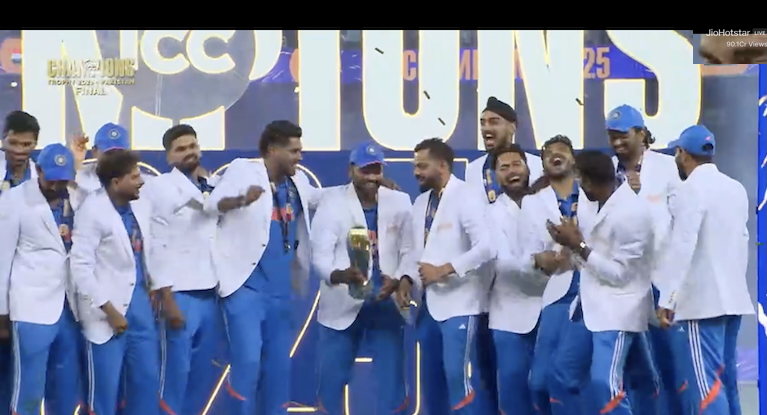
MUMBAI: Cricket fever has turned into a full-blown phenomenon as the ICC Women’s Cricket World Cup India 2025 smashes viewership records faster than a boundary off a power hitter’s bat.
Over 60 million viewers have already tuned in to the first 13 matches across Jiohotstar and Star Sports Network, a staggering five times more than the previous edition. Watch-time has also soared 12-fold to a jaw-dropping 7 billion minutes, proving that women’s cricket isn’t just winning hearts, it’s ruling screens.
The India vs Pakistan showdown on 5 October bowled the world over, becoming the most-watched women’s international cricket match in history with a reach of 28.4 million and 1.87 billion minutes watched. The India vs Australia clash wasn’t far behind, hitting a record 4.8 million peak concurrent viewers on Jiohotstar, the highest ever for women’s cricket.
Television audiences have been equally captivated. The India–Pakistan league game has become the highest-rated in Women’s ODI World Cup history, while the first 11 matches together reached 72 million viewers, marking a 166 per cent leap from the last tournament. Viewing minutes jumped 327 per cent to 6.3 billion, underscoring the growing passion for the women’s game.
“The incredible viewership for the ICC Women’s Cricket World Cup India 2025 is a true testament to the growing interest in women’s sports in India,” said Jiostar head of viewership and monetisation initiatives – sports Siddharth Sharma. “Fans are embracing women’s sports like never before, and at Jiostar, we’re proud to be the platform powering this movement.”
Much of the success stems from a unified marketing push by the ICC and Jiostar, supported by the BCCI. The ICC’s global ‘Will to Win’ campaign and Jiostar’s emotionally charged ‘Jersey wahi toh jazbaa wahi’ have together sparked a national conversation and brought fans closer to the women in blue.
The matches are being broadcast in five languages: English, Hindi, Tamil, Telugu, and Kannada, across Jiohotstar and Star Sports channels, with an Indian sign language feed introduced for the first time to make the game more inclusive.
MUMBAI: Vidaa, the global smart television operating system powering millions of connected devices worldwide, has struck a strategic partnership with India’s RunnTV to launch TV Channels, its free ad-supported streaming television (Fast) service, across the subcontinent this September.
The collaboration marks Vidaa’s most significant push into one of the world’s fastest-expanding streaming markets, where ad-supported platforms are experiencing meteoric growth as viewers increasingly abandon traditional pay-television models in favour of free, on-demand content.
TV Channels will offer Indian audiences an extensive lineup of premium international content alongside carefully curated regional programming spanning entertainment, films, music, lifestyle, children’s shows and infotainment—all delivered at zero cost to viewers through Vidaa-powered smart televisions.
RunnTV, the streaming technology platform founded by Manish Sinha, brings crucial local market intelligence to the venture. The company will leverage its deep understanding of India’s complex linguistic and cultural landscape to help Vidaa localise its offering, secure partnerships with top regional content creators and maximise advertising revenues through sophisticated programmatic integrations and precision-targeted campaigns.
The partnership extends far beyond simple content aggregation. Both companies will collaborate extensively on technology integration, distribution strategies and advanced monetisation models designed to capture and retain audiences in a market where free, advertiser-supported content is rapidly displacing subscription-based services.
Industry observers note that India’s Fast ecosystem has reached an inflection point, with viewership patterns shifting dramatically as consumers embrace connected television experiences. The entry of established global players like Vidaa signals growing confidence in the market’s potential, particularly as smartphone penetration and affordable broadband access continue expanding across tier-two and tier-three cities.
For advertisers, the platform promises unprecedented reach and sophisticated targeting capabilities, enabling brands to connect with specific demographic segments through data-driven campaign optimisation. Content creators and channel partners, meanwhile, gain access to new revenue streams through Vidaa’s established global advertising network.
Viewers can expect a premium experience featuring seamless channel switching, intuitive navigation and high-quality streaming performance—all integrated directly into their smart television interface without requiring additional subscriptions or hardware investments.
The launch comes as traditional broadcasting models face increasing pressure from streaming alternatives, with Fast services emerging as a compelling middle ground between expensive subscription platforms and conventional linear television. Industry analysts predict the segment could capture a substantial share of India’s entertainment consumption within the next two years, driven by rising data affordability and changing viewer preferences.
Vidaa’s decision to partner with a local technology specialist rather than launching independently reflects the complexity of India’s media landscape, where success often depends on nuanced understanding of regional content preferences, regulatory requirements and advertiser expectations across diverse markets.
The collaboration positions both companies to capitalise on what many consider the next major wave in India’s digital entertainment evolution, as millions of households transition from traditional cable and satellite services toward internet-connected viewing experiences that offer greater choice, convenience and cost savings.
TOKYO: Netflix will be the exclusive home of the 2026 World Baseball Classic in Japan, under a rights deal with World Baseball Classic Inc (WBCI), the body jointly run by Major League Baseball and the MLB Players Association. The streamer will carry all 47 games live and on-demand for Japanese subscribers.
The sixth edition of the tournament will feature 20 national teams across four pools in Tokyo, San Juan, Houston and Miami from 5 March 2026. Defending champions Japan will again be in the spotlight.
MLB deputy commissioner for business and media Noah Garden said the deal reflected “the growing popularity of the tournament” and WBCI’s ambition to expand through digital platforms. Netflix Japan vice president of content Kaata Sakamoto called the tie-up a chance to “deliver a new kind of viewing experience that brings fans even closer to the action.”
MLB Players Inc president Evan Kaplan added that the partnership would give Japanese fans front-row access to “one of the sport’s most unique stages, where the world’s top players compete for national pride”.
For Netflix, the deal is the latest step in its tilt towards live sport, positioning it at the heart of one of baseball’s biggest international events.
Could we see it snap up some premium cricket media rights in India? That’s a delivery media observers have been waiting for Netflix to bowl for quite a while now.
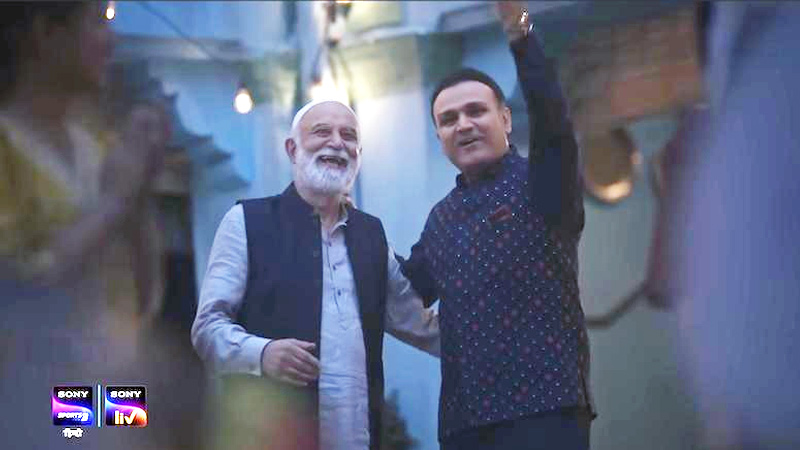
MUMBAI: Cricket advertising in India is a genre unto itself, but Sony Pictures Networks India may have just served up one of its most affecting innings yet. Its new Asia Cup promotional TVC, titled Asia Cup ka maha-muqabla, does not rely on pyrotechnics or overblown jingoism. Instead, it leans into something far more powerful: the lived reality of a billion-strong cricket nation.
The spot opens in a middle-class household, the sort instantly recognisable to viewers across India — compact, cluttered, warm. A multi-generational family, representing the classic Indian joint household, is gathered around a television set. Their emotions run the gamut from tense expectation to barely-suppressed hope. In their midst sits Virender Sehwag, the retired swashbuckler whose effortless stroke play once embodied India’s batting swagger. His presence is casual, yet symbolic: cricket is family.
On screen unfolds the ultimate cliché of Indian sport — a last-ball thriller against Pakistan. Suryakumar Yadav, known for his 360-degree stroke-making but carrying the weight of a poor run against Pakistan, takes guard against Shaheen Shah Afridi, Pakistan’s fiery left-arm quick. India need three off the final delivery. The room holds its breath. Yadav unfurls his trademark flick-sweep off his pads. The ball soars over fine-leg, lands in the stands. India have won.
The family erupts. So do, by implication, the millions watching at home across the country. The genius of the commercial is that the victory is not just India’s, not just Yadav’s redemption, not just a nod to the India–Pakistan rivalry that remains cricket’s greatest theatre. It is framed as a shared triumph of nationhood.
Sony has laced the narrative with subtle social cues. The family members are deliberately cast without overt religious markers — no heavy-handed signifiers of Hindu, Muslim, Sikh, or Christian identities. Instead, their togetherness suggests an anonymous universality, a blend of every Indian home. When one family member remarks, “God has listened to your prayers,” the phrase resonates across religions. It could as easily be said in a temple, mosque, church, or gurdwara.
This inclusivity crystallises in the closing voiceover: “When it comes to Team India, 140 crore hearts beat as one.” It is more than a tagline; it is an assertion of secular nationalism, packaged through the one institution that cuts across fault lines of caste, creed, and community — cricket.
The choice of Sehwag is inspired. His image has long been that of the approachable great: less demi-god than street-cricketer made good. Sehwag in a living room, laughing along with ordinary Indians, works as shorthand for the collapsing of boundaries between the game’s elite and its fans. In a country where cricket stars are often deified, here is one being human.
The film also plays on nostalgia. For decades, Indian households have arranged their routines around cricket matches. The image of families huddled before television sets — chai cups rattling, grandparents muttering prayers, children imitating shots in the cramped corridor — is imprinted in the national psyche. By invoking that memory, Sony makes the Asia Cup not just about live sport, but about reliving a tradition.
The timing of the TVC is astute. The Asia Cup kicks off on 9 September, with India–Pakistan ties expected to draw record ratings. This is also India’s first major tournament after the passage of the Online Gaming Bill 2025, which banned betting and fantasy sports with cash stakes but emphasised “safe online gaming” and esports as cultural exports. Sony’s film neatly dovetails with the government’s rhetoric: cricket as a unifying, wholesome national obsession rather than a site of division.
Advertising scholars will note how Asia Cup ka maha-muqabla breaks from older tropes. Previous India–Pakistan promos often thrived on antagonism: taunts, satire, chest-thumping. Sony, by contrast, softens the edges. The rivalry remains fierce — the six off Afridi is fantasy fulfilment — but the messaging is inward-looking. The focus is not beating Pakistan as much as celebrating India.
For a tournament where sport often becomes geopolitics, this is a nuanced turn. In less than a minute, the campaign positions cricket as faith, family, catharsis, and national glue.
That, in the end, is why the spot works. It is not simply flogging a match, or a tournament. It is selling the idea that India itself is best understood when a billion-plus citizens are praying for the same thing, shouting at the same screen, and rejoicing together when the ball sails into the stands.
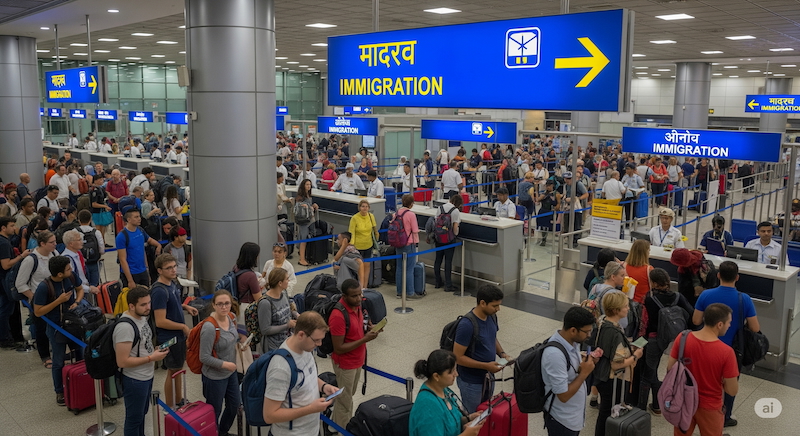
MUMBAI: India’s tourism sector is roaring back to life, with foreign tourist arrivals surging to nearly 100 million last year—the highest on record. The ministry of tourism announced that 99.5 million foreigners visited India in 2024, up from just 15.3 million during the pandemic-ravaged year of 2021.
The recovery has been spectacular. Foreign exchange earnings from tourism more than quadrupled from Rs 64,000 crore in 2021 to Rs 293,000 crore in 2024. Tourism’s share of GDP has jumped from a measly 1.5 per cent in 2020-21 to 5.2 per cent in 2023-24, making it a significant economic driver.
Americans lead the charge, with 1.8 million visitors in 2024, followed closely by Bangladeshis at 1.75million. The British, Australians and Canadians round up the top five source markets. Notably, Australia saw its visitor numbers soar from just 34,000 in 2021 to over 518,000 in 2024.
The boom has created jobs too. Employment in tourism rose from 68 million positions in 2020-21 to 84.6 million in 2023-24, providing livelihoods for millions across the country.
Union minister for tourism and culture Gajendra Singh Shekhawat shared these figures in parliament, highlighting how India has bounced back from the travel restrictions that decimated global tourism. International tourist arrivals, including non-resident Indians, reached 206 million in 2024.
The numbers suggest India is capitalising on pent-up demand for travel as the world emerges from the pandemic’s shadow. With its rich cultural heritage, diverse landscapes and competitive costs, India appears well-positioned to maintain this momentum.
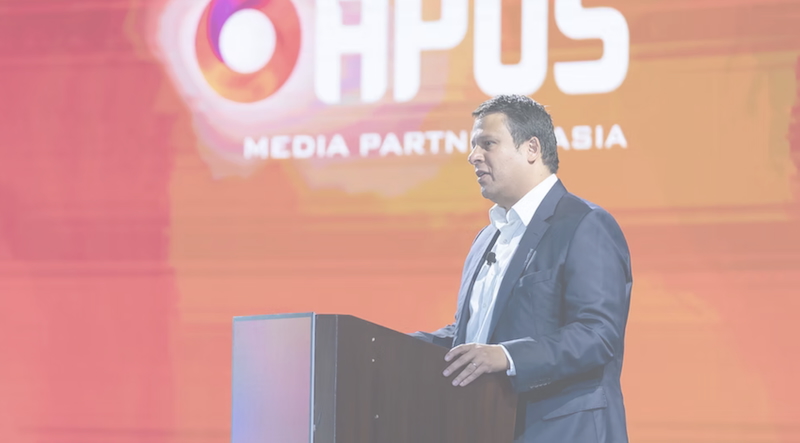
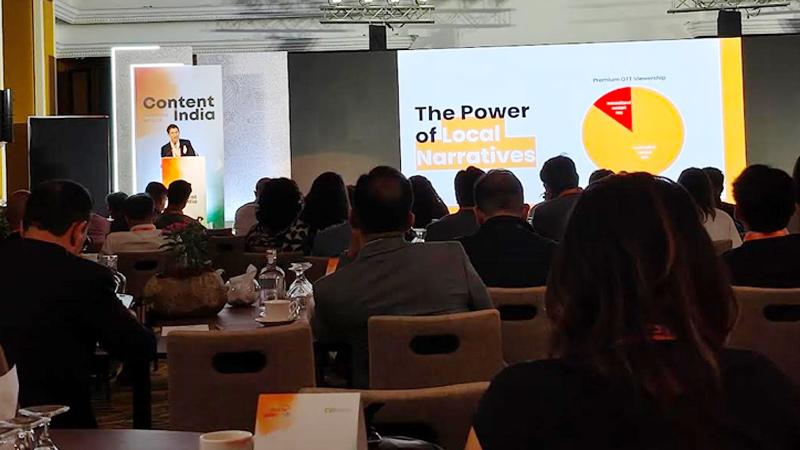
BALI : The 16th edition of the APOS Summit opened in Bali with a blunt forecast: Asia-Pacific’s media juggernaut is heading into rougher waters. “The next wave in Asia is here and it looks very different,” said Media Partners Asia founder Vivek Couto, addressing 550 delegates from across the region’s fast-evolving screen economy.
Asia’s screen count is booming—from 4.5 billion today to 5.5 billion by 2030—with smartphones still king, rising to 4.4 billion, and connected TVs becoming the fastest-growing segment at 13 per cent CAGR. Yet the party is winding down. After raking in $36 billion in new revenues during the pandemic-era gold rush (2020–25), the region now expects just $16 billion more over the next five years. The culprit? A steady erosion in traditional TV’s dominance.
“Monetisation is decisively shifting to digital,” Couto declared. TV, which currently commands 49 per cent of screen revenues, will sink to 41 per cent by 2030. In its place, premium video (SVOD/AVOD) will rise to 29 per cent and UGC/social video will power up to 24 per cent. Theatrical remains flat.
China and India dominate the region’s screen scale—72 per cent by 2030—while Indonesia, the Philippines and Thailand lead in screen growth. Three markets—China, Japan and India—will account for almost 75 per cent of screen revenues. But their playbooks couldn’t be more different.
China’s model is fuelled by short-form content, micro-dramas and a mature VOD sector monetised through ads and transactions. Japan stays TV-centric with high-ARPU SVOD and premium AVOD. India is firing on both cylinders with ads and value-led subscriptions across streaming and broadcast, and mobile-first, hybrid OTT platforms.
Local champions are holding their ground. JioStar is the fastest riser in India, on track to cross $1 billion this year. Australia’s Foxtel and Nine, Korea’s TVING, Indonesia’s Vidio and Thailand’s TrueID are proving that scale outside of global behemoths is not only possible—it’s profitable. “The new video economy isn’t just digital-native—it’s cross-platform,” Couto stressed.
YouTube still rules the roost, projected to hit $18–19 billion in regional revenues by 2030, followed by ByteDance’s Douyin and TikTok, which are closing in on $10 billion combined. Netflix dominates premium VOD beyond China, with Disney+ and Prime Video scaling in Japan, India and Southeast Asia. Japan’s U-Next is riding a strong mix of sports, local content and Hollywood imports.
Meanwhile, the creator economy is exploding—with over 100 million creators in 2024 expected to grow to 165 million by 2030. China’s micro-drama boom has already become a $7 billion beast, now expanding globally. “It’s part entertainment, part conversion funnel,” Couto said. Platforms are blurring content and commerce, particularly in China and southeast Asia, where creators are anchoring live shopping and branded content ecosystems.
Premium content is still critical, but the free-spending days are done. Investment in streaming originals is projected to climb from $17 billion to $21 billion by 2030, but platforms are asking tougher questions: What retains? What monetises? What builds the ecosystem?
Retail media is the region’s new digital ad workhorse, expected to drive $45 billion in spend by 2030—$26 billion in China, $10 billion in India and $9 billion in Japan. While SVOD and AVOD still rake in the bulk of video monetisation, it’s the integration of retail commerce and media that’s reshaping the ad game.
Couto’s closing pitch was a rallying cry for innovation: “Asia-Pacific leads the world in screens, time spent and innovation. We’re no longer just a consumption story—we’re a revenue engine. But this next phase is more competitive. Growth must be earned.”
MUMBAI: What happens when one of the world’s biggest smartphone giants teams up with a machine learning marvel? A global ad tech power play. Moloco, the operational machine learning company, has struck a global strategic partnership with Xiaomi’s International Internet Business Department, unlocking a fresh frontier in mobile advertising across more than 100 countries and regions. With Xiaomi boasting a staggering 702 million monthly active users, the alliance is set to supercharge advertising efficiency, targeting accuracy and developer growth worldwide.
As part of the deal, Moloco will bring its ML chops to optimise ad placements across Getapps (Xiaomi’s overseas app store), in-app inventory and lock screen ads. In return, Moloco’s advertisers get front-row access to Xiaomi’s high-value user base served through a tech ecosystem spanning mobile, smart homes, and even electric vehicles like the new Xiaomi SU7.
Having tested the waters in a pilot partnership in 2023, the results spoke for themselves. Daily ad spends soared, native and interstitial ad formats drove stronger conversions, and Xiaomi’s presence across Brazil, India, Turkey and Germany emerged as a serious magnet for advertisers chasing scale and precision.
Moloco, co-founder and CEO Ikkjin Ahn called the partnership a response to the rising need for “efficient monetisation and the ability to reach the right users.” He added, “Xiaomi’s global ecosystem is a perfect match for our machine learning platform. Together, we’ll unlock serious ROI for advertisers and push the boundaries of programmatic efficiency.”
Xiaomi International Internet Business general manager Qiang Song echoed the sentiment, noting that Moloco has already “helped enhance the competitiveness of our ad platform.” With more AI-powered tools on the horizon, both companies are eyeing innovative monetisation models that could reshape how brands connect with mobile-first consumers.
Whether you’re an app developer chasing downloads or a marketer craving smarter reach, this partnership may just be the algorithmic edge you’ve been waiting for.
MUMBAI: Heena Chaudhari has gone up a level once again. The seasoned strategist and investment ace has been promoted to associate director – strategic markets’ activations at Sony group Corp , where she’ll be steering high-impact business initiatives across India and the Middle East.
With a power-packed portfolio that includes investment management at Sony Innovation Fund and a board observer role at Nodwin Gaming, Chaudhari is no stranger to spotting what’s hot in media, entertainment, and gaming before the world catches on. Now, in her new gig, she’s charged with turning strategic visions into high-octane action.
Her Sony journey began in 2023 as strategic markets’ activations manager, and in just under two years, she’s earned her stripes by crafting clever market entry plays and forging high-value collaborations in two of Sony’s most promising growth zones.
Before Sony, Chaudhari held leadership roles at Embold Technologies GmbH and Yoozoo Games, juggling strategy, HR, sales ops, and product development like a pro. She’s been in the trenches with startups, scaled up global projects, and even donned the CEO’s right-hand cap more than once.
Armed with over a decade of experience and a resume that reads like a masterclass in cross-functional execution, Chaudhari isn’t just moving markets—she’s redesigning how legacy giants like Sony grow in emerging ones.
Her superpowers? Investment foresight, operational precision, and boardroom charisma. With the gaming and streaming boom in full swing and the Middle East–India corridor heating up, Heena Chaudhari’s next play could very well be Sony’s best move yet.
MUMBAI: Move over fancy plating and fast food postpartum plates are having a moment. Foodxp, the food and lifestyle entertainment channel, is set to debut a refreshingly grounded culinary series titled Diapers to Delight, spotlighting the often-overlooked world of postpartum nourishment. Premiering 26 May at 9:00 PM IST, the show will air across India, Bangladesh, the US, and the UAE, bringing heartfelt recipes and ancient Ayurvedic wisdom to modern screens.
Hosted by chef Deepa Chauhan, the series features 15 plus carefully curated dishes designed to nurture new mothers from the protein-packed Gond ke laddoo to warming Raab and Moringa soup. The recipes are as practical as they are healing, tapping into traditional Indian kitchens to serve dishes that comfort both body and spirit.
“Diapers to Delight isn’t your typical food show. While most focus on street snacks or fancy plating, this one asks a question we often forget: what should a new mom eat after childbirth? With warmth, wisdom, and a dash of spice, it serves up answers rooted in care and tradition,” says Foodxp creative director Geetika Jain.
At a time when fast-paced living has edged out age-old practices, the show aims to reclaim the kitchen as a space of support, healing, and family wisdom not just for Indian audiences, but also for diaspora families seeking cultural reconnection through food.
To take its mission further, Foodxp is launching a free digital companion recipe book, featuring all the dishes from the show. It’s a small but meaningful step in helping new mothers and caregivers whip up recovery-friendly meals with ease.
“When I had my children, I wish I had access to something like this. Through this show, I hope to make that journey easier for other women,” shares chef Deepa Chauhan.
So whether you’re a first-time parent, a curious caregiver, or someone who just loves a good bowl of warm, healing food mark your calendars. Diapers to Delight is not just cooking; it’s caring served hot.
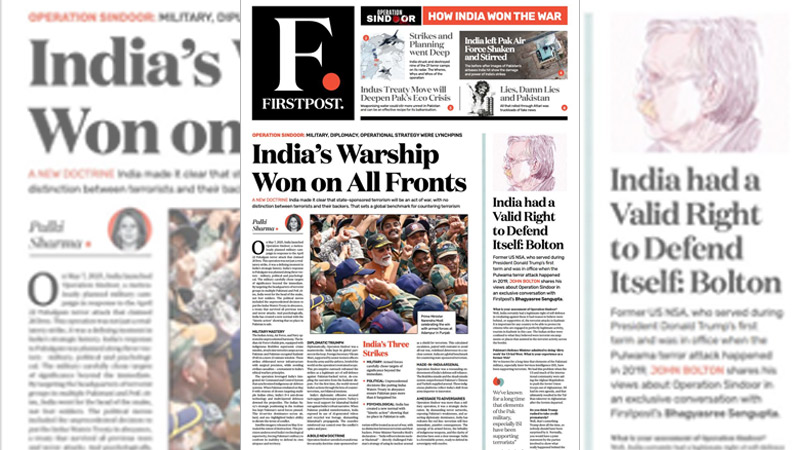
MUMBAI – In a gutsy move both on ground and in print, Firstpost has dropped a collector’s edition digital broadsheet dedicated to Operation Sindoor—India’s audacious counter-terror strike that sent shockwaves across the region and rewrote the rules of military engagement.
This slick, oversized digital spread dives headfirst into the mission that rattled Rawalpindi and reasserted New Delhi’s zero-tolerance stance on state-sponsored terror. From boots-on-the-ground bravery to geopolitical chess, the edition lays out the anatomy of the operation with forensic flair—packed with verified reports, exclusive interviews, and sharp strategic analysis.
The shadow of Pakistan army chief-turned-field marshal Asim Munir looms large, as the edition probes the ideological flashpoints fuelling cross-border aggression and the Indian response that followed. No propaganda, just precision reporting.
“While the magnitude of Operation Sindoor, and what it has achieved, is a compelling enough reason for Firstpost to bring out this special edition, the need to present facts amidst a flood of disinformation was a trigger too,” says Firstpost managing editor Palki Sharma.
This isn’t just a recap of a military win—it’s a reframing of the global counter-terror playbook, with India leading the charge. Readers can scan the QR code to get their hands on this digital deep-dive—a timely tribute to grit, guts, and a nation drawing a red line no enemy dares cross.