Tag: independence

  • Mathrubhumi Daily celebrates children and their future!

    Mathrubhumi Daily celebrates children and their future!

    Mumbai: Are you ready to write the newspaper of the future?

    This simple question was the spark that ignited Mathrubhumi Daily’s Children’s Day activity for 2022. The future was set in stone when the media house chose the year 2047. It was a good time away, enough for children today to be in the 30–50 age group. It was also India’s 100th year of independence and Mathrubhumi’s 125th year of existence. Perfect!

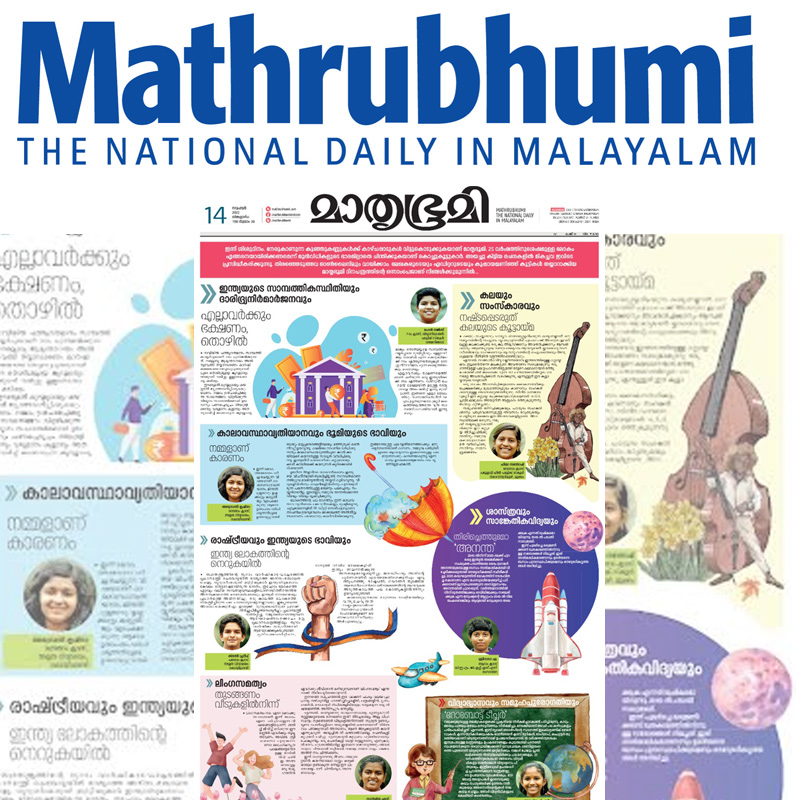
    Within a few days of getting in touch with schools, Mathrubhumi was flooded with entries. The editorial team of the company shortlisted the articles that would fill up the front page—14 different front pages for each of Kerala’s districts. The children were then brought in to sit with the editorial team led by Mathrubhumi, fine-tune their articles, and help design the front page. The remaining articles were uploaded to the Mathrubhumi website for everyone to read.

    On 14 November, Malayalees awoke to a front page that was very different: one that spread joy, looked ahead to the future, and gave everyone a glimpse of what the year 2047 could look like. Some of these ideas could revolutionise industries, make an impact, and perhaps even change the world. And what better way to change the world than through a humble newspaper.

  • Amitabh Bachchan turns narrator for Warner Bros Discovery’s new series

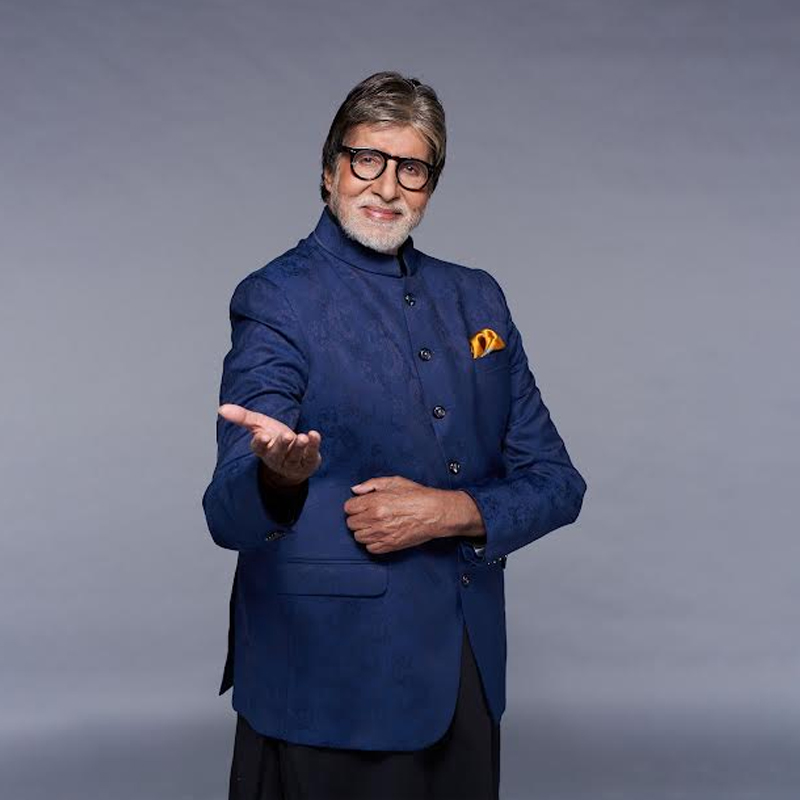
    Amitabh Bachchan turns narrator for Warner Bros Discovery’s new series

    Mumbai: Warner Bros. Discovery, the leading global media and entertainment company, is in celebratory mode with India’s “Azadi Ka Amrit Mahotsav” on its 75th year of Independence and is all set to unveil its new series, The Journey of India, on October 10. Narrated by Bollywood legend Amitabh Bachchan, who is also the face of Incredible India, the series is ready to memorialise the country’s rich tapestry of heritage, innovation and contemporary marvels that have paved the way for the country’s cutting-edge advancement.

    The six-part special series premieres globally on the streaming platform, discovery+, in India, the US, the UK, and the Philippines. It will be broadcast in more than 140 countries, including India, Japan, Singapore, France, Switzerland, UAE, Egypt, Brazil, Iran, and Kenya, among others, on the Discovery network of channels.

    The series weaves a tale of India’s legacy with contributions from a range of esteemed personalities and leaders. Spanning a wide range of subjects, this one-of-a-kind series provides an in-depth look at the nation’s progress, influences and accomplishments during the past 75 years; from advancements in science and technology and our ambitious and successful space missions to the world of cinema that not only entertains but also inspires.

    From fascinating stories of faith found across the length and breadth of the country to a diverse food culture that is adored around the world, India in the last 75 years has slowly but steadily made its presence felt on the global stage. Featuring an extensive collection of historical footage, it also hears from a stellar line-up of respected personalities and subject matter experts.

    Warner Bros. Discovery general manager South Asia Arjun Nohwar said, “As India celebrates 75 years of Independence, this commemorative new series reflects Warner Bros. Discovery’s commitment to bringing to life unique stories that inspire. We are proud to work with the iconic Amitabh Bachchan to take the audience on a vibrant journey through India, capturing the ethos of the nation, its diverse culture, and the spirit of its people.”

    The Journey of India will premiere in India on Discovery Channel, TLC, Discovery Science, Discovery Turbo and DTamil. More details on the series will be announced in the coming weeks.

  • RED FM’s new campaign celebrates 75 years of independence

    RED FM’s new campaign celebrates 75 years of independence

    Mumbai: Private radio and entertainment network 93.5 RED FM has announced a new campaign ‘India @ 75’ to celebrate the history of the country. Launched in collaboration with India’s apex business organisation FICCI as the knowledge partner, the initiative aims to relive the footprints that the nation has created over the glorious years of independence.

    ‘India @ 75’ will document the country’s landmark achievements through weekly episodes narrated by RJ Praveen. It will also feature interviews of prominent bureaucrats, government officials, and scholars.

    The campaign will run from 4 February 2022 to 15 August 2022 every Friday 9:30 am – 10:30 am.

    RED FM and Magic FM director and COO Nisha Narayanan said, “It’s indeed a matter of pride for the entire nation to be achieving this landmark. Over these years, the nation and its citizens have gained tremendous respect around the globe for contributions and achievements across various walks of life. The campaign aims to showcase stories that have been lost in time over the historical journey of 75 years since India’s independence. These anecdotes will urge individuals to pause, relive and soak in the past that has helped our country to grow and develop.”

  • Media’s independence needs to be zealously guarded: Narayan Rao Executive Vice Chairperson at NDTV

    Media’s independence needs to be zealously guarded: Narayan Rao Executive Vice Chairperson at NDTV

    Freedom of the media is a fundamental component of a vibrant democracy. It is what differentiates a democracy from a dictatorship and all forms of totalitarianism. Indeed a democracy cannot function without a free media while the latter can only exist in a democratic state.

    As Lord Northcliffe, owner of The Times during the First World War once said, “News is something someone somewhere wants to suppress”. As a free media in the world‘s largest democracy, it is our job to ensure that nothing ever gets suppressed. Also, dissemination of news is really the performance of a public service. We seek to inform and educate and to do it with independence….from Government and from revenue considerations. Our responsibility is not to the Governors but to the governed.

    While a free media is an absolute need, it is also necessary to stress that with freedom comes responsibility. Responsibility to ensure that one is always accurate and credible and respectful of the privacy of an individual.

    It is in this need for freedom with responsibility that talk of regulation comes up every now and then. I would like to state with all the emphasis at my command that the only regulation that is acceptable in a democracy is self regulation. And by this I do not mean that each news organization regulates itself by following its own editorial policy and standards which would naturally be of varying levels from channel to channel, but to have a structured self regulatory mechanism that watches over a common expectation of what constitutes good, responsible journalism.

    While a free media is an absolute need, it is also necessary to stress that with freedom comes responsibility. Responsibility to ensure that one is always accurate and credible and respectful of the privacy of an individual.
    _____****_____


    I honestly believe that the News Broadcasters Association (NBA) has made remarkable progress in this regard. We created a common code of ethics, a wonderful document of journalistic good practices and expectations, which is available for all to see on the NBA website. We then set up a News Broadcasting Standards Authority (NBSA) with a Chairperson and several eminent members to monitor and ensure that this code is followed by all our member channels. Our first Chairperson was the most ethical, learned and highly regarded, late Justice J S Verma. He ensured along with the eminent members, that the NBSA is truly independent. It also needs to be noted that the NBSA is the “standards authority” and not merely the complaints authority.


    The aim is to improve standards of news broadcasting over a period of time and we are well on the path to realizing that aim. In probably the only such example of its kind in the world, every member channel carries a scroll several times a day, exhorting viewers to approach the NBSA if they have any complaint against a channel. The decisions of the NBSA can be seen on the NBA website and over time action has been taken against several of our channels. We also have some Editors sitting on the NBSA for fixed terms and on a rotational basis as it is believed that self regulation flourishes and standards improve when it is known that, among others who will look at the quality of your content, will be your own peers.

    We will miss Justice Verma immensely. But the show must go on and I am honoured and delighted to announce that Justice R V Raveendran, former Judge of the Supreme Court of India, has very graciously accepted our invitation to be the next Chairperson of the News Broadcasting Standards Authority.

    Justice Raveendran brings with him incredible legal and judicial ability, a wealth of experience and outstanding reputation in upholding democratic institutions and values through strict and fair implementation of the law of the land. He very ably takes the baton from the late Justice Verma to chart out the next leg of our mission to establish that the media must function through structured self regulation.

    In such a robust system where is the need for a media council? With all due respect to our Parliamentarians in the Standing Committee and some others, very erudite people who have pushed for such a Council, my counter question to them is what for? When we have the NBSA which is doing such magnificent work in an independent and strict manner, what is it that a media council will do? Who will appoint such a media council? Government? How can that be acceptable?

    We will miss Justice Verma immensely. But the show must go on and I am honoured and delighted to announce that Justice R V Raveendran, former Judge of the Supreme Court of India, has very graciously accepted our invitation to be the next Chairperson of the News Broadcasting Standards Authority.
    _____****_____

    The media is the fourth estate, the fourth pillar of democracy, and has to be independent of the other three. And like the three zealously guard their independence of each other and safeguard their positions, as they must and should do, so should the media zealously guard its independence.

    That in part means, no Government appointed body to oversee the media. 
    Some complain that the NBSA does not have statutory powers. I would urge that they only take a look at the NBA website to look at the powers that the NBSA has been given. These range from censure to asking offending channels to carry apologies, retractions and corrections on the same slot where the offense was first carried (if, for example, the offending story was in the 9 pm news, the retraction/apology has to be carried in the 9 pm news as well), a fine that can be up to Rs one lakh, and finally, the power to recommend to the licensing authority that the license of a particular channel should be suspended, even cancelled. Isn‘t that power enough?

    (To take a dekko at some of the decisions that the NBSA has taken click here)

    Also, it needs to be noted that in the Cable Act, when it comes to the advertising code, the Advertising Standards Council of India (ASCI) has been mentioned as the standard under which advertising can take place. Similarly, for programming, why can‘t the same be the case with the NBSA for news and the BCCI for other categories of television? In fact this has been one of our long pending requests to the Ministry of I&B.

    What is necessary is to ensure that all laws are implemented strictly and speedily by our courts. We have laws against defamation and libel but the general feeling is that there will be no decision in most such cases for 20 years. That can sometimes make our journalists complacent about essential things like accuracy. If one knows that the law will be applied with effect and expeditiously, one will be far more conscious of the need for absolute accuracy. We have the laws. Please implement them.

    (The views expressed in the comment are in author‘s personal capacity and do not represent the corporate viewpoint)

  • Musharraf: Pakistan against independence of Kashmir

    MUMBAI : In a landmark interview on NDTV Pak President Pervez Mushrraf has for the first time said that Pakistan is prepared to give up its claim to Kashmir if India and Pakistan agree on the ‘four-point solution’

    (a solution in which boundaries are not changed and India does not have to give up any territory).

    Musharraf, when asked by NDTV’s Dr Pronnoy Roy, “so you are prepared to give up your claim to Kashmir”? replied: “We will have to … Yes … if this solution comes up”. The excerpts of the interview will be telecast on News on Tuesday night, an NDTV press statement said.

    Musharraf also says that Pakistan would give up its demand for a plebiscite in the region and give up on the UN resolutions, under this solution. He added that that self-governance or autonomy is not independence -saying that Pakistan is against independence for Kashmir.

    It may be remembered that last year, Musharraf had hinted that the solution to the Kashmir problem could be possible “within Indian Prime Minister Man Mohan Singh and my tenures”, and the latest startling statement on NDTV seems to be a well-planned one, following a calculated roadmap.

    When Roy repeated his question: “You are letting them self govern and you have no claim on Kashmir” … Musharraf retorted: “Why are you going on … I have said, at the moment, both India and Pakistan … We are on the same position as we were since 1948. But we both … I am saying … we both ought to be prepared to give up all that we have been saying. And this includes all this … If we reach an agreement where we are giving self governance, yes indeed…”

    In the interview President Musharraf also makes it clear that if the four-point solution (no change in boundaries of Kashmir; borders and the LoC to be made irrelevant; staggered demilitarisation; and autonomy or self-governance with a joint supervision mechanism) is agreed upon … Pakistan would also give up on the UN resolutions and its long-standing demand for a plebiscite.

    Roy further asked, “One thing in your solution… I will just be very clear so that the people of India can know this clearly. You are being, in a way, extremely bold, because it means that you are giving up plebiscite and giving up the UN resolution?”
    The wily general replied “One is giving up that clearly and I say, yes am giving up…There is a provision in that. One is prepared to give up, in case India leaves its stated position also…”

    The Pakistani President also said: “I believe when you are negotiating and you go for peace, it means what? It means compromise … otherwise you can’t… go for a solution of a problem … What do you mean by compromise? Compromise can never take place if you don’t step back. Compromise inherently means stepping back by both sides. So inherently, both sides have to give up their positions … and step back. If one of us is not prepared to step back, we will not reach a solution.”

    Musharraf also made it clear that once Pakistan gives up its claim to Kashmir, this four-point solution would not be a negotiating step towards getting independence for Kashmir and that self-governance or autonomy is not the first step to Kashmir’s independence.
    Roy asked: “Are you then saying, No independence for Kashmir?” and the general said: “Absolutely, we are against independence… and so is India.”