Tag: Inclusion

  • 63% surveyed more likely to buy from brands that made inclusive efforts: Wunderman Thompson global report

    63% surveyed more likely to buy from brands that made inclusive efforts: Wunderman Thompson global report

    Mumbai: Wunderman Thompson launches ‘Inclusion’s Next Wave,’ a global trends report outlining the driving forces behind the next wave of inclusion. The report reveals the powerful role brands can play by putting inclusion at the heart of their business, in storytelling, design, and in the workplace, creating authenticity and reflecting life as it is lived. Through extensive research, Wunderman Thompson Intelligence has identified key trends in inclusion that are on the rise and 10 actions authentically inclusive brands and businesses can take from the office to the Metaverse to show up for their audiences.

    82 per cent of the study’s respondents feel that actions on inclusion and equality should be integrated throughout the entire business, with 63 per cent more likely to buy from brands that made more effort to represent people like them. Customers will reward brands that deliver on inclusion, with 66 per cent of people agreeing that they are more inclined to buy from companies who speak out on issues of equality and inclusion, and 60 per cent of people agreeing that brands who do not deliver on inclusion will become irrelevant.

    Wunderman Thompson also studied representation in media such as TV and film. Of the groups that feel most underrepresented, 46 per cent of neurodiverse respondents say there aren’t enough characters depicted on screen that share their traits, followed by 45 per cent of disabled people; 42 per cent of people with mental health issues; 35 per cent of LGBTQ+ and 35 per cent of people aged 60 and over; and 32 per cent of underrepresented racial groups.

    The study also brings to light issues that are rising in a rapidly changing era, such as how brands must now pivot to ensure that they are building safe, accessible, inclusive, and democratic digital spaces (82 per cent of those who have heard of the metaverse believe that companies should make special efforts to ensure digital worlds are accessible to everyone). On the other hand, 83 per cent agree that brands should not use digital spaces as an excuse to avoid providing accessible spaces in the real world.

    Wunderman Thompson Intelligence global director, ‘Inclusion’s Next Wave’ editor-in-chief Marie Stafford said, “Businesses and brands will not hit the mark if they don’t hire, collaborate with, and support marginalised groups. Recent events have intensified existing inequalities, and the global conversation is gaining momentum, but this new research shows just how much consumers want to see more inclusive actions from brands. They have a powerful role to play in building a truly inclusive world, and those who take this into consideration can deliver authenticity and better reflect the real world, and in turn, reap the rewards of doing so.”

    Key trends in inclusion that are on the rise:

    • Intersectional storytelling: Diversity both on-screen and behind the camera is shaping a new era of inclusive storytelling.

    • Inclusivepreneurs: Entrepreneurs from underserved communities are innovating for themselves

    • Mass inclusive design: Accessible products and services are hitting the mainstream as brands target mass distribution. 

    • Meta-inclusion: As we build new virtual worlds, brands have an unprecedented opportunity to build in inclusion, accessibility, and equity from the start.

    • Revolutionary rest: Exhausted from constantly fighting their corner, marginalised communities are giving themselves permission to focus on rest.

    Wunderman Thompson global head inclusive design Josh Loebner commented, “Driven by a range of external factors, the next wave of inclusion is upon us. But the journey is just beginning, and there is a huge opportunity for brands to deliver better products, spaces, and experiences by putting inclusion at the heart of their business to ensure they stay relevant and capture both consumer attention and spending power.”

    Vignettes of companies breaking inclusion barriers appear throughout the study, from a lingerie brand that democratised desire among the disabled community and people over 50, movements shining a light on men’s mental health, and stories of digital sanctuaries for segments of inclusive communities to be themselves. It outlines rising trends in inclusion, how inclusion affects product development, workplace dynamics and the bottom line, and includes first person accounts of challenges and benefits from people with full spectrums of identities from around the world.

  • ASCI bats for better inclusion in advertising, to clamp down on discriminating ads

    ASCI bats for better inclusion in advertising, to clamp down on discriminating ads

    Mumbai: The Advertising Standards Council of India (ASCI) has updated its code to add greater inclusivity in advertising depictions. The ASCI code already required ads to not deride anyone based on race, caste, creed, gender or nationality. However, new areas of possible discrimination or derision have now been included such as gender identity, sexual orientation, body shape, age, and physical as well as mental conditions.

    Advertisements that mock or deride anyone on these bases will now be considered in violation of the ASCI Code. Talking about the changes, ASCI CEO & secretary general Manisha Kapoor said: “We have seen consumers call out ads that mock or deride people, or portray them in unfavourable ways. And it is only right that advertising becomes more inclusive and sensitive to this.”

    “It is not acceptable, for example, to associate characteristics such as sluggishness with a certain body shape. Similarly, to deride someone with a physical or mental ailment, or their gender identity would now violate the ASCI code,” she continued.

    “With this change, ASCI hopes to ensure that advertising becomes more inclusive and sensitised to all sections of our country, and does not perpetuate certain portrayals that have no place in a progressive society,” Kapoor added further.

    The changes to the ASCI code were approved by the board recently. This clause is now updated as part of Chapter 3 about advertisements that cause harm, which reads as follows:

    3.1. No advertisement shall be permitted which:

    (b) Derides any individual or group based on race, caste, colour, religion, gender, body shape, age, sexual orientation, gender identity, physical or mental conditions or nationality.

    As a future-facing organisation, ASCI works to ensure that its guidelines keep pace with the ever-evolving society, the advertising industry watchdog said in a statement. As consumers are becoming increasingly concerned about unfavourable depictions of certain sections of society, this change ensures that advertising keeps pace with these rightful expectations.

  • Vanaja Pillai to head of diversity, inclusion and impact at DDB Mudra

    Vanaja Pillai to head of diversity, inclusion and impact at DDB Mudra

    Mumbai: DDB Mudra Group has announced the elevation of Vanaja Pillai as head of diversity, inclusion and impact, underscoring the company’s commitment to embedding diversity, equity and inclusion in its people and business strategy.

    Pillai was the driving force behind the Phyllis India Project, a comprehensive and intense leadership development program to help prepare DDB’s women talent for leadership.

    “Vanaja’s work on the Phyllis India program has been applauded across DDB’s borders and is a brilliant example of senior leadership driving actionable change in advancing DEI within the DDB family,” stated DDB Worldwide chief diversity, equity and inclusion officer Nikki Lamba. “We are excited about her taking on this larger mandate and bringing DEI to the heart of our business, people and product strategies in India.”    

    In her expanded role, she will work closely with CEO and MD Aditya Kanthy and HR head Rita Verma on initiatives to grow a diverse and inclusive workplace, including talent acquisition, retention, training and outreach to talent in underrepresented communities. Pillai will also lead the creation and delivery of effective growth and development opportunities rooted in the company’s purpose and growth strategy, said the statement.

    “To compete in our times, we need to take a critical view of every aspect of our business. Our approach to talent and culture included,” commented Aditya Kanthy. “There is much to do in this area, and Vanaja is just the right person to lead us to success. This work, with the Group’s effort as a global network, will bring in diverse voices to help shape workplace culture and brand communication of the future.”

    “It has been an exhilarating journey, from the intent of creating an India chapter for the Phyllis Project, to having the first batch graduate last week,” Vanaja Pillai said, speaking on her extended role. “The bar has been set high for every challenge we pick up from hereon. Over the next year we will focus on a select set of DEI goals and approach them with the same rigour and passion that made the Phyllis India Project what it is today. From an overall talent perspective, the pandemic made us even more aware of the need for constantly focusing on people and their growth.”

  • Reckitt, UN Women join hands for betterment of women in India

    Reckitt, UN Women join hands for betterment of women in India

    Mumbai: UN Women and Reckitt have come together to create economic opportunities for women in the health, hygiene and sanitation sectors with a commitment to promote gender equality, diversity and inclusion as well as the incorporation of the highest standards of governance.

    A Memorandum of Understanding (MoU) was signed by UN Women India, country representative, Susan Ferguson and Reckitt, senior vice president – South Asia, Gaurav Jain.

    With this partnership, the global consumer health and hygiene company will engage with two billion people through its programmes, partnerships, and campaigns. Each brand is driven by this purpose and is responsible for improving lives through education and providing access to the highest-quality health, hygiene and sanitation, said Reckitt in a media statement.

    “Women are the real catalysts of change. We must act as an enabler and catalyst to mentor them and create a more balanced environment,” said Jain during the signing event. “We, at Reckitt are happy to further strengthen our efforts in this direction with UN Women on this one-of-a-kind partnership to support women in our society to become resilient. This partnership aims to equip women with life skills like decision-making, and entrepreneurial opportunities in the health, hygiene, and sanitation sectors. Together, with UN women, we share the common goal of addressing the educational imbalance, gender inequality, and hygiene for all.”

    “UN Women and Reckitt are committed to improving women’s access to better health and hygiene and decent jobs for women, which is an urgent need in India,” said Ferguson. “Women and girls have been badly affected by Covid-19, so helping the most marginalised find decent jobs in sanitation and hygiene services is an important step towards improving women’s lives.”

    Reckitt has introduced several initiatives in marginalised districts of India that the government has categorised as “aspirational” and deserving of particular support. The initiatives cover areas of hygiene, health, and sanitation for women including its support for the Harpic World Toilet College, Dettol Hygiene Impact Bonds as well Dettol Banega Swasth India (India for Health) initiative, and Harpic Mission Paani.

  • Mars Wrigley India exemplifies inclusion and diversity with five key appointments

    Mars Wrigley India exemplifies inclusion and diversity with five key appointments

    Mumbai: In a significant move demonstrating its ambitious focus on inclusion and diversity and continued investment in the talent pool in India, Mars Wrigley on Thursday announced the appointment of three new women executives in its India Leadership Team and chose two executives from India to take up global roles critical to the company’s growth strategy.  

    Richa Singh, Sunita Patnaik, and Shahine Ardeshir have joined Mars Wrigley India Leadership Team as chief financial officer (CFO), director – corporate affairs, and director – people and organization (P&O) India, respectively, while Chirag Shah has been elevated as CFO of Nature’s Bakery, a Mars business in the US, and Hegeler Solomon promoted to director of people and organisation, Mars Wrigley Asia.

    “Fostering talent and building capability remain a cornerstone of Mars Wrigley and we are highly intentional in finding the best talent, building the right capabilities and creating an environment of inclusion and diversity,” said Mars Wrigley India, general manager, Kalpesh R Parmar. “This is instrumental to our ability to deliver our growth legacy and navigate the challenges as well as capitalize on the opportunities that lay ahead as we remain steadfast on our long-term commitment to India. Aligned with this, I am pleased to welcome  Richa, Sunita and Shahine to Mars Wrigley India’s leadership team. These appointments advance our commitment to bringing on board strong women leaders to position us well in our journey of purpose-led growth.”

    “Equally, I am very excited that Chirag Shah and Hegeler Solomon have been elevated to lead global positions within Mars. Both of them have been strong architects in India’s growth story for Mars Wrigley and have made a significant contribution to the business. I am very proud of this move as it is a strong testament of our ability to nurture and export world-class talent from India for the company globally. Their unique experiences in a diverse and fastest-growing market like India will help shape and contribute to the transformative growth strategy of the company across the markets. I wish all of them the very best as they begin their new assignments,” Parmar added.

    Richa Singh comes with a global experience of over two decades across consumer durables and FMCG companies, leading business accelerations and transformations, process optimisations, among others. She joins from Niine Pvt Ltd, a start up in feminine hygiene that she led for three years. Prior to Niine, she worked in Philips Healthcare@Home, Philips Consumer, J&J Medical ASEAN, Coca-Cola, and P&G across India, ASEAN, Australia, and Japan. Richa replaces Chirag Shah.

    Sunita Patnaik comes with nearly two decades of experience in journalism, corporate affairs, communications, CSR, and Sustainability. Sunita joins from Facebook India where she led content and programs policy communications. Prior to Facebook, Sunita was associated with Walmart India and Cargill India. In her current role, Sunita will be responsible for leading government relations, corporate communications, PR, and advocacy efforts across all Mars Wrigley India brands and verticals.  

    Shahine Ardeshir comes with a wealth of experience, a large part of it from within the company, having joined Mars in 2012. She has held a number of key roles within the leadership team, including most recently as Associate Relations (AR) Lead for the segment across India, Middle East and South Africa. She played an integral part in launching and stabilising AR operations of the new People and Organization operating model, across a diverse region, supporting all segments including Mars Wrigley, Pet Nutrition, and Royal Canin. Shahine replaces Hegeler Solomon.

    Richa, Sunita, and Shahine will be based in Gurugram.  

    Chirag Shah joined the company in 2016 as CFO for the erstwhile Mars Chocolate segment in India. He was later appointed as Finance Director for the Mars Wrigley integrated business in 2017 in India. Shah will be relocating to the US shortly.

    Hegeler  Solomon joined Mars in May 2014 as People and Organization Business Partner for the erstwhile Wrigley segment and subsequently moved as director – people and organization for Wrigley South Asia. Later he was appointed as director – people and organisation for the combined Mars Wrigley unit in India. During this stint, Solomon played the lead role in integrating the structure of the two different organisations and created an enabling culture that helped the company secure a ‘Great Place to Work’ status in India. Solomon will transition to his new role in September. 

  • Saraf Furniture to hire 250 LGBTQ+ professionals for equality at workplace

    Mumbai: In a bold move, furniture brand Saraf Furniture has announced it will walk its own talk on championing LGBTQ+ rights at the workplace, by hiring around 200 to 250 professionals from this community in the financial year 2021-22, as a part of the brand’s mission of ‘equality in the workplace’.

    Transforming the dream of LGBTQ+ equality in the workplace into reality, Saraf Furniture is carving out a detailed plan to constitute an expert committee to smoothly execute the socially relevant process. The top management has left no stone unturned to make its entire hiring process comfortable and hassle-free, especially for eligible, deserving LGBTQ+ candidates.  

    Professionals belonging to LGBTQ+ community may now explore careers at the company across a diverse range of job profiles – interior designers, after-sales support, HR, chat support individuals, website developers, Search Engine Optimization (SEO), AutoCAD experts, digital marketing, supply chain managers, to name just a few.

    To streamline the entire mission, Saraf Furniture is running awareness and training-related programs on lifestyle diversity for their current employees also. The program seeks to ensure mutual respect, awareness, and communication among the entire workforce.

    The company does not believe in half-hearted measures, it plans to go the entire mile and even further. A slew of new policies that include one on gender affirmation as well as a sexual harassment prevention initiative will also be implemented. Furthermore, Saraf Furniture will construct unisex washrooms and set up an additional safeguard to protect the rights of the LGBTQ+ community in the form of a ‘welfare committee’.

    Saraf Furniture founder & CEO Raghunandan Saraf said, “There is a famous idiom – practice what you preach, and, I firmy believe in this. We can’t afford to speak LGBTQ+ equality in the workplace if we fail to implement it in our own (corporate) workplace. Saraf Furniture has taken a firm decision to come forward and set an example for others to be followed, by living up to its firm commitment towards the LGBTQ+ (community and for) equality in the workplace in the true sense”.

    “As a growing organisation and one of the biggest names in the furniture industry, Saraf Furniture is always keen and geared up to integrate diversity at workplace. Nowadays, organisations need to involve people from all walks of life, hone their skill sets so as to take (get an) edge over others in the era of severe competition. As entrepreneurs, we need to be more open when it comes to talent which is lying untapped and unexplored. I know, together we can make a difference,” Saraf added.

    With the month of June globally recognised as ‘gay pride’ month, many brands today flaunt the community’s rainbow colours on their logos via social media handles. However, on-ground measures are yet to keep pace with the total number of brands seen championing the cause over Instagram. While every conversation that results in a mindset change cannot be discounted, it is crucial that more companies come forward and actually walk the talk.

    At present, even two years after the landmark Supreme Court ruling decriminalised homosexuality, members of India’s LGBTQ+ community lag far behind their western counterparts to attain due corporate representation and other benefits. Hence brands like Saraf Furniture will serve as the right role model for more corporate to take inspiration, perhaps borrow a bit of panache from them, to accomplish increased inclusivity, diversity and equality in the respective workplaces.

  • Saraf Furniture to hire 250 professionals from the LGBTQ+ community

    New Delhi: In a bold move, which is perhaps a first for Corporate India, furniture brand Saraf Furniture is actually walking the talk when it comes to championing LGBTQ+ rights at the workplace. The solid wood furniture player announced that it will hire about 200-250 professionals from the LGBTQ+ community in the financial year 2021-22 to ensure ‘Equality in the Workplace’.

    The company said it is carving out a detailed plan to constitute an expert committee for the smooth execution of the entire process. Professionals from the LGBTQ+ community will be able to explore careers at the company in a diverse range of job profiles – interior designers, after-sales support, HR, chat support individuals, website developers, Search Engine Optimization (SEO), AutoCAD experts, digital marketing, supply chain managers, to name a few.


    The company has also been running awareness and training-related programs on lifestyle diversity for their existing employees as well. A list of new policies including major ones like Gender Affirmation and Sexual Harassment Prevention Policies are all set to be implemented. Furthermore, Saraf Furniture will also be constructing unisex washrooms.

    “There is a famous idiom – Practice what you preach. And, I firmly believe in this. We can’t afford to speak LGBTQ+ equality in the workplace if we fail to implement this in our workplace. Saraf Furniture has taken a firm decision to come forward and set an example for others to be followed by living up to its firm commitment towards the LGBTQ+ equality in the workplace in the true sense”, says Saraf Furniture founder & CEO Raghunandan Saraf, on the policy decisions pertaining to LGBTQ+ equality at his organisation.

    With the month of June globally recognised as Pride month, many brands today flaunt the community’s rainbow colours on their logos via their social media handles. However, on-ground measures are yet to keep pace with the number of brands championing the cause on Instagram. Hence brands like Saraf Furniture need to be lauded so that more corporates can also take a step forward in accomplishing increased inclusivity, diversity and equality in the workplace.

  • Netflix India in step with global trend of nearly 50% female representation: Srishti Behl Arya

    Netflix India in step with global trend of nearly 50% female representation: Srishti Behl Arya

    KOLKATA: Netflix added inclusion as its cultural value in 2017. Recently, the streaming giant released its first ‘inclusion report’, which revealed that women comprised 47.1 per cent of its workforce. The company, a vocal proponent of gender equality, has featured women in the lead role in many of its original shows and films as well. The balance between an inclusive internal community and female representation on screen is being followed in India as well, Netflix India international original film director Srishti Behl Arya said.

    Since joining Netflix in 2018, Behl Arya has been front and centre in building the streamer’s local content library. She has seen the industry grow and evolve – from the time when there were only a handful of women on film sets, before streaming platforms had entered the scene. She used to be the only woman on set as an assistant director; things have come a long way since then, but there is still a lot to be done. For starters, said she, we need to reach a point when we stop referring to “women director” as something extraordinary.

    “As far as Netflix is concerned, we have even put out an inclusion report globally, we are showing that almost 50 per cent of our workforce is women and that’s the same thing we are seeing in India as well. Not just in the workforce but also in leadership positions,” Behl Arya shared during a virtual interaction. In 2021, the company will be working with 18 women directors and it is already collaborating with over 1,000 women creators in various roles.

    She further added that last year, 50 per cent of Netflix’s film titles had a woman producer or a woman director. Nearly half of its entire content had women playing central roles. Moreover, the company is giving equal opportunity to newer people as well, rather than riding on established names alone.

    “As you see all the members, you see all our subscribers are divided between male and female. When the population of the world is divided in such a way, it’s not right to not represent half the population of the world. That’s a very logical next step for us. And I think what has happened is more and more female members are also finding their voice now. That itself is giving rise to more and more stories about women and more stories, very importantly, from women’s point of view,” she noted.

    Behl Arya reemphasised how Netflix is committed to diversity of all types. According to her, it will come by including more and more voices and stories, as more people want to see themselves reflected on screen.

    The Netflix executive also said the change is also about giving women access to tools to aid their quest for equality and representation. The streaming giant recently created a $100 million global fund for creative equity aimed at more inclusive pipelines behind the camera. $5 million of that fund will be deployed for women all over the world. As part of the initiative, Netflix will be conducting screenwriting workshops for women over the course of a year. In India, the company had many first time female producers, writers, directors.

    “The idea is to enable women to come forward and provide comfort for them to share their stories and that is something that we are actively working on. In fact, right now, in one of our titles, we have a first-time female cinematographer,” she commented.

    There is a common notion that companies hire women leaders in tried and tested roles. However, the scenario is entirely different for Netflix. “We have great representation in the tech side at our Los Gatos office. We have lots of women working on our film side, all our regions, we have them in our production management, VFX, we have women working in marketing and different aspects of it. India office is also following the global trend of close to 50 per cent representation of females. There is no function we can say that is not touched by women,” she remarked.

    While many OTT platforms boast their ratio of female viewership, Netflix India takes a different approach. Behl Arya clarified that Netflix does not divide viewers on the basis of gender, age. It’s the viewing of the title that matters.

    “We have the same high bar for all the countries we are programming and for all the employees and the same standard, we want to maintain all our subscribers. It helps us think things a little differently from how other traditional players think,” she stated.

    Overall transformation in the industry, including at Netflix, was not easy to come by. Women have increasingly stepped up in uncomfortable circumstances to prove their competence. Along with that, men also frequently supported and enabled them.

    “As we break more and more bastions, we will find more and more opportunities to prove how good we are and we are here to entertain and do it really well and it just makes sense to work with more and more people bringing in the diversity,” Behl Arya shared on a confident note.

    Despite the positive changes, one may observe there are only a few women in the upper echelons, which applies to video streaming services too. However, Behl Arya begged to differ. She cited the example of industry leaders like Ekta Kapoor who runs the OTT platform ALTBalaji; Reliance media segment has Jyoti Deshpande at the top, south-based Annapurna Studios CEO Supriya Yarlagadda, ex-Sony Pictures Networks’ (SPN) film production division head Sneha Rajani. Having said that, she raised an important point.

    “There are women in the position but I think that we are still not used to seeing them so they stand out. That’s exactly my dream is that one day gender will not stand out because it will be so common,” she summed up.

  • Inclusivity makes a strong business case for media companies

    Inclusivity makes a strong business case for media companies

    MUMBAI: In the last few years, diversity and inclusion have caught heightened attention in organisations across the world. Although diversity is less of a concern for media companies, inclusion is what needs to be addressed. The motive behind this should its relevance today and the impact it has on business.

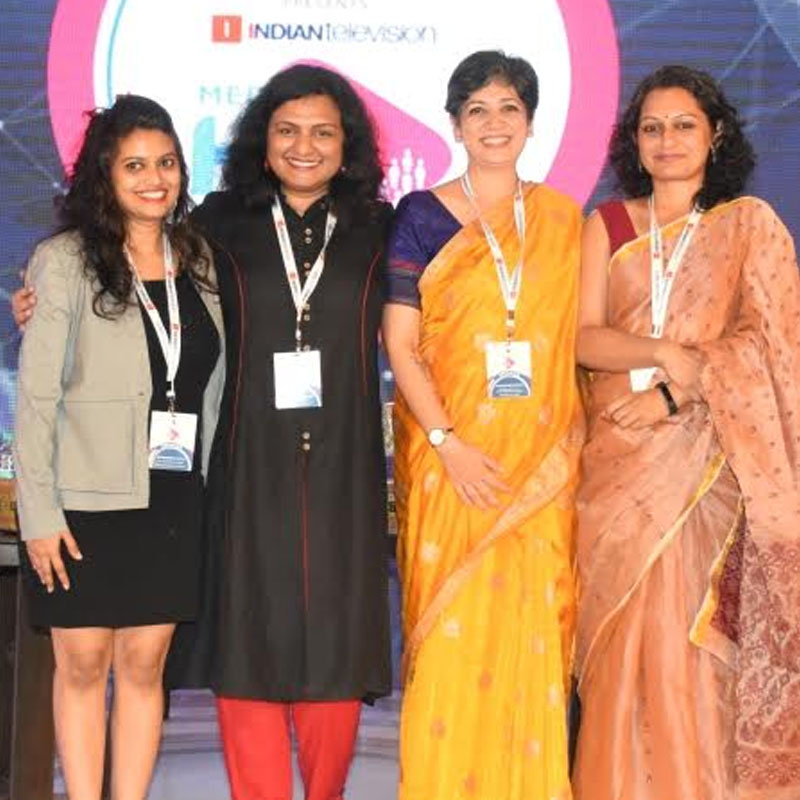
    At the recently concluded Media HR Summit hosted by Indiantelevision.com, a panel discussion moderated by D&I evangelist and founder and MD Vividhataa, Diversity Hiring Consultants Ratnaprabha Sable revolved around the issues regarding D&I. Voices of Inclusion author Deepa Shankar, Mondelez International diversity and inclusion lead (independent consultant) Priyadarshini Gupta, NeoSeven Solutions global HR expert Monika Navandar took part in the discussion.

    Gupta explained that diversity is about having diverse perspectives, thoughts and viewpoints on the table while innovating something or creating a new product, service or working together, collaborating. According to her, having diverse thought processes on the table is important.

    Talking about the need for diversity in an organisation, she also said that a diversity agenda should have a business case for it. She gave the example of an American KPO that was investing a high amount of money in training employees in the age group of 22-25 who would end up leaving the organisation in less than a year. Instead, it started recruiting retired people with the necessary skill sets for whom skipping jobs or moving high or quickly in their career did not matter. As a result training cost reduced significantly impacting topline and bottom line of the organisation.

    “Inclusion is about what I am doing in order to help a talent who has been brought back into the system to make them feel they belong to the organisation and the person thrives and grows,” Shankar commented. She also added that inclusion is also about policies which support the diversity agenda.

    Navandar contradicted a point from another session where panellists made a point about having tech and analytical skills. According to her, people should play to their strengths as there are so many other jobs.

    While there’s a common tendency of discussing only on gender-specific issues, it came out during the discussion that diversity moves beyond this. The panel also discussed the issue of unconscious biases which even sometimes affects recruitment processes.

    In the context of the media and entertainment industry, it was agreed that diversity is not a big concern there but inclusion needs to be worked upon such as accepting smokers and non-smokers, people who have alcohol vs those who don’t have. More importantly, Sable highlighted the need for backward integration. She contended the importance of creating jobs for people with disabilities, acid attack victims and mental health issues. According to her, organisations need to identify jobs where these people can be placed in or trained for.

    The media industry has the advantage of having different sets of people compared to other industries. Moreover, multicultural workforce brings out multicultural content making the business case strong for diversity agenda. However, looking at supplier, product and service delivery diversity along with consumer diversity is also important while working. Hiring a diverse slate of people and recruiting from different industries, not just from media will also enhance diversity.