
Connect with us
NEW DELHI: Even as the federal government in India is contemplating whether to distance itself from the second round of controversy regarding implementation of conditional access...
MUMBAI: Less than a fortnight before the conditional access system (CAS) gets implemented in Mumbai, the first of its kind suburban news channel has been launched....

MUMBAI: When the cable industry committed on Saturday to provide all channels (pay and FTA) available for a total monthly tab of Rs 222 (exclusive of...

NEW DELHI / MUMBAI: On Wednesday it was the big broadcasters (excluding Zee Telefilms) that threw their “pricing spanner” in the works of the conditional access...
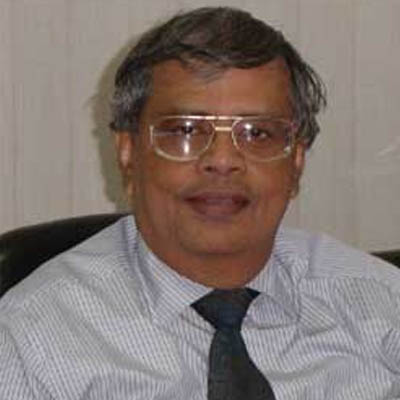
HTMT group director and CTO (chief technology officer) KV Seshasayee is the man in the centre of action. He is the man who will spearhead the...
MUMBAI:Hinduja group MSO INCableNet today announced it would brand its Conditional Access System (CAS) service as ‘INDigital’. For provision of CAS service to customers through Set...
MUMBAI: The first to switch off and the last to do it, ESPN Star Sports and the Star Network respectively, ended their blackout of Hinduja group...
MUMBAI: First, it was switch-off time. Now it is switch-on time. One by one, broadcasters, who had blacked out InCableNet in Mumbai for non-payment of dues,...
Mumbai: More than a fortnight after it witnessed a gradual blackout by the leading pay channels – ESPN-Star Sports, Sony, Zee and Star – the Hinduja-run...
MUMBAI: Sony’s Sambhav Asambhav’s launch episode may have suffered due to the Hinduja group MSO IncableNet switching off the Sony bouquet in several parts of Mumbai,...
MUMBAI / NEW DELHI: ESPN Star Sports has just upped the ante in its confrontation with Hinduja Group MSO INCableNet over the issue of outstanding dues....
MUMBAI: InCablenet may well start receiving signals of all the 17 channels belonging to the Zee-Turner bouquet from 14 May 2003 onwards. Speaking on the sidelines...
NEW DELHI: India’s information and broadcasting minister Ravi Shankar Prasad today categorically ruled out any extension of the 14 July deadline of CAS and also attempted...
MUMBAI: Hinduja Group MSO INCableNet has charged Star India with bowing to pressure from “other broadcasters” in its decision to switch off Mumbai’s biggest cable service...
MUMBAI: Well, it happened finally. Hinduja Group MSO InCablenet can now virtually qualify as Mumbai’s first major free-to-air cable service provider. The Star network late this...
MUMBAI: Responding to yesterday’s disconnection by the Zee Turner alliance, Hinduja Group MSO INCableNet has disputed the reasons given for the switch-off. Zee had cited large...
MUMBAI: At the rate the Hinduja Group MSO InCablenet is getting switched off by the different pay bouquets, it could soon qualify as a free-to-air platform....

MUMBAI: The disconnection virus seems to be spreading in Mumbai. Following ESPN-Star Sports, SET-Discovery One Alliance bouquet of channels has switched off its service to Hinduja’s...

MUMBAI: Hinduja Group MSO INCablenet has lashed out at ESPN-Star Sports for switching off signals saying the sports broadcaster was resorting to “pressure tactics” despite “being...

MUMBAI: The tug of war between cable ops and broadcasters shows no signs of slowing down. ESPN Star Sports (ESS) has discontinued its service to Hinduja’s...

MUMBAI: Broadcaster-MSO payment disputes are coming out in the open in Mumbai after what has been many months of relative calm. Premium sports channels ESPN and...
NEW DELHI / MUMBAI: Two leading multi-system operators of India, Siti Cable and the Hindujas-controlled INCableNet, are pushing ahead with conditional access (CA). While Siti Cable,...
MUMBAI / NEW DELHI: Showtime’s been overtaken by sabre rattling between cable ops and broadcasters in the western state of Gujarat. Cable operators, who have not...
NEW DELHI: The last legislative requirement as far as bringing addressability in Indian cable homes has been cleared. President Dr APJ Abdul Kalam yesterday gave his...
NEW DELHI : The path has been paved and the first hurdle crossed as far as bringing addressability in Indian cable homes is concerned. But before...
NEW DELHI: An early rollout of CAS looks unlikely, though the government (read the information and broadcasting ministry) would like an early implementation in the four...

MUMBAI: Multi-system operators (MSOs) have been working overtime (or should we say overnight) as the 10-day grace period given to Mumbai’s cable operators (by the I&B...

MUMBAI: BBC World and IN Mumbai, the news and events channel of Hinduja Group MSO INCableNet, today announced a content sharing agreement that allows for the...
MUMBAI: Underdeclaration – the monkey on the backs of broadcasters and, apparently, MSO’s as well, may well have a solution if an initiative announced today proves...

NEW DELHI: Television Eighteen Ltd, the Indian joint venture partner for CNBC India, is in talks with Sony Entertainment TV India to sort out the matter...

NEW DELHI: Television Eighteen Ltd, the Indian joint venture partner for CNBC India, has questioned the Hinduja Group MSO INCablenet’s stand on the black out of...

MUMBAI: The following is the statement issued by INCablenet in response to CNBC India’s charges: Indusind Media and Communications Ltd has learnt that a press release...

NEW DELHI/MUMBAI: The multi-system operator (MSO)-broadcaster face-off has taken another twist. Now the dramatis personae are the Hinduja group-controlled INCablenet and business news channel CNBC India....

MUMBAI: INCablenet is increasing the number of channels offered in its bouquet from 90 to 105 within a week. The 15 new channels will include three...

MUMBAI: The Hinduja Group MSO INCableNet announced today that it will be telecast the Ganapati Visarjan live from Girgaum Chowpatty on 20 September 2002. 'The channel,...

There has been a major reorganisation at Hinduja Group MSO INCableNet in its senior management structure. INCableNet president Rajiv Vyas now has sole operational charge of...

After a day of hard negotiations, Star India and Hinduja Group MSO INCableNet this evening appeared to have bought themselves some time to arrive at an...

In the end, it was too good to last. Yesterday, Hinduja Group MSO INCableNet’s subscribers who were tuned in to the quarter final match-up between new...

BBC World Service and IndusInd Media & Communications Ltd announced toady a partnership to provide BBC radio programmes 24 hours a day on INCableNet, in Mumbai....

No more unauthorised reception of the FIFA world cup soccer. Armed with a restraining order issued by the Delhi High Court last night, applicable across the...

How well it will work in the rest of the country remains to be seen. But the leading cable MSOs in Mumbai have decided to work...

Just in time. Seven Star Cable Network, which was the only MSO in Mumbai still to sign on to the new subscriber regime of ESPN Star...

Just in time. Seven Star Cable Network, which was the only MSO in Mumbai still to sign on to the new subscriber regime of ESPN Star...

Two can play at the game. With the Bombay High Court expected to issue a ruling tomorrow on the ongoing spat between the Hinduja Group MSO...

ESPN Software today claimed a major victory in its tussle with the Hinduja Group MSO InCableNet when it announced that most cable networks across Mumbai city...
Justice Patil of the Bombay High Court today posted for Friday the hearing of the contempt case filed by Hinduja Group MSO InCableNet against ESPN Software...

The Consumer Guidance Society of India (CGSI) has lambasted cable operators for “holding consumers to ransom” in the ongoing dispute between InCableNet and ESPN Software over...

With the spat between ESPN Star Sports and Hinduja Group MSO InCablenet set to be thrashed out in court, the channel has decided to take its...
The battle between ESPN-Star Sports has entered another phase. On 24 January cable TV operators in cable TV capital Mumbai extended their agitation against basic subscription...
Information & Broadcasting minister Sushma Swaraj has scheduled a meeting today evening at 5:00 pm with cable operators where major issues impacting the industry are to...


