Tag: InCable

  • Vynsley Fernandes becomes CEO NXTDigital

    Vynsley Fernandes becomes CEO NXTDigital

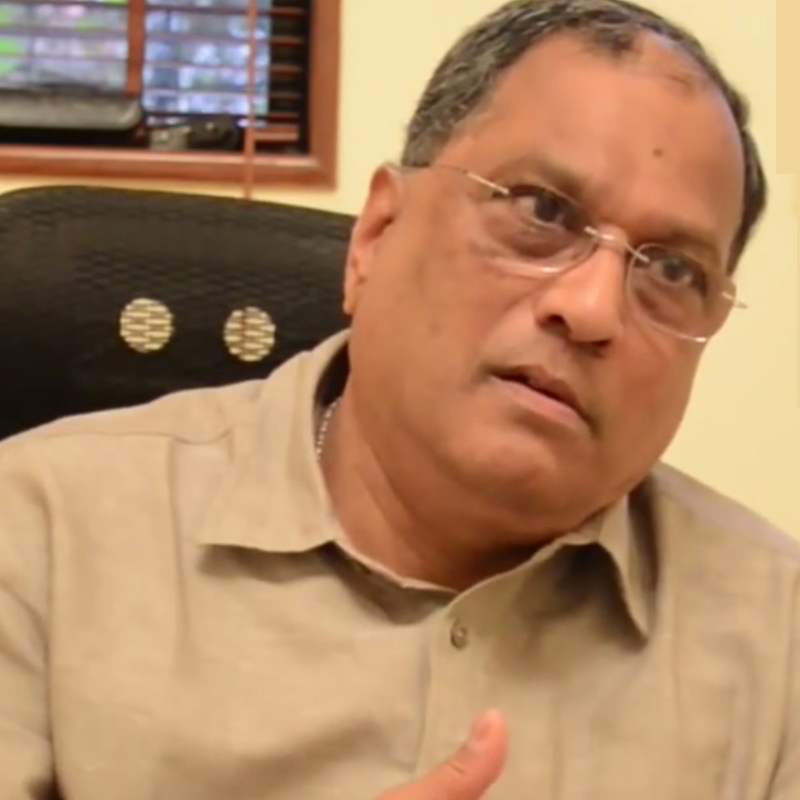
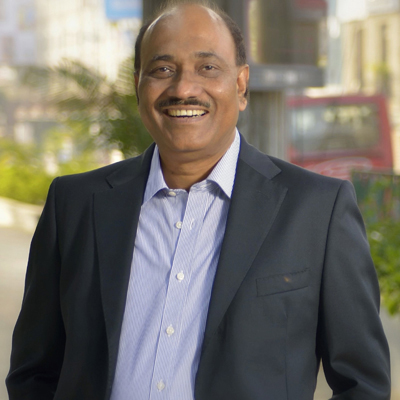
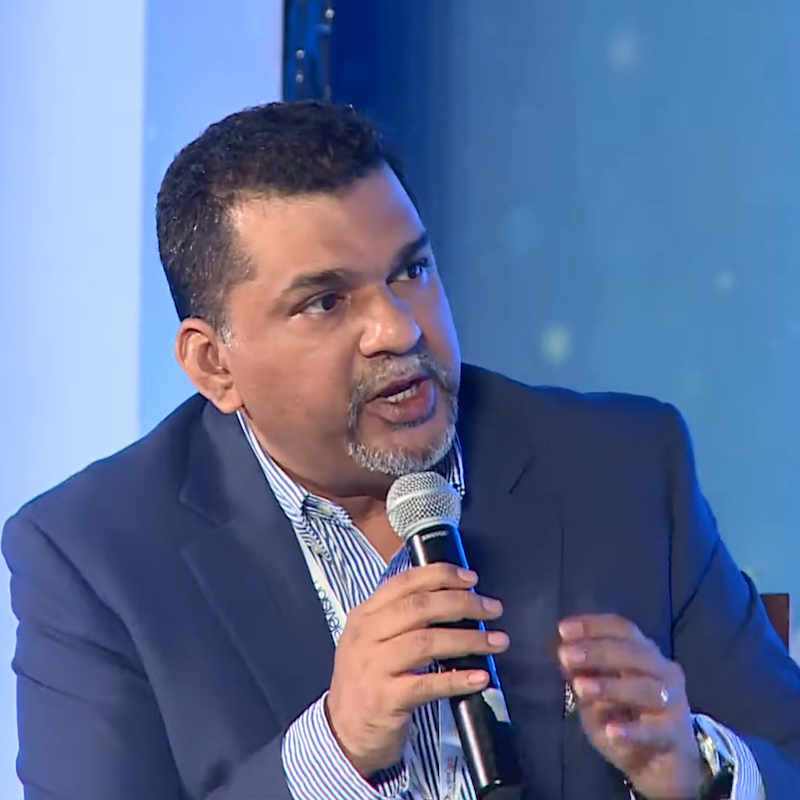
    Vynsley Fernandes has been known as the CEO of Hinduja group-owned Indusind Media & Communications which runs cable TV MSO InCable TV, a position he took up in August 2018. As of last month, his role and designations have changed: he has been redesignated as CEO of the theheadend in the sky (HITS) venture NXTDigital and president of IndusInd Media.

    Since joining, Vynsley or Vyns as he is known has managed to return the struggling NXTDigital businesses to profitability, thanks to better management at IMCL which he headed

    On a consolidated basis, revenues grew at NXTDigital by 65 per cent over FY19, from Rs 704.62crore to Rs 1,162.10crore; operating EBIDTA rose significantly to Rs 218.01crore against a loss of Rs 72.61crore; its PAT is a healthy Rs 110.05 crore as against a loss of Rs 303.43 crore in FY19.

    Thanks to the great showing, Vyns got elevated to CEO of NXTDigital with the additional responsibility of IMCL.

    Vyns updated his designation on linkedin today. 


  • MCOF raises questions on Hathway, Den pushing existing STBs under Jio brand

    MCOF raises questions on Hathway, Den pushing existing STBs under Jio brand

    KOLKATA: Maharashtra Cable Operators’ Foundation (MCOF) has flagged off several unethical practices in the television distribution segment. In a letter written to the Telecom regulatory authority of India (TRAI), it has alleged that some multi system operators (MSOs) are violating rules and taking the unethical route of business. 

    MCOF has expressed concern about Den Networks and Hathway for imposing replacement of existing STBs by STBs under Jio brand in the last six months. The federation has claimed that the two MSOs have not replaced the expired standard interconnection agreement (SIA) with the model interconnection agreement (MIA) without offering any explanation for the rebranding.

    “The LCOs who resist the imposition are made to toe the line by disabling their access to the Prepaid Portal resulting in service interruptions ton the subscribers. In addition to the arm-twisting, the MSOs have lined up numerous dummy operators to replace the existing LCOs who usurp their business and assets,” the letter added.

    MCOF stated that Jio is not a registered MSO nor has it signed interconnection agreement (ICA) with LCOs. Moreover, Hathway and DEN continued to rely upon expired SIA overlooking repeated requests to adopt MIA. 

    It has also claimed that BRDS provides signal feed to its network in Kolhapur and connected areas but deploys InCable STBs. InCable has been alleged of providing feed to Sampark Network (Powai Mumbai and Bhiwandi Area) through STBs that the latter has deployed. 

    “We fail to understand as to how auditors have overlooked the mismatch between CAS, STB inventory and conflicting branding, head-ends can be used as pass-through pipes for signals from another MSO, random off-site checks by broadcasters through watermarking have not detected the malpractices,” it added.

    Against this context, MCOF has asked copies of ICA between Jio and Broadcasters and status of MSO License to Den and Hathway. It has also called for clarification on whether a mere share purchase deal allows the buyers to change brands and automatically subrogate the company whose shares it buys. 

    It has also requested the industry watchdog to share the steps it is taking to prevail on MSO to sign up fresh ICA with LCOs by mutual consensus rather than arm-twisting via Prepaid Portal Access denial. MCOF has also asked directions for the course of actions that LCOs should take to safeguard against likely disabling of STBs that are drawing signals from third party head-end or suspension of feed sharing between MSOs. 

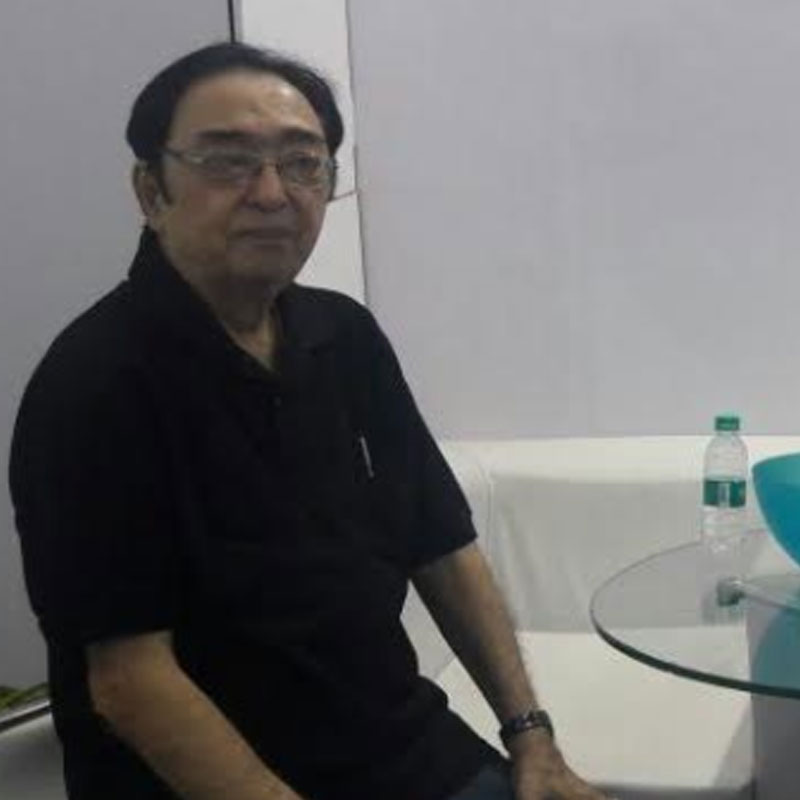
  • Obit: Remembering InCable’s Ram T Hingorani

    Obit: Remembering InCable’s Ram T Hingorani

    MUMBAI: “Hi I am Ram Hingorani,” said the squeaky but very amiable voice. I looked around and saw this short bespectacled man dressed in a safari suit, with his hair slicked back. “I am here to show you around and I am with the media business of the Hindujas.”

    The time was the mid to late nineties and I was at the Hinduja office in Worli, Mumbai, just diagonally opposite the Haji Ali Dargah and next to the NSCI to meet up with the group of young men that had set up InCable – the Hinduja foray into the cable TV business.

    He was kind, gracious and over welcoming to a fault, Ram. He then went on to tell me how he had worked at The Times Of India for almost 30 years, retiring if I am right as a general manager or something like that. He then told me about being involved with the Ambanis in the nineties and the acquisition and relaunch of the quickly aborted Observer of Politics and Business and the Sunday Observer. He finally hopped onto the Hinduja group which had expanded into India by acquiring Gulf Oil, Ashok Leyland, apart from other companies.

    He talked about the group moving into the business of media by introducing newspapers, magazines, TV stations, cable TV networks, among other initiatives.

    The Hindujas had formed Induslnd Media & Communications company, which in turn would float four subsidiaries – In Cablenet, In Vision, In Movies and In Print. In Print was slated to publish magazines for specific niche markets, beginning with What’s In, a city entertainment and leisure guide which hit the stands and was distributed to its cable TV subscribers. RTH was in charge of In Print, which ran for a few years and then was phased out.

    He was the Hinduja man as they shopped around for their media ambitions reaching out to the existing media houses along with Sudheendra Kulkarni, the then vice-president of the Hinduja group’s media wing.

    Of all the ventures only one has survived the turbulent media times: the cable TV venture and part of the credit for that must go to RTH as he used to be called. He often played foil to the four musketeers as they were labeled– Yogesh Radhakrishnan, Jagjit Singh Kohli, Yogesh Shah, and Ram Punjabi –by working as a mediator between the Hindujas and them, easing out thorny issues. 

    Along with them, he expanded InCable into 14 cities over 10 years. With the network set up, he moved out, new executives replaced him and he went back to the Ambanis’ Reliance Communications in a bid to set up a triple play venture using the existing infrastructure of independent cable TV operators.

    RTH then retired in 2008 and lived a relatively sedate life – though he mixed around with the cable TV trade from time to time handing out advice – until he passed away on 24 May 2018.  

    The industry came out singing his praises. Said Ashok Mansukhani who currently runs InCable: “He was a giant of a man. He also helped ‘corporatise cable’ and was very hands-on in a world of armchair CEOs.”

    Added Dubai based president & CEO Mediastream FZE (an independent channel and content distribution company)  Rohinton Kapadia: “RTH was always positive even in the face of severe situations at critical times in our cable business. Having worked closely with him for many years I found him to be an inspiration for all of us and an invigorating leader at InCable. We all looked up to him as more of a father figure than our boss.”

    Like the rest of the cable TV trade, Indiantelevision.com sends out condolences to his family. And may his soul rest in peace.

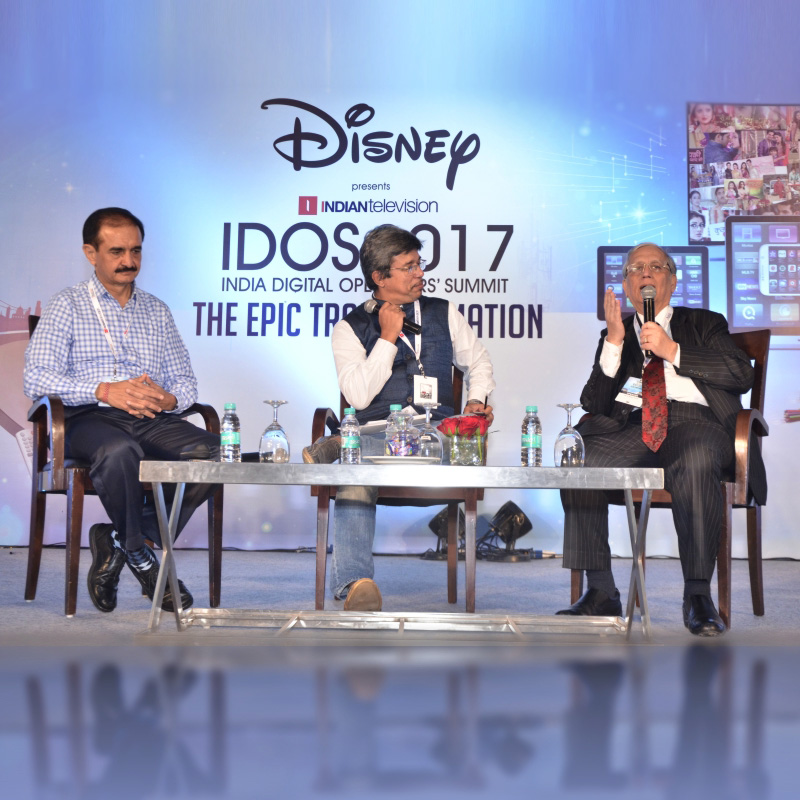
  • IDOS 2017: Cable TV sector needs more collaborative broadcasters, say MSOs

    IDOS 2017: Cable TV sector needs more collaborative broadcasters, say MSOs

    NEW DELHI: Even as the multi-system operators and cable operator are doing their bit to aid digitisation, broadcasters need to participate more in the process which officially has been completed. They need to be more transparent and supportive of the distribution platform operator — in this case the MSO and cable TV operator — and not be like a tax collector always asking for more.

    This was the general view of both, S N Sharma of Den and Ashok Mansukhani of Incable in a discussion in ‘The Indian MSO: Redefining the raison’etre’, who also said it was only now that the MSO was beginning to monetise almost five years after digital addressable system was first launched.

    Furthermore, the broadcasters were still free to fund the business as they wanted, and, as Sharma put it, there are only two laws that control the broadcaster – the Programme and Advertising Codes and the Cable Television Networks (Regulation) Act 1995. Thus, there is virtually no regulation for the broadcaster, Sharma said.

    Both, Sharma and Mansukhani agreed that MSOs and even LCOs had put in a lot of effort to get DAS off the ground — that too in a period of four to five years, which is unprecedented globally.

    “The DAS regulation was brought in for transparency and to allow everyone to have a fair share of the huge subscription revenues that viewers were paying to watch cable TV,” said Sharma. “But, the sad part is that broadcasters are constantly asking for rate increases of 24 per cent or so without even asking if it were possible,” added Mansukhani.

    They said that it would be better if the broadcasters were to communicate rate increases to viewers and invest in promoting that, rather than expecting MSOs who are just about recovering from the hangover of the huge investments they have put into DAS as well as getting robust systems and processes in place. “Also, we are not equipped or have the creative mindset to communicate this effectively for all channels,” agreed both Sharma and Mansukhani.

    Rather than going to courts to stall the TRAI tariff order, they said, broadcasters could collaboratively work with the DPOs to take DAS on to the next level. “Neither the government nor the regulator has been able to do anything,” they said.

    “We have our own troubles, recouping our investments to bring back profitability into the cable TV sector, as well as dealing with piracy and leakages which broadcasters take time to check and stop because they have procedures to follow,” said Sharma.

    Mansukhani disagreed with Indiantelevision.com founder, CEO and editor-in-chief Anil Wanvari that the cable TV sector will not be in a position to manage complicated skinny a la carte bundles for the millions of customers that it serves. “Our backends are ready,” he said. “Our SMS, billing and KYC of the customers is in place,” he said. “We are just waiting for the (court) order to come through.”

    He opined that the industry would ultimately survive the changes, and he was also confident that the cable industry was ready to adapt to any new technology.
    To a question about monetisation, Sharma said the MSOs were not beginning to reap the monetary benefits of Phase I. Even the DTH industry was beginning to break even only now, more than a decade after it was launched.
    Mansukhani said he was happy that the Hinduja’s headend in the sky (HITS) NXTDigital was reaching 1.5 million consumers. But, the need was to break even as early as possible and “giving a dividend to my shareholders.”

    But, he stressed the need to keep the dialogue open with the LCOs who are the ones dealing with the consumer. Consumer connect has to continue. He regretted that the level playing field that he had hoped to get from the government has never came.

    Both Mansukhani and Sharma agreed that, though the government had not made a difference between the urban and rural viewers, this was necessary if there has to be penetration in rural areas. Otherwise, they would go to Doordarshan’s FreeDish.

    Sharma said his company was soon launching a device that would not be internet-based and could be used for all gadgets including mobiles, TV, tabs, and so on.

    Mansukhani said that it was clear that the MSO will have to graduate from being a TV MSO to a multi-screen MSO.

  • 2014: Cable TV’s year of missed opportunities?

    2014: Cable TV’s year of missed opportunities?

    2014 many would say has been a year of more downs than ups, especially for the cable TV industry. But, if one peels off the superficial layers and looks deep, it would be fair to say that it was indeed a year of opportunity for all the stakeholders in the cable TV ecosystem, despite all the trappings that it had of a Bollywood film with all the drama and twists and turns.

    The year began with industry regulator the Telecom Regulatory Authority of India (TRAI) cracking the whip on errant multisystem operators (MSOs) and last mile owners (LMOs) who had not implemented simple hygiene requirements such as subscriber information and billing in Digital Addressable System (DAS) phase I and II areas. 2014 probably was the most litigious one in recent memory for those in the cable TV ecosystem with the various constituents spending more time in courts or in the portals of the Telecom Disputes Settlement Appellate Tribunal (TDSAT) than in upgrading their systems or moving ahead on business models. LMOs and MSOs snapped at broadcasters and aggregators, even as the latter took swipes at them with their heavy hands. No resolution seemed in sight and hence the anti-climactic postponing of phase III and phase IV DAS to 2016 by the Information and Broadcasting (I&B) Ministry almost came as a lifeline to the industry. Some carped about the postponement, some decided to take it upon themselves to voluntarily digitise, while other LMOs just got back to squabbling once again.

    Even as international strategic and financial investors got repelled by the chaos in Indian cable TV land, domestic lay investors and equity investors too gave the sector a thumbs down. One of the leading stocks, the Sameer Manchanda-run Den Networks, which was the investors’ darling in 2013, registered a 19 per cent erosion in its share price from Rs 161.65 in early January 2014 to Rs 131.30 on 24 December. Hathway Cable & Datacom rose 25 per cent from Rs 278.75 to Rs 347.50. Both underperformed the Bombay stock Exchange Sensex which rose 28.5 per cent from 21,000 on 2 January 2014 to 27,206 on 24 December 2014. However, an exception was the stellar performer  Essel group owned Siti Cable which appreciated 80 per cent from Rs 18.15 to Rs 32.75 on the same dates. 

    November 2014 saw Star India take a big punt and play pioneer by deciding to enter into only Reference Interconnect Offer (RIO) deals with MSOs in DAS areas.  The hope was that it would push cable operators to come up with better subscriber packages and hopefully improve realisations for themselves and Star too. With ARPUs sneaking up marginally, the big MSOs and cable TV cooperatives aggressively moved ahead with the more lucrative broadband offerings to subscribers.

    The year began with the MSOs meeting in different parts of the DAS areas to ensure gross billing could be started. While Delhi and Kolkata could, at least in a few parts start gross billing, Mumbai and other phase I and II cities, even as the year comes to an end, haven’t seen bills being rolled out. The reasons for this being no consensus: on the biller’s name (whether it should be of the LCO or MSO), revenue share between the two and the pending entertainment tax case in the Bombay High Court.

     The next big development in the year was when Hathway Cable and Datacom announced a cricket pack, wherein the MSO created a separate offering consisting of all the sports channels. When the announcement was made, little did people know that the issue would be dragged to the court and would keep the TDSAT occupied for almost the rest of the year. Hathway has been one player that has been in the news throughout, mostly for its progressive moves- from launching new local cable channels, to launching DOCSIS 3 broadband technology. It also wrestled with the major broadcasters such as Star and Zee through the year on terms and conditions.

     2014 was the year of opportunities, as it opened doors for the $100 million Hinduja’s Headend In The Sky (HITS) project and the Cable Virtual Network Operator (CVNO) model. As part of this LMOs can come together and join hands with the MSO to take its infrastructure, thus giving the former the power to own their consumers. The former Indusind Media CEO and promoter of Bhima Riddhi Digital Services Nagesh Chhabria too showed his intent of getting into the cable TV market with a national MSO. A much hyped $200 million announcement – in July about his agreement with Atlas Consolidated LLC (a joint venture between Greenwich Equity Partners and Jagran Infra-Projects led by Sanjiv Mohan Gupta) – to create a national MSO it has been followed by a strange silence since.

    It was a year of opportunity, as after a gap of long seven years, the TRAI decided to defreeze prices and allowed a price hike. The regulator in March, released a notification, offering a 27.5 per cent inflation-linked hike to stakeholders in the tariff ceiling. The hike was to be implemented in two phases: 15 per cent from April 2014 and the remaining 12.5 per cent from January 2015. The move gave some hope to stakeholders to increase their Average Revenue Per User (ARPU) which was at around Rs 180 – a 20-25 per cent increase. But the industry is clearly aiming at much higher ARPUs of Rs 300-350 in the short to medium term. 

    The most important month for the cable TV industry was August. Ask why? Well, this was the month, which shocked the whole value chain.  While the LCOs were relieved, the worried ones were the broadcasters and the MSOs. The newly appointed Information and Broadcasting Minister (now former)  Prakash Javadekar, looking at the condition of phase I and II cities, which had undergone seeding of set top boxes (STBs) decided to further push the digitisation dates for phase III to December 2015 and phase IV to December 2016, from the earlier deadline of December 2014. The reason given by the Minister was that he wanted to promote indigenous STB manufacturers, who had not benefitted much from the earlier two phases.

     The news brought in some cheer for the indigenous STB manufacturers who said that this would help the indigenous manufacturing industry give employment to about 50,000 people and would attract an investment of about Rs 500 crore. The move, according to many would also generate local support facility for repair of STBs and help in smooth implementation of digitisation in the country.

    While, everyone has their own take on the decision, one should take this as an opportunity to be able to complete phase III and IV cities, which includes the small towns and villages, in a much more organised manner. Currently in phase I and II, while boxes have been seeded, no proper rollout of package and billing has happened. The stakeholders have time to ensure that along with seeding of boxes in phase III and IV cities, they can ensure that Consumer Application Forms (CAFs) are filled, the information is added in the Subscriber Management System (SMS), packages are created, offering consumers the option to choose and proper bills are rolled out, bringing in complete addressability and transparency.

     According to many, with delayed digitisation, carriage fees are once again on the rise. According to a Media Partners Asia (MPA) report, carriage fee has gone up by 14 per cent, while broadcasters and MSOs peg this at around 20-25 per cent for niche and news channels. In fact, Colors CEO Raj Nayak at this year’s India panel in MIPCOM said that carriage fees which had come down by 20 per cent are again climbing and have gone back to pre-digitisation rates. Yes, all these can be counted as the drawback of delayed digitisation, but tackling the same is broadcaster Star India’s take on the deals with MSOs.

    The case which kept TDSAT busy this year was the Hathway vs Zee and Star case. It was during this, that Star India, in order to fight discrepancy in deals with MSOs, took a firm decision of entering into only RIO deals with MSOs. While this did hit the MSOs, since their cost of content went up, it did two things. One, it nipped carriage fees and two, opened the doors for the MSOs to increase their ARPUs. In fact broadcasters, who feel that the carriage fees are headed northwards, should consider entering into RIO deals, as was also said by MPA in one of its reports.

     With the extension of digitisation dates, a number of MSOs also decided to opt for voluntary digitisation, which was a welcome move, since it showed the intent of MSOs to see the country fully digitised.

    Keeping digitisation and broadband plans in mind, the year saw a few MSOs raising funds for themselves. Considering the money spent by the MSOs in acquiring content and taking digitisation forward did not match with the on-ground collections, MSOs were left with no choice but raise more funds to complete the task in hand. So while Hathway got board approval to raise Rs 300.80 crore through preferential allotment of shares, Essel Group’s subsidiary Siti Cable Network raised Rs 600 crore through the issuance of securities. Last mile owner Ortel Communications too made its move towards getting listed. The LMO, this year, filed its draft red herring prospectus (DRHP) for its proposed initial public offering (IPO) with the securities and exchange board of India (SEBI). The IPO may raise as much as Rs 360 crore.

    The year also saw the I&B cracking its whip on a few MSOs like Digicable and Kal Cable as their licences were cancelled following refusal of security clearance by the Home Ministry. But the duo got relief from their respective state High Courts and are still up and running. Even as Tamil Nadu former Chief Minister J Jayalalithaa owned Arasu Cable struggles to get its DAS licence, Karnataka state government Minister for Information, Public Relations and Infrastructure R Roshan Baig too showed some interest in entering the cable TV business, this year.

     The cable TV industry, like every year was brought together through one forum organised by indiantelevision.com and MPA, IDOS 2014, held in Goa. The three day event threw light on some important statistics:

    ·         Of the 262 million households in the country only 162 million houses have a TV. Of this, 27 million is taken up by the free to air service providers such as Freedish via satellite and 7 million by terrestrial DD, while the rest comes under cable and satellite.

    ·         Rs 32,000 crore has been invested in digitisation since 2005 with a bulk of the investment coming from the DTH operators followed by the MSOs and LCOs since 2011. Out of this, over Rs 11000 crore in the last 24 to 30 months has been invested by MSOs and LCOs.

    ·         While the cost of all the pay channels on a wholesale basis is Rs 922 to digital platforms, the highest pack price is Rs 550 which is an anomaly and needs correction. Retail pricing is the answer to correct this. And it is competition amongst six DTH, two HITS, five national MSOs and several regional ones and the local cable ops will keep retail rates in check.

     We at indiantelevision.com hope that broadcasters, LMOs, MSOs will take a progressive view towards digitisation of their operations and also becoming transparent with their partners in 2015. The fact is there is a lot of work to be done: more than $3-4 billion are needed to digitise India’s cable TV infrastructure; a large part of these will most likely come from international players.   Many of these who were pacing the sidelines watching the developments clearly got a stomach upset and decided to park their funds elsewhere. Now it is up to the industry to restore investor confidence; that cable TV is a sector where one can see adequate returns. Failing which newer distribution technologies like OTT, video streaming and 4G might end up being good options which video lovers could end up considering.

  • LMOs demand Star channels on a la carte, or face switch off, non-payment of monthly charges

    LMOs demand Star channels on a la carte, or face switch off, non-payment of monthly charges

    MUMBAI: The multi system operators (MSOs) and broadcaster Star India could have moved into the no-war zone, after Star declared that it would give its channels only on the basis of Reference Interconnect Offer (RIO). While this led to MSOs going ahead and declaring that the network’s channels will now be given to consumers only on a la carte, the incentives given by Star, melted most.  Unhappy now are the last mile owners (LMOs), who fear losing their subscribers.


    Leading the way is Maharashtra Cable Operators Federation (MCOF) president Arvind Prabhoo, who today called for a meeting, which was attended by close to 400-500 LMOs. The agenda of the meeting was simple: Getting Star channels only on a la carte.


    “While the MSOs had earlier said that the Star channels will be available on a la carte, suddenly everyone is switching on the Star channels and including it in the existing packs,” informs Prabhoo.


    The LMOs in the meeting took two resolutions. “The first one is that we will meet at least two MSOs tomorrow (25 November) and tell them that they should remove the Star channels from the packages and sell it only on a la carte,” he says.


    MCOF will meet InCable and Hathway Cable and Datacom first and then move on to meeting Siti Cable and Den Networks. “We don’t want any of the Star channels in any of the packs. We will go to our customers and ask them for the channels they want to watch and bill them only for those as per the published a la carte rate,” he adds.


    The LMOs will first request the MSOs to put the channels on a la carte, on immediate basis. “But if this doesn’t happen, we will start switching off the STBs on our own and also will not pay the MSOs the monthly charges,” informs Prabhoo, who says whatever they are demanding is as per the Telecom Regulatory Authority of India (TRAI) regulation.


    The second resolution passed is on the interconnect agreement which was drafted months ago by MCOF as per the suggestion given to TRAI and also accepted by both InCable and Hathway. “Though they had agreed to the interconnect agreement drafted, they have still have not signed it. We are going to ask them to sign it or else have decided not to pay them the monthly charges,” he says.


    According to Prabhoo, the move has been taken as the LMOs are losing their subscribers to the direct to home (DTH) players. “It is getting difficult to manage the business,” concludes Prabhoo.

  • MSOs to put Star’s popular channels in base pack, regional in a-la-carte

    MSOs to put Star’s popular channels in base pack, regional in a-la-carte

    MUMBAI: As the deadline for signing deals with Star India for its channels on reference interconnect offer (RIO) ended on 10 November, MSOs are preparing various options to deal with the altered business plans.


    While the network is providing all its channels only on RIO, MSOs are finding out different ways to package the channels. India’s leading MSO Hathway is currently creating new packages that it will roll out soon. Says a source, “We will be redefining our packs and giving revised rates soon. Marketing on the same will commence as well. It will be something new for the trade.”


    While the base pack could include the popular channels from its bouquet, the regional channels will only be on a-la-carte. English, sports and others will be categorised in different packs. The channel had initially disconnected signals in October, but now the channels are switched on again.


    IMCL’s InCable on the other hand has also followed a similar pattern. The base pack will consist of Star Plus, Life OK and Star Pravah, the latter due to its large presence in the state of Maharashtra. The regional channels such as Star Jalsha, Star Vijay, Asianet, Suvarna etc will be on a-la-carte.


    “We have decided to put the popular channels on the base pack for three months to avoid unnecessary system overload due to people calling for it. Slowly, they will also be moved out into a-la-carte once we educate consumers. Soon we will also have proper EPRS, CAS and also net billing,” says IMCL group MD and CEO Tony D’silva. The MSO has taken Star’s incentives for channel penetration by putting three in its base pack.


    According to an official from Den Networks, the MSO has not yet signed the deal and is yet negotiating. Advance Multisystem Broadband Communciation (AMBC) in Kolkata will ensure all 26 channels will be given to consumers while another Kolkata based MSO said that the agreement with Star has been signed but it is evaluating the incentive schemes.

  • Big Magic launches weekend property ‘Shahi Shanivaar’

    Big Magic launches weekend property ‘Shahi Shanivaar’

    MUMBAI: Big Magic, the flagship Hindi general entertainment channel from Reliance Broadcast Network brings another new offering in its bouquet of shows.


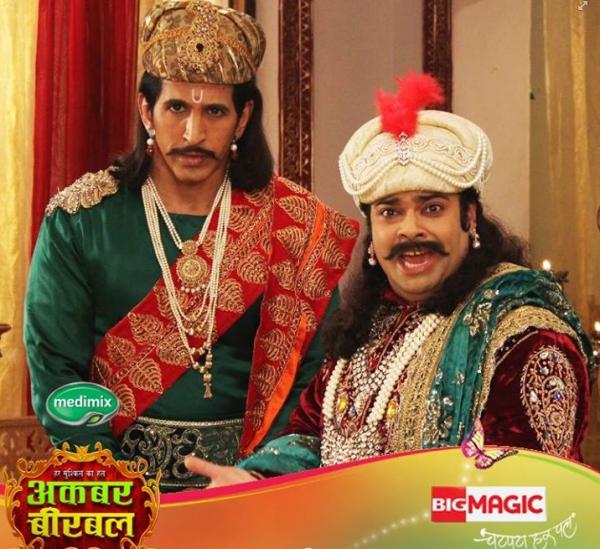
    Riding on the immense popularity of ‘Har Mushkil Ka Hal Akbar Birbal’, the channel is extending the show now on weekends with a one hour new episode every Saturday at 9 pm.


    Titled Shahi Shanivaar’, the latest weekend property stands on the backdrop of magnificent look and historical stories and aims to retain its audience attention even on weekends.


    Commenting on announcement of Shahi Shanivaar, Reliance Broadcast Network COO Lavneesh Gupta said, “We are delighted to announce a weekend property called ‘Shahi Shanivaar’ on the popular show ‘Har Mushkil Ka Hal Akbar Birbal’ that keeps up the historical comedy quotient on Saturdays too.”


    “The one hour shows will have new and interesting plots backed by historical research on the backdrop of royal splendour and special appearances by celebrities. We have maintained the same timing of 9pm so that from Monday to Saturday our audience’s experience the show same time thus offering greater value and consistency for marketers,” he added.


    Beginning on 1 November 2014, popular artist and celebrity Chetan Hansraj will be a part of a major conspiracy plot in the show, which will be followed by an episode on ‘Vishkanya’ on 18 November and a ‘Maha-episode’ on 15 November. Each of these episodes will also be integrating local festivals of the Hindi heartland that characterises India and is backed by strong local research and insight.

  • Hinduja Ventures’ HITS platform to launch in Jan 2015

    Hinduja Ventures’ HITS platform to launch in Jan 2015

    NEW DELHI: The Hinduja group is all set to launch its HITS platform by January 2015. The test signals will begin by November 2014. The news was confirmed by IMCL MD and group CEO Tony D’silva to indiantelevision.com.


    The new HITS entrant, which already runs a multi system operator (MSO) business InCable, received the licence on 6 March 2014 from the Information and Broadcasting Ministry and has also paid the fee for it.


    Grant Investrade, a 100 per cent subsidiary of Hinduja Ventures, is the company which is rolling out the HITS service. A discussion with the company chairman is around, to ensure everything is in place before January.


    It is looking at capturing 15 to 20 per cent of the 120 million households in phase III and IV markets of digitisation. It has already arranged for funding of Rs 500 crore for the project.


    The HITS model will have a complete different vertical, which will cater to all the content and video on demand (VOD) services requirements. “The services will be made available to all the LMOs along with IMCL,” concludes D’silva.

  • MSO in Belgaum booked for illegal piracy of Zee TV signals

    MSO in Belgaum booked for illegal piracy of Zee TV signals

    NEW DELHI: Karnataka police has registered a first information report (FIR) against Belgaum’s only multi-system operator, Riddhi Vision which is a joint venture of InCable, for illegal transmission of copyrighted content.


    The action was taken on a written complaint filed by Cable Star Copyrights Investigations, who is the distributor for Cable TV Rights all over India of Zee Entertainment Enterprises Limited (Zeel). 


    Karnataka police took cognizance under Section 37, 51, 52(A), 63, 68(A) of the Copyright Act for telecasting of the Hindi film ‘Khalnayak’ starring Sanjay Dutt and Madhuri Dixit on 20 July evening in Belgaum. The FIR was filed against the managing director and other directors of Riddhi Vision by Dr Chandragupt, superintendent of police in Belgaum. A spokesperson for Cable Star Copyrights Investigations told indiantelevision.com that the pirated content for which the rights were with Zee was being shown on the local channel run by the MSO.  


    The spokesperson added, “It has been a practice of various cable operators to run content and specially movies without obtaining permission from the content owners, and the industry has been demanding strict action.”


    He said Cable Star Copyrights Investigations is working for anti-piracy and distribution of Zee and other similar companies and has been a crusader against such piracy for several years and have previously lodged many such FIRs in various states.


    He said, “Such blatant transmission causes immense loss of revenue to the content owners and government. Cable Star Copyrights Investigations has also lodged many complaints against big cable operators in Maharashtra and other states, in which they are pressing for swift and strict action. Such police action would definitely be a right step towards stopping the menace of piracy, which has been the bane of entertainment industry.”