Tag: IN10 Media

  • IN10 Media’s Gubbare supports child education with Smile Foundation

    IN10 Media’s Gubbare supports child education with Smile Foundation

    Mumbai: With the education of children impacted by the pandemic, IN10 Media Network’s kids channel Gubbare has joined hands with leading non-government organisation Smile Foundation to support its Shiksha Na Ruke campaign.

    A first by the channel, the partnership aims to create awareness among Gubbare’s viewers across India about the impact of COVID-19 on children’s education. With schools going online, many were left in the lurch with no internet or device to log in and continue learning.

    The campaign aims to help such students continue learning through different modes of engagement such as door-to-door distribution of worksheets and study material, cluster classes in small groups through youth volunteers, television and radio-based educational programs, and telephonic counseling. Additionally, Shiksha Na Ruke provides access to digital mediums like projectors and tablets at learning centers to enable the transition to digital learning.

    IN10 Media Network VP- corporate strategy development Mansi Darbar said, “Children are the future of the nation, and as a kids’ broadcaster, we believe that it is our responsibility to help them prepare for a brighter tomorrow. We all need to play our part in building a stronger nation and the partnership with the Smile Foundation is a step towards that. Through the Shiksha Na Ruke initiative, we want to create awareness among people regarding how the pandemic impacted the world at various levels and how can a small contribution change a child’s life.”

    Smile Foundation’s co-founder and executive trustee Santanu Mishra said, there is a need for increased collaboration among stakeholders to drive greater access to education. “Helped by Gubbare’s reach and accessibility, this partnership will be important in driving impact for Shiksha Na Ruke. We urge more organisations to come forward and do their bit for millions of underprivileged students who continue to experience an abrupt break in learning,” he added.

    The campaign has nearly 50,000 students enrolled across the Smile Foundation’s 201 Mission Education centres in 22 states of the country. The organisation trains teachers for the dynamic digital learning environment and even counsels parents to ensure children’s active participation. 

  • Juggernaut Productions all set to begin work on its first international mini-series

    New Delhi: Taking a strategic step towards international partnerships, IN10 Media Network’s production arm, Juggernaut Productions has joined hands with the UK based Nucleus Media Rights, a fast-growing television production and distribution company, and creator Brendan Foley, for the international mini-series, Mark Twain in India.

    Juggernaut Productions will be the Indian development, production, and distribution partner for the project. “We are glad to partner with Nucleus Media as it illustrates our commitment towards creating global content,” said IN10 Media Network, VP-corporate strategy, and development, Mansi Darbar highlighting that the collaboration is a significant first step for IN10 Media’s Juggernaut Productions to bring forth its expertise to the international foray while developing and producing the content, locally. 

    The mini-series Mark Twain in India narrates the story of the author, Mark Twain’s life-saving and life-changing tour to India during a personal tragedy and ruin when all appeared lost. In a vast and remote subcontinent, he discovers his love for life through India’s history and humanity.

    Juggernaut Productions’ chief operating officer, Samar Khan who will work closely with Foley and Nucleus on the project said, “Creating content with inspiring concepts is what excites us, and we look forward to working together on the project. Mark Twain was a curious traveller and his stories have been a part of our growing up years. It will be exhilarating to exhibit India through his journey of the country that he undertook in what was a crucial juncture of world history.”

    Nucleus Media Rights, chief executive officer, Bruno Zarka sees this collaboration as “an exciting development as we broaden our international connections. IN10 Media Networks- Juggernaut Productions shares our vision of a highly commercial series with wonderful production values and an all-star cast. We are confident that they can help deliver a series that will appeal to mainstream audiences everywhere.”

    “It’s wonderful to work with such a well-known and well-loved character as Mark Twain, yet in such a little explored facet of his life. Bankrupt and miserable, Twain rediscovered his love of life and of writing, as he explored India from mud huts to palaces, on an epic speaking tour,” said creator Brenden Foley whose recent work includes Nordic Noir series Cold Courage forAMC+, Lionsgate, Viaplay and Britbox; The Man Who Died, currently in production in Finland for streamer ELISA; showrunner for crime series Body of Water for ZDFE, Nucleus,3zero2; Sherlock’s Daughter for Starlings, Mediawan and StoryFirst; and Ghostwalk for Blue Ant and Canada’s T+E channel.

    Nucleus will make further announcements shortly about finance and other partners for Mark Twain in India.

  • IN10 Media Network launches technology service solution Stream-Sense

    KOLKATA: Amidst the tremendous growth of OTT platforms and a boom in home entertainment, IN10 Media Network has launched a new technology service solution, Stream-Sense.

    The technology, client support, and security solution will help enterprises communicate through the power of video. Stream-Sense will enable broadcasters, distributors, content owners as well as sports-tech companies to stream live and on-demand video/audio content on multiple devices like the web, mobile, and SmartTV.

    Commenting on the new venture, IN10 Media Network MD Aditya Pittie said, “IN10 Media Network is committed to the development of the broadcast and digital ecosystem in the country. And with Stream-Sense, we aim to drive the growth of content platforms by providing them with swift technology to reach out to a large section of the audience via our streaming PAAS (Platform-As-A-Service).”

    Sourjya Mohanty, who currently heads the network’s OTT platform, Epic On, will also be in charge of the new vertical along with a specialized team. 

    “The solution aims to help clients make sense of their end-to-end streaming requirements across audio, video, gaming, and E-Books. We have developed 30+ key components indigenously to provide cutting–edge technology to our clients,” said Mohanty.

    He added, “With Stream-Sense, IN10 Media’s commitment takes a significant step ahead in the digital transformation of many creators, publishers, and existing platforms businesses as it will enable enhancement of their revenues by offering a better quality of streaming to their audience and monetization routes.”

    The service caters to existing as well as upcoming content platforms in the country.

  • Filamchi inks a strategic partnership with Chingari app

    Filamchi inks a strategic partnership with Chingari app

    MUMBAI: Filamchi, a Bhojpuri movie channel from the house of IN10 Media Network has signed a strategic partnership with Chingari, a homegrown short video app for live streaming of its world TV Premieres.

    The association will commence with the premiere of the movie Loha Pahalwan, which will be live-streamed on the Chingari app. The tie-up marks a first in the genre as a TV channel and short video platform will integrate to enhance a multi-viewing experience for the audience.

    Speaking on the plan of action, Chingari’s co-founder and CEO, Sumit Ghosh said, “This is one of its kind collaboration where a film will be premiered and made available to the audience through not just TV channel, but also through a short-video platform which will not only expand the audience base but provide a new way of live streaming films in the current digital world. Evolution is the key and Chingari aims to continue collaborating and evolving the space of digital media to the best of its capabilities so that the audience and creators both benefit from it.”

    Commenting on the association, IN10 Media Network, AVP-Marketing, Vinita Shrivastav, said, “The Bhojpuri market has the potential to grow as the audience seeks more localized and relatable content. In today’s multiscreen world, we need to be omnipresent to reach out to our viewers and let them experience content across platforms. The association will aid the platforms in increasing their audience base and engaging them across Bhojpuri movie fans.”

    Talking about the collaboration, app’s co-founder, and COO, Deepak Salvi said, “The contest on Chingari is to provide an overall benefit to both the film creators and the Chingari creators. Pawan Singh is one of the most renowned actors of Bhojpuri Cinema and hence it is authentic entertainment being made available for our audience along with a chance to win a huge cash prize.”

    The live streaming is supported by a dialogue challenge #mainbhifilamchi where Chingari users can create interesting videos on Pawan Singh’s dialogues from the movie and participate in the contest to win 20 lakh Chingari coins.

    The movie will air on 22 May at 1:00 pm on Filamchi channel and Chingari App.

  • DW partners with Epic for ‘Eco India’ series

    DW partners with Epic for ‘Eco India’ series

    MUMBAI: DW’s flagship TV series, Eco India, which focuses on finding sustainable and environment-friendly solutions for a wide range of issues, has launched its Hindi series on In10 Media Network’s infotainment channel Epic. 

    The Eco India series by DW is an attempt to bring to the masses stories of the change-makers who have found innovative ways to solve the problems faced in day-to-day life as well as across various sectors and industries. 

    The series sheds light on how communities in India are coming up with innovative solutions for a wide gamut of issues such as food shortage, and rising sea levels in Mumbai among others. It also attempts to showcase some of the impactful stories of sustainable eco-friendly endeavours such as lake conservation in Bengaluru, new ways of taking care of livestock and earning money with cow dung, and recycling of industrial cloth wastes.

    In10 Media Network acquisition & syndication network senior AVP Adita Jain said, “Epic is committed in its endeavour to bring to the viewers some of the most exceptional content about India covering a wide range of topics. The Eco India series is the perfect opportunity for us to play our part in generating awareness around the need to adopt environment-friendly solutions for various industrial and domestic challenges. We are delighted to partner with DW.”

    DW distribution asia head Andrés Palacios-Degwitz said, “We are delighted to partner with Epic for the Eco India series to bring to light some of the new age environmental innovations. Epic has established itself as an India-centric platform for infotainment and Eco India Hindi series fits well in the Epic content library.”

    The Eco India English series is available on Epic On.

  • In10 Media Network’s ShowBox pays tribute to the ‘Swag Wali Naari’

    In10 Media Network’s ShowBox pays tribute to the ‘Swag Wali Naari’

    Mumbai, 8 March 2021: ShowBox, a youth-centric music channel from the IN10 Media Network, has launched an original song, Swag Wali Naari, to pay tribute to the never-ending resilience of women, on International Women’s Day. 

    The song showcases how today’s naari dons numerous hats. She can be a Durga or a Kali as she juggles various roles – from being a mother, a daughter, a wife, or a friend/colleague or a boss – in her daily life. Through this song, the channel wants to celebrate womanhood and pay an ode to its numerous avatars. 

    IN10 Media Network corporate strategy and development VP Mansi Darbar said, “At In10 Media Network, we constantly thrive to create content that celebrates the spirit of life. Through Swag Wali Naari, we want to salute women and the infinite naari shakti. Women need to acknowledge their achievements, inspire younger generations as well as encourage equality every day!” 

    The pop song, sung by BIG Golden Voice (season three) finalist Anurag Mohn and rapper & composer Sumit, features famous faces from various fields like Commonwealth Karate Gold medalist Sandhya Shetty, singer Shibani Kashyap, Marathi film actress Smita Gondkar, former supermodel Diandra Soares among others.

    The song is available on iTunes, Spotify, Amazon Music, Saavn, Hungama Music, Gaana, and YouTube Music.

  • Guest column: What not to do – A revelation in the times of Covid2019

    Guest column: What not to do – A revelation in the times of Covid2019

    MUMBAI: As we now stand in 2021, I remember a strategy quote by Sissy Gavrilaki which reads, “Failure is nothing more than a chance to revise your strategy.” When the bullet of Covid2019 pierced through our uneventful and routine lives, we didn’t know what hit us. There was pandemonium, anxiety, struggle, outbursts all around us – in every household of every city belonging to every country. All we saw, heard, spoke of was Covid2019 which had become the centre of all our lives and livelihoods.

    Uncertainty became a constant in our lives. As we realised that the path ahead would be undefined, all we could now do was reflect, reassess, redetermine, revalue, re-strategise, realign and run forward with a redefined strategy for our respective businesses.

    Strategy, to think of it, is a word with a simple meaning – a detailed plan for achieving a goal. But execution of a plan has its layer of complexity coupled with strategic vision. As we faced the pandemic, the first question which arose in front of our eyes was, ‘What happens to the business strategy which affects the outcome of goals, that in turn impacts revenue, which ultimately defines the future of our respective businesses’?

    This simple yet alarming question was to be addressed and thus began the path to re-strategise in the Covid2019-dominated world. Each sector carved out its own innovative ways to re-strategise its business plans. Somewhere the strategy was to pause, somewhere it was to slow down, at some places it was to dismantle and while at others, to move forward. Each of these strategic steps redefined the business model, which redefined each human being’s life cycle which now consisted of new patterns, behaviours, lifestyles, cultures and most important habits.

    As a start-up media network fuelled by the fire of ambition, we decided to stand together with the vision ‘united we stand, divided we fall’ to combat the avalanche of issues created due to Covid2019. Reassessing plans to ensure we achieve our goals in an uncompromised fashion became the need of every second and every hour at IN10. Grit, hard work, focus, teamwork became the artillery in our mission to stay on the targeted track of our business goals.

    The pandemic taught me a very simple lesson – ‘What not to do.’ Yes, since the time we make a dramatic entry into this vast universe as human beings, we are taught ‘what to do’ at each level of our life. But as we grow out of the cocoon and take our steps on the road to adulthood, no one tells us, ‘What not to do.’ Now, as one of the most gruelling years of the decade comes to an end, I sit back and reflect on what I learnt ‘not to do!’

    (The author is VP – corporate strategy and development network, In10 Media. Indiantelevision.com may not subscribe to her views.)

  • “We are expanding our genres & focussing on chiselled storytelling”: Juggernaut Productions’ Samar Khan

    “We are expanding our genres & focussing on chiselled storytelling”: Juggernaut Productions’ Samar Khan

    MUMBAI: Director and producer Samar Khan, who is known for his critically acclaimed war drama film Shaurya, is now weaving stories for digital platforms. Khan has now donned the hat of a creative producer for Avrodh on SonyLiv.

    Avrodh revolves around a surgical strike based on the 2016 Uri attack, depicting historical events as they occurred in real. The series was launched on 31 July. The former journalist has a keen interest in creating stories for armed forces. Most of his recent or past work like Regiment Diaries on Epic channel, The Test Case or the AltBalaji-ZEE5 series Code M is around the same subject.

    Juggernaut Productions chief operating officer OTT business Samar Khan says that for a show like Avrodh, it’s important to find likeminded people. According to him, the producer is not someone who just funds the project; he is also the creative producer who is involved in every step of story production. The job of the creative producer is to pick the right talent, cast, director, storytellers and look after the story development.

    Avrodh is based on a chapter in a book written by Shiv and Rahul. It is also inspired by the quotes of Major Mike Tango. The word is a pseudonym for the paramilitary officer who helmed the overall operation. The team at Juggernaut Productions also spoke to people who are aware of military procedures. As the show is on a very sensitive topic and to avoid any misrepresentations the makers, directly and indirectly, reached out to people who were involved in the event. It took eight months of research.

    Khan, who is ecstatic to work as a creative producer, gives a lot of credit to Applause Entertainment for bringing out this story. He also hints at creating similar stories soon. The idea behind collaborating with Applause Entertainment is to co-develop shows. Both the studios are currently developing and producing two shows. Khan is looking forward to creating original IPs and premium original content with Applause Entertainment.

    He says that audiences in today’s time are aware of what they are watching. He says, “Audiences don’t need to be served a buffet anymore. I think the popular commercial cinema always tried to serve a buffet where there was a little bit of humour, romance and drama.  But what OTT platforms have done is to focus on one. This chiselled storytelling is truer to what we really want to say and this is the true learning experience for me. For the past four to five shows and even going forward, we are trying to stay true to the promise of the show and not deviate.”

    He is also aware that the company has an image of creating only legal dramas but that’s going to change. “We want to be known as a company that does broad-based content development. We are looking at developing stories across genres,” he shares.  

    Due to the pandemic, there is a boost in the viewership on OTT platforms and with normalcy returning, Khan’s immediate focus is to start shooting. He says, “We utilised the past four months of lockdown to develop a slate of shows that we will be collaborating or pitching to platforms. We have a huge bank of stories that we have developed in this time period. The plan is to make and tell as many stories as possible.”

    Juggernaut Productions recently acquired the screen adaptation rights to Jay Alani and Neil D’Silva’s book “Haunted” but is stuck at the initial stage due to Covid2019. The company is open to any international collaboration too in difference genres, formats and stories that can be adapted to the needs of Indian audiences. For now, the focus is on Hindi content but Juggernaut is planning on acquiring regional content too.

  • I am passionate about building businesses that have scale: Aditya Pittie

    I am passionate about building businesses that have scale: Aditya Pittie

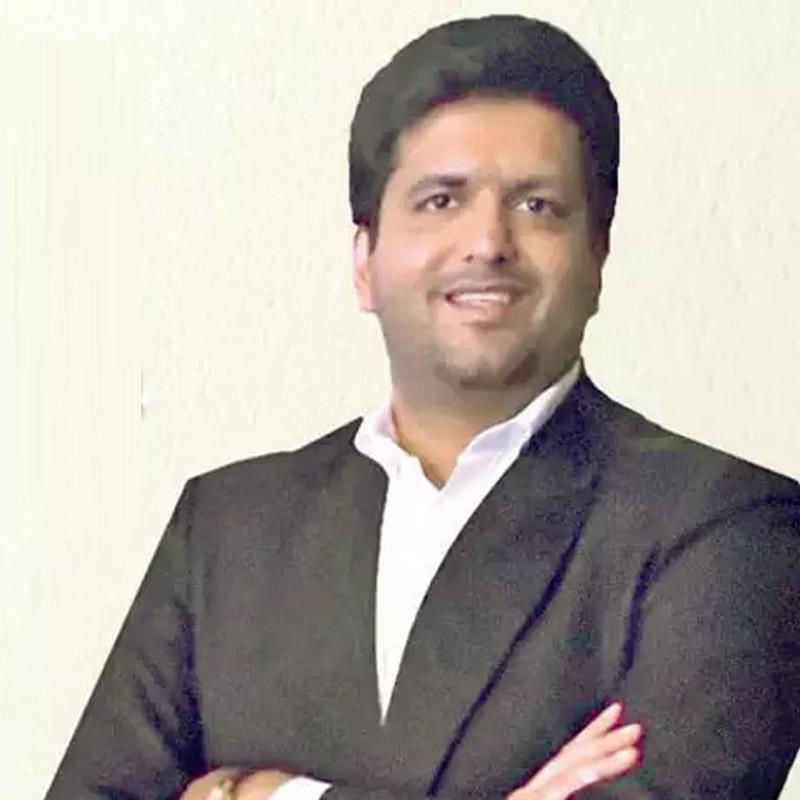
    From being a young man who had to Google about downlinking and uplinking and did not know how a satellite signal works a decade ago to an entrepreneur at the helm of a media conglomerate, IN10 Media Network and Pittie Group managing director Aditya Pittie has come a long way. Anand Mahindra- and Pittie-promoted IN10 Media has television (Epic TV), OTT platforms (Epic On and Docubay), and production house (Juggernaut) in its kitty.

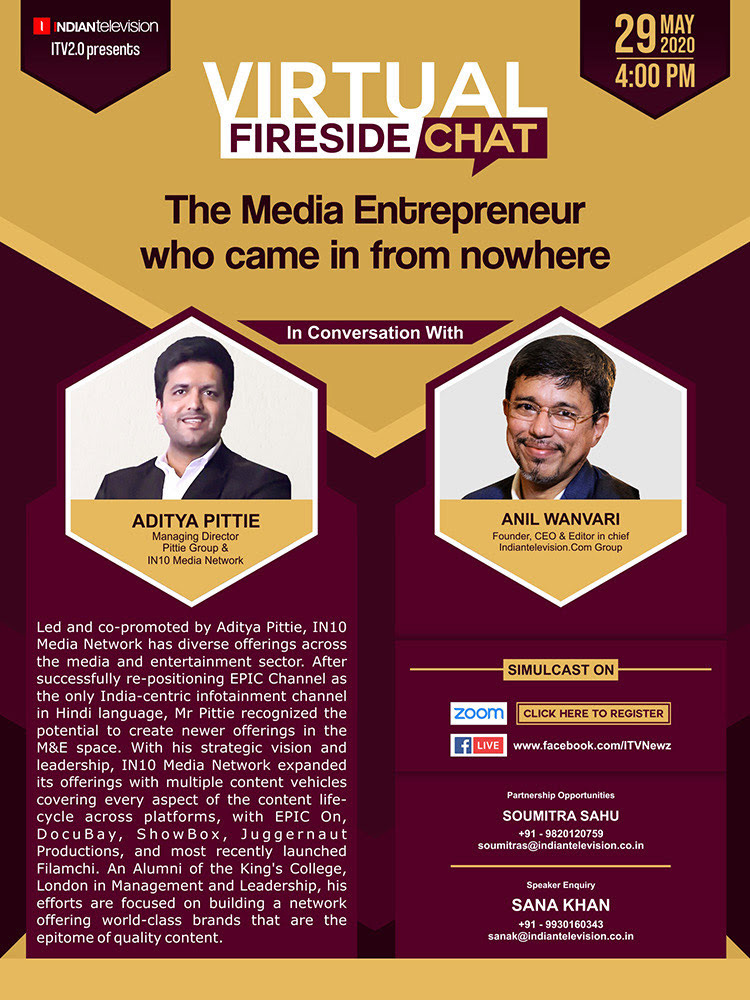
    Pittie finds his passion is creating value and wealth and building scale.  “That’s why I am interested in multiple businesses, not just any particular business. I am passionate about business, and building businesses that have scale, that gives employment to many people. That is what drives me,” says Pittie during a virtual fireside chat with Indiantelevision.com group founder, CEO and editor-in-chief Anil Wanvari.

    Here he talks about his and his and his father’s association with Patanjali, Aastha and Sanskar television channels, the distribution business and how he ventured into the world of broadcasting. He is very clear about where he wants to position himself in the broadcast business when he says: “I realised that it is better to be part of a smaller genre but have a better market share, rather than be part of a big genre and have an insignificant market share.” Excerpts:

    Describe your journey with Patanjali.

    Our relationship has gone stronger over the years. We have a lot of common values in terms of how business can be used to create value for society at large. We have been connected to him since the seeding of the idea and therefore we share the long-term vision and we continue to be part of that journey in some way or the other.

    Your father had gone to Haridwar and seen him there and invited him to Mumbai and conducted the very big Yoga gathering some 14 years ago.

    That was much before Patanjali. At that time, Swamiji was spreading the knowledge of yoga across the country to as many people as possible and obviously through television. He used to come live on Aastha channel. He was able to create the awareness of how simplified yoga can be done by people in their homes and the value it can add to the health, not just from a weight-loss point of view but from general mental health. So that is the time when my father went to Haridwar first and did yoga camp with him and was impressed with the vision that this man had that we decided to be part of the journey.

    Aastha and he became a big name after that.

    TV played a big role in his popularity. A lot of people don't know this: Swamiji is actually one of the very people in this country who have travelled to every single district by road. Lot of people think his popularity came from TV, which he does. But he has physically conducted big yoga camps with millions of people in the country. I don't think anybody has done this kind of large yoga camps of this scale ever in the history of the country. So his ground connection with the people is so strong; that is where the whole idea or philosophy of Patanjali comes from. It is for the real people that would not have access to real quality products in a market where brands used to mark up their products by creating brand perceptions, sometimes by compromising the underlying value of products. When he travelled across the country, he realised that there was a big gap in that. And he wanted to give better value products to consumers. That was the mission. I think while television was an important part of his popularity, a lot of people don’t know that he really worked hard. Almost seven-eight years he travelled to conduct yoga camps in every part of the country.

    You had a good starting point in a way. Your dad, Acharyaji and Swamiji. Acharyaji was extremely good at Ayurveda. Your father was a good entrepreneur. He was into real estate. Then you came in and expanded the business. Tell us about that. 

    I worked with my father for eight – nine years after my graduation. After that I thought of building my own identity and business. That is when the idea of selling Patanjali in super markets came about. That time Patanjali was a Rs 700-800-crore company. They were not present in any of the supermarket chains. And there was a lot of noise around how modern retailers eventually were going to have a larger share going forward. And I was very intrigued by that. So I thought it was a good business opportunity to build from scratch. Before that, while we were part of the Patanjali journey, I was not involved in any of the management decisions or business of Patanjali. It was completely a new business for me. Luckily, Swamiji supported and gave me an opportunity to see if there is an interest among the retailers. Then the first retailer I went to was Reliance. While they liked the idea of Patanjali they were very supportive of the fact that as an entrepreneur I had to build a business. That’s how the journey started. We piloted with five Reliance outlets in Mumbai first. I still remember I used to make the invoices myself and take order sheets from merchants, just to understand how the business is done on the ground. Then Patanjali grew and we started contributing 10 per cent of Patanjali’s overall business.

    So there is a logistics side to the business, there is construction and there is Patanjali distribution and you came to the media business.

    Real estate is my father’s business. I am not actively involved in the business any more. Over the years we build a lot of capabilities at the backend. We designed solutions that specifically catered to supermarket chains. Dealing with chains was not as easy as dealing with the unorganised sector. We created solutions for the brand to increase market share in supermarket chains. We have a large warehousing network. Now we have started looking for other clients who require this kind of logistical reach and service. Our biggest client continues to be Patanjali.

    Are you open to distributing other companies’ products?

    We are very selective. I have just done a deal with an American company for their beauty brands; they are non-competing with Patanjali. I also have some companies that use only our warehousing logistics. It is sort of a complex structure we have now. We are trying to find our feet on what exactly we would be when we go forward.

    What actually inspired you to get into the media?

    The Sanskar opportunity came to us very organically. When the opportunity came, we thought that the product was really strong. Aastha and Sanskar had 95 per cent of market share in the genre at that time. Our family – though not an orthodox Marwari family – was a pretty religious family. And the family found the opportunity to have Sanskar in our portfolio and to be able to be part of the journey as a good decision. And that’s how we got into the media business, specifically in Sanskar. When I started out, the first thing I did was to google about downlinking and uplinking. Until that time, I did not know how a satellite signal works. That was almost 10 -12 years ago. Sanskar was a very different, unique business model. It wasn’t the typical broadcast business where you invest in programming and then monetise through ad sales. Most of the programming on the spiritual genre was given by the content owners for free, because they want reach. In fact, they pay you to use your platform. It was a great experience. We ran it for five years and sold it to Swamiji for a very good return. That’s how we got interested in the media business. Then we looked at starting other spiritual channels. That’s how Shubh TV came along. And during that time, I had met Anand a couple of times. That’s how the journey of Epic started. The primary objective of the relationship was to make sure that Epic as a brand, which was loved by millions, was able to survive and continue in a viable way with critically acclaimed products, something Anand was proud of. When I researched on the channel, I realized that the product was very strong and definitely worth putting some time to make it work. And that’s how my partnership with Anand started. That’s how we started building Epic again.

    So you also have invested in the channel, right?

    Yes, there is an arrangement where I am also a shareholder.

    With Epic what did you feel was right and what did you feel was wrong? And what did you do go about correcting it?

    The product was just very ahead of its time. Mahesh Samat is a very seasoned media professional. He ran big companies. A lot of people don’t know this: Mahesh is a consumer guy. He understands what a consumer wants in general. Some of the content he created is still our flagship ones. They did a lot of things right. The timing of TAM going away and BARC coming in, etc., and the fact that the content was slightly ahead of time, something the mass audience in India at the time did not accept as Mahesh would have thought. That’s the challenge they have faced. The opportunity was obviously the fact that there was strong brand affinity. While the viewership was low, it was loyal. My research found that in niche products you have less absolute viewership, but you have relevant one. For example, the number of people watching English news is far lower than mostly all genres. But the reason why they get so much traction and advertising is because brands want that TG and affinity require English news for that. With such strong positioning and niche, I felt in the long term it would definitely reap some value. That was the base concept behind my conviction that Epic can be turned around. Then we did the repositioning and changed the distribution strategy. We did multiple things to ensure that we stay on course and on our path to profitability.

    In terms of distribution what did you change? Did you get on to more DPOs?

    Epic was always a pay channel. When you launch a new channel you have to incentivise DPOs and cable operators to carry your channel. When I took over Epic had certain deals in the market with DPOs, which I felt was not ideal, and which we then turned around in a couple of years. This year Epic will be subscription-positive from a distribution point of view for the first time. So we went from being a pay channel that incentivises our DPOs and cable operators to carry the channel to becoming a net-positive subscription earner.

    From being a man who did not know what uplinking and downlinking to a media entrepreneur, you have come a long way. What next?

    My passion is creating value and wealth and building scale.  That’s why I am interested in multiple businesses, not just any particular business. I am passionate about business, and building businesses that have scale, that gives employment to many people. That is what drives me. In Epic and in my partnership with Anand Mahindra I felt that there was an opportunity for a young guy like me to really live up to that dream of wanting to create that opportunity for others.

    So you took up Epic four years ago when you were 32. What did you learn about the business?

    Honestly, I had the luxury of having people around me who had an equation that was not limited not just to work. I worked with them like they are my friends. We have a very democratic approach to finding solutions to challenges that epic faced. We used to always ideate. It was a collective effort. One of the things was to reposition Epic. While it was intended to be a GEC, somewhere in the programming it became a knowledge-based product. People started perceiving it as an infotainment channel. Even in the market, some of the brands started calling it an infotainment channel when it always was in the GEC space. I realised that it is better to be part of a smaller genre but have a better market share, rather than be part of a big genre and have an insignificant market share. That is why I felt that it would be smarter to be moving to infotainment which is what people perceived it to anyway. And that’s why the decision to rebrand the logo the reposition the channel from GEC to infotainment came about.

    It is a smart decision, because GECs’ carriage fee is much higher.

    Carriage fees are one part of the GEC. But content is the key. To get significant market share in GEC, you need a certain amount of capital. Otherwise you cannot compete in that space. At that time Epic was loved because to make it into a GEC would have compromised the value and brand identity of Epic and what it stands for. So the objective was not only to make it viable but also to keep the essence of Epic as a brand alive and to make sure that people who love continue to get that content. It wasn’t just about viability; we had to find the right fit. That’s why infotainment was the right fit. We do about 150 hours of original programming. We acquire a lot of programming as well. We have 600 hours of our own IP, all episodic programming. People love watching them multiple times.

    How was the advertisers’ reaction?

    Infotainment genre is pretty stagnant when it comes to advertising. In the infotainment genre there is a lot of brand integration. A lot of FCTs are done just based on ratings. We have been focusing a lot on content and trying to find brands to plug into the Epic positioning.

    What is the journey ahead for Epic? You launched Epic+ HD.

    A lot of our viewers have wanted an HD version of the channel for a very long time. We want to have a separate channel and programming line-up for Epic+ HD as and when we decide to launch it. 
  • We are in the race to build a niche product, not to increase user numbers: Aditya Pittie

    We are in the race to build a niche product, not to increase user numbers: Aditya Pittie

    “We are not in the race of having x million DAUS or MAUS or active users. We are in the race of building a niche product.” IN10 Media Network managing director Aditya Pittie is pretty much clear about where he wants to position the network’s OTT business in an ever-growing market. Anand Mahindra- and Aditya Pittie-promoted IN10 Media has a bouquet of varied media offerings such as television (Epic TV), OTT platforms (Epic On and Docubay), and production house (Juggernaut).

    During a virtual fireside chat with Indiantelevision Group founder, CEO and editor-in-chief Anil Wanvari, Pittie asserts that Epic On and Docubay are not driven by number of users. They are rather driven by time spent, organic tractions, etc. Instead of increasing the number of users, the aim is to build a niche product as a vertical player. That is the OTT strategy the company is following. He is also bullish about Juggernaut, which is going to be one of the company’s key businesses going forward. He says that having an asset like Juggernaut will definitely be a big value addition. “We have the probably largest order book in the industry right now with more than 11 shows confirmed for production,” he states.

    Here he dwells at length on the network’s OTT business, strategy, etc.

    Excerpts:

    After the successful entry into the broadcast business, you launched Docubay. Tell us about it.

    Docubay came about because of our love for factual entertainment. We were very interested in documentaries and we believed that as a genre it is the most popular in the world. Prominent OTTs like Amazon have a good library of documentaries. A lot of people across the world enjoy watching them. Then we thought: why don’t we look at a dedicated platform for documentaries. Then we thought of going global, instead of making India-centric. Today, Docubay is a very powerful product; the experience of watching documentaries on Docubay is far superior than any other platform. And we don’t call our subscribers. We call them members, because the idea is to build a community. That’s why it has the tagline of ‘one tribe, many stories.’ The message is that there are many things to explore in this planet, but we are all one tribe. That is the message of Docubay. We just went live on Roku in North America.  And we are one of the very few companies – in the smaller media networks segment – in India that has its own OTT technology in-house. We spent almost a year and a half in building that technology. As an organisation we are really proud of both our OTT products.

    How are Epic On and Docubay faring in terms of pricing and number of subscribers?

    As regards the KPIs and metrics, Epic On and Docubay are not driven by number of users. They are driven by time spent, how many organic tractions, etc. We are not in the race of having x million DAUS or MAUS or active users. We are in the race of building a niche product.  The pricing of Epic On or Docubay is far higher than any of the horizontal or generic OTT. We are very clearly a vertical player. We have very specific offering and then charge a premium for that offering. That is the model we are working on. By no way we try to fret about how many users we have or how faster our user base is growing. We are not hungry just to drive traffic. We wanted quality traffic. Some of the conversion rates that we have in terms of install vs number of people who are subscribing is probably one of the best in the industry. Those are the kind of models we try to work on. Stickiness, higher paying members who are looking for a specific service as opposed to getting everybody to come on the platform and give what they like. That is not our strategy.  

    Since you are not looking at metrics, what is your business game plan to monetise?

    Profitability in the media business is about how much content you want to put out. We have a business plan in place. We believe in a direction we want to take. Going forward, 15 to 20 years from now, when OTTs become mainstream, there will be a big market for vertical OTTs where people will subscribe and pay you a premium for the kind of content you create and curate for them, which is dedicated to the genre they prefer focusing on. So the differentiation is that in horizontal you have all kind of content under one umbrella, whereas vertical is slightly more focused on niche. That is the base model behind our OTT strategy. There are various other vertical OTT players all over the world. They have less number of users, but very viable business model.

    But here you have entered a global space. So are you competing with Curiosity Stream?

    Curiosity Stream has a lot of short-form content and docu-series. Docubay is a feature platform. We only do films. We carry content that has minimum duration of 20-25 minutes. The product offering thus is very different. Theirs is a very knowledge-based, and about science, research, etc. On the other, we give perspective for you to form your own opinion. That is how the documentary genre should be. If you look at the content at Docubay you will realise that they give perspective but let you form your own opinion about the topic. While they are in some degree competition to us, we believe that we are a completely different platform than Curiosity Stream. And we don’t necessarily consider them to be a competition.  

    What is the thinking behind having own production company and forging partnership with Applause?

    I think we need to separate the Applause Entertainment deal from us being in production. While they are connected they are two separate business models. We were able to foresee last year that the demand for content for OTT platforms is going to skyrocket. Unfortunately, good content creators who understand what kind of content works for OTTs are limited in our industry. There are only a handful of players that are able to create good quality content. As an organisation we have created so many hours of content for our broadcasting business. We felt that we could leverage that knowledge and expertise to build successful production business for other platforms. In terms of scale, we felt that the business can be large enough to justify our resources, time, and energy. That’s why we hired Samar Khan to lead our production business for OTT. And Code M was a super-hit (which came on ZEE5 and Balaji).

    And we have the probably largest order book in the industry right now. We have more than 11 shows confirmed for production, with an order book of over Rs 100 crore for the next one year. Juggernaut is going to be one of our key businesses going forward. We are really excited about the ability to create content at scale. Samar and his team have really worked hard to build our good talent of writers and convince OTT platforms that we have the ability to deliver solid products. I am really excited about the Juggernaut business. Having an asset like Juggernaut in our portfolio will definitely be a big value addition.

    You work for local OTTs or big international ones like Amazon, Netflix, etc.?

    I won’t be able to divulge specific contract details because that will be breach of confidentiality with them. We have one or two shows with every Indian platform. We are obviously in conversation with international OTT players. While Samar has a very big pedigree of content creation, Juggernaut as a company is new. So we are building some traction. Our aim is to deliver some hits this year and then start working with OTTs like Netflix, Amazon, Hulu, HBO Max, etc. at some point as well.

    What genre is Juggernaut positioned in?

    We have seen the success of Code M and Samar as a content creator has been very good at certain shows, but we don’t want ourselves to be restricted to that. Content creation is a collective effort. Success in content creation happens by bringing the right people together for the right type of project. So we are not focussed on just doing thriller shows, fiction or non-fiction. The idea is to create good content that is in demand by platforms. OTT is such a fast-feedback medium. It is not like television. You come to know the feedback – whether it works or not – the same day of launching the show. And there is so much data. The platforms specifically know what they want, what kind of content works, and in which region. So rather than focusing on a particular genre like thriller or non-fiction, etc., we want to focus on knowing what works with audiences, learning from experiences in creating good content, working closely with the platforms, leveraging our relationships to pre-empt what kind of concepts and stories are going to work down the lane and prepare our content bank to cater to that need. That’s the broad strategy we are looking at. You can see that we are creating shows across genres.