Tag: IMRB

  • Mediker launches new campaign “Mediker On Juey Gone”

    Mediker launches new campaign “Mediker On Juey Gone”

    Mumbai: Mediker, an anti-lice treatment brand from FMCG major, Marico Ltd launched its new communication campaign – “Mediker On Juey Gone!”

    Lice infestation is a common problem for most households with young girls aged six to 15 years. According to a recent study conducted by IMRB, lice affect over 37 per cent of urban households in South & East regions and is an even bigger hair concern than dandruff*. The concept behind the ad film originates from a common worry among mothers regarding lice affecting their children’s hair, especially during school, at exam time & generally across Indian households, in hot and humid weather conditions.

    *As per Kantar IMRB Rider study’2020.

    The new communication attempts to educate consumers, that a mere lice comb is not enough to remove lice effectively. The conventional lice comb only targets the big lice, leaving behind small lice that stick to the scalp, inadvertently allowing further growth of their eggs and eventually new baby lice, which further become big and lay more eggs. Over time, this vicious cycle perpetuates, leading to a recurring problem.

    To address this persistent challenge, Mediker a market leader in anti-lice treatment, offers a safe-for-kids, doctor certified solution# Its breakthrough formula contains 100 per cent natural actives – Neem & Coconut, designed to break the life cycle of lice in just four weeks^.

    ^Use Mediker every Sunday for four weeks for effective lice removal #Mediker is clinically tested and safe to use. Basis Clinical Study, 2023

    Commenting on the importance of Mediker in the current context, Marico Ltd chief marketing officer Somasree Bose Awasthi stated, “Mediker’s new TVC encapsulates our commitment to providing effective solutions that address real-life challenges faced by our consumers Powered by 100% Natural Actives of Coconut & Neem, Mediker promises to solve the persistent issue of lice by breaking the life cycle from within thereby bolstering children’s self-assurance and overall well-being, something that is very important to every parent. We are thrilled to introduce this powerful solution that helps assure parents of their children’s well-being and nurtures healthy hair”.

    The TVC will make its debut in Telugu and Bengali, catering specifically to the vibrant markets of Andhra Pradesh, Telangana, and West Bengal. Through this compelling and informative brand film, Mediker aims to raise awareness about the comprehensive approach to lice removal and establish itself as a reliable partner in every family’s hair care journey.

    Speaking on the brand film, MYO founder Deepa Geethakrishnan said, “In a functional problem solution category, the big creative challenge was to demonstrate the expertise of Mediker while keeping the story authentic and something the mothers can instantly relate to, but with a smile”.

    Mediker is now available at all leading retail outlets pan India & e-commerce platforms such as Amazon, Flipkart.

  • Television reigns in rural India despite 79 pc OTT scope

    Television reigns in rural India despite 79 pc OTT scope

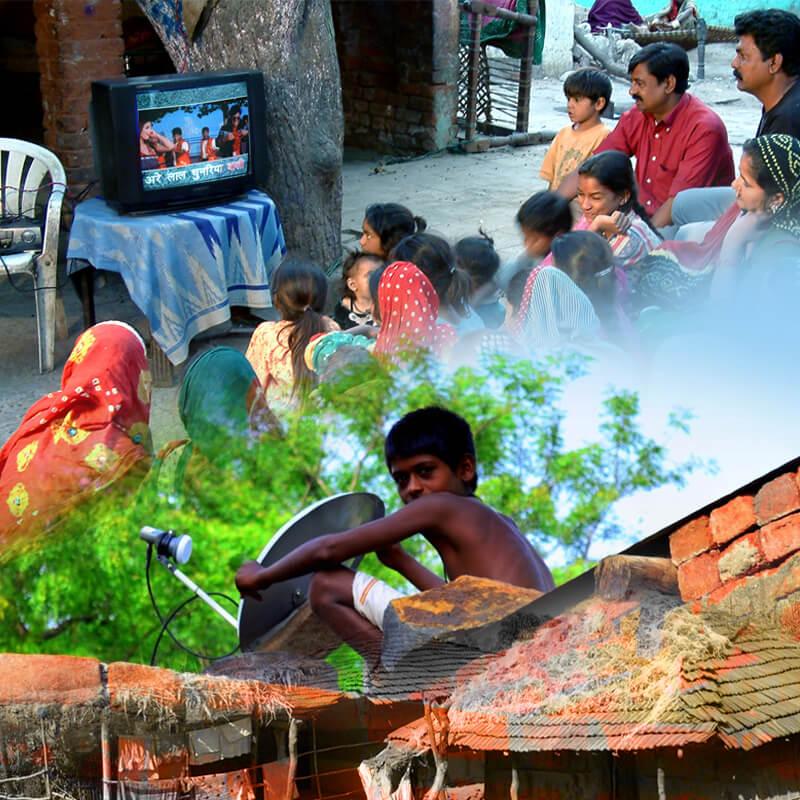
    MUMBAI: Television remains the dominant medium as far as the news, entertainment and advertising need in rural India is concerned although 79 per cent consumers (signifying crucial scope for OTT platforms) own a mobile, including those living in towns/villages inhabited by as low as 2,000-3000.

    Market research firm Kantar IMRB has found that only 22 per cent of rural consumers who were surveyed read a magazine or a newspaper in the four weeks preceding the survey. And, only four per cent surveyed said they listened to the radio, Mint reported.

    The penetration of mobile phones is the highest in southern and northern India at 80 per cent while it was 75 per cent in the west and  78 per cent in the east.

    In its report ‘Star 2017,’ the firm said that it found that 59 per cent of all rural consumers polled watched television in the previous week before they were queried for the survey. The report showed scant use of personal computer or laptop in rural India.

    These conclusions are in sync with BARC India data. As reported by Indiantelevision.com, according to BARC figures released in February 2017, the all-India TV universe has increased to 183 million from the earlier collated figure of 154 million with the growth in rural audience showing a quantum jump signifying that upswing is coming from non-urban areas.

    The data highlights that while the total urban TV universe stood at 84,414 (in ‘000) in 2017, the comparative rural figure is 98,639 (in ‘000), signifying that the rural segment has grown at a faster rate, which opens up whole new marketing options for broadcasters and advertisers. The comparative old figures as per BARC estimates in 2015 were 77544,000 (urban) vs. 75967,000 (rural).

    This data showed that, while the urban-rural audience mix was almost equal earlier, the rural segment has outpaced the urban as per latest figures in rate of growth. The data reiterates that since it started surveying the rural audience, a whole new world has opened up for subscribers of the data, which, incidentally, also include government organisations apart from the traditional TV channels and advertising agencies.

    ALSO READ :

    PKL rural telecast exceptionally propels Star Sports First to top

    IPL net realisation up, digital ad revenue grew astronomically as compared to TV

    Total TV universe up to 183 mn, rate of rural growth higher than urban: BARC survey


  • Digital is way forward but auxiliary for top brands: Reports (updated)

    MUMBAI / BENGALURU: Two separate studies by unrelated parties have been used in this report. Mobile internet has excellent future prospects in South East Asia, and more so in India says the Indian Digital Advertising Report 2017 (DA Report) by Cheetah Global Lab.

    India has, as a country, skipped right over PC and entered the mobile internet age. Although India’s mobile internet penetration remains low, the accelerated development of its infrastructure and support from local carriers have made India one of the fastest growing internet populations in the world. 4G coverage in India continues to rise, and the rural market there has considerable potential.

    India differs from markets with more mature digital ecosystems, in that traditional media, especially newspapers, have not yet been seriously challenged by digital content channels. Traditional media would continue to enjoy high popularity and profit margins. Indian newspapers; revenues have continued to grow, and newspaper is still the most effective way for advertisers to reach a great number of users.

    However the DA Report says that India’s digital ad market development has been hindered by insufficient infrastructure and limited internet speed, but these factors aside, digital ads are not the main advertising channel for top-tier brands. From the data it has obtained, Cheetah Lab says that it is clear that even if brands had bigger advertising budgets, Indian advertisers would retain a preference for traditional media and the non-mobile internet. According to Cheetah Global Lab, one of the main reasons for this is that at present, the Indian ad market lacks industry standard, widely accepted performance evaluation standards. Compared to digital ads, print media and television ads can provide clearer statistics for reaches and digital ad performance is harder to determine.

    In terms of the distribution of spending on digital advertising across all vertical industries, e-commerce, accounting for 19 per cent of all digital ad spending, leads the pack. FMCG comes in second with a 14 per cent share, while banking, financial services and insurance (BFSI) follow closely behind. Consumer durables, automotive, and media & entertainment are not separated by wide margins.

    When comparing vertical industries in terms of the percentage of marketing budget spent on digital advertising, e-commerce companies spend the highest percentage at 25 per cent, less than the percentage of advertising budget allocated for television advertisements (38 per cent) and print ads (28 per cent). Number two telecommunications companies allocate 22 per cent of their marketing budgets for digital advertising, followed by BFSI and media & entertainment, in which about one-fifth of advertising budgets are allocated for digital advertising. In the durable consumer goods industry, 17 per cent of advertising budgets go to digital advertising.

    The major developments and conclusions of the DA Report are: In the digital age, traditional media continue to thrive in the Indian ad market; Spending on digital advertising in India will be increased in social and video; Standards for measuring ad performance, data, independent third-party verification, and visibility rates: spending on digital ads in the Indian market revolves around these keywords.

    A separate report unrelated to the DA Report of Cheetah Global Labs, Indiantelevision.com found, confirms the analyses of India Mobile Video Report (a joint study by Kantar IMRB & Culture Machine) June 2017 that mobile equipment manufacturers, mobile advertisers and OTT players will be investing in mobile technologies to expand their business, explore new avenues in terms of monetisation, especially broadcasters, production units to create new content on OTT, advertisers who are ready to spend on mobile ad placements as they are exploring new opportunities in mobile marketing, where there is a surge in data traffic and addition to mobile video consumers which will open up to new avenues for digital companies.

    The Mobile Video Report says further that mobile is the future as most of the data is processed through the small handheld device. Video has adopted a dual role, becoming a means of consumption and expression. There has been a rapid evolution in the way the consumer is expressing her/ his opinion. Hence the brand marketers and digital advertisers are facing distraction as there is an oversupply in data which is confusing them and depriving them from making new opportunities.

    But video is future of the content marketing. The Mobile Video Report says that, mobile screen will be attracting more engagement than any other media, likely to be 37 percent higher than TV. Not only are more people turning to the mobile for entertainment, they are also watching and engaging more deeply online.

    The report unfolds that daily engagement time on mobile hovers around the four-hour mark, as per the report, it has estimated that the average time of the consumer spent on entertainment is 23 per cent in the last 9 months. And it will register a hike in data traffic from 1.4 GB in 2015 to 7 GB in 2021, which is measured in data traffic per active Smartphone.

    The market will grow from Rs 1,700 million in 2016 to Rs 12,300 million in 2020. The digital video subscription market is estimated to cross 12,000 million by 2020. The OTT (over the top content) is growing rapidly; already 3 out of 10 users are across on OTT video platform.

    The Mobile Video Report also suggests that 65 per cent of the video surfers on the mobile belong to non-metro towns. And while most of the users are likely to be women accounting for 30 per cent to be avid consumers of mobile video.

    While the report also indicates that most of the users spend 3 hours/ week on consuming mobile video, while 90 per cent of this is spent on. It means that the 2 platforms are popular with the consumers that are YouTube and Facebook.

    The other indications are, that the medium is popular across the age groups, not just the young, and over half the viewers are above the age group of 25 years. In fact India has more than 20 million avid video consumers who spend more than 22 hours a month consuming video. Mobile video consumption is not just for affluent homes, more than 40 per cent of viewers belongs to SEC C/D/E homes.

  • MIB scheme evaluation: Tenders invited from Chrome DM, IMRB & Nielsen etc

    NEW DELHI: Offers have been invited by the information and broadcasting ministry for the evaluation of its schemes from 11 short-listed agencies which include Chrome and IMRB.

    Tenders have been invited by 23 June 2017. The bids will be opened in the presence of authorised representatives of the bidders. The date and time of opening of the bids of the eligible bidders will be intimated separately. The ministry has made clear that it is not permissible for the addresses to transfer this invitation to any other Institution.

    A notice on the website of the ministry includes Terms of Reference (TOR) of the Schemes for Assignment, the standard form of certificates to be included in the proposal and the standard form of agreement. The evaluation of the proposals will be done by the Evaluation Committee.

    A detailed proposal including the technical bid and the financial bid need to be submitted in two separate sealed covers. The reference number of the letter and the title of the assignment should be superscribed on the envelope containing the proposal.

    The short-listed agencies are:

    National Institute of Public Finance and Policy (NIPFP),
    National Council of Applied and Economic Research (NCAER),
    National Institute of Labour Economic Research and Development (NILERD),
    National Institute of Financial Management (NlFM),
    Centre for Media Studies
    Nielsen (India) Pvt. Ltd
    Sambodhi Research & Communication Pvt. Ltd.
    GFK Mode Pvt Ltd.
    Frost and Sullivan
    IMRB International, and
    Chrome Data Analytics & Media

    The schemes include:

    Broadcasting Sector:
    i) Supporting Community Radio Movement in India
    ii) Prasar Bharafi
    a) Grant in aid to Prasar Bharati
    b) Grant in aid to Prasar Bharati for Kisan Channel

    Film Sector:
    i) National Museum of Indian Cinema
    ii) Infrastructure Development Programme relating to Film Sector
    a) Upgradation, modernisation and expansion of CBFC and certification process
    b) Upgradation of Siri Fort Complex
    c) Upgradation of building infrastructure of Films Division
    d) Grant-in-Aid to FTII – Upgradation and Modemisation of FTII
    e) Infrastructure development in SRFTI
    D Development Communication & Dissemination of Filmic Content
    a) Promotion of Indian cinema through film festivals and film markets in lndia and abroad
    b) Production of films and documentaries in various Indian languages
    c) Webcasting of Film Archives
    d) Acquisition of archival films and film material
    iv) National Film Heritage Mission
    v) Anti-Piracy initiatives
    vi) Setting up a Centre of Excellence for Animation, Gaming and VFX

    Information Sector:
    i) Up-gradation of IIMC to International Standards
    Media Infrastructure Development Programme
    Development Communication & Information I)issemination Iluman Resource Development
    a) Training for Human Resource Development (excluding Prasar Bharati)
    b) International Media Programme
    c) HRD of Film MediaUnits
    d) Payment for Professional Services

  • BARC India & Israeli company explore customised digital measurement tools

    BARC India & Israeli company explore customised digital measurement tools

    NEW DELHI: The Broadcast Audience Research Council of  India (BARC India) is said to be in talks with an Israeli media technology company to customise for it tools for digital measurement, which is likely to be rolled out in phases from sometime in 2017 or early 2018 and could go on to make BARC India an organisation measuring TV+digital eco-systems.

    After having issued Request for Information (RfI) for digital measurement in December 2015 and having received responses from 11 leading vendors from across the world, BARC India had come out last year Request for Proposals for the same.

    BARC India is presently working on digital proof of concept that will help it in testing different technologies, methodologies and potential capabilities of the shortlisted vendors.

    The companies that had responded to the RfI included agencies such as Kantar Media, IMRB, ComScore, Nielsen, MediaMetrie, Gracenote (in December 2016  it entered into an agreement to be acquired by Nielsen), Informate, GfK, Accenture, EY, eywa Media, Gemius and Verto Analytics.

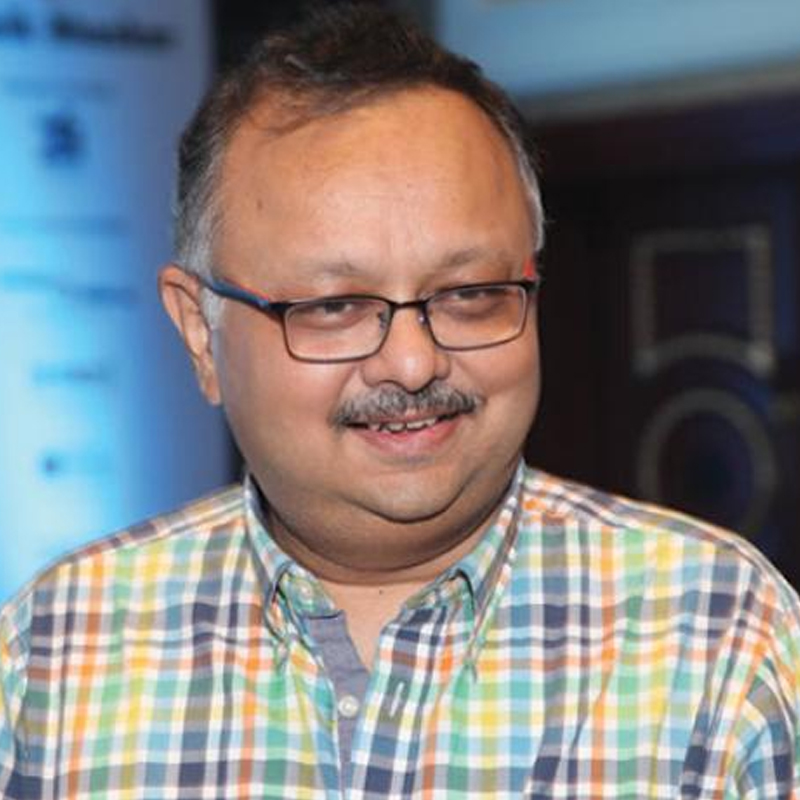
    It was in October 2015 that BARC India CEO Partho Dasgupta had announced at a panel discussion on new TAM models at CASBAA Convention in Hong Kong that the audience measurement organisation was looking at launching digital measurement and will float a global tender for vendor(s).

    Industry sources indicated that the Israeli company could be Actus Digital, a global provider of broadcast media and video technologies, and that the exploratory talks between the company and BARC India could be revolving around customising measurement tools for India instead of simply re-deploying universal tools generally used by big companies for digital data collection.

    However, it must be admitted that Indiantelevision.com could not independently confirm the name of the Israeli company from either BARC India or the company concerned till the time of writing this report.

    The barely two-year-old BARC India, which initially focussed on measuring TV viewing habits via BAR-O-Meters through watermarking technology, is now expanding into the digital realm.

    BARC India is jointly promoted by the Indian Broadcasting Foundation (IBF), the Indian Society of Advertisers (ISA) and the Advertising Agencies Association of India (AAAI) with the latter two organisations holding 20 per cent each, while the broadcasting body holds 60 per cent.

    ALSO READ:

    BARC issues RFP for playout monitoring and DB system

    BARC India eyes digital measurement; calls for global RFIs

    BARC India ropes in Nielsen’s Jamie Kenny as DAM head


  • BARC India & Israeli company explore customised digital measurement tools

    BARC India & Israeli company explore customised digital measurement tools

    NEW DELHI: The Broadcast Audience Research Council of  India (BARC India) is said to be in talks with an Israeli media technology company to customise for it tools for digital measurement, which is likely to be rolled out in phases from sometime in 2017 or early 2018 and could go on to make BARC India an organisation measuring TV+digital eco-systems.

    After having issued Request for Information (RfI) for digital measurement in December 2015 and having received responses from 11 leading vendors from across the world, BARC India had come out last year Request for Proposals for the same.

    BARC India is presently working on digital proof of concept that will help it in testing different technologies, methodologies and potential capabilities of the shortlisted vendors.

    The companies that had responded to the RfI included agencies such as Kantar Media, IMRB, ComScore, Nielsen, MediaMetrie, Gracenote (in December 2016  it entered into an agreement to be acquired by Nielsen), Informate, GfK, Accenture, EY, eywa Media, Gemius and Verto Analytics.

    It was in October 2015 that BARC India CEO Partho Dasgupta had announced at a panel discussion on new TAM models at CASBAA Convention in Hong Kong that the audience measurement organisation was looking at launching digital measurement and will float a global tender for vendor(s).

    Industry sources indicated that the Israeli company could be Actus Digital, a global provider of broadcast media and video technologies, and that the exploratory talks between the company and BARC India could be revolving around customising measurement tools for India instead of simply re-deploying universal tools generally used by big companies for digital data collection.

    However, it must be admitted that Indiantelevision.com could not independently confirm the name of the Israeli company from either BARC India or the company concerned till the time of writing this report.

    The barely two-year-old BARC India, which initially focussed on measuring TV viewing habits via BAR-O-Meters through watermarking technology, is now expanding into the digital realm.

    BARC India is jointly promoted by the Indian Broadcasting Foundation (IBF), the Indian Society of Advertisers (ISA) and the Advertising Agencies Association of India (AAAI) with the latter two organisations holding 20 per cent each, while the broadcasting body holds 60 per cent.

    ALSO READ:

    BARC issues RFP for playout monitoring and DB system

    BARC India eyes digital measurement; calls for global RFIs

    BARC India ropes in Nielsen’s Jamie Kenny as DAM head


  • Rural India pips urban India in social media usage with 100% growth

    Rural India pips urban India in social media usage with 100% growth

    MUMBAI: Internet and Mobile Association of India [IAMAI] and IMRB International report depicts 100 per cent growth in usage of social media in rural India during the last one year with 25 million users in rural India. 

    On the other hand, urban India registered a relatively lower growth of 35 per cent with the total number of users at 118 million as on April 2015. According to the report there are 143 million social media users in India as on April 2015. 

    The report also finds that the top four Metros continue to account for almost half of the social media users in urban India.

    According to the latest report, the largest segment accessing social media consists of college going students with 34 per cent followed by young men at 27 per cent. School going children constitute 12 per cent of social media users. College going students and young men still form 60 per cent of the social media users in urban India.

    The report further finds that 61 per cent of these users access social media on their mobile device. The fact that almost two thirds of the users are already accessing social media through their mobile is a promising sign. With the expected increase in mobile traffic the number of users accessing social media on mobile is only bound to increase.


    The report further finds that 61 per cent of these users access social media on their mobile device. The fact that almost two thirds of the users are already accessing social media through their mobile is a promising sign. With the expected increase in mobile traffic the number of users accessing social media on mobile is only bound to increase.

    According to the report, maintaining a profile on social networking sites is a top activity of users followed by updating status. On the other hand, commenting on a blog site is the third most popular activity among users in social networking sites. 

  • Bengali film viewing has dropped: CII & IMRB report

    Bengali film viewing has dropped: CII & IMRB report

    KOLKATA: Majority of Bengali film viewers in Kolkata have not been in theatres in the last one year to watch a Bengali film, despite proliferation of multiplexes. However, it is interesting to note that in the districts, around two thirds have visited movie theaters to catch a Bengali film, but the frequency of visits are quite low, not even three films in a year, reveals a report ‘Bengal Bioscope: A Big Picture Outlook for Sustainable Growth’ launched jointly by the Confederation of Indian Industry (CII) and IMRB.

    The report further reveals that around 30 per cent of Bengali cinema viewers do not contemplate watching a Bengali film in a hall in near future and an additional 10 per cent have stopped watching Bengali films on big screens in the last one year.

    This is further corroborated by IMRB’s primary survey of 35 single screen theatres across Kolkata and West Bengal revealing 30 per cent occupancy on weekends and around 20 per cent on weekdays.

    The tastes and preference of viewers in Kolkata and rest of Bengal are quite different which is echoed by only handful of releases successfully straddling both geographies.
    While original engaging content, a larger pool of good actors and directors and better in hall experience can drive Bengalis back to cinema halls.

    The report was launched at CII Big Picture Summit – Vision Bengal, 2014 on 12 December. The CII has partnered with IMRB International to conduct a study on Bengali film industry that focuses on understanding the emerging business models, importance of internet and innovative viewer engagement methods that are vital for the growth of the industry. 

    As a part of this project, IMRB conducted a first of its kind consumer survey across eight districts in urban West Bengal to learn the changing nature of film viewership and the general perception of Bengali films among its target audience. In addition to the consumer survey, a series of interviews were conducted to understand the trade insights of the film industry through in depth interactions with producers, actors, directors, distributors, exhibitors and broadcasters of Bengali cinema, it is further learnt.

    “With the increasing investment in infrastructure and production as well as growing consumer interest in regional cinema, we see a very bright future for Bengali film industry which has always been a flag bearer of creative excellence. The study encompasses the key constituents of the industry – producers, creative artists, distributors- as well the opinions of consumers who decide the fate of the creative products,” said IMRB International SVP media & retail Hemant Mehta.

    CII director General Chandrajit Banerjee said, “CII’s vision is to take the Indian Media and Entertainment sector towards achieving $100 billion by the year 2020. We expect that this growth will also come from regional media and entertainment markets across India.”

    “Regional is the new national and it fits well for the media and entertainment sector. Bengali Cinema has an enviable past and it continues to be one of the most vibrant regional film industries in the country,” Banerjee concluded.

  • Online ad market to reach Rs 3575 crore by March 2015: IAMAI-IMRB report

    Online ad market to reach Rs 3575 crore by March 2015: IAMAI-IMRB report

    MUMBAI: As of June 2014, there were 243 million claimed internet users in India out of which 192 million are active internet users who access internet at least once a month. There has been a consistent growth in the number of internet users over the past few years. In urban cities, the penetration of active internet users is nearly 36 per cent whereas in rural villages the penetration is 6 per cent. There is a large part of the population that still needs to be included in ensuring a large-scale digital adoption in the country.


    The latest finding of the ‘Digital Advertising in India’, a report jointly published by the Internet and Mobile Association of India (IAMAI) and IMRB International, reveals that the online advertising market in India is projected to reach Rs 3,575 crore by March 2015 with a y-o-y growth rate of 30 per cent.


    The report finds that currently, search and display are the top two contributors to the total digital advertisement spends in India. Of the Rs 2,750 crore digital advertisement market, search ads constitute 38 per cent of the overall ad spends followed by display ads which contribute 29 per cent and social media contributing 13 per cent of overall digital advertisement spends. It is estimated that the proportion of spends on search advertisements will reduce and spends will increase on email, video and mobile advertisements.


    By 2015, spends on video ads will grow by a CAGR of 56 per cent and contribute 12 per cent to the overall market share of digital advertisements. In FY ending in March 2014, the contribution of search spends reduced to 30 per cent of the overall digital advertisement spends i.e. contributing Rs 825 crore to the Rs 2,750 crore digital advertisement market.


    According to the report, ad spends on mobile devices are growing at a CAGR of 43 per cent and social media is grew at a CAGR of 41 per cent y-o-y and touched Rs 385 crore and Rs 440 crore in March 2014. Spend on video grew at CAGR of 51 per cent and reached Rs 303 crore. Spends on email ads grew at a CAGR 16 per cent to reach Rs 88 crore.


    Further, on industry wise spends, the report finds that e-commerce, telecom and FMCG & consumer durables are the top three verticals driving the digital advertisement spends in India.


    Digital ad spend on mobile devices is 14 per cent whereas on desktop PCs, laptop computers, it is 86 per cent. Although traditional media still holds strong ground in the Indian ad space, digital advertising is catching up fast and is expected to overtake traditional media within the next 5 -10 years.

  • Aamir Khan wins Aaj Tak Care award for his work in films and TV

    Aamir Khan wins Aaj Tak Care award for his work in films and TV

    NEW DELHI: Actor Aamir Khan, who took television viewers by storm with his first series of Satyamev Jayate has received the award in the individual category in the Aaj Tak Care awards held on 28 August here.

    The anthem for the Aaj Tak Care Awards, the first crowd sourced anthem was launched by actor Ajay Devgn and is a unique initiative.

    All the other awards and recognitions were given in the corporate category. Corporate Affairs Minister Sachin Pilot and cricketer Yuvraj Singh were also present in the event.
    All the received entries were evaluated on various parameters by IMRB and then were passed on to FICCI to select six nominees in each category. The final list of these six nominees was submitted to the panel of the jury members.

    The final awardees in various categories were selected by the Jury members comprising Gurcharan Das, Ashok Seth, Sandeep Chachra, Sandeep Pandey, Rajendra Singh, Dipankar Gupta and Arun Kapur.
        
    Yuvraj Singh who was present at the award ceremony addresses the gathering
        
    Ajay Devgn inaugurates the Aaj Tak Care award anthem


    The final list of winners and recognition in various categories is as follows:

    Education: Mahindra and Mahindra Ltd.
    Recognition: Shree Renuka Sugars Limited & SRF Limited
    Healthcare: Amul Dairy – Kaira District
    Environment: None
    Recognition: J K tyres & Royal Bank of Scotland
    Empowerment: The Lemon Tree Hotel company
    Recognition: Dharampal Satyapal Limited
    Individual: Aamir Khan