Tag: IMG Reliance

  • ICC enlists Prabhakaran Thanraj as VP-commercial & operations

    ICC enlists Prabhakaran Thanraj as VP-commercial & operations

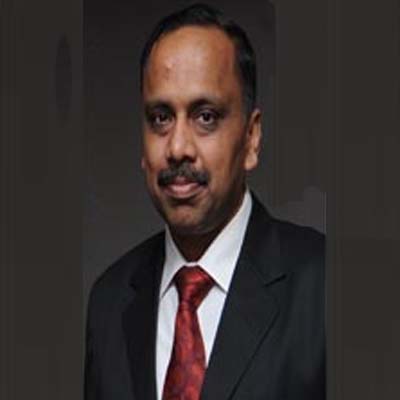
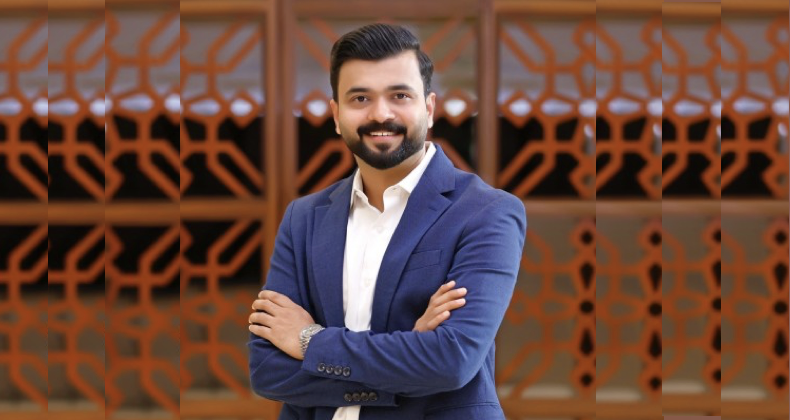
    MUMBAI: Prabhakaran Thanraj has reasons to be pleased. He’s just been appointed as the  vice-president – commercial & operations at the apex global cricket administrative  body – The International Cricket Council based in Dubai. For three years he was at the Asian Cricket Council (ACC), first as head of events & commercial, then being promoted as general manager – events and commercial in 2024..

    At the ACC, along with the team, he helped monetise the Women’s Asia Cup, a 70 per cent higher value from Sony Pictures Networks India for the ACC  media rights for the 2024-2031 cycle.

    Prabha, as he is called by colleagues, began his career as a signage and branding coordinator at IMG Reliance for the Aircel Chennai Open from 2009-2012. It was onto the desk as a graphic designer for around two years with Cognizant Technology and hew switched to IMG Reliance as a graphic designer for a year. It was here that the Board of Control for Cricket in India (BCCI) spotted him and hired him as sponsorship manager for the Champions League 2013 and 2014. IMG  Reliance once again lured him away as assistant sponsorship manager and he stayed put there for almost four years.

    And then came the shift to the ACC which was a huge leap for Prabha. But he has proved himself. Today, he has a track record driving revenue through strategic partnerships, managing high-impact events, and leading successful marketing campaigns. And he is known for guiding teams, maximising brand impact, and advancing the sport’s reach on an international scale.

    The ICC congratulated him and wishes him all the best for his innings with them. We, at indiantelevision.com,  are sure Prabha will negotiate the googlies  as well as the short-pitched deliveries well. And even pull some of them over mid-wicket for a six.

  • IMG Reliance to be rebranded following RIL acquisition

    IMG Reliance to be rebranded following RIL acquisition

    MUMBAI: The sports ambitions at the Mukesh Ambani-headed  Reliance Industries continue to grow. In the latest announcement, it is set to change the name of its Indian joint venture with the Mark McCormack founded firm International Management group (IMG), IMG Reliance. This will happen post its acquisition of the 50 per cent shares held by IMG Singapore in the Indian operation.

    Reliance informed regulators  that it will be paying out not more than Rs 52.08 crore for the acquisition.

    The duo had set up IMG Reliance to build a platform to help   market sports, fashion and media and entertainment in India.

    IMG-Reliance  had a turnover of Rs 181.70 crore  with net profit at Rs 16.35 crore in FY 2020, Rs 195.55 Crore with net profit at Rs 19.25 crore in FY 2019, and Rs 158.26 crore  with net  profit at Rs 15.82 crore respectively.

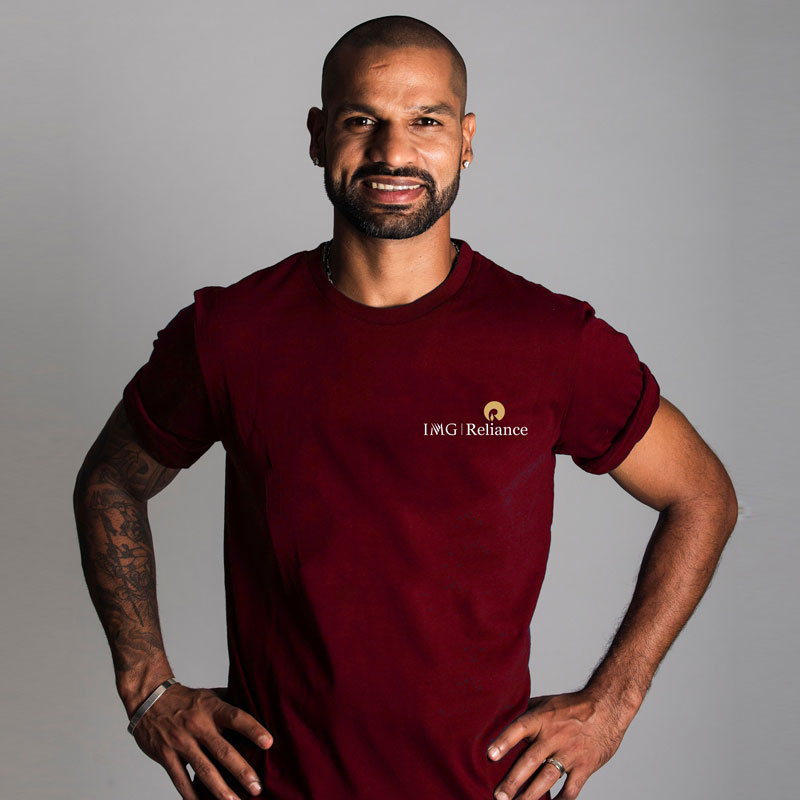
  • Shikhar Dhawan signs deal with IMG Reliance

    Shikhar Dhawan signs deal with IMG Reliance

    NEW DELHI: IMG Reliance today announced that Indian cricket star Shikhar Dhawan has signed an exclusive worldwide marketing and management agreement with the company – specialised in talent management, sports sponsorship & marketing.

    Since the launch of the Talent Management division in 2016, IMG Reliance has enjoyed great momentum, adding some of the cricket’s most exciting starts to its roster including Rohit Sharma, Jasprit Bumrah, Hardik Pandya, Krunal Pandya, Shreyas Iyer and now the prolific batsman Shikhar Dhawan.

    “I think what IMG Reliance brings to the table is quite dynamic and unique in India. I am very excited to partner with the company which has expertise across so many different platforms,” said Dhawan. “While I continue to focus on my cricket and bringing laurels to the nation, off-the-field, I know I have my new team at IMG Reliance to help me maximize my talent.”

    Dhawan is one of the most charismatic and talented players of this generation. One of the finest openers in the history of Indian cricket, Dhawan has led the team to numerous wins single-handedly. Dhawan has been one of the most prolific scorers for India in the limited overs format accumulating close to 6000 runs at an enviable average of over 45.

    “Shikhar possesses enormous talent and character, a unique combination that along with cricket will help us build a brand. It is our absolute delight to be representing a talent like Shikhar who ranks amongst the best cricketers India has produced. We have put together a great team around Shikhar, whose expertise across various verticals will help him achieve the goals,” said IMG Reliance head-talent & sponsorship Nikhil Bardia.

    Follow Tellychakkar for the consumer facing news & entertainment

  • CII Sports Summit: The role of corporate India

    CII Sports Summit: The role of corporate India

    MUMBAI: Profit is not a bad word which the sports ecosystem has awakened to and realised, seemed to be the essence of the discussion at the inaugural ‘Corporatization of Sports’ session at the CII summit on the business of sports and entertainment held in Mumbai on 21 September. The session sought to discuss how Indian sport could evolve and produce champions with the involvement of corporate India.

    The need for looking at the commercial aspect of sports, scope for public-private partnership in promotion, possibility of the government incentivising investments, supporting sports for the sake of business and branding, games packaging and cultivating viewership and media coverage were some of the ideas thrown up at the summit to which almost all the experts agreed.

    KPMG partner Jaideep Ghosh, GroupM business head – entertainment, sports and live events Vineet Karnik, IMG Reliance COO Ashu Jindal, PMG chairman Sam Balsara, YES Bank president and country head, media & entertainmemt, luxury & sports,Karan Ahluwalia and MICA professor Sanjeev Tripathi, were the panelists. Harsha Bhogle, commentator and journalist, moderated the session.

    Bhogle introduced the experts and sought some opinions on the subject. “It is indeed encouraging to see that lately sports was being promoted from the school and college level,” Jindal said. Ghosh said that consumption of sporting events in India has been on the rise, which mainly included online consumption. He underlined the importance and growth of digital media and social media rights for such events.

    Pointing at the international sporting leagues, Ghosh quoted an example of how La-Liga had tweaked its sports timing so as to suit the Indian viewership timings. He noted the positive trend of a worthwhile increase of 20-30% in female viewership of sporting events in India.

    Profit-making training academies and sports good manufacturing were other areas that get a boost with the promotion of sports, Ghosh remarked.

    Whether the Indian government will support sports, Bhogle sought to know from the panelists. Tripathi, quoting a government web site, said that the establishment’s self-declared role was creating infrastructure and capacity-building. “One needs to love sports to promote it,” quipped Bhogle referring to the government versus corporate role.

    Tripathi suggested the concept of public-private partnership in promoting sports. “If tollways can follow the PPP model, I don’t see any reason why sports can’t,” he seemed curious. Giving the example of a private company managing the commercial exploitation of swimming pools at Kendriya Vidyalayas after school hours, he said Sports Authority of India stadia could also be exploited along similar lines.

    “Almost 340-350 days in a year, the SAI stadia are unused,” he quipped. In metros, Bhogle said, because of the traffic snarls and other issues, people barely manage to reach the stadia. There is no time to play or practice. “Medals will hopefully come from small towns – where there is space and time,” Bhogle opined.

    Jindal agreed that the government builds infrastructure and corporates invest. Reliance Foundation, he said, was supporting sporting events in around 2000 schools in the country. “IMG sponsored two sportspersons to train at a US academy and one of them today is playing for the prestigious NBA,” Jindal said.

    Bhogle said it was very significant to reach the grassroots level to cultivate sporting talent. “Let under-16 boys and girls play their game at various levels – talent and technique will follow suit,” he felt.

    “There is no database of grassroots-level sporting events being played in the country,” Karnik remarked. There is no national-level academy for training budding talent, he said. Corporates, Karnik stated, were engaging in sports. Like broadcasters and distributors, etc. make money, he said, it was crucial that Indian companies sought RoIs (returns on investments). “But, are they looking at the long-term (say, five years) perspective? May be, no,” he felt.

    In almost 30 years, Balsara said, the business of sports (advertsing,etc.) in India has grown around 50 times which was far less than growth in other sectors/sub-sectors.

    Balsara said there was a need to see sports as a business. “And, in business, there are profits – however distant that may be.” Be a ‘lambi race ka ghoda’, he said. Balsara believed that corporates need to have more and better risk appetite to be in the business of sports promotion.

    Corporates, of course, support events for the sake of building their brands, said Ahluwalia. Given the demographics in India, advertising was done for more visibility. For the sake of going the whole hog into sports promotion, Ahluwalia said, the complete supply chain would need to be looked at – from scouting for talent to sports good manufacturing etc. to CSR

    We also need to support games other than cricket, Bhogle said. Tripathi agreed, and informed that he found 20 football academies in Ahmedabad but none for cricket.“The different leagues being played in India are creating dreams,” Bhogle said. There was a need for heroes.There were fewer heroes because federations used to dwarf them in the wake of retaining their own supremacy, Bhogle said.

    Balsara agreed on heroes and winners. The whole nation is watching sports. Winners at any level – state level or national level – are a good bet. “Only then, people and corporates would go after them,” he said.

    India needs a revolution in all sporting activities. “The revolution that the former world champion Grandmaster Vishwanathan Anand could bring about in chess, could not be replicated in the case of Mary Kom,” Bhogle lamented. “You need the power of media to establish and popularise a sport,” Balsara said. A strong medium like TV was very significant for sports promotion, he said.

    Bhogle agreed – TV creates heroes. “The digital medium in India, which does not need the help of airtime or printing, is also growing very well,” Bhogle said. Jindal nodded, saying, “All the school matches supported by IMG were published on the social media and uploaded on Youtube”. The influence of social media, especially the opinions and reactions, was very powerful, he said. Jindal said the social media helps in taking sports to the next level.

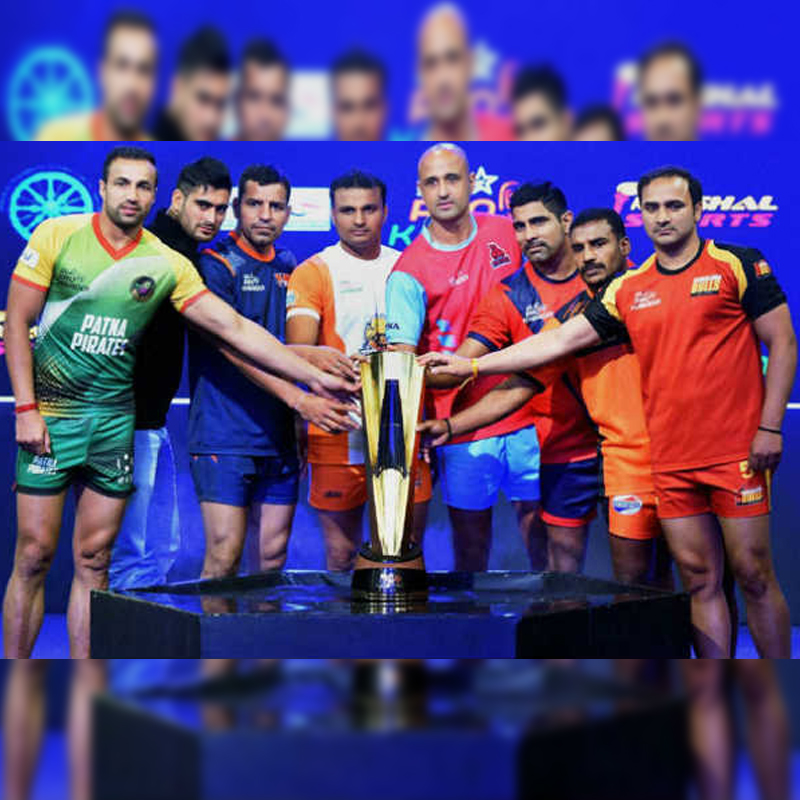
    Bhogle sought to analyse the success of ‘pro-kabaddi’ in India. “Apart from some tweaks to the game’s rules, did it succeed because there was no burden of legacy,” he asked. “The packaging was very good, although there were no top-level, known players,” Ghosh answered. “Each game, which helped release the regional pent-up demand, is short and held the viewers’ interest for 45-50 minutes,” he said. Half-jokingly, he said he found some DJ kind of effect at the ‘pro-kabaddi’ matches.

    “Kabaddi is a kind of revolution brought about with multimedia help.Players who were making Rs 2-5 lakh are now making 50-70 lakh,”Ahluwalia said. Regional brands and products are associating with the game. Sarpanchs etc. have become trainers, mentors and coaches.

    “Leading kabaddi players are earning more than the average IPL players,” Bhogle remarked. He said, as in the US, he could foresee regions in India playing against each other.

    Whether mega corporations can help sports and/or fund stadiums, Bhogle asked. To this, Karnik said that Hero, Pepsi and Vodafone (which supported 10 seasons of a game) were the examples of that phenomenon. “Casual relationships with sports doesn’t work,” Balsara agreed. Relationships over some years reaped a good harvest, he said.

    “Pepsi, for example, does not support only a few episodes of a TV serial,” Balsara said. Consistency of sponsorship in sports is critical, he said.

    However, with limited spending and maximum leverage, RoI is also possible. Balsara gave the example of Kent RO which sponsors non-live after-hours of games. On the other hand, he said, IPL sponsors Vivo was leveraging far less than it could have had. Everybody agreed.

    “Eventually, with low RoI, they may end up being unsatisfied,” said. Bhogle said some companies were quietly supporting potential winners so that they could leverage them when they triumph.

    The business of sports in India was merely worth $2 billion, whereas, in the developed countries, it was pegged at around $ 50-60 billion, Ahluwalia said. So, are we bullish on the business of sports in India, Bhogle asked. Almost all panelists answered in the affirmative, with Jindal adding, “India is growing at 7%, earnings are increasing and so is sports.”

    Bhogle concluded by saying that (sporting) opportunities well-packaged get investments. Begging bowls get pennies.

  • CII Sports Summit: The role of corporate India

    CII Sports Summit: The role of corporate India

    MUMBAI: Profit is not a bad word which the sports ecosystem has awakened to and realised, seemed to be the essence of the discussion at the inaugural ‘Corporatization of Sports’ session at the CII summit on the business of sports and entertainment held in Mumbai on 21 September. The session sought to discuss how Indian sport could evolve and produce champions with the involvement of corporate India.

    The need for looking at the commercial aspect of sports, scope for public-private partnership in promotion, possibility of the government incentivising investments, supporting sports for the sake of business and branding, games packaging and cultivating viewership and media coverage were some of the ideas thrown up at the summit to which almost all the experts agreed.

    KPMG partner Jaideep Ghosh, GroupM business head – entertainment, sports and live events Vineet Karnik, IMG Reliance COO Ashu Jindal, PMG chairman Sam Balsara, YES Bank president and country head, media & entertainmemt, luxury & sports,Karan Ahluwalia and MICA professor Sanjeev Tripathi, were the panelists. Harsha Bhogle, commentator and journalist, moderated the session.

    Bhogle introduced the experts and sought some opinions on the subject. “It is indeed encouraging to see that lately sports was being promoted from the school and college level,” Jindal said. Ghosh said that consumption of sporting events in India has been on the rise, which mainly included online consumption. He underlined the importance and growth of digital media and social media rights for such events.

    Pointing at the international sporting leagues, Ghosh quoted an example of how La-Liga had tweaked its sports timing so as to suit the Indian viewership timings. He noted the positive trend of a worthwhile increase of 20-30% in female viewership of sporting events in India.

    Profit-making training academies and sports good manufacturing were other areas that get a boost with the promotion of sports, Ghosh remarked.

    Whether the Indian government will support sports, Bhogle sought to know from the panelists. Tripathi, quoting a government web site, said that the establishment’s self-declared role was creating infrastructure and capacity-building. “One needs to love sports to promote it,” quipped Bhogle referring to the government versus corporate role.

    Tripathi suggested the concept of public-private partnership in promoting sports. “If tollways can follow the PPP model, I don’t see any reason why sports can’t,” he seemed curious. Giving the example of a private company managing the commercial exploitation of swimming pools at Kendriya Vidyalayas after school hours, he said Sports Authority of India stadia could also be exploited along similar lines.

    “Almost 340-350 days in a year, the SAI stadia are unused,” he quipped. In metros, Bhogle said, because of the traffic snarls and other issues, people barely manage to reach the stadia. There is no time to play or practice. “Medals will hopefully come from small towns – where there is space and time,” Bhogle opined.

    Jindal agreed that the government builds infrastructure and corporates invest. Reliance Foundation, he said, was supporting sporting events in around 2000 schools in the country. “IMG sponsored two sportspersons to train at a US academy and one of them today is playing for the prestigious NBA,” Jindal said.

    Bhogle said it was very significant to reach the grassroots level to cultivate sporting talent. “Let under-16 boys and girls play their game at various levels – talent and technique will follow suit,” he felt.

    “There is no database of grassroots-level sporting events being played in the country,” Karnik remarked. There is no national-level academy for training budding talent, he said. Corporates, Karnik stated, were engaging in sports. Like broadcasters and distributors, etc. make money, he said, it was crucial that Indian companies sought RoIs (returns on investments). “But, are they looking at the long-term (say, five years) perspective? May be, no,” he felt.

    In almost 30 years, Balsara said, the business of sports (advertsing,etc.) in India has grown around 50 times which was far less than growth in other sectors/sub-sectors.

    Balsara said there was a need to see sports as a business. “And, in business, there are profits – however distant that may be.” Be a ‘lambi race ka ghoda’, he said. Balsara believed that corporates need to have more and better risk appetite to be in the business of sports promotion.

    Corporates, of course, support events for the sake of building their brands, said Ahluwalia. Given the demographics in India, advertising was done for more visibility. For the sake of going the whole hog into sports promotion, Ahluwalia said, the complete supply chain would need to be looked at – from scouting for talent to sports good manufacturing etc. to CSR

    We also need to support games other than cricket, Bhogle said. Tripathi agreed, and informed that he found 20 football academies in Ahmedabad but none for cricket.“The different leagues being played in India are creating dreams,” Bhogle said. There was a need for heroes.There were fewer heroes because federations used to dwarf them in the wake of retaining their own supremacy, Bhogle said.

    Balsara agreed on heroes and winners. The whole nation is watching sports. Winners at any level – state level or national level – are a good bet. “Only then, people and corporates would go after them,” he said.

    India needs a revolution in all sporting activities. “The revolution that the former world champion Grandmaster Vishwanathan Anand could bring about in chess, could not be replicated in the case of Mary Kom,” Bhogle lamented. “You need the power of media to establish and popularise a sport,” Balsara said. A strong medium like TV was very significant for sports promotion, he said.

    Bhogle agreed – TV creates heroes. “The digital medium in India, which does not need the help of airtime or printing, is also growing very well,” Bhogle said. Jindal nodded, saying, “All the school matches supported by IMG were published on the social media and uploaded on Youtube”. The influence of social media, especially the opinions and reactions, was very powerful, he said. Jindal said the social media helps in taking sports to the next level.

    Bhogle sought to analyse the success of ‘pro-kabaddi’ in India. “Apart from some tweaks to the game’s rules, did it succeed because there was no burden of legacy,” he asked. “The packaging was very good, although there were no top-level, known players,” Ghosh answered. “Each game, which helped release the regional pent-up demand, is short and held the viewers’ interest for 45-50 minutes,” he said. Half-jokingly, he said he found some DJ kind of effect at the ‘pro-kabaddi’ matches.

    “Kabaddi is a kind of revolution brought about with multimedia help.Players who were making Rs 2-5 lakh are now making 50-70 lakh,”Ahluwalia said. Regional brands and products are associating with the game. Sarpanchs etc. have become trainers, mentors and coaches.

    “Leading kabaddi players are earning more than the average IPL players,” Bhogle remarked. He said, as in the US, he could foresee regions in India playing against each other.

    Whether mega corporations can help sports and/or fund stadiums, Bhogle asked. To this, Karnik said that Hero, Pepsi and Vodafone (which supported 10 seasons of a game) were the examples of that phenomenon. “Casual relationships with sports doesn’t work,” Balsara agreed. Relationships over some years reaped a good harvest, he said.

    “Pepsi, for example, does not support only a few episodes of a TV serial,” Balsara said. Consistency of sponsorship in sports is critical, he said.

    However, with limited spending and maximum leverage, RoI is also possible. Balsara gave the example of Kent RO which sponsors non-live after-hours of games. On the other hand, he said, IPL sponsors Vivo was leveraging far less than it could have had. Everybody agreed.

    “Eventually, with low RoI, they may end up being unsatisfied,” said. Bhogle said some companies were quietly supporting potential winners so that they could leverage them when they triumph.

    The business of sports in India was merely worth $2 billion, whereas, in the developed countries, it was pegged at around $ 50-60 billion, Ahluwalia said. So, are we bullish on the business of sports in India, Bhogle asked. Almost all panelists answered in the affirmative, with Jindal adding, “India is growing at 7%, earnings are increasing and so is sports.”

    Bhogle concluded by saying that (sporting) opportunities well-packaged get investments. Begging bowls get pennies.

  • ISL Auction: Ranbir Kapoor’s Mumbai City FC snaps up Sunil Chhetri for Rs 1.2 crore

    ISL Auction: Ranbir Kapoor’s Mumbai City FC snaps up Sunil Chhetri for Rs 1.2 crore

    MUMBAI: The first auction of Indian footballers’ new dream tournament IMG-Reliance and Star India funded Indian Super league (ISL) kickstarted in Mumbai with national football sensation Sunil Chhetri going under the hammer for a whopping Rs 1.20 crore. Having a base price of Rs 80 lakh, Chhetri was picked up by Ranbir Kapoor’s Mumbai City FC. 


    Kapoor said, “I am excited to have Sunil in our team and we are looking forward to the next season with him in the team. Sunil and Anelka up in front will certainly be a worthy experience.”


    Veteran football commentator John Dykes started the auction proceedings along with auction specialist Charlie Ross.


    The first player to go down the hammer was the winner of the I-League Player of the Season Jackichand Singh. His base price was Rs 20 lakh and after much tussling and strategising, Pune FC grabbed his services for Rs 45 lakh. Hrithik Roshan sported a big smile after securing Singh’s services. Mumbai co-owner Kapoor and North East United co-owner John Abraham were also aggressively bidding for Singh.


    With a base price of Rs 39 lakh, Thoi Singh managed to raise many eyebrows when Chennai FC clinched him for Rs 86 lakh.


    Alongside Chhetri who breached the Rs 1 crore mark, Eugeneson Lyngdoh became the first player in the auction to touch the coveted price point. After several rounds of aggressive bidding, which started from the base price of Rs 27.5 lakh, Roshan had the last laugh as Pune City FC secured the midfielder’s services by investing a sum of Rs 1.05 crore. As many as five clubs were vying for Lyngdoh.


    On the other hand, Rino Anto was the show stopper of Pool B of the ISL auction. The one-of-a-kind Indian national Left Back went under the hammer with a base price of Rs 17.5 lakh. However this amount was too little when compared to his class and franchise owners recognised it early on. Defending champions Athletico de Kolkata bagged his services after several rounds of counter bidding against various franchises. Anto’s selling price went up to Rs 90 lakh, which was way over his base price. 


    Pool B also had nation number 9 Robin Singh. The goal scorer was expected to grab the attention of many a teams but it turned out to be a very cold bidding while he was under the hammer. Delhi Dynamos secured his service paying Rs 51 lakh, a tad higher than his base price of Rs 40 lakh.


    A total of Rs 7.22 crore was spent in the first edition of the ISL player auction for garnering the services of top 10 Indian players.  


    The auction began with an encouraging speech from ISL founder and chairperson Nita Ambani. 


    Ambani said, “Half a million young minds participated in the Reliance Foundation young minds grassroots program out of which the best 23 were selected and now they are privileged with top class facilities in Mumbai, getting top class coaching from top football coaches. We are committed to make the second season bigger and better. We will try our level best to make India a truly footballing nation. Come on India, let’s football.”

  • Rs 20 crore salary cap set for Indian Super League season 2

    Rs 20 crore salary cap set for Indian Super League season 2

    MUMBAI: The first season of the Hero Indian Super League (ISL) was indeed a success for the sport in India as it achieved a rare status of being the fourth-most watched football leagues in the world. 


    Now in its second edition, the controlling body of the ISL, the Football Sports Development Ltd (FSDL), formed through a joint venture between IMG-Reliance and Star India, has decided that the ISL clubs will have player’s salary cap of Rs 20 crore for the second season to be held this year. 


    The board has also decided that the ISL will have an auction for Indian players who have played in the senior national teams but missed out on the inaugural ISL season.


    Each club will be eligible to add only one such player from the auction list consisting of maximum 12 to 15 players. Those not picked through auction will form part of the Domestic Players Draft. 


    Commenting on the development, an Indian Super League spokesperson said that the new set of rules are defined to encourage clubs in player retention, assist them in managing player costs and provide a level playing field for each club to prepare for the second season with a reasonable and broadly equitable chance of winning the league in 2015. 


    “The inaugural year of the ISL brought to fore many new faces of Indian football other than the known international names. The league encourages the Clubs to retain such players to help them build an identity and fan base,” added the spokesperson.


    In terms of player retention, a number of decisions have been taken at the first Governing Council to review the inaugural season. The Governing Council committee consists of all eight ISL participatory club representatives and officials from FSDL. 


    For marquee players it has been decided that each club must have a minimum of one marquee player. Clubs can retain their marquee player from the inaugural season but are free to sign one from the open market, with prior approval from the League. For international players, clubs can retain a minimum of one and maximum of five international players. Additionally, clubs are allowed to contract international players by themselves through the market directly. 


    It has also been decided that a minimum of one and maximum of six domestic players can be retained by a club. Players, who are not part of the retention list of clubs, can be signed by any ISL club in the open market until April 2015. In case they are still without contract, such players will be listed in the Domestic Draft. 


    Each club is to have a minimum of 22 players, with a mandatory two developmental players in the squad. Each team would consist of one marquee, eight international and 13 domestic players including the compulsory two under-23 developmental players. A club can have a maximum squad size of 25. Additional quota of three players can have maximum two international players it has been decided.

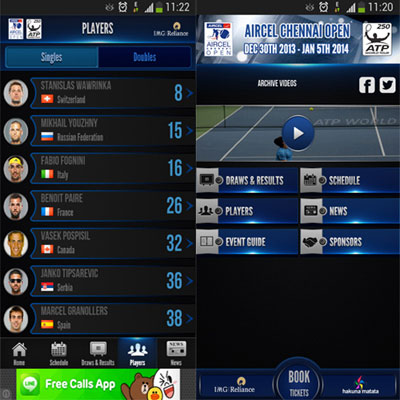
  • Magic Bus named as official charity partner for Aircel Chennai Open 2015 edition

    Magic Bus named as official charity partner for Aircel Chennai Open 2015 edition

    MUMBAI: The organisers of the Aircel Chennai Open have announced that Magic Bus India Foundation, a non-governmental organisation that steers underprivileged children towards a better life with better awareness, life skills, and opportunities, is the official charity partner of the tournament. This is the first year Magic Bus is partnering with the event.

    Through the association, Magic Bus will execute the sport for development programme in Chennai in 2015 for underprivileged children, financed out of the ATP Aces for charity grant. The ATP Aces for charity is a global initiative aimed at giving back to communities where ATP World Tour events are played, and supporting tournament and player charitable activities, which focus on causes from education to youth and community services to health and fitness.

    Last month, the NGO organised its 2014 benefit during which the Open sold its premium VIP seats to Magic Bus to help raise money for charity. During an event organised at the Stadium’s Centre Court, ATP Supervisor Mark Darby, presented a cheque of $15,000 to founder and executive chairman Matthew Spacie. The proceeds will be used by Magic Bus to enrol 1,000 underprivileged children across Chennai into the Magic Bus sport for development programme.

    Magic Bus will invite 350 children enrolled in Magic Bus programmes in Chennai to participate in the Kid’s tennis clinic and witness centre court matches to expose children to the sport.

    Magic Bus founder and executive chairman Matthew Spacie said, “Through a number of programmes in partnership with the tournament and the ATP, we hope to give millions of children living in poverty the opportunity to control the way they view the world, the freedom to choose the role they will play in it, and the power to define their own destiny.”

    IMG Reliance chief operating officer Ashu Jindal commented, “We are happy to enter into a meaningful partnership with Magic Bus India Foundation and look forward to using the platform that the Aircel Chennai Open gives us to make a positive difference to the lives of the underprivileged in India. We welcome Magic Bus into the ACO family today.”


  • Hero ISL reports viewership of 429 million across the nation

    Hero ISL reports viewership of 429 million across the nation

    MUMBAI: Hero Indian Super League (ISL), a joint venture by IMG-Reliance and Star India has created history in India with a record- breaking reach on television, in stadia and digital.  

    As per the TAM data, an aggregate of 429 million viewers from across the nation tuned in to watch the inaugural season of Hero ISL live on their televisions screens, making it the second most-watched sport in the country after cricket. Over 1.5 million fans watched it on ground, in-stadia, making it the fourth most attended football league in the world. Stadia were packed close to full capacity with attendance averaging about 26,000 fans per match. 

    The league cut across demographic boundaries and captured the imagination of a diverse fanbase, with women and children accounting for 57 per cent of the 429 million viewers.

    The Hero ISL was telecast live on eight channels in five different languages cross the Star India network. The league was also aired on starsports.com which had more than 32 million visits recorded during the tournament, surpassing the online audience even for the FIFA World Cup 2014. Across web, mobile and app, starsports.com recorded over 17 million online video views through the course of the tournament. The final match played between Kerala Blasters FC & Atletico de Kolkata recorded 1.6 million online visits. 

    Talking about the league’s success, Star India CEO Uday Shankar said, “Launched with the aim of helping football take root among the country’s masses, the Hero ISL was backed by an aggressive broadcast plan to bring an unparalleled football experience to the viewers. Our intent was to awaken the passion of football and create the birth of a footballing nation. The resultant success of the Hero ISL justifies it as the right platform for tapping the passion for the sport that exists in India. As we gear for a bigger and better second edition, I would like to thank our partners IMG- Reliance, AIFF, all the club owners and more than 400 million fans for making this dream a reality.”

    On 20 December 2014, the Hero ISL finale, held at DY Patil Stadium in Mumbai, had about 37,000 fans in attendance. The crowning of the first Hero ISL league champion was also watched by 57 million viewers, 2.4x of the reach of 2014 FIFA World Cup final, culminating the over two months long league. The final, with an average TVT of 1418 among M 15+ ABC, registered as the highest rated match of the tournament, 11 per cent higher than the opening match of the tournament. In the social media front, Hero ISL created a total of 2.2 million conversations with more than 275,000 unique authors, generating 11 billion potential impressions. #ISLfinal trended at #2 worldwide on Twitter, and Atletico de Kolkata at #1 in India on Facebook on the day of the finale.


    According to IMG-Reliance Chairperson Nita M Ambani, the success of Hero ISL is a realisation of the dream of a billion including Indians to experience and embrace the beauty of football. She said, “The beautiful game has successfully captured the imagination of people of India and we have experienced the joy of watching the birth of a footballing nation. Hero ISL has been geared towards one overarching objective— to develop football across the country in a systematic and holistic manner, and its success will spur the development of Indian football. I extend my gratitude to the people of India for their love and support.”


  • I -League set to return on 17 January 2015

    I -League set to return on 17 January 2015

    MUMBAI: The launch of Indian Super League (ISL), made many doubt if the country’s original football league would be able to sustain or not. However, putting fears to rest about the future sustainability of the I–League, it is all set to take off from 17 January 2015 in Bengaluru and will be telecast on Ten Sports.


    The official broadcaster, which will air 75 out of the total 110 matches live on the channel, is optimistic about it.  Ten Sports CEO Rajesh Sethi says, “We have had a long-standing partnership with the All India Football Federation (AIFF) and the I-League. We have seen this property grow leaps and bounds on our network in terms of audience interest and viewership numbers.”  


    He goes on to say that the network values the primary national league on its platform and is looking forward to an exciting new season of the tournament from January 2015 as well as the Federation Cup, which will commence from December 2014.


    While some sports experts feel that the ongoing Hero Indian Super League (ISL) would cause sustainability problems for the league, the announcement comes as a welcome move.  Sports columnist Hemant Kenkre says, “The I-League was introduced in India as a professional football league. While India may have a low ranking in terms of world football standings, foreign leagues like the EPL are popular in the country. The I-League together with the Indian Super League can co-exist together, as a large number of football leagues will provide not just an opportunity for youngsters to play but also give international exposure for the game.”


    The decision on the dates for the league, were taken at the recent I-League and Federation Cup committee meeting. It was also decided that the inaugural edition of the AIFF U-15 tournament for I-league clubs will be held in the next calendar year and will consist of 16 teams wherein besides the 10 league clubs, four other academies and two AIFF academies will be a part of the final round.


    “With the new clubs in the league giving more importance to infrastructure and grassroots development programmes, and with AIFF’s initiatives for new tournaments in the junior categories, it is definitely going to impact the quality of youngsters in the game in India and I am confident that these initiatives will bear fruit in the Indian teams performances and results in the U-17 World Cup,” adds Sethi.


    While coming up with the fixture of the championship, the schedule of school examinations will be kept in mind, and only post discussions with sponsors like Coca Cola and AIFF marketing partners IMG-Reliance, will intimate the clubs. It has also been decided that the registration of players would be done centrally through the state associations and all ID cards would be issued by AIFF. No club would be allowed to register a player after the completion of the 11th round of I-League.


    As per the release of players for the AFC U-22 Qualifiers, slated to be held from 23 to 31 March 2015, the clubs have agreed to get back to the governing body over the same. Meanwhile, the second division league would take place in two venues which are to be finalised post inspection by AIFF. The eight participating Clubs are Aizawl FC, Chanmari FC, United Sports Club, Mohammedan Sporting, PIFA Sports, Kenkre Sports, Hindustan FC and Lonestar Kashmir FC. The U-19 I-League will kick-off in the second week of December.


    The last season of the championship was won by the newcomer Bangalore FC, which was led by India’s national football team captain, Sunil Chhetri.  When asked for his expectations for the upcoming league he says, “Expectations remain same in the I-League; we want to defend our title. We want to make it as difficult as possible for the competition. We also have an AFC competition and the Federation Cup so we have our work cut out.”


    “The players obviously want to put up performances that the audiences can enjoy,” he concludes.