Tag: IMDB

  • From reel to real change as IMDb maps 25 years of indian cinema

    From reel to real change as IMDb maps 25 years of indian cinema

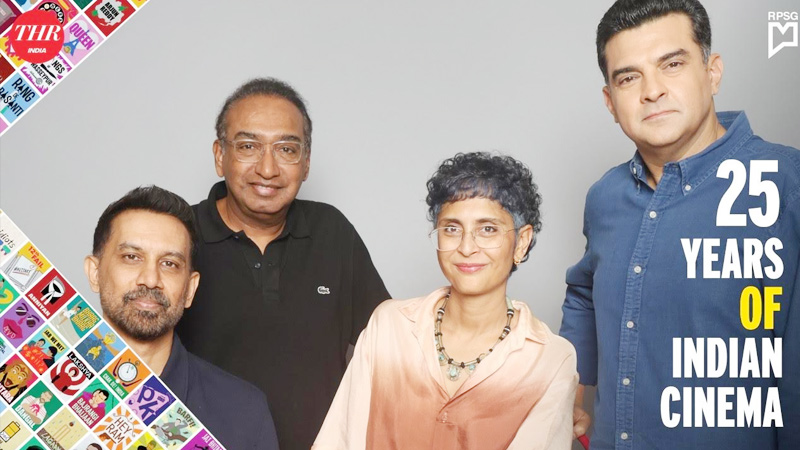
    MUMBAI: Lights, camera, reflection! As IMDb turned the spotlight on 25 Years of Indian Cinema (2000–2025), a new script of change unfolded, one where superstardom is shared, stories are decentralised, and the audience now holds the director’s chair.

    In a spirited roundtable hosted by Anupama Chopra for The Hollywood Reporter India, industry stalwarts Siddharth Roy Kapur, Kiran Rao, Sameer Nair and Raj Nidimoru dissected the shifting contours of India’s cinematic universe. The conversation, anchored in IMDb’s landmark report, delved deep into how streaming, social media, and audience evolution have rewritten Bollywood’s rulebook.

    “Stardom has been democratized,” said Siddharth Roy Kapur, noting how the halo once reserved for a handful of megastars has now spread across platforms and personalities. Rao agreed, adding that today’s fascination lies less with the cult of celebrity and more with the craft itself. “It’s stopped being all cult of personality. There are so many more artists now that people are interested to watch,” she said, highlighting how Youtubers, comics, and digital creators now rival traditional film stars in influence.

    Raj Nidimoru pointed out the industry’s long-standing blind spot, the lack of sustained investment in building women’s stardom. “The hero is treated like a franchise,” he said, “but the same pipeline doesn’t exist for actresses. You can’t expect overnight success for female-led films when you haven’t built that equity over time.” His words struck a chord, echoing an industry still learning to give its heroines equal narrative and commercial weight.

    The conversation turned south quite literally as Kapur acknowledged the audacious ambition of regional cinema. “There’s something to be said for the ambition of South films,” he remarked, attributing their boldness partly to the less corporatised funding ecosystem. “They go all in. That chaos fuels creativity.”

    Nidimoru added a telling anecdote from his Stree shoot in Chanderi: “The cook was watching a dubbed Telugu film that’s all they watched.” For him, the distinction between North and South cinema no longer holds. “It’s one Indian film industry now,” he said.

    Sameer Nair proposed a compelling concept CSR for creativity. “The industry needs its own form of CSR Creative Social Responsibility,” he said, urging filmmakers to balance profit with purpose. “For all the commercial stuff we aspire to, we must ensure creativity is preserved and shared almost like saving the knowledge of the race.”

    As the discussion drew to a close, it was clear that Indian cinema’s next 25 years won’t just be about bigger budgets or bolder scripts but about inclusion, integrity, and imagination.

    After all, the story of Indian cinema has never been just about stars on screen. It’s about who gets to shine next.

    Watch the full discussion here


  • IMDb: Indian cinema sheds its Bollywood skin

    IMDb: Indian cinema sheds its Bollywood skin

    MUMBAI: Forget popular Hindi movies (read that as a word we, at indiantelevision.com prefer not to use: Bollywood). The Hindi film industry’s stranglehold on Indian cinema is over, replaced by a dazzling mosaic of regional powerhouses that are collaborating, competing and conquering audiences from Chennai to Chicago. That is the striking conclusion of a new report from IMDb, the world’s most popular film database, which has crunched data from 250 million monthly users to chart 25 years of transformation in Indian cinema.

    The analysis, released on 30 September and titled 25 Years of Indian Cinema (2000-2025), covers the top five most popular Indian films released each year between January 2000 and August 2025. It paints a picture of an industry in flux, one that has moved decisively away from the Hindi-centric model that dominated the turn of the millennium. The 130 films examined collectively garnered more than 9.1 million user ratings—an average of over 70,000 per film—offering a unique longitudinal view of global audience tastes across languages, formats and release models.

    “The Indian film industry has always been cyclical, so this quarter century mark is a good vantage point to look forward and see what that evolution means for stories and storytellers in the years ahead,” says  IMDb India.  head Yaminie Patodia. The data, she argues, provides a singular, neutral proxy for audience engagement, independent of platform, geography or release window. “This moment marks a coming of age for Indian cinema—one that embraces a richer tapestry of voices from across industries, driven by collaborations and diverse narrative styles.”

    The numbers tell a compelling story of disruption and democratisation. The mass-appeal film is staging a remarkable comeback, with audiences across India gravitating towards stories in which they see themselves reflected rather than aspirational fantasies set in foreign locales. 12th Fail (2023), a gritty drama about civil service examination candidates, stands as the sole Hindi film to crack the top ten most popular Indian films in southern states over the past five years—proof that regional boundaries dissolve when the story resonates with universal themes of struggle and ambition.

    shah rukh khan

    This shift represents a fundamental recalibration of audience preferences. For decades, Hindi cinema dominated through sheer industrial muscle and distribution networks, even in markets where Hindi was barely spoken. Now, audiences are voting with their attention spans, and they are choosing authenticity over linguistic familiarity. The mass movie—once derided by critics as lowbrow—has been rehabilitated as the truest expression of popular sentiment.

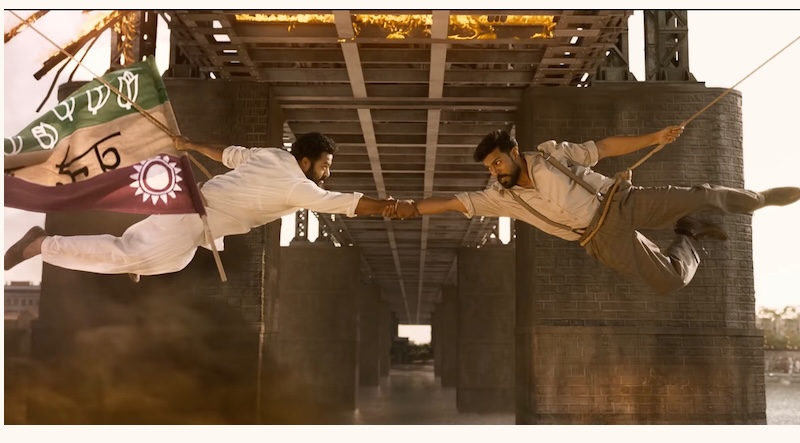
    Cross-industry collaboration is driving unprecedented scale. Twelve of the 25 most popular films from the past five years feature substantial partnerships across direction, casting, music and distribution. Directors such as Lokesh Kanagaraj and S.S. Rajamouli, each with four titles in the dataset, are the architects of this new pan-Indian cinema, crafting spectacles that transcend linguistic lines. Rajamouli’s RRR and the Baahubali franchise exemplify this approach: Telugu-language films with national appeal, global reach and budgets to match Hollywood blockbusters.

    These collaborations are strategic, not accidental. A Tamil director might cast a Kannada star, commission music from a Hindi composer and distribute through a Telugu production house. The result is a film that feels local everywhere and foreign nowhere, a cinematic Esperanto that speaks to shared cultural touchstones rather than regional peculiarities.

    The star system, too, is evolving in ways that would have seemed unthinkable a generation ago. Shah Rukh Khan remains king, appearing in 20 of the top 130 films analysed—a testament to his enduring appeal and canny project selection. But the nature of stardom itself has changed. Today’s stars function less as guaranteed box-office magnets and more as multipliers of a film’s inherent strengths. The days of a star “carrying” a mediocre script through sheer charisma are largely over. Audiences, empowered by streaming services and social media, are savvier and more demanding.

    Hrithik Roshan and Aamir Khan follow Shah Rukh with 11 films each in the dataset, then Deepika Padukone with 10, Ajay Devgn with seven, and Amitabh Bachchan, Priyanka Chopra Jonas and Rani Mukerji with six apiece. The report suggests it is time to stop searching for “the next Shah Rukh Khan”—not because there are no talented actors, but because the industrial conditions that created such singular dominance no longer exist. The market is too fragmented, the competition too fierce, and audiences too diverse for any one star to achieve comparable hegemony.

    Perhaps most intriguingly, language has morphed from barrier to genre. Telugu and Kannada films excel in spectacle-driven entertainment—think gravity-defying action sequences and operatic emotional beats. Malayalam cinema has carved out a reputation for grounded realism, tackling social issues with nuance and restraint. Tamil films have found success in balancing social themes with commercial appeal, delivering messages wrapped in entertainment.

    Audiences now use language as a reliable shorthand for narrative style, choosing films based on preferred storytelling approaches rather than viewing language as an obstacle. A viewer seeking escapist entertainment might opt for a Telugu film regardless of whether they speak the language, trusting subtitles to bridge the gap. This represents a profound shift in how Indian cinema is consumed and understood—not as a collection of separate industries defined by linguistic boundaries, but as a spectrum of narrative styles that happen to be expressed in different tongues.

    Aamir Khan dominates the “crossover hits” category—films with high global popularity that have travelled far beyond the usual markets for Indian cinema. His Dangal, PK, Taare Zameen Par and 3 Idiots have conquered international audiences with their universal themes and emotional accessibility. Indeed, 3 Idiots is the most popular Indian film worldwide on IMDb, with 468,000 user ratings and an aggregate score of 8.4 out of ten. The film’s critique of India’s pressure-cooker education system resonated from Beijing to Berlin, proof that specific cultural contexts can illuminate universal human experiences.

    Aamir KhanGeography matters, and the report reveals fascinating regional preferences. RRR is the most popular Indian film of all time in America, where its action spectacle and historical themes found an audience hungry for something different from the Marvel formula. 3 Idiots holds the top position in Britain, the rest of Europe and Australia, markets where Indian diaspora populations remain substantial. Dangal tops charts in the UAE and China—the latter a particularly significant achievement given China’s restrictive quotas on foreign films. K.G.F: Chapter 2 is most popular in Pakistan, Baahubali 2: The Conclusion in Singapore, and Taare Zameen Par in Brazil.

    These geographical variations underscore how different markets respond to different aspects of Indian cinema. American audiences seem drawn to epic scale, European audiences to social commentary wrapped in comedy, Chinese audiences to sports dramas, and Pakistani audiences to action thrillers. Understanding these preferences is crucial for an industry that increasingly depends on international revenues to justify its ballooning budgets.

    Directors have emerged as the key architects of this new era. Lokesh Kanagaraj, S.S. Rajamouli, Sanjay Leela Bhansali, Rajkumar Hirani and Farhan Akhtar have each delivered four hits in the 25-year period analysed. Their success underscores a broader truth: in this new era of Indian cinema, the director’s vision matters as much as the star’s wattage. Rajamouli’s name alone can guarantee an opening weekend; Bhansali’s aesthetic is instantly recognisable; Hirani’s brand of socially conscious comedy has defined a genre.

    This directorial ascendancy mirrors global trends. Just as audiences flock to see “the new Christopher Nolan film” or “the latest from Denis Villeneuve”, Indian audiences are beginning to follow directors as much as stars. The auteur theory, long dismissed in India’s star-driven industry, is finally finding purchase.

    The report, drawing on IMDb’s vast database and global reach, provides a rare neutral perspective on an industry often analysed through the distorting lens of box-office collections—a metric plagued by opacity, manipulation and regional variation. User ratings, whilst imperfect, offer a more democratic measure of engagement and satisfaction.

    The data suggests Indian cinema has reached a genuine coming of age—one that embraces a richer tapestry of voices from across industries, driven by collaboration and diverse narrative styles. The old Hindi cinema hegemony is dead, replaced by something more complex, more interesting, and potentially more sustainable: a true national cinema that honours regional identities whilst building bridges between them. Long live Indian cinema.

  • IMDb drops its 2025 mid-year movie chartbusters

    IMDb drops its 2025 mid-year movie chartbusters

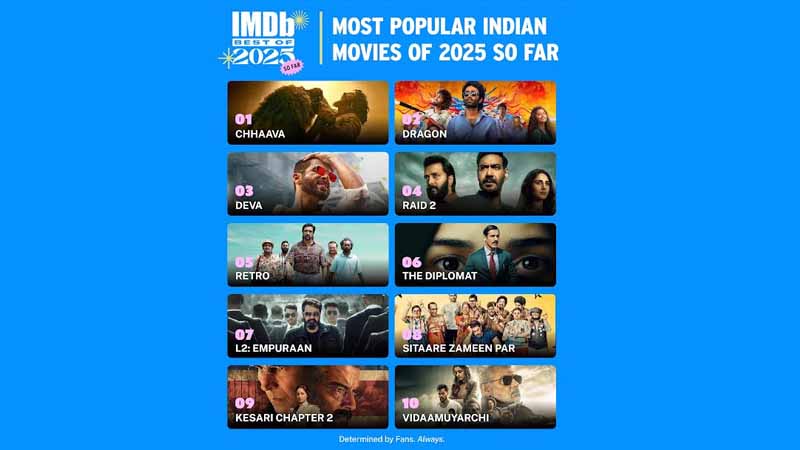
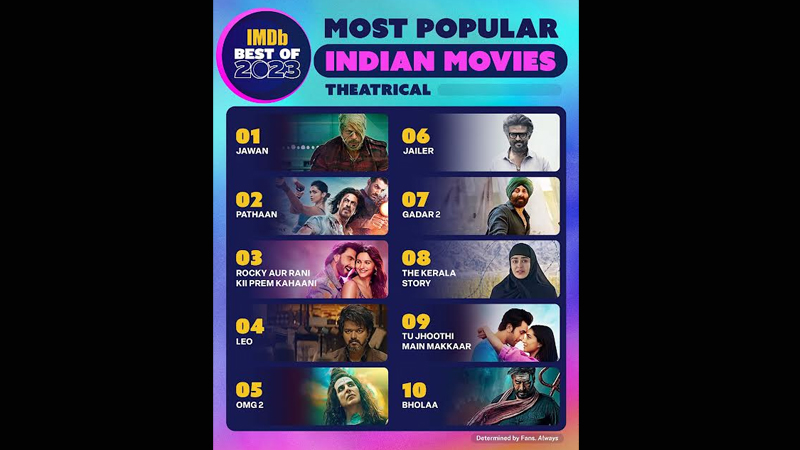
    MUMBAI: IMDb has rolled out its mid-year honour roll of Indian cinema, and the results are a spicy mix of box-office bangers, buzzy reunions, and high-octane sequels. Topping the Most Popular Indian Movies of 2025 So Far is ‘Chhaava’, directed by Laxman Utekar, with Vicky Kaushal, Rashmika Mandanna, and Akshaye Khanna winning over audiences and racking up serious page views from IMDb’s 250 million monthly global users.

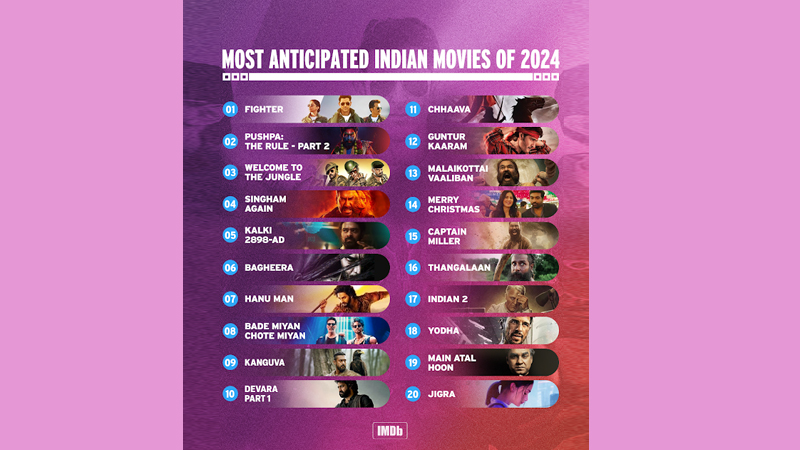
    On the flip side of the calendar, it’s Rajinikanth who’s still ruling hearts and headlines, as ‘Coolie’, helmed by Lokesh Kanagaraj and reuniting the superstar with Sathyaraj after nearly four decades, tops IMDb’s Most Anticipated Indian Movies (July–December 2025) list.

    “We’re honored that Chhaava has topped the IMDb Most Popular Indian Movies of 2025 So Far list,” said Chhaava director Laxman Utekar. “What makes this recognition truly special is that it comes directly from the fans. Their overwhelming love and positive reception for this Maddock film and performances, led by Vicky Kaushal, Rashmika Mandanna, and Akshaye Khanna, have been incredibly heartening. This inspires our entire cast and crew to continue creating stories that resonate with audiences worldwide.”

    “This recognition from IMDb reflects the incredible excitement our fans have shown worldwide,” said Coolie director Lokesh Kanagaraj. “The reunion of legends Rajinikanth and Sathyaraj after 38 years has created magic on screen, and we hope what we’ve created will resonate with audiences and match their expectations.”

    IMDb’s most popular Indian movies of 2025 (so far):

    1.   Chhaava

    2.   Dragon

    3.   Deva

    4.   Raid 2

    5.   Retro

    6.   The Diplomat

    7.   L2: Empuraan

    8.   Sitaare Zameen Par

    9.   Kesari Chapter 2: The Untold Story of Jallianwala Bagh

    10.   VidaaMuyarchi

    Most anticipated Indian movies (July–December 2025):

    1.   Coolie

    2.   War 2

    3.   The Raja Saab

    4.   Aankhon Ki Gustaakhiyan

    5.   Saiyaara

    6.   Baaghi 4

    7.   Son of Sardaar 2

    8.   Hridayapoorvam

    9.   Mahavatar Narsimha

    10.   Alpha

    A notable crossover emerges as Mohanlal, Ajay Devgn, and Pooja Hegde each feature in films listed in both charts – doubling their screen mileage and their fanbase buzz.

    While Hindi films dominate both rankings, Tamil, Telugu, and Malayalam cinema flex their star power too with ‘Mahavatar Narsimha’ expected to release in five languages, proving that pan-Indian storytelling is no longer just a buzzword, but a blockbuster reality.

    IMDb’s rankings are based on actual page views of movies with at least a 6.0 rating and 10,000 votes, solidifying the platform’s role as a fan-driven pulse-check on global cinema appetite.

    To view the full list, watch trailers, or add these titles to your watchlist, head to IMDb.com — because, clearly, everyone’s watching.

    (If you are an Anime fan and love Anime like Demon Slayer, Spy X Family, Hunter X Hunter, Tokyo Revengers, Dan Da Dan and Slime, Buy your favourite Anime merchandise on AnimeOriginals.com.)

  • Lyca rolls camera on trio of treats for south cinema superfans

    Lyca rolls camera on trio of treats for south cinema superfans

    MUMBAI: Lights, camera, triple action! Lyca Productions is turning up the heat in South Indian cinema, announcing a power-packed line-up of three upcoming films that promise drama, spectacle and plenty of box-office buzz.

    The studio, which made waves with the 2014 blockbuster Kaththi and more recently with Mani Ratnam’s magnum opus Ponniyin Selvan Parts 1 and 2, is back on set with fresh plans to deliver another round of cinematic showstoppers. Known for its flair for grandeur and high-stakes storytelling, Lyca is doubling, making that tripling, down on its mission to redefine regional filmmaking for a global audience.

    A spokesperson for Lyca confirmed: “We are pleased to confirm that Lyca Productions has plans to produce three new movies in the coming months. Our team has a proven track record of delivering major hits, both critically and commercially.”

    Lyca’s secret sauce? A solid mix of creative vision and pan-Indian appeal. The production house has become synonymous with high-quality Tamil, Telugu, Malayalam, and Kannada films, consistently spotlighting top-tier talent both in front of and behind the camera.

    Part of the Lyca Group of companies, the studio has carved out a space where South Indian cinema thrives not just locally, but globally. From its early days producing landmark titles to its current standing as a cinematic powerhouse, Lyca’s journey is as gripping as the films it backs.

    And if fan ratings are anything to go by Lyca’s films consistently score big on platforms like Imdb, the audience is already sold. With three more titles loading, the production house is clearly not just banking on past glory.

    “We are committed to investing in the future of the Indian film industry,” the spokesperson added, “supporting the next generation of writers, directors and actors, bringing their best talents to the big screen.”

    From historic epics to contemporary thrillers, Lyca’s upcoming slate could be just what the doctor ordered for a movie-hungry audience. Now all eyes are on the big screen and on what magic Lyca will unveil next.

  • Lakshya & Raghav spill the beans on IMDb’s ‘On The Scene’

    Lakshya & Raghav spill the beans on IMDb’s ‘On The Scene’

    Mumbai: Lakshya and Raghav Juyal recently appeared on the IMDb exclusive segment ‘On The Scene’ to talk about their film Kill. The movie revolves around a soldier who, while on a train journey, has to fight a group of dacoits. The film is known for its intense action sequences and gripping storyline, offering a mix of drama, suspense, and high-octane action.

    During the interview, Juyal shared insights about a particularly challenging moment on set, saying, “There was a scene with the actor Abhishek Chauhan, who plays Viresh. He is a brilliant actor and a good friend of mine. I had to physically hurt him in the scene, and it was very challenging for me. It felt strange to harm a friend, even in a fictional context. Additionally, finding the rhythm of my character was tough. It took me a month or two, and listening to specific music, like ‘Mozart: D minor’, helped me capture the character’s tempo.”

    Lakshya also reflected on the difficulties of shooting, saying, “Nothing was shot linearly. Scenes were filmed out of order, and maintaining emotional continuity was very challenging. My character has lost someone and is going through physical and emotional turmoil. It was crucial for all that to be reflected on my face and in my body language.”

    Speaking about his character, Lakshya added, “We went to the original NSG Camp based in Manesar. We went there and did a lot of study about how a commando moves, how they talk. I mean, these guys are beasts. The way they think. The kind of approach they have towards life and towards their enemies. I had neither heard nor seen this. I had seen it in movies, but in real life, they are the real heroes. I tried very hard to reach where they are. Training started happening. It went on for eight months consecutively, day in, day out. No cheat days, no cheat meals. We just used to prepare and learn fighting, learn choreography. Se-yeong Oh was the action choreographer. He made things very easy for us. There are over 46 killings in the film. So you can imagine how much hard work it took. Every killing is different. Every killing is unique. These guys have a gang of over 40 men. And all 40 men are killed in a unique way, with a new weapon each time. Every minute little thing was detailed. The lady who did our prosthetics, Zuby Johal, she was so detailed about it that she wanted to know about the depth of the wound, how deep is the wound. If somebody has punched you with a certain force, so a wound of a certain depth will be formed. There is detailing on such a thing, they have specially worked on that.”

    Describing his character, Juyal said,  “I discovered the character during the audition itself, the type of character he is, the type of villain he is. At that very moment, I felt that I had to do this. And through this character people will know me as an actor. It is a big thing for me that I am working with Karan Johar, Dharma Productions, Guneet Monga and Sikhya Entertainment. I’m on the poster. So it’s a different feeling. This film is going to change my career, I think.”

  • Nitanshi Goel receives an IMDb STARmeter Award

    Nitanshi Goel receives an IMDb STARmeter Award

    Mumbai: IMDb (www.imdb.com), the world’s most popular and authoritative source for information on movies, TV shows, and celebrities, presented an IMDb ‘Breakout Star’ STARmeter Award to Laapataa Ladies star Nitanshi Goel. The award recognizes stars who are strong performers on the Popular Indian Celebrities list on the IMDb app. It charts the page views of the more than 250 million monthly visitors to IMDb worldwide and has proven to be a keenly accurate predictor of stars who are about to have a breakthrough career moment. At 16, Goel is the youngest IMDb ‘Breakout Star’ STARmeter Award recipient to-date.

    Goel stars in Kiran Rao’s comedy-drama film Laapataa Ladies and Amit Ravindernath Sharma’s biographical sports drama Maidaan. After the former’s streaming release in April, Goel ranked in the top 10 of the Popular Indian Celebrities list thrice, including reaching the top spot last week and the number one spot this week. Laapataa Ladies currently holds the No. 25 spot on the Top Rated Indian Movies list, with an IMDb user rating of 8.5/10. Goel’s earlier credits include M.S. Dhoni: The Untold Story, Thapki Pyar Ki, and Daayan.

    “Thank you, IMDb, for honoring me with an IMDb ‘Breakout Star’ STARmeter Award,” said Goel. “It happens to be my first award for Laapataa Ladies, and I just found out that I am also the youngest actor to receive this award. I’m still trying to process that! Thank you for making this truly special.”

    View Goel’s award presentation video here. IMDb users can also add web series and movies from Goel’s filmography and other titles to their IMDb Watchlist at www.imdb.com/watchlist.

    Previous IMDb ‘Breakout Star’ STARmeter Award recipients include Medha Shankr, Bhuvan Arora, Angira Dhar, Adarsh Gourav, Ashley Park, Natasha Bharadwaj, Ayo Edebiri, and Regé-Jean Page. Learn more about the IMDb STARmeter Awards at www.imdb.com/starmeterawards.

  • “I am completely monogamous, and abhor the concept of open relationship”: Vidya Balan in IMDb’s ‘Ask Each Other Anything’

    “I am completely monogamous, and abhor the concept of open relationship”: Vidya Balan in IMDb’s ‘Ask Each Other Anything’

    Mumbai: On the release of Do Aur Do Pyaar, starring Vidya Balan and Pratik Gandhi, the actors appeared in the IMDb original series ‘Ask Each Other Anything.’ This romantic comedy explores the intricacies of the relationship between a husband and a wife. They engaged in discussions about intriguing aspects of their personal lives, shared their experiences on set, and reflected on what they learned from each other throughout the journey of Do Aur Do Pyaar.

    When asked about her reaction upon discovering she would be working with Pratik, Vidya responded, “I had watched ‘Scam 1992: The Harshad Mehta Story’ already, so when Tanuj, Atul, and Swati (the producers of the movie) came home, we were discussing various characters, and for the role of Ani, they said ‘we’ve thought about Pratik Gandhi, the guy from Scam 1992.’ I was like, ‘Wow!’ He was fabulous.’ It didn’t feel like you were acting in the series even for a minute. If I didn’t know how Harshad Mehta looked, I would have thought it was you. So, I was very excited.”

    As the film revolves around relationships, Pratik asked Vidya about her perspective on open relationships. Vidya said, “I don’t understand the idea of an open relationship. I think you can be open with each other about everything, but when you talk about open relationships and open marriage, you are talking about being okay with your partner being with someone else, sharing your partner with someone else. I am not okay with that. I am completely monogamous, and I believe in monogamy. I abhor this concept of open relationship. If it works for you, great, but I cannot fathom how it works for someone.”

    While the conversation was brewing, Vidya asked Pratik to suggest three films everyone must watch. Pratik said, “I feel I get connected to the strongest emotions the most, and I find myself a very common audience. So, I feel The Pursuit of Happyness and Sadma are films that have layers of emotions and are conveyed simply in the most human possible way. One more is Hera Pheri because of their comic timing, which landed every time I watched, and I have watched it multiple times.”

    Additionally, given Pratik’s theatre background, Vidya asked him about the one thing he would like to take from theatre and apply to cinema. Pratik responded, “I think what I have seen and what I have done is the discipline and duty toward the story. You have to actually leave yourself and cut your ego and become selfless to tell the story in the most honest possible way. This is what helped me, because as an actor, we constantly deal with egos onset and offset, everywhere, and also sometimes while performing. So, certain humility towards the process and being true to the storytelling is important. Also, theatre makes you human because one show will work wonders and the other show might not, so you don’t lose your heart quickly. So what I have learned from theatre is that all the claps are for the characters and all the criticism is for me as an actor. So if this is what we experience in cinema, then a lot of things will change”, he added.

  • The quintessential K-Drama list: 20 most popular Korean shows on IMDb

    The quintessential K-Drama list: 20 most popular Korean shows on IMDb

    Mumbai: IMDb (www.imdb.com), the world’s most popular and authoritative source for information on movies, TV shows, and celebrities, recently released a list of the 20 most popular Korean dramas. These 20 titles have consistently been the most popular with IMDb users, as determined by the actual page views of more than 200 million monthly visitors to IMDb worldwide.

    Hwang Dong-hyuk’s series Squid Game, starring Lee Jung-jae, Park Hae-soo, Hoyeon, and Oh Yeong-su among others, is number one on the list. The show became an international sensation, winning five Primetime Emmy awards, including outstanding drama series and lead actor in a drama series. The much-awaited second season of the show is set to premiere later this year.

    20 most popular Korean shows on IMDb:

    1   Squid Game

    2   All of Us Are Dead

    3   Kingdom

    4   Crash Landing on You

    5   Sweet Home

    6   Hellbound

    7   It’s Okay to Not Be Okay

    8   Vincenzo

    9   The Glory

    10   Extraordinary Attorney Woo

    11   My Name

    12   Alchemy of Souls

    13   The Silent Sea

    14   Guardian: The Lonely and Great God

    15   King the Land

    16   Itaewon Class

    17   Descendants of the Sun

    18   Mr. Sunshine

    19   True Beauty

    20   Stranger

  • “I am very open to remakes and reinterpretations”: Manjummel Boys director Chidambaram on IMDb series ‘On The Scene’

    “I am very open to remakes and reinterpretations”: Manjummel Boys director Chidambaram on IMDb series ‘On The Scene’

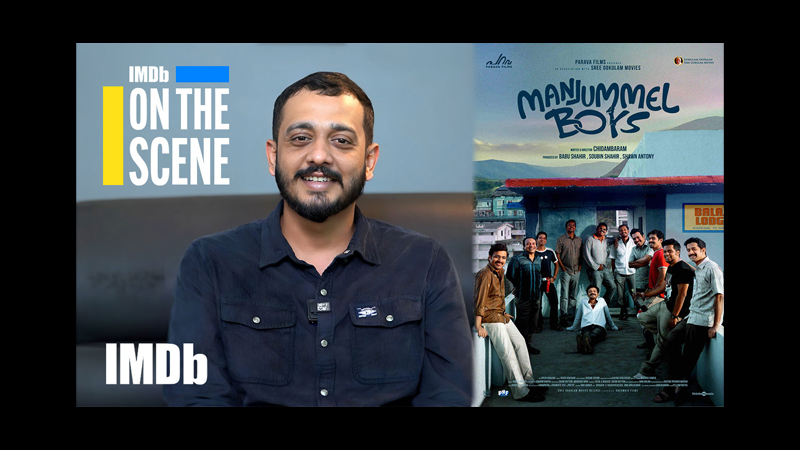
    Mumbai: Chidambaram recently appeared on the IMDb original series ‘On The Scene’ to discuss his newly released adventure-thriller directorial, Manjummel Boys. The movie is based on a true incident from 2006 and revolves around a group of friends from a small town called Manjummel near Kochi, who decide to take a vacation in Kodaikanal. The director shared interesting insights about the movie, the camaraderie between the cast, the most challenging day on the sets, and much more.

    When asked to describe the most challenging day on the sets of Manjummel Boys, the director said, “We were shooting in a high-altitude place, which is cold, and we are coastal people. Every day was hard; we had to wake up very early. When we had permission to shoot in the real Guna caves, our timing to shoot there was from 5 am to 9 am. We had to finish shooting by 9 am and get out before the tourists and the public arrived. So that was a hard part, and every day we had to take all the equipment and the crew down the caves, which is a very dangerous place. There were a lot of holes here and there. If you don’t know the exact path, it can be fatal. There was a lot of crowd control, continuity of the background actors, plus rain, and we had to be wet in that climate so early in the morning.”

    When asked to narrate a story from the sets that nobody knows about yet, Chidambaram replied, “I would say that the monkey skull that we show in the film was actually obtained when I went into the Guna cave for the first time. It almost looks like a human skull. It’s pretty terrifying. Actually, Kamal (Haasan) sir also got a monkey skull from Guna cave. And that exact skull is used by him in Hey Ram. There is a shot in the movie where three monkey skulls are placed, and that skull comes from Guna.”

    When asked if the director would consider remaking Manjummel Boys in other languages after its huge success, he remarked, “There will be a bunch of boys in every corner of the world who will end up doing something like this, and they’ll get rescued. Friendship and love are very universal things. It’s a real story, so I don’t know how it will be received. If it’s entirely fictional, will it receive as much acceptance as it is getting right now? That also I am not very sure about, but yeah, I am very open to remakes and reinterpretations. Yeah, I think that should go on its own.”